For original article by Marsílea Gombata in Portuguese in Carta Capital click here.
It could be New Year’s Eve in Búzios: young people, well dressed, girls in skimpy clothing and jewellery who love to be tanned and wear natural makeup. But we are in Pavão-Pavãozinho, a favela in Rio’s South Zone which up until recently has been the stage for confrontations between police and drug traffickers.
Since the arrival of the Pacifying Police Units (UPP), the firing of heavy arms and baile funk have given way to other sounds and other people. The asphalt (formal city) has invaded the favela. The current fashion in Pavãozinho More >
favela culture,
funk,
gentrification,
Pacifying Police Unit (UPP),
Pavão-Pavãozinho,
Rocinha,
South Zone,
Tabajaras,
tourism,
Vidigal,
zero participation
Click here for original Portuguese Opinion piece by Itamar Silva in O Dia.
It is hard to contain water flowing downwards, smoke rising, and the tourist invasion of pacified favelas. Something must be done to prevent the positivity of the moment from turning into “communities just for show.” The pacified favelas have become targeted by a consumer’s lust seldom seen in Rio de Janeiro. From the moment the Pacifying Police Units (UPPs) installed themselves, in some favelas it is like a new sarcophagus of Tutankamon, the Egyptian pharaoh, has been discovered. A legion of tourists, researchers, business men, and marketers ‘discovered’ the favelas.
During its almost More >
“Money! Money! Your house!”-That’s how Vilma Cristina Ribeiro, 43 and a lifelong Vidigal resident, says foreign investors approach her as they come into Carlos Duque Street, located in the upper part of Vidigal, trying to acquire properties. The houses are in a prime location, not only with easy access to the main street, but with a breathtaking view of the beach of São Conrado. Her answer comes swiftly: “We say no.” She explains, “I do not want to lose my house to the City, why would I lose it to these gringos?”
What these interested visitors don’t know is that Carlos Duque is a More >
For original article published in Portuguese click here.
On July 25th, residents living at the summit of the Santa Marta favela, known as “Pico do Morro” (or “Hill’s Peak”), gathered to listen to a presentation by engineer Mauricio Campos dos Santos, discussing the physical geology of where they live.
Resisting for over two years, most residents of Hill’s Peak want to remain in the location where they were born and where they have survived the more difficult moments of favela life. The site hosts one of the most beautiful views in Rio de Janeiro and today is considered a privileged place to live More >
Eike Batista,
false arguments,
forced evictions,
GEO-Rio,
landslide risk,
Pacifying Police Unit (UPP),
real estate speculation,
resistance,
Santa Marta,
South Zone,
tourism
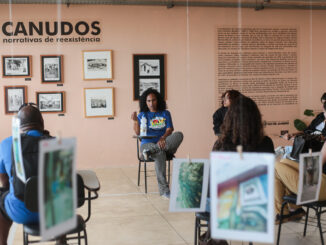
Brazil’s first favela, Morro da Providência (Providence Hill), was built by veterans of the Canudos War. Thousands of soldiers flocked to Rio when the war ended in 1897, because the government had offered them housing in the nation’s capital. Veterans built provisional shelters on the hill while they awaited the promised housing. When it never materialized, the initial settlement grew into a permanent community originally called “Morro da Favela” or “Favela Hill,” named after the shrubby plants soldiers had lived amongst during their battles in the Northeast. Freed slaves and their descendants joined the original settlers, arriving in search for jobs in More >
Bittar,
forced evictions,
furnicular tram,
gentrification,
gondola,
Growth Acceleration Program (PAC),
Inter-American Development Bank,
Minha Casa Minha Vida,
Morar Carioca,
Odebrecht,
Pacifying Police Unit (UPP),
Port Region,
Porto Maravilha,
PPP,
Providência,
tourism