

This article is part of a series of profiles of initiatives in Rio de Janeiro’s Sustainable Favela Network.
Initiative: Sweet Memories by Claudia Queiroga (Doces Lembranças por Claudia Queiroga)
Contact: Instagram | LinkedIn | WhatsApp +55 (21) 964368724
Year Founded: 2012
Community: Nova Campinas, Duque de Caxias
Mission: To transform lives through the integral use of food and a strong nutritional foundation.
Public Events: In collaboration with other organizations and as part of its mission, Sweet Memories by Claudia Queiroga can be found at a range of events and selected fixed locations in the Greater Rio de Janeiro region. Among its main activities, the initiative comprises Refettorio Gastromotiva’s solidarity dinners and is part of the Fiocruz Manguinhos Health Catalog, where it prepares lunch for the Sergio Arouca National School of Health (ENSP) cafeteria, including green jackfruit and mushrooms in savory dishes. Check social media channels for more on upcoming events and locations.
How to Contribute: Become a project sponsor, volunteer at the Social Impact Culinary School in Nova Campinas and donate equipment to the kitchen, other rooms, or activities at the community space. Current key partners contributing food and educational supplies include Refettorio Gastromotiva, Mão na Jaca Institute, Eldorado Farm, UAI Tofú and Embrapa Soils & School.
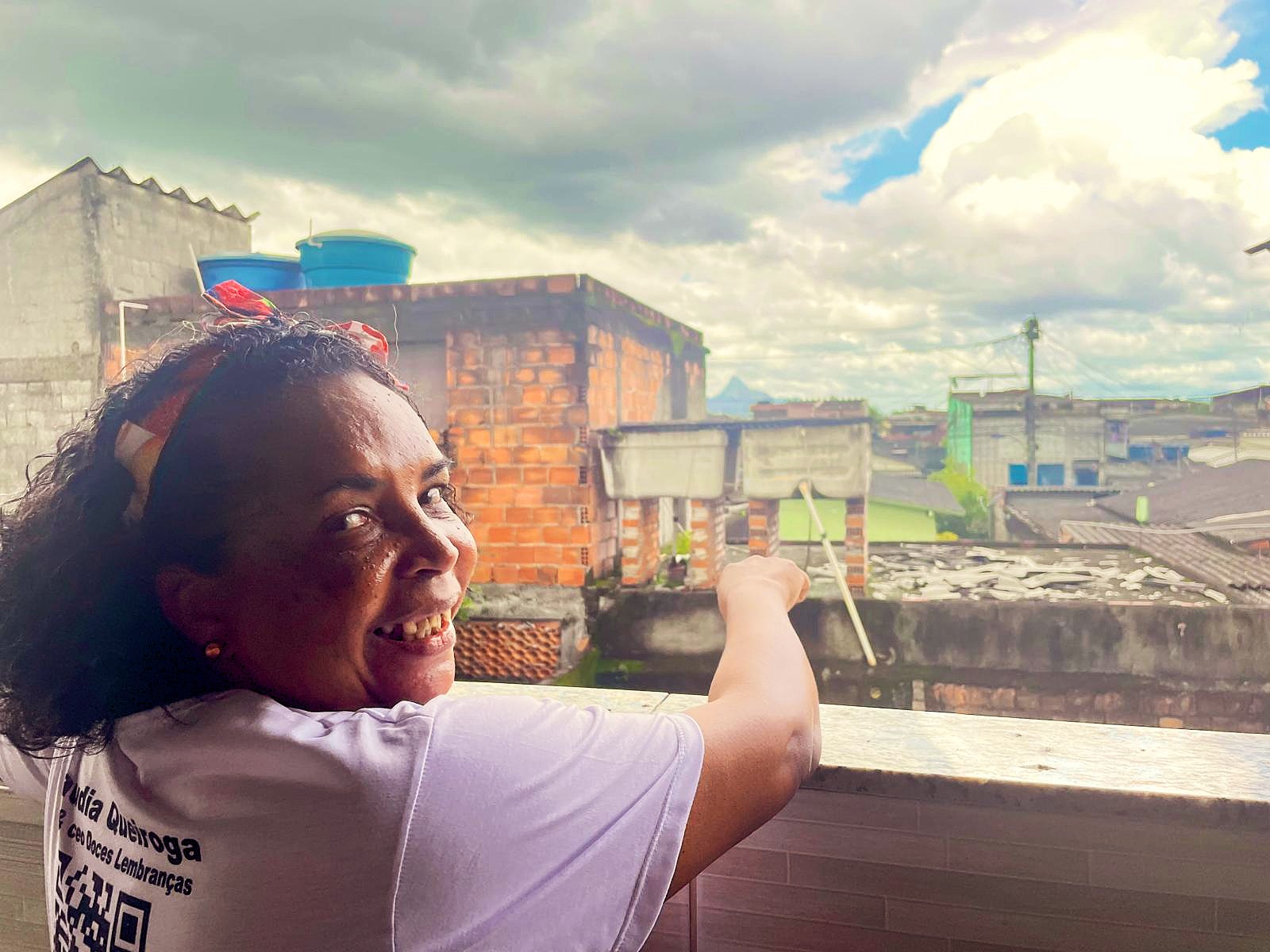
January 25, 2026 marked one year since the Social Impact Culinary School at Sweet Memories by Claudia Queiroga first offered culinary training for low-income neighbors. The solidarity kitchen initiative provides new opportunities, helps make dreams possible and brings about social change for the residents of Nova Campinas, a neighborhood in Duque de Caxias, a city in Greater Rio de Janeiro’s Baixada Fluminense region. The project was created by Claudia Queiroga, a social entrepreneur and chef trained by the NGO Gastromotiva. Beyond the culinary courses provided, the initiative also provides a catering service, as well as food donations for social events and individuals in situations of social vulnerability. Far from Rio’s city center, the project helps residents nonetheless access opportunities and realize dreams. Sweet Memories breaks down these barriers through professional culinary training, often elitist and inaccessible, while also bringing a social and ecological perspective to cooking.
Roots, Treats and Beginnings
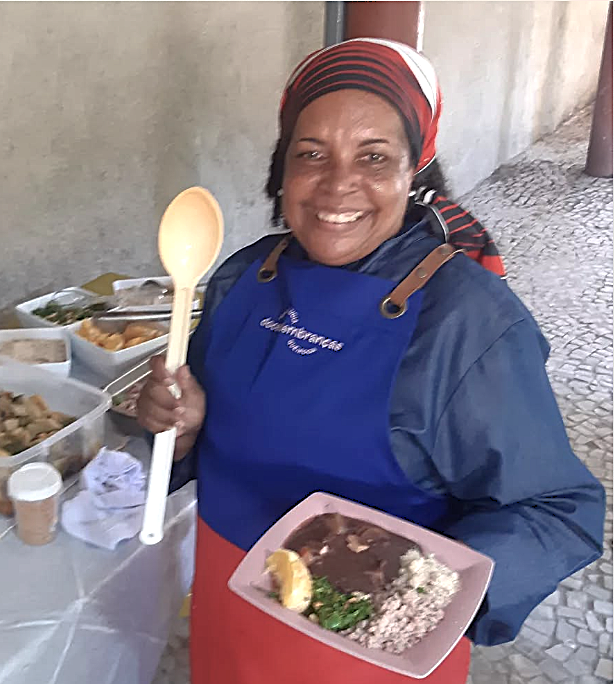
Sweet Memories was started in 2012, when Queiroga had a stable job in accountancy. The name of the project was inspired by fond memories of a childhood spent among family members deeply rooted in samba culture.
“My maternal grandparents were part of the Mangueira samba school, and making feijoada is a very important tradition for samba schools. It was a tradition to always have plenty of food.” — Claudia Queiroga
Even though she had officially registered the project, Queiroga’s dream of turning it into something bigger had to be put on hold for a few years. It gained new momentum in 2016, when her son began to pursue a professional career in wrestling. To support him, after he had received a grant, Queiroga resigned from her job and dove headfirst into this new phase.
During the 2016 Olympics, Queiroga joined the Brazilian Wrestling Federation‘s support team as the official chef for the young athletes. Although this experience brought her a great sense of pride, it was also accompanied by a period of financial instability.
In 2019, she decided to turn the tables, submitting her grandmother’s layered jar cake recipe in a competition by Empretec, a training program for entrepreneurs run by the Brazilian Support Service for Small and Micro Businesses (Sebrae). As a result, she initially received a grant covering 30% of the fees, which increased to 100% over the course of the program. Even with this aid, however, Queiroga still had to cover transportation and food costs to participate.
“I’d get the [public transportation] card from my husband. I’d go with him in the morning, take a banana, an apple, some cookies and a bottle of water, and head to downtown Rio. Once there, I’d stay in a common area at Sebrae [where the course was held], bring a book and read until class time, because that way I would only spend money on the [fare] back. Sometimes I had to go every day. I went through this routine believing that everything would get better.” — Claudia Queiroga
Ver essa foto no Instagram
‘Does Hunger Take a Day Off?’
Having completed the Empretec program in 2019, Queiroga went after an even bigger dream. She applied to a professional chef training program run by the NGO Gastromotiva but fell outside the course’s required age bracket at the time. Shortly afterward, she was able to enroll in Be an Entrepreneur: Make and Sell, another training program offered by the same institution. Not long after, however, with the advance of the coronavirus pandemic, Gastromotiva was forced to shut down its operations, including the kitchen in Lapa that served over 100 people in situations of social vulnerability. “It was my birthday and we had even arranged a small celebration [at my house]. [Then] I received a message from the course administrators saying that we couldn’t go to class, that everything had been shut down,” says Queiroga.
However, soon afterward, as a result of the temporary pandemic closure, Gastromotiva’s cafeteria doubled as a food bank.
“A former student [from Gastromotiva asked the NGO to donate food] to a children’s project in Guadalupe. This request inspired a [new] training program at Gastromotiva: ‘Who Wants to Be a Solidarity Chef?’ When [I heard the news] it was like I’d won the lottery. I was the tenth chef to be selected… It was then that I realized this was a chance of a lifetime.” — Claudia Queiroga
The new opportunity changed Queiroga’s trajectory, leading her to begin cooking for her neighbors in Engenho da Rainha, and later for people experiencing homelessness in downtown Rio and the Aterro do Flamengo. It also opened space for deeper reflection and the chance to overcome barriers.
“The kitchen [of fine dining] is not an environment for a Black woman without formal training. My lived experience helped me see this as a unique opportunity for transformation. After being the tenth to be selected, I asked myself: ‘How can I make sure everyone sees me as a professional worthy of this place?’” — Claudia Queiroga
Ver essa foto no Instagram
Queiroga started her solidarity kitchen in her home, near the Galinha favela in Engenho da Rainha. The initiative had humble beginnings but grew quickly, producing up to 300 meals a day, and totaling over 150,000 delivered between 2020 and 2022. Sweet Memories also worked alongside other solidarity kitchens across the city, contributing to a highly impactful movement. During the pandemic, Queiroga was included among 50 Gastromotiva solidarity kitchens operating daily. Between 2020 and 2023, she produced 500 meals per day for social projects on Sundays organized by the Friends of Christ the Redeemer. She continues to deliver hot meals alongside the Street Yoga project.
“If I’m going to fight hunger: does hunger take a day off? [No, so] I’m going to cook every day! The first dish I made came from a fond childhood memory. I was given a bag of Malabar spinach and a box of eggs. So I made Malabar spinach with eggs. I ate a lot of that leaf as a child. My grandma used to make it. I made 55 hot meals with Malabar spinach, eggs, rice, beans and grated carrots. I had to think carefully because I only had three burners, you know? I had big pans I’d borrowed from my family. That’s when I discovered I was someone who could help others.” — Claudia Queiroga
Today, in addition to her work with solidarity kitchens, Queiroga takes part in the Social Impact program at Refettorio Gastromotiva, creating opportunities for the partner social projects she works with and helping build a gastronomic experience at Rua da Lapa 108.
From Solidarity on Every Plate to the Social Impact Culinary School
The immediate popularity of the solidarity kitchen further inspired Queiroga to set up her culinary school. Initially in Engenho da Rainha, the opportunity arose for Queiroga to take her work further afield, to Nova Campinas, in the Baixada Fluminense—and so she did. Queiroga believes that the qualifications she obtained and the experience she accumulated as an entrepreneur were essential stepping stones, each contributing to her growth and helping pave the way for what would come next.
“Today, I can put all my studies and knowledge into this opportunity to cook for everyone… The kitchen is a collective space. Food is to be shared. It’s also a caress.” — Claudia Queiroga
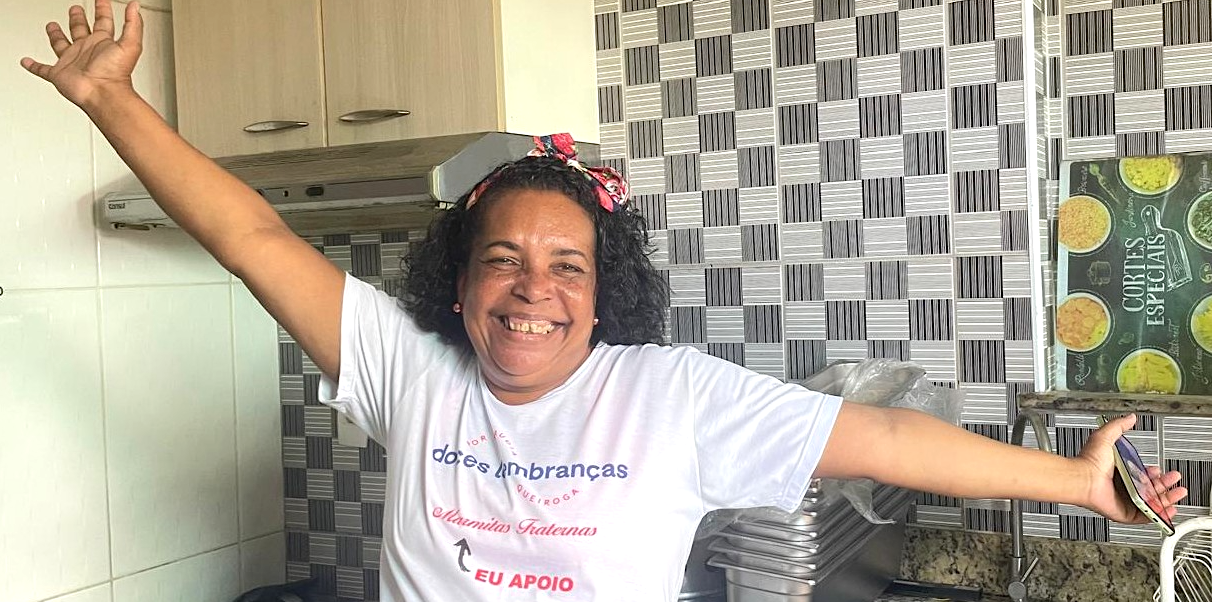
In addition to the many training programs and socio-environmental initiatives that inspired the creation of the Social Impact Culinary School project, a growing number of volunteers also inspired the need for a new space. As a result, on January 25, 2025, Claudia Queiroga opened a new space in Nova Campinas.
“[Successfully running this project in this area] means facilitating a space for prosperity, but for that you need a physical space it can exist in. This kitchen right here is a space for transforming lives.” — Claudia Queiroga
The objective of the Social Impact Culinary School is to train individuals in situations of social vulnerability in the culinary arts. The project also aims to strengthen socio-environmental awareness through food—a perfect context for working with the circular and creative economies: “The kitchen is a major industry that can employ and provide opportunities for many.”
“Sometimes people struggle with food insecurity because they don’t understand all the properties of food and don’t make use of everything it offers… With just a few vegetables, you can create an extensive menu. With tomatoes, you can make juice, soup, or grilled tomatoes to eat with rice and beans. In the past, we didn’t eat meat every day. [Making use of everything] was a way to feed yourself with what you had… Nowadays, we’re so neglectful with that kind of thing, not getting the most of what an ingredient can offer. If we respect [the food cycle], we will eat with abundance. Without a shadow of a doubt. People often think they can solve the problem [of hunger] by distributing baskets of basic foodstuffs. Of course you can’t.” — Claudia Queiroga
Challenges of the Present and Sweet Dreams for the Future
Today, Sweet Memories and the Social Impact Culinary School are partially sustained by the sale of hot meals, which cover basic expenses, as well as through donations of ingredients and equipment. Some of the funds raised from these meals are converted into lunch boxes for people experiencing homelessness. Claudia highlights that she seeks autonomy and makes the most of the resources available to her.
“If I get a large donation of carrots, why not process them and freeze them so they last longer? When they’re out of season, they’ll still be there. If I can do this production in the Culinary School, I can sell it and turn it into income for the kitchen itself. Then the kitchen will become self-sustaining. It needs investing, but I believe that in two or three years it will already be managing itself and sustaining the projects.” — Claudia Queiroga
The chef highlights the importance of determination.
“The hardest part of being an entrepreneur isn’t the money, it’s finding someone who believes in your idea, who believes it’s going to work. A venture takes from five to ten years to grow, but only three to fold. And I’ve been working on Sweet Memories for almost six years now, so I’m a fighter. I wasn’t born into a rich family, so I have to work hard. People don’t make it on their own. You can even get things going alone, but you give up [if you don’t get support]. Sometimes you think you won’t make it. There are times I feel like that. But even when I feel low, I pick myself up again and see that it is possible. That I’ll make it.” — Claudia Queiroga
With courses underway since 2025, Queiroga shares several goals for the future. She aims to offer training and workshops for people experiencing homelessness and to distribute 200 meals per week to this population. Other objectives include building a multi-purpose room with a TV, computers, and books—especially for youth to use while their parents attend trainings—and creating an open-air kitchen specialized in jackfruit-based dishes, an affordable and highly nutritious alternative to meat, which is linked to numerous illnesses. She also hopes to install green roofs and solar panels, all with the overarching goal of engaging the neighborhood and turning the space into a community hub.
Queiroga hopes to equip and finalize the rest of the culinary school in the near future. She emphasizes the importance of creating opportunities that generate income for families in the community, helping more individuals realize their potential and fostering growth.
“A person who doesn’t eat, who’s experiencing hunger, doesn’t dream. And I want everyone to dream. So I want everyone to be well fed… I want everyone to have the desire and the opportunity to grow. This idea of transforming lives is something very strong within me. It’s about believing that we can change anything with our own hands… The hand that harvests is the same hand that sows, the same hand that transforms and delivers. I believe hands have a magical power.” — Claudia Queiroga
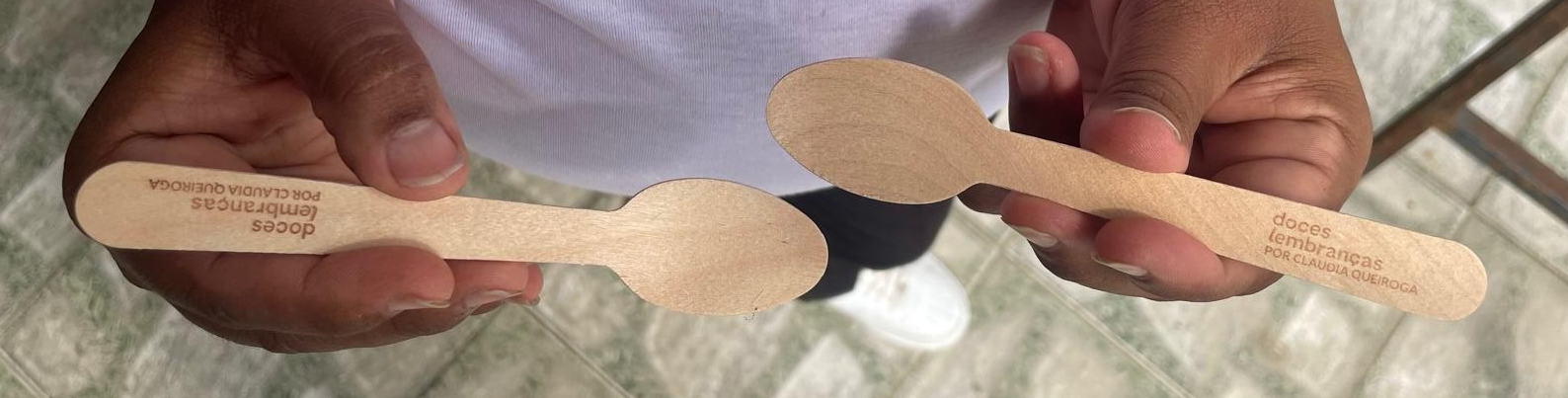
For more information about the project, how to get involved and how to support it, contact Sweet Memories by Claudia Queiroga using the contact details at the top of this profile.