
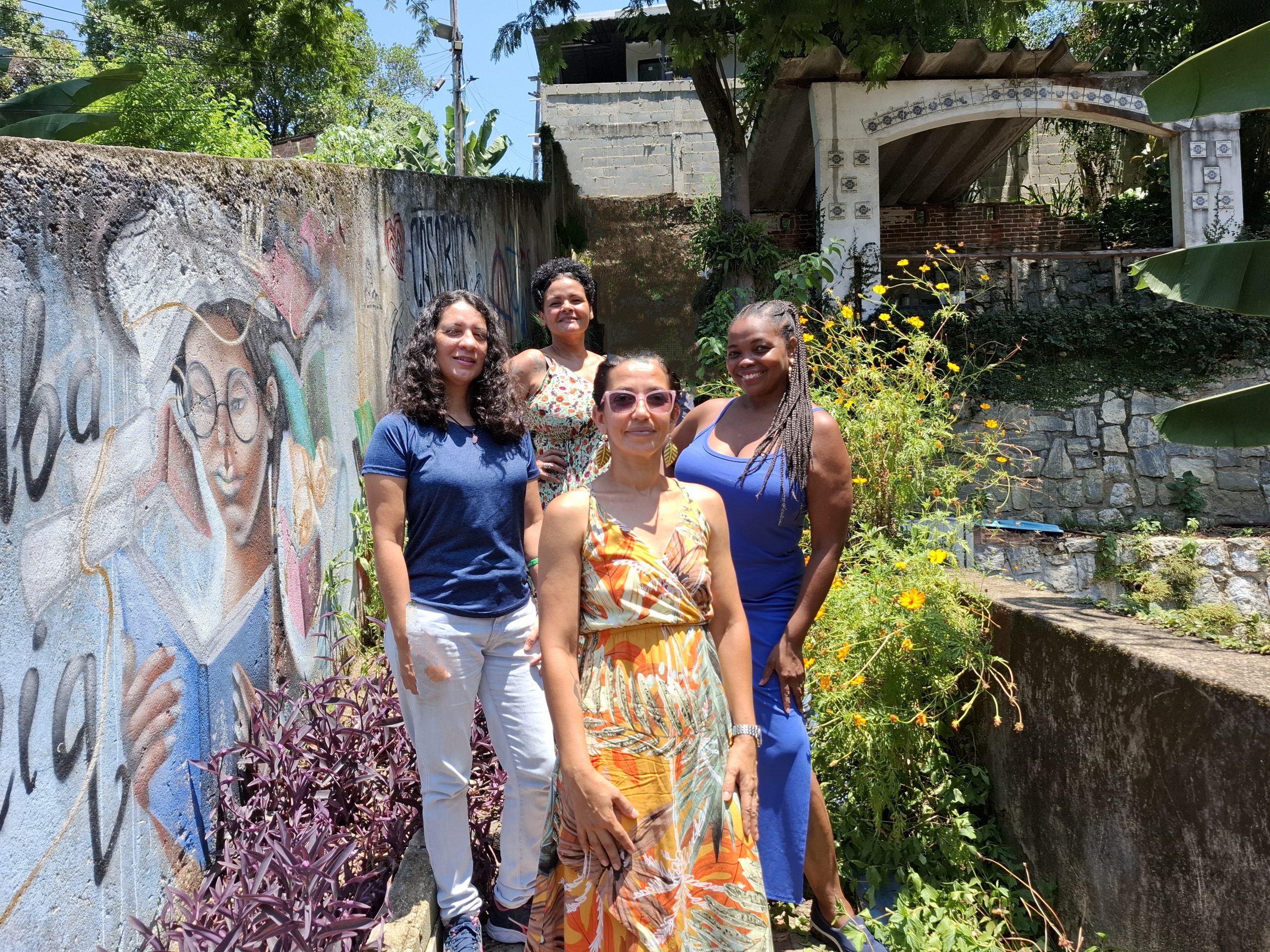

Rap battles, DJ-led workshops, rock concerts, festas juninas (traditional June Festivals), Halloween parties, English classes and political meetings to decide the city’s future. In recent years, a bit of everything has taken place on a plot of land located on a picturesque avenue in the Jardim Primavera neighborhood of Duque de Caxias, a municipality in Greater Rio de Janeiro’s Baixada Fluminense region. That is where you will find the Culture Manor Institute, known simply as the Culture Manor, which sets the stage for multiple forms of art, culture, education and political engagement in the region.
The location reflects the socioeconomic changes that Jardim Primavera has undergone over the past six decades: an oasis of the bourgeoisie that learned to coexist with its more peripheral side. The property, built in the early 1950s, blends with the greenery and can almost be mistaken for a small estate. Owned by a family of German descent, the Steiners, the Manor is a synthesis of a past when wealthy residents dreamed of turning Jardim Primavera into the “Brazilian Switzerland.”
Jardim Primavera: A Housing Project for Duque de Caxias’ Bourgeoisie
But how did it all start? The neighborhood’s concept came from musician and former race car driver Nelson Cintra, who organized much of Duque de Caxias’ so-called “high society” and other powerful actors from Rio to make his dream of a “Brazilian Switzerland” come true. A champion of street racing circuits inspired by similar races held in Monaco since 1929, Cintra helped popularize these competitions, which did not even have a name. He won multiple times, driving his Renault Gordini in cities like Petrópolis, in the state’s mountainous region.
Fame helped Cintra make his dream viable. He worked tirelessly lobbying authorities in Duque de Caxias, Rio and São Paulo, as he was both a music teacher at Rio’s Municipal Theater and a real estate broker in both states. Cintra was so well-connected socially that among his friends was President João Goulart. Over time, he founded his own real estate company and became a successful entrepreneur in construction.
Largely due to Nelson Cintra’s own efforts, Jardim Primavera emerged in 1947 next to what is now the Washington Luis Highway. According to the September 2014 edition of the magazine Pilares da História, Cintra gave blood, sweat and tears to turn Jardim Primavera, an old pineapple plantation, into an unprecedented real estate development for the Baixada Fluminense. He “ensured the streets had curbs, trees and drainage, extended the electric grid to the area, designated space for squares and churches, drilled wells for drinking water and arranged for the construction of a school and even a train station.”

451 plots were established, ranging from 500 to 1,500 m². However, what was meant to be a paradise for wealthy Poles, Germans, Italians, Englishmen and other Europeans couldn’t hold back the influx of lower-income populations who were displaced from other areas or who needed housing to escape high rents in more central parts of Greater Rio.
In the 1960s and 1970s, various studies show that, with the unplanned expansion of the Rio de Janeiro Metropolitan Region and the advance of industrialization in the Baixada Fluminense, the local elite gradually left the area, along with a decline in public investment and an increase in urban precariousness. Cities like Duque de Caxias and Belford Roxo began receiving a migratory flow from lower income regions, either from other parts of the country or displaced from other areas within Greater Rio. With State neglect and a systematic lack of public policies, a new socioeconomic reality imposed itself. During this period, Jardim Primavera witnessed the growth of Favela do Rasta and Complexo do Cangulo, starting in the 2000s.
The Manor remained fully functional until 1994, when its last resident, biologist Áurea Steiner, passed away. After that, the family abandoned the property and 25 years went by.
“With this neglect, all kinds of things started happening there. Illegal parties were being held. The furniture in the house was stolen. People began using the residence for sexual encounters. The Manor was turning into a drug hotspot and making the neighborhood more dangerous.” — Dayse Alves
The Manor’s New Phase
Since 2020, the multifaceted Culture Manor has been managed by radio host, cultural producer, choreographer and ballet instructor Dayse Alves. Raised by her grandparents, she had to learn to make a living from a young age. Alves worked as a sales clerk, bartender and children’s entertainer, among other things. “I had to learn to manage on my own and make money to support six children. I think I’ve never stopped a minute in my life. Rarely do I take a day off or go on vacation,” she says.
In 2019, she was approached by painter Juan Wallace Pinto, known as Ronan, a local artist who had been carrying out some renovations around the Manor for two years. An elderly gentleman, he told Alves he feared the Manor would be invaded and turned into a drug hotspot. He tried to convince her to move into the house and turn it into a cultural hub. In 2020, she accepted his proposal. She evaluated that she needed a bigger place to raise her small children, and committed to offering cultural activities to the community in the space.

Since he knew Alves and her involvement in various cultural initiatives, such as the Moonlight of Dance project—which also operates in Jardim Primavera and where she acts as a choreographer and instructor—the invitation for her to take over the Culture Manor came naturally.
“At first, the family didn’t like this change, saying they didn’t know me. But Ronan convinced them that if I didn’t take over, no one else would. I’ve spent over 20 years carrying out social initiatives in the neighborhood, I’ve coordinated an NGO, I can fundraise and I’ve learned how to get public funding for nonprofits. In other words, I had the right credentials to make me a trustworthy choice for this new chapter.” — Dayse Alves
Starting From Scratch
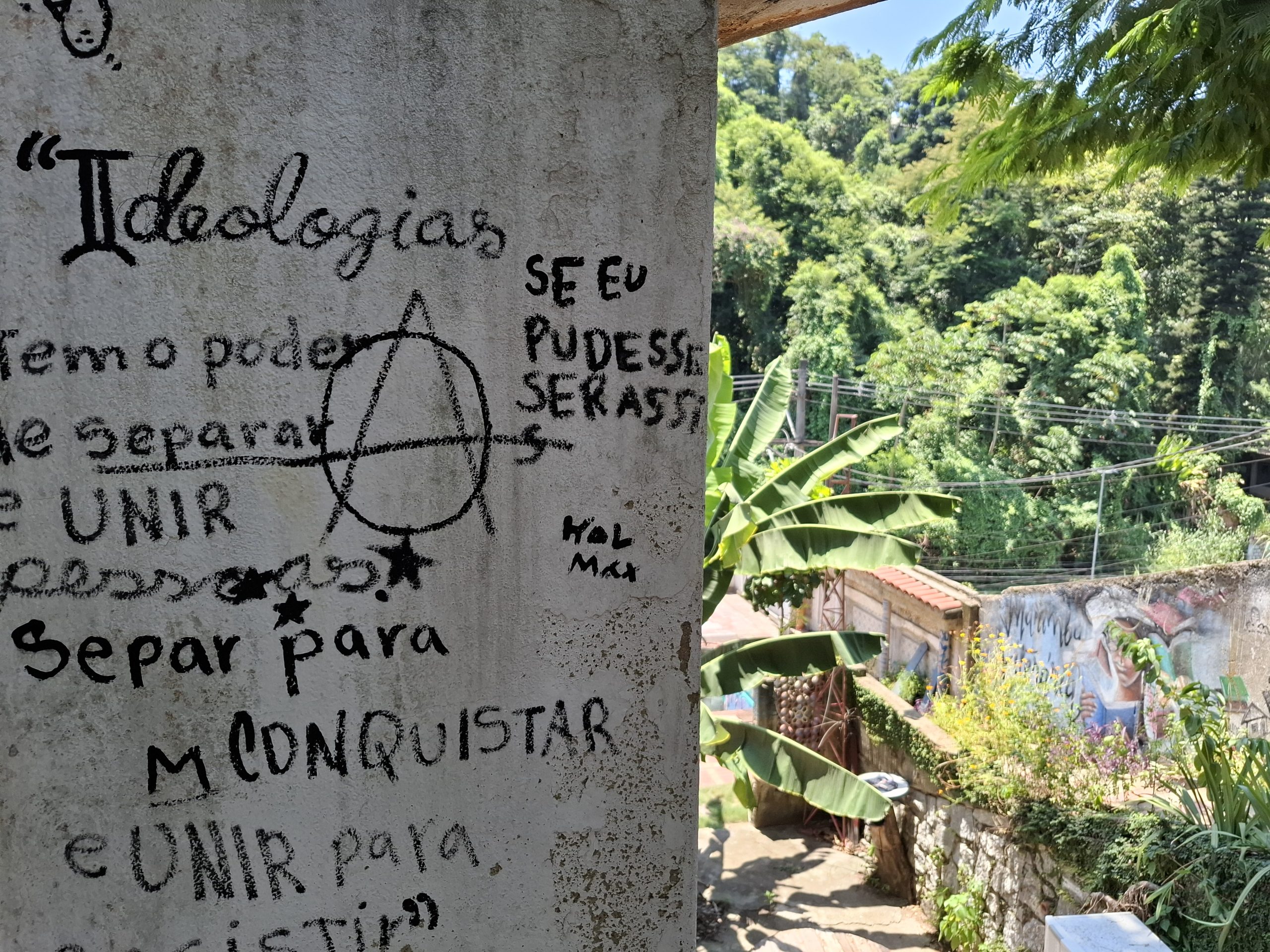
Along with friends and some neighborhood volunteers, an intensive cleaning of the Manor began. Alves and her family then moved from their former home on Rua 2 to Avenida Primavera, where the property was under restoration. Yet, much still needed to be done: there were no bathrooms, no water or electricity, and the roof needed repairing. They also faced threats from former occupants claiming what wasn’t theirs. On one occasion, Alves and her ex-husband called the police, who caught two suspects fleeing toward the upper part of the property. She was pregnant at the time.
That same year, Alves held the first events, still with minimal infrastructure. The news of the Manor’s resurgence needed to be swift and visible to local residents. Everyone had to understand that neglect was no longer a reality.
Once it was known that the abandoned Manor had been transformed into a cultural hub, an educator approached Alves and together they launched the extensive program that would be consolidated from that moment on. Since then, Mônica Coelho, who holds a master’s degree in education, is a member of the Group for Education, Research and Extension for the Initial and Ongoing Training of Educators of Children in Situations of Social Vulnerability (PIPAS) at the Fluminense Federal University (UFF), and is known as the Marginal Professor on social media, became Alves’ friend and partner, leading to a series of events. On the first week of December 2021 (with proper coronavirus safety measures), they hosted events related to rap and hip-hop culture, as well as the launch of Coelho’s book Journeys and Movements.
Ver essa foto no Instagram
“Even without proper infrastructure, it was wonderful to launch a book among my peers, with people from our everyday lives: children, youth, adults and elders. Duque de Caxias’ Culture Manor is the place of resistance of our existence—those marginalized by the system.” — Mônica Coelho
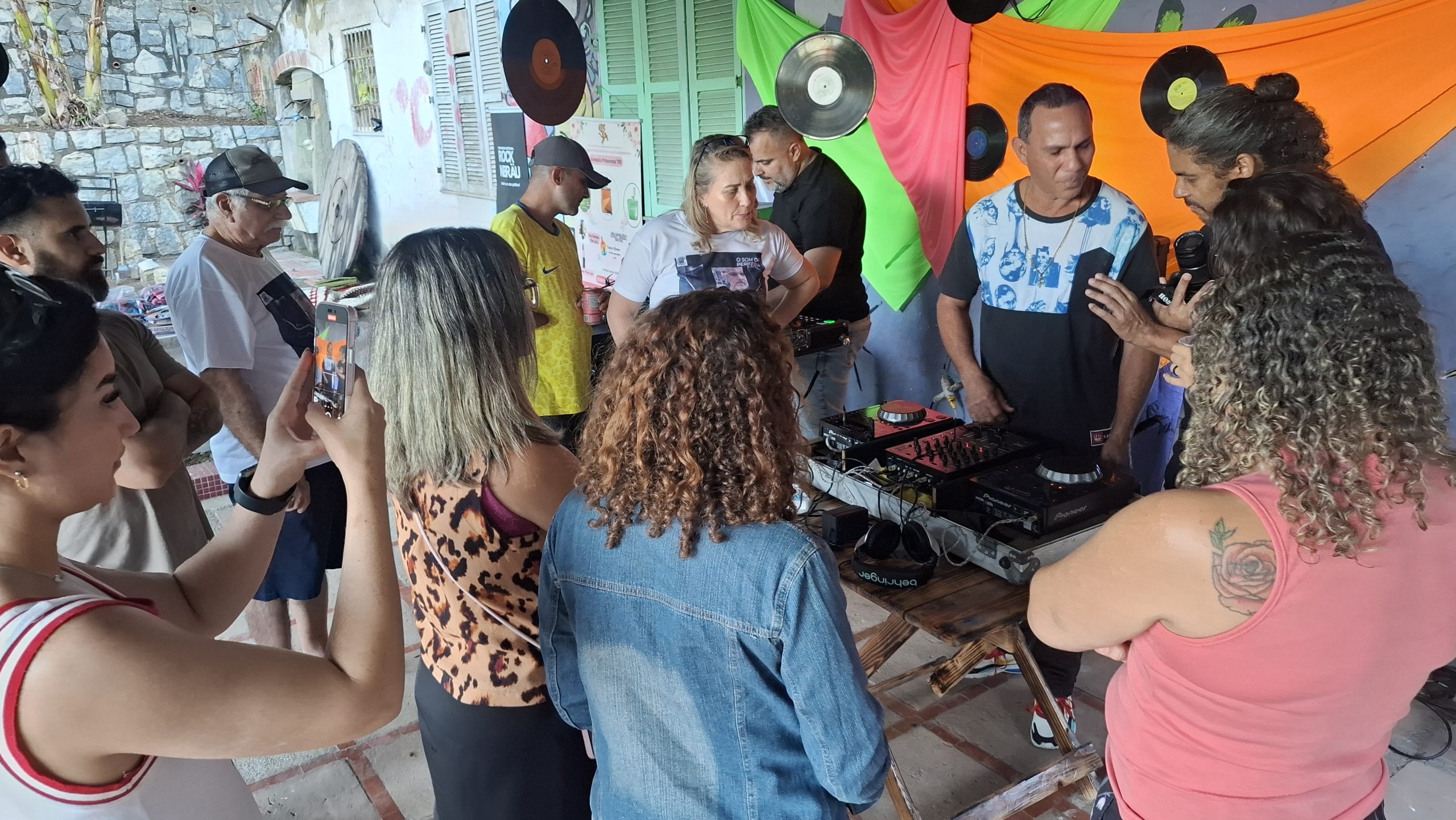
Another example of the Manor’s diverse programming took place on July 26, 2025 with a workshop and DJ battles. The event featured some of the most prominent names in Duque de Caxias’ culture scene, such as DJ Gustavo Mesquita, who explained the importance of initiatives like this one.
“This is great for promoting the art of DJs in the neighborhoods and bringing visibility to names from our city’s peripheries. But it’s a tough market for those just starting out, because everyone thinks that all you need to do is turn on the Bluetooth on a speaker and you have a DJ. We know how to read the crowd; we’re the ones who give life to parties and hangouts.” — Gustavo Mesquita
At Face Value, No One Sees the Hustle
Over four years, over R$20,000 (~US$3,800) were invested in repairs, maintenance and basic items for ensuring a dignified space, such as a refrigerator and water tank. This total does not include donations, long-term installment negotiations and the personal efforts of the family, friends and volunteers. In legal fees alone, to regularize the property title through adverse possession, over R$5,000 (~US$960) were invested. The Public Defenders’ Office has yet to issue the deed, although a construction technician, after learning the story of the Culture Manor’s reemergence, has been handling other bureaucratic aspects to formalize everything. The Steiner heirs responded naturally to the initiative, which seeks to legally recognize the Culture Manor’s new owners: the people of Jardim Primavera.
Despite the recognition, Alves wants the Culture Manor to become even more established in Duque de Caxias as a benchmark for local cultural production and promotion. She says she intends to leave the Culture Manor as a legacy for the people of Caxias.
“I don’t want the kids in the neighborhood to have to go to the Banco do Brasil Cultural Center (CCBB) in downtown Rio de Janeiro to consume and see art. They can go, but first they need to find out that there’s also art and culture in their city, in their own neighborhood. Then they can visit the CCBB.” — Dayse Alves
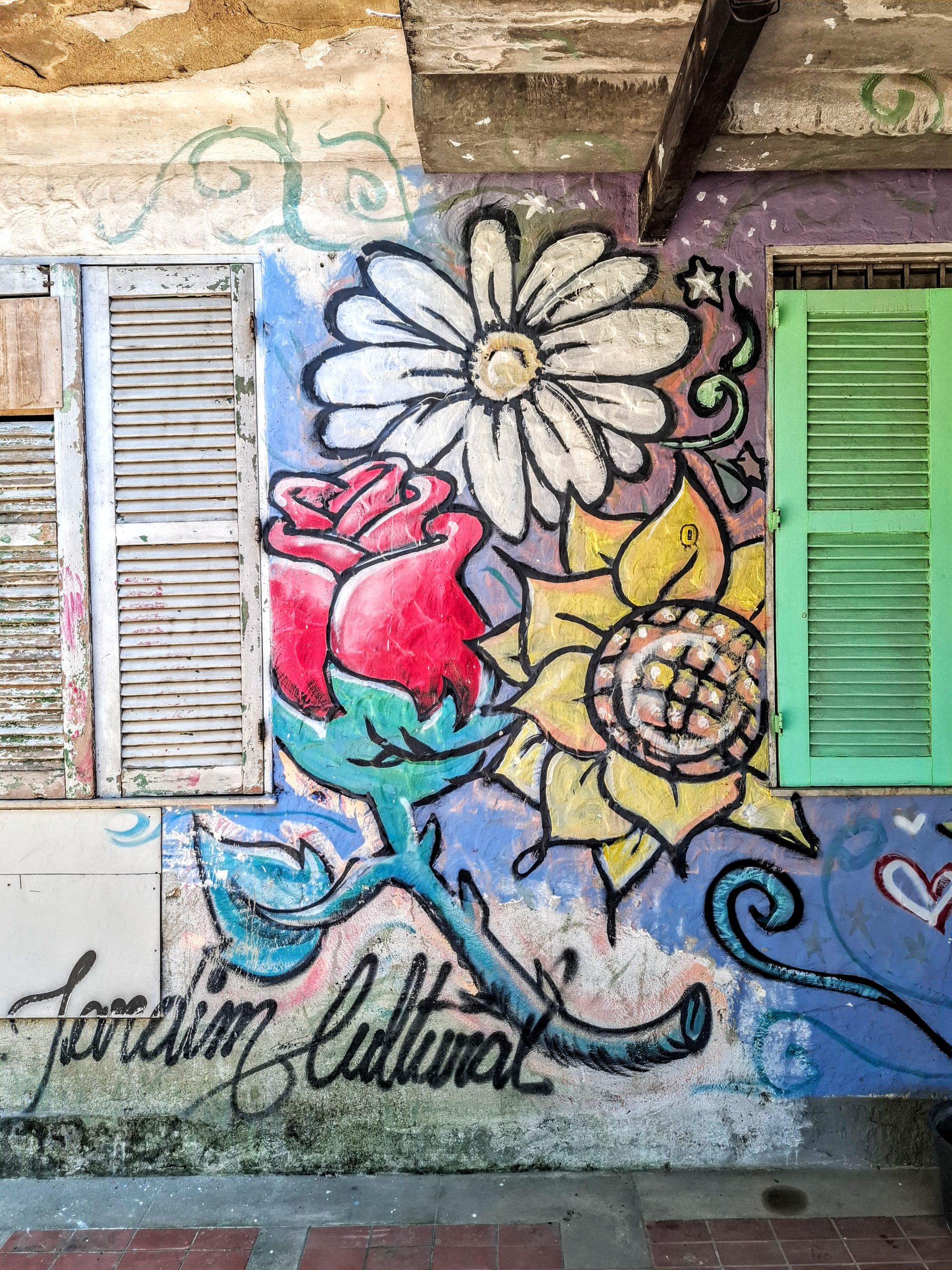
Participate and Support Duque de Caxias’s Culture Manor
Participate in regular activities, such as:
- Belly Dancing Classes: Tuesdays, Wednesdays, Thursdays. Morning 9-11am; afternoon 2-4pm; evening 7-9pm.
- Music Production Course: MSC Music Studio, Monday to Saturday, 10am-9pm.
The Duque de Caxias Culture Manor is looking for volunteers in construction, psychology, social work and social education. Donations are accepted in cash, furniture and food, as well as for cats, dogs and birds. Cleaning and hygiene products, office supplies, paint and construction materials are also welcome. Find out how you can help through the Culture Manor’s Instagram and Facebook channels, or reach out via WhatsApp +55 (21) 98126-5941.
To support the project financially, please donate via Pix to ASTV-SOLIDÁRIA e Cultural Produções (CNPJ): 24.558.493/0001-48.
About the author: Fabio Leon is a journalist, human rights activist, and media advisor with Fórum Grita Baixada.