
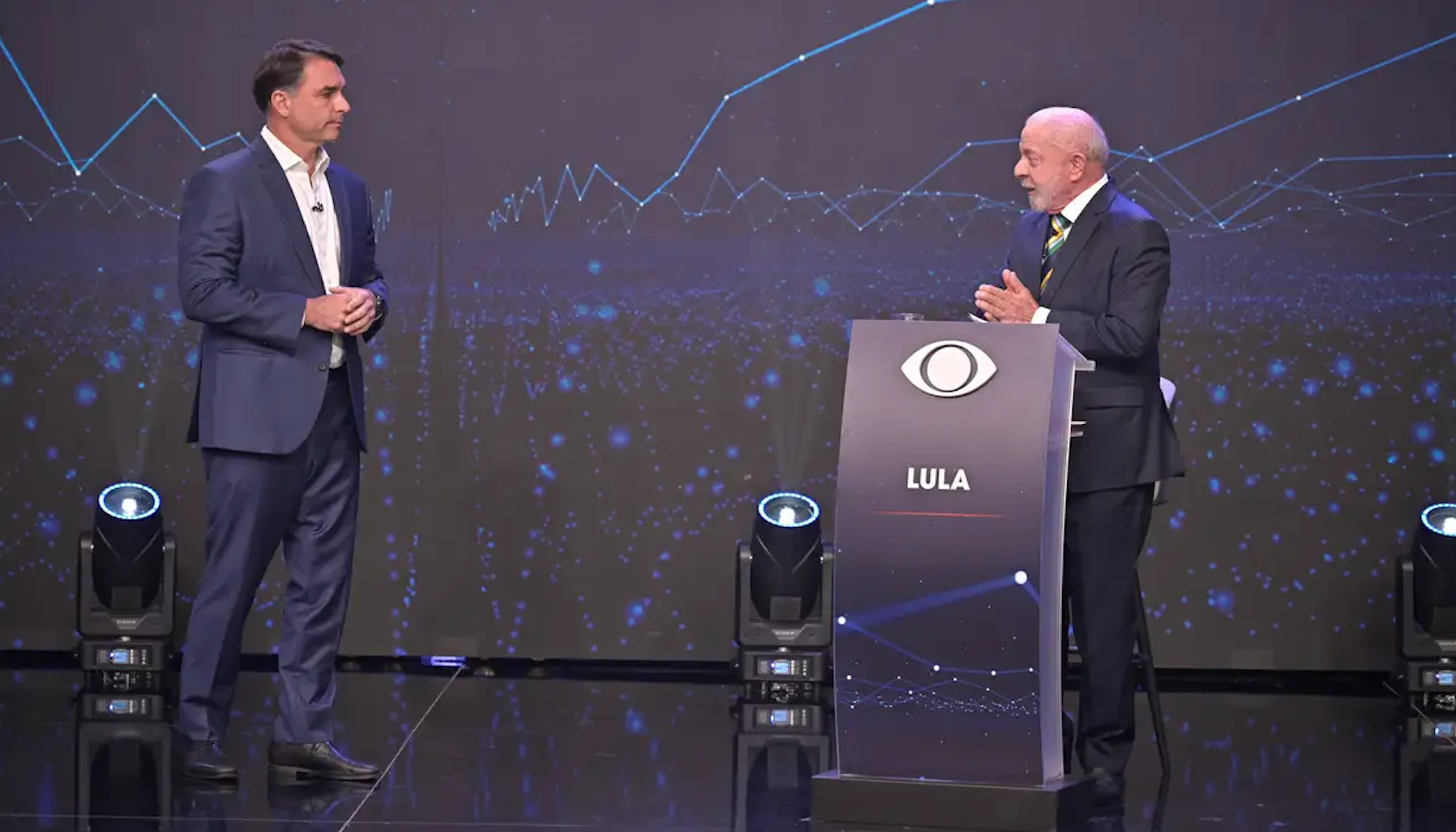

This article is part of a series on the 2026 Brazilian elections, focusing on the perspectives of Greater Rio’s favelas.
Flávio Bolsonaro mentioned favelas in the Bandeirantes TV political debate, but did not refer to these areas in his policy platform. Lula made two references to favelas and included favela upgrading and public security proposals in his platform.
A few days before Brazil’s 2026 presidential runoff election, scheduled for Sunday, October 25, RioOnWatchpresents an analysis of the government programs of Luiz Inácio Lula da Silva (Workers’ Party – PT) and Flávio Bolsonaro (Liberal Party – PL), filed with the Superior Electoral Court (TSE). The investigation mapped what the two presidential candidates propose for favelas and peripheral areas and how these areas feature among their stated priorities for public security, urbanization, housing and social rights.
Map of the Candidates’ Proposals
| Theme / Area | Luiz Inácio Lula da Silva (PT) | Flávio Bolsonaro (PL) |
|---|---|---|
| Favelas and Peripheries | Integrated favela upgrading and expansion of the Living Peripheries program. | Does not use either term in the platform; focuses on reclaiming areas controlled by criminal factions. |
| Public Security | Creation of a Ministry of Public Security, if the proposed constitutional amendment (PEC) is approved; intelligence and disrupting criminal financial flows. | Classification of criminal factions as narcoterrorist organizations, harsher sentences, lowering the age of criminal responsibility to 16 and 500,000 new prison beds. |
| Police Oversight | Encouraging the use of body cameras under a national standard and strengthening internal affairs divisions and external oversight. | No oversight mechanisms; legal backing for police and the killing of criminals armed with rifles. |
| Housing | Direct public subsidies through the My House, My Life program and use of federal government properties in central areas. | Revival of the Green and Yellow House program, a target of 2.5 million units and delivery of property deeds through private partnerships. |
| Sanitation | Federal funding via the New Growth Acceleration Program (Novo PAC), prioritizing peripheries (no set deadline). | Faster auctions to award service contracts to private companies (Legal Framework), a target for schools by 2030 and the Lixão Zero (Zero Landfills) program. |
| Labor | End of the 6×1 work schedule, a 40-hour week, rules for app-based work and a crackdown on pejotização (the bogus classification of workers as self-employed for the employer’s benefit). | Lower payroll charges, agreements between companies and workers that override the law and specific first-job contracts. |
| Education | Literacy at the appropriate age, expanded full-time schooling, connectivity in schools and expanded access to public education. | Daycare vouchers for families without a spot in the public system, peer tutoring, expansion of civic-military schools and transfer of federal universities to the Ministry of Science, Technology and Innovation. |
| Health | Expanding multidisciplinary teams, strengthening digital health, expanding access to dental care and vaccination and adding diagnostic tests to the Popular Pharmacy program. | Updating the SUS payment table (amounts paid to hospitals and clinics per service), expanding telehealth, integrating electronic medical records and making it easier to deliver medication to older people and people with disabilities or chronic illnesses. |
Analysis of the Candidates’ Platforms and the Bandeirantes TV Debate
The central question guiding our reporting was: what are the presidential candidates promising those who live in favelas? Finding the answer on paper took stamina. In the 76 pages of Flávio Bolsonaro’s program, Brazil’s favelas are not mentioned once. In the 84-page platform put forward by Lula, who is running for a final term, these communities appear twice: on page 28, in the chapter on public security, and on page 45, in a mention of Living Peripheries, a federal program that funds upgrading projects in favelas and peripheral areas.
The contrast, however, took on new contours on television. In the debate hosted by Bandeirantes TV on October 18, Flávio Bolsonaro made a point of mentioning favelas six times—five of them associating these areas with drug trafficking, guns, violence and the state reclaiming territorial control. On one occasion, he mentioned economic activity and entrepreneurship. In one of his remarks, he spoke directly to those living in these areas: “You who live in a favela dominated by drug trafficking, there are guns where you live, illegal guns, right? There are rifles there, right?” said the candidate.
In another statement, he promised to reclaim “every meter” and “every street.” Later, he described the favela as a “powerhouse,” linking the circulation of people and economic activity to the possibility of living free from drug trafficking. The candidate also presented a credit proposal for small entrepreneurs associated with privatizing the Caixa Econômica Federal federal housing bank, transforming it into a “Prosperity Bank,” that would work as “the Itaú of the favelas or the Bradesco of the peripheries,” a reference to two of the country’s largest private banks.
When it came to favelas, the debate on security did not take State violence into account—that is, the killings and abuses committed by public officials, especially police officers, during police operations.
Lula, on the other hand, did not utter the word “favela” during the debate, instead using the analogous term “community” on a few occasions. On public security, he said the goal was “for working people and the community, protection; for criminals, prison.” He argued that organized crime involves both those operating in working-class [favela] areas and those who live “upstairs” in gated communities, an expression he used to refer to the wealthy elite who often call the real shots from outside favelas but are rarely caught or killed by police. Defending the Proposed Constitutional Amendment (PEC) on Public Security, the president argued that the aim of joint federal and state action was to fight criminal factions and militias in order to “reclaim territories for communities.” Finally, also on public security, Lula used the term when describing the case of Ana Clara, a five-year-old girl killed by a stray bullet in Monan Pequeno, a “community in the Pendotiba neighborhood of Niterói,” whose killer was defended by Flávio Bolsonaro.
In Lula’s printed policy platform, beyond the two explicit mentions of favelas, the word “periphery” appears in various passages. The document links the upgrading of these areas to infrastructure, adequate housing, public facilities such as schools, daycare centers and health clinics, and essential services.
Comparing the debate with the programs filed with the TSE led to a second question: when the candidates talk about favelas, what do they see in these areas and what policies do they propose for those who live there?
Public Security and State Violence
Flávio Bolsonaro’s official program proposes classifying drug factions such as the First Capital Command (PCC) and the Red Command (CV), as well as militias, as narcoterrorist organizations; lowering the age of criminal responsibility—the age from which a person is tried as an adult—from 18 to 14; and building five maximum-security prisons inspired by El Salvador, where President Nayib Bukele has maintained a state of exception with mass arrests since 2019. The program also calls for 500,000 new prison beds over four years and states that “a criminal armed with a rifle in hand will be shot dead by security forces.”
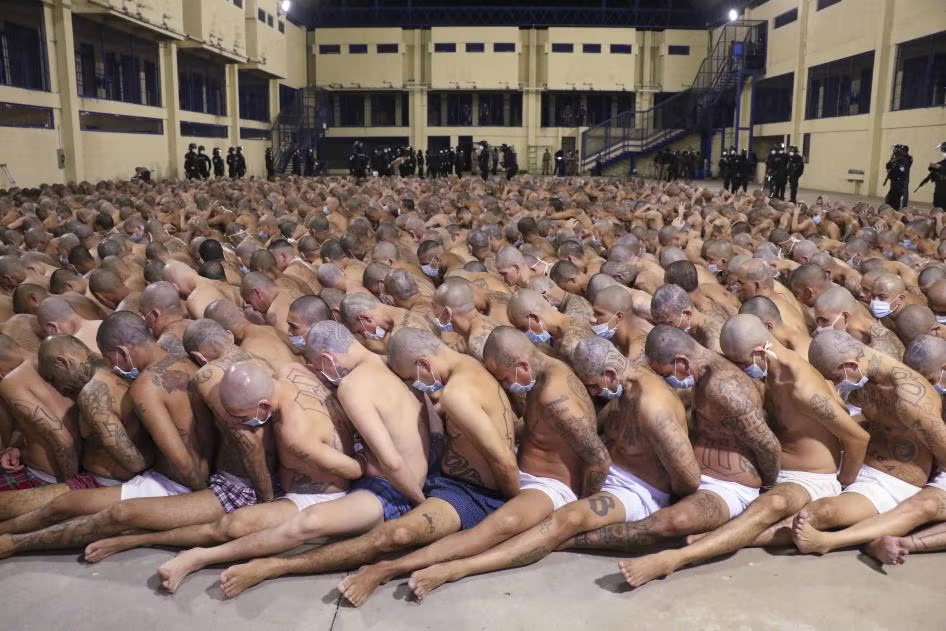
The platform also proposes reclaiming areas controlled by criminal factions, a term used in Rio to describe the police and military occupation of Complexo do Alemão in 2010. It also calls for reviewing the scope of Claims of Non-Compliance with a Fundamental Precept (ADPFs), legal actions filed with the Federal Supreme Court (STF) to protect constitutional rights. The program does not specify any, but the best known in Rio’s favelas is ADPF 635, the “ADPF of the Favelas,” through which the STF began imposing rules on police operations in 2020. In 2025, as senator, Flávio Bolsonaro promised to work toward ending it. The program makes no mention of measures to control police killings or use of body cameras.
Lula’s program focuses on cooperation between federal, state and municipal governments through the Unified Public Security System (SUSP), as well as investigating and blocking the financial resources of criminal factions and militias, with R$10 billion (~US$1.99 billion) from the National Social Infrastructure Investment Fund (FIIS) for states and municipalities. It promises to create a Ministry of Public Security if Congress approves the Proposed Constitutional Amendment (PEC) on Public Security, which expands the federal government’s role in the area.
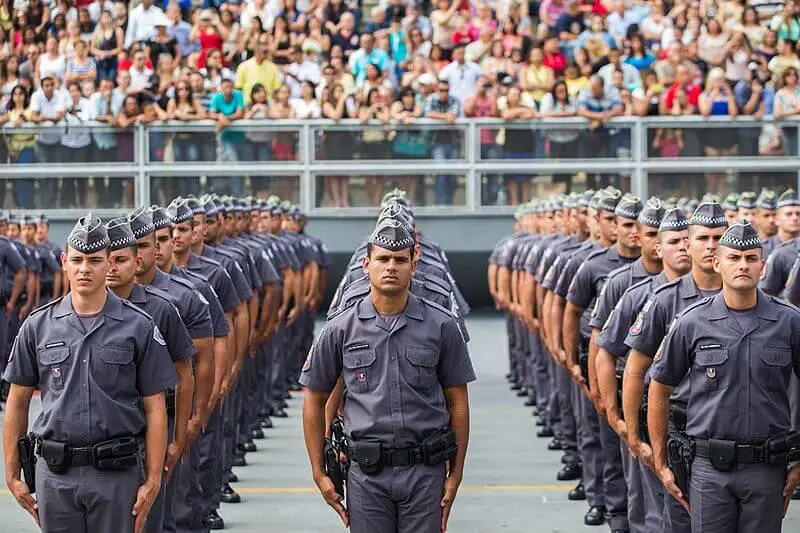
On policing, his platform proposes encouraging the use of body cameras under a national standard and strengthening internal and external oversight of the police—carried out by internal affairs divisions and the Public Prosecutor’s Office—without targets or deadlines for reducing deaths. Since the Military and Civil Police are under the authority of state governors, the federal government can only encourage changes through funding and general rules.
Housing and Land Regularization
Lula proposes expanding the My House My Life housing program so that, in the lowest income bracket, public funding covers almost the entire value of the home; allocating federal government land in central areas for housing; and continuing Living Peripheries, a program for favela upgrading, land regularization and the issuance of documents proving possession of the home. The program cites the resumption of 85 stalled or slow-moving projects.
Bolsonaro proposes reviving the Green and Yellow House program, created in 2020 under his father, Jair Bolsonaro’s administration to replace My House My Life, with a target of 2.5 million homes. He favors public-private partnerships (PPPs), in which companies carry out construction and are paid by the government over a number of years, and fast-tracked land regularization in neighborhoods and favelas that have existed informally for years.
Lula prioritizes integrated upgrading, in which a single public project brings housing, sanitation, streets and services to an area; Bolsonaro prioritizes property deeds and private partnerships.
Sanitation and Infrastructure in At-Risk Areas
Lula presents a tally of R$23.3 billion (~US$4.62 billion) in new water supply, sewerage and waste management projects since 2023 and promises to support states and municipalities through the New Growth Acceleration Program (Novo PAC) and the National Social Infrastructure Investment Fund (FIIS), prioritizing historically neglected peripheral areas, with no set deadline. Flávio Bolsonaro centers his proposals on the Sanitation Legal Framework—a 2020 law that set 2033 as the deadline for providing water to 99% of the population and sewerage to 90%—and service concessions to private companies, which take over the services for decades and charge fees. He promises “no school without water by 2030” and an end to open-air landfills. On slope stabilization, the two candidates’ proposals are similar.
Work, Income and Social Assistance
On labor, Lula’s program advocates ending the 6×1 schedule—working six days a week with only one day off—with a 40-hour week and no pay cut; the change was enacted by Congress on October 16, and the workweek will reach 40 hours within 14 months. It also proposes cracking down on “bogus pejotização”—classifying workers as independent contractors to deny them rights such as paid vacation and the 13th-month salary (a Brazilian worker’s right victory going back to 1962 that provides an extra month’s salary at the end of each fiscal year)—and creating rules and social security rights for app-based delivery workers and drivers.
Bolsonaro’s program prioritizes reducing payroll charges, creating first-job contracts for young people aged 18 to 24 and upholding the principle of “collective agreements taking precedence over legislation,” under which agreements between companies and workers can override the law. For app-based workers, he promises to preserve income without union mediation.
On social assistance, Lula seeks to strengthen the Bolsa Família social welfare wealth distribution program and the Unified Social Assistance System (SUAS). Flávio Bolsonaro promises to maintain these programs, with anti-fraud audits and a ban on using benefits for gambling, alongside sweeping spending cuts, without saying how these would affect the ability to afford maintaining social assistance.
What the Promises Cost
In Bolsonaro’s program, the target of 500,000 prison beds faces a major cost obstacle. In November 2025, the National Secretariat for Penal Policies (Senappen) estimated that R$14 billion (~US$2.78 billion) would be needed to eliminate the current deficit of around 200,000 beds—close to R$70,000 (~US$13,894) per bed for construction alone. By the same calculation, half a million beds would cost around R$35 billion (~US$6.95 billion), not counting operating costs for staff, food and maintenance, and would require adding over 340 beds per day for four years, while his program, in general, promises to cut spending and shrink the State.
Lula’s program depends on funding from the National Social Infrastructure Investment Fund (FIIS) and the New Growth Acceleration Program, the federal government’s public works program. This funding falls under the fiscal framework, a rule that has limited growth in federal spending to 70% of revenue growth since 2023. Favela upgrading and sanitation projects, in turn, are carried out by municipal and state governments. Neither candidate’s program details where the money will come from or how federal, state and municipal governments will divide the work.
What the Programs Leave Open
Regarding health, only Lula’s program gives explicit attention to “areas of greater social vulnerability.” Neither program details funding, timelines or verifiable targets. The runoff takes place on Sunday, October 25, and both programs can be read in full on the TSE’s candidate disclosure system.
About the author: Tatiana Lima is a journalist, popular communicator, editor and human rights communications advisor. She holds a PhD in Communication and a master’s degree in Media and Everyday Life, both from the Fluminense Federal University (UFF). A grassroots network organizer, she represents Território Mídias Brasil in Rio de Janeiro and contributes to Núcleo Piratininga de Comunicação. A Black feminist born and raised in Favela do Quitungo and Morro do Tuiuti, Lima currently lives in Rio’s urban periphery.