
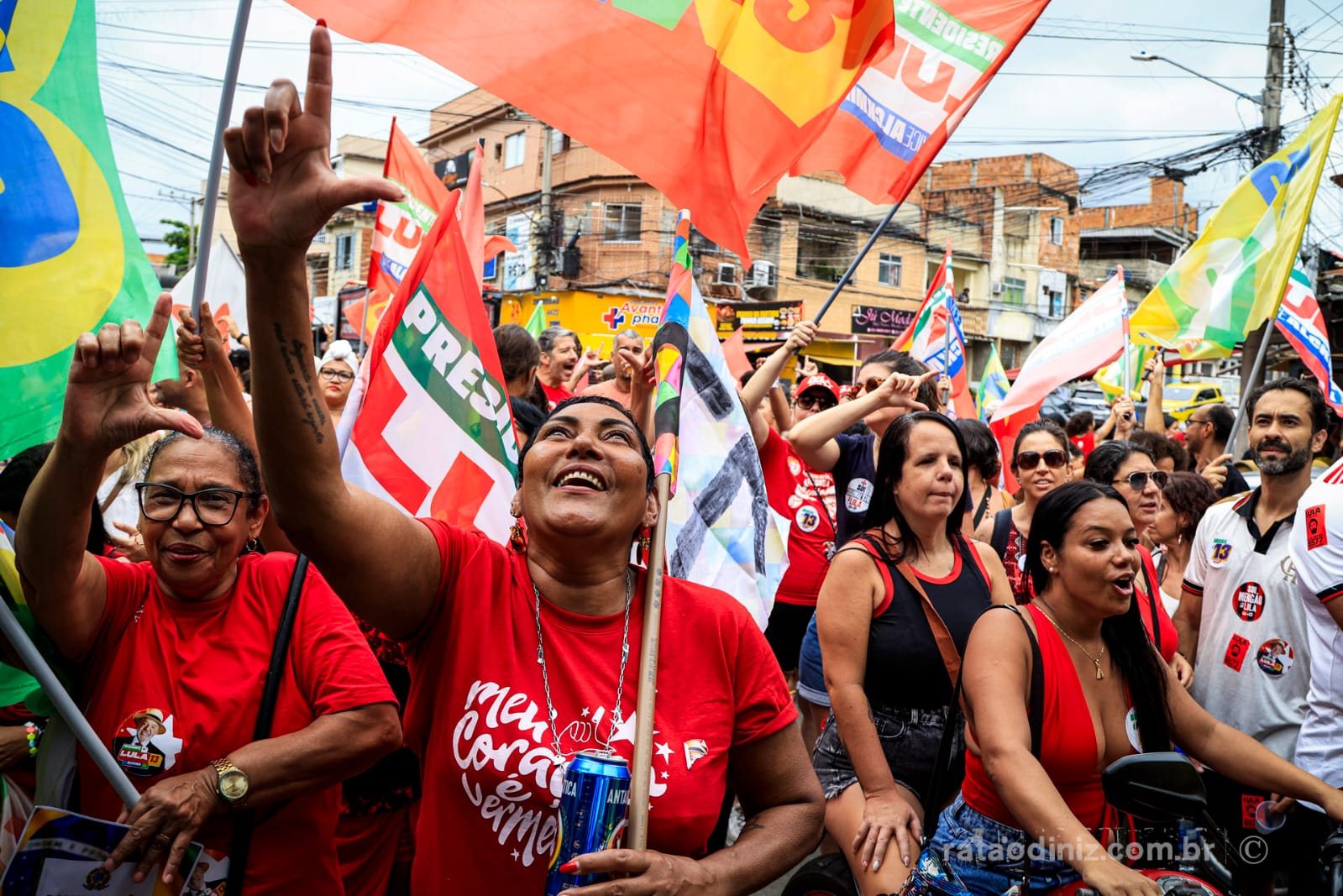

This article is part of a series on the 2026 Brazilian elections, focusing on the perspectives of Greater Rio’s favelas. It is also part of RioOnWatch’s ongoing #VoicesFromSocialMedia series, which compiles perspectives posted on social media by favela residents and activists about events and societal themes that arise.
After neither Lula nor Flávio Bolsonaro won an outright majority in the first round of voting in Brazil’s 2026 presidential elections on October 5, with the candidates receiving 45.16% and 47.03% of the vote, respectively, student movements, artists and collectives from favelas and outlying areas took action, leading numerous mass pro-democracy demonstrations.
That is because, unlike other elections, this year’s race is much more than a mere political disagreement: at stake is the defense of important advances and rights won by the Brazilian people since the return to democracy forty years ago, including a potential rollback of the nation’s Constitution itself, which has guaranteed fundamental human rights since 1988.
Movements across the state of Rio de Janeiro are no different, engaging diverse areas across the municipality of Rio and far beyond in a series of actions aimed at getting out the vote, defending democracy and informing voters. These movements have events scheduled through October 24, the eve of second round voting (the presidential runoff will be on Sunday October 25), a date that, as never before, will be decisive for the future of the country and the world.
At the time of this publication, RioOnWatch has identified the following actions, including plenaries, leafleting campaigns, marches, samba circles, capoeira and jongo, among many others, taking place in the city’s favelas, inner and outlying neighborhoods and diverse municipalities across the state of Rio. These data were compiled from events held starting on October 7 (two days after the first round vote) and organized by committees, collectives, social groups, universities and independent movements, as posted in WhatsApp groups and other social media.
In total, over 300 events were identified, from massive rallies to neighborhood get-out-the-vote actions. Scroll down this page, click on the videos, and get a feeling for this energy!
Largest Actions Led by Students and Artists
The first major demonstrations to mobilize the city of Rio de Janeiro were organized by students.
Thousands of students demonstrated at the State University of Rio de Janeiro (UERJ) on October 7.
Ver esse post no Instagram
UERJ hosted a plenary session on October 13. The Federal University of the State of Rio de Janeiro (UniRio) also declared support for the students.
Ver esse post no Instagram
The large rally held in Copacabana, in the city’s South Zone, on October 12, the Our Lady of Aparecida holiday, filled Avenida Atlântica, stretching for seven city blocks.
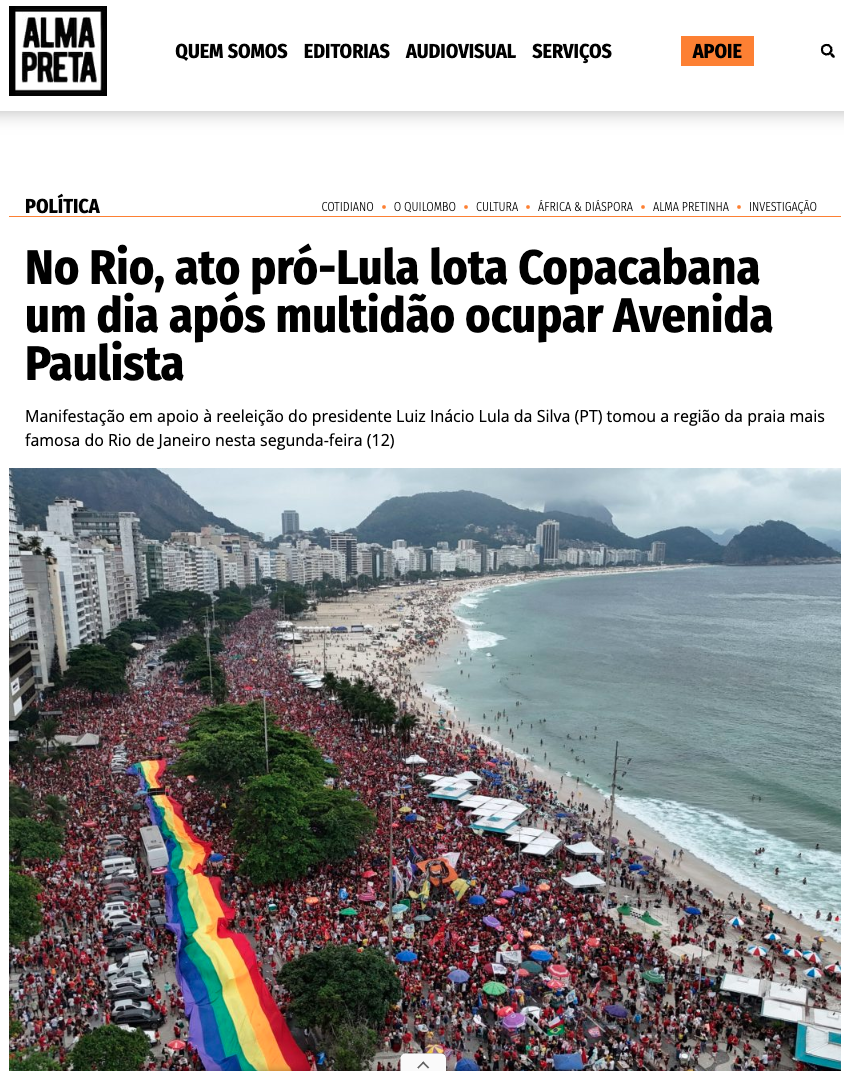
On the same day, another massive event took place in the Lapa neighborhood, in downtown Rio, organized by samba groups and bringing together a flood of artistic and cultural expressions rooted in popular culture, such as samba schools and samba bands, percussion groups, Afro dance troupes, street parades, and various social movements.
Ver esse post no Instagram
On October 18, the “Musical Rally for Democracy,” also held on Copacabana Beach and led by foundational Brazilian musical icon Caetano Veloso and numerous other artists, drew 56,000 people.
But the demonstrations covered by mainstream media are just a few of the hundreds of events that have marked recent weeks.
North Zone Favelas Brought Together Political Figures and Artists
Starting in the North Zone, the Inhaúma neighborhood hosted one of the first events, held on October 7, calling on residents of the favelas and the Baixada Fluminense to march together.
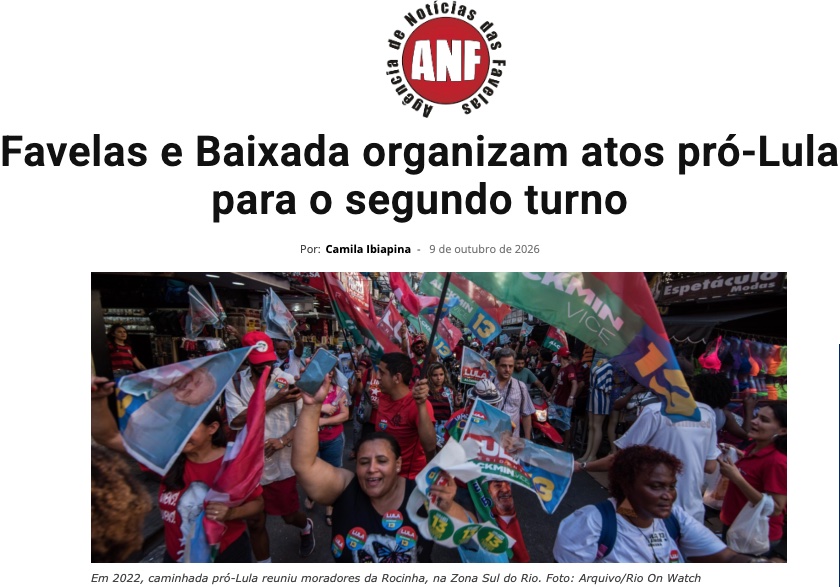
At the Acari Residents’ Association in the Acari favela, a plenary brought together 100 people.
Ver esse post no Instagram
Two events were held in the Maré favela complex. One took place on October 10 and featured a march through the Nova Holanda market, attended by political figures such as Mônica Benicio, Benedita da Silva, Renata Souza and Jandira Feghali, as well as artists such as Leandra Leal and Juliana Alves.
Ver esse post no Instagram
Another was held on October 13, with activities that took place on the streets at four locations throughout the community: Nova Holanda, Passarela 7, Vila do João, Rubens Vaz and Praça do Parque União.
Ver esse post no Instagram
Minister of Culture Margareth Menezes visited the favelas of Mangueira, Maré and Nova Brasília in Complexo do Alemão on October 10, to encourage residents to vote and reduce the abstention rate in these areas.
Ver esse post no Instagram
In Complexo do Lins, a march was attended by residents and Landless Workers’ Movement (MST) city councilwoman Maíra Marinho.
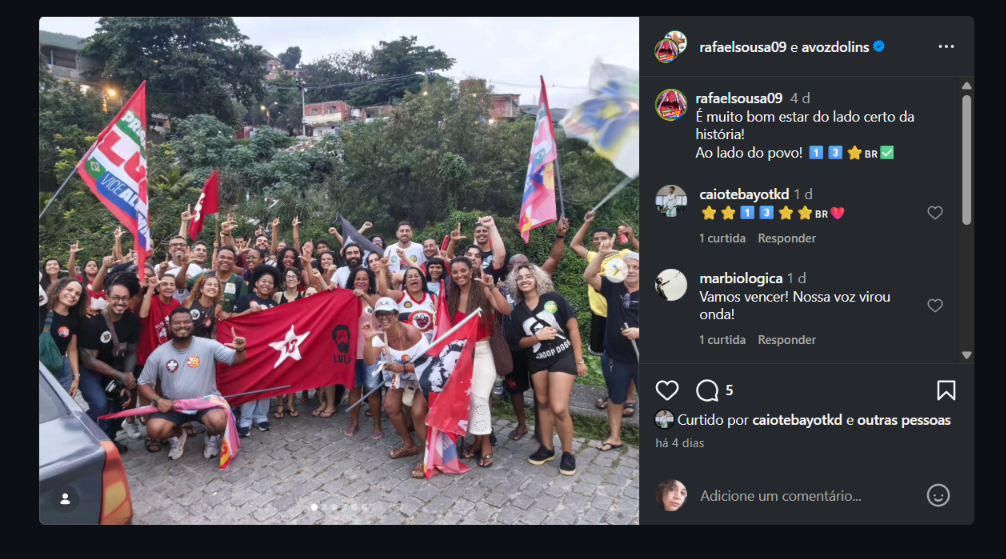
In Penha, collectives organized a jongo circle in support of democracy.
Ver esse post no Instagram
Residents of Complexo do Alemão also took to the streets on October 19.
Favelas in the South Zone Organized Mass Flag-Waving and T-Shirt-Distribution Events in the Streets
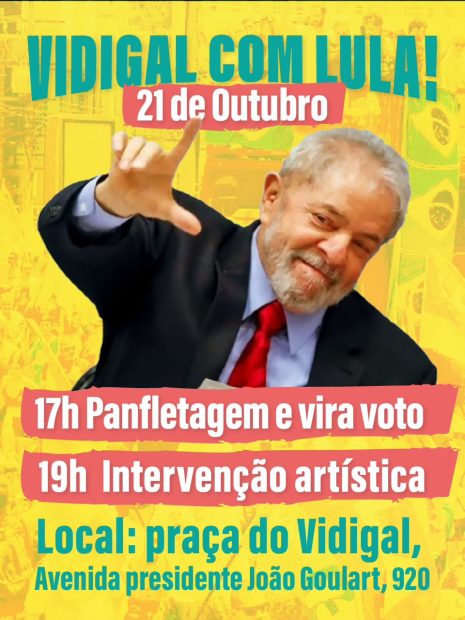
On October 9, residents of the Vidigal favela held two events featuring t-shirt and leaflet distribution, a lively mobilization that drew numerous residents.
In Rocinha, residents handed out flyers at the entrance to the community’s subway station.
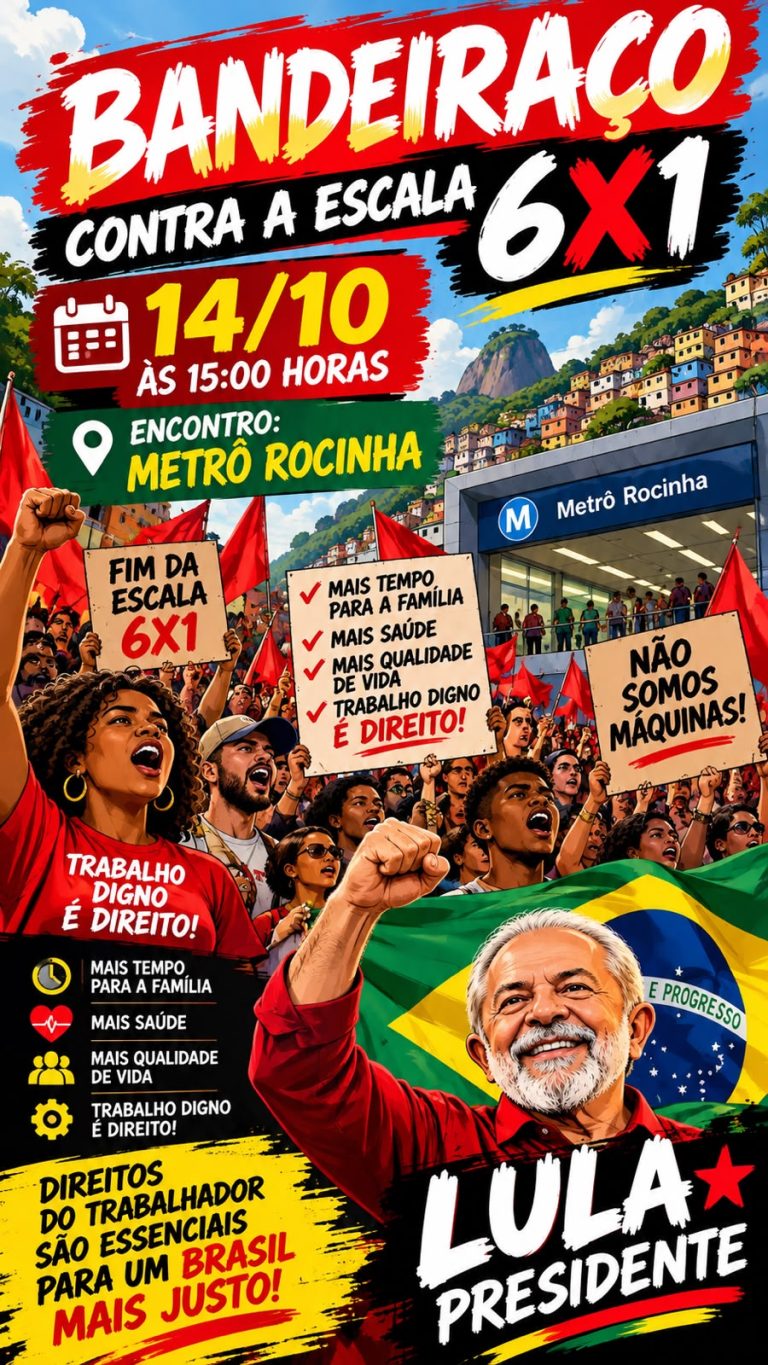
In the Horto Community, in Jardim Botânico, residents occupied the street of the same name.
Ver esse post no Instagram
In the Santa Marta favela, community groups rallied support.
Despite Its Reputation as a Militia Stronghold, the West Zone Turns Out in Force
Favelas and neighborhoods in the West Zone demonstrated their strength and drew on their creativity.
Campo Grande, Brazil’s most populous neighborhood, hosted a massive rally in the West Zone. It’s worth noting that this region was among those that voted most heavily for Flávio Bolsonaro in the first round. An activist was assaulted during the rally.
Ver esse post no Instagram
In City of God, t-shirts were printed and a fair was held.
Ver esse post no Instagram
In Recreio dos Bandeirantes, participants walked along the neighborhood’s beachfront.
Ver esse post no Instagram
In Santa Cruz, the event turned into a big party.
Ver esse post no Instagram
Greater Rio’s Baixada Fluminense Takes to the Streets
In outlying areas of the Baixada Fluminense, the movement has also gained strength. The Muda BXD collective called for demonstrations in Belford Roxo and São João de Meriti.
Ver esse post no Instagram
Protesters filled the streets of Nova Iguaçu, forming a “sea of people.”
Ver esse post no Instagram
There was also a march in Duque de Caxias, with protesters demonstrating in support of workers.
Ver esse post no Instagram
The Areia Branca neighborhood in Belford Roxo welcomed many.
Ver esse post no Instagram
Queimados also rallied against fascism, featuring speeches by local residents.
Ver esse post no Instagram
A gamut of demonstrations were held in other neighborhoods across the Baixada Fluminense.
Ver esse post no Instagram
The Costa Verde, Eastern and Southern Regions of Rio de Janeiro State Also Took Action
In São Gonçalo, across Guanabara Bay in the Leste Fluminense region, diverse protesters gathered to encourage voters to reconsider their votes in the lead-up to round two.
Ver esse post no Instagram
In Niterói, Complexo do Viradouro also organized actions in the community.
Ver esse post no Instagram
Residents sent a message: workers vote for workers.
Ver esse post no Instagram
In Itaboraí, protesters raised flags and voices on October 11.
Ver esse post no Instagram
Volta Redonda brought together students, supporters and residents in Vila Santa Cecília.
Ver esse post no Instagram
In Saquarema, protesters marched along the main streets of the Bacaxá neighborhood.
Ver esse post no Instagram
Over 78 areas in the state of Rio held or will hold events, many locations holding a variety of activities during the period between the first and second rounds of voting. These, include, in the city of Rio de Janeiro: Acari, Alcântara, Bangu, Bento Ribeiro, Bonsucesso, Botafogo, Cachambi, Campo Grande, Cascadura, Catete, City of God, Cidade Universitária, Cocotá, Complexo da Maré, Complexo do Alemão, Complexo do Lins, Copacabana, Flamengo, Honório Gurgel, Horto, Grajaú, Ilha do Governador, Inhaúma, Irajá, Lapa, Laranjeiras, Leme, Madureira, Mangueira, Manguinhos, Maracanã, Méier, Morro da Coroa, Morro dos Macacos, Olaria, Pavuna, Pedra de Guaratiba, Penha, Praça Seca, Realengo, Recreio dos Bandeirantes, Rio Comprido, Rocinha, Santa Cruz, Santa Marta, Santa Teresa, Sepetiba, Taquara, Tijuca, Urca, Vila Isabel and Vidigal. In the Baixada Fluminense: Duque de Caxias, Edson Passos (Mesquita), Itaguaí, Juscelino (Mesquita), Nilópolis, Queimados, Santa Eugênia (Nova Iguaçu), São Bernardo (Belford Roxo), UFRRJ (Seropédica), Vila Esperança (Magé). In the Leste Fluminense region: Barreto, Cachoeiras do Macacu, Centro (Maricá), Centro (Niterói), Fonseca, Icaraí, Inoã (Maricá), Itaipuaçu (Maricá), Mutondo (São Gonçalo), Nova Cidade (Itaboraí), Ponta do Francês (Maricá), São Domingos and Venda das Pedras (Itaboraí). In the northern part of the state of Rio: Aroeira (Macaé), Centro (Macaé), Custodópolis (Campos dos Goytacazes), and Parque Aeroporto (Macaé). In the northwest part of the state: Bom Jesus de Itabapoana. In the southern part of the state: Aterrado, Barra Mansa, Belmonte, Freiras Soares (Porto Real), Jardim Jalisco (Resende), Nossa Senhora das Graças (Volta Redonda), Parque Maíra (Pinheiral), and Vila Santa Cecília (Volta Redonda). In the Lakes Region of the state: Araruama, Armação de Búzios, Bacaxá (Saquarema), Estação (Iguaba Grande), Jardim Esperança (Cabo Frio), Rio das Ostras and São Pedro da Aldeia. In the state’s center-south region: Vassouras. In the state’s mountainous region: Cantagalo, Nova Friburgo, Passos dos Reis and Várzea (Teresópolis).
Check Out the List of Events Yet-to-Come
October 21, 2026
ANGRA DOS REIS
- 7pm — Samba for Democracy
Event type: Samba circle and musical event
Location: Praça Zumbi dos Palmares, known as Praça do Mercado, Centro
NITERÓI
- 6pm — Reggae with Lula
Event type: Culture and resistance
Location: Praça da Cantareira, São Domingos
RIO DE JANEIRO
- With Lula to Win Over Voters!
7:30am — In front of Manguinhos Station
9:30am — Praça das Nações, Bonsucesso
11:30am — Penha, in front of Parque Shangai - 9:30am — Embroidery and Flowers for Lula
Event type: Collective embroidery circle (BordAção) - 10am — T-Shirt Printing to Win Over Voters
Event type: Rally and T-shirt printing
Location: Praça da Matriz, São João de Meriti - 5pm — Leafleting and Night Flight in Botafogo
Event type: Leafleting and information stand
Location: Botafogo Metro Station - 5pm — Collective Cultural and Artistic Movement — Centro
Event type: Leafleting, information stand, discussion circle and MC battle
Location: Praça Procópio Ferreira - 6pm — Popular Culture with Lula
Event type: Cultural event featuring maracatu, coco, jongo, folia de reis and carimbó
Location: Praça Maracanã
SÃO GONÇALO
-
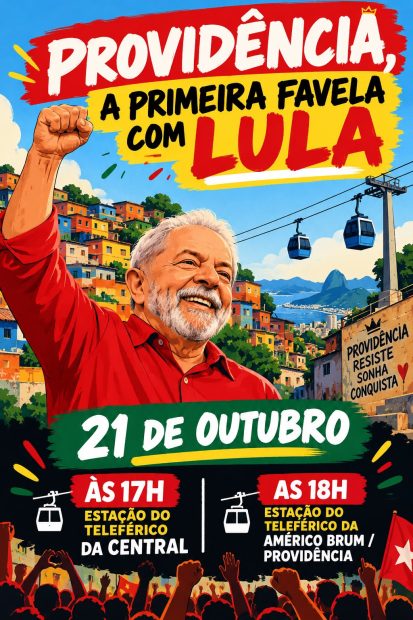
Rally in Morro da Providência. Photo: Social Media 5pm — São Gonçalo Social Movements’ Manifesto March
Event type: March
Location: Prédio do Relógio, Alcântara
SÃO PEDRO DA ALDEIA
- 5pm — March to Turn the Vote Around — São Pedro da Aldeia
Event type: March
Location: Praça do Canhão
October 22, 2026
ARMAÇÃO DOS BÚZIOS
- 4:30pm — Free Voices March in Favor of Democracy
Event type: March
Route: From Praça Santos Dumont to Praça da Ferradura
ARRAIAL DO CABO
- 6pm — Rally to Win Over Voters — Arraial do Cabo with Lula
Event type: March and flag-waving
Location: IFRJ, Prainha
RIO DE JANEIRO
- 4pm — Leafleting at Central do Brasil with Tatiana Roque and Tatiana Sampaio
Event type: Leafleting
Location: Central do Brasil, Centro - 5pm — PUC for Democracy — In Defense of Science, Freedom and the Common Good
Event type: Rally and debate
Location: PUC-Rio - 5:30pm — Guaratiba March with Lula
Event type: March
Location: In front of CIEP Heitor dos Prazeres, Pedra de Guaratiba - 7pm — Artists with Lula
Event type: Cultural space with an open mic for artists
Location: Travessa do Comércio, 16, Arco do Teles, Praça XV, Centro
October 23, 2026
RIO DE JANEIRO
 5pm — Mangueira with Lula
Event type: Rally
Location: Quadra da Candelária- 5pm — Rocinha and Youth with Lula
Event type: Leafleting and dialogue with residents
Location: Exit A of Rocinha Metro Station - 5pm — Guadalupe with Lula — Together for Guadalupe, for a Fairer and Happier Brazil
Event type: March, leafleting, sticker distribution and peaceful rally
Meeting point: Guadalupe Shopping — Estrada do Camboatá, 2300, Guadalupe - 5pm — Sepetiba Turns the Vote Around
Event type: Rally in support of Lula’s reelection
Location: Iemanjá statue, Praia do Recôncavo, Estrada São Tarcísio
October 24, 2026
PINHEIRAL
- 5pm — Motorcade
Event type: Motorcade
Meeting point: Parque Fluvial, Parque Maíra, Pinheiral
RIO DE JANEIRO
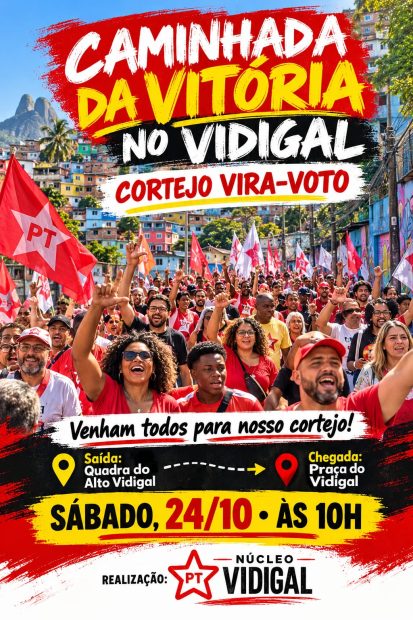
- 10am — 1st Vidigal March
Event type: March
Route: From Quadra do Alto Vidigal to Praça do Vidigal - 10am — Major #BoraVirar Lula March in Copacabana on Election Eve
Event type: March with Lula on Copacabana Beach
Location: Posto 5, Copacabana - 12:13pm — Motorcade to Win Over Voters
Event type: Motorcade
Location: Praça Júlio de Noronha, Leme - 2pm — Democratic Cultural Marathon
Event type: Cultural event featuring a fair, discussion circles, jongo, samba circle and other attractions
Location: Viaduto de Madureira - 2pm — Rocinha with Lula
Event type: March along Estrada da Gávea
Meeting point: Estrada da Gávea, 250, Rocinha - 3pm — 2nd Rocinha March
Event type: March
Route: From CMS Albert Sabin (Rua 1) to Largo da Macumba
About the author: Amanda Baroni Lopes is a journalism student at Unicarioca and was part of the first Journalism Laboratory organized by Maré’s community newspaper Maré de Notícias. She is the author of the Anti-Harassment Guide on Breaking, a handbook that explains what is and isn’t harassment to the Hip Hop audience and provides guidance on what to do in these situations. Lopes is from Morro do Timbau and currently lives in Vila do João, both favelas within the larger Maré favela complex.