


This article is part of a series on the 2026 Brazilian elections, focusing on the perspectives of Greater Rio’s favelas.
In the state of Rio de Janeiro, public security gains prominence with each election. From the lack of a sense of safety on the streets to aggressive crime-fighting measures, following decades of failed proposals to toughen law enforcement and combat crime, the issue takes center stage on the agendas of candidates running for federal and state deputy in both Brazil’s National Congress and the Rio de Janeiro State Legislative Assembly (Alerj), respectively. It is equally prominent in the platforms of candidates running for the Senate, governor and president.
To provide a broad overview of the various aspects of violence affecting Greater Rio, in addition to possible solutions, RioOnWatch presents the perspectives of five public security experts on what needs to be done and what must never be repeated.
The Political Economy of Violence
Sociologist Nalayne Pinto, a member of the Observatório Fluminense research group and professor at the Federal Rural University of Rio de Janeiro (UFRRJ), studies the activities of criminal groups in Greater Rio’s Baixada Fluminense region. She emphasizes that, for three decades, the area has witnessed the involvement of public officials in illegal activities. This involvement helps elect politicians at all levels of government. Pinto explains that “those who provide protection for these public officials are police officers hired illegally while off duty.”
According to Pinto, the growing strength and, at times, alliances between drug trafficking factions, militias, Civil and Military Police officers and military firefighters have professionalized the organization and execution of crime and violence. Given the expansionist nature of these criminal groups, more communities find themselves under siege and new markets emerge for exploitation.
“There is an economic interest at stake. All [these groups] want to profit from selling legal and illegal goods, bribes, providing ‘protection’ [extortion] to businesses, in general. All of this serves the interests of many people, including major local merchants and business owners.” — Nalayne Pinto
The professor explains what possible solutions might look like:
“I emphasize the need for research and evidence-based planning to identify the most serious forms of violence, such as homicide, intentional homicide, disappearances, forced disappearances, femicide, domestic violence, robbery, theft, etc. We need a public policy for each type of violence. The next step is to ensure the effective participation of the education, sports, culture, leisure, health and social assistance secretariats—all government departments. Whether municipal or state-level, they need to work together in these territories.”
Conquer and Never Divide
Carolina Grillo is the coordinator of the Fluminense Federal University’s Study Group on New Illegalities (GENI/UFF) and an associate researcher at the Federal University of Rio de Janeiro’s Center for the Study of Citizenship, Conflict and Urban Violence (NECVU/UFRJ). The group recently produced maps revealing a relentless pattern of territorial expansion and reconfiguration by armed groups in the state of Rio de Janeiro.
The researcher identifies two different ways in which armed groups expand: conquest and colonization. Colonization occurs when a group moves into territories that were previously not under the control of any armed group. Conquest occurs when an armed group takes over territory previously controlled by a rival group.
“Colonization has been the main form of expansion for armed groups, particularly militias. But even Comando Vermelho [the Red Command, Rio’s largest criminal faction, commonly known as CV], the group most associated with conquest, has also relied primarily on colonization to expand throughout the period studied. This is because these groups expand precisely by occupying and establishing a presence in territories that were previously not under the control of any armed group.” — Carolina Grillo
Grillo notes that what she calls a colonization process is particularly significant in parts of the city of Rio de Janeiro, such as neighborhoods in the West Zone and Southwest Zone, but also in other areas of Greater Rio, including São Gonçalo and Itaboraí, across Guanabara Bay in the Leste Fluminense region, as well as several municipalities in the Baixada Fluminense. According to the researcher:
“We’ve got organized crime using coercion to establish monopolies, control and extort businesses selling goods and services related to urban infrastructure. In other words, people living in areas controlled by these groups often end up paying more for a cylinder of cooking gas, even though its price is regulated. There are regulatory agencies, such as the National Petroleum Agency (ANP), responsible for managing and overseeing these markets, as well as other State institutions. These are not necessarily public security agencies, but they are failing to regulate these markets because they depend on operational support from police forces. Investigative and intelligence work are needed to identify individuals within State institutions who are allied with these [criminal] organizations. Efforts must also be made to seize assets and capital, trace financial flows and investigate money laundering, because these organizations, which extort the poorest residents and provide low-quality services at high prices, move enormous sums of money. And this money isn’t hidden under mattresses; it circulates through the financial system.”

Data Suppression: A Serious Problem in Public Security
Pablo Nunes is a researcher specializing in public security, technology and open data, as well as policing models and crime statistics analysis, and coordinator of the Network of Security Observatories. One of his major concerns is the widespread suppression and manipulation of official data on violence, including the underreporting of homicides and the distortion of statistics on armed confrontations. One example is Rio de Janeiro, which, like other states, does not systematically release data on police operations, despite their central role in current public security policy.
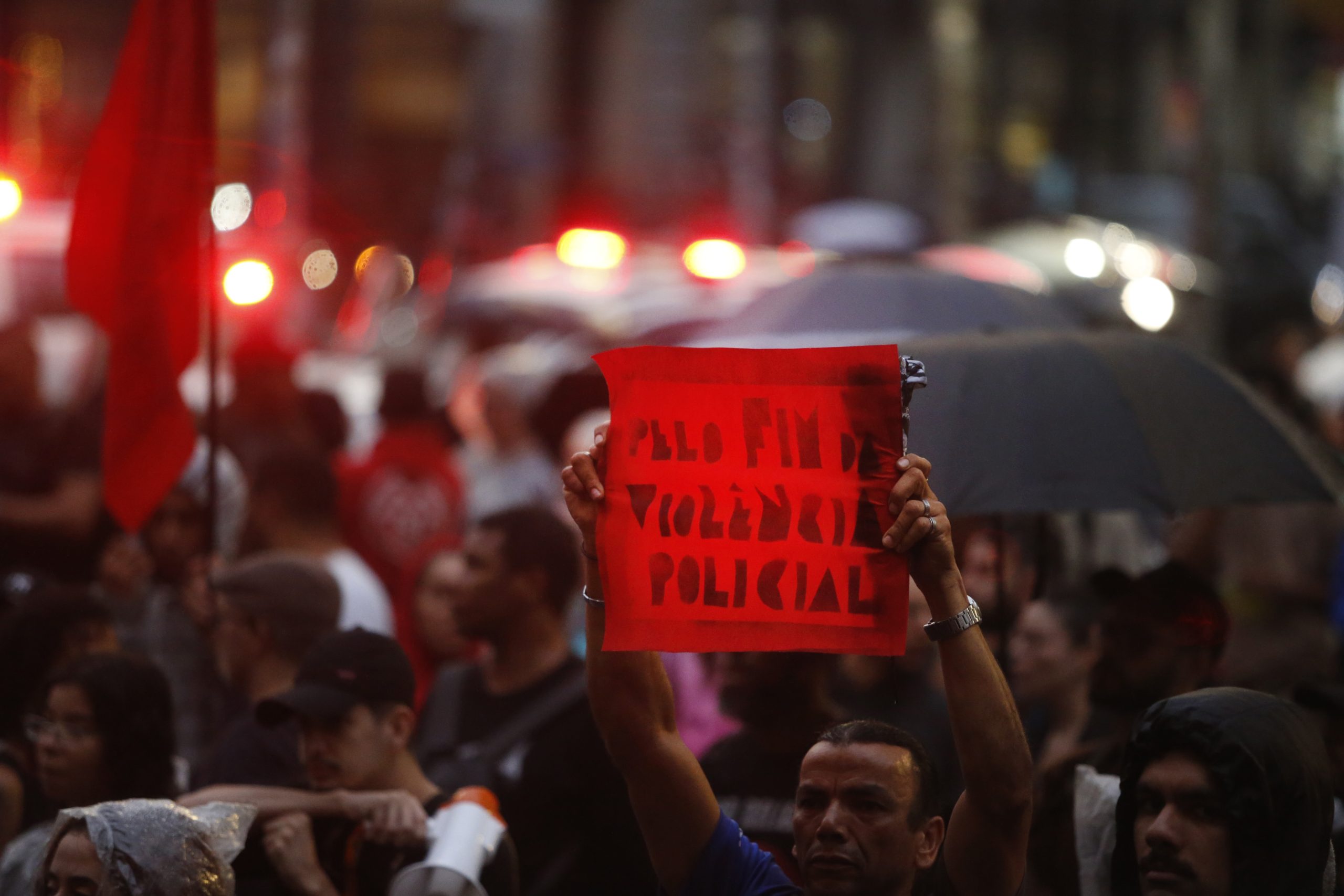
“This non-production of data is a mechanism to stifle society’s questioning. There’s an absence of essential data: skin color, race and age are left blank in some records, as we showed in the Pele Alvo reports. In practice, this means that we often discuss public security policy without reliable data. Over 6,000 deaths perpetrated by police officers have been recorded nationwide, accounting for nearly 15% of all violent deaths. And that figure comes from databases that the State itself acknowledges are incomplete. Without reliable microdata, no robust policy evaluation is possible: we don’t know which police battalion kills the most people, at what times, during what types of operations or how many weapons are seized as a result.” — Pablo Nunes
In a context of a lack of reliable data and extremely limited use of technology, Nunes argues that the first change must be structural, not technological. In his view, one solution would be to remove data production from the police chain of command:
“This means establishing state-level data institutes with their own budgets, permanent technical staff and a legal obligation to publish data, as well as a minimum national standard for microdata disaggregated by race, sex, age, police unit and territory. Second, transparency must extend to both technology and contracts. Prior impact assessments, external audit clauses, publication of error rates and periodic reports on results. These are minimum requirements for introducing such potentially harmful technologies into public service. Third, data must have institutional consequences. Publishing spreadsheets without linking them to targets is mere decoration. In addition, reducing police lethality must be a criterion for evaluating managers, the Public Prosecutor’s Office must be required to issue a statement on every death resulting from police intervention, and oversight bodies, public defenders’ offices and lawyers must have automatic access to body camera footage and records.”
The Caliber of Danger
Roberto Uchoa is a lawyer specializing in organized crime, trained at the National Police Academy (ANP), and a member of the Board of Directors of the Brazilian Forum on Public Safety. An expert in firearms control, he was directly involved in regulating the firearms market at the Federal Police. In 2022 and 2023, he served on the Justice and Public Security Technical Group as part of the federal government transition team, playing a key role in analyzing and reviewing Brazil’s firearms policies, which had been relaxed under the Jair Bolsonaro administration.
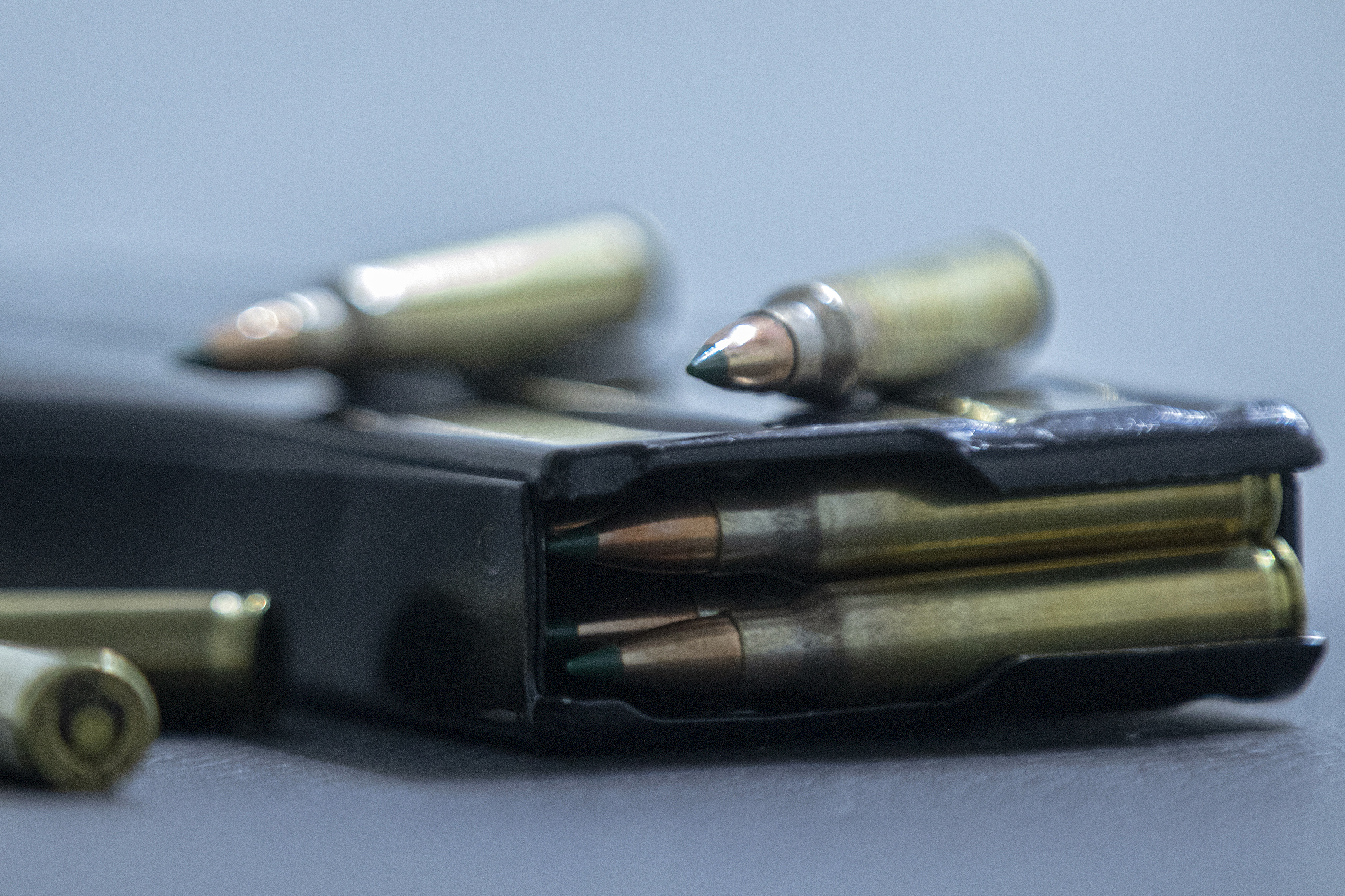
“The unprecedented expansion of purchasing limits for firearms and ammunition, including restricted-use calibers, such as those of rifles, reduced transaction costs for criminal organizations. Instead of relying exclusively on complex transnational trafficking routes, criminal organizations began turning to the formal domestic market through straw buyers and planned diversions, transforming the legal market into a direct, low-cost source of weapons and ammunition.” — Roberto Uchoa
According to Uchoa, this weakening of management in recent years may also have made oversight virtually impossible:
“The territorial control exercised by criminal factions and militias requires a constant supply of ammunition and the power to intimidate. The explosion in civilian firearms registrations, combined with the longstanding lack of integration between the Sinarm (Federal Police) and Sigma (Army) databases and lax oversight, created a regulatory smokescreen. With thousands of firearms and millions of rounds of ammunition dispersed across private residences, auditing became unfeasible. Organized crime exploited this gap in oversight.”
The expert concludes:
“It’s not a matter of choosing a single measure, but of integrating three strategic approaches:
- Governance and centralization: consolidating civilian authority over firearms control and oversight, with unified and fully interoperable databases to eliminate the system’s lack of transparency;
- Financial intelligence and tracing: financial and ballistic investigations aimed at cutting off supply chains and money laundering operations that finance heavy weaponry, coordinated with international cooperation to curb the trafficking of parts and components;
- Strict control of public arsenals: modernizing custody, marking and auditing protocols for firearms held by security forces to stop weapons from leaking out of official stockpiles.”
I’m Still Here
Augusto Perillo is a doctoral candidate in the Graduate Program in Sociology at the Federal University of São Carlos (UFSCar). He is author of the 2025 book Where Bodies Disappear, a study on the proliferation of clandestine graves, the concealment of bodies by armed groups in the Baixada Fluminense and the forced disappearances of people, in which he showed that these crimes serve as a mechanism of territorial control.
“Disappearances are documented in testimonies given by torturers to the Truth Commissions of individual Brazilian states as an effective method of inflicting pain on the enemy because, beyond the pain itself, not knowing the victims’ whereabouts caused despair among other left-wing activists. The deeply entrenched machinery of the repressive apparatus did not disappear during democratization. The enemy just went from being the political activist to becoming the Black favela resident.” — Augusto Perillo
Data from the National Public Security Information System (Sinesp) show that 2025 was the year Brazil broke its record for missing persons, with over 84,000 cases recorded. And why does this raise a red flag? Because disappearances are not counted as homicides. According to the researcher, by making bodies disappear, State agents conceal the true scale of the problem and shield themselves from investigations.
Perillo has also emphasized that armed control enforced through killing imposes severe restrictions on the exercise of democracy itself in favelas and peripheral areas. The routine of terror imposed by the fear of disappearing without a trace paralyzes community organizing.
“We often hear from the people we speak to that one of the characteristics of the forced disappearance of bodies is that families are prevented from accessing the victim’s body. In other words, criminals kill their victim, someone informs the family of what happened, but they cannot recover the remains. Even when they turn to the State, it does very little, since most of the victims are poor.” — Augusto Perillo
According to Perillo, this ultimately amounts to the denial of the right to mourn. Many mothers become ill, family members develop depression and families are torn apart by the lack of answers about their loved ones. It is impossible to talk about democracy and citizenship when millions of people have to deal with death, disappearances and terror on a daily basis.
“The states need to coordinate with the federal government. Data on missing persons are neither systematically organized nor effectively produced. In Brazil, we have little data on missing persons and virtually none on those who have been found. This reflects a tremendous degree of ineffectiveness, given the urgency of the issue.” — Augusto Perillo
Therefore, in the 2026 elections, the debate on public security cannot be limited to increasing police presence on the streets or toughening laws. The interviews above point to a broader problem involving the territorial expansion of armed groups, the circulation of firearms, weaknesses in the production and transparency of data, the involvement of public officials in criminal networks and the forced disappearance of people.
Given this scenario, the experts interviewed agree on the need for evidence-based policies, investigation and intelligence, control over firearms and financial flows, coordination between institutions and the production of reliable data. In addition, they agree on the need for coordinated policies on education, health, culture, social assistance and leisure in these communities.
Beyond short-term responses, the challenge facing the next administrations is to confront the structures that sustain violence and ensure that public security means protecting rights, transparency, citizenship and democracy—not more weapons, police operations involving shootouts and massacres in favelas.
About the author: Fabio Leon is a journalist, human rights activist, and media advisor with Fórum Grita Baixada.