
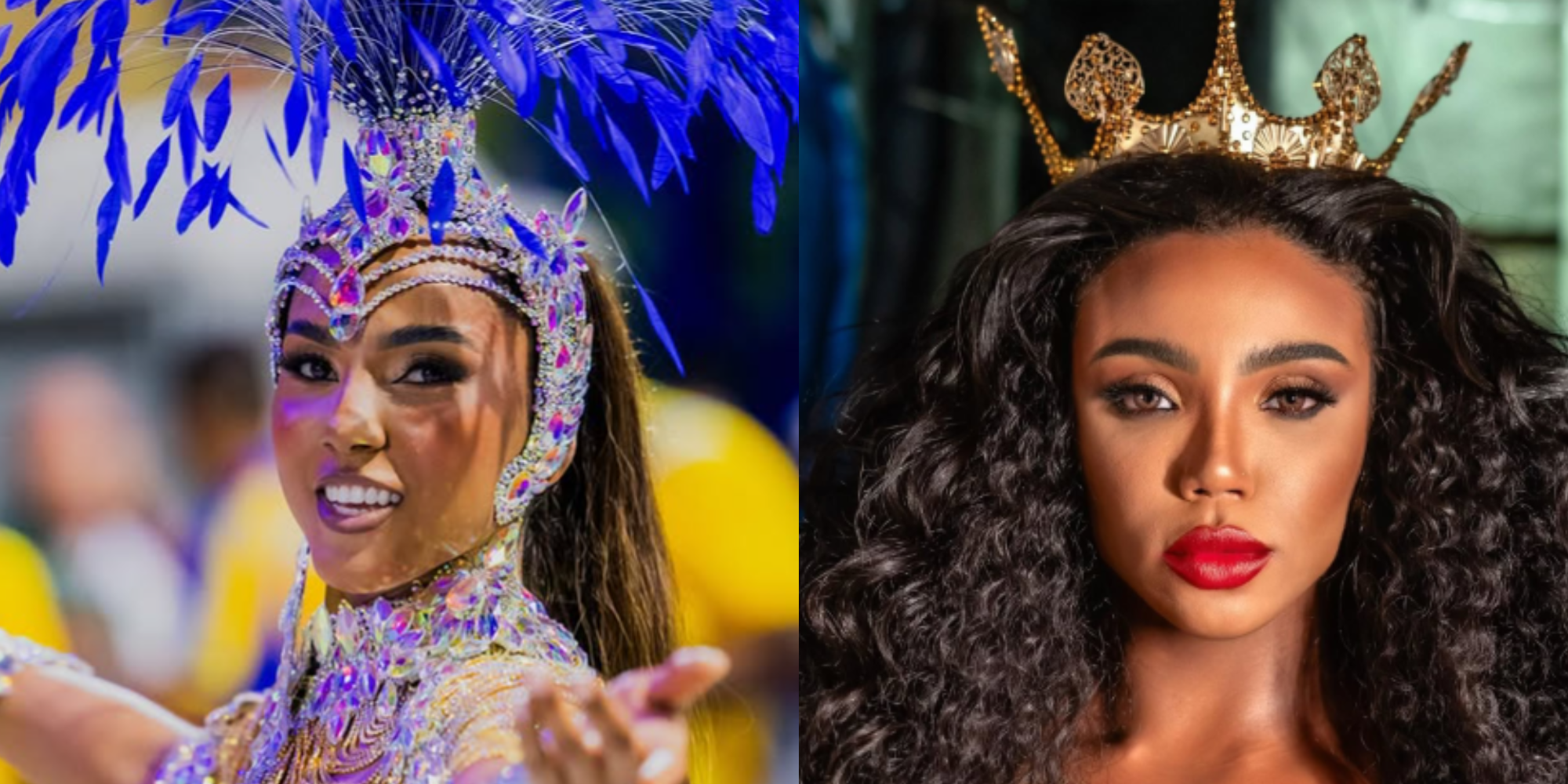

In Rio de Janeiro’s 2026 Carnival, RioOnWatch highlights the only two “rainhas de bateria,” rhythm section queens, who hail from the favelas where their samba schools are located. Leading the rhythm section during the carnival parade and helping rouse the audience, this position is becoming increasingly rare among local residents, year after year. Meet Mayara Lima, from the Paraíso do Tuiuti Samba School, and Evelyn Bastos, from the Mangueira Samba School (Estação Primeira de Mangueira).
In the traditional Marquês de Sapucaí Sambadrome Carnival parade, women occupy a wide range of roles and positions, whether within the samba schools themselves or in the organization of the festivities—be it with the Independent League of the Samba Schools of Rio de Janeiro (Liesa), which organizes the Special Group parades, or at Liga RJ, responsible for the Gold Series parades. However, one of the roles most closely associated with women is that of rhythm section queen.
Favela Samba Queens
The role of rhythm section queen was created in the 1970s through invitations from carnival designers, patrons and samba school leaders, or through contests aimed at giving visibility to the most talented passistas (samba dancers) and muses from the favela. These women had a connection with the samba schools and were part of the community itself, living in the favelas and peripheral areas that were the birthplace of the samba schools they would go on to represent. The primary mission of the queen was to entertain and energize both the rhythm section and the school’s supporting community through samba, during rehearsals and the Sambadrome parade.
Ver esta publicação no Instagram
During this same era, the role of “madrinha de bateria,” the rhythm section’s godmother, was created. It was offered to famous and affluent women, who covered the costs of costumes, clothing, instrument maintenance, barbecues and rhythm section celebrations.
Over time, these roles merged, and today many rhythm section queens are chosen for their ability to attract funding for the samba schools’ parade, despite the role having originally emerged to highlight local talent. More recently, we have seen the rise of famous performers and digital influencers—often white and wealthy, and sometimes even disconnected from the world of samba and from the favelas they represent at the Sambadrome. At times, they do not even know how to dance samba.
A brief Internet search clearly reflects the issue: images of celebrities with no connection to the favelas represented at the Sambadrome prevail.
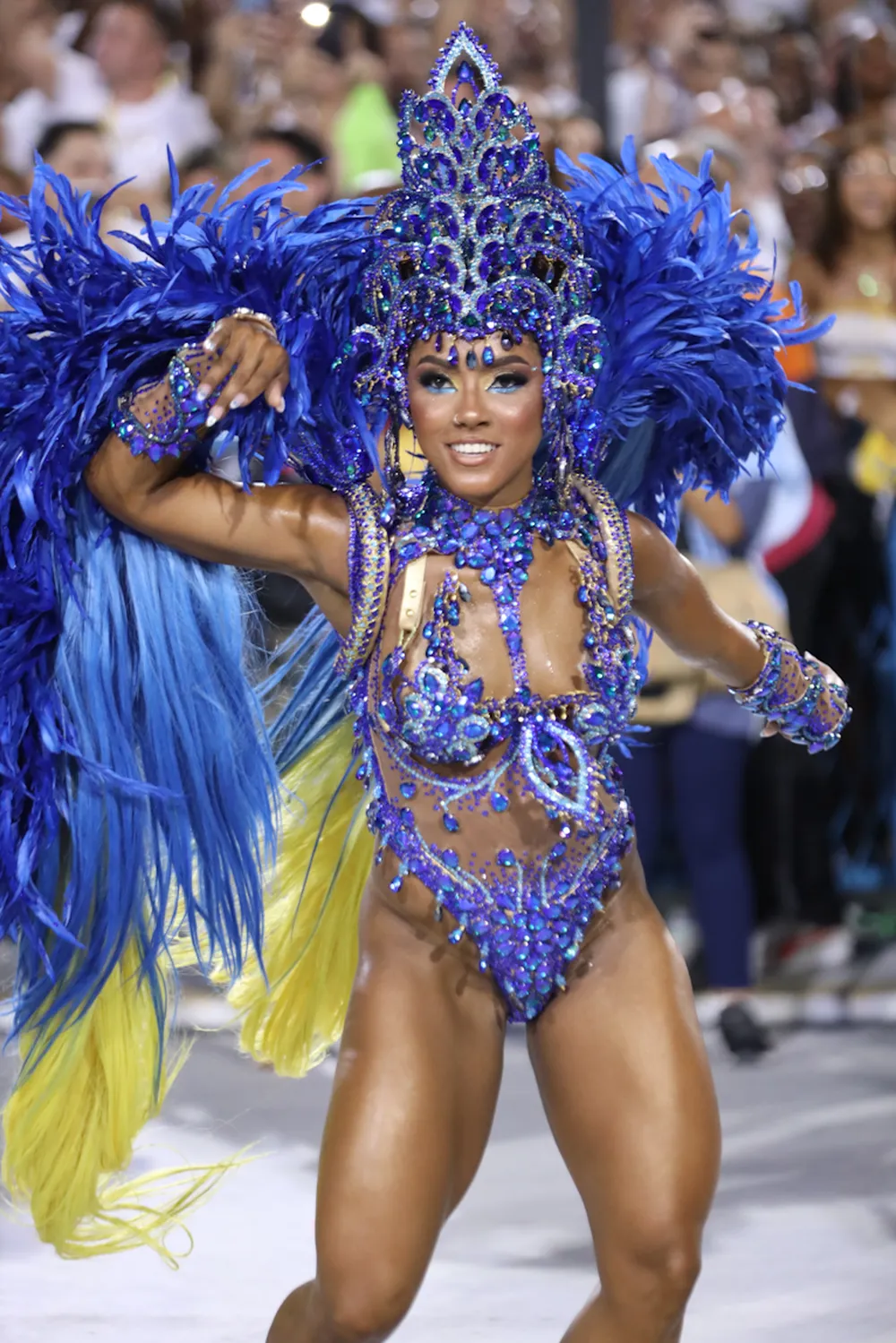
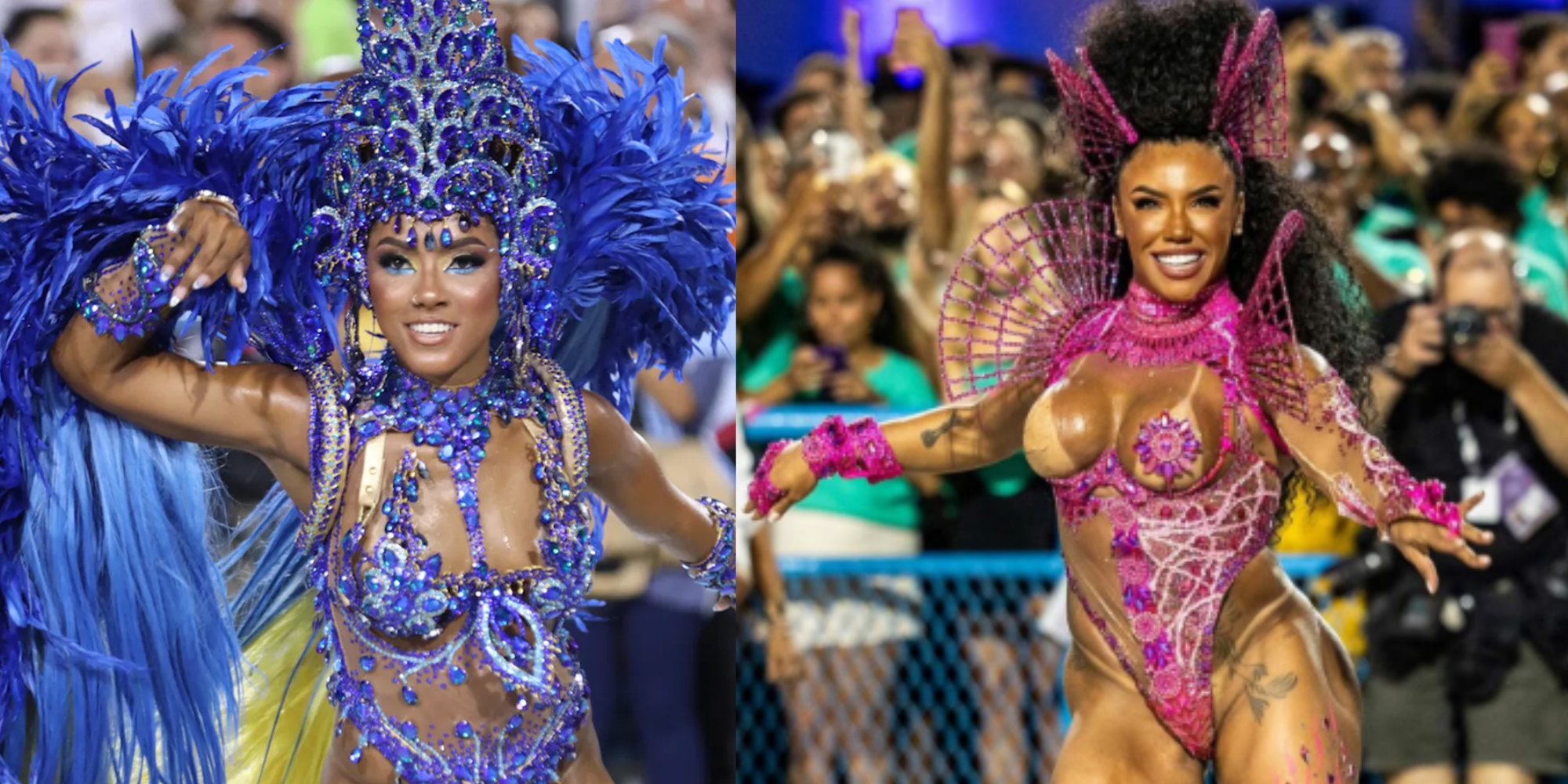
This Carnival, of the 12 rhythm section queens set to parade in the Special Group samba schools, only two are from favelas and will be representing their communities: Mayara Lima, from Paraíso do Tuiuti, who was born and raised in the Tuiuti favela, and Evelyn Bastos, from Estação Primeira de Mangueira, born and bred in the Mangueira favela. Both were trained and shaped in this context, starting in the children’s section of the main samba school or its junior equivalent.
In recent years, social media has helped some muses with skilled samba footwork go viral, creating public pressure for samba schools to act.
Mayara Lima, Queen of Paraíso do Tuiuti
One such example is Paraíso do Tuiuti‘s Mayara Lima, who went viral in a video in early 2022.
Born and raised in the Tuiuti favela in São Cristóvão, a neighborhood in Rio de Janeiro’s North Zone, Lima rose to prominence for her close synchronicity with the rhythm section and her charisma. She began her journey at age ten as a passista at Aprendizes do Salgueiro, Salgueiro Samba School’s junior samba school. In 2011, she was invited by Salgueiro and later by Tuiuti to join their main passista sections. At Tuiuti, she became a featured performer in 2017, a muse in 2020, rhythm section princess in 2021 and, in 2022, was acclaimed by popular demand as Paraíso do Tuiuti’s rhythm section queen—a position she holds to this day.
In rehearsals for the current parade, Lima has reaffirmed her majesty with one of the most acclaimed choreographies of the pre-Carnival season, accompanying the Bateria Super Som as it plays one of the year’s most popular samba-themes, sung by Pixulé: Lonã Ifá Lukumi. The Queen of São Cristóvão was named Best Rhythm Section Queen of 2025 in the Special Group Samba Schools and is a strong contender to repeat the title in 2026.
Ver essa foto no Instagram
For her, holding this position was crucial to becoming the artist she is today.
“Many girls look up to us and dream of becoming rhythm section queens. When you crown a girl from the favela queen, another one sees that it’s possible, that she too can achieve that goal one day… It’s an incredible responsibility, because I carry within me the legacy of many others who paved the way so that I could be here today making my dream come true, doing my job and representing all the girls out there. I spent ten years sharing my talent alongside other wonderful passistas and learned about unity, discipline, respect and teamwork, and that was very important in shaping who I am today. I am very happy to have built my journey within Tuiuti, because it’s a samba school that is part of my life and that gave me the opportunity to be out front with Bateria Super Som, representing and reclaiming samba as it should be danced: with skill and passion.” — Mayara Lima
Ver essa foto no Instagram
Evelyn Bastos, Queen of Estação Primeira de Mangueira
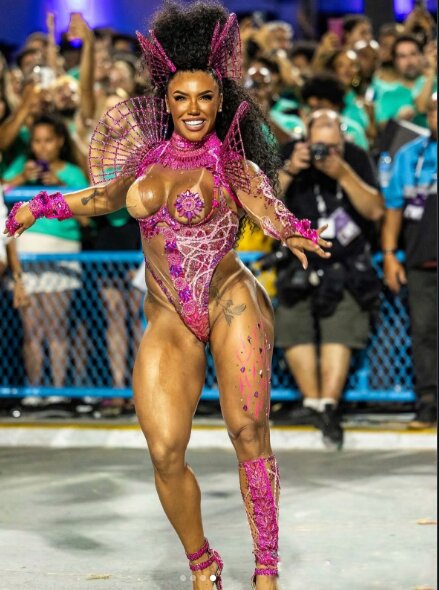
Born and raised in the Mangueira favela, Evelyn Bastos has been Mangueira Samba School’s rhythm section queen since 2014. She began her journey in samba as a child, at the junior school Mangueira do Amanhã, which she has presided over since 2022. The daughter and granddaughter of samba performers, she has won several titles in the carnival world, including Junior Queen in 2004, at age eleven; Carnival Muse in 2012; and Rio Carnival Queen in 2013.
She received the Pedro Ernesto Medal in 2019, awarded to individuals who have contributed to the development of the city of Rio or work for the benefit of others, and took on the role of Cultural Director at Liesa in 2024. In 2025, she became rector of the Carnival Free University, a pioneering project for professional development in the carnival industry. With a degree in History, Bastos is a physical education instructor, entrepreneur and women’s rights activist. A passista at Mangueira for many years, she is the daughter of former Mangueira rhythm section queen Valéria Bastos and continues the legacy of her mother and ancestors.
In an interview with FM O Dia, Bastos emphasized that holding this position has been, and continues to be, an important confidence-building role for girls from favelas.
“I’ve always believed strongly in legacy. I only got to this position of rhythm section queen—which was my mother’s role in the late 1980s—because of that legacy and because I believed that women like me could claim the highest crown in a samba school. If it weren’t for this belief, for this faith in seeing myself [as] a queen, maybe the hope in the heart of ten-year-old ‘Evelyn’ would have died. That’s why, whenever I can, I talk about the importance [of representation]. Preparing this generation, placing that hope in the hearts of these girls is also about showing them that this representation exists beyond words. The images of Lorena Raíssa from the Beija-Flor Samba School, Mayara from Tuiuti and Bianca from Portela offer powerful visual representation. [Other] girls from samba school communities can recognize themselves in them. Example is made through actions, not just words.” — Evelyn Bastos
Ver essa foto no Instagram
Queens from Rio’s Outskirts and the Baixada Fluminense Also Resist Celebrities and Outsiders
Besides the queens from favelas, there are also queens from other peripheral areas and Greater Rio de Janeiro’s Baixada Fluminense region who represent their communities. Such queens include Lorena Raíssa from the Beija-Flor de Nilópolis samba school, born and raised in the city of Nilópolis, in the Baixada, and Bianca Monteiro from Portela, born and raised in traditional samba cradle Osvaldo Cruz and Madureira, both neighborhoods in Rio’s North Zone.
Among the celebrities, singer Iza is the rhythm section queen of Imperatriz Leopoldinense and was born and raised in Olaria, a suburban neighborhood in the Leopoldina region that is the very heart of the green-and-white samba school.
The other seven schools—that is, the majority of the Special Group samba schools in Rio de Janeiro in 2026—feature famous performers who are neither born nor raised in the favelas or neighborhoods they represent in the parade.
This lack of representation is not due to an absence of talent within samba communities. According to passista professionalization expert Leonardo Prazeres, one path toward a real change begins with mobilizing those who carry the roots and traditions of samba within schools. This community must collectively reinforce the importance of homegrown dancers to representation during Carnival.
“A samba school is a machine for creating talent and for preparing young dancers to become queens. The key [crucial to this change] is for the community to foster this child as she grows up, to empower her and to help her embrace her roots—which are right there. It’s essential that we value the work of this community. These girls will get the job done, because they matter to the school. We have the human material needed to take on this role, but we live in a time when people’s value is being measured either by money or by the number of followers they have. So it’s the community’s task to show why a woman who doesn’t have that many followers on Instagram represents far more of the essence of what is being done [by the school] than any other [famous or wealthy woman].” — Leonardo Prazeres
About the author: Amanda Baroni Lopes holds a degree in Journalism from Unicarioca and was part of the first Journalism Laboratory organized by the Maré community newspaper Maré de Notícias. She is the author of the Anti-Harassment Guide in Breaking, a handbook that explains what is and isn’t harassment to the Hip Hop audience and provides guidance on what to do in these situations. Lopes is from Morro do Timbau, a favela within the larger Maré favela complex.