

 This article is part of a series created in partnership with the Behner Stiefel Center for Brazilian Studies at San Diego State University, to produce articles for the Digital Brazil Project on environmental justice in the favelas through RioOnWatch.
Jardim Gramacho, a neighborhood located in the municipality of Duque de Caxias, in Greater Rio de Janeiro’s Baixada Fluminense region, is internationally known as the site of the 2010 film, Waste Land, about the largest garbage dump in Latin America, which was based there until its 2012 closure. Today, it embodies the contradiction between the discourse of sustainability and the denial of dignified living conditions to populations living on the margins of so-called “sustainable development.” Situated along the Washington Luiz Highway, at the mouth of the Sarapuí and Iguaçu rivers, the area is surrounded by an extensive stretch of mangroves within the Guanabara Bay watershed. It is an area of high ecological and geopolitical relevance, marked by the presence of mangroves that play an essential role in maintaining biodiversity and the balance of the bay’s coastal ecosystem.
Its proximity to the urban center of Rio de Janeiro intensifies pressures on the use and appropriation of this space, highlighting conflicts between economic interests, urban dynamics and the need for environmental preservation. Just eight kilometers away in a straight line from downtown Rio de Janeiro, physical proximity to one of the most expensive areas in the country provides a contrast with the State neglect, precarization of housing conditions and lack of adequate infrastructure in Gramacho.
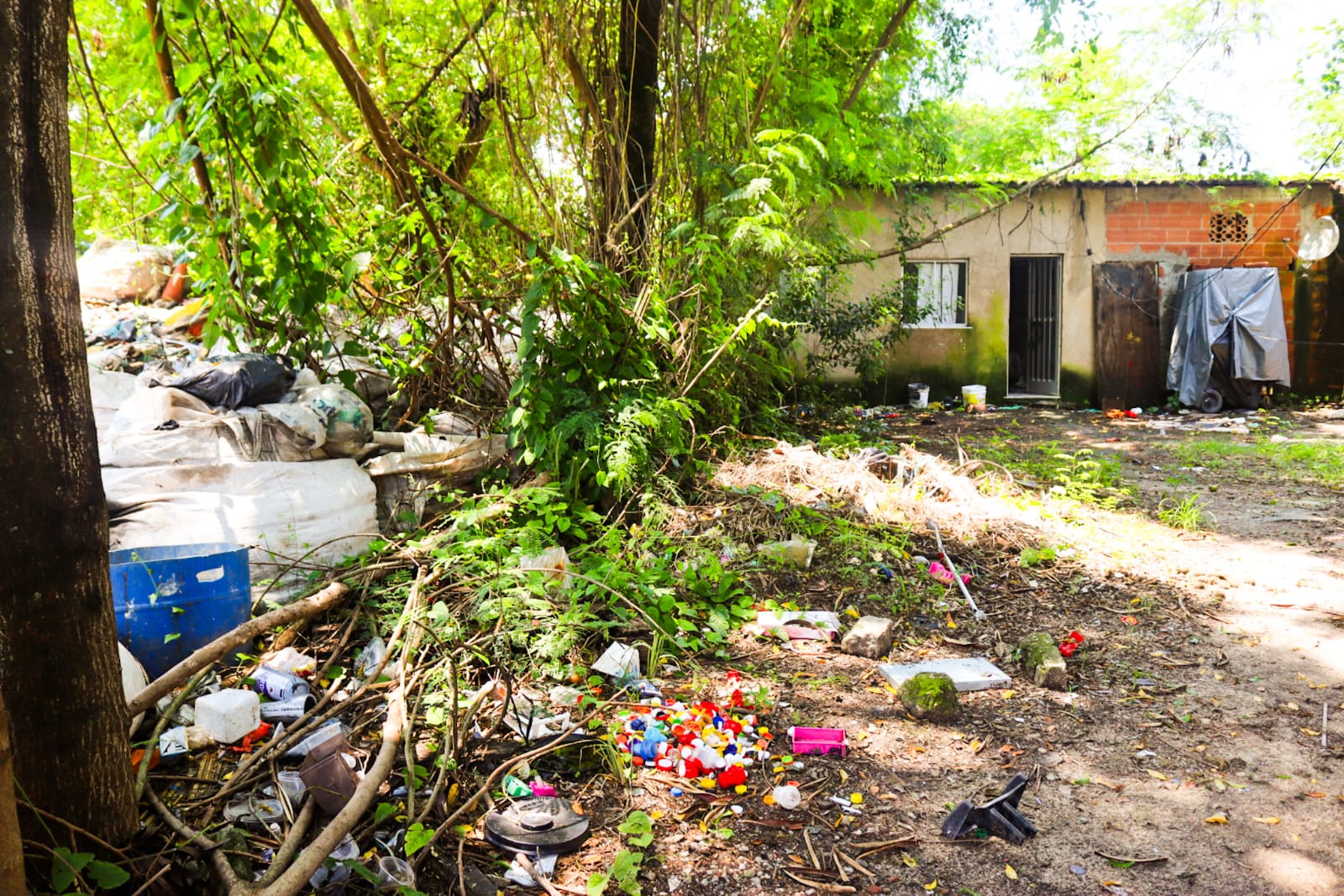
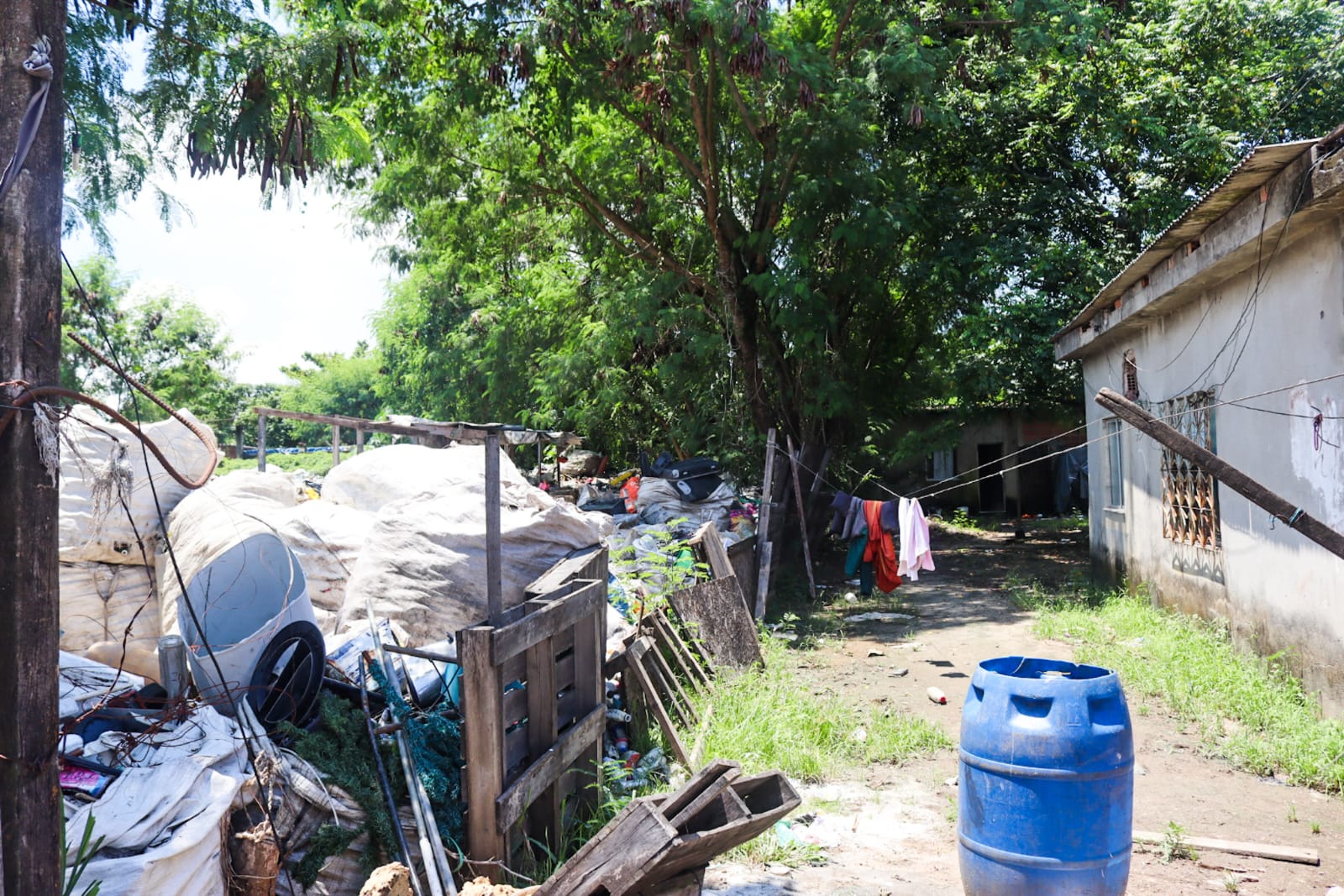
Imagine being embarrassed by where you live, being unable to have a simple barbecue due to the unhealthiness of your surroundings. Working every day and still having to live with waste scattered through the streets and leachate running along the edges of your yard. Being unable to eat a meal without flies hovering over your plate. This is the reality of environmental racism faced by residents of Jardim Gramacho.
Is There Sustainability Without Socio-Environmental Justice?
The area that once housed the largest unsanitary landfill in Latin America bears deep marks of socio-environmental inequality. For decades, waste produced by Greater Rio was sent to the neighborhood, delegating the daily burden of living with environmental impacts, health risks and social stigma to the local population. While official reports and institutional campaigns celebrate sustainability targets, residents continue to face inadequate sanitation, limited access to public services and restrictions on the full exercise of fundamental rights.
Laiane Oliveira, 28, a resident of Jardim Gramacho and waste picker shares that, “what affects my daily life the most is the filth and polluted air. There’s a lot of garbage on the streets, they’re really dirty.”
For Larissa Pacheco, 30, a social worker trained at the Federal University of Rio de Janeiro (UFRJ), resident of Jardim Gramacho and daughter of a waste picker, “I lived without access to clean drinking water for a long time and I see many residents without access to this basic right even today.”
The logic underpinning this perverse model reveals structural selectivity: green discourse is often deployed as a market strategy, while peripheral communities continue to be treated as sacrifice zones. The sustainability discourse protects landscapes but neglects people.
“When I hear people talk about sustainability, I think it should also include us—include our income, our livelihood. After the landfill was closed, practically nothing changed… nothing improved, things only got worse.” — Laiane Oliveira
Thousands of waste pickers who depended directly on activities at the landfill were abruptly deprived of their livelihoods when it closed in 2012. The lack of a structured economic transition deepened existing vulnerabilities.
“Talking about sustainability also means recognizing the work of waste pickers, who are still widely undervalued. For many families, the garbage dump was their livelihood, so its closure [without a proper transition or planning] was not positive.” — Larissa Pacheco
At the same time, social movements made up of residents, waste pickers, community leaders and local institutions have taken the lead in resistance and advocacy. Their actions strengthen support networks, promote political education and reaffirm community identity and a sense of belonging. However, responsibility for the structural transformation of Jardim Gramacho cannot be left to civil society.
Green Discourse vs. Reality in Jardim Gramacho
After the closure of the garbage dump, governments announced a plan to revitalize the area. Proposed measures included the creation of structured recycling cooperatives, the construction of housing complexes, the implementation of daycare centers, the establishment of a hub for preparatory courses and professional training, as well as significant improvements to urban infrastructure.
“Many promises were made, such as the revitalization of the area, but they were never fulfilled in practice.” — Larissa Pacheco
As resident points out, these promises were only partially fulfilled. The installation of a biogas plant, built on an area of over three hectares, has become one of the main landmarks of the post-landfill period. The facility began operating by harnessing gas generated by waste accumulated over decades, turning environmental liabilities into economic assets. However, while the productive dimension has been consolidated, social reparations have remained insufficient: “Many changes are still needed, especially in infrastructure, health care and access to basic rights,” Pacheco adds.
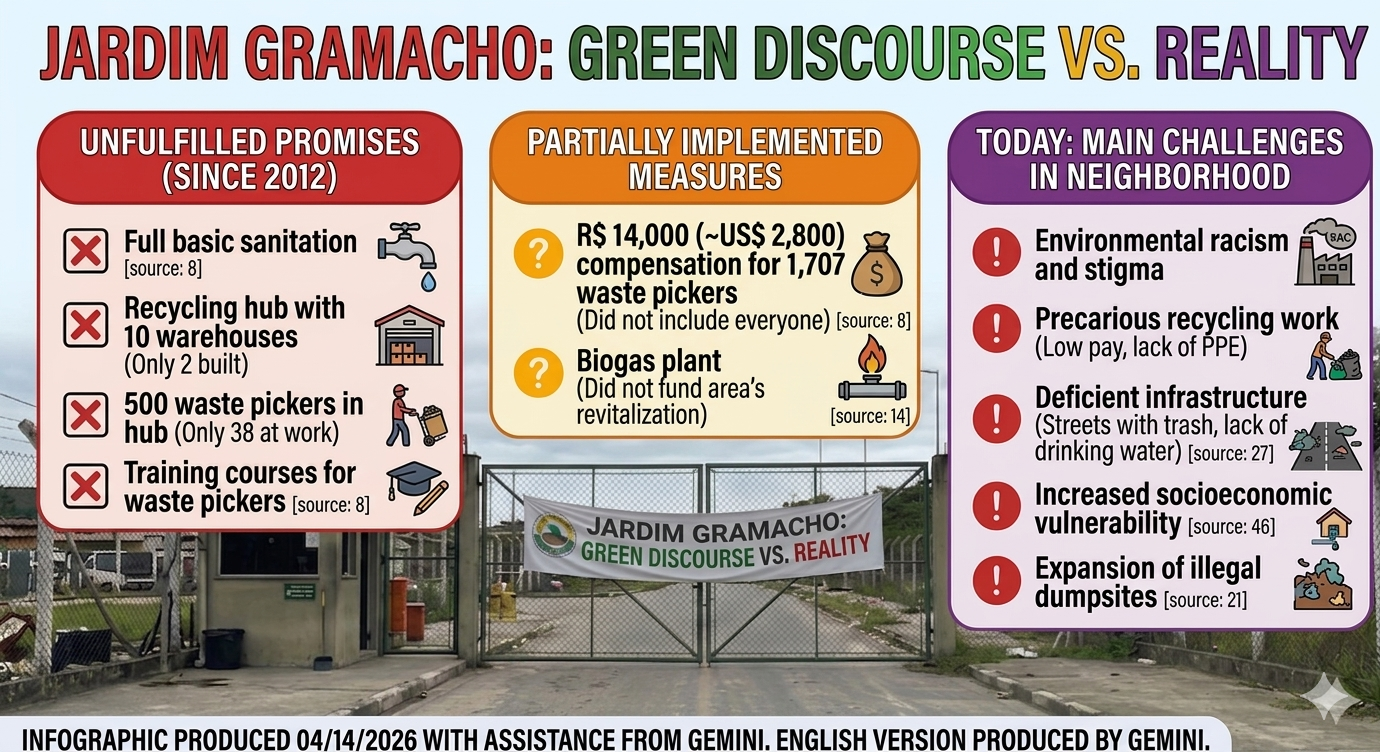
Even with legal instruments in place and planned investments, the “revitalization projects” were not implemented. This raises questions about where the resources are being allocated. For the community, what remains is a sustainability discourse rooted in repression, as seen in the Guanabara Bay Sanitary Barrier Operation—a state-led policing initiative that controls access to Jardim Gramacho to curb illegal waste dumping while allowing regulated recycling activities to continue.
Unfulfilled Promises of Economic Transition: Waste Pickers Lose Autonomy
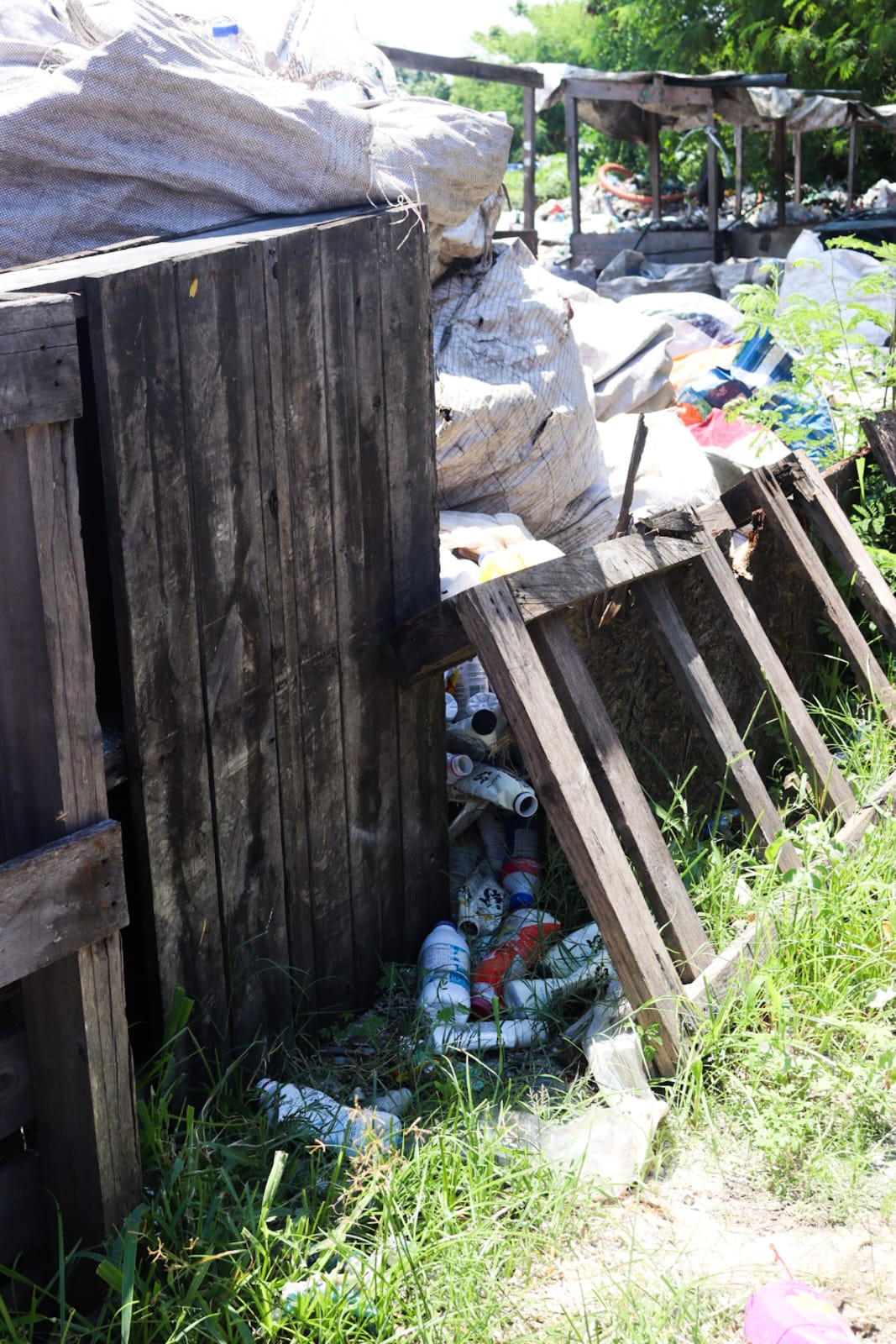
Beyond the unfulfilled promises and the closure of the landfill without an effective economic transition for waste pickers, from 2012 onwards there was an intensification of the devaluation of recyclable materials. This process is directly related to the unequal way in which Brazil’s recycling production chain is structured, with waste pickers occupying the base and selling materials at low prices to depositistas (middlemen), who concentrate most of the added value, making these workers highly vulnerable to market fluctuations.
In Jardim Gramacho, this devaluation was exacerbated by a concrete shift in the relationship between supply and demand. While the landfill was still operating, there was a large circulation of waste, reaching 8,000 tons per day, and intense competition among local depots, structuring a true productive arrangement in the area surrounding Gramacho. The depositistas would go up to the landfill’s unloading area to directly compete for the collected material, offering better prices to waste pickers, who had greater autonomy over their production and income. With its closure, this dynamic was disrupted: the flow of materials was drastically reduced, as were the number of purchasing depots, which weakened the bargaining power of waste pickers.
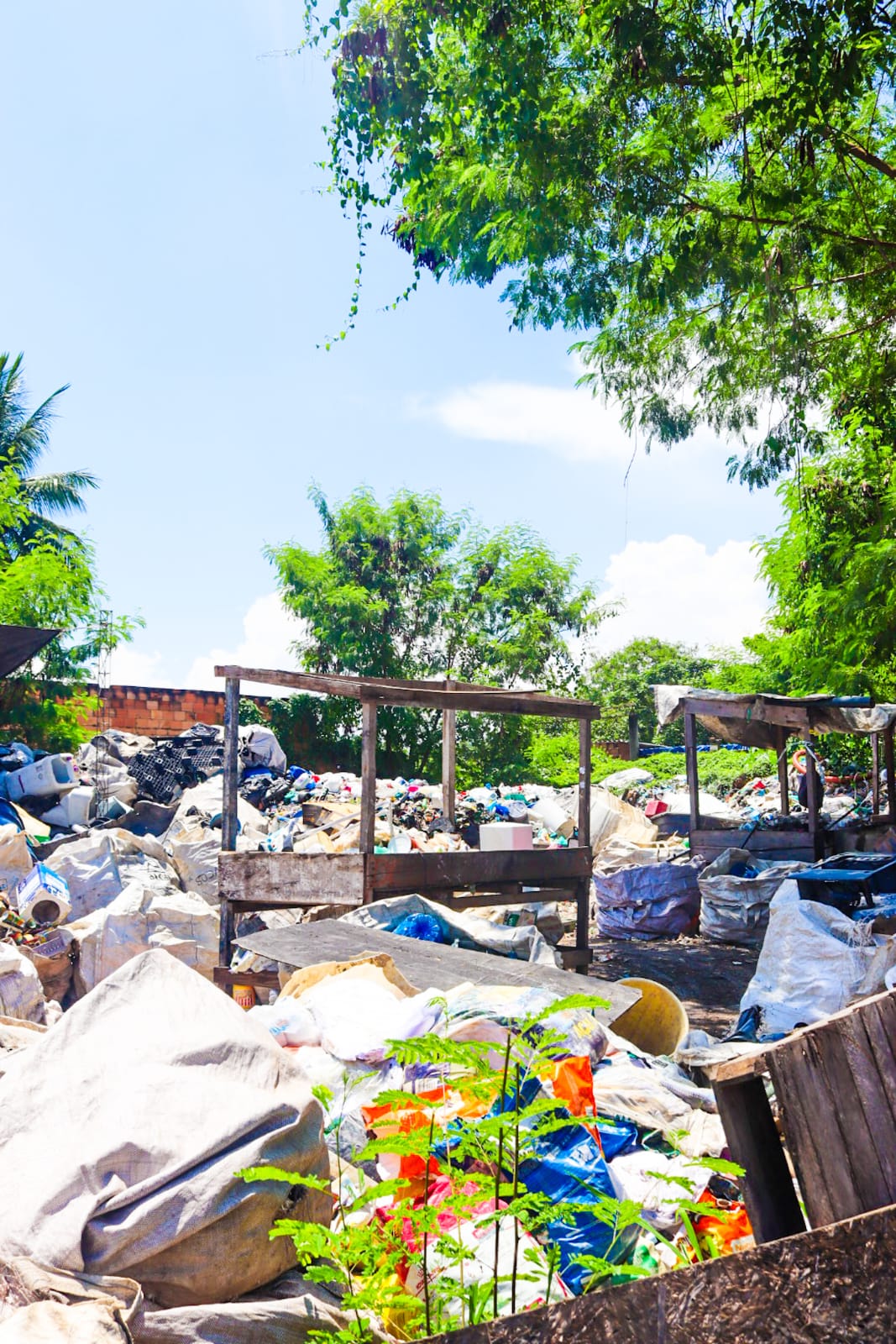
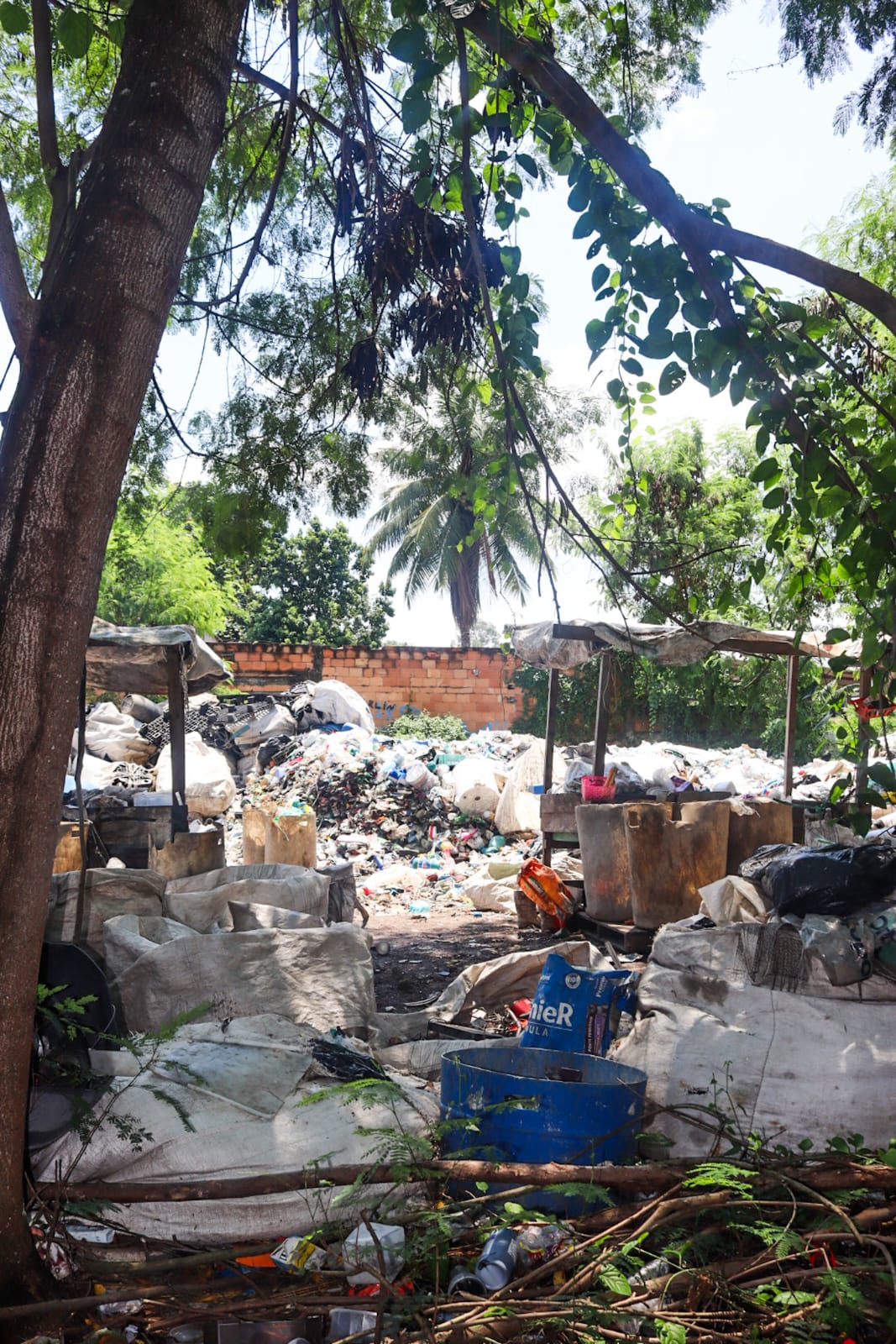
At the same time, the expansion of illegal garbage dumps established a new logic of control, in which access to recyclable materials became mediated by the owners of these spaces, who charge fees for waste picking and impose lower resale prices. In addition to losing direct access to materials, waste pickers also began to bear costs in order to work and sell under imposed conditions. This is the scenario faced by waste pickers like Josias Silva, 50:
“When [the Gramacho landfill] loading area was still around, I could make good money—I could make a living based on what I set. If I wanted to spend a whole night there and collect 10 tarps at R$30 each (~US$6), I could. Today, I can’t even collect one tarp without having that amount reduced. That tarp isn’t worth R$30 anymore—it’s whatever the depositista wants to pay. It’s a lot harder being a waste picker nowadays. My health’s been going downhill, but I don’t have any other option.”
The lack of a fixed collection point led to a precarious reorganization of work in Jardim Gramacho. Scattered across streets and irregular dumping sites, residents and waste pickers began to face greater instability and reduced bargaining power.
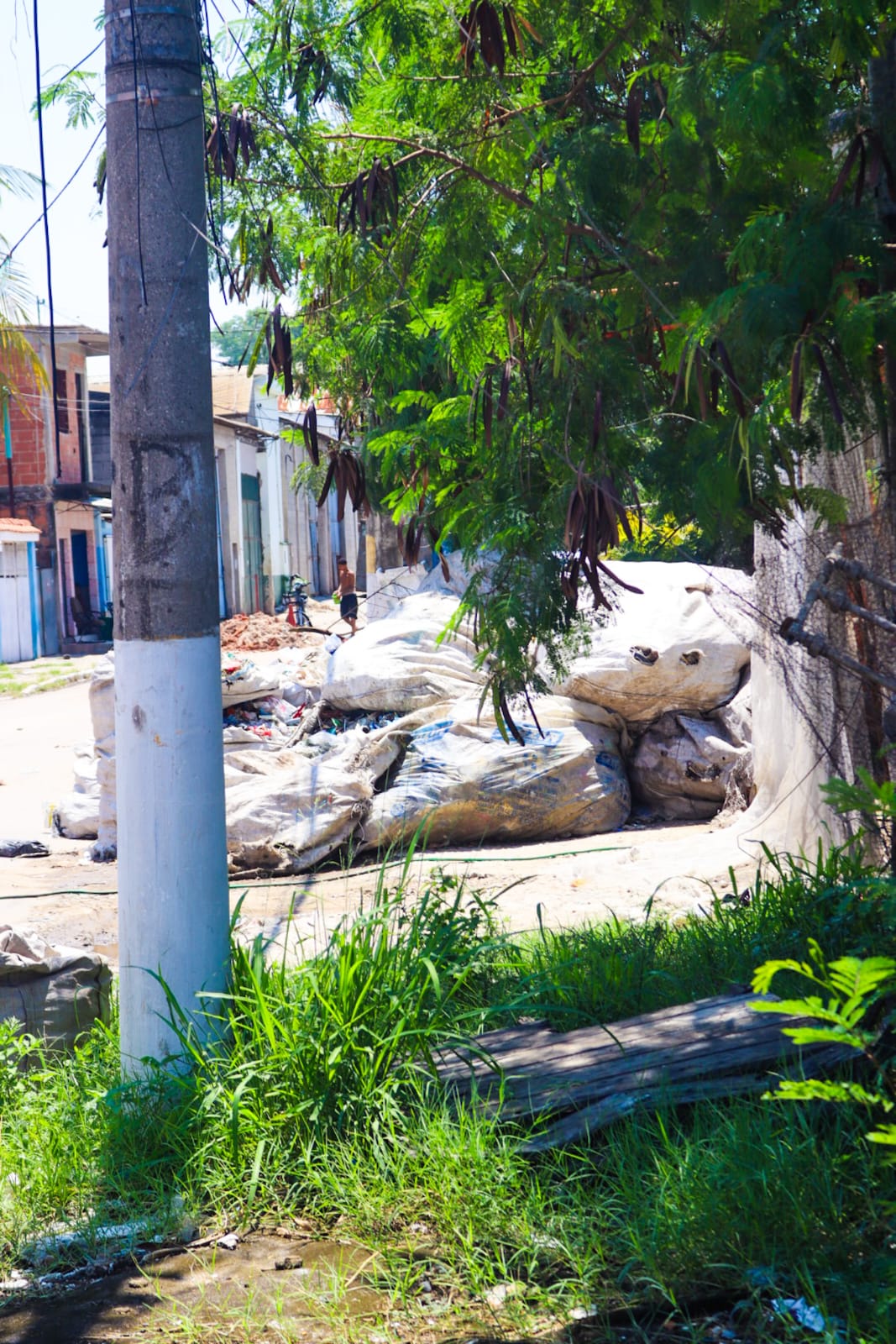
The promise of improvements following the closure of the former landfill did not materialize for those who continue to depend on recycling as their main source of income. Precarization is also reflected in working conditions and low pay, disproportionate to the effort required on a daily basis. Above all, in the face of these challenges, remaining in this line of work reveals the scarcity of concrete alternatives for these workers.
“They promised they would help residents, that there would be improvements, but that didn’t happen… [Today,] the pay is very low for those who work in the sun, in the rain, on their feet all day. I work in recycling… it’s a lot of work for little return.” — Laiane Oliveira
The Pyramid of False Sustainability
Further along this chain are the so-called batedores, responsible for sorting, classifying and organizing recyclable materials. These workers operate under sun and rain, amid waste, rats and flies, often without adequate protective equipment. The work takes place under precarious conditions, with direct impacts on their health and life expectancy.
The sorted material then moves on and is often resold outside the state, gaining value along the national production chain. It is through this process that the much-celebrated recycling system is consolidated, presented as a symbol of environmental responsibility and sustainability. However, waste pickers—and the socioeconomic vulnerability to which they are exposed—are often overlooked. Recycling generates profit, improves environmental indicators and strengthens institutional narratives, but it continues to rest on deep inequalities.
This reveals the pyramid of false sustainability: at the base are waste pickers and recycling workers, exposed to precarious conditions and often irreversible harm; in the middle, depot owners and depositistas, responsible for amassing and selling materials; and at the top, the companies that benefit economically from this process and the green marketing it generates. This structure’s persistence shows that irregularities are not isolated, but part of a system sustained by inequality.
Jardim Gramacho lays bare the contradictions of sustainable development in Brazil—an environmentally strategic neighborhood, socially vulnerable and politically invisible. This case shows the consequences of talking about sustainability without addressing socio-environmental justice.
About the author: Joelma Araujo is an undergraduate Geography student at the State University of Rio de Janeiro (UERJ) and a resident of Jardim Gramacho, Duque de Caxias. A Black woman, single mother and daughter of a waste picker, she has been conducting research for over three years on sanitation, illegal garbage dumps and socio-environmental justice. She is a scholarship holder with the Baixada Fluminense Geodiversity, Heritage and Education Study Group (Geopart BF); member of the Baixada Fluminense Interdisciplinary Studies Center (NIESBF), the Unified Black Movement (MNU) and the Movement of People Affected by Dams (MAB); founder of Dona Black Fotografias; and serves as coordinator of the Environmental Working Group at the Jardim Gramacho Community Forum and Duque de Caxias Municipal Black Women’s Forum.