
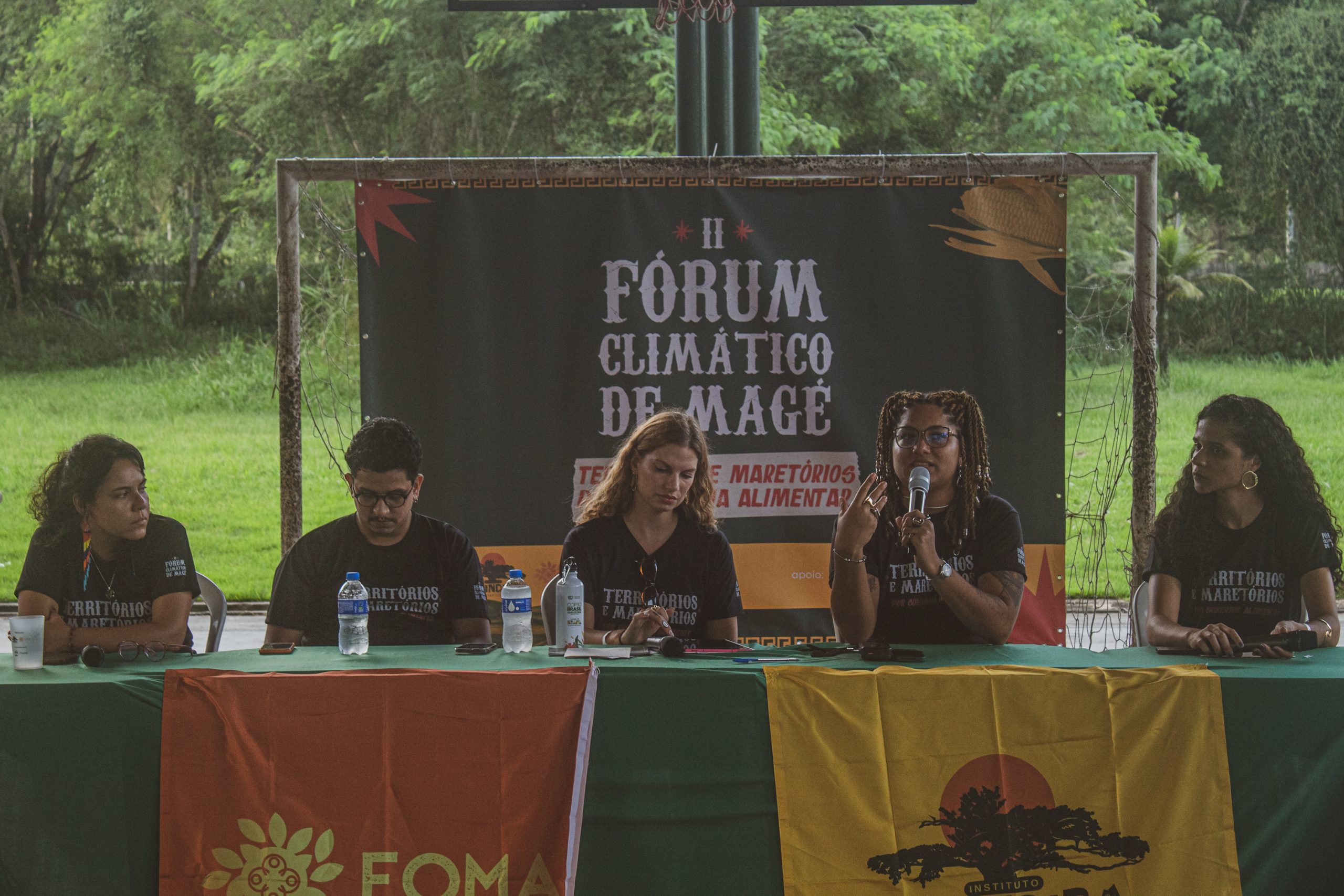

If food reaches plates in Rio de Janeiro, it comes—often unacknowledged—from hands that sow, fish and resist in Greater Rio’s Baixada Fluminense, north of the city. It was in response to this that leaders, farmers, fishers, researchers and residents came together on March 21 at a public high school, CIEP 327, in Suruí, in the municipality of Magé’s fourth district, for the 2nd Magé Climate Forum with an essential question at the center of debate: who produces the food and who decides who eats?
Three years after its first edition, the event organized by the Mirindiba Institute returned with even greater political weight and social urgency. Under the theme “Peripheral Territories Between the Land and Seafor Food Sovereignty,” the forum outlined concrete paths to address hunger, the climate crisis and the historic inequalities that impact Magé and the whole Baixada Fluminense.
Ver essa foto no Instagram
The program began at 8am, with an ecological breakfast prepared by Chef Gama, highlighting organic ingredients and sustainable practices—a gesture that set the tone of the event: thinking of food as a right, culture and politics. As the chef himself noted:
“We need to start looking again at food as something that comes from the earth, respecting nature’s timing and valuing food produced locally and in healthy ways.”
At the opening, moderated by DJ Dorgo from the Enraizados Institute, Anderson Ribeiro, coordinator of Mirindiba Institute underscored the collective responsibility for favela and peripheral areas and the power of communication, reinforcing the importance of words as a tool for transformation and social critique.
Hunger Is Not an Accident, It’s Structural
The first panel, titled “Hunger, Nutricide and Food Systems,” centered on one key idea: hunger does not happen by chance—it is historically constructed. As expressed by by Andressa, environmental manager and coordinator of collaborations at the Mirindiba Institute:
“Hunger is not a lack of food, it is the result of political choices and a system that produces inequality… when we talk about nutricide, we are referring to a process that denies the right to adequate food and directly impacts people’s health.”
Andressa reinforced the importance of considering favelas and peripheral areas in this debate: “solutions already exist, but they necessarily involve strengthening those who produce real food and recognizing the knowledge already present in these communities.”
First-hand experiences from these marginalized territories reinforced this analysis. Jandira Rolha from the Magé Living Museum of Agroecology demonstrated how agroecology is a practice of resistance and autonomy, linking food production, solidarity economy and traditional knowledge.
Alana Patrícia, fisher and leader of the Association of Fishers Fighting for Life, brought the perspective of riverside communities marked by resistance in the face of environmental degradation, State negligence and a lack of public policies.
Expanding the debate, Walmir Junior, a leader of the Maria Angu Community Garden in the favelas of Complexo da Maré in Rio de Janeiro’s North Zone, showed how food production is also possible in favelas and urban peripheries through collective organization. Solutions already exist—and they are out there in these communities.
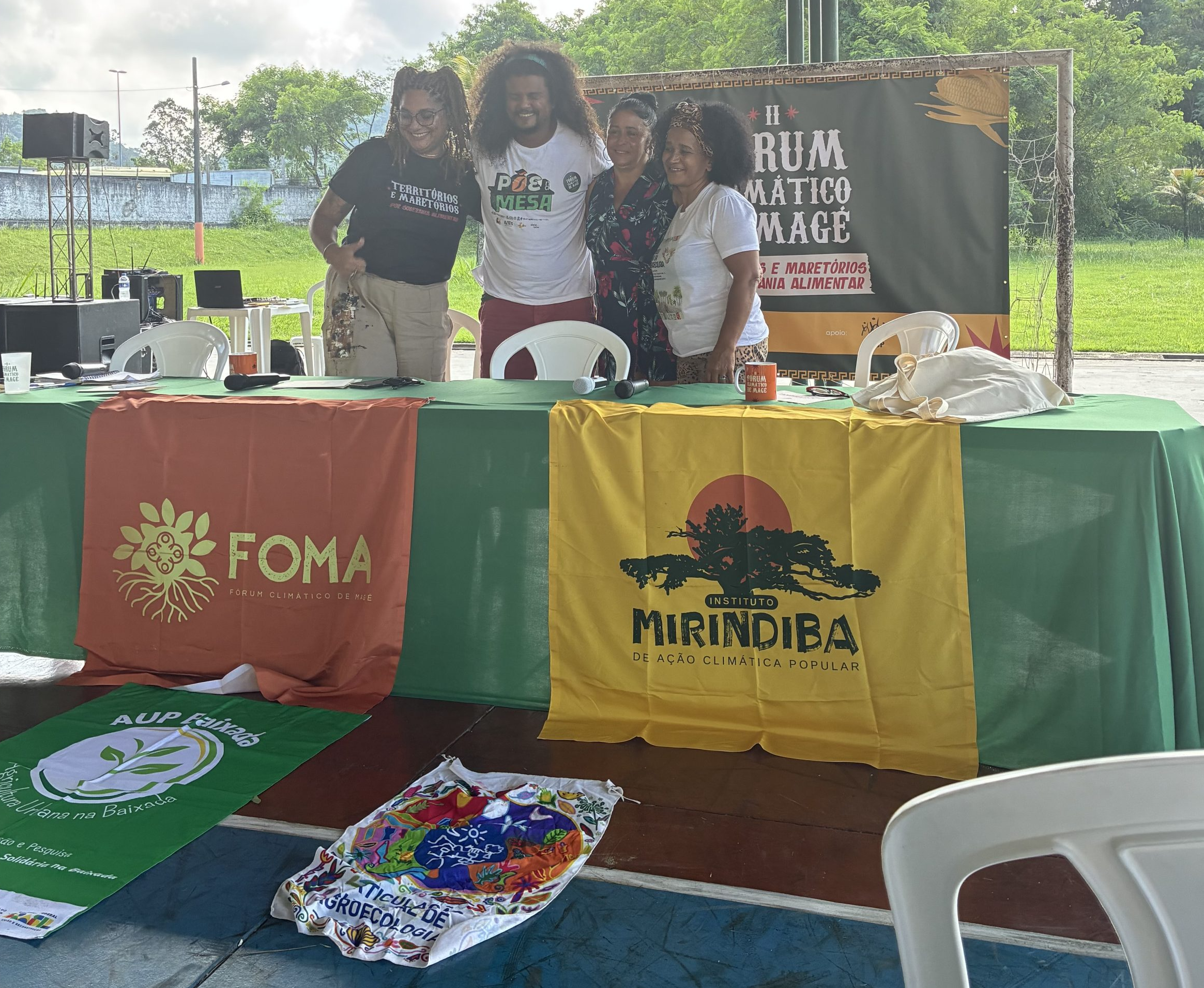
Following this, the second panel discussed concrete solutions for the climate and food crises.
Gaio Jorge de Paiva, from the Criação Collective, emphasized the importance of integrating technical know-how with grassroots knowledge in the production of public policies. Patrícia Lyra shared the experience of solidarity kitchens as spaces that help guarantee rights and community organizing. This was complemented by Leudideia Lima, a farmer, who reinforced the importance of agroecological food production. Meanwhile, Marcia Regina drew attention to tidal areas and the direct relationship between environmental preservation and the survival of fishing communities.
All of these remarks converged on a common point: there is no climate justice without social justice—and favelas and peripheral territories need to be heard.
Onça Fair: Economy and Culture as Resistance
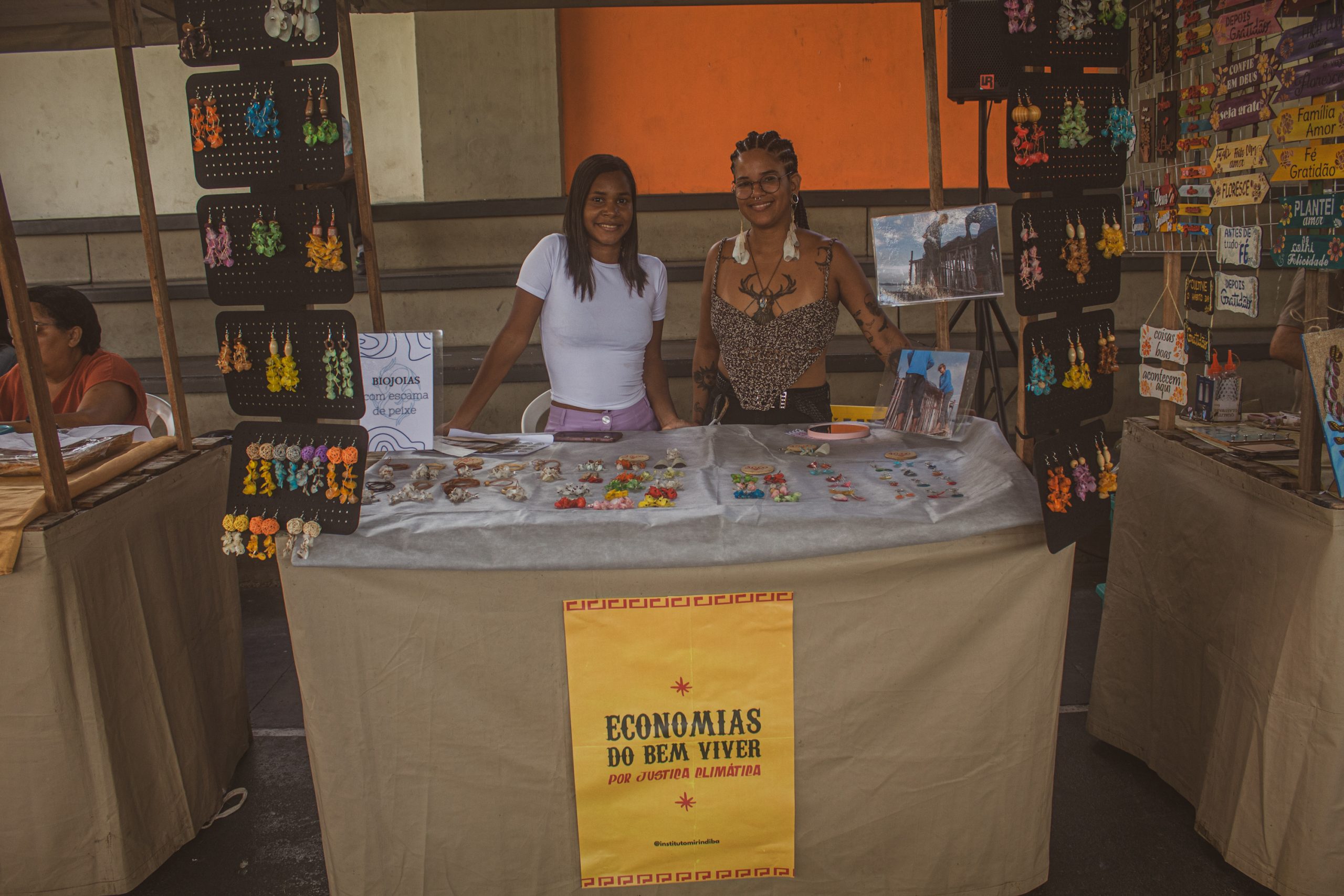
The Onça Fair, an initiative of the Mirindiba Institute, brought together artisans, artists and local producers presenting solutions created in favelas and peripheral territories of the Atlantic Forest and Guanabara Bay. More than a space for buying and selling, the fair highlights that valuing traditional knowledge is also part of the fight for climate justice.
As emphasized by Lyvia Leite, communications coordinator at the institute: “That’s why we have so many things going on at the same time: debates, workshops, the fair. This is the world we want to create, a whole ecosystem, with dignified work and social technologies in the fight against the climate crisis.” She also reinforced the role of the fair in this process: “We bring together creators of culture and local producers to strengthen the regional economy and include them in the climate justice debate. The fair itself is a green job technology.”
The showing of the film Women, Earth and Flavors: Agroecological Experiences in Magé, in partnership with the Imbariê Film Club, brought a sensitive dimension to the debate. The piece connects images and stories of those who sustain food production with their own bodies.
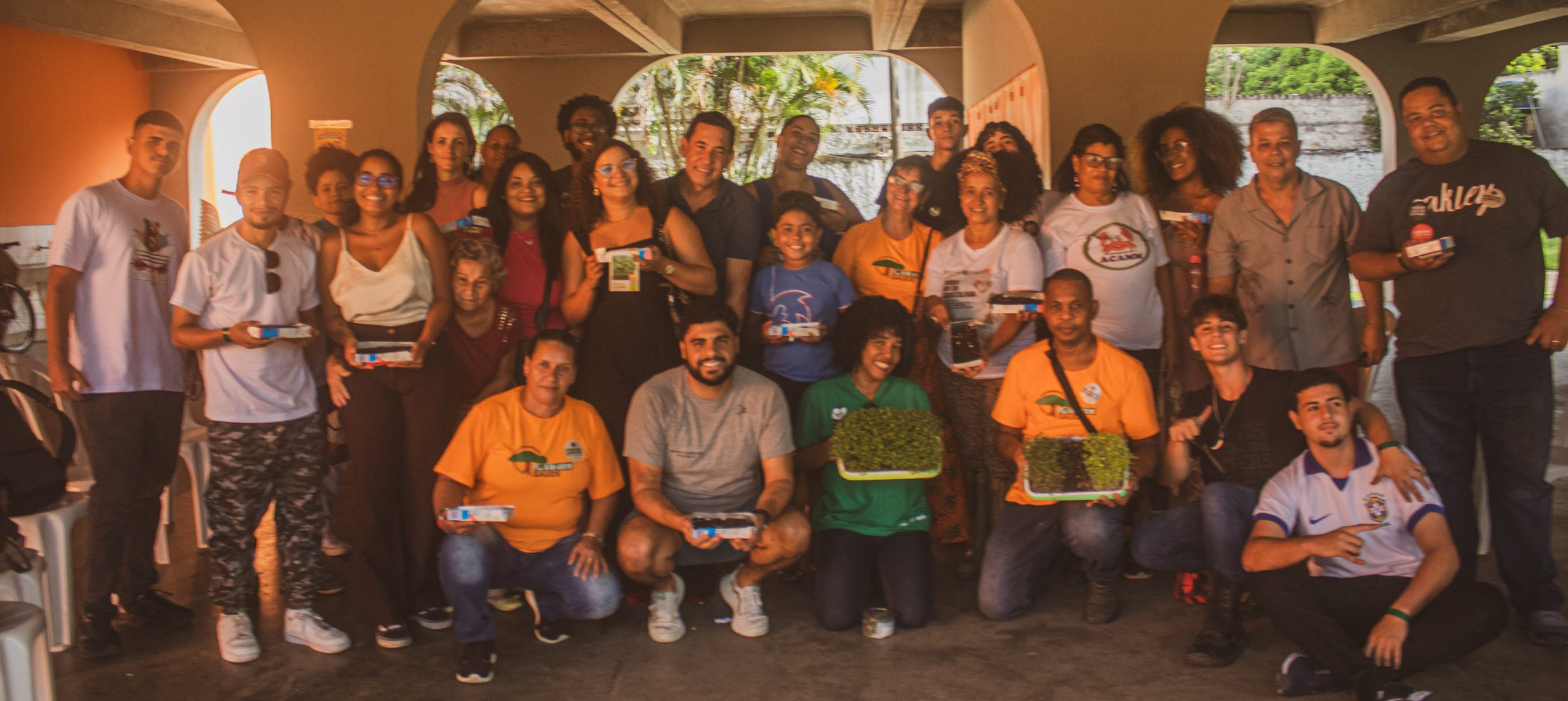
As summarized by Lyvia Leite, a social scientist from the Federal Fluminense University (UFF) and communications and cultures coordinator at the Mirindiba Institute:
“Food sovereignty is not just about food, it’s also about the right to memory and the future. And climate justice only exists when the people who take care of the land are listened to, valued and protected.”
A Call to Collective Responsibility
The 2nd Magé Climate Forum also saw the release of the Popular Guide to Food Sovereignty and the Fight Against Hunger in Magé (RJ). The document collects concepts and proposals to address food insecurity in the municipality. This and other initiatives of the 2nd Magé Climate Forum reaffirm that the Baixada Fluminense is a place of knowledge production, resistance and solutions.
Beyond denouncing hunger, the 2nd Magé Climate Forum highlighted those who combat this social problem on a daily basis. As noted by pedagogical and projects coordinator Carla Lubanco:
“Hunger is a social product that has been constructed since colonization by invaders who came here to expropriate the land.”
This statement synthesized the understanding that food insecurity in the peripheries is directly linked to historical processes of exploitation, inequality and exclusion. It also summed up the root of what makes spaces such as the Magé Climate Forum so important and powerful, bringing together different voices and experiences from the peripheries. Thus, the event strengthened networks and pointed to possible paths towards a more just future.
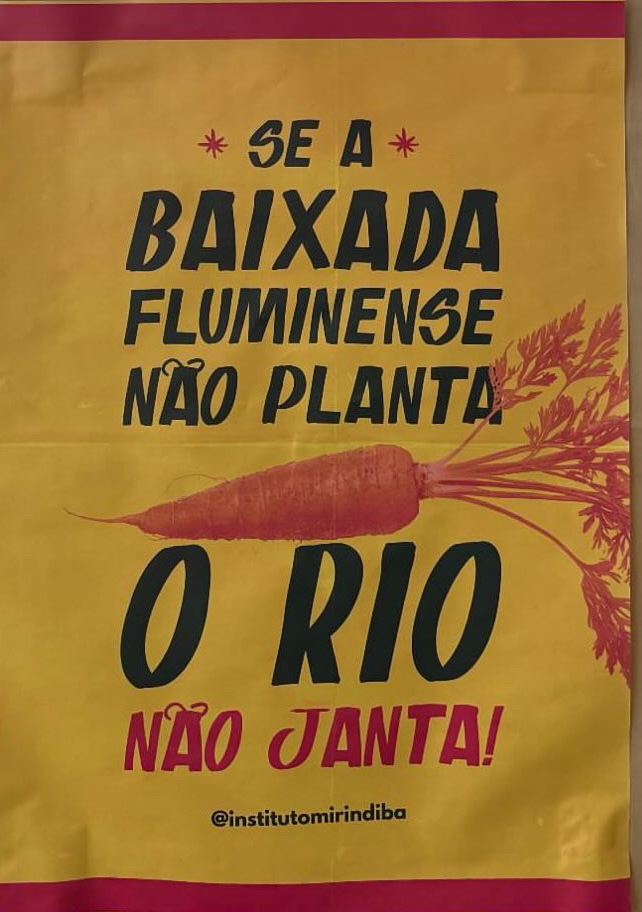
It left one thing crystal clear: if the Baixada Fluminense plants, Rio de Janeiro eats. If the Baixada Fluminense does not plant, Rio de Janeiro does not eat. But the message that echoes is even deeper: we must guarantee that those who plant also have the right to the land, to food and to their dignity.
About the author: Rick Barros is a journalist with a degree from the Federal University of Rio de Janeiro (UFRJ), reporter at Revista Minerva and member of the Network for Communication and Culture in Favelas through Fala Roça, a newspaper from Rocinha, Brazil’s largest favela. He is a community educator at the Só Cria College Entrance Exam Course and volunteer at the Guarani Collective (Magé), as well as creator of the Guetografia project and a digital influencer, working to promote the value of favelas, culture and community journalism.