
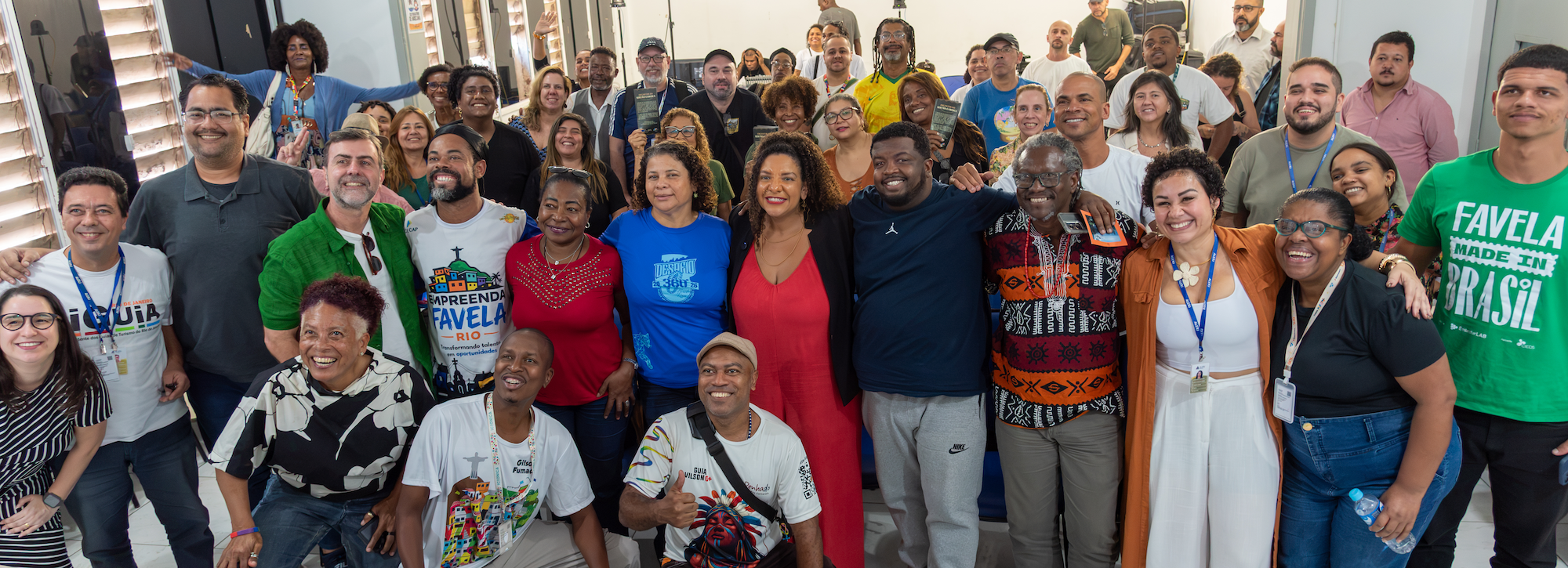

Representatives of various favela tourism initiatives, government officials and researchers in the field gathered on July 23 in Tijuca, a neighborhood in Rio de Janeiro’s North Zone, at Antônio Prado Júnior State High School for the public hearing “Tourism, Favelas, Peripheries and Citizenship: Pathways to a Community-Based, Sustainable Model.” Organized by the Rio de Janeiro Legislative Assembly’s (ALERJ) Special Commission on Favelas and Peripheries in partnership with Rota Favela Brasil, the hearing discussed the role of community-based tourism in preserving the memory, history and identity of the state’s favelas and peripheral urban neighborhoods.
The school was chosen as the venue for the hearing not only because it allowed for broad public participation but also because it has been home to the Technical Course for Tour Guides since 1974. Many of those present—local favela tour guides—are graduates of the program.
State Deputy Renata Souza, chair of the Special Commission on Favelas and Peripheries, presided over the hearing, opening the meeting with the following remarks:
“It’s important to note that when we talk about tourism in favelas, we’re not just talking about visitors… in the sense of a visitor going on a ‘safari.’ That’s not what we want. What we want is for the local culture, the local memory and identity of these areas to be recognized, and for residents themselves to have the opportunity to tell their stories, the stories of their neighborhoods. It’s about them taking the lead—telling their own stories based on their experiences and lived realities… Creating narratives about the city is what makes community-based tourism. It also involves bringing about what we’ve been advocating for so strongly: job and income generation in the community, opportunities for social interaction and the possibility for historical reparations.”
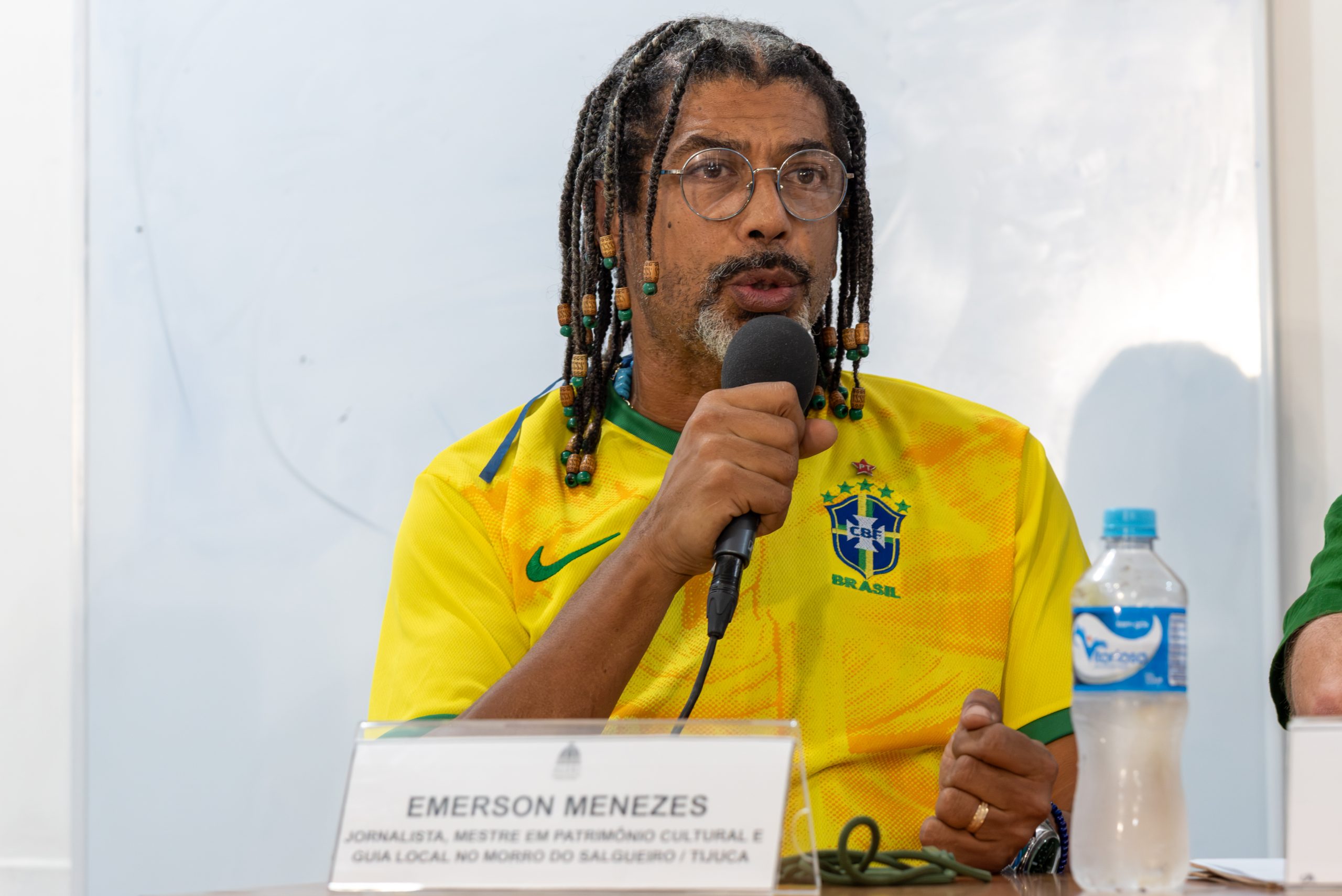
The first panel, “Favelas Are Not Just Scenery: Community-Based Tourism, Memory and the Right to the City,” featured Marcelo Freixo, former president of the Brazilian Tourism Board (Embratur); Camila Maria dos Santos Moraes, professor of tourism and coordinator of the Favela Tourism Observatory at the Graduate Program in Social Memory at the Federal University of the State of Rio de Janeiro (UniRio); Caroline Martins de Melo Bottino, professor in the Department of Tourism at the State University of Rio de Janeiro (UERJ); Emerson Menezes, journalist, MA in Cultural Heritage and local guide in the Salgueiro favela; and Sheila Souza, tourism specialist with an MBA and graduate degree in Afro-Brazilian Culture, guide in the Santa Marta favela and representative of Rota Favela Brasil.
“When we talk about tourism, the focus tends to be very much on the South Zone… because of what the South Zone offers, what it showcases. But there is culture, there is art and there are unique aspects that the South Zone neither has nor can offer. And they are definitely in Mangueira, they are definitely in Salgueiro, in Turano and in Formiga. Formiga, for example, in the Greater Tijuca area, has four ‘folias de reis‘ [an old Catholic celebration in which groups go door to door between Christmas and Epiphany, reenacting the journey of the Three Wise Men]—the finest in the world.” — Emerson Menezes
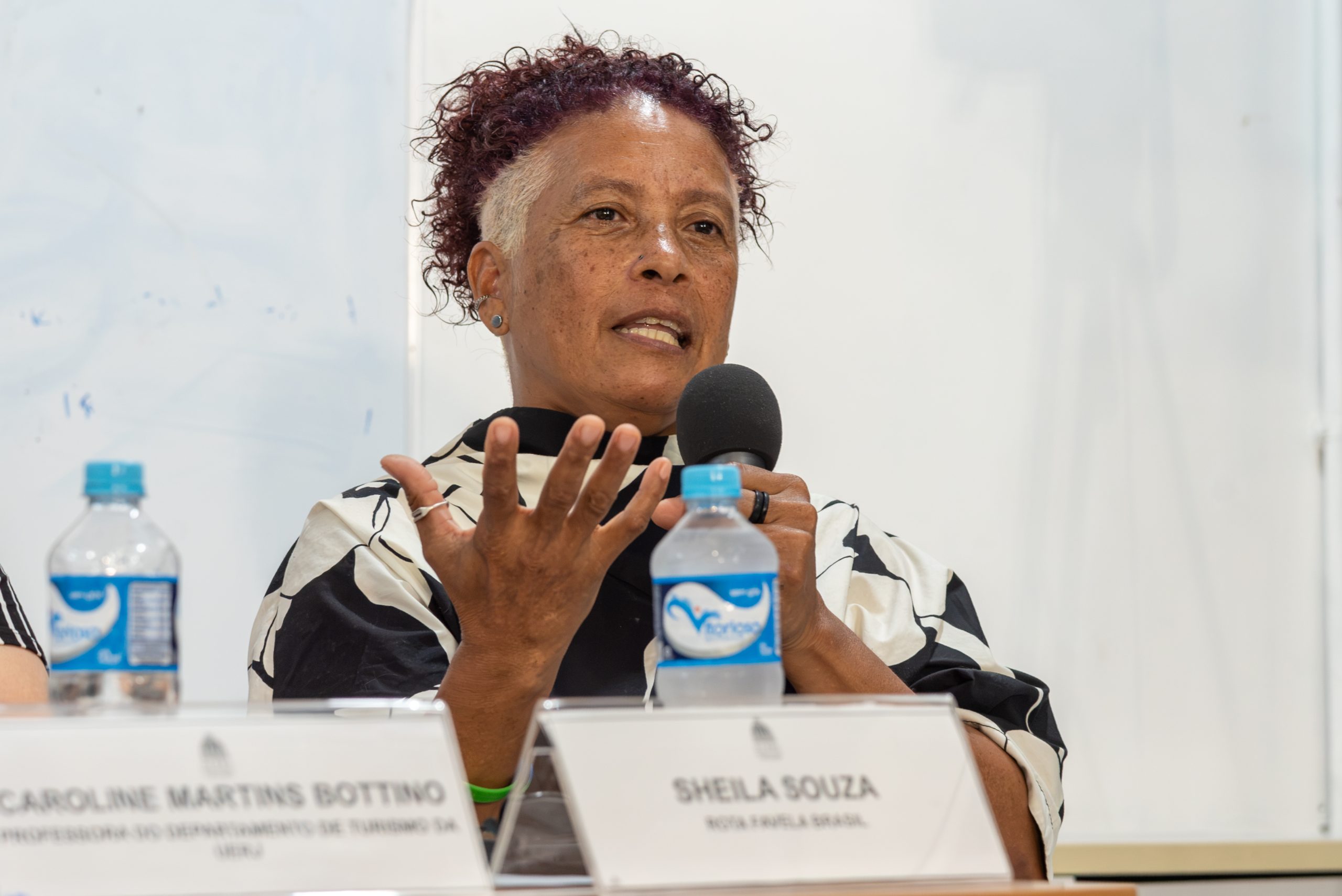
Sheila Souza pointed out that favela residents who work as local tour guides are the leading voices in shaping the narrative and memory of their communities.
“We are Afro-tourism, we are community-based tourism. For the first time, we view ourselves as the protagonists of [our] story, because throughout this entire process [the history of tourism in Rio de Janeiro], we still didn’t understand what our role was in the development of our community, or the importance that [tourism] has for the development of our history, our memory and our identity. [Engaging in community-based tourism] is much more than just taking a slice of the market and bringing it into the favela. That’s not what it’s about… it’s about our ability to tell our stories in a beautiful, genuine and wonderful way, right here in our own territory.” — Sheila Souza
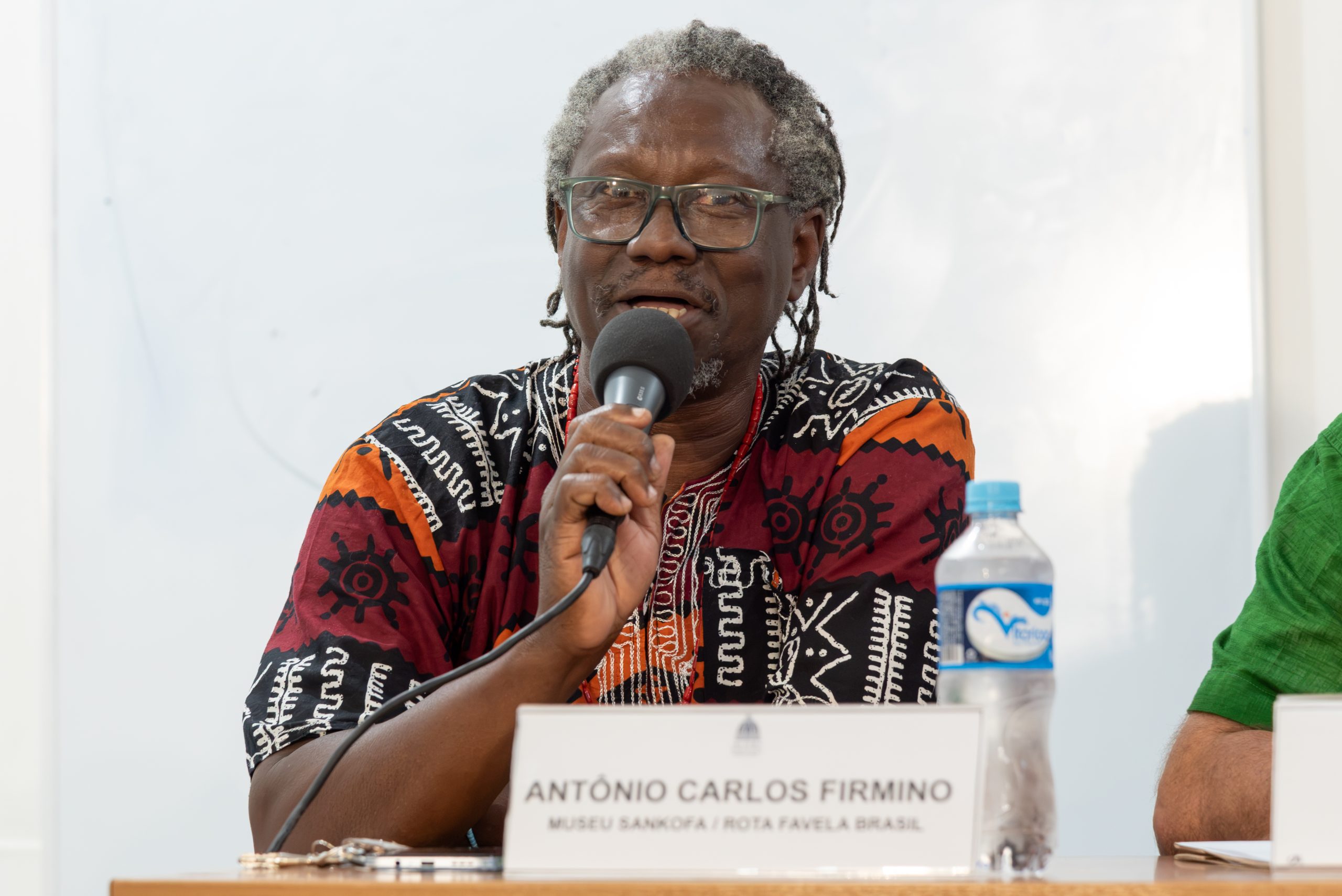
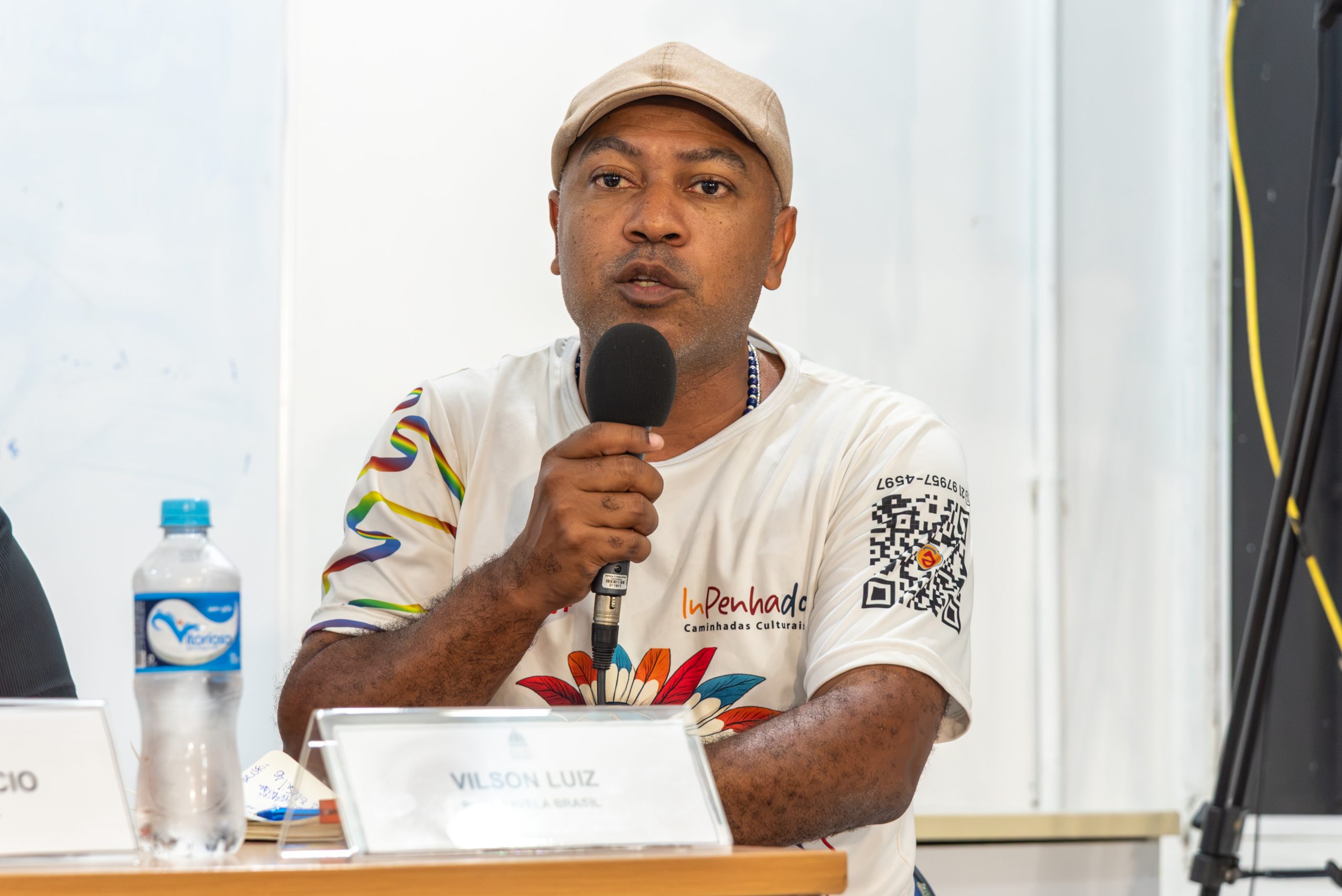
The second panel, “Community Tourism and Territorial Justice: Challenges and Opportunities for Favelas and Peripheries,” featured Antônio Carlos Firmino, from the Sankofa Museum in Rocinha, a local tour guide with an MA in Social Memory; Patrícia Ignácio, a tour guide in the Babilônia/Chapéu-Mangueira favelas; Gilson Fumaça, a tour guide in Santa Marta; and Vilson Luiz, a tour guide in Penha through the Inpenhado Afro-tourism project—all members of Rota Favela Brasil.
Participants discussed the challenges and potential of favela and community-based tourism as a way to honor local memory. Firmino explained that favelas have always been cultural hubs, visited by other city residents.
“Favelas have always been visited: who [among Rio’s residents] hasn’t gone up to the favelas to see samba veterans and attend samba circles?… So… our ancestors already experienced these visits. Then why is [it only considered] tourism [when it happens] downtown? In Copacabana? Who is it that creates Brazil’s culture? What is the greatest show on Earth? Where does [carnival] come from? From the favelas! It’s samba! Samba comes from the favelas and we have a hard time understanding just how powerful we are, just how much we can contribute to the city’s transformation through tourism.” — Antônio Carlos Firmino
Vilson Luiz offered a deep reflection.
“The territory started out as a[n indigenous] village. Then came the ships, bringing people who had been kidnapped from another continent. And then we realized that, at some point, we were imprisoned… So we began our revolts, going through changes and transforming into quilombos. And then the quilombo gave way to the morros (hills), which were left to us as a place to live. So we occupied the hill. And we changed the name of that hill and turned it into favela. The favela was seen as a complex place. So we turned all of this into territory… All of it started a long time ago. We are the result of this transformation process; we’ve gone through and lived this transformation.
So, how can we, inside the favela, create opportunities for generating income so that… we can take pride in the place we come from? So that when people come there, they understand our reality, understand the history of that place?” — Vilson Luiz
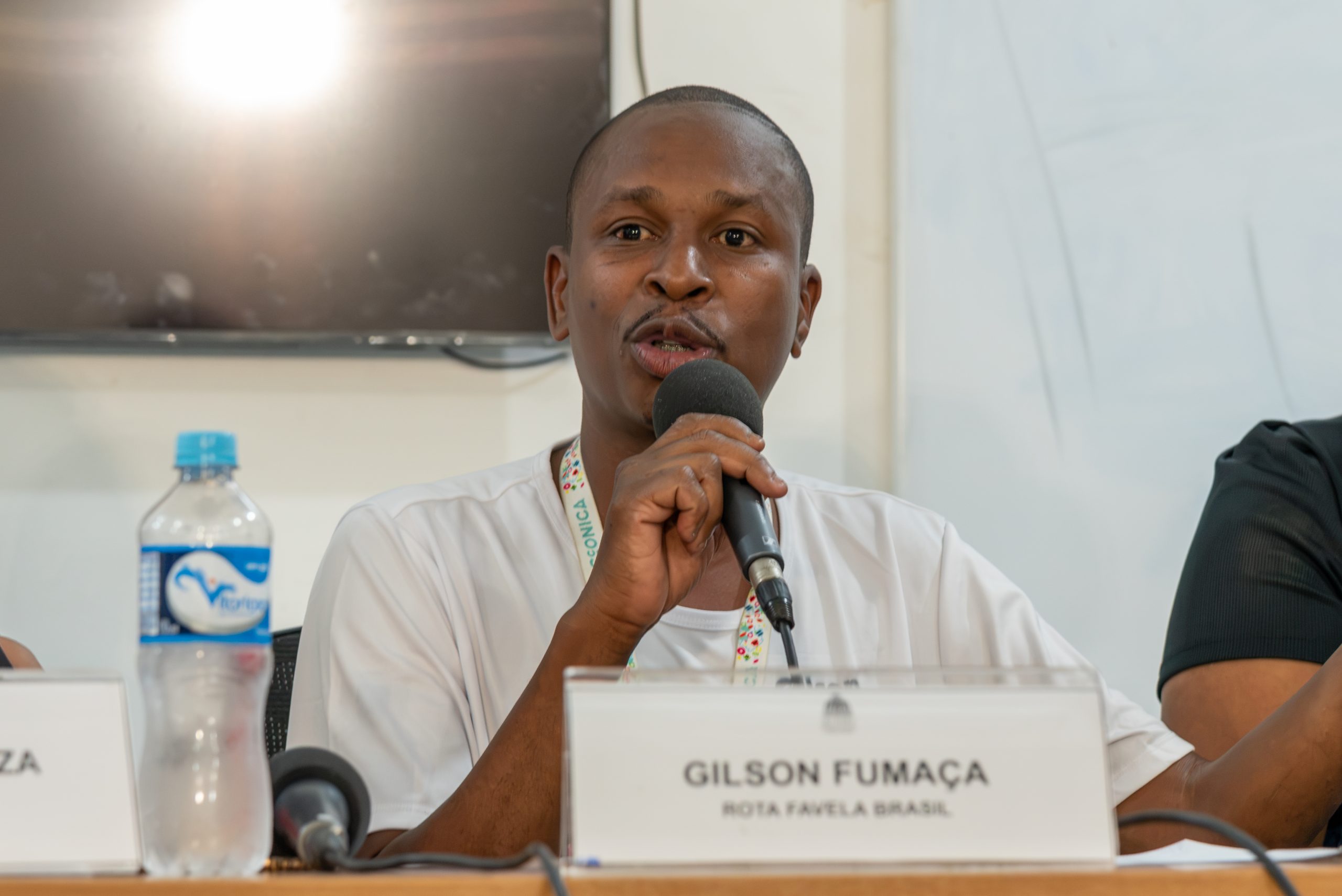
Gilson Fumaça describes how favela and community-based tour guides are becoming increasingly organized.
“At Rota Favela Brasil, we’re envisioning a people-centered social enterprise made up of community-based tourism entrepreneurs—people from local communities, from favelas, peripheral areas and the suburbs—created by residents and developed by residents, where they are no longer just background figures in tourism but become protagonists of their own stories.” — Gilson Fumaça
At the end, residents of favelas were able to speak about their experiences. Members of Rota Favela Brasil also presented a letter outlining their demands. They are:
- Inclusion of favelas and their businesses in Rio de Janeiro’s official tourism maps, guides, websites and events;
- Expanded promotion of community-based itineraries;
- Guaranteed participation in national and international fairs and events;
- Protection and maintenance of equipment and support structures for tourism;
- Regular provision of courses, training programs and mentoring for entrepreneurs;
- Creation of specific calls for proposals to provide access to financial resources and technical support;
- Promotion of initiatives located in areas of the city that remain outside traditional tourist itineraries, highlighting bars, restaurants, cultural projects, trails, parks and other community attractions; and
- Semiannual meetings to monitor the progress and implementation of these actions.
The politicians in attendance pledged to incorporate the document’s demands into the recommendations from the hearing.
Watch the Recording of the Public Hearing Here:
See More Photos in the Album:

About the author: Bárbara Dias was born and raised in Bangu, in Rio’s West Zone. She has a degree in Biological Sciences, a master’s in Environmental Education, and has been a public school teacher since 2006. She is a photojournalist and also works with documentary photography. She is a popular communicator for Núcleo Piratininga de Comunicação (NPC) and co-founder of Coletivo Fotoguerrilha.