

For the original obituary by Karen Fontoura published in Fala Roça, click here.
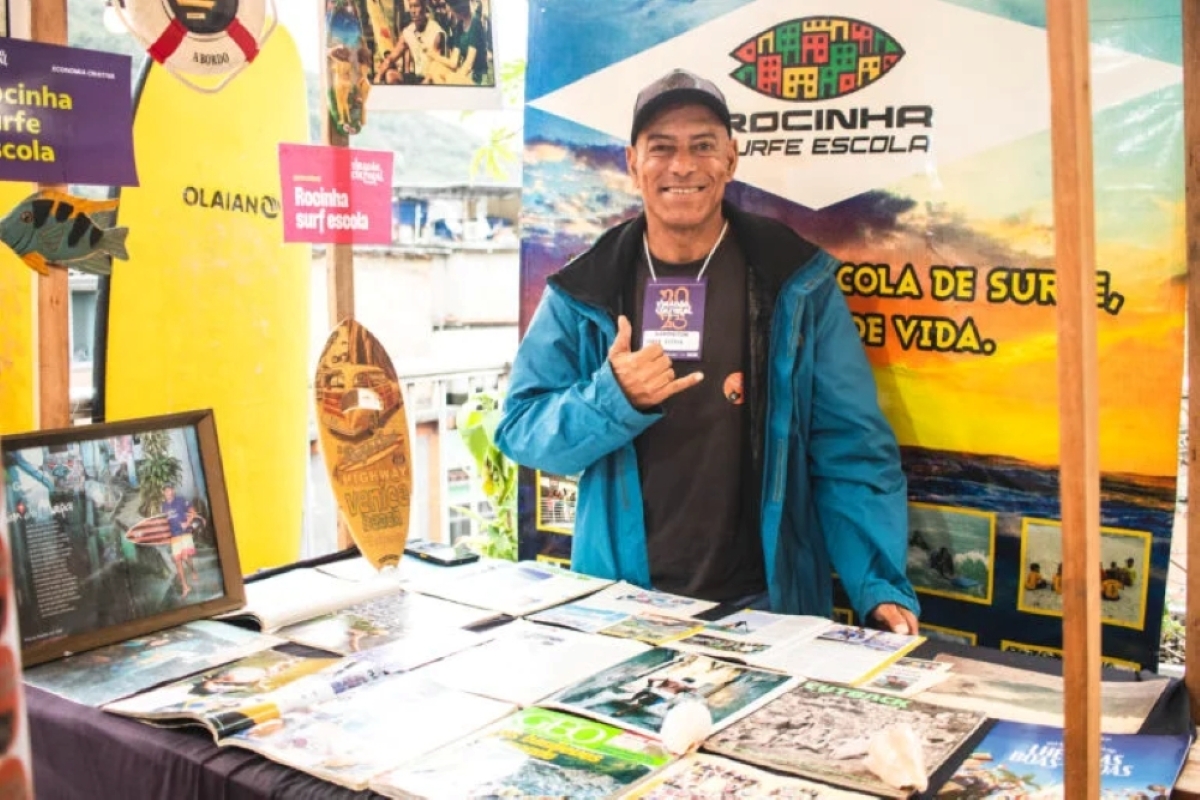
Known as “Bocão,” Ricardo Ramos founded the Rocinha Surf School Association. His legacy was defined by his commitment to promoting the sport and social inclusion in the community.
Instructor, surfer, Roupa Suja resident and one of Rocinha‘s leading figures in the sport, José Ricardo Ramos, 54, known as “Bocão,” was found dead on Sunday, June 28, along the rocky shoreline of São Conrado‘s Avenida Niemeyer after a five-day search carried out by firefighters, fellow surfers, civil society organizations and friends. His passing carries an almost poetic dimension.
Even while pierced with the immense pain of the loss of a family member, an instructor and a friend who dedicated over three decades of his life to Rocinha, it is impossible not to reflect on the symbolism of someone who lived for the sea and, in a way, found in it his final destination.
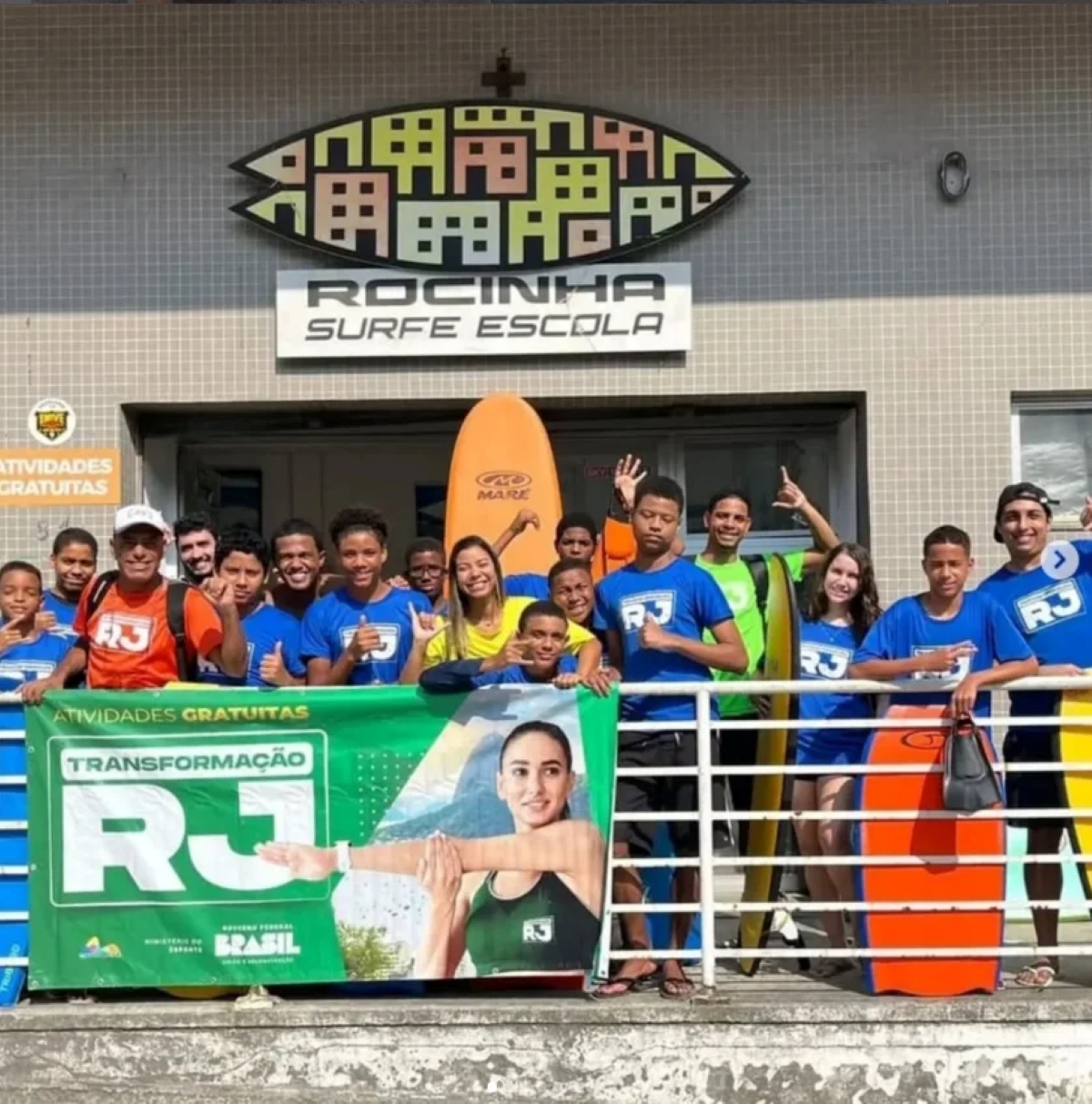
Ricardo Bocão devoted his time to others without ever neglecting to cultivate what gave his life meaning: surfing. He taught the sport free of charge to countless children and youth from Rocinha through the Rocinha Surf School, making Cantão de São Conrado an extension of their home—a backyard where they could practice a sport still considered elitist.
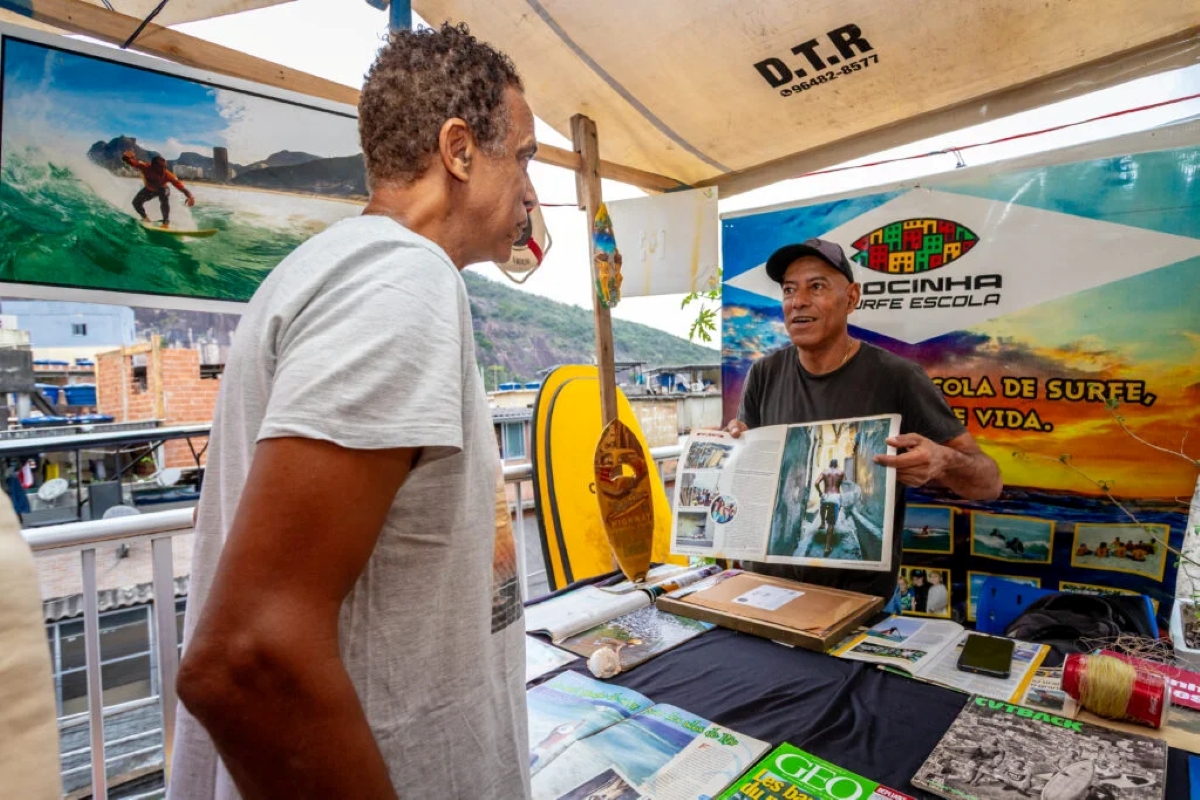
Beyond teaching, the instructor also restored, loaned and donated boards to those who could not afford one, making surfing possible for favela youth. At the same time, Bocão emphasized that sports should not replace education.
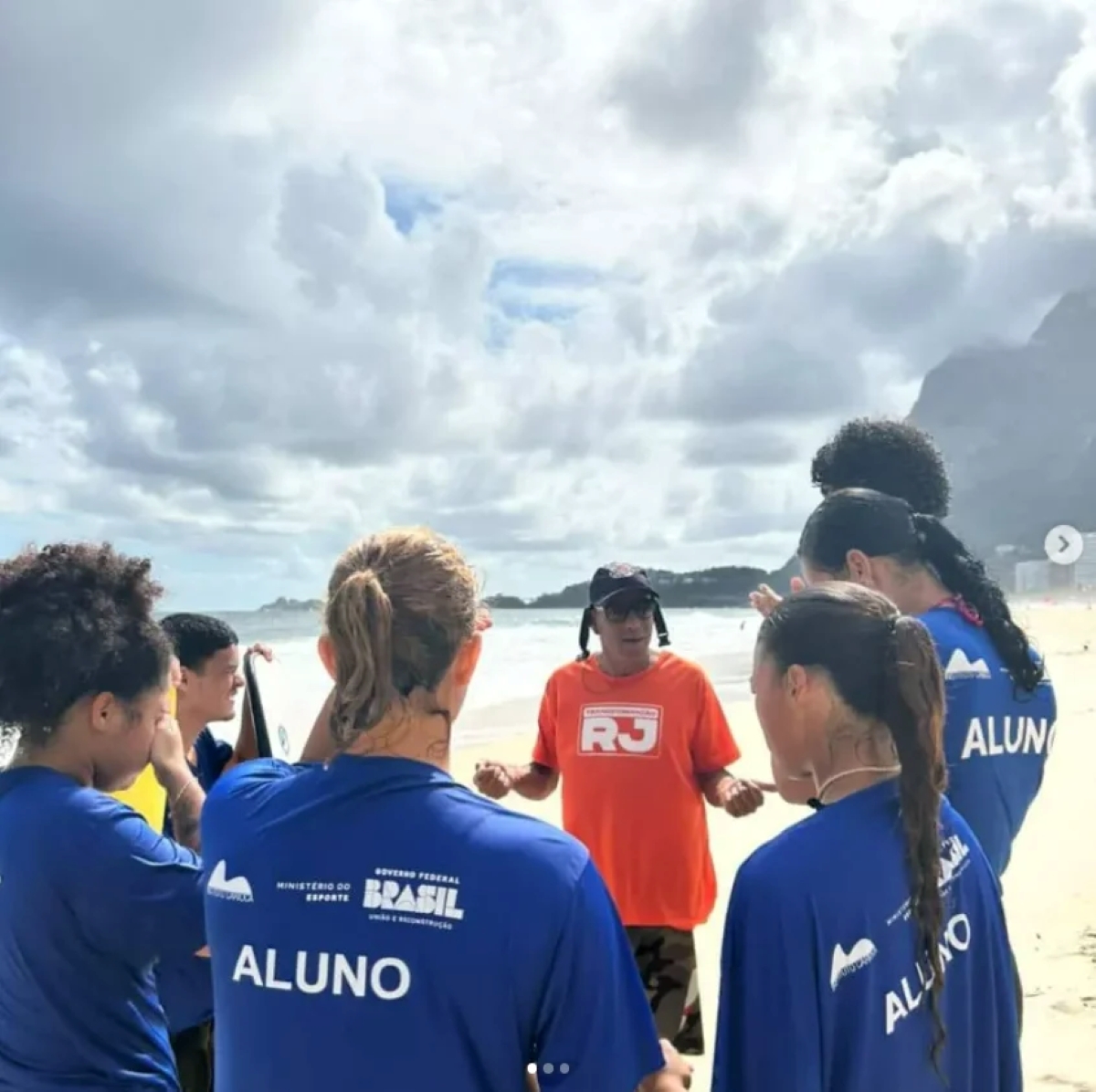
“Go to school, then come surf,” he said in a video shared on social media by the Barraco Adentro Podcast about the work of the Rocinha Surf School. It was a simple phrase, but one that reflected his worldview: sports as a tool for transformation, never as a substitute for academic and civic education.
Founded in 1989 and formalized in 1994, the Rocinha Surf School Association became a place of opportunity for generations of children and youth from the favela. Bocão built a life defined by purpose and commitment to the community and the beach. He was a constant presence at community events, championships, beach clean-ups and initiatives that helped keep the project alive, which often survived thanks to collective effort and the constant search for resources. His name was known, respected and admired by many Rocinha residents.
Ricardo Ramos disappeared in the early hours of Wednesday, June 24, after entering the ocean at São Conrado Beach in Rio de Janeiro’s South Zone. The fire department, residents and surfers organized a search for the instructor, hoping to find him alive. Residents remained hopeful as WhatsApp groups and local community social media pages joined forces to encourage continued search efforts and offer support.
Yet none of this takes away from the difficult questions Ramos’ death poses. It invites us to look at mental health with responsibility and less silence, and to think about how even those who dedicate their lives to caring for others may face invisible struggles. It also highlights the weight of the social and financial challenges faced by those who keep community projects going, almost always with limited resources and tremendous resilience.
May Bocão be remembered not only for how he passed away, but above all for the legacy he left behind: the legend of teaching surfing to favela children and teenagers. For the waves he taught how to ride, for the children he took in, for the values he imparted and for his conviction that education and sport, together, could change lives. May his legacy be honored and inspire future generations.
About the author: Karen Fontoura is a journalism student at the Federal University of Rio de Janeiro (UFRJ), a resident of Rocinha, and a reporter with community newspaper Fala Roça, where she coordinates the organization’s institutional and project communications. She works with audiovisual production, reporting and the promotion of community initiatives.