
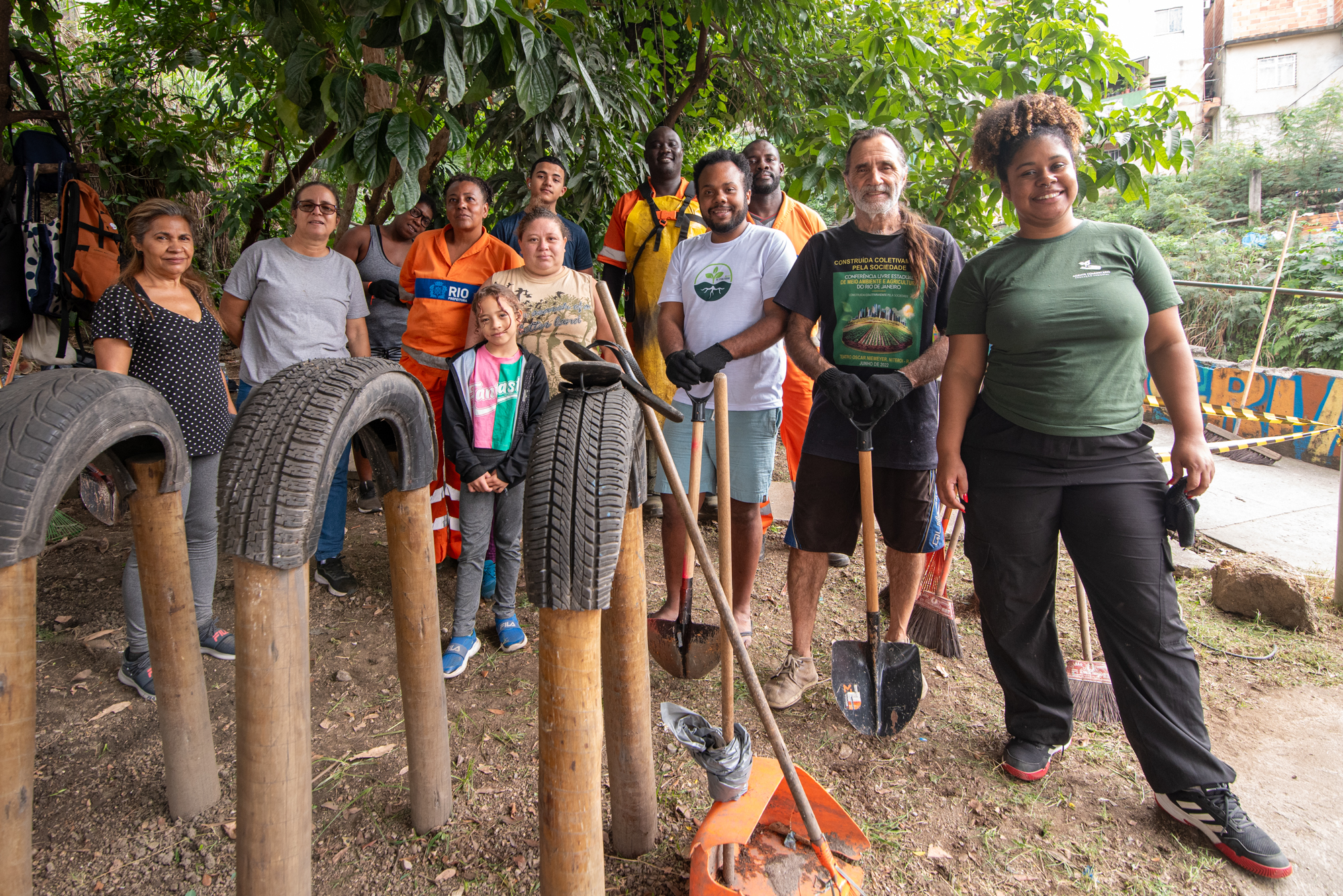

The agroforest in the Morro da Providência favela, in Rio de Janeiro’s city center, has been pulsing with renewed health since July 12. On that day, a collective action organized by Agroecological Providência carried out cleaning and maintenance of the community’s common space, known locally as Java. Publicized by the Sustainable Favela Network Collective Calendar* and other collectives, the initiative also received support from a community agent with the Municipal Secretariat of Environment and Climate, as well as cleaning staff from Comlurb, the municipal waste collection utility. By the end of the collective action, 20 bags of trash had been removed from the agroforest.
Agroecological Providência has been developing the community and strengthening a sense of belonging among residents since 2013. Combining community development with agroecology, socio-environmental education, and community health and wellness, the initiative is coordinated by Alessandra Roque, a forest guide and guardian, and traditional healer who has lived in Providência since 1997, alongside Lorena Portela, an environmental engineer from Niterói—Rio’s sister city across Guanabara Bay. The project’s headquarters is located in a green space above the João Ricardo Tunnel. Roque explains the dynamics of the monthly collective action that cleans and maintains the space.
“It’s hard to keep this space clean since it’s open to everyone… It’s like the work of ants: once a month we hold a collective action. It really depends: in months when a lot of people show up, we remove a lot of garbage. In months with fewer people, we take out less, because it’s back-breaking work… Last month, we had [more] help and managed to take out 68 bags of trash, including rubble… If we can keep the amount of trash from building up, that’s a job well done.” — Alessandra Roque
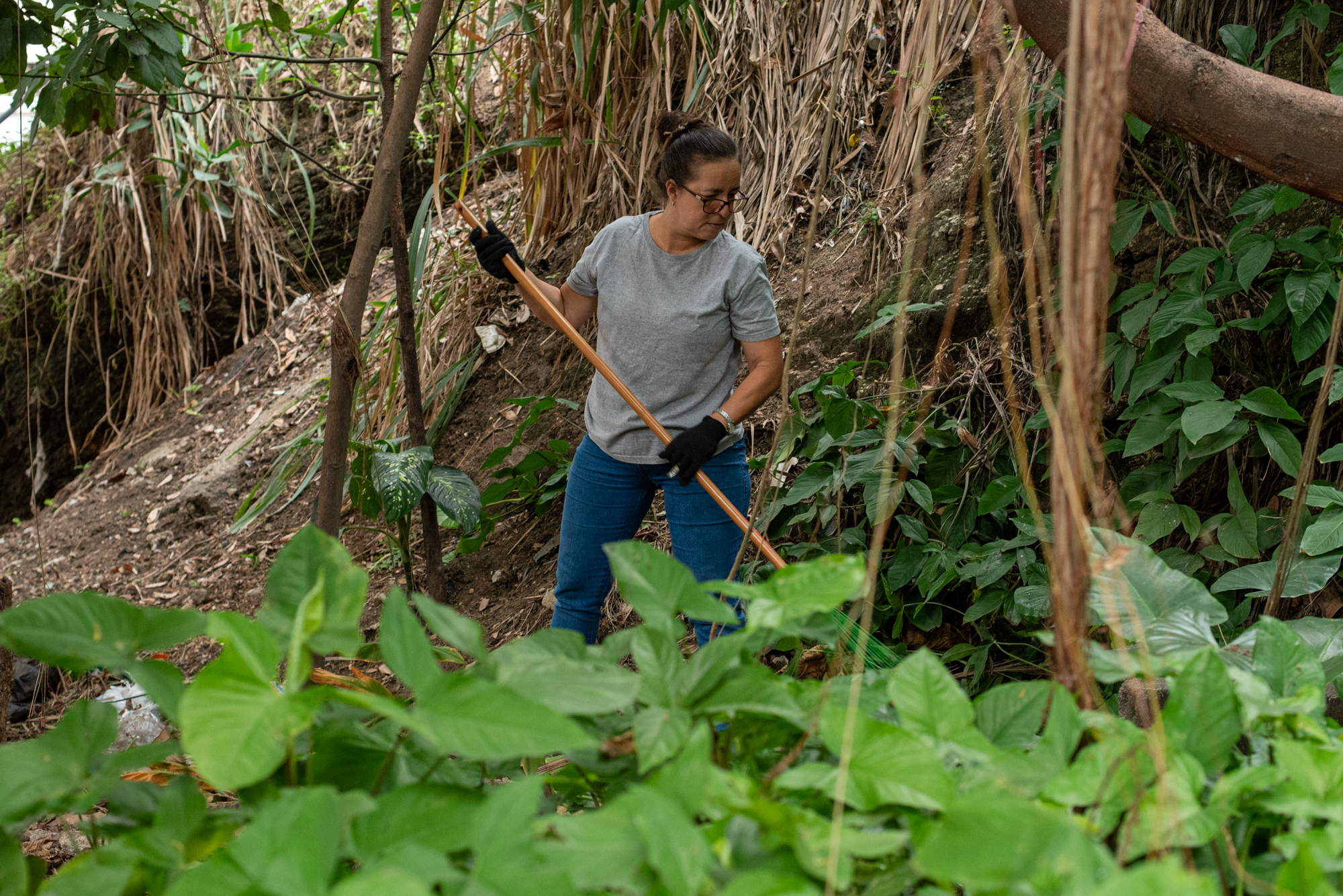
The action was dedicated to removing inorganic waste, such as plastic bags and wrappers. The organic materials, such as weeds and tree prunings, stay in the agroforest to decompose and serve as compost.
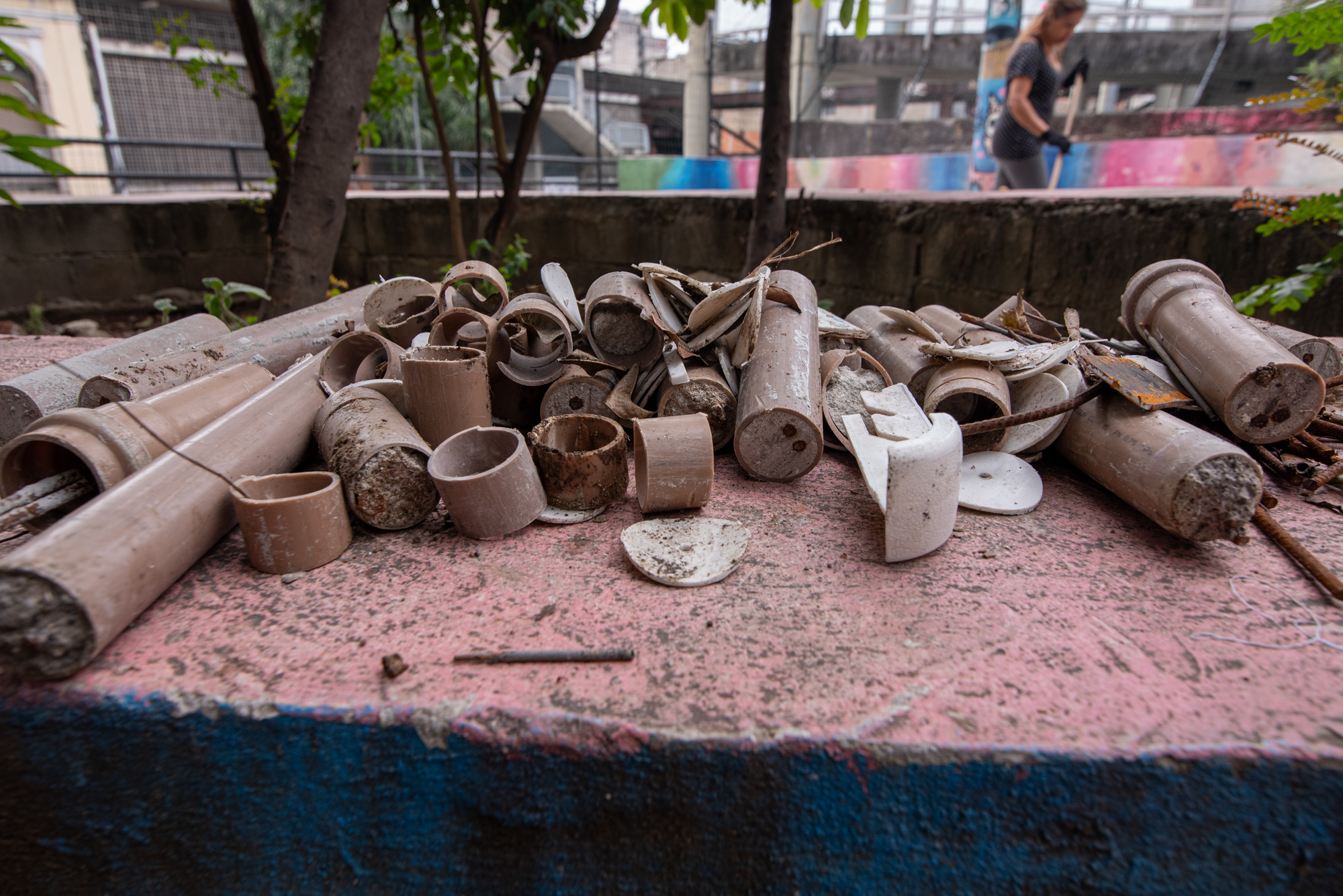
Cleaning and maintaining the forest poses many challenges. Roque lists difficulties with some residents, people experiencing homelessness, and public authorities. During the action, she called out the neglect of a recent municipal construction project which, after building a railing for the stairway leading to the favela, left rubble inside the garden bed.
“In addition to the difficulties we face with [some] residents who dump rubble, there are people experiencing homelessness who sometimes seek shelter and leave their trash behind. We also face neglect from public authorities, who built the railing on the stairs and dumped all the cement… into the garden bed. All the rubble, pipes, and rebar were tossed into the garden bed.” — Alessandra Roque
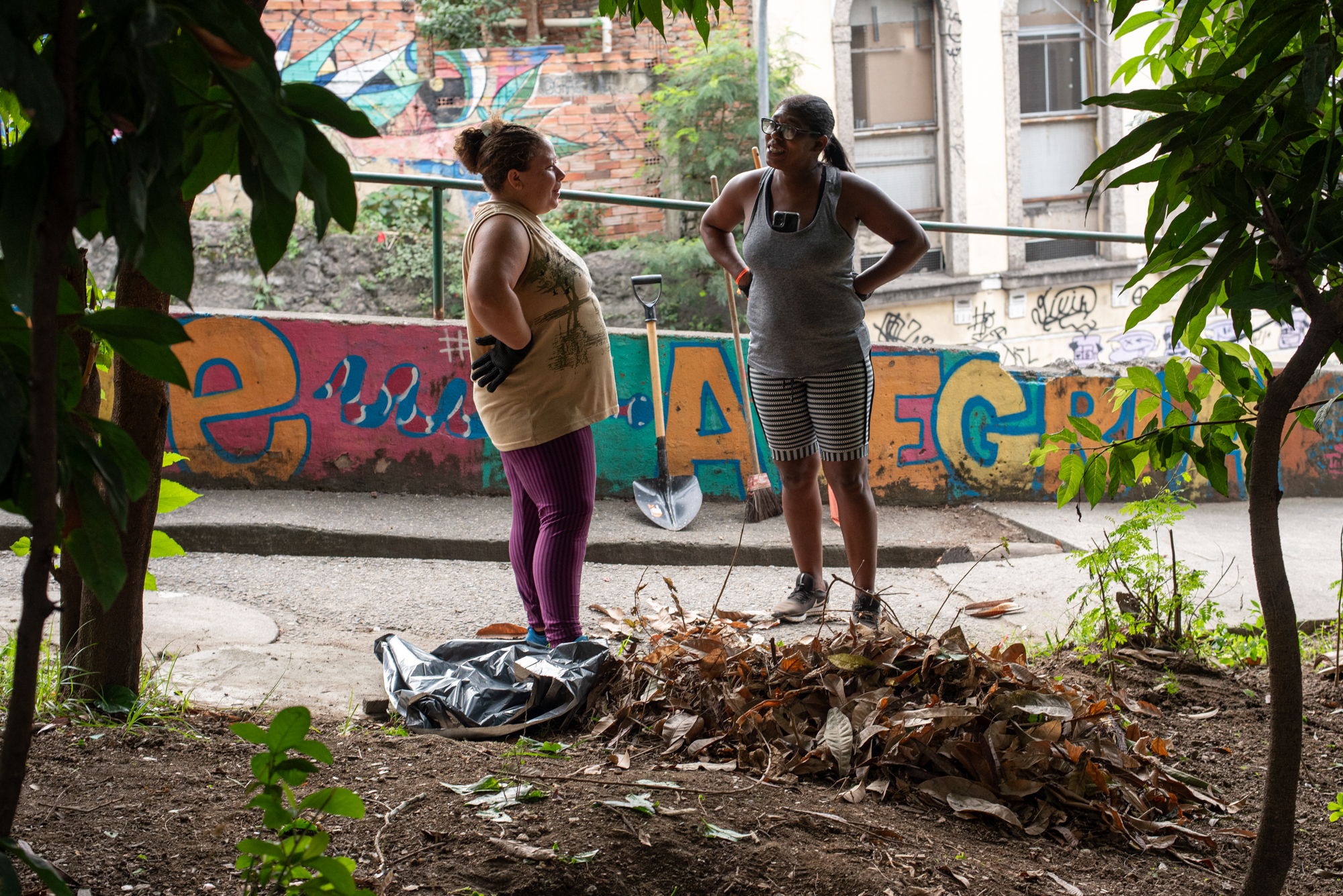
All collective actions have the support of Providência residents who, faced with the scarcity of leisure spaces in their community, come together in a collective effort to keep this green space alive. Resident Solange Barcelos said in an interview that she regularly takes part in maintaining the space.
“I always participate. I think it’s a good thing, because we don’t have much space as it is. This is a good space, but it [depends on] maintenance… It’s difficult, but not impossible. We’re doing our part and counting on the residents and on people who pass through to do theirs… Having a place for the kids to play [is important]… There’s some room here, and no danger from cars.” — Solange Barcelos
Located in an area known as “Java,” one of the main entrances to Morro da Providência, this previously abandoned site was revitalized as an agroecological space in 2019. Since then, the agroforest has continued to bear fruit for residents of the community and surrounding area. Dona Franklina do Nascimento, a resident of neighboring Santo Cristo—just downhill from Providência—takes part in Agroecological Providência’s activities and shares her thoughts about preserving the space.
“I’ve lived in this area for 40 years… We should come here more often [to keep it clean], but life gets so busy, you know? There should be more signs to educate residents and keep the place clean. Whenever we come, we make a difference. That’s how it has to be—each one does a little. Before you know it, that little is a lot. I’m one of Alessandra’s sewing students; I take part in her tailoring and creative sewing classes. So when she says [there’s going to be a collective action], we bring our strength to help out.” — Franklina do Nascimento
Daniel Alves found out about the event through the Sustainable Favela Network’s Collective Calendar and came all the way from Ilha do Governador, in Rio’s North Zone, to take part in the collective action.
“I’m from Ilha do Governador, born and raised in the Parque Royal favela, and I grew up on Guanabara Bay… My childhood was spent on the bay, fishing for shrimp, fish, and crab, and coming into contact with other species like squid and octopus. I took environmental education at school, and after the 2000s came a major environmental disaster in Guanabara Bay—the one caused by Petrobras’s Duque de Caxias Oil Refinery (REDUC), one of the biggest [environmental disasters in Rio]… After that, I graduated and began working in sustainability and human development. I learned that we only have dignity when we talk about human and social development, when the favela and the community become sustainable.” — Daniel Alves
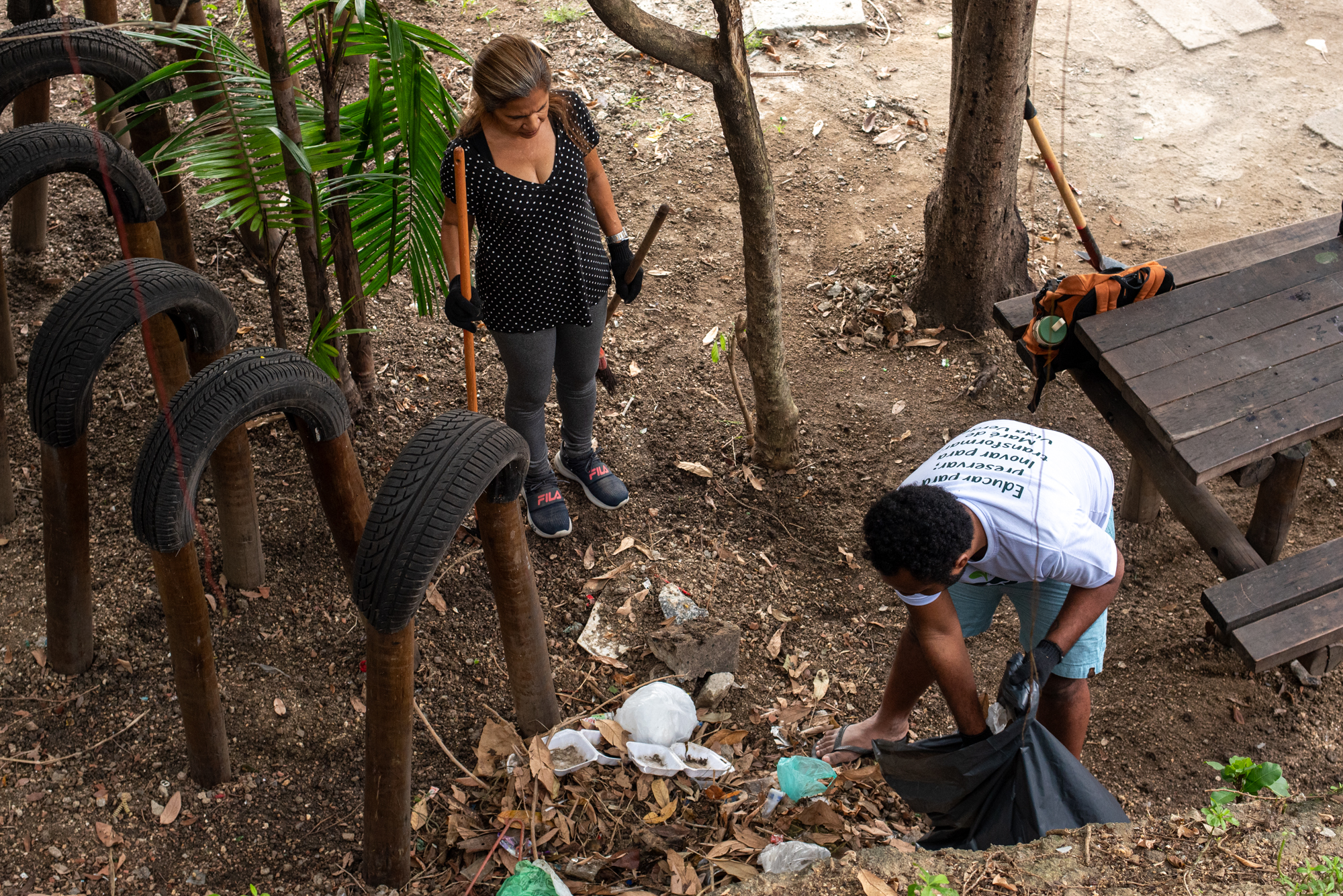
The collective action also had the collaboration of Thais Barbosa, a community environmental education agent from the Municipal Secretariat of Environment and Climate’s Environmental Education Center, as well as three Comlurb staff who helped clear tall grass from the most difficult‑to‑access parts of the agroforest. Barbosa spoke about the role of Agroecological Providência’s agroforest and her work in the community.
“[It’s essential to] raise residents’ awareness about the importance of not only cleaning the space but also preserving this forested area… Sometimes people are experiencing vulnerability and poverty, so the last thing they’re thinking about is cleaning or preserving—or not cutting down a tree… We only recently started [our environmental education work]… We’re going to start now, with the people from [the] Pedra Lisa [area of the community], who are the ones facing the most vulnerability here in the favela… We’re going to start by talking to them and planting a few vegetable gardens in the area—a very confined area, lacking trees. There are only houses and narrow alleys there… We need to do the work of going and talking to them before planting the gardens, you see?” — Thais Barbosa
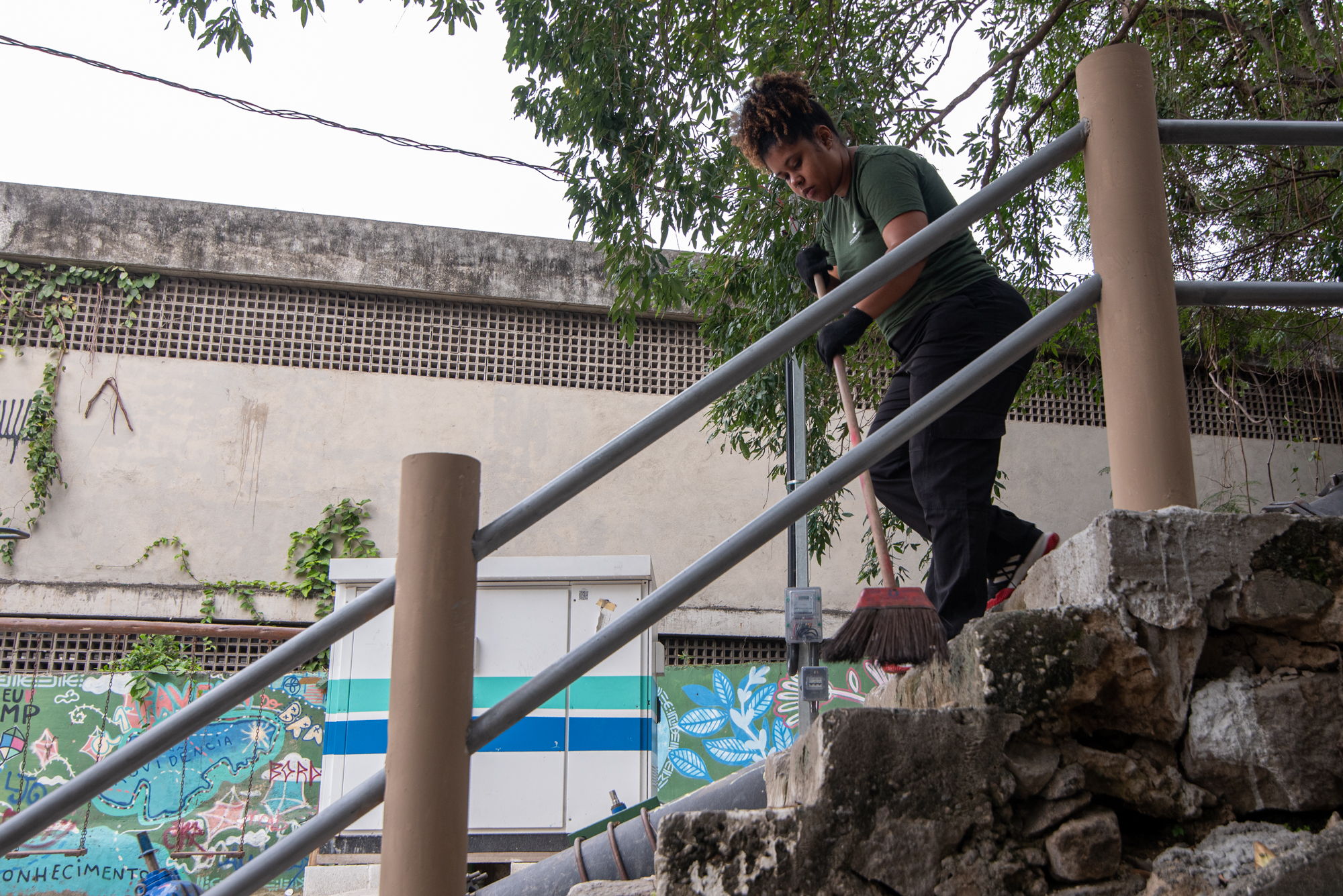
Resilient, the Providência agroforest project continues to create a breath of fresh air for the favela right in Rio’s city center. It is one of the few places in the area where residents can enjoy the cooler microclimate that only green spaces provide. For over a decade, Agroecological Providência has been building a sustainable favela in the Port Region, in Little Africa, with the support of residents and volunteers. Like Providência, through collective organizing, favelas and peripheral areas across Rio continue to make themselves present and occupy abandoned spaces, create sustainable alternatives, and fight for their rights in the face of a State which, historically, has evaded its responsibilities.
See the Full Album by Bárbara Dias on Flickr:

*The Sustainable Favela Network (SFN) and RioOnWatch are both initiatives realized by not-for-profit organization Catalytic Communities (CatComm).
About the author: Bárbara Dias was born and raised in Bangu, in Rio’s West Zone. She has a degree in Biological Sciences, a master’s in Environmental Education, and has been a public school teacher since 2006. She is a photojournalist and also works with documentary photography. She is a popular communicator for Núcleo Piratininga de Comunicação (NPC) and co-founder of Coletivo Fotoguerrilha.