
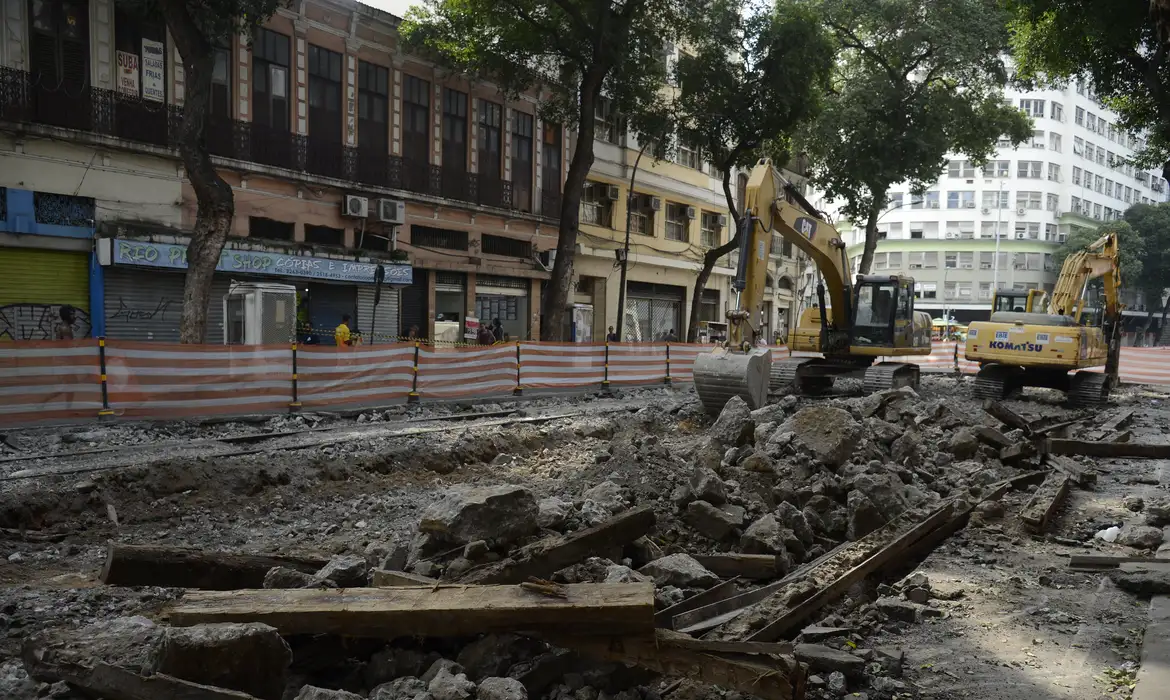

Released in full in 2025, the trilogy Valongo’s New Blacks Cemetery – An Impactful Journey Through the History of Slavery in Brazil, organized by the New Blacks Institute (IPN) and João Carlos Nara Jr., reveals a registry of Rio de Janeiro’s history that over a significant period was erased: records of Black deaths.
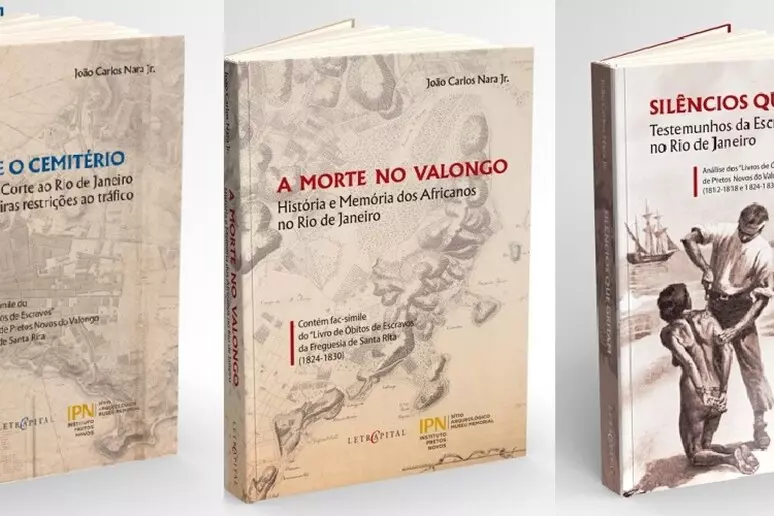
Across its three volumes, The Wharf and the Cemetery: from the Arrival of the Portuguese Court in Rio de Janeiro to the First Restrictions on the Slave Trade, Death at Valongo: History and Memory of Africans in Rio de Janeiro and Silences That Scream: Testimonies of African Slavery in Rio de Janeiro, the author uses real historical documents, particularly death records from Santa Rita Church, the few that survived mold and termites, and others linked to the New Blacks Cemetery, to reconstruct how enslaved Africans were treated from disembarkation to death in Little Africa, in downtown Rio.
These documents reveal a brutal routine: bodies buried in haste, deaths ignored and a full, institutionalized dehumanization.
Author João Carlos Nara Jr. uncovered numerous details drawn from the death records, among them the so-called “Marca da Carregação,” a “cargo mark” burned into the skin of enslaved people with a hot iron.
“Perhaps one of the most striking things in the book is the so-called ‘cargo mark,’ a seal [placed] on the ‘merchandise’ [on the enslaved]. People would take a scalding-hot iron, the kind used to brand cattle, and mark the person who was to be exported. It’s hard to talk about it that way, but that’s what it was. So the book has this singular characteristic that distinguishes it from other death registers you’d find in church records. Those people are unnamed, but you identify them through the marks on their skin. The fact is that in addition to the ‘cargo marks,’ people also carried on their bodies the marks of their own land—that is, the tattoos of their culture, which they’d brought from home. So there was a coexistence of two types of marks: the mark imposed by the violence of commerce and the mark of culture.” — João Carlos Nara Jr.
By turning these records into narrative, the author reminds us that the city was built not only upon these bodies but also upon a politics of forgetting. The trilogy does what public authorities never have: it restores origin, context and integrity to lives erased from official maps.
According to Merced Guimarães dos Anjos, president of the New Blacks Institute, recovering these stories is fundamental to reshaping the future.
“It’s very sad when you see this transcription, the silence that screams. [The documents/records] have no age, have no name, but they do have some of the places [where] they came from, the ships that brought them here. And [some details], more or less: whether they were a girl, a boy, a ‘new Black’ or a ‘cria,’ [the child of an enslaved woman] as they used to say back then, right? It’s very sad. And nothing’s changed… we’re still losing children and youth even today. In my view, slavery is still ongoing, you know? The New Blacks Cemetery has a lot to tell about this history of Brazil’s past, of the city, that they want to silence. They [the elites, to this day] want to exclude Little Africa from modernity. They want to destroy the cemetery because it’s a place of pain, a place that shows the truth of what happened. They want to preserve Cais do Valongo, [to reduce history to] ‘Oh, Cais do Valongo, [they] arrived through here, ‘the people’ [from Africa],’ and that doesn’t hurt as much as it does when you go to the New Blacks Cemetery and come face to face [with the bodies of the new Blacks killed by the slave trade].” — Merced Guimarães dos Anjos
It is precisely at this point that the work engages with the present. The region where the records were taken from, i.e., the Port Region, Valongo and the area surrounding the New Blacks Cemetery, became, in later decades, a space of urban abandonment, racial violence and the criminalization of poverty. The same region where enslaved bodies were discarded, later became an area designated for the precarious housing of poor workers.
This development is no coincidence: it demonstrates how the dehumanizing logic found in the death records persisted in how the city distributes rights, infrastructure and humanity. The Port Region’s first low-income housing occupations set the stage for a process that would spread throughout Rio’s favelas.
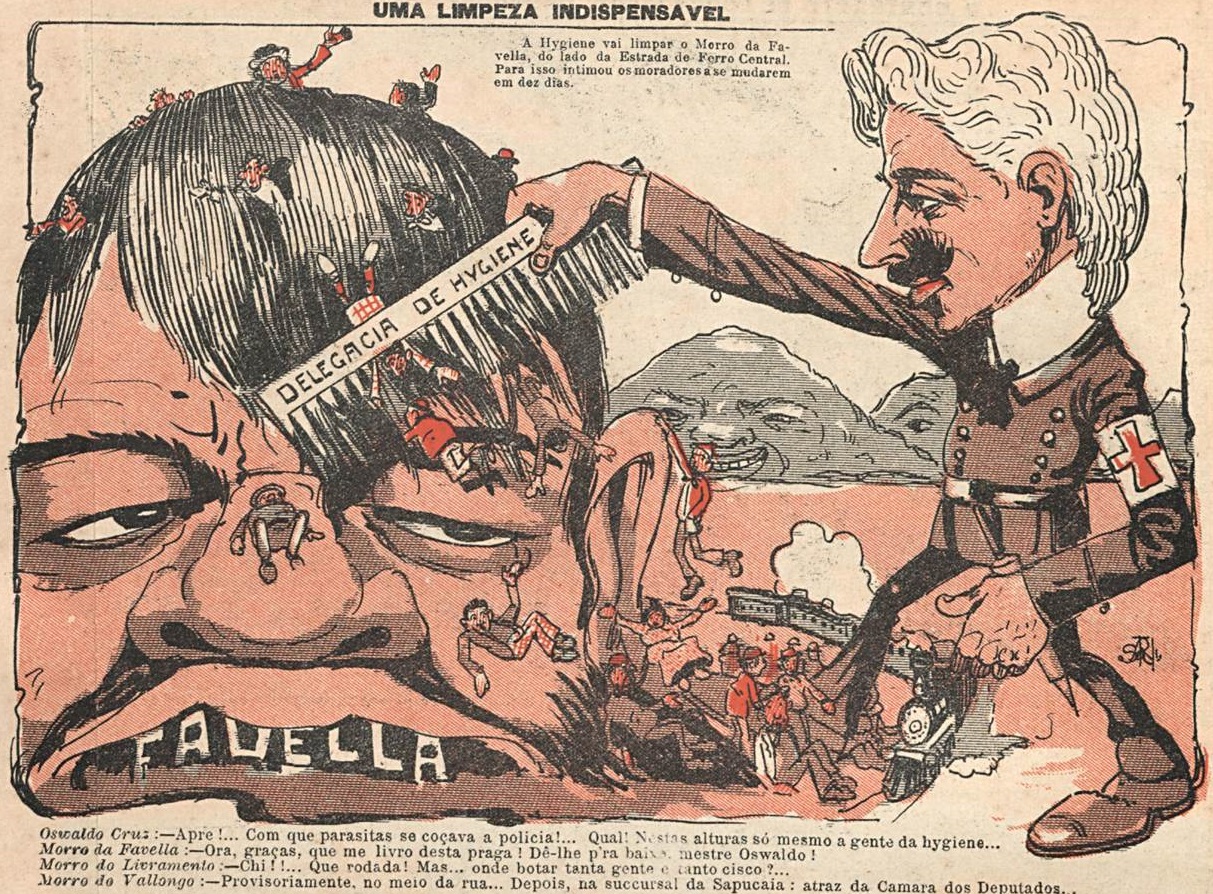
Nara Jr.’s trilogy helps trace this historical thread. These documents reveal lives marked by neglect, not registered as citizens but as discarded property. This reality still resonates today in how the State manages predominantly Black communities. Philosopher Achille Mbembe calls this necropolitics: a politics that decides who dies, who lives and who merely survives—with fewer rights, less protection and less social worth.
When one looks at Rio’s favelas from the perspective of racial violence rooted in the nation’s slave-holding past, it becomes clear that today’s cycle of violence and denial of rights did not arise by chance. It is the continuation of an age-old, structural logic: assigning certain bodies and territories to abandonment and death. According to Nara Jr., documenting these deaths in books is an essential step towards reparations.
“These are too many people for such a tiny cemetery. So many people! The impact is enormous. I confess that when I was working on this, it hurt a lot, because you start reading a record, then another, and it’s all very much the same. And it almost feels like you’re getting used to it. But you can’t get used to it, you know?
You’re dealing with pain, with death, with the relatives’ grief, with the people who were around. Because I think even the people who were more directly involved—the priest recording the death, the gravedigger carrying out the burial, the person there [employee] whose job was to carry the deceased. For those people, all of this must have been very distressing. When we look at documentation from the period discussing the end of the slave trade, everyone admits that it was indeed wrong. There was a sense of unease about that situation. Of course, there were [also] people who became incredibly rich [from slavery].” — João Carlos Nara Jr.
The author’s trilogy opens up the perspective that, even today in relation to favelas, there is a way of governing Black lives that normalizes death in the most undignified ways. It documents how Black people were denied the right to mourn, to funeral rites or to any kind of respect for their bodies—something that is also present in contemporary scenes.
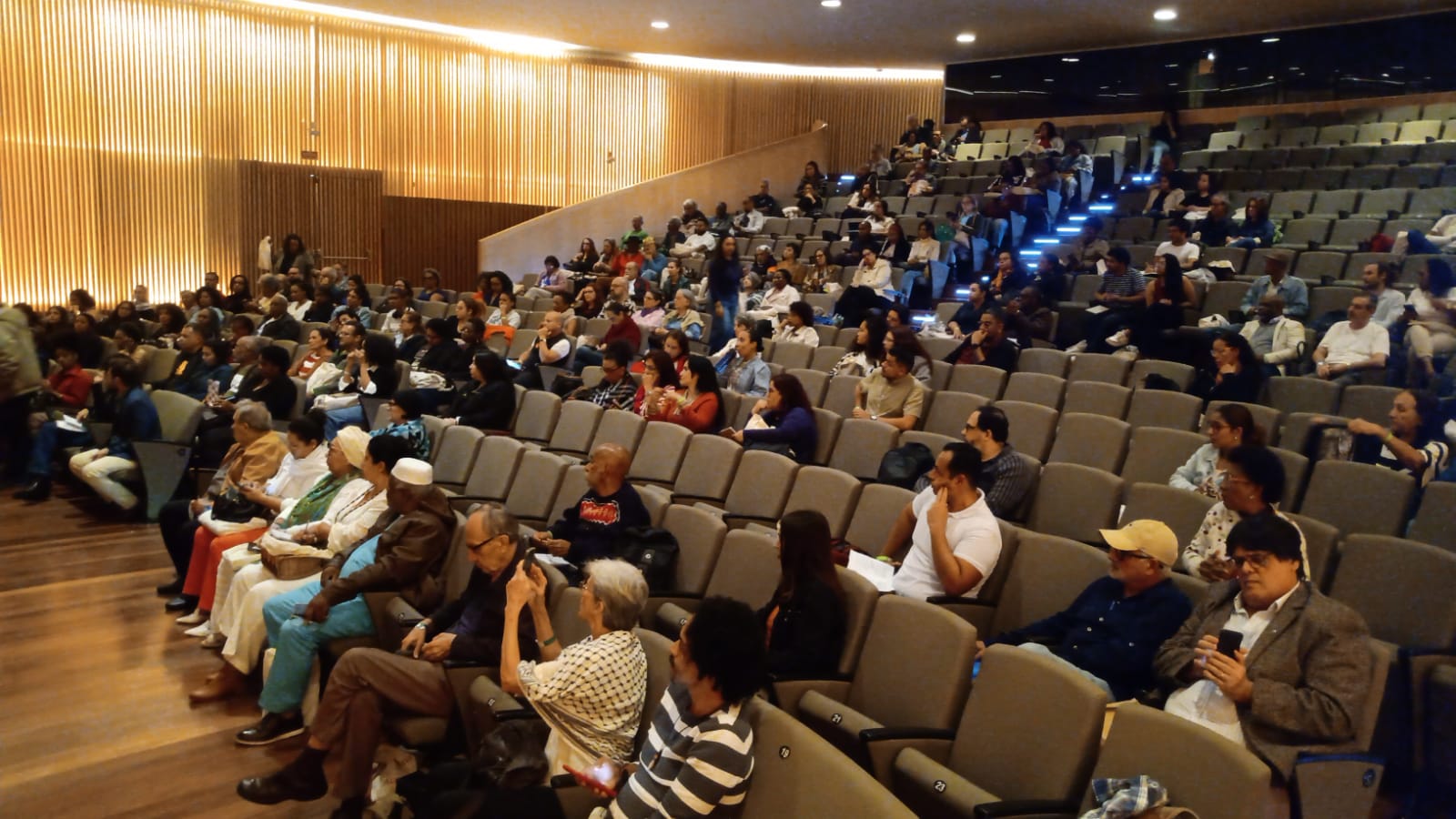
By recovering the New Blacks and Santa Rita death records, the trilogy compels us to confront the fact that urban inequality in Rio has deep roots that, despite attempts at erasure, are still documented and persist to this day. We must acknowledge that the city of Rio de Janeiro was built upon piles of Black bodies and that this past, as the Mangueira samba school sang during Carnival 2025, is still “just under the Earth’s surface.”
About the author: Paulo Gabriel dos Santos is an undergraduate student in social sciences at the State University of Rio de Janeiro (UERJ). Having taught children with special needs at a public school near the favela of São Carlos, he has recently begun working as a community communicator with the aim of making favela knowledge and information reach as many people as possible.