
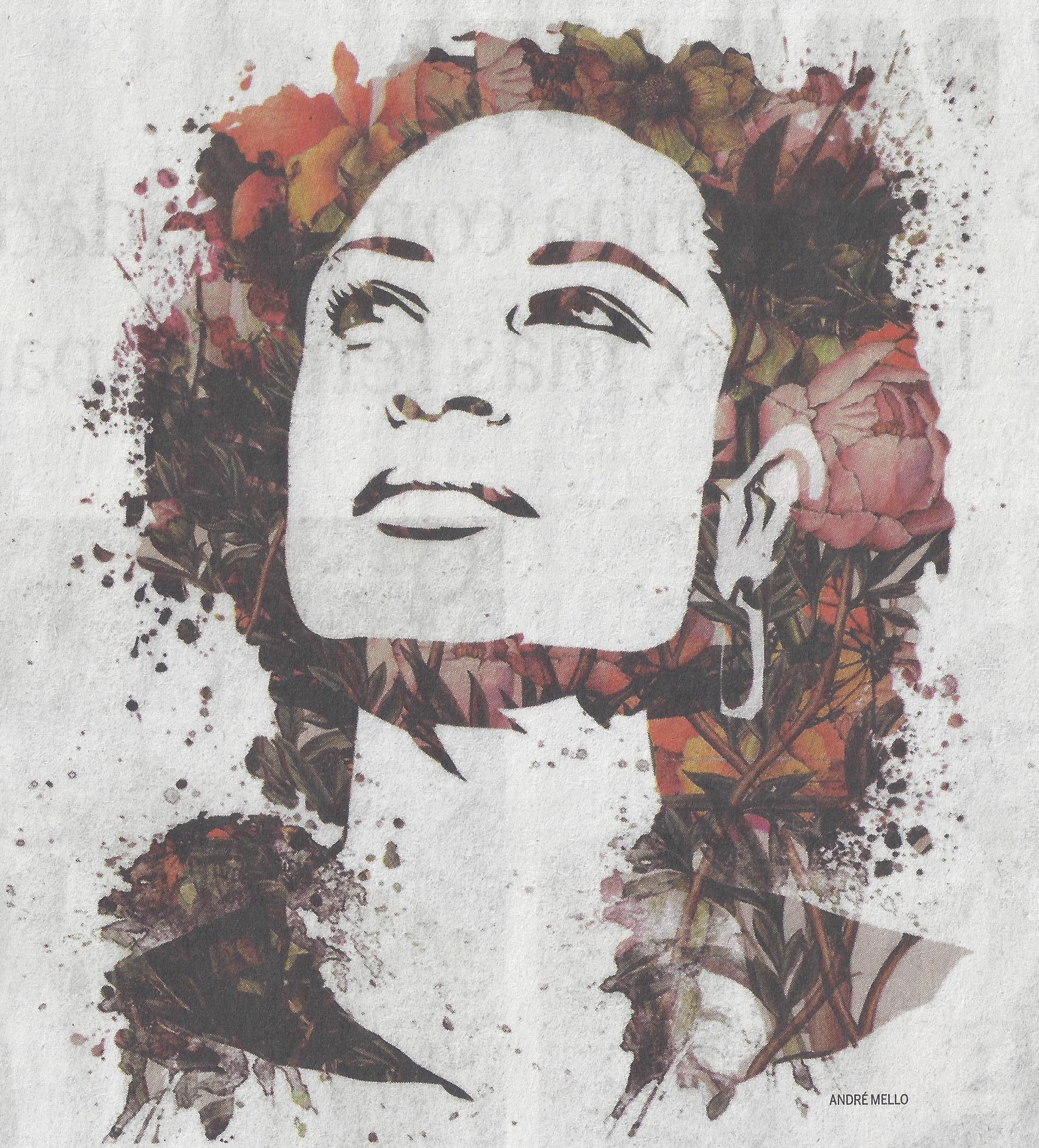

City councillor Marielle Franco and her driver Anderson Gomes were fatally shot eight years ago, on March 14, 2018, in Estácio, Rio de Janeiro, following one of hundreds, if not thousands of community meetings she had attended over her career as a human rights activist. On the eighth anniversary of her assassination, we are relieved to print this translation of a recent article by journalist Flávia Oliveira, summarizing the long battle for justice, published on February 28, 2026 in O Globo.
Nearly eight years after the atrocity was committed, the long road to punishing Marielle Franco and Anderson Gomes’ killers has finally ended. The Brazilian Supreme Court’s (STF) First Panel has now unanimously convicted five more people involved in the crime. The outcome, crucial for a nation that sees itself as democratic, signals a rejection of impunity and acknowledgement of the relentless demands from the victims’ families, civil society and even international public opinion. No one left anyone’s side until the authorities were able to identify both those who carried out the killings and those who ordered the murder of the Rio councilwoman while she was in office.
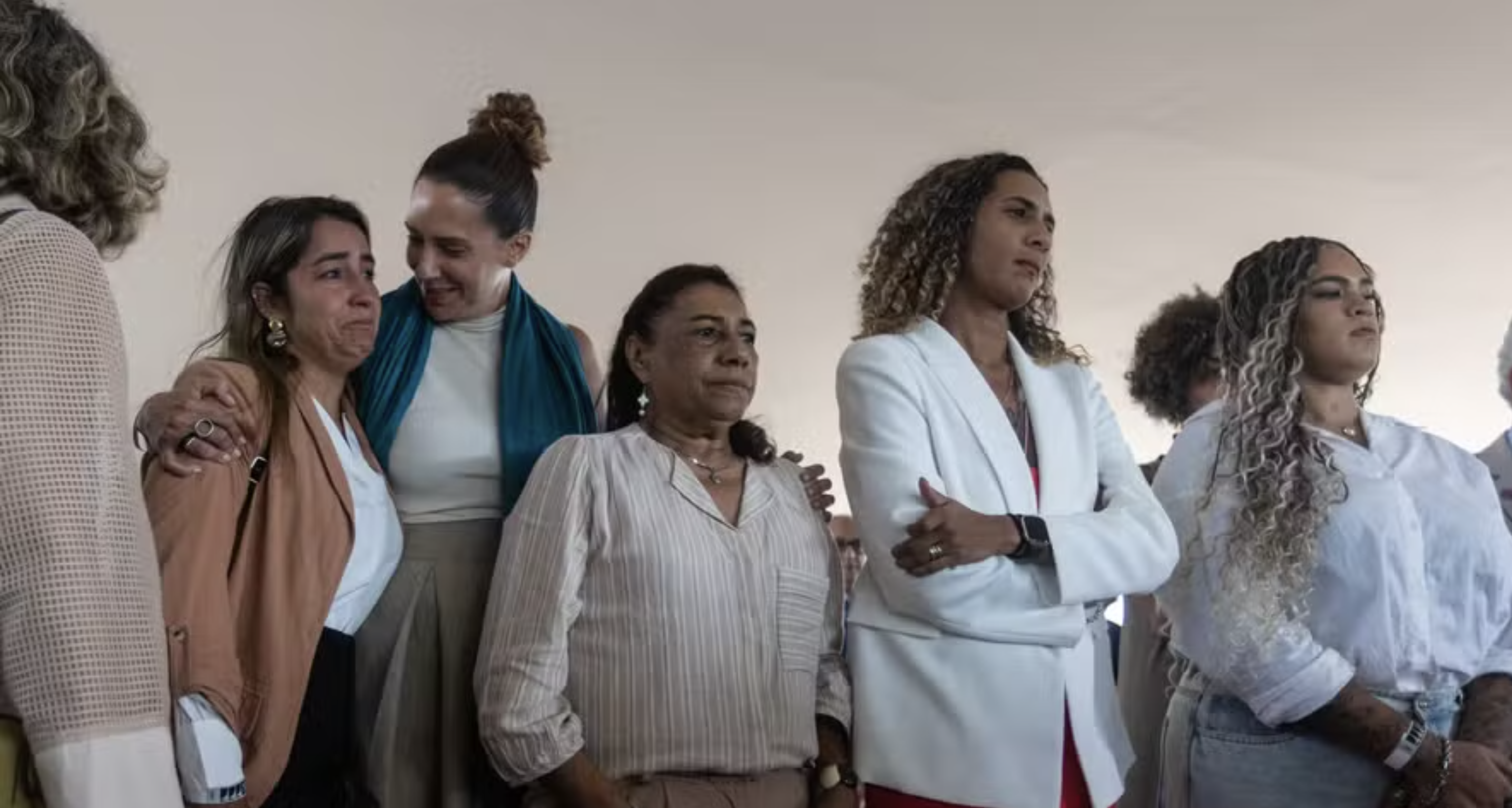
The double homicide, as well as the attempted murder of Fernanda Chaves, Marielle’s aide and friend, exposed to Rio de Janeiro and Brazil the entrails of a death industry operating freely in a state where five governors and two presidents of the Legislative Assembly of Rio de Janeiro (ALERJ) have been put behind bars. The lid was lifted on the sewer that conceals the obscene connections between organized crime, the police and politics. All seven convicted were public officials—men trained, hired or elected to serve, yet who acted against the people.
Ronnie Lessa and Élcio de Queiroz—one the gunman, the other the driver of the car that carried the shooter—are former Military Police officers. In 2024, they were sentenced by a jury to 78 and 59 years in prison, respectively. This year, during the week of February 23, five others were tried at the Brazilian Supreme Court due to the parliamentary immunity of then-federal deputy Chiquinho Brazão. Yes, a lawmaker reelected in 2022 with 77,000 votes had ordered the councilwoman’s murder. Acting alongside him were his brother, Domingos Brazão, a former state deputy and member of the Rio de Janeiro State Court of Accounts (TCE-RJ) and Ronald Paulo de Alves, a Military Police major tasked with monitoring the councilwoman. The three were convicted of two counts of aggravated homicide and one attempted murder. The Brazão brothers, also found guilty of armed criminal organization, each received 76 years in prison; the police officer, 56.
Another public official involved was police chief Rivaldo Barbosa, former head of the Civil Police. He was convicted of corruption and obstruction of justice. He was acquitted of the homicide charges due to insufficient evidence but will serve 18 years in prison for acting to obstruct investigations, as proven. Federal Deputy Tarcísio Motta and City Councilwoman Mônica Benício, Marielle’s widow, both from the Socialism and Liberty Party (PSOL), requested the Rio de Janeiro Public Prosecutor’s Office (MP-RJ) reopen investigations shelved when Barbosa held command positions in the state’s Civil Police. Finally, Robson Calixto Fonseca, an aide to Brazão at the TCE-RJ, was convicted of criminal organization.
The Supreme Court ordered that four of the five convicted lose their government jobs. Chiquinho Brazão [has already] lost his seat one year after his arrest—due to absences and not by vote of his peers. Justice did not come from the political class, an indication of the congressman’s influence within circles of power. When Chiquinho Brazão was arrested, only 18 of Rio de Janeiro’s 46 federal deputies voted in the Chamber of Deputies to keep him detained. Another 18 voted to overturn the arrest, three abstained and seven were absent from the session.
The police investigation, indictment by the Office of the Prosecutor General and votes of the four judges of the First Panel highlighted the role of Chiquinho and Domingos Brazão as militia leaders in Jacarepaguá, in Rio’s Southwest Zone. The criminal case revealed their involvement in land grabbing, exploitation of the real estate and services markets and the territorial, economic and electoral control of favelas. Having their interests challenged by Marielle Franco’s actions, they ordered the councilwoman’s execution, in an act that combines political violence, misogyny and racism. In the milieu of militia brutality, the councilwoman was a “killable” body.
The conviction of the defendants brings relief to those who, for many years, fought against impunity. Solving the crime also helped expose the entanglement of power structures with organized crime in Rio. Worse still, it remains in force. The Federal Police indicted TH Joias, a state deputy elected in 2022, and Rodrigo Bacellar, the president of ALERJ, on leave since December 2025, for involvement with the Comando Vermelho (Red Command) drug trafficking faction. The Red Command controls nearly half (47.5%) of favela territories under criminal control—an area of 150 km2 home to 1.6 million people—according to the Historical Map of Armed Groups in Rio, produced by the Fluminense Federal University’s Study Group on the New Illegalities (Geni/UFF) and the Fogo Cruzado Institute.
If it revived belief in [the ability to] punish the guilty, the trial also consolidated certainty that, in crimes against life, justice is always partial, never complete. The killers extinguished the life of a woman—mother, daughter, sister, wife, friend, professional—and of a man—father, son, husband, worker. Marielle and Anderson will not return. Never again [will we see] her, him, or the dreams they planted. In 2016, 46,000 voters cast their hopes voting for the political project of a Black woman born in a favela, who earned a master’s degree and spent a decade fighting for human rights. The crime committed by seven public officials stole from us what Marielle was. And what she promised.