This article begins a series on the 2026 Brazilian elections, focusing on the perspectives of Greater Rio’s favelas.
Misinformation is a silent epidemic—yet its consequences are immediate and tangible. In Brazilian favelas, it is no different. The investigation Fake News: The Epidemic that Invades Peripheries, carried out and released by Data Favela in July 2024, revealed that 89% of Brazil’s favela residents—about 94 million people—were victims of fake news.
Misinformation affects favela residents in several ways: disseminating false data about the sale of products or services (65%); in the areas of public policies for education, health and vaccination (64%); on the economy and taxes (58%); with regard to public safety and laws (52%); and environmental, scientific, and educational issues (49%).
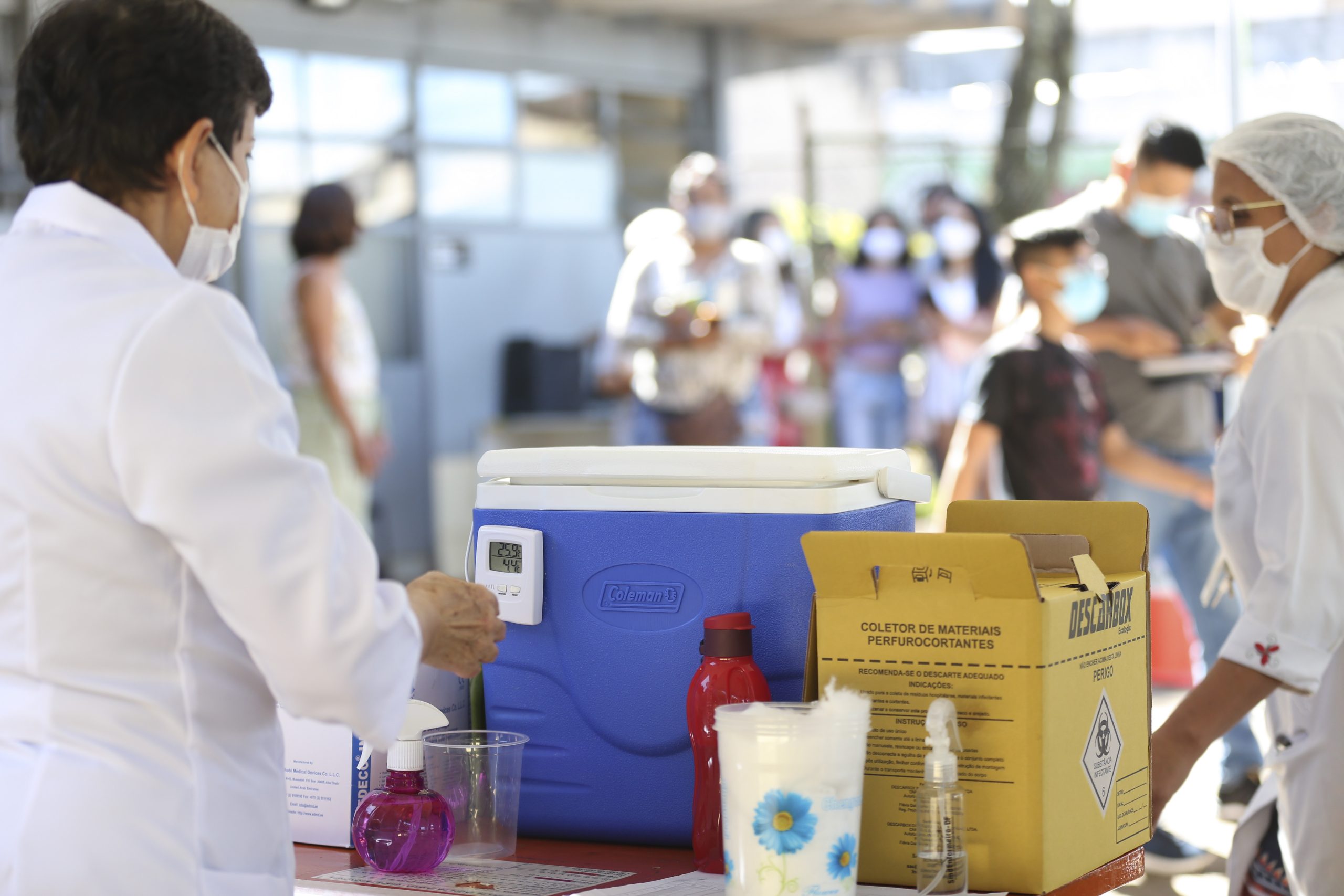
The problem goes beyond simple rumors: fake news kept residents away from health centers at the height of the pandemic. It generates panic during police operations and influences important political decisions. The combination of limited access to reliable sources and the speed with which messages spread through messaging and social media apps creates the perfect scenario for disinformation in Brazil’s favelas.
Letícia Pinheiro, a community organizer from the Acari favela, in the North Zone of Rio de Janeiro, holds a master’s degree in Social Work and is a member of Fala Akari, a community media collective focused on grassroots human rights education. Pinheiro emphasizes that videos with distorted data spread quickly at critical moments—such as floods or police operations—just when residents need information most.
“Videos that distort local reality circulate widely, spreading misinformation about the community. This intensifies fear among residents, especially during critical moments, emergency situations—whether [during] climate crises such as floods or health crises such as the Covid-19 pandemic—and during police operations. These are times of great need when people urgently seek guidance but often end up receiving incorrect information, much like a game of ‘telephone.’” — Letícia Pinheiro
Social worker and Lins de Vasconcelos resident Rafael Sousa, creator of A Voz do Lins, a favela media channel that has been operating for ten years, shares how misleading information about a rape case in 2020 almost led to the conviction of an innocent person.
“A girl here [in Lins] was sexually assaulted and a young man had his photo and personal details disclosed in WhatsApp groups citing him as the perpetrator [of the crime]. After we verified the information, we were also contacted by the victim’s family, who informed us that, although the young man looked a lot like the accused, he was not the criminal. Someone simply got hold of photos and information from a stranger and shared what happened through an audio message. To avoid unfair retaliation, the innocent man had to file a police report and record a video—which was released through mainstream media—to clarify that he wasn’t the perpetrator.” — Rafael Sousa
Rafael warns of why this happens, and how this type of information can drive entire families into despair.
“One key aspect—which is not exclusive to [our community] but is common in [many] favelas and peripheral areas—is the kind of widely shared fake news that circulates daily, mainly through WhatsApp groups. These messages have an alarmist tone that fuels fear and are often used to undermine issues related to the federal government or public services, such as health care and social assistance. There is a large volume of misinformation on these topics that contributes to a climate of fear within the community.” — Rafael Sousa
Letícia Pinheiro points out that the alarmist tone that accompanies many fake news stories also harms the mental health of residents.
“Panic attacks, heart attacks and other issues emerge in regions that are already marked by constant [human rights] violations. It’s a perverse game in which favelas are targeted for their social and digital vulnerability.” — Letícia Pinheiro
Pinheiro mentions the 2022 elections, when right-wing groups took advantage of the chaos generated by the pandemic to reproduce anti-vaccine rhetoric, confusing the population.
“During the pandemic, all the misinformation about vaccines [made many residents reluctant] to get vaccinated. During the elections, claims bordering on the absurd were spread, such as the notion that ‘vaccines turn people into alligators.’ If we stop to think about the impact of this phenomenon on the political debate, especially during elections, we have a major problem: the fake news produced by right-wing sectors intensified disinformation and directly targeted favelas and peripheral areas. And this is a serious issue because the majority of the people in these areas have a hard time accessing official information channels. Many residents have access to social media, but have not had the formal education necessary to enable them to tell whether a news story is real or fake.” — Letícia Pinheiro
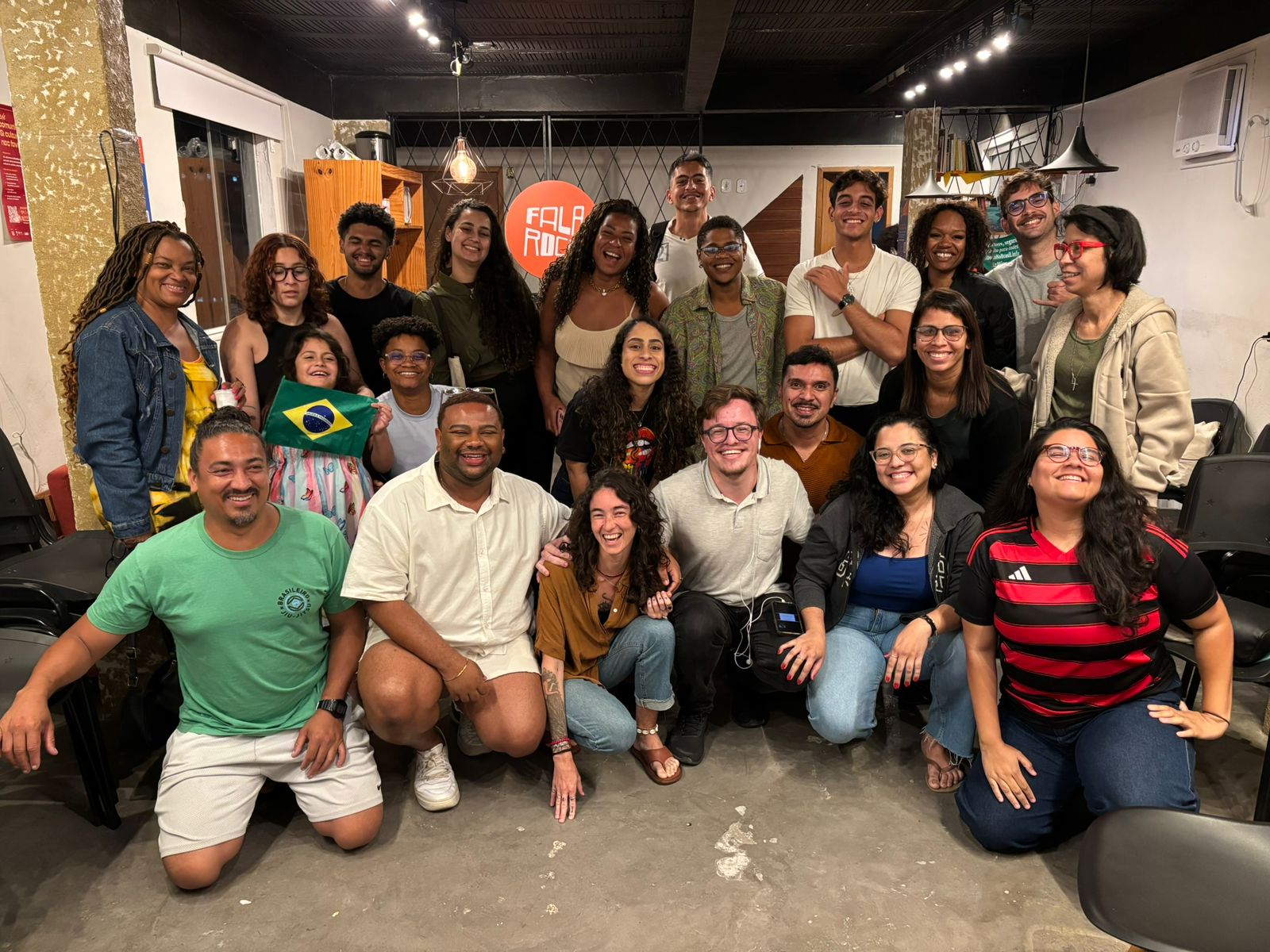
Rocinha residents who participated in the Health Communication training, an initiative of the Fala Roça Informa Network program. Photo: Fala Roça Archive
Karen Fontoura was born and raised in the Rocinha favela and is a journalist with the Fala Roça community news portal. She reenforces that the pandemic was pivotal for the news site to start a more intense campaign against fake news, since vaccination against Covid-19 was crucial to residents’ survival.
“[While the rest of] Rio de Janeiro was getting ready for a third dose, Rocinha still hadn’t gotten the vaccine. People just kept moving around as usual. Rocinha never stopped—even with the ‘stay at home’ campaign. Buses and vans remained crowded with workers because they didn’t have the choice to stay home—and still the vaccines didn’t come. The impact of fake news became more evident during the pandemic when all the rhetoric devaluing SUS [the public healthcare system] and the vaccine itself emerged from governmental officials. Their speeches influenced a drop in vaccine demand, which was reflected in the favelas. So we realized we had to work to reverse this situation.” — Karen Fontoura
According to Pinheiro, miscommunication does not originate in the favelas—it is, in fact, the result of the State’s lack of accountability in disseminating information to society. She shares that she has identified highly educated people in Acari—including judges—believing fake news.
“There’s a gap in public communication… that does not reach these communities in a clear and reliable way. All of this contributes to a context in which disinformation spreads easily, undermining not only everyday decision-making, but also democratic debate itself.” — Letícia Pinheiro
The Role of Community Media in the Fight Against Fake News
In response to this scenario, media collectives engage in organized resistance to reverse or mitigate the impacts of disinformation in their communities.
“We check who produced each video [published on our social media, and] if it’s recent… we cross-reference the information with official sources. This network mobilization allows us to accept what the population is sharing while evaluating the speed and veracity of the information. We use WhatsApp and Facebook a lot, but always with caution. Everything that comes to us is verified. People often share things without reading carefully. Our role is to guide, to explain when something is fake and provide legitimate sources so that people can have accurate information.” — Letícia Pinheiro
In addition to implementing consolidated reporting techniques, community media collectives also offer training for new journalists in an effort to combat fake news. In 2024, Fala Roça held a course on Health Communication in Rocinha, where they problematized misinformation in the context of community health.
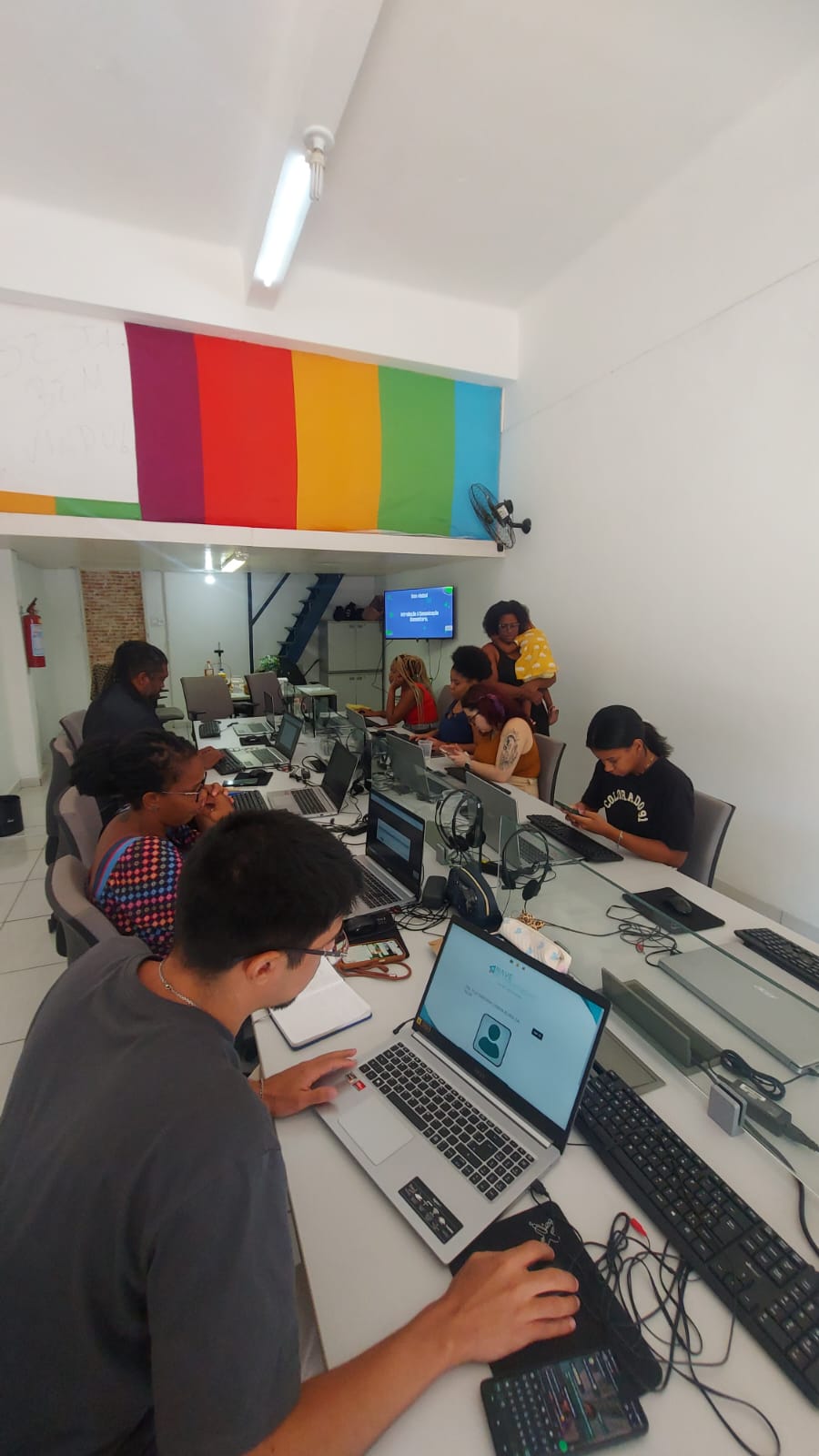
First class of New Voices, A Voz do Lins training to ensure that ‘news that matters is delivered accurately.’ Photo: A Voz do Lins Archives
“Although we started combating fake news more intensely during the pandemic, we continue with other issues of misinformation. One [of the outcomes was that we uncovered] the lack of medication for transgender people in Rocinha. We realized that there were no medications for those undergoing gender transition. People in vulnerable communities often don’t know their rights. When we fight misinformation, we offer these residents the guarantee of these rights. We’re thinking about quality of life and access to services that are often outside favelas.” — Karen Fontoura
Between April and August 2025, A Voz do Lins promoted the New Voices training, a partnership with a research group from the Department of Communication of the Pontifical Catholic University of Rio de Janeiro (PUC-Rio). Sousa explains that the goal was to train new journalists from Lins to work with the news portal, addressing topics such as information responsibility, including fact checking and source verification. Currently, five students who participated in the training work with A Voz do Lins. “We teach the students that our role is not only to inform, but to make sure that news that matters is delivered accurately,” says Sousa.
Concluding her reflection, Pinheiro explains that misinformation about favelas has always existed. Although the standard narrative tends to associate these communities with stereotypes of criminality and marginality, their residents suffer historical and ongoing rights violations. She, therefore, emphasizes the importance of community media building and consolidating a factual narrative of their own.
“We believe that community media plays a crucial role for the country’s democracy and for the population to access its guaranteed rights as citizens. Thinking about democratic values, this type of communication fulfills a basic function. Working with community media in the favela, we show that it is a pluralistic and diverse space, home to a population that seeks dignity, rights and the preservation of its values. This is a fundamental point: to show the existence and resistance of our territory, because if we do not speak up for ourselves, no one will.” — Letícia Pinheiro
About the author:Felipe Migliani has an undergraduate degree in journalism from Unicarioca and post-grad in Investigative Journalism and Data Journalism. He works as a reporter and media advisor, having published stories with outlets such as Meia Hora, Estadão, Agência Lume, PerifaConnection, Ambiental Media, Gênero e Número, Olhos Jornalismo and ND Mais.
Support RioOnWatch’s tireless, critical and cutting-edge hyperlocal journalism, online community organizing meetings, and direct support to favelas by clicking here.