
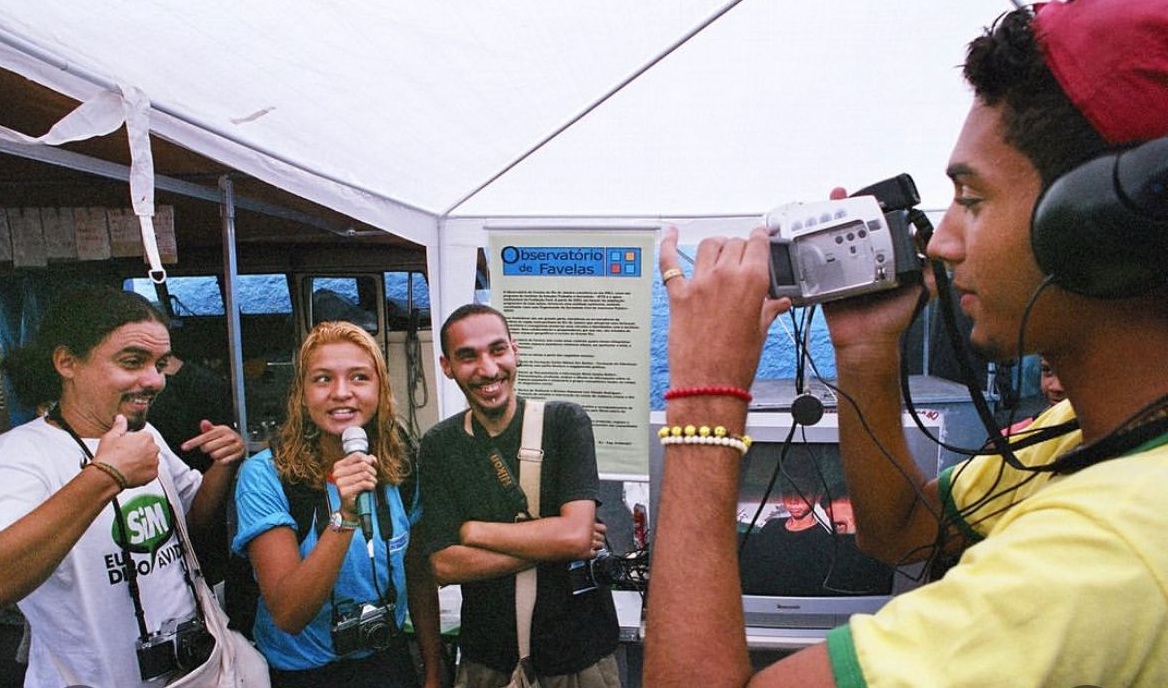

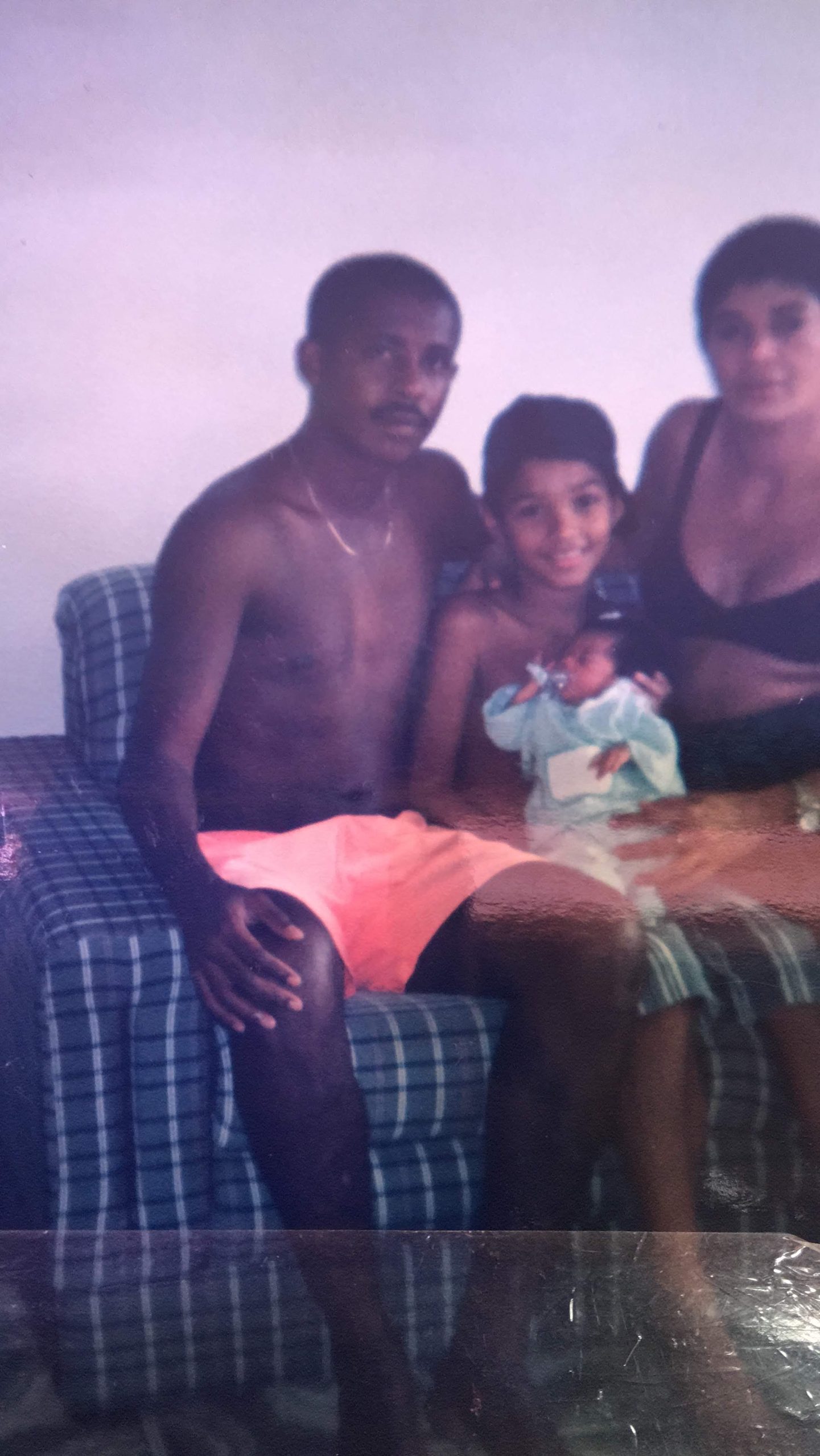
In the North Zone of Rio de Janeiro, in the group of favelas that make up Complexo da Maré—more precisely, in the Pinheiro favela, Block 7, apartment 502: that’s where Cadu Barcellos grew up alongside his mother, Neilde, his sister, Lethícia, and his stepfather, Willian, in a home that overflowed with affection, resistance and art. Although the family no longer lives there, the place remains alive in Maré’s collective memory: it was the birthplace of a cria—born and raised in the community—whose career turned the favela into cinematic language. In 2025, marking five years without Cadu Barcellos, RioOnWatch celebrates the legacy of this Maré artist who dignified the favela in Brazilian cinema.
Cadu was born in 1986 in Complexo da Maré, now home to about 125,000 residents across 16 favelas marked by rich cultural diversity, stories of resistance and community organizing. As a boy, from his window in Conjunto Pinheiro, Cadu observed daily life in Maré: alleys, narrow lanes, colors, and sounds that would later become the raw material of his art.
“I feel a sense of recognition, pride for having raised my son in Maré, in the favela, and seeing him become an artist who is an inspiration. An artist who is a source of pride not just for me, but for our family and all other residents of the favela.” — Neilde Barcelos
Cadu’s family history in Maré begins with Neilde’s mother, Dona Irene—his maternal grandmother. Coming from São Fidélis, a city in northern Rio de Janeiro state, Dona Irene was brought to the favela with the promise—made by then-Governor Carlos Lacerda in the 1960s—that her stay would be temporary.
However, the stay became permanent, and Neilde grew up and built her story in Nova Holanda, one of Maré’s favelas. As an adult, she moved to Conjunto Pinheiro, in the Pinheiro Favela, where Cadu was born and raised, and where his life was shaped by both resistance and contradictions.
In the 1990s, while drug trafficking and violence worsened in Maré, Neilde—a social activist since the 1980s—fought to ensure that her son would have a dignified childhood. In spite of the challenges of favela daily life, this affectionate family foundation was crucial to the development of the artist and activist that Cadu would become.
A Master of the Seventh Art for a New Generation of Dreamers
Cadu Barcellos’ artistic soul never needed a label to express itself. His creative, vibrant, and free essence found its first stage in dance. At 15, he joined the Maré Dance Corps, a project that introduced him to the world of physical expression. With it, he discovered the power of movement as a way to tell stories and connect with his Afro-Brazilian roots.
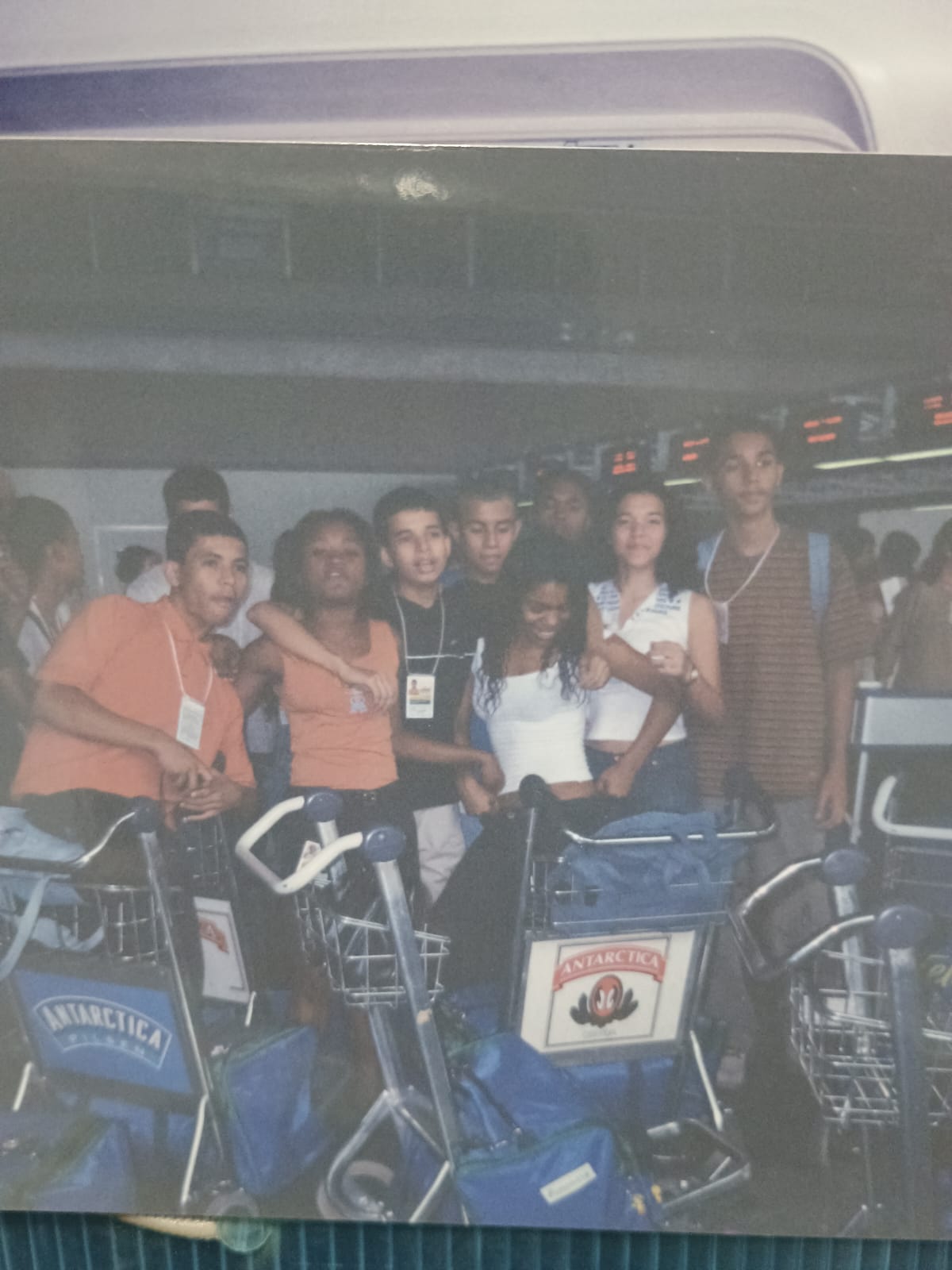
“Can you imagine? We were 14 or 16, traveling alone—taking buses and planes without our parents… it was truly magical. There was so much courage and so much emotion. The Maré Dance Corps opened the world to us,” recalls Vitor Santiago, Cadu’s childhood friend and artistic partner. Another of Cadu’s friends, photographer Jéferson Vasconcelos, also born and raised in Maré, remembers and highlights the filmmaker’s artistic inventiveness.
“There was this one scene I’ll never forget: Cadu grabbed some PVC tubes that were part of the set and, right there on the spot, created a percussive sequence, improvising with the dance group. It was so him—creativity pulsing, art born from improvisation. That gesture said everything about who Cadu was.” — Jéferson Vasconcelos
At 17, in an interview for a TV Globo program, Cadu explained—already in the most matter-of-fact tone—that his painted nails “were an artist thing,” an early sign of an identity he embraced with pride. That same expressive urgency would gradually find a new way to live on. It wasn’t long before the artist who had learned to tell stories with his body became a master of the seventh art for a new generation of dreamers.
Cadu Barcellos began his audiovisual career in the very place where he grew up. In 2006, he studied at the Darcy Ribeiro Film School and at the Popular School of Critical Communication (ESPOCC)—the latter linked to Favelas Observatory, a nonprofit that brings together education, art and activism in many favelas, from its headquarters in Maré. While at ESPOCC, Cadu made his first attempts at filmmaking and, years later, returned to teach, passing on and multiplying knowledge at the same school that had shaped him, as recalled by Jailson de Souza e Silva, founder of the Favelas Observatory.
The starting point for Cadu’s professional film career was a short film that brought together training and location: Teixeira’s Open-air Market, made in 2006. The film was his final project at ESPOCC, a collective audiovisual exercise immersed in a setting he had known since childhood. More than a student project, the short already carried Cadu’s trademark: a keen eye for the cultural and economic power of the favela, capturing the life, trade and lively exchanges of a traditional open-air market in Maré.
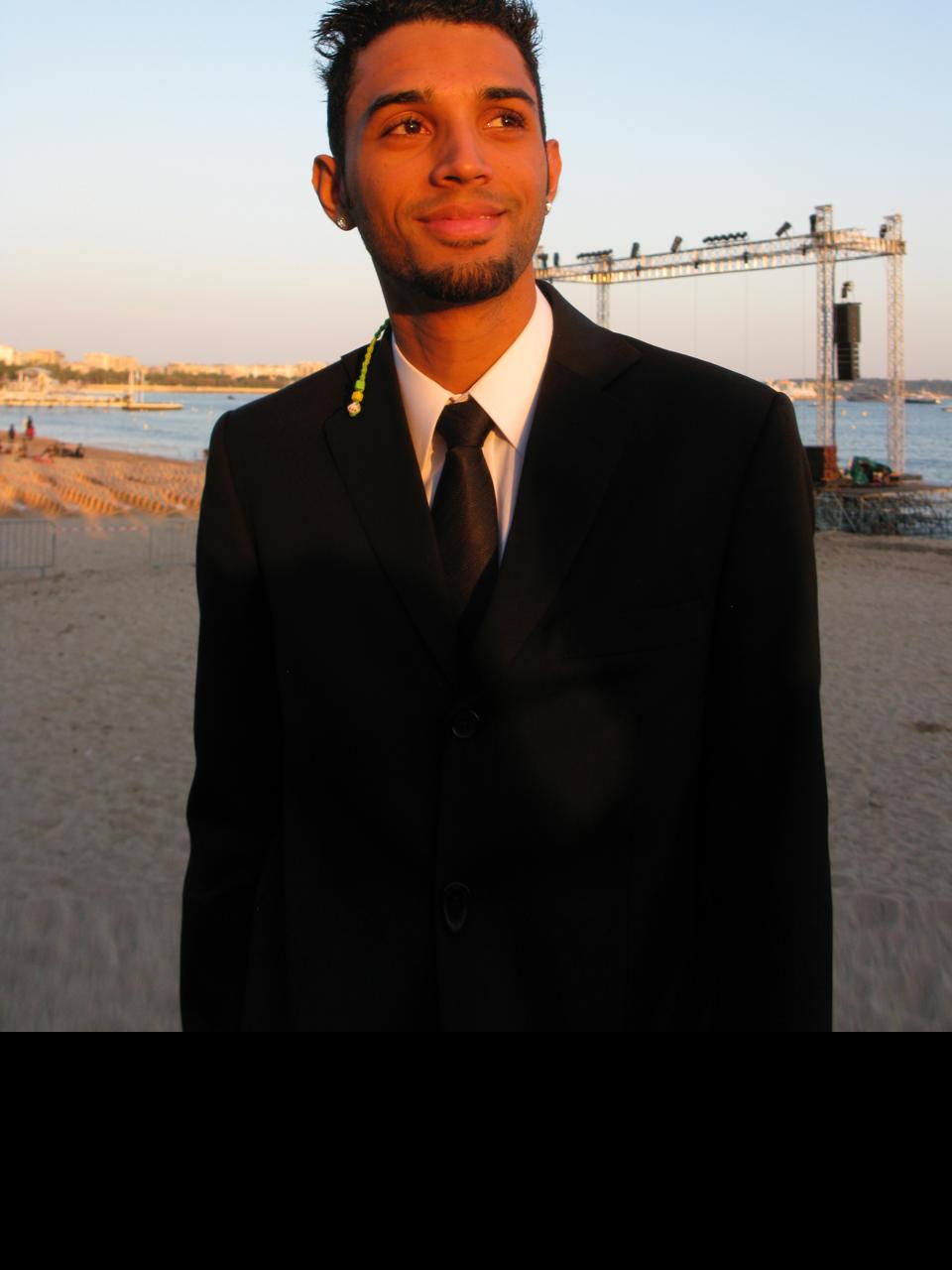
In 2007, Cadu Barcellos directed City Chronicles, a series of six 30-minute episodes shown on Canal Futura. The project had national reach, delving into the daily life of the urban peripheries of six Brazilian cities: Rio de Janeiro, São Paulo, Belo Horizonte, Florianópolis, Recife and Fortaleza. The format’s genius, however, lay in its collaborative process: through workshops held in each city, chronicles written by residents were transformed into fictional scripts. In a role reversal that defined Cadu’s work, the authors themselves became part of the technical crew and, in many cases, also acted in their own films. This was Cadu at his core: not only putting favela communities on screen but also giving them tools to tell their own stories.
The turning point in his career came in 2010 when he directed the short film Let It Fly, one of the five episodes that make up the acclaimed feature film 5x Favela: Now by Ourselves. Produced by celebrated filmmaker Cacá Diegues, the film was a landmark in Brazilian cinema, achieving international recognition with its selection for the Un Certain Regard section of the Cannes Film Festival in 2010. Within this successful project, Cadu’s particular genius was evident. For Cacá Diegues, Let It Fly was “a very personal film, full of [Cadu’s] inventions. More than inspiration, it was a premonition of what needed to be done. He didn’t wait for permission. He just did it,” as Diegues said in the documentary Cadu Barcellos: A Child of the Favela Doesn’t Die, He Becomes a Legend.
In 2011, Cadu premiered One More in the Crowd, a documentary that showcased the hallmark of his work both aesthetically and politically.
“I started out with a short film about the forced demolition of the first square built by residents of the Providência favela. From there, I kept working on themes primarily related to representation and the construction of image surrounding Rio’s Black, favela, and peripheral populations.” — Cadu Barcellos
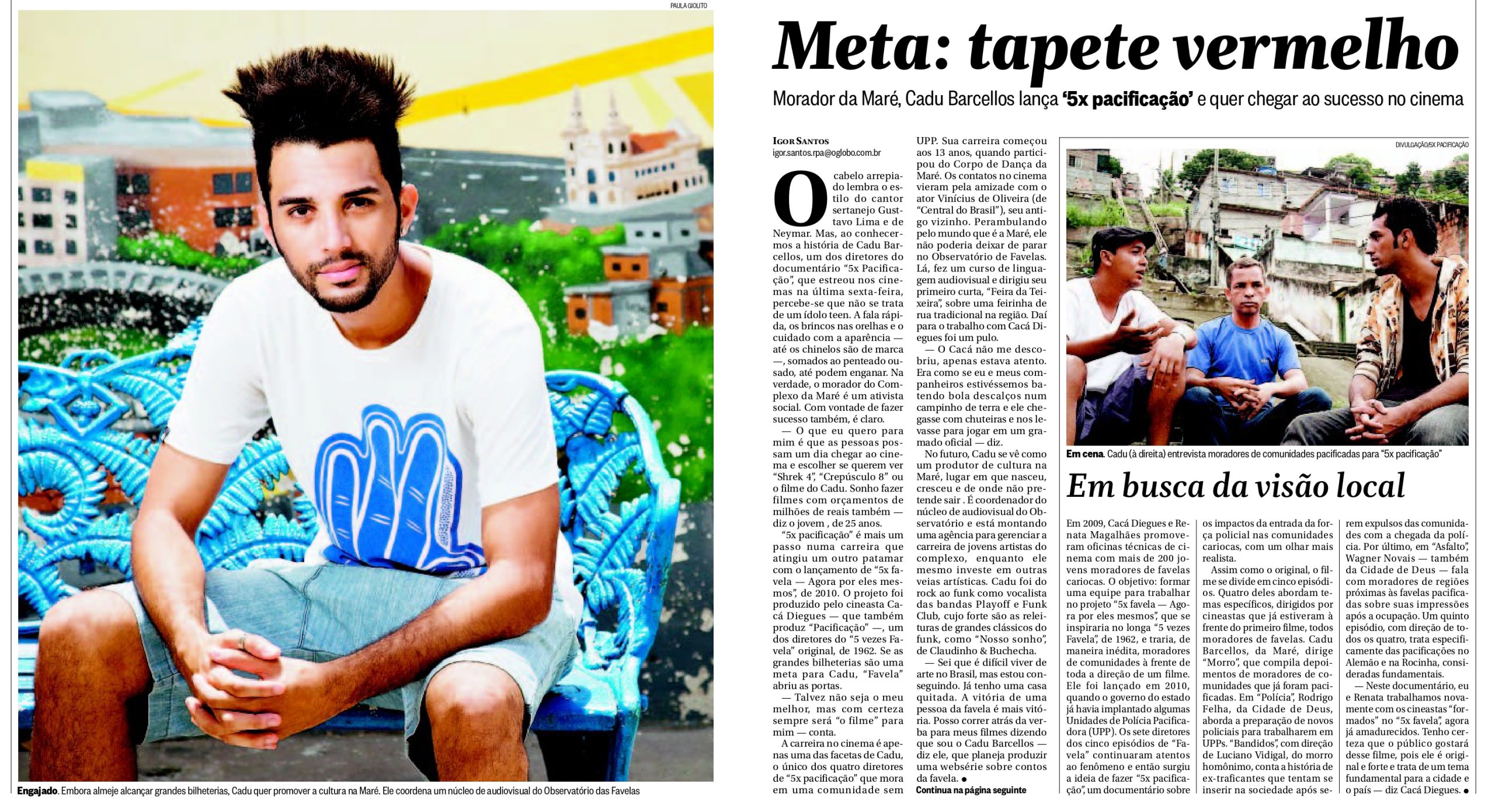
At 25, his artistic identity, established in film, had caught the attention of mainstream media. Newspaper O Globo published an article about the release of 5x Pacification, of which Cadu was screenwriter. He was described as a social activist whose ambition matched the scale of his dream: “What I want for myself is for people to one day be able to go to the cinema and choose whether they want to see Shrek, Twilight 8, or Cadu’s film,” the filmmaker said in the interview. With the success of projects like 5x Favela: Now by Ourselves, which enjoyed Cacá Diegues’ blessing, Cadu proved that the young man from Maré not only told stories, but was ready to compete for the biggest box offices.
Cadu also worked for the comedy TV program Porta dos Fundos (Back Door), and as assistant director for the program Greg News hosted by Gregório Duvivier. His work in critical humor and advocacy for Black representation in traditional media was a significant milestone in his career. In his work for Greg News, Cadu distinguished himself as a great creative mind. He was a writer and news director for the program, strategically using critical humor to dismantle stereotypes and bring racial and social debates to the forefront with an authenticity and sharpness rarely seen on television.
His importance was constantly highlighted by his colleagues. In the Greg News episode Good Evening, Family—a tribute to Cadu—they celebrated the affectionate way in which Cadu had worked and the closeness with which he addressed his co-workers (“Talk to me, Fam” and “Good evening, Fam”). In the episode, host Gregório Duvivier said that Cadu “taught the team with each story,” bringing a perspective on the reality of the favelas and racism that the rest of the mostly white, middle-class team could not access. A notable example of his work was a segment on police violence, in which Cadu crafted a narrative that exposed the absurdity and perverse logic behind the so-called war on drugs. He did not merely act but commanded the narrative, proving that sharp humor could be the most effective weapon for social criticism.
Lived Experience as Raw Material for Art
Known for his charisma, generosity, and easy laughter, Cadu is a role model for many young people in Maré and other Rio favelas. One of them is social entrepreneur Raull Santiago, from the Straight Talk Institute: “Man, I have thousands of stories [about] Cadu, but the most important is remembering that he was my teacher before anything else. He was a wonderful friend, but first and foremost, he was a role model for me.”
With a camera in hand, Cadu proved it was possible to build powerful, truthful narratives from the inside out, without waiting for permission from traditional media. The greatest lesson Cadu’s cinema left was not technical, but existential: that lived experience itself is raw material for art and, above all, a tool for social change.
Photographer, audiovisual producer and Maré native, Mayara Donária, was a student of Cadu’s in his film course at ESPOCC. She carries with her the impact he had on her training: “I learned how to make films with him. Cadu gave me the tools and the confidence to tell our stories.”
The story of artist, philosopher, and environmental activist Emerson Matos is further living proof of Cadu’s legacy. The two crossed paths at a film festival in Rio in 2014. On one side was Matos, a native of Lagoa do Dionísio—a small town in the countryside of Bahia state—and a student who feared the audiovisual world was not for him, since he did not come from a wealthy family. On the other was Cadu, who already had his name on a poster for a film about passinho dance battles. When Matos confessed his fear, Cadu pointed to the poster and, according to Matos, said: “Man, just keep going. Look what I’m doing here.”
That was, in Matos’ words, his “first breath of courage to confront an elitist market.” Fate, with its cutting irony, would have it so that the news of Cadu’s murder came on the very day Matos won his first film grant, through the Aldir Blanc Law for cultural support during the coronavirus pandemic. The dream of reuniting with his mentor to say “thank you, it all worked out” was cut short. But gratitude became a driving force: the prize money also became a video tribute, ensuring that Cadu’s courage would continue to inspire other dreamers to keep going.
Ver essa foto no Instagram
‘He Taught Us to Turn Affection Into Film’
In November 2020, Cadu Barcellos was murdered, at 34 years of age, during an attempted robbery in downtown Rio de Janeiro. His death sparked outrage in Maré and across the city’s cultural scene.
In 2025, Iroko Productions launched the documentary Cadu Barcellos: A Child of the Favela Doesn’t Die, He Becomes a Legend and held an advance screening at CineBela Maré in February. The film, produced by Cadu’s friends and partners, pays tribute to his career and celebrates his life and work.
“It was moving to see my son’s story told, to see his work shown. How important it was for him to leave the dance group and become a filmmaker, which was something he really wanted. We would love to be telling his story with him here, but, unfortunately, that can’t be. But the good work he did remains in our memories. It’s good to remember what he left behind for the young people of Maré and many other favelas.” — Neilde Barcelos
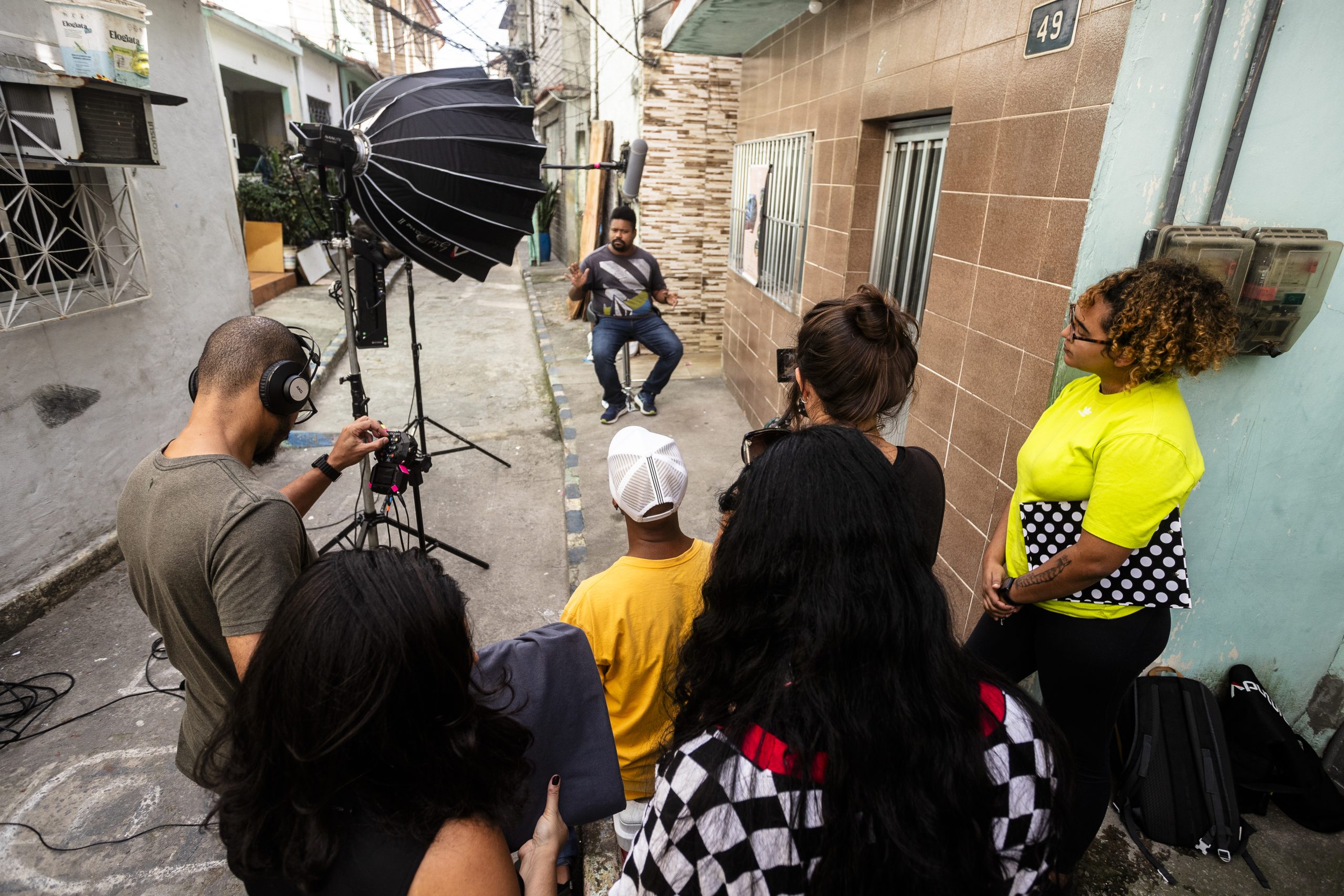
“Everyone was a friend of Cadu’s—from the cameraman to the producer. He brought people together, brought affections together, made human films,” said screenwriter and director Wagner Novais. For him, the decision to direct a film about Cadu came from a sense of urgency: to defend the memory of his friend and great carioca filmmaker. He explains that, after Cadu’s tragic death, online searches for his name were dominated by narratives of violence, overshadowing the legacy of his life’s work. The film, therefore, became a tool to reverse this logic and create positive content about his story—just like this article, which joins this movement to honor and reclaim the memory and legacy of Cadu Barcellos.
“We needed to make a sunny film that celebrated his power in life. The film was born from the desire to create another memory, to leave a gift. A gift for Bernardo [Cadu’s son], so he knows the magnitude of the father he had. And a gift for future filmmakers, so they see Cadu as an inspiration. After all, this is what art does, right? It creates collective memory. And the memory we want to [see] remain of Cadu is of his light, his affection, and a legacy that inspires. Documenting Cadu’s legacy is a mission, because his filmmaking was special—he didn’t film a subject, he filmed life. His legacy is this: proof that our lived experiences are the most powerful raw material there is. He taught us to turn affection into film, and this is a lesson that cannot be forgotten; it needs to be documented to inspire, always.” — Wagner Novais
Beyond all that Cadu built, shared, and left as a legacy through his art and ideas, the filmmaker’s memory lives on through the Cadu Barcellos Ecological Park. A public green space—known by many as “Maré’s forest”—the park was renamed in his honor as part of a Black Awareness Month initiative, through municipal bill 866, enacted on November 10, 2021, one year after Cadu’s brutal murder.
With a biodiverse area of approximately 44,000 m², the Cadu Barcellos Ecological Park is considered Maré’s “green lung” providing some respite from the community’s intense urbanization. Furthermore, under the management of the Maré Ecological Park Residents’ Association, it is a focal point for initiatives essential to the development and well-being of residents, such as socio-educational, cultural, and environmental activities, as well as the donation of organic food.
Cadu Barcellos remains alive in collective memory, on screens and in the hearts of all who believe in the transformative power of art born in favelas. Just as Cadu dreamed and fought, his story lives on, inspiring new generations to create, resist and change the world.
Discover Cadu Barcellos’s Filmography Here:
- 2006 – Teixeira’s Open-air Market (short film)
- Cadu’s first work, completed as his final project at the Popular School of Critical Communication (ESPOCC). The film is a documentary and affectionate portrait of Maré’s traditional open-air market, exploring its cultural and economic importance for the community.
- 2007 – City Chronicles (TV series – Canal Futura)
- Cadu spearheaded this six-part series, which turned chronicles by residents of favela communities across Brazil into fictional scripts. The project was collaborative, with the authors themselves joining the technical crew and, in many cases, acting in the productions.
- 2010 – 5x Favela: Now by Ourselves (feature film)
- Cadu directed the episode Let It Fly, one of five segments of the acclaimed feature produced by Cacá Diegues. The film was a landmark in Brazilian cinema and received international recognition when it was selected for the Cannes Film Festival.
- 2011 – One More in the Crowd (short film)
- A documentary that explores the eviction of residents from the Morro da Providência favela to make way for the Morar Carioca Project. This work marked his formal debut in filmmaking, his gaze set on issues of favela life and human rights.
- 2012 – 5x Pacification (feature film)
- Cadu was one of the directors of this documentary, which investigates the impacts and contradictions of the Pacifying Police Units (UPPs) in five Rio favelas.
- 2013 – Passinho Battle: The Film (feature film)
- A documentary directed by Cadu, chronicling the cultural explosion of passinho, a dance style that originated in Rio’s favelas and became a global phenomenon. The film celebrates the creativity and resilience of favela youth.
- 2016 – Guti (documentary)
- A sensitive documentary co-directed by Cadu that follows the journey of Guti, a young trans man, in his search for identity, acceptance and freedom amid social challenges.
- 2017 a 2020 – Greg News with Gregório Duvivier (HBO TV program)
- As a writer and director of segments, Cadu was a key voice on the program, bringing his critical perspective and sharp humor to address issues such as racism, police violence and social inequality on prime-time cable TV.
About the author: Juliana Portella is a journalist with a degree from the Federal Rural University of Rio de Janeiro (UFRRJ) and holds a master’s in dducation from the Education, Culture, and Communication in Urban Peripheries Program (FEBF/UERJ). She is a founding partner of Iroko Production and Consultancy.