

 This article is part of a series created in partnership with the Behner Stiefel Center for Brazilian Studies at San Diego State University, to produce articles for the Digital Brazil Project on environmental justice in the favelas through RioOnWatch.
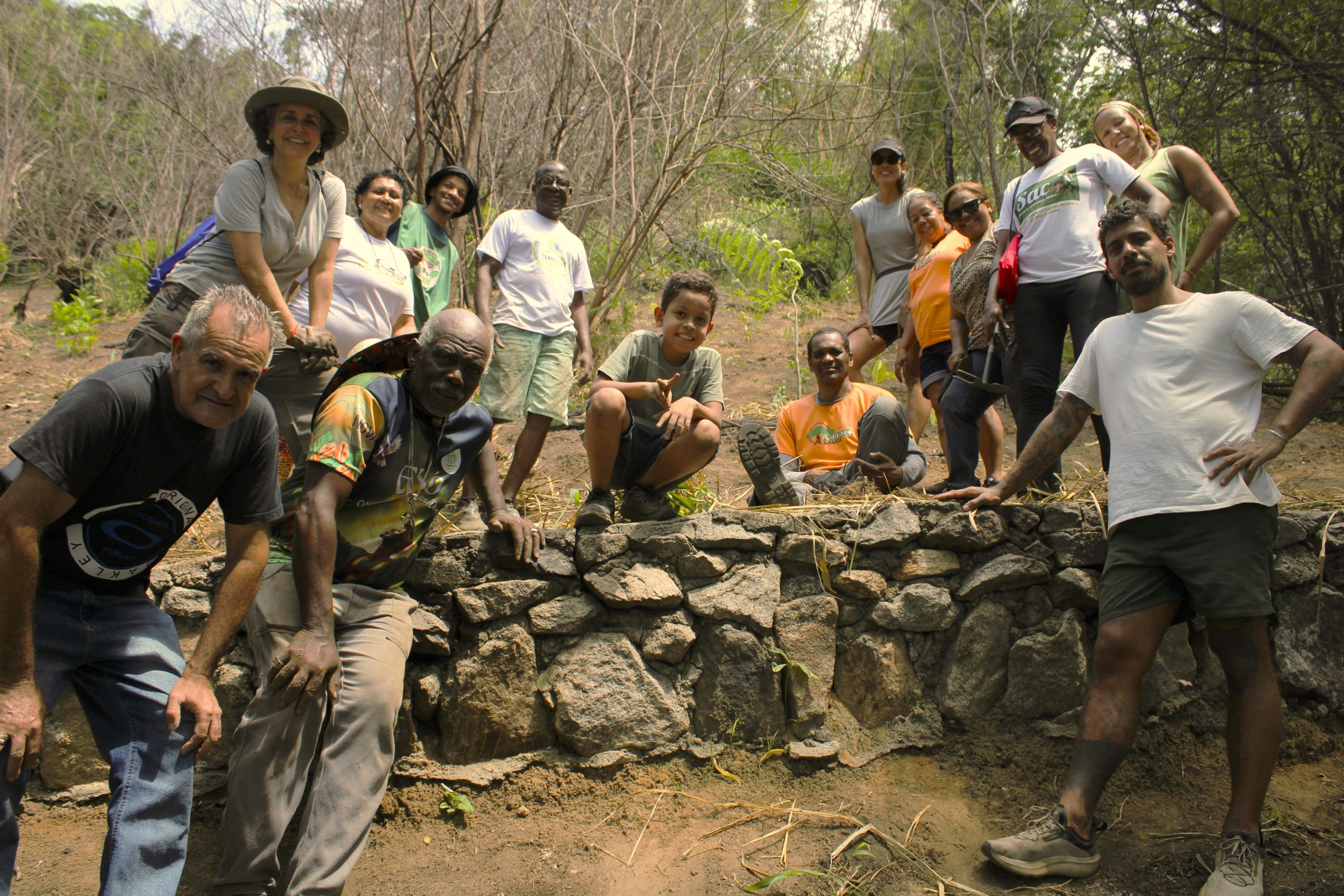
On December 7, environmental agents, local organizers, residents and visitors gathered at Morro do Salgueiro, a favela in Tijuca, in Rio de Janeiro’s North Zone, for a collective action reforesting local Atlantic Forest land. The activity, organized by Salgueiro’s very own Time to Plant Regenerative Movement (Tempo de Plantar), was part of the Sustainable Favela Network’s (SFN)* Collective Calendar, aiming to restore an area called Caixa D’água de Faustino. Situated on one of Salgueiro’s highest points, the reforested area is frequently affected by fires and landslides.
Robson Basilio, the resident responsible for Salgueiro’s Time to Plant initiative, explained that this action is essential to reduce heat and prevent landslides in the community, both common occurrences in the region during summer.
“We come here, we plant… I’m always finding and planting saplings, even when there’s no [organized] action [going on]. I’ve been at this for over 20 years, in this rush. We’re always trying to plant. I take five or ten little saplings, go [plant them across the community] and done. We can’t leave any empty spaces, because when we came into this world, they were already here. So, we have to preserve [them].” — Robson Basílio

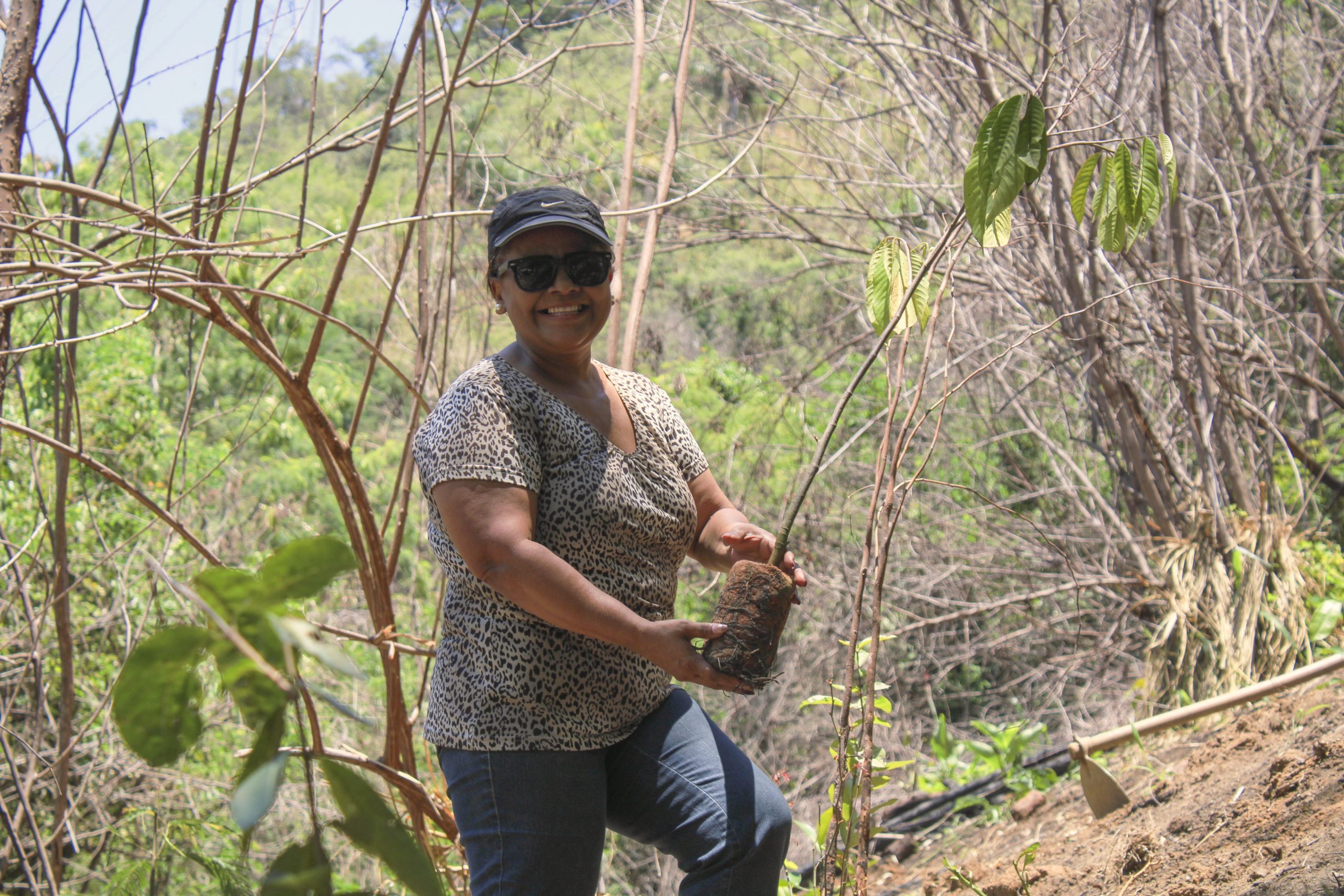
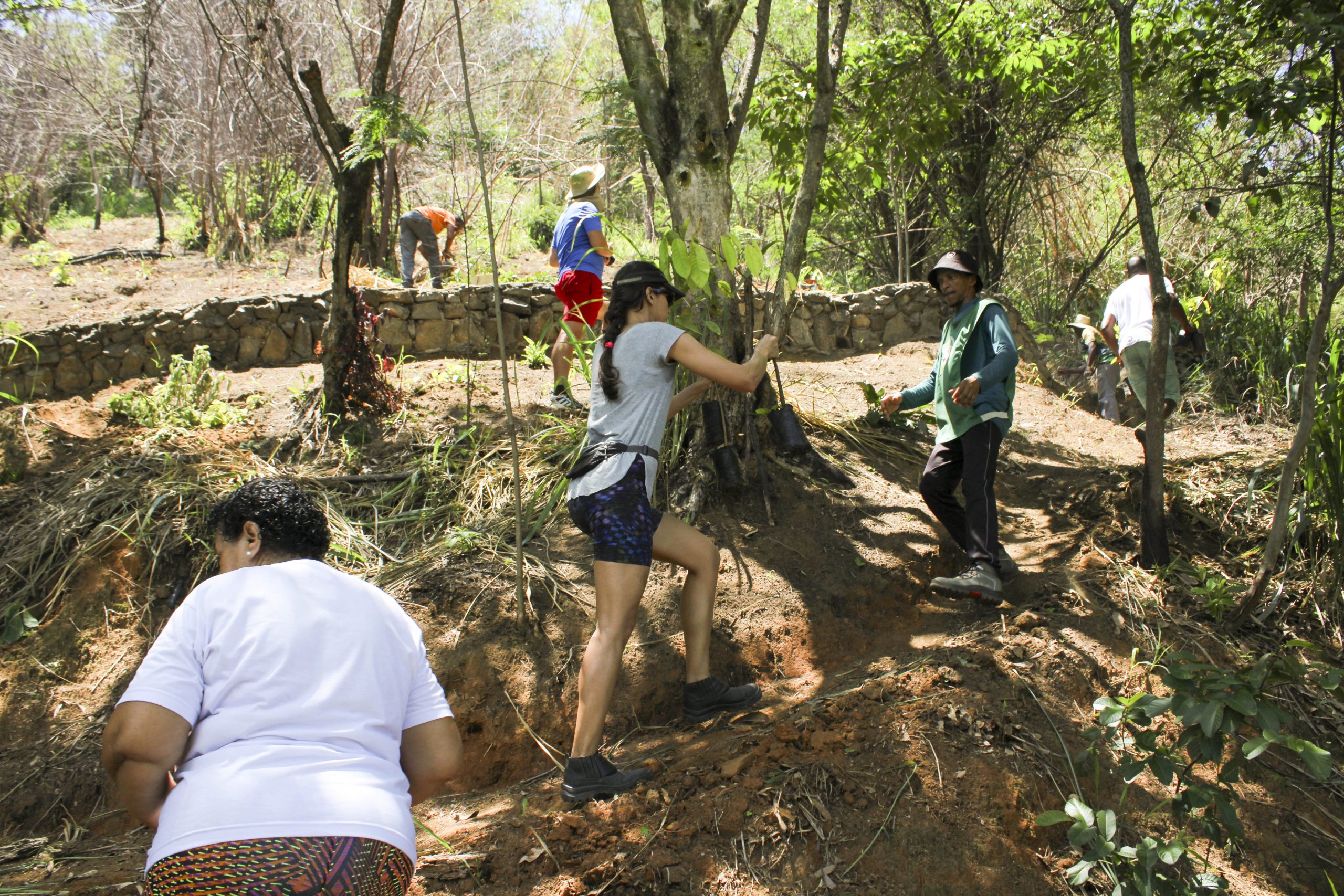
Salgueiro is frequently affected by spontaneous fires during the dry season. The action aimed to restore soil moisture using materials that retain water and planted over 130 medium-sized saplings, mostly fruit trees, to prevent erosion. Some of the species planted included juçara palm, ice cream bean, Surinam cherry, grumixama, araza, Brazilian peppertree, guava, jabuticaba (Brazilian berry) and cambuci.
The reforestation effort is part of a national action undertaken by Time to Plant, which has been organizing volunteers across Brazil since 2019 to plant on the first Sunday of December, a period that traditionally sees the highest rainfall in the tropical climate.
For Glaucio Goncalves, gardener and resident of Salgueiro, this action has a variety of benefits.
“[Planting] gets rid of garbage dumps… and stops landslides. And it’s therapy, right? Working with plants is satisfying. I feel gratified. It really is good.” — Gláucio Gonçalves

Participants from other communities also shared positive impressions of the gathering. Marcia Greice, a resident of the Morro do Fogueteiro favela, in Santa Teresa, a neighborhood in Rio’s central region, said that what she learned during the action can help her community, which is still susceptible to landslides.
“I came today because I’d also really like to learn. How to treat [the soil], how to care [for it]… To me, plants are life. I also came for the importance of… [learning to prevent] landslides, you see? [In my community] we used to have a lot of them. But that’s because the soil there is also [mixed with] red clay, yellow clay. We still have a little piece of land that’s very vulnerable. So, we also need to [learn and do] all of this there. To look after it more [carefully], you know?” — Marcia Greice
A Collective Action in the Present for the Future
In addition to encouraging planting, the collective action also sought to encourage ongoing actions, with periodic maintenance, in order to ensure effective environmental recovery.
“The idea is to encourage this resilience. Continuing [these actions] and bringing more people in is what really makes [change] happen, you know? Which is super important. It’s not enough to just go and plant. We have to stay in one place, come back every three months, see how it’s doing and have someone responsible who can keep things going.” — Gil Pires, environmental manager and project participant
This view is reiterated by Janaína Soares, member of the local Salgueiro Herb Growers Collective. To her, planting is a form of cultivating knowledge that bridges generations, maintaining not only respect for nature but also for one’s ancestors and descendants.
“This is good because we’re bringing our ancestral knowledge and we want to keep this going so that the younger generation can follow our example and continue this in the future. So that they are able to make some [cough] syrup, make [medicinal] tea for their children, their nieces and nephews. So I’m here because I think it’s really nice for us to do this, hands-on, for our community, right? We’re planting tomorrow, we’re planting the future.” — Janaína Soares
Edith Barcelos, physiologist and Time to Plant volunteer, said that it is in the actions of today that we cultivate positive perspectives for the communities of the future. She added that, “despite it being hard work,” reforesting is the greatest legacy someone can leave for the future.
“One of the people here in the community was saying that, when they got here, at first theirs was a shack made of tarp, cardboard. Today it’s a house. Now, imagine if these people are able to project a future where they have a house with a beautiful wooded area behind it, cool, with water coming from the spring? This is why we organized this specific action here in Salgueiro, today, to mobilize people about what reforestation is and that, actually, maintenance is even more important—because reforestation is a lot of work. I think about this all the time: when I die, I’ll have planted a bunch of trees, a little bit of me will be in each tree I’ve planted. So, you die, but you die less, you know? Because a little bit of you will be in the things you’ve spread.” — Edith Barcelos
The collective action in Morro do Salgueiro included ten volunteers from other favelas in Rio de Janeiro, such as Morro da Formiga, Morro do Fogueteiro and Complexo da Maré. These actions are open to the public. To keep up with the program, access the project’s Instagram page.
*The Sustainable Favela Network (SFN) and RioOnWatch are both initiatives realized by not-for-profit organization Catalytic Communities (CatComm).
About the author: Amanda Baroni Lopes is a journalism student at Unicarioca and was part of the first Journalism Laboratory organized by Maré’s community newspaper Maré de Notícias. She is the author of the Anti-Harassment Guide on Breaking, a handbook that explains what is and isn’t harassment to the Hip Hop audience and provides guidance on what to do in these situations. Lopes is from Morro do Timbau and currently lives in Vila do João, both favelas within the larger Maré favela complex.