

November 5, 2025—Rio de Janeiro Mayor Eduardo Paes, like Brazil’s President Lula, has recently been recognized by TIME magazine as one of 100 Climate Leaders. Currently hosting the C40 World Mayors Summit in Rio, he paints a picture of a city intent on addressing climate risks, all the more in the news as Brazil prepares to host COP30, the 30th UN Climate Conference, in Belém, in the heart of the Brazilian Amazon, next week.
“Aware of its responsibility… [as] an important hub for climate discussions, alongside Belém,” as the Municipal Secretariat of Environment and Climate (SMAC) has been promoting by email, the city is also welcoming the Local Dialogues, The Earthshot Prize, the Annual Plenary of the Amazonian Cities Forum, and the Urban Transitions Missions. It is a busy week for climate discussions in Rio!
According to a press release from SMAC, the Local Dialogues are being held to “show the world that Rio de Janeiro is a city of climate action, popular participation, and innovation,” among other goals. Meanwhile, this Monday, November 3, Mayor Paes welcomed the future King of England, Prince William, to the city: “It’s the first time the Earthshot Prize, the ‘Oscars of Sustainability,’ takes place in Latin America, and Rio was the city chosen to host the event,” he celebrated on Instagram.
Despite all this talk, a green revolution already well underway in Rio de Janeiro’s Atlantic Forest—born of visionary, now well-established public policies implemented consistently over four decades—is, at this very moment, suffering at the hands of this same City administration.
Determined and Determinant, the Remarkable ‘Reforestation Collective Action Program’
Forty years ago, in 1984, the Reforestation Collective Action Program (PMR by its Portuguese acronym) was launched. Perhaps Rio de Janeiro’s most impactful and long-lasting environmental and climate mitigation policy, it is little discussed in the media today—in spite of (or perhaps due to) having become so essential to the green identity of a city that prides itself on having “the largest urban forest on the planet.” Implemented by trained favela residents under the guidance of SMAC’s forestry engineers and agronomists, the program restores hillsides and mangroves and, according to the report “33 Years Planting Forests in Rio de Janeiro,” was responsible for planting approximately 3,400 hectares by 2019.
Up to the publication of this report, the Reforestation Collective Action Program had planted 10 million seedlings in Rio de Janeiro, promoting the reforestation and recovery of the original Atlantic Forest ecosystem and helping keep the soil alive and fertile through the presence of animals, humus layers, and grass, which reduce the occurrence of fires.
Unfortunately, current trends point to the end of this program. The PMR faces a scenario of doubt and uncertainty following budget cuts that began nine years ago but have intensified precisely as the climate emergency worsens. In 2025, the year of COP30, Rio de Janeiro City Hall reduced SMAC’s budget by 40%—from R$164 million (~US$30.5 million) in 2024 to R$99 million (~US$18.4 million) in 2025.
Now largely forgotten—and consequently an easy target for dismantling—the Reforestation Collective Action Program was, in its first decades, “awarded in Brazil and abroad… selected by the UN Megacities Project… chosen as one of the 100 Brazilian Experiences in Sustainable Development and Agenda 21… and as one of the 20 best projects in the Public Management and Citizenship Competition, by the Getulio Vargas Foundation/Ford Foundation,” among other honors, according to an old program webpage.
However, the PMR is even more relevant at this moment, in light of climate mitigation and adaptation—the precise focus of the current meetings being held by City Hall and by Brazil as a whole. In the context of the climate emergency, the greatest risks faced by Rio de Janeiro’s population—especially favela residents and other groups facing social vulnerability—are floods and landslides, water crises, heat waves, and urban fires. All of which are mitigated by the program.
For decades, Rio de Janeiro’s Reforestation Collective Action Program has been protecting hillsides by stabilizing the soil and anchoring it with tree roots. This makes it easier for water to infiltrate into the subsoil, reducing the risk of landslides and erosion on hillsides. Not to mention that the more trees are planted, the lower the temperatures, the higher the air quality, and the greater the absorption of greenhouse gases—the central drivers of the climate crisis.
Portraits and Perspectives from Those Who Make It Happen
Through the Reforestation Collective Action Program, hundreds of residents of favelas bordering degraded areas were trained and became reforesters—strengthening their vocations and building careers marked by deep commitment and expertise in environmental preservation and the mitigation of climate risks in the city.
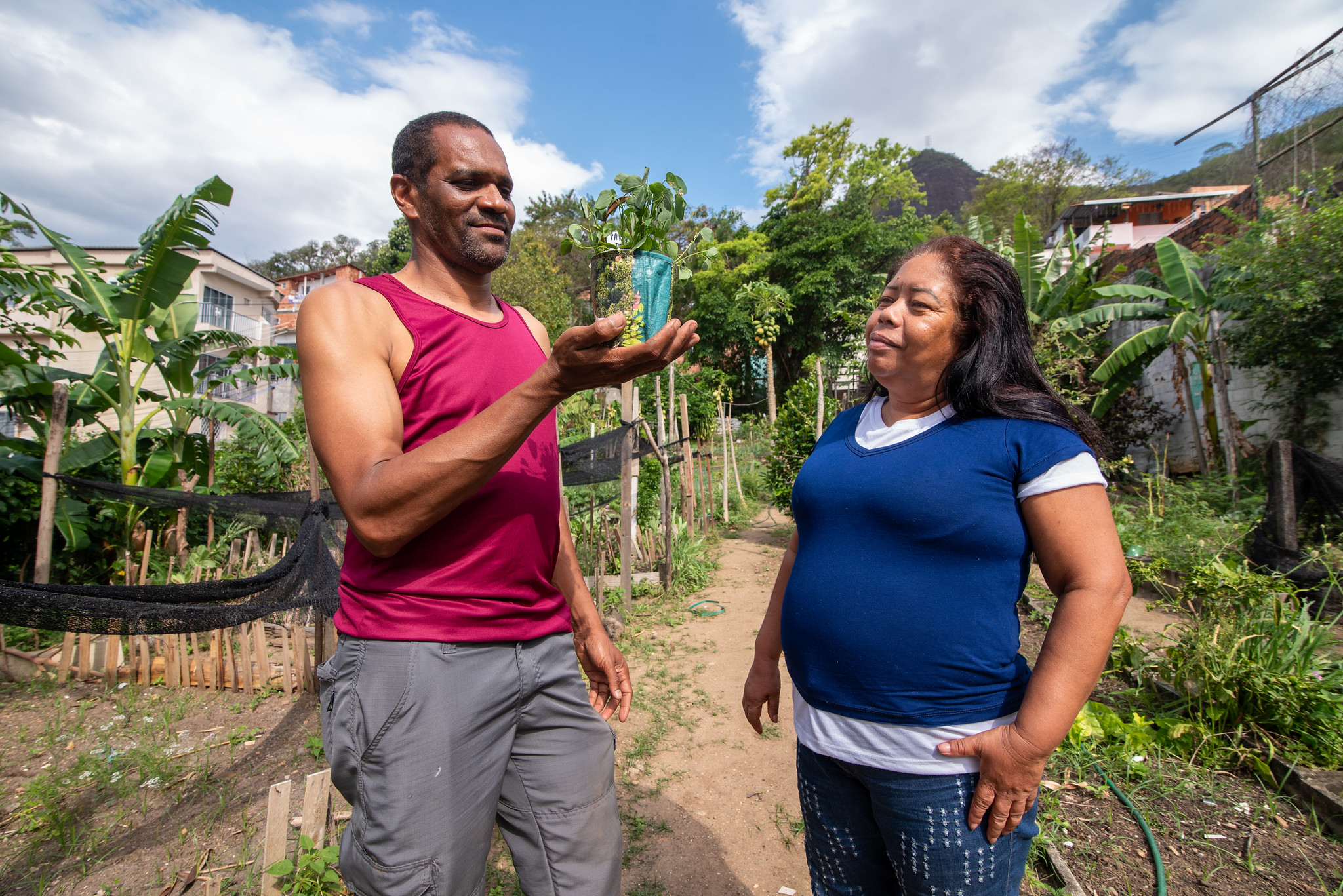
Born and raised in Morro do Salgueiro, a favela in Rio’s North Zone, environmental educator Denise Vieira was trained through the Educational Program in Reforestation Areas (PEAR by its Portuguese acronym) and has been a stipend recipient dedicated to this work since 1987. She explains how reforestation efforts alongside favelas bordering the forest provides safety for local residents, helps control deforestation, promotes inclusion and enhances overall well-being.
“We wake up in the forest and go to sleep in the forest [that’s how dedicated we are]. [That creates] quality of life [a community surrounded by greenery] that we’re not going to give up. People [in the community] end up not deforesting, because we’ve become guardians of the forest. We’re up there, keeping a close watch. We instruct [them] not to build because some City Hall agency might come to tear it down. [We] end up being a shield against uncontrolled growth in the community. We live and breathe [this work].” — Denise Vieira
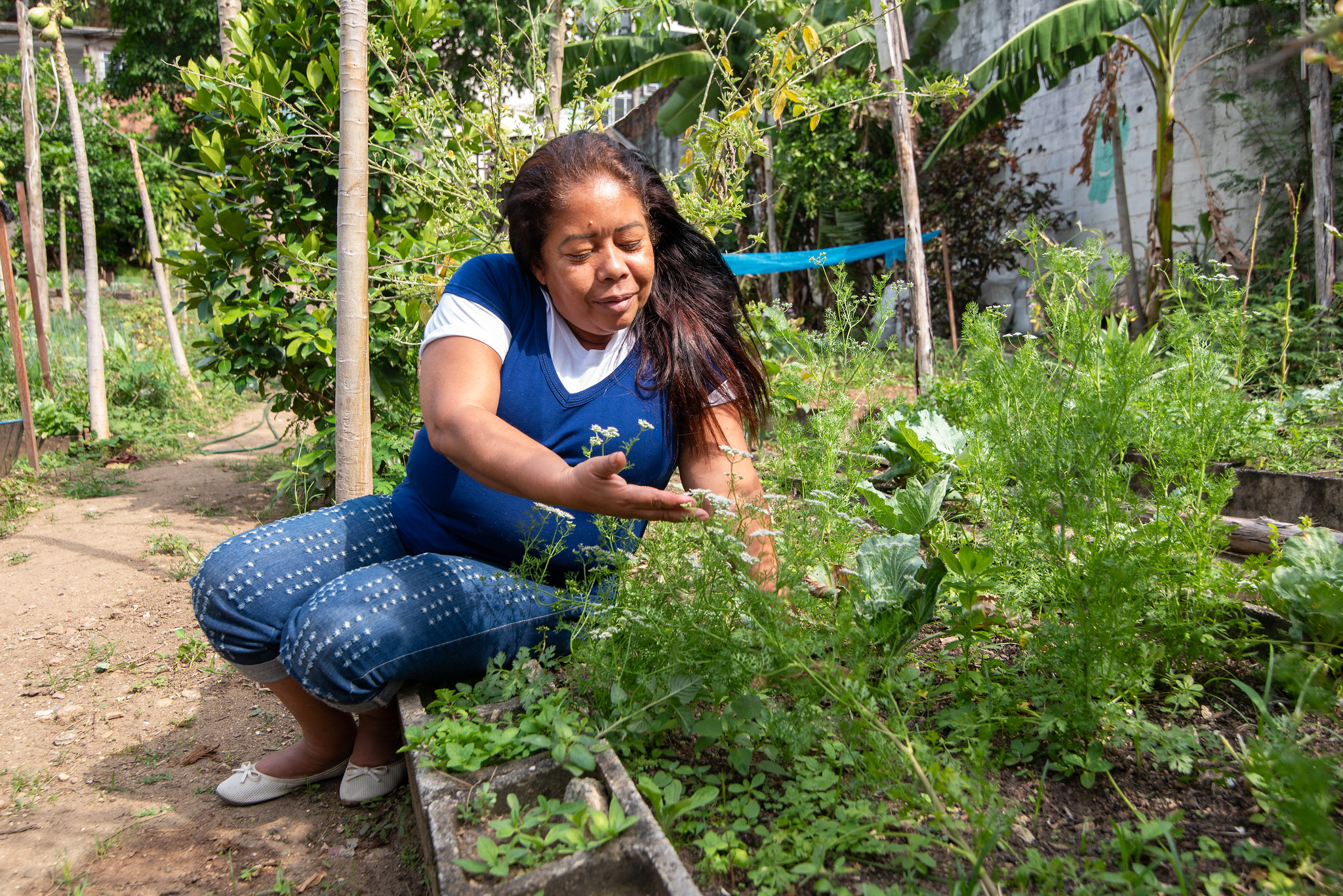
Álvaro Silva, a former PMR agent, says that after 20 years of recovery efforts in Morro do Salgueiro, Morro da Formiga, and Borel—all favelas relatively close by in the North Zone neighborhood of Tijuca—landslides have ceased to be a regular occurrence.
“A lot of people died [in the 1969 landslide]. Rocks came rolling down the hill, mud, all sorts of things. There were people in the river and everything. But this reforestation, with the species that were planted… it held the soil to prevent [more] landslides. The reforestation work in Morro do Salgueiro, Morro da Formiga and Borel is fantastic. We hear many stories from the past about landslides, collapses, and lots of trash ending up on the streets below. But after all this vegetation protection, it’s been greatly reduced over the past ten, twenty years.” — Álvaro Silva
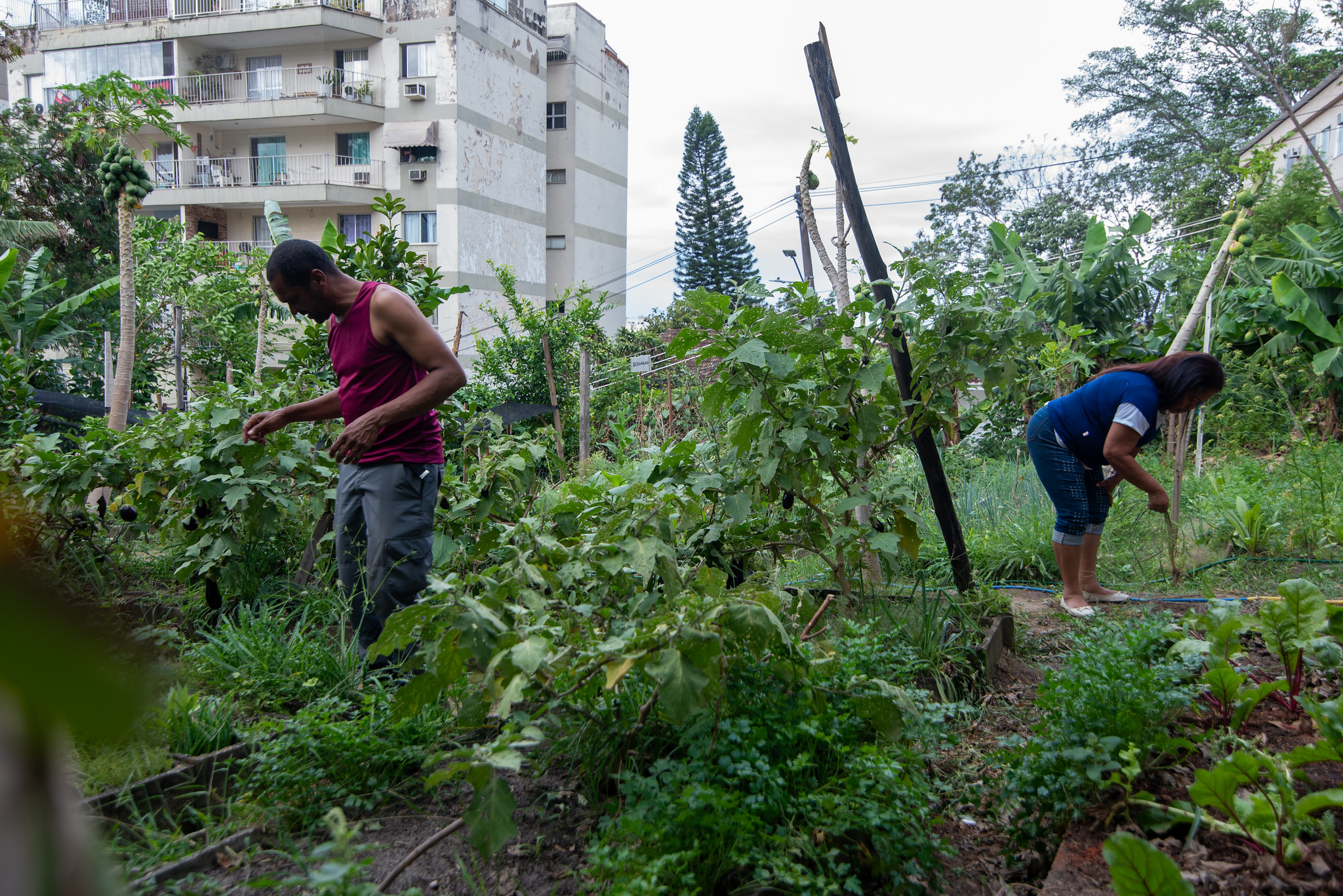
Working alongside the Reforestation Collective Action Program (PMR) are the Educational Program in Reforestation Areas (PEAR)—an educational branch of the PMR within the communities—as well as Hortas Cariocas, a Rio City Hall initiative which promotes community gardens in underused spaces.
Geiza de Andrade, an environmental agent with PEAR since 2001, describes some of the environmental education activities she has developed in her community, Vila Kennedy, a favela located in the West Zone, where she also works in connection with the Pedra Branca State Park.
“I run workshops [like] foot-soak and eco-soap workshops… We went to a daycare and [furnished] a room [with little sofas and a table] using only milk cartons and cardboard. We always look at what’s being wasted so we can reuse it. Through our craft workshops, many women today earn income by selling soap, making little baskets, decorating for parties, making flowers.” — Geiza de Andrade
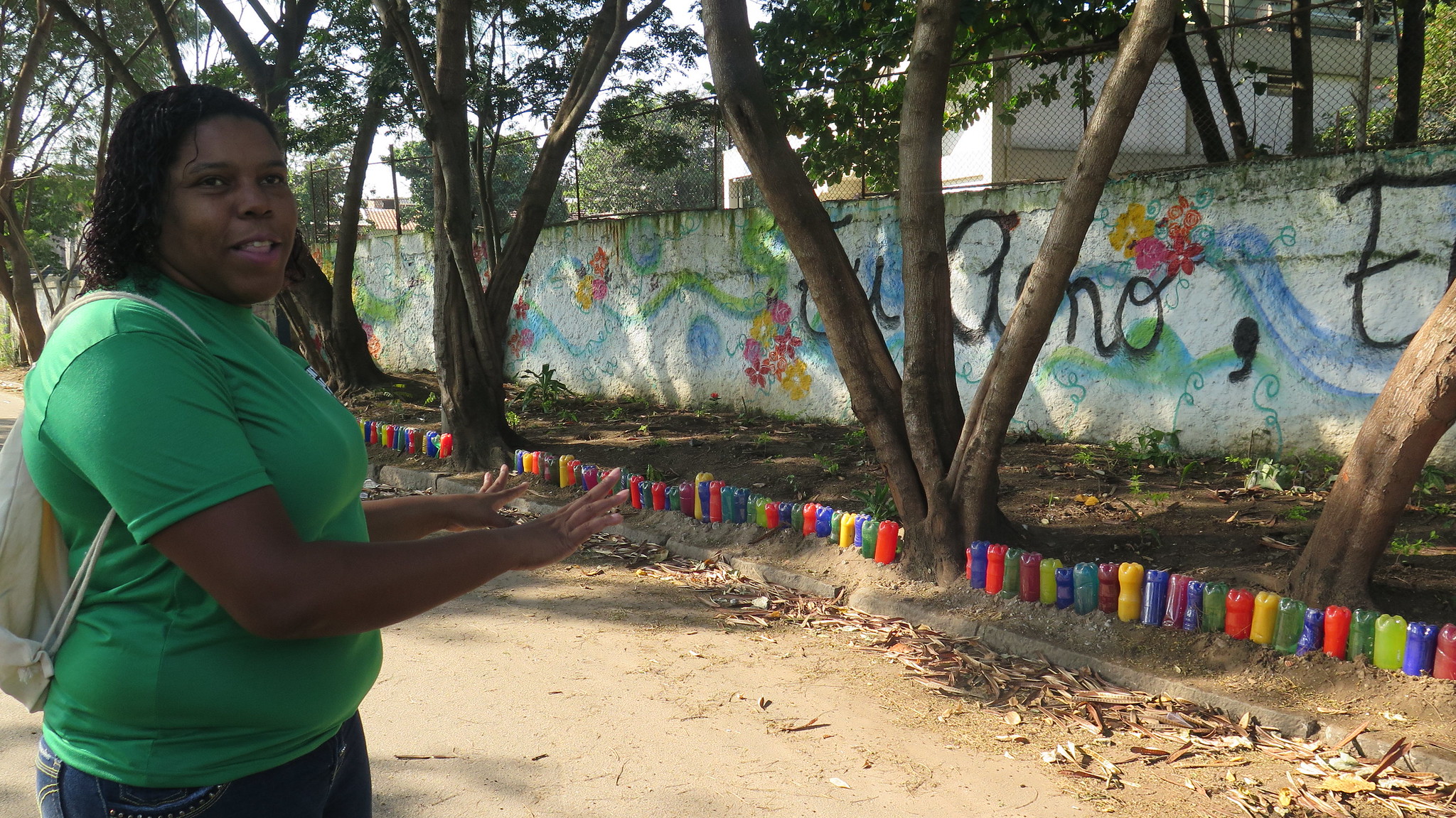
In addition to Morro do Salgueiro, Morro da Formiga, Borel, and Vila Kennedy, the Reforestation Collective Action Program has trained environmental leaders in dozens of other favelas bordering the forest, the most well-known being the South (tourist) Zone favelas of Babilônia, Vidigal and Rocinha, where eco-tourism in these communities is also a result of the PMR.
And they are true leaders. De Andrade shares that the work of environmental agents goes beyond the goal of restoring nature: it builds local environmental leaders, training qualified people across vulnerable areas of the city, who become essential points of reference for their neighbors in a city facing the impacts of climate change.
“Today’s environmental agents aren’t just reforestation agents. They are community leaders, organizers, because anyone who wants [information on the subject] sees us as a reference.” — Geiza de Andrade
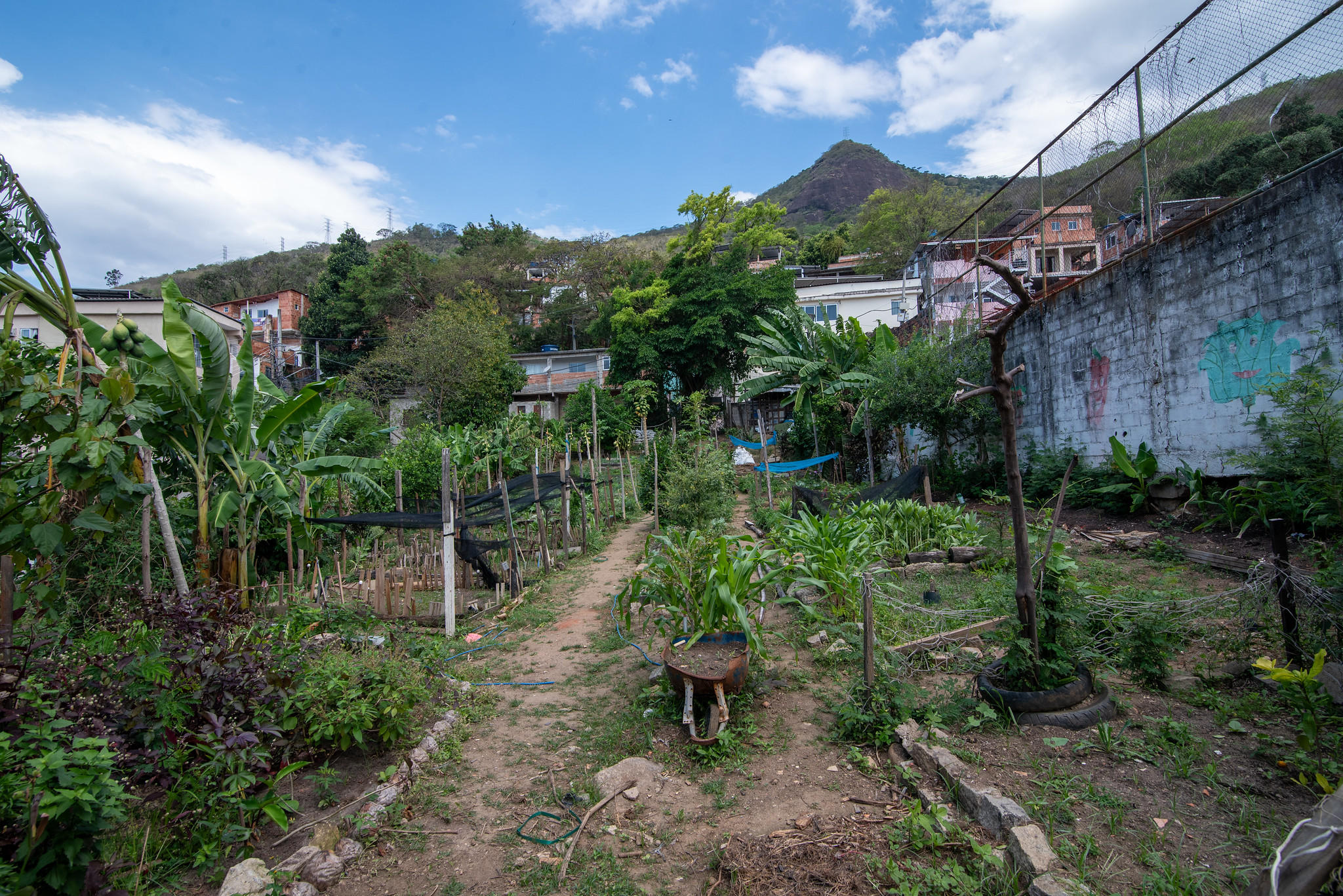
Suddenly, with this year’s budget cuts, for the first time in over four decades, the fruits of this work are at risk.
Silva notes that SMAC justifies the budget reduction by claiming that work in already restored areas is complete, and therefore no longer requires continued investment.
“We [society] talk so much about environmental issues, there are so many events, G20, COP30, this and that, going on. Then you see the Secretariat [Municipal Secretariat of Environment and Climate] come in and belittle [this work], saying that the area is under ‘maintenance’ [and therefore doesn’t need funding], when that’s really not the case. Fires [spontaneous combustions] could wipe out this whole forest [in an instant]. It’s crazy. Replanting has to be continuous, people. There’s no such thing as ‘maintenance’… If this project stops, the risk [of historic landslides] returning starts to grow.” — Álvaro Silva
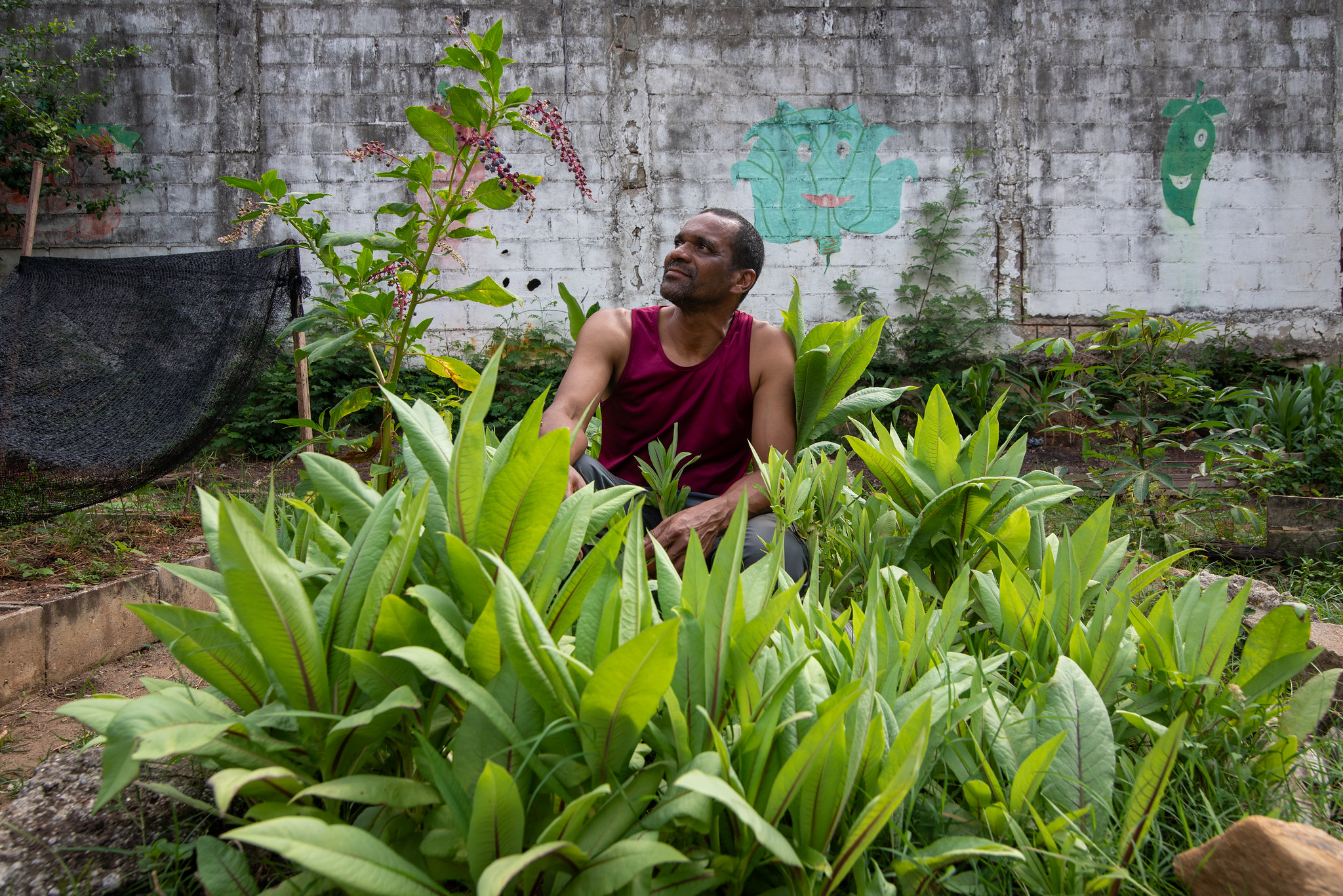
Denise Vieira, who until this year had been receiving her stipend from the program without fail since 1987, describes the situation.
“The [Reforestation Collective Action Program] is budgeted for 12 months, but we were told in August that it was going to end, that ‘the last payment would be made in September.’ Later I found out they backtracked and kept a part of the team. Now, close to COP30, they say they don’t have money. ‘[The Secretariat of] Finance is having a funding problem, there’s no money for payments.’ That’s what they say. [But] when it’s time to show the projects [to the world], SMAC claims that ‘we have [a lot of] work in progress… the project is happening.’” — Denise Vieira
De Andrade, whose stipend has been reduced after years of dedication, continues to uphold her commitment to the residents of Vila Kennedy who rely on her work.
“I run some workshops… [buying] materials out of my own pocket, with my own money… It’s reaching the point where I just can’t keep funding things myself…” — Geiza de Andrade
Vieira goes on, describing the changes over the years, which intensified particularly in 2025, leaving her without a stipend.
“At the Environmental Education Center, they cut the staff by half… There’s a [reforestation] project that had 24 people on the team when it started in 2000 and now there are only six left. This year, the stipend they used to pay us on the 15th of every month [we started getting] a month later,… [or] ‘there’s no expected payment date.’ So the payment comes the following month, almost a month late, which never happened [before]… A co-worker hasn’t been paid for three months. On top of that, the stipend [for those who remain] went from R$1,000 (~US$190) to R$700 (~US$130).” — Denise Vieira
WARNING: Do Not Confuse Programs
The robust Reforestation Collective Action Program (PMR) and its allied initiatives (PEAR and Hortas Cariocas)—with their long, measurable, and proven track records—must not be undermined by confusion with the new, seemingly electioneering projects launched by SMAC in 2023, which have similar, and thus misleading names: Guardiãs da Mata (Forest Guardians), Cada Favela uma Floresta (For Each Favela a Forest), and Refloresta Rio (Reforest Rio).
“The Guardiões dos Rios (River Guardians) program appeared during an election year [for example]… it ran for a while, and then, once the election was over, everyone was dismissed.” In the lead-up to the most recent election, the teams of both River Guardians and Forest Guardians were expanded—only for most operations to be shut down shortly afterward. “The current administration created these programs [Reforest Rio, For Each Favela a Forest, and Forest Guardians] that, to this day, we still don’t know what they actually do. The Forest Guardians project is [justified as] a bridge between the community and public authorities. But isn’t that precisely [the role of PEAR, which has been around for some time]?”*
Another source of confusion lies in the fact that the Reforestation Collective Action Program is now formally placed under the Reforest Rio program. While City Hall presents this as a continuation of the PMR, Reforest Rio operates under a secondary management structure that implements reforestation through compensatory measures, with funding being diverted from the PMR to this other unit. Instead of centering on favela-based agents committed to reforestation, preventing irregular land occupation, and carrying out community-rooted environmental education, we now see resources being channeled into experiments with “seed-planting drones,” for example.
Conclusion
Despite its proven, well-documented, and long-lasting impact—the result of years of work by community reforesters—the Reforestation Collective Action Program is being dangerously undermined by the very City Hall that is promoting a series of supposedly climate-emergency-driven activities ahead of COP30 and the visit of mayors from around the world for the C40 Summit. Unless this course is reversed to bring coherence between what the current administration preaches and what it actually does, the contradiction can only be seen as yet another hollow marketing stunt—typical of a city that does things just for show, or, as Brazilians say, “For the English to See.”
As COP30 takes place in Brazil this month—amid a pre-election period and worsening climate impacts year after year (especially in favelas)—City Hall should be strengthening solutions that have proven their worth, even without considering the additional benefits in the fact that they are realized by favela residents—the very communities most vulnerable to climate change.
At present, the City is moving in the opposite direction of its own stated agenda, disregarding the knowledge built by these programs and their professionals—in both the favelas and within City Hall—who have spent decades working toward the environmental recovery of our Marvelous City.
Investments like these save and improve countless lives while helping safeguard the future of a planet now dangerously close to a devastating and irreversible point of no return, when the effects of climate change will become irreversible.
“We breathe this [environmental recovery]. We wake up in the woods and go to sleep in the woods, and we’re not giving up this quality of life. You understand? A lot of people have their eyes on other things, but not us. This improvement in quality of life isn’t just for the favelas, because when we plant countless trees, we’re producing oxygen for the whole world… The Amazon is a lung of the planet, right? But the favelas are part of those lungs too.” — Denise Vieira
If we want to achieve the shift needed to confront the climate crisis, favelas must be at the center of decision-making—from the local to the regional, from national to international levels. And given the global significance of its favelas, Rio de Janeiro could—and should—become a model for this approach.
*For safety reasons, this interviewee’s name has not been included in the article.