

 This article is part of a series created in partnership with the Behner Stiefel Center for Brazilian Studies at San Diego State University, to produce articles for the Digital Brazil Project on environmental justice in the favelas through RioOnWatch.
This Women’s Month, following Rio de Janeiro’s 2026 carnival, RioOnWatch visited Mesquita, a city in Greater Rio’s Baixada Fluminense region, to learn about the Carolinas of Jacutinga project, created in honor of Carolina Maria de Jesus. De Jesus, one of the greatest authors in Brazilian history, was the inspiration behind one of Rio’s premier samba schools, Unidos da Tijuca’s 2026 carnival parade. Like the women of Jacutinga, she was a waste picker. Today, these residents transform their neighborhood’s history through a cooperative focused on recycling, art, environmental education and memory.
‘I Am Carolina Maria de Jesus: The One Who Overcame Hunger and Rewrote Brazil’
Carolina Maria de Jesus’ life journey echoes in the streets of Mesquita, in the Baixada Fluminense. The writer who transformed her lived experience amid hardship in the Canindé favela, on the banks of the Tietê River, in São Paulo, into a landmark of world literature with Child of the Dark in 1960, today inspires the project Carolinas of Jacutinga, which not only honors the writer’s name but also brings her essence to life by organizing women waste pickers into a network of solidarity economy, leadership and cooperative work.
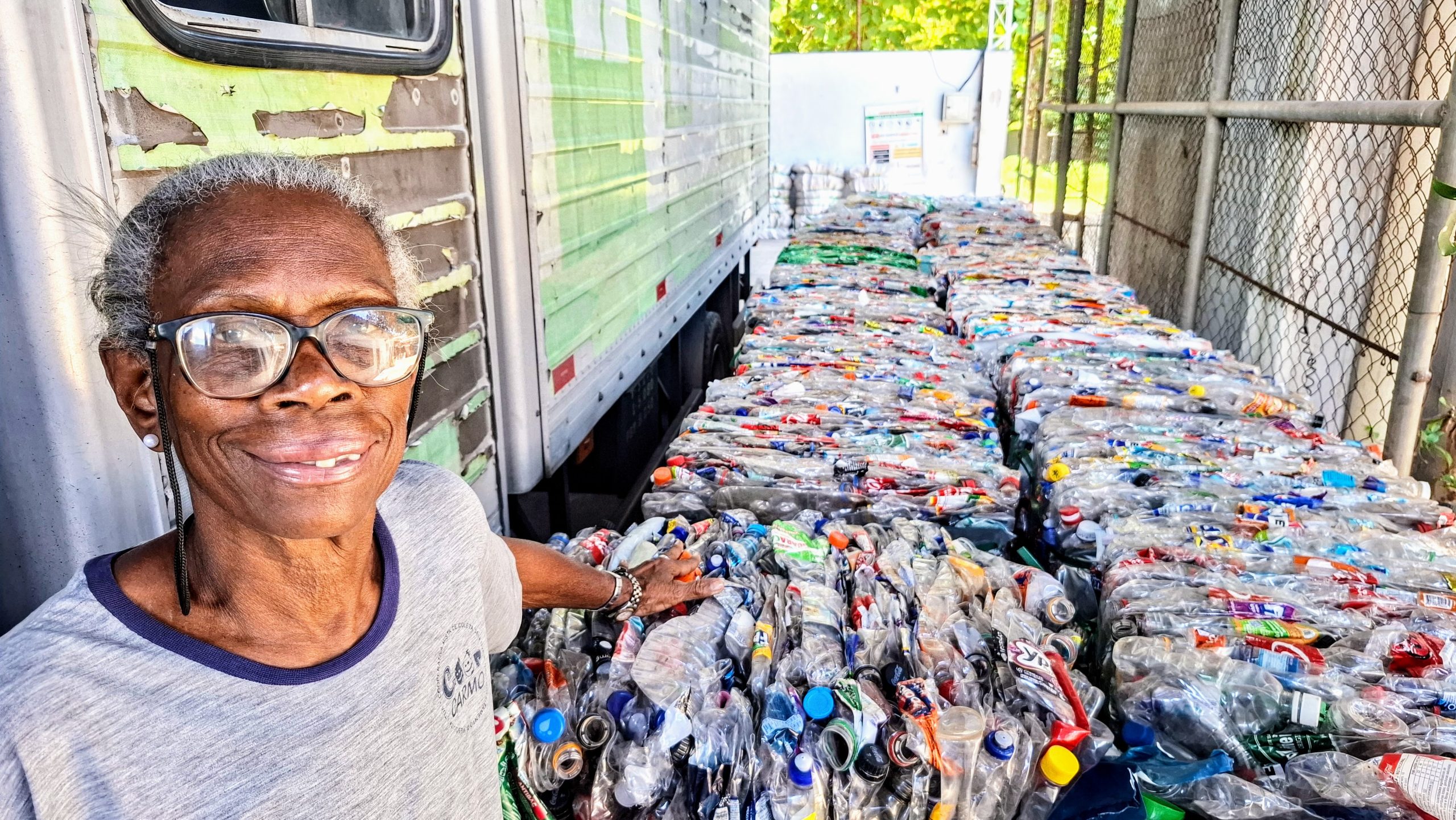
Since 2024, a partnership with Petrobras allowed for the inauguration of a Socio-Environmental Memory Center open to the public, located at the cooperative’s headquarters. Beyond their home territory, the Carolinas are active in four other municipalities in the Baixada Fluminense: Belford Roxo, Nova Iguaçu, Nilópolis and São João de Meriti. Today, in Jacutinga, recyclable materials serve as a tool of emancipation, enabling women to break free from situations of vulnerability while taking a leading role in managing solid waste in Greater Rio.
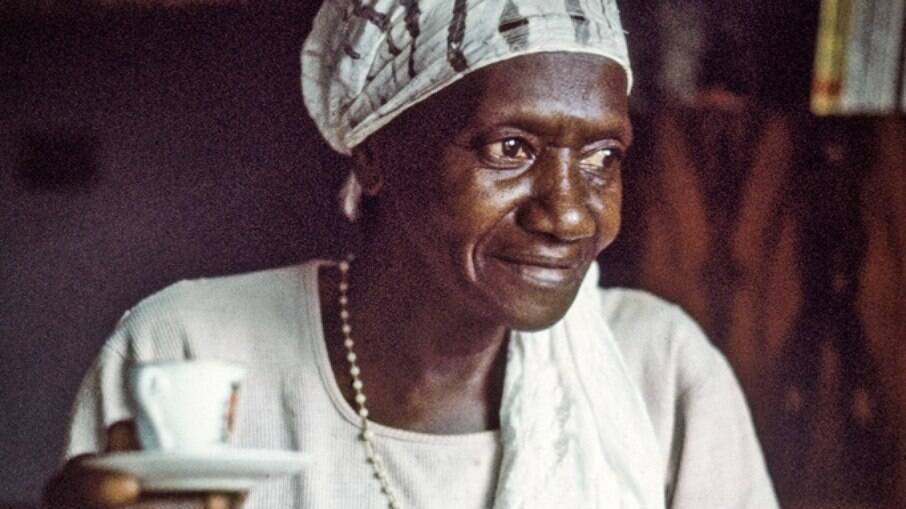
The cooperative’s story begins with an act of solidarity. In 1992, during a mass at Nossa Senhora do Carmo Church, in Mesquita, Hada Rúbia Silva, today the cooperative’s director, accepted a challenge posed by the priest: to organize the distribution of donated vegetables to women facing extreme vulnerability. What was meant to be a one-time community task became the seed of Coopcarmo, as the Mesquita Cooperative for Employment and Waste Sorting is known, forming the structural foundation of the project inspired by Carolina Maria de Jesus years later.
“Nowadays, the situation here in Jacutinga has changed a lot. But back then, life was really hard. Women didn’t live long. It was horrifying!” — Hada Rúbia Silva
The shift from charity to a desire to foster autonomy marks a pivotal chapter in the history of Coopcarmo. In the 1990s, life in Jacutinga was precarious, with women living along the edges of drainage channels and relying on church services to plead for basic necessities, such as cooking gas, rent or a meal. Silva recalls that for years, this support network was sustained by Father Nino Miraldi, an Italian so dedicated to the vulnerable that he is fondly remembered as Jacutinga’s “father of the poor,” and lends his name to the local high school (CIEP). He founded several community centers and promoted important initiatives, such as the “Kilo Campaign,” which collected food for those in need.
With the passing of Father Miraldi, the social work faced a hiatus, later filled by the arrival of another Catholic priest, Father Obertal Xavier. The new priest, knowledgeable about the dynamics of the Baixada Fluminense, brought with him a philosophy of transformation. Under this new direction, Hada Rúbia Silva, who already organized the distribution of vegetables and the community soup delivered in the parish’s old VW bus, took on an increasingly prominent role in transforming charity into a solidarity economy project. However, the idea was not well received at first.
“The reaction was not at all good. At the meeting, when he brought up the possibility of doing this work with garbage, most of the women said, ‘Oh no, that’s not feasible. That’s not going to work. How are you going to put those women who are living in extreme poverty to collect and sell garbage? That’s not going to work.’” — Hada Rúbia Silva
The concept of recycling was initially foreign to the women of the community. They came around not because of a focus on preserving the planet, but on fighting the immediate hunger and unemployment that plagued single mothers and marginalized families in Jacutinga.
‘Developing Actions in Art, Environmental Education and Memory’
Without infrastructure or technical knowledge, the cooperative had to reinvent itself. The women realized that Coopcarmo’s operational capacity lacked almost everything: qualified personnel to manage recyclable materials, facilities equipped with proper tools, standardized storage and the ability to turn recyclables into financial gain. To address this, Father Obertal traveled to Germany and Belgium, where he connected with NGOs specializing in the creation, organization and training of recycling and agroecology initiatives in the Global South. A technical team traveled to Mesquita, and through an immersion that lasted several weeks, the group of women began their journey as part of the solidarity economy.
In 2010, the cooperative was officially registered, undergoing necessary bureaucratic adjustments, such as securing labor guarantees for its members, such as opening bank accounts and registering with the Brazilian social security system.
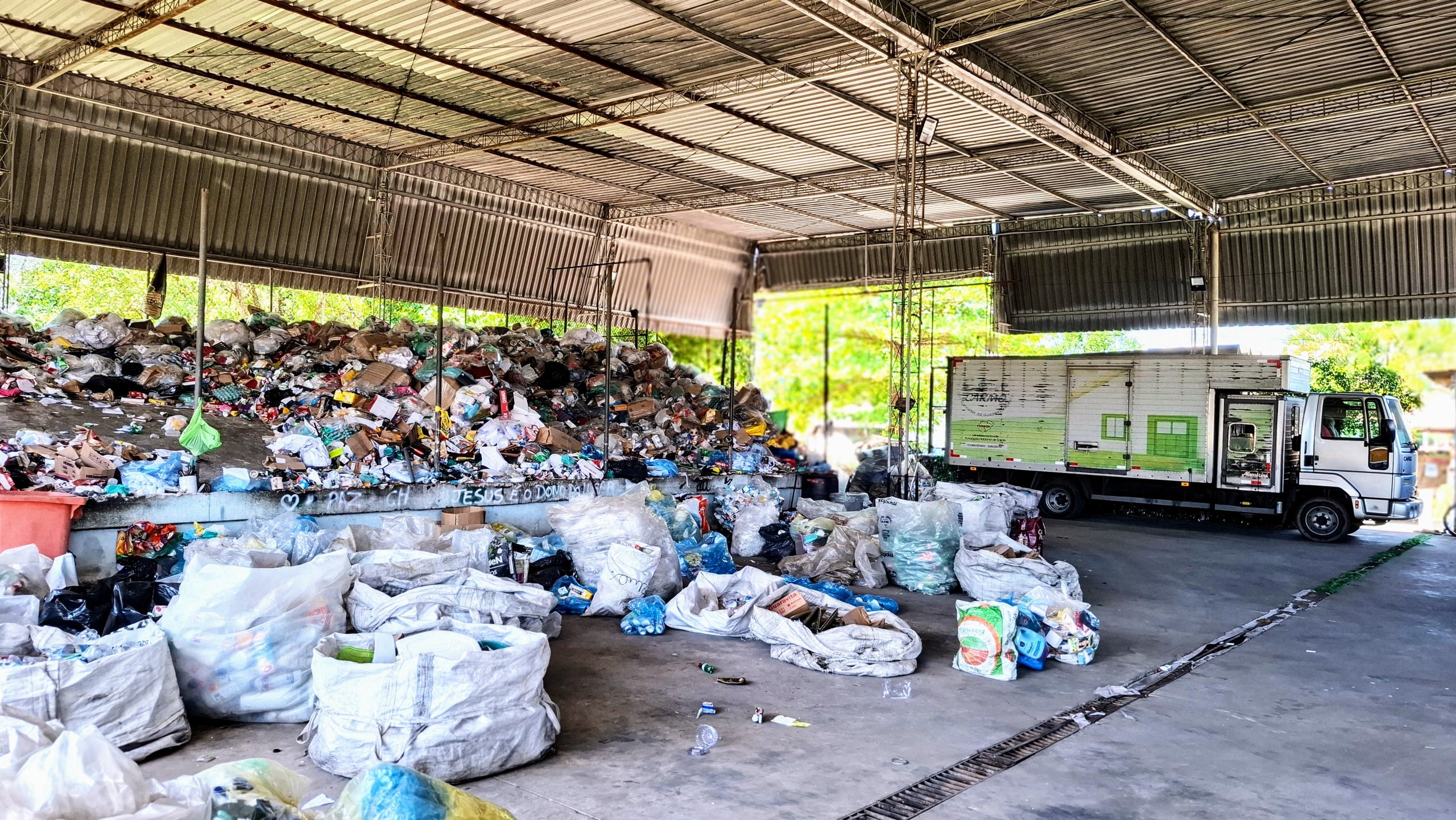
In addition, a partnership with Mesquita City Hall helped clarify technical specifications and enabled the cooperative to acquire, in 2011, a hydraulic press and its own truck to assist in collecting and transporting recyclable materials. These assets were obtained through a call for proposals issued by the National Health Foundation (Funasa), which invested in social inclusion through sanitation and environmental health initiatives in partnership with civil society organizations.
Some time later, the group learned about an exhibition dedicated to their inspiration, author Carolina Maria de Jesus. They decided to take the Dutra Highway on a seven-hour journey to the Moreira Salles Institute (IMS) on Avenida Paulista in São Paulo.
“We simply went,” recalls environmental educator Fabiana Oliveira, one of the project’s volunteers. With R$5,000 (~US$950) obtained through a Sebrae grant and donated tickets, they arrived in São Paulo. At the meeting with the museum’s educators, a surprise: the women from the Baixada knew everything about Carolina Maria de Jesus.
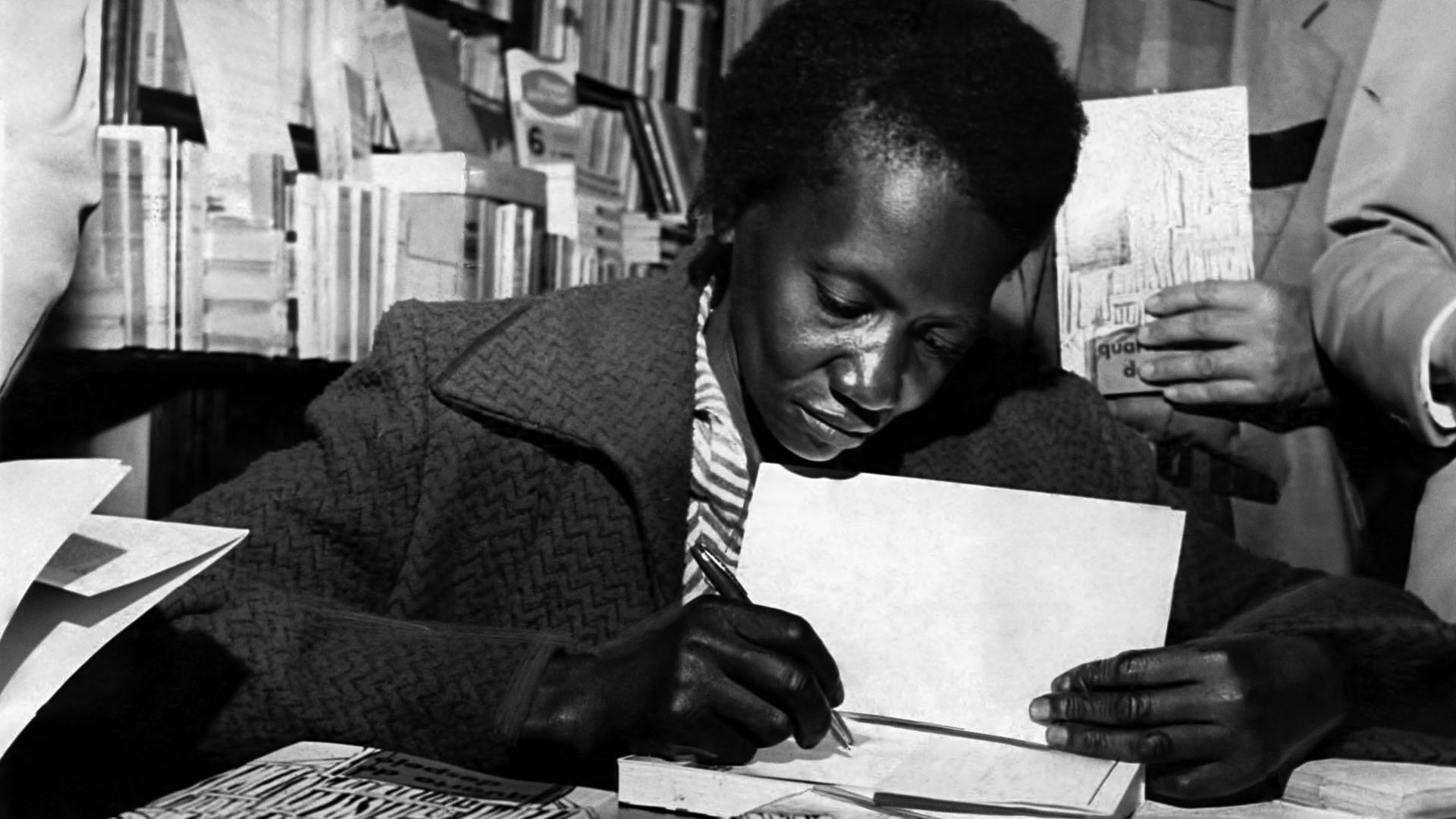
The connection with the writer who made a living from garbage and transformed her story into literature was immediate and profound. From that encounter emerged a partnership with the IMS and a new identity. The Carolinas were no longer simply waste pickers—they became women reinventing themselves through three pillars: art, environmental education and memory.
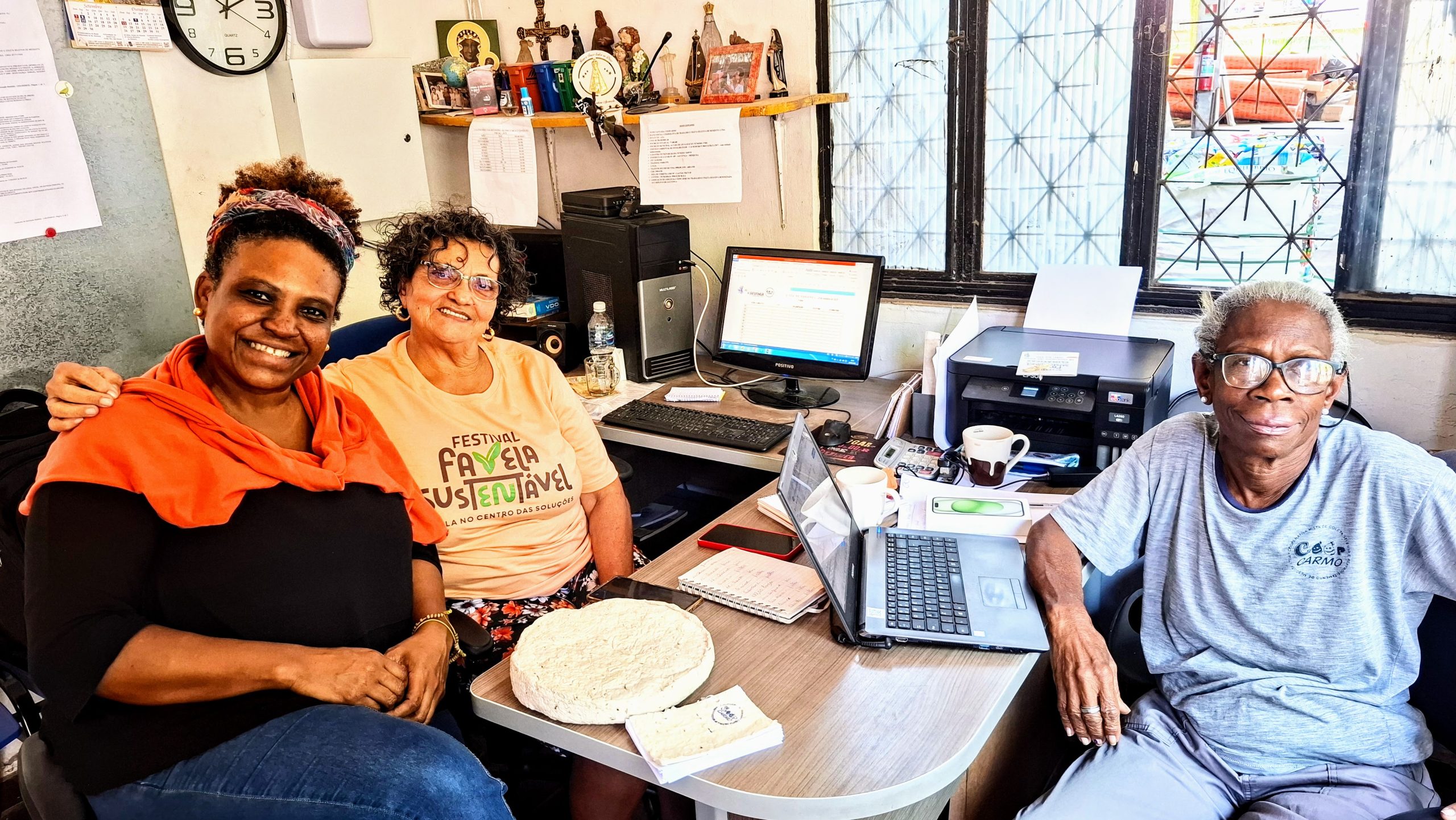
Today, in addition to the Memory Center, the hydraulic press and the warehouse, the cooperative’s headquarters house Repapel, an innovative handmade paper factory. One of its main distinctions is its partnership with the neighboring city of Nova Iguaçu, which does not have its own cooperative and sends its recyclable materials to Jacutinga—approximately 20 tons per month.
Ver essa foto no Instagram
Among the materials received, one stands out for its technological innovation: cigarette butts. Considered highly polluting due to nicotine and heavy metals, cigarette butts can take up to five years to decompose. However, through a technology developed by the University of Brasília (UnB), those collected in Nova Iguaçu undergo a decontamination process and return to the cooperative as pure cellulose pulp.
“This here is the decontaminated cigarette filter,” says Fabiana Oliveira, showing the raw material that now goes into handmade notebooks. “The project has already produced over 1,000 units, which have been refined since 2019. What once had ordinary cardboard covers now has the texture and value of handmade paper, imbued with history,” explains the educator.
Recently, during a workshop at the Sustainable Favela Festival, the artisans discovered the potential of agave, an invasive plant with resistant fibers similar to sisal. The plan now is to replace the plastic in the notebook bindings with fibers from the plant, completing the cycle of a 100% eco-friendly product. “The idea is to make these notebooks increasingly sustainable and improve their appearance,” explains Oliveira.
Even with Legalization, Challenges Remain
Since then, there have been many successive achievements: the establishment of a handmade paper production unit using recycled materials, collage training activities, painting, bookbinding, mosaic and design using recyclable materials; interactive meetups addressing recycling, conscious consumption and the favela as an educational space; workshops on memory and writing; as well as sharing and self-care circles, including sessions focused on emotional well-being, a sense of belonging and collective strengthening through networks.
However, nothing comes easily for the women in Carolinas of Jacutinga. Even while surviving with dignity and overcoming the most severe economic hardships, their lives remain marked by limitations.
At 60, Márcia Rodrigues Conceição, a resident of Nova Iguaçu, says her journey with the cooperative began 18 years ago, during a period of uncertainty. Unemployed and coming from a difficult experience as a cleaning lady in a building complex—where she faced long commutes and exposure to violence—she found a new life through recycling.
Even though she is illiterate and says that, in the beginning, she felt “a bit lost,” Conceição did not back down. Under the care of Hada Rúbia, whom Conceição describes as “a mother with a huge heart,” she completed her trial period and never left.
For Conceição, the cooperative provided more than just a salary: it provided socioeconomic inclusion. Through this work, she was able to open her first bank account and get her first debit card. “I had nothing,” she recalled. Not even the devastating floods that hit the region in 2023 and took nearly all her belongings could discourage her. With the support of government benefits and her ongoing work in recycling, she continues to rebuild her life, brick by brick, in the same place near the Japeri train line. The promotion to production director came as an exciting surprise. Conceição said that she found out about it during a meeting, when her name was announced: “I started crying right there; it’s something you never expect.”
Today, she leads a team of ten people. Her daily routine involves ensuring the organization of the warehouse, sorting materials arriving from neighborhoods such as Austin, also in Nova Iguaçu, and overseeing the use of personal protective equipment (PPE). Despite the responsibility, she avoids the stereotype of a “strict boss.” Márcia Conceição prefers dialogue and a relaxed approach: “I take everything in stride; I joke more than I scold,” she said.
‘I’d Eat If There Were Anything Left’
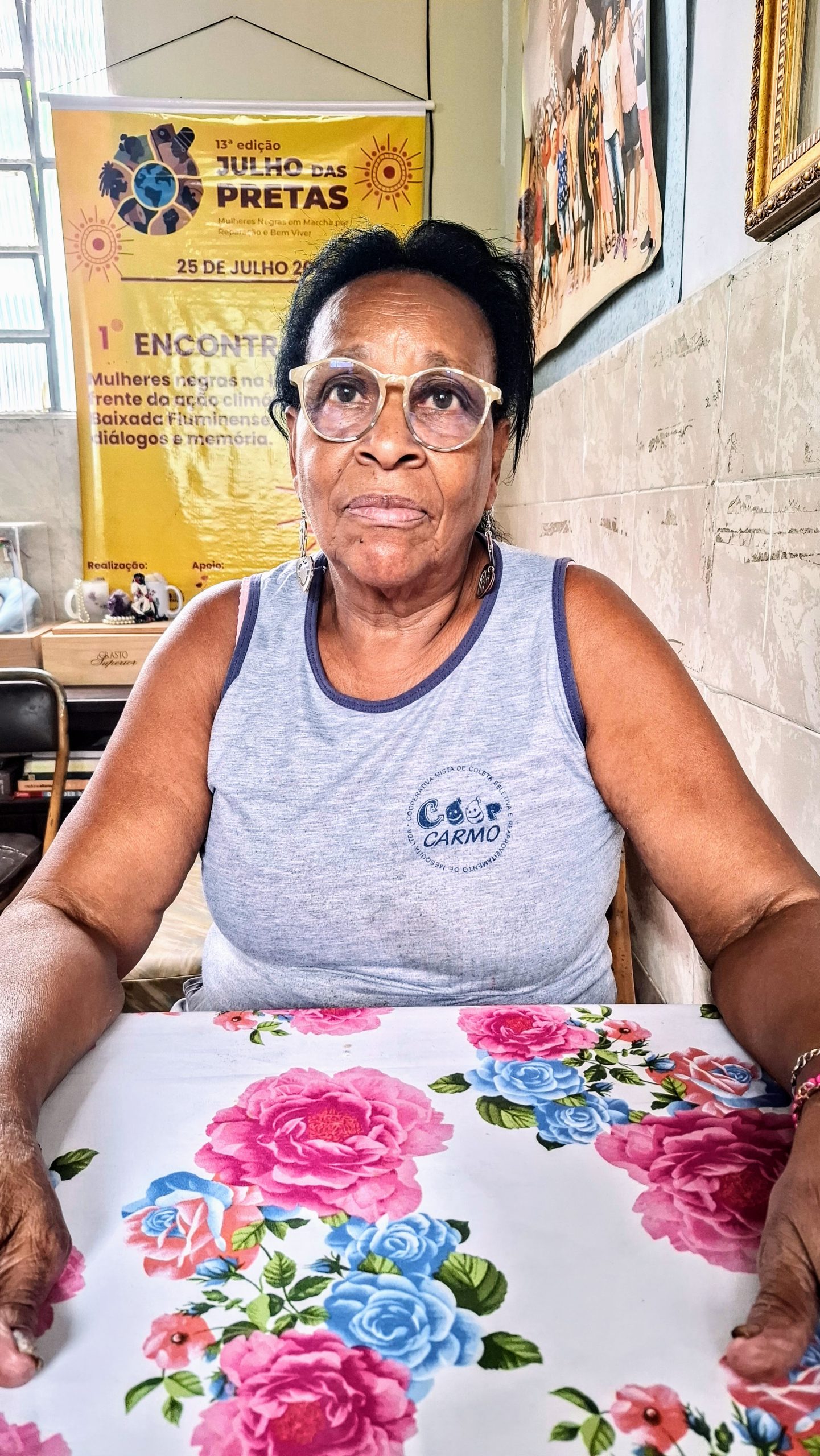
With a gaze that reflects the experience of someone who witnessed the project’s beginnings, at 69, Sônia Regina Narciso celebrates 25 years of dedication to sorting recyclable materials. Yet, beyond separating PET bottles and paper, Narciso’s journey is a story of fighting hunger and relentlessly pursuing her children’s dignity.
Before joining the cooperative, Narciso’s reality was marked by the uncertainty of odd jobs. Raising four children on her own, she split her time between exhausting cleaning jobs that barely paid R$300 (~US$55) per month, which did not even cover the basics. Memories of that period are harsh. She recalls prioritizing her children’s meals over her own. “The food here is just for you,” she told them, hiding her own hunger. In a moment of desperation, when she asked a local priest for help buying a gas cylinder, she received the advice that would change her life: “Go see Hada; she’ll get you a job.”
Joining the cooperative was not immediate. Narciso had to persist until she secured her place. When she finally joined, the change was dramatic: her work in recycling allowed her to leave the wooden shack where she lived and build her own home. “Where there used to be a tile roof, now there’s a concrete slab!” she says proudly.
Born in São João de Meriti, another city in the Baixada Fluminense, but living in Mesquita since the age of 11, Narciso now faces a new kind of pressure: the overprotectiveness of her children, who are now adults with established careers, asking their mother to stop working. They worry about the physical strain, a natural consequence of working with recyclable materials.
Narciso, however, resists. For her, the recycling warehouse is more than just a job: it is a place where she feels useful and engaged. “It’s better than staying home,” she says, determined to continue working until official retirement.
By transforming the “garbage room” into a “living room”—in the words of Carolina Maria de Jesus—the Carolinas of Jacutinga “changed their story” and “drew strength from the verses to prevail,” as sung by the Unidos da Tijuca samba school in 2026.
Like Carolina Maria de Jesus, these women use recyclable materials to achieve autonomy and do far more than just clean cities: they rebuild life in their communities. They have rewritten their dignity through environmental awareness, economic independence and women’s empowerment.
Watch the 2026 Unidos da Tijuca samba school parade and learn more about Carolina Maria de Jesus here:
About the author: Fabio Leon is a journalist, human rights activist, and media advisor with Fórum Grita Baixada.