

 This article is part of a series created in partnership with the Behner Stiefel Center for Brazilian Studies at San Diego State University, to produce articles for the Digital Brazil Project on environmental justice in the favelas through RioOnWatch.
The favelas of Complexo da Maré, in Rio de Janeiro’s North Zone, are one of the city’s areas most affected by extreme heat, having become a major heat island. Studies indicate that the heat index can exceed 60°C due to extensive asphalt cover, lack of green space (with the rare exception of Cadu Barcelos Ecological Park), environmental degradation and the building materials and architecture of homes, which contribute to rising temperatures.
Besides extreme heat, there are other risks associated with climate change in favelas and peripheral areas. Depending on the community, residents may face the risk of flooding or landslides during heavy rainfall, as well as constant water shortages (especially in summer), poor air quality, wildfires, electrical grid fires, high tides, among other hazards. And when these extreme weather events affect favelas, people with disabilities are among those who suffer most.
Intersectionality: Eco Ableism in the Favelas
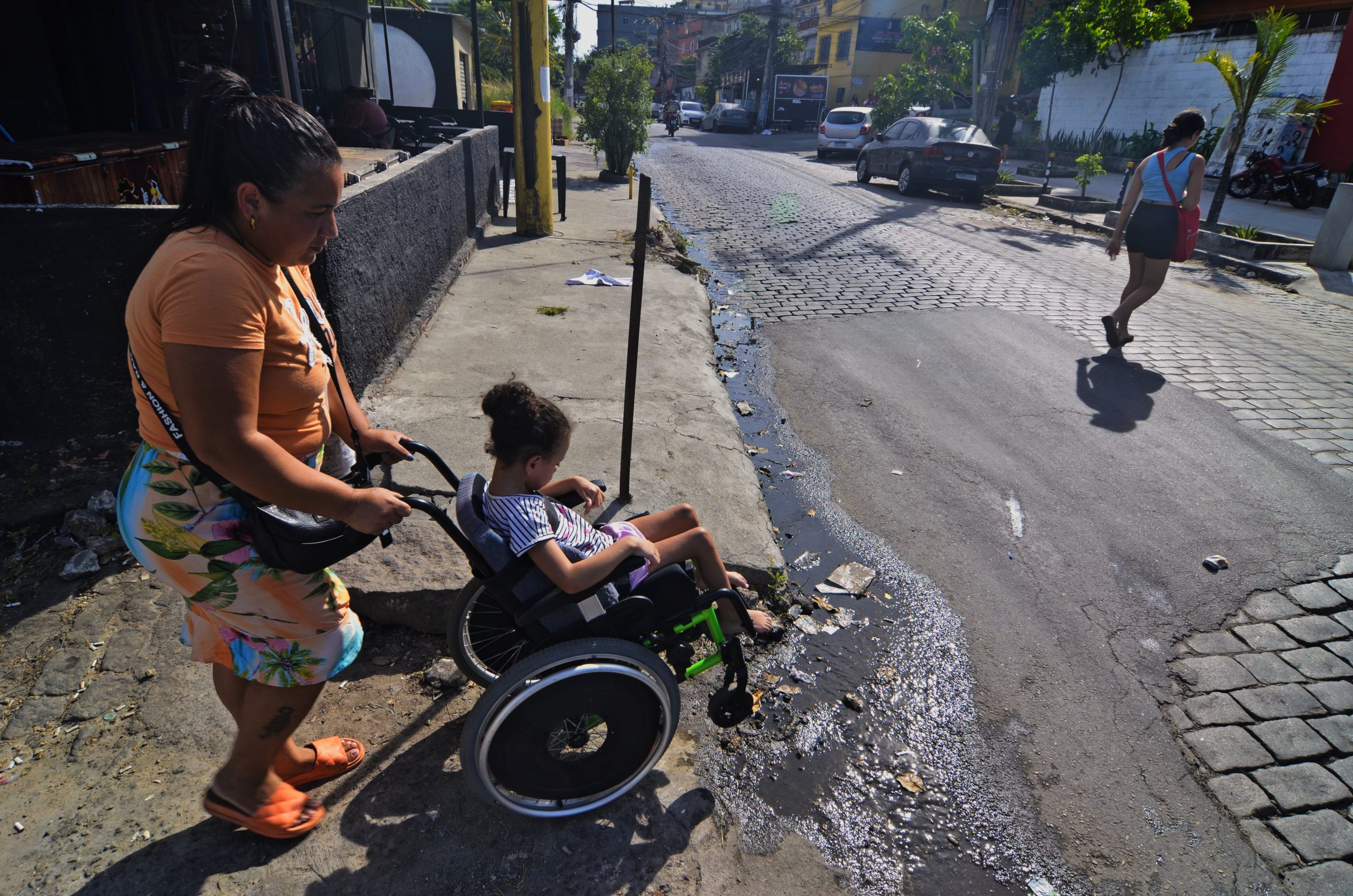
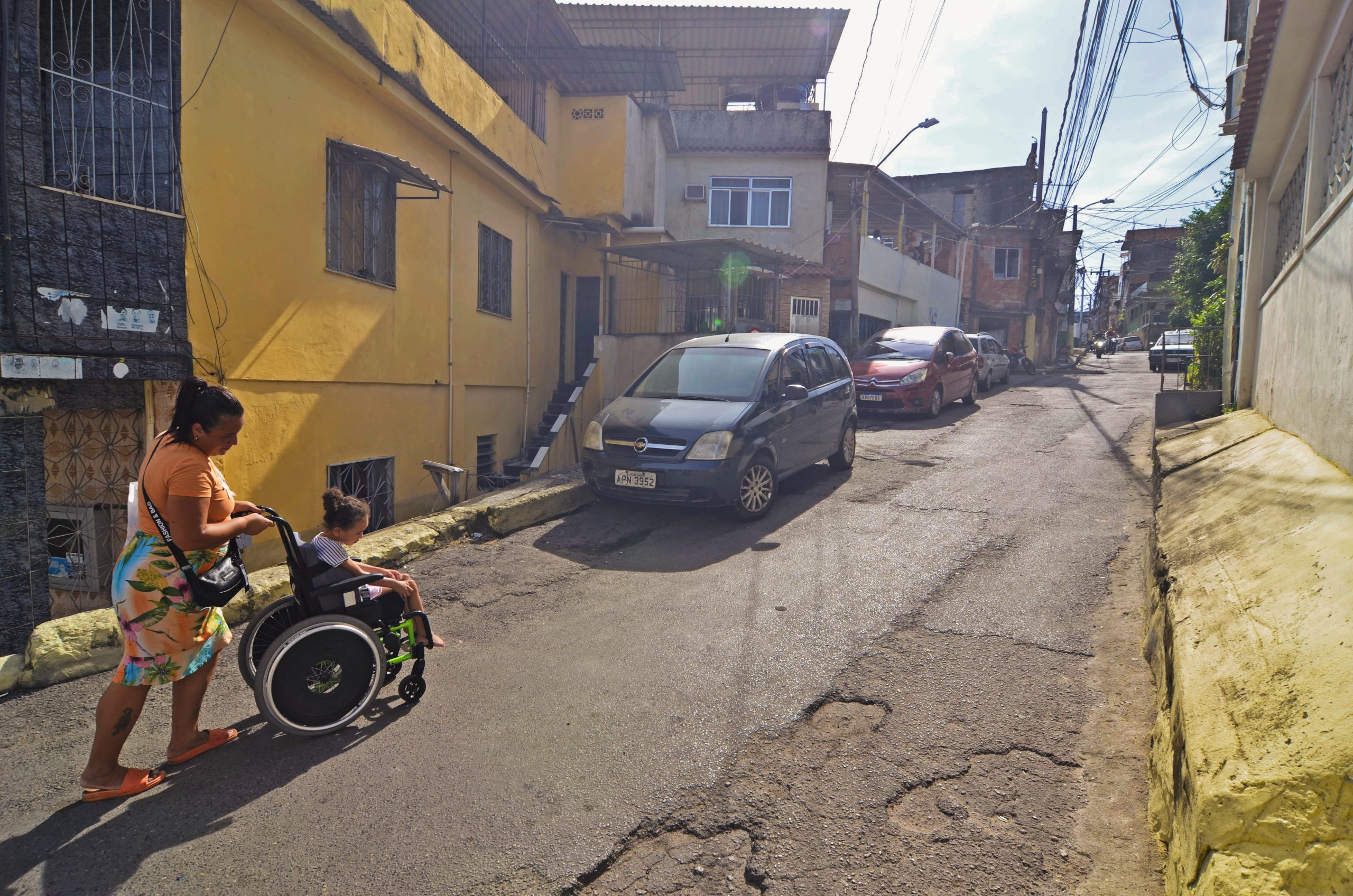
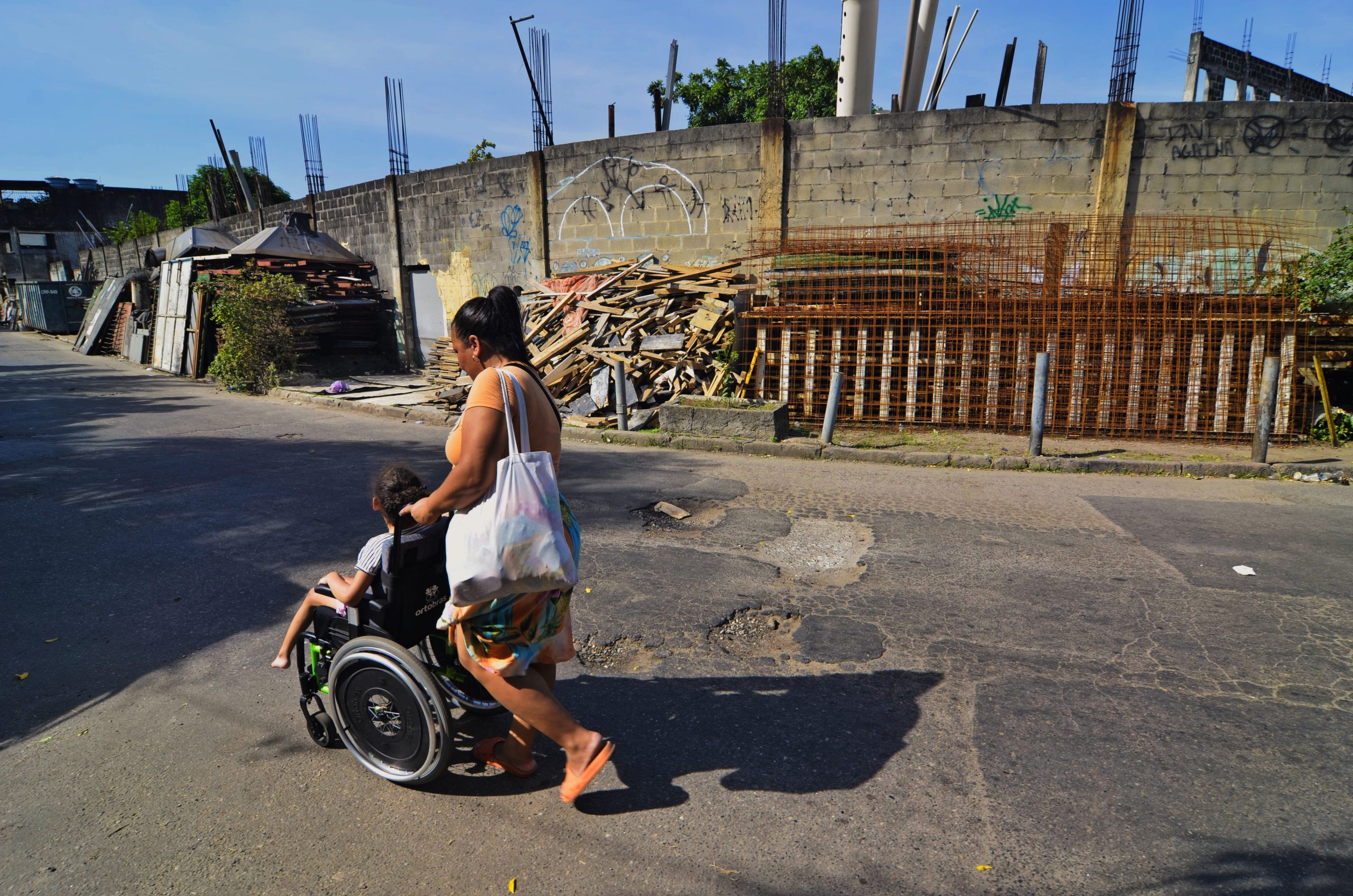
A member of the local collective Maré’s Specials, Ana Raquel de Almeida Rocha, 37, shares that it is very difficult to leave home with her six-year-old daughter, Eloá de Almeida Villela Ezedim, especially on rainy days:
“With Eloá in a wheelchair, it’s [already] harder to go out with her. We have to plan ahead. If it rains, we can’t go out with her [at all]—and if we have to, we need to plan for it and have the whole day free to take care of her… I’ve already missed many of her medical appointments because of buses [on] rainy days.”
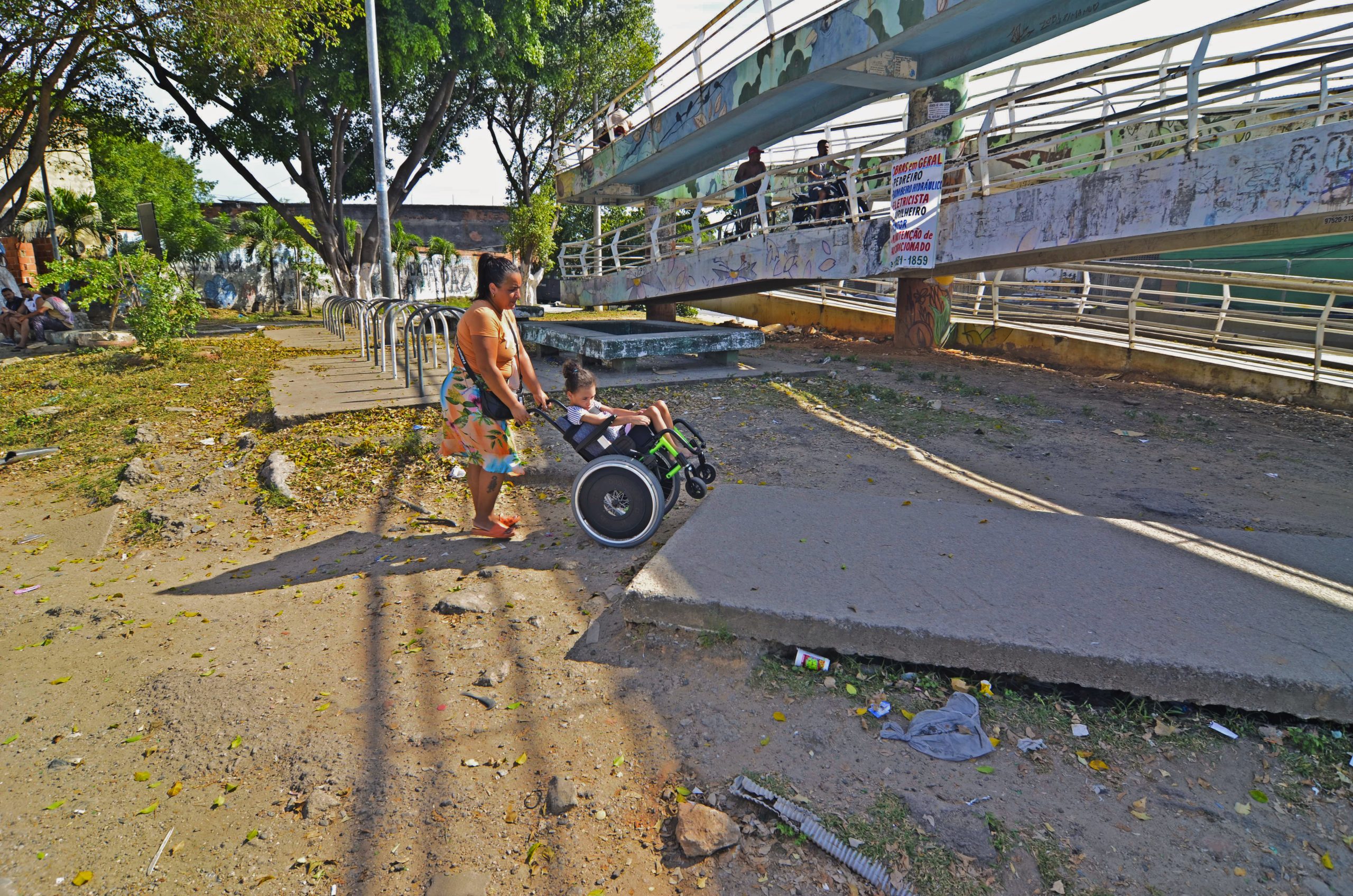
In the increasingly critical context of the climate crisis, the heightened vulnerability of people with disabilities (PWDs) is known as eco ableism. Flooding, heat waves, drought, water shortages, landslides, poor air quality and other extreme weather events disproportionately affect people with disabilities. The lack of adaptation, mitigation and rapid disaster response policies reproduces and deepens discrimination against favela residents with disabilities.
Part of the everyday ableism to which the families of people with disabilities living in favelas are exposed is the normalization of always having to make do as best they can, at times even in risky conditions.
Eco ableism manifests when evacuation plans, alert systems, emergency shelters, urban infrastructure and environmental strategies are designed without considering the needs and participation of people with disabilities. The term highlights the intersection between climate injustice and the State’s failure to guarantee the constitutional rights of people with disabilities and to implement inclusive and accessible environmental policies.
Flávia de Lima Andrade, 52, speaks about her 21-year-old daughter Juliana Andrade do Prado’s lack of mobility. Her account highlights how this becomes a major complicating factor during climate emergencies in the favela. Living with Spinal Muscular Atrophy, do Prado is forced to remain on the second floor of her home. This is meant to protect her in the event that the family’s ground floor floods.
“It’s more comfortable and safer for her and for us if she stays on the second floor… It’s difficult, but we’ve gotten used to it and we manage. We [also] have help from friends and neighbors… She stays on the second floor of the house so that when it rains [enough to flood the ground floor], we don’t have the [added] challenge of moving her upstairs.” — Flávia de Lima Andrade
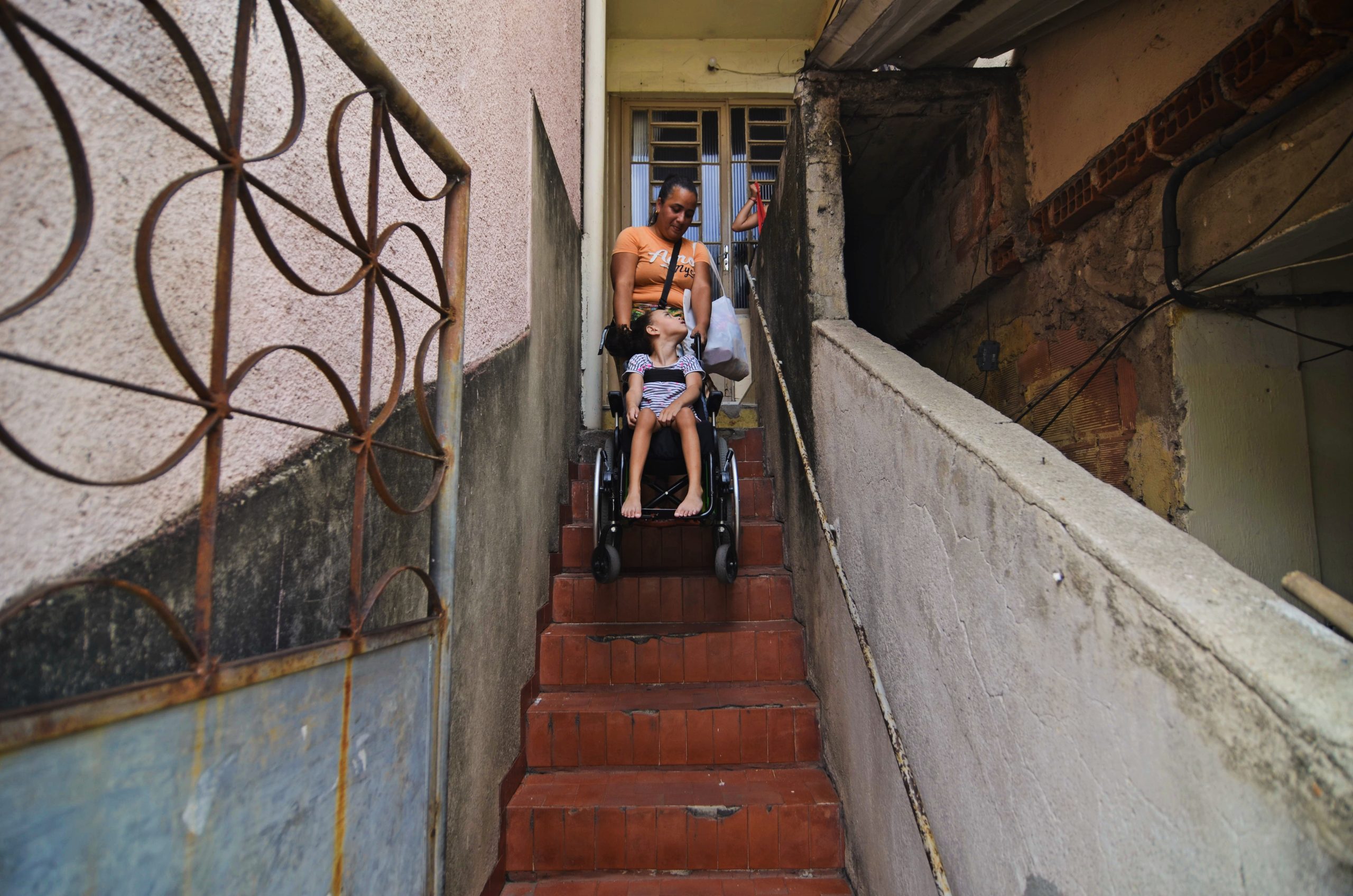
According to the Maré Population Census, produced by community NGO Redes da Maré, the favela complex has approximately 140,000 residents. 1,670 of its households (3.5%) include people with disabilities. With Black people making up 72.9% of Brazil’s favela population according to the 2022 national census by the Brazilian Institute for Geography and Statistics (IBGE), Black Brazilians are also those most affected by eco ableism.
Worldwide, studies show that 15% of the global population lives with some form of disability—about 1.3 billion people. An estimated 80% of people with disabilities live in lower-income countries and are consequently more exposed to the impacts of climate change.
Challenges, Routines and Survival Strategies
Given the conditions imposed by structural racism and the lack of public policies on sanitation, urban planning, climate adaptation, access to healthcare, public education, adequate jobs and income, and transportation, among others, Maré’s atypical families confront the many facets of eco ableism.
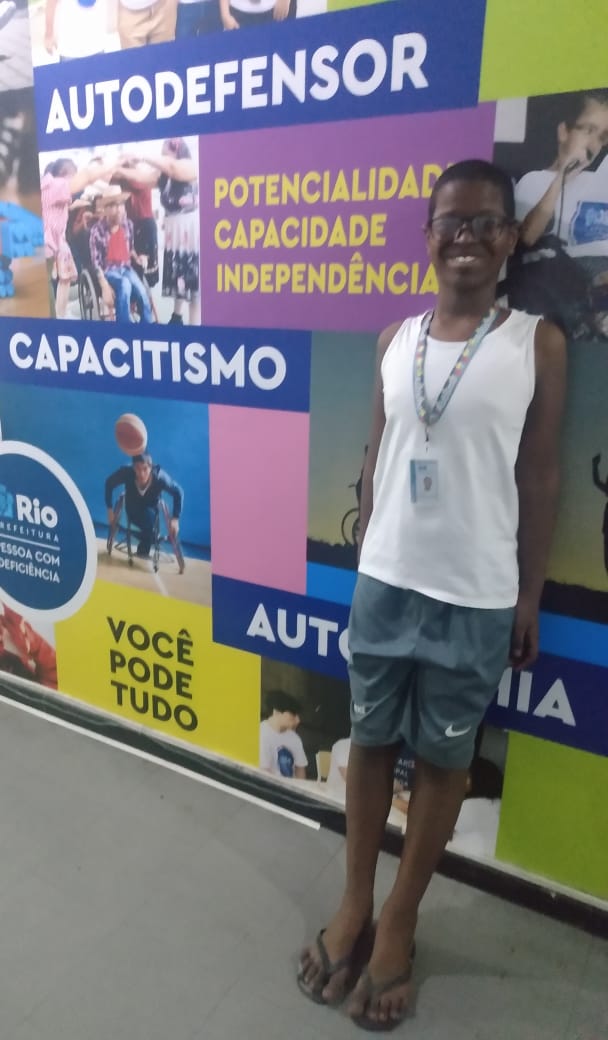
One such case is that of Rosane Garcia do Espírito Santo, 44, mother of 11-year-old Raphael, who highlights how eco ableism reinforces barriers to healthcare, transportation and, above all, education.
Her son is autistic and has Oppositional Defiant Disorder, Attention-Deficit/Hyperactivity Disorder (ADHD) and an intellectual disability. Challenges exist both inside and outside the home. Rosane explains that, because of Raphael’s autism and ADHD, he often has difficulty concentrating in the extreme heat at school, which lacks adequate climate adaptation:
“What can you do? It’s just life—always dealing with the heat… When he has breathing problems, we rush to get medicine and ask our support network for help. If it rains and streets flood, we can’t leave the house.
Sometimes the heat stresses him out, he can’t pay attention in class and the teacher pays no attention to him. He misses out on the lesson and feels discouraged. Then they complain that students don’t go to school… When it’s too hot or too noisy, he gets irritated [and completely loses his focus]. He focuses on too many things at once, which leaves him agitated.”
Antônia Maria Souza Pirangi, 46, is paraplegic and the one organizer herself with a disability at Maré’s Specials. Originally from the northeastern state of Paraíba, Antônia moved to Rio de Janeiro with her mother and two siblings when she was seven. Antônia’s condition was treatable, but her family couldn’t afford treatment and Brazil’s Unified Health System (SUS) was unable to provide a quality alternative. Antônia explains how difficult it is to live with a disability in a favela:
“People with physical disabilities, autistic people, wheelchair users, people with reduced mobility, people who are bedridden—we who live in favelas, most of us on the second, third or fourth floor, depend on other people for help. These are places with very narrow alleys, raised thresholds and stairways. If we don’t have help during heavy rains, and a person with a disability lives on a flood-prone street, they risk being left behind… We can only access our own homes because someone helps us. I can only get to my home—or even my street—because my brother helps me.”
Jéssica Cerqueira, 27, has xeroderma pigmentosum, a rare skin condition that causes extreme sensitivity to sunlight, increasing the risk of skin cancer, vision problems and neurological disorders.
Her mother, Aline Cerqueira, 45, remembers that when Jéssica was little, every time they went to the bus stop, she tried to shield herself from the sun however she could and couldn’t keep her eyes open due to photosensitivity.
There are almost no bus shelters, and Jéssica’s symptoms are exacerbated by eco ableism. After just a few minutes in the sun, she develops severe burns, freckles and spots on her face, arms and legs.
“My daughter is nocturnal. She is able to leave the house [during the day], but the risks she faces from the sun and heat are extreme. We couldn’t even use warm light bulbs at home because of the light and heat they gave off.” — Aline Cerqueira
Recently, Jéssica had to undergo surgery to have her nose removed because of skin cancer. People with disabilities experience the cumulative effects of eco ableism due to the lack of public investment and adequate urban planning.
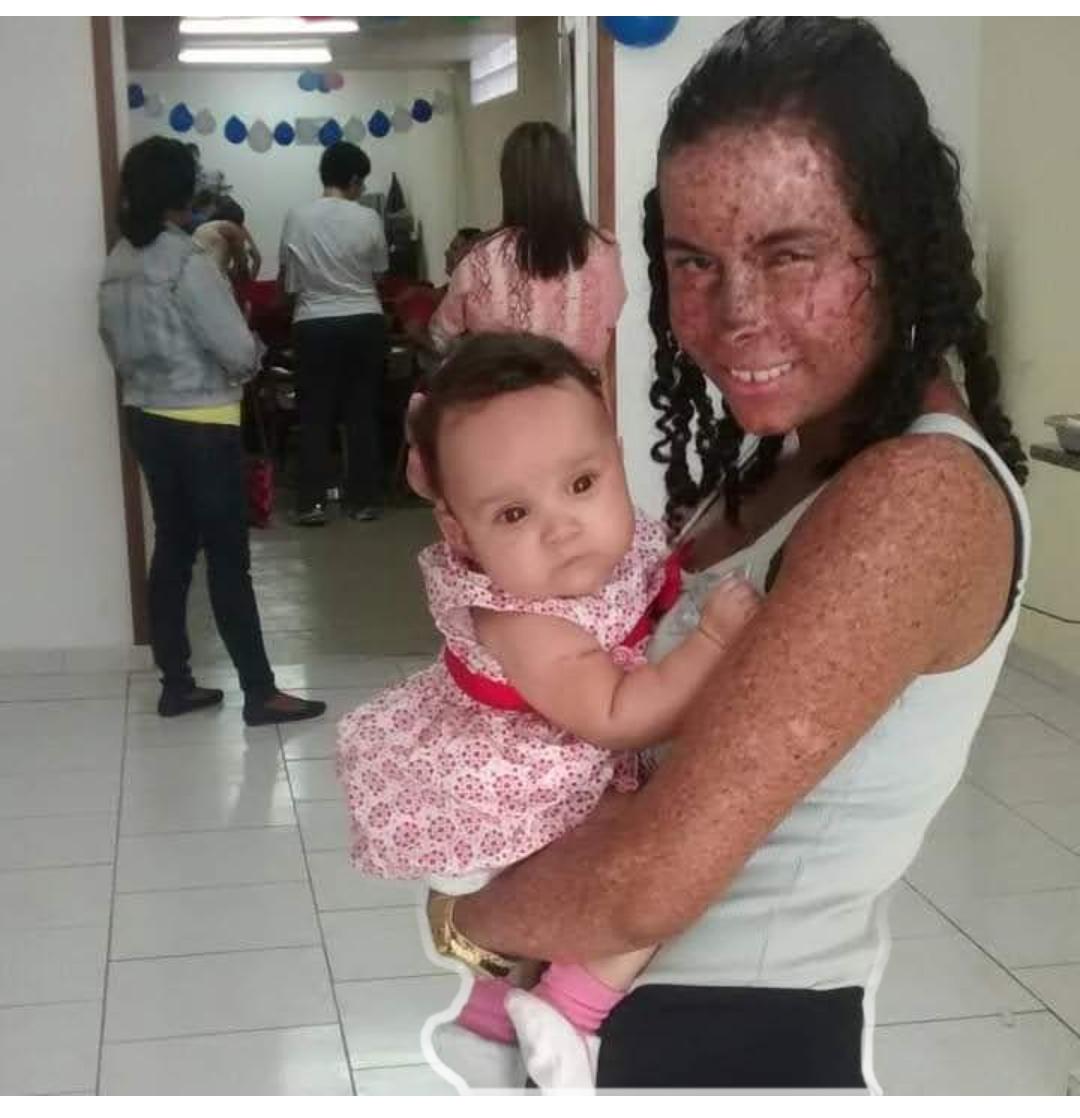
Aline Cerqueira also speaks out on the harm caused by the lack of information and basic resources for personal protection among low-income favela residents:
“When I first found out about Jéssica’s diagnosis, I knew nothing about it and started looking for more information. There is specific clothing and protective eyewear, but it’s expensive. The cheapest ones cost at least R$200 (~US$40), in addition to sunscreen and other personal protection items.”
Cerqueira says that, according to Jéssica’s doctor, her daughter was entitled to medication, protective clothing and a free public transportation pass. Yet, “all this time, the only thing I’ve managed to get is the free pass.”
Jéssica’s case reveals how eco ableism, combined with State negligence, worsens the quality of life and reduces life expectancy of PWDs living in Rio de Janeiro’s favelas.
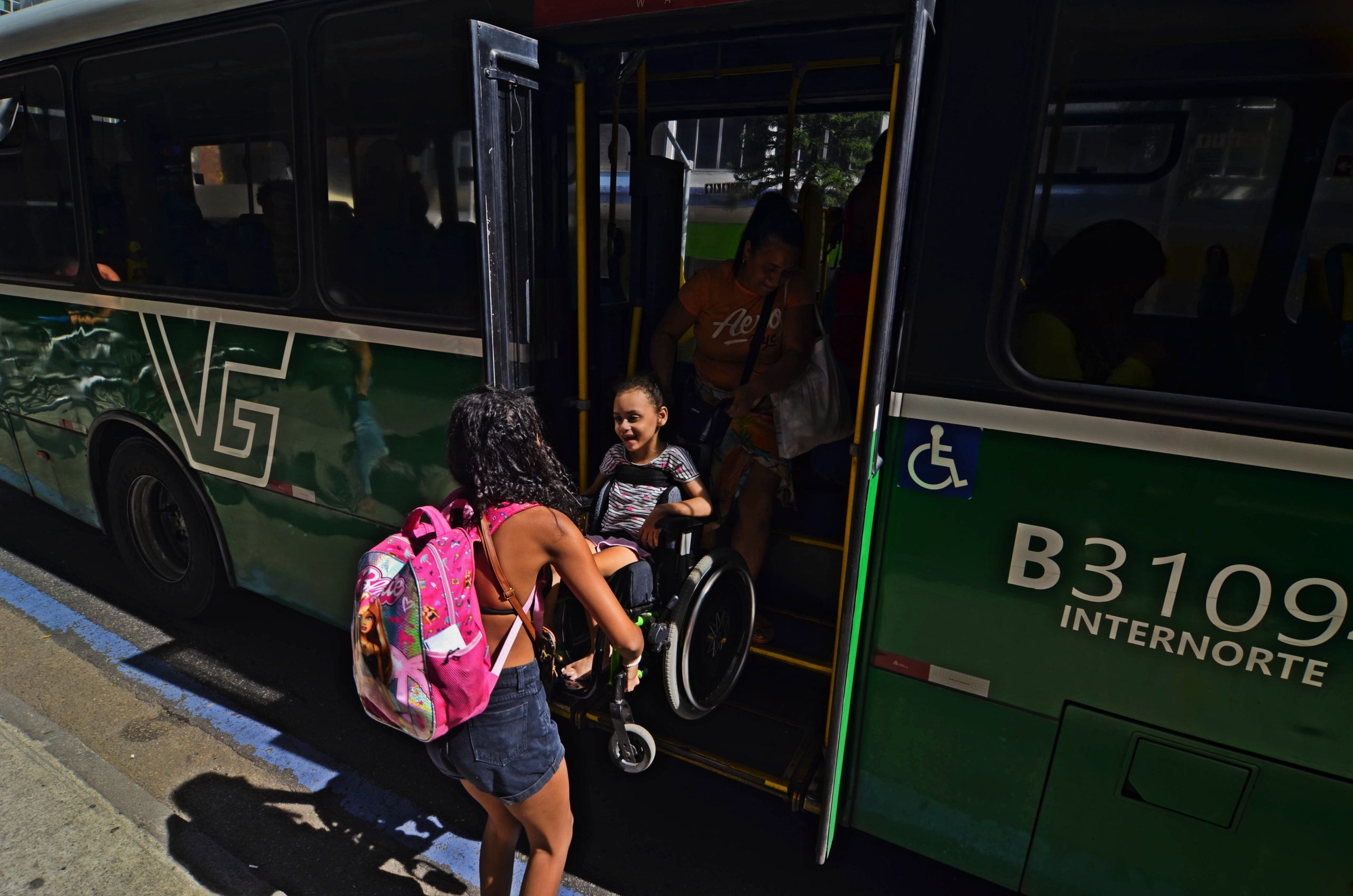
It is a consensus among those interviewed for this article that eco ableism directly impacts the right to come and go. It is difficult for PWDs to leave the favela by bus, van or moto-taxi, but also to get around within the favela—even on foot.
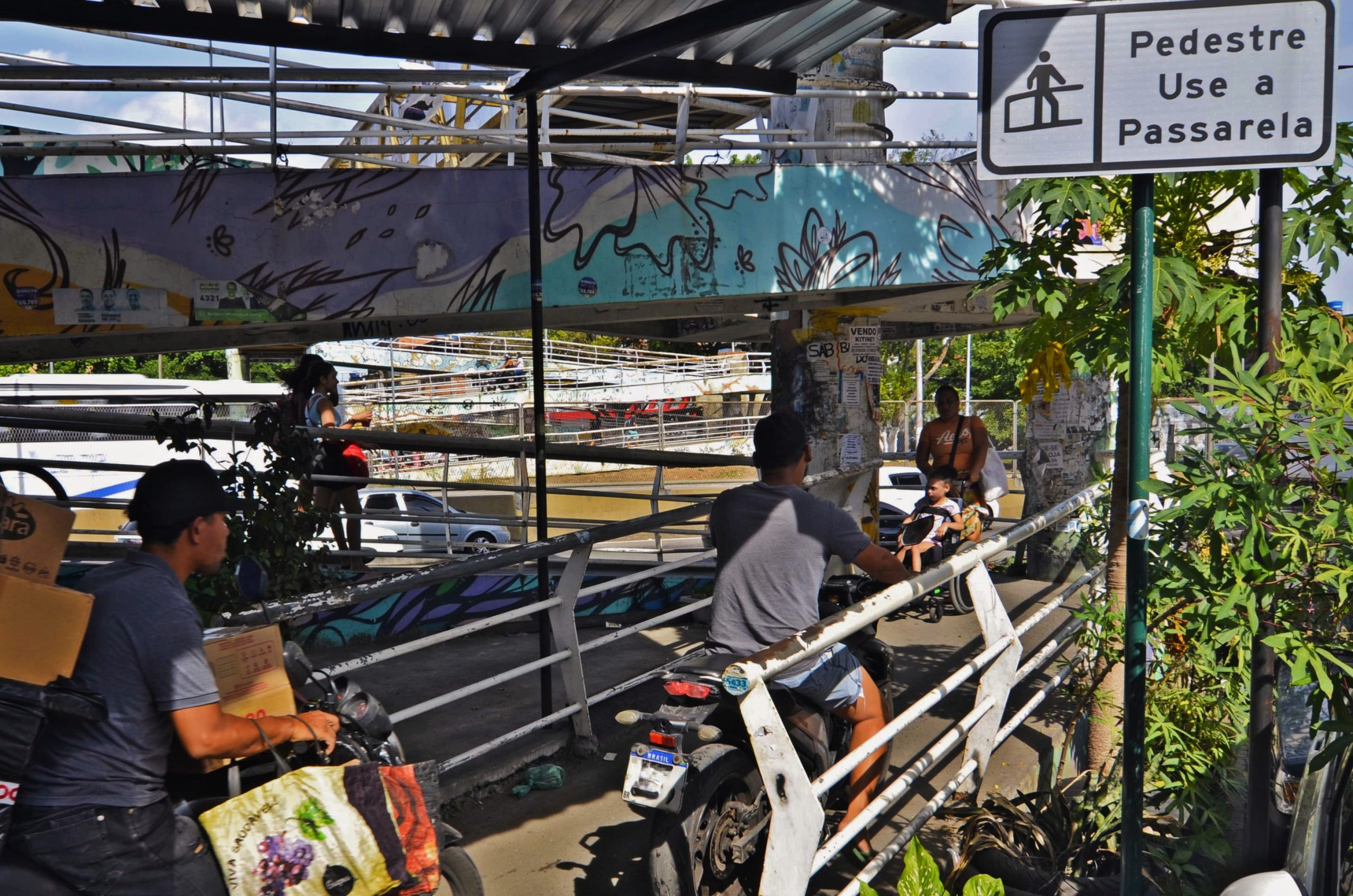
Vehicles are often in terrible condition, extremely noisy and rarely have functioning air conditioning—meaning that eco ableism also affects the right to the city and to the favela. The debate around eco ableism is therefore crucial to the quality of life of PWDs living in favelas.
Living under eco ableism means that daily routines are marked by uncertainty and the denial of rights. In a reality where government offers little or no help, support networks and social projects such as Maré’s Specials are left to fill that role as best they can.
About the author: Ramon Vellasco is a freelance photojournalist and reporter, born and raised in Vila da Penha. He focuses on issues related to human rights, culture, education, diversity, and marginalized social groups, primarily working in peripheral, favela, areas.