
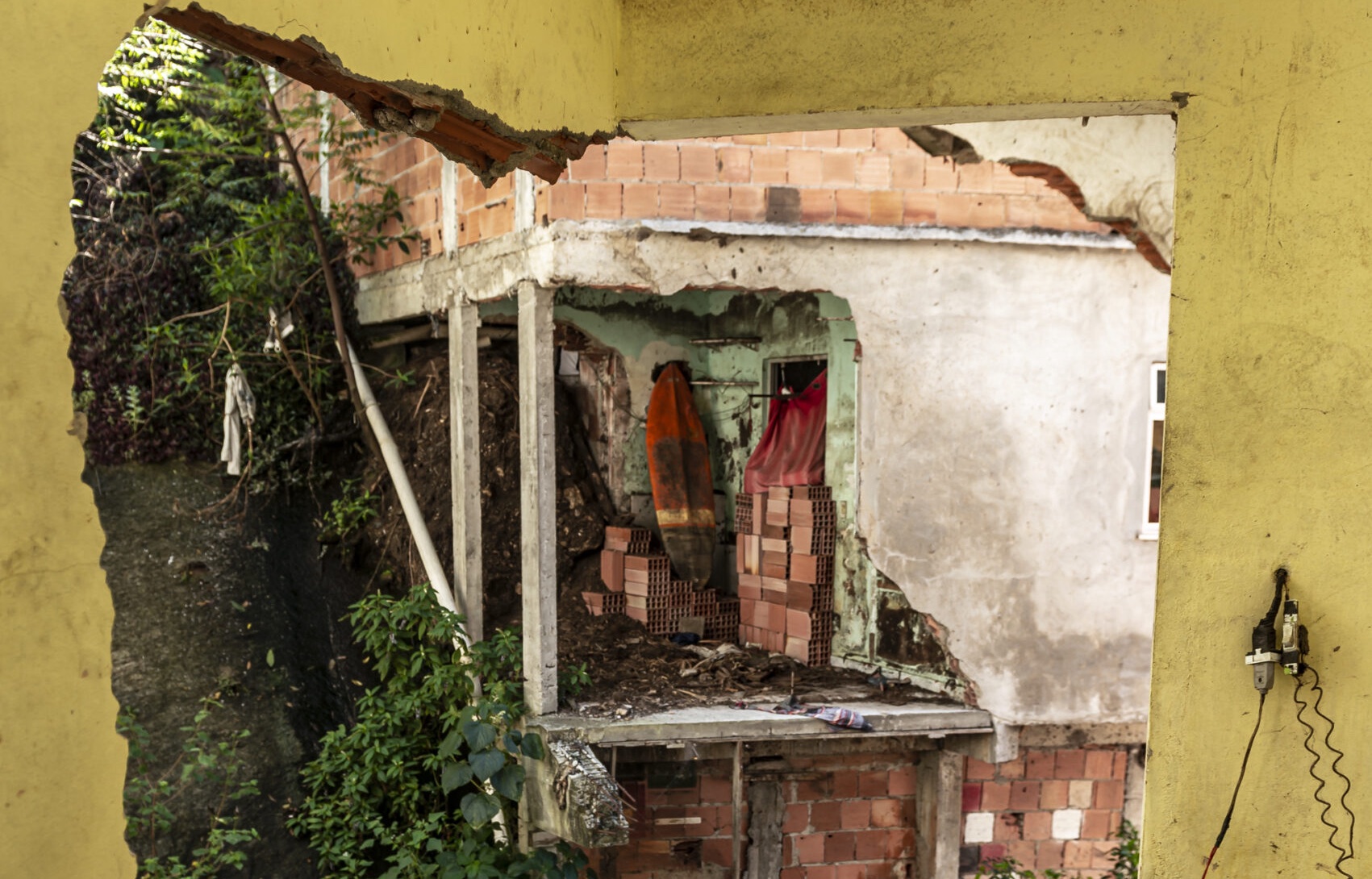

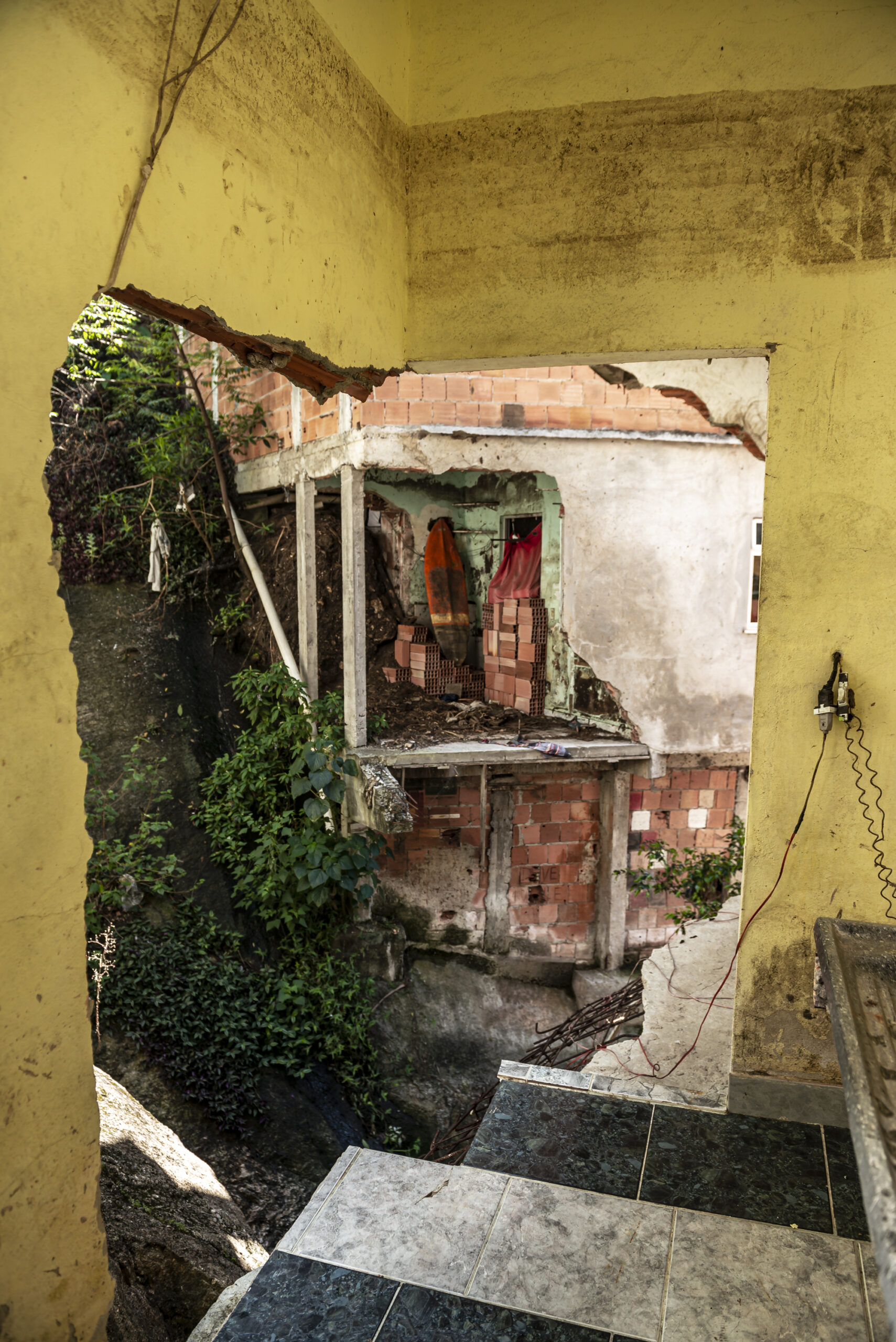
The climate crisis is often framed around floods, landslides and heat waves produced by extreme weather. For those living in Brazil’s favelas and peripheral areas, protection thus begins with safe housing and security of tenure. On July 11, at the first Brazilian Housing and Climate Forum in Brasília, speakers and participants advocated for strategies to strengthen communities in the face of the climate crisis, including social rent and Community Land Trusts (CLTs).
The forum was organized by TETO Brasil and the Community Real Estate Rental Fund (FICA). Public officials, researchers and community leaders present argued that housing must occupy a central place in climate change adaptation policies, recognizing that people experiencing housing vulnerability are precisely those most exposed to extreme weather events.
One of the forum’s panels that attracted the most attention focused on a question that is rarely addressed in public debate: must the right to affordable housing necessarily be linked to homeownership?
Subsidized rental housing was discussed as a way to build climate resilience through social housing. Specialists and leaders defended housing policies that go beyond the building of new units to incorporate new ways of guaranteeing security of tenure and access to the city. Subsidized rental housing was presented as a housing access policy capable of reducing forced displacement and protecting communities from the effects of real estate speculation.
Among the participants was Zulema Calizaya Choque, a beneficiary of the FICA Fund’s subsidized rental housing program, who brought to the debate the perspective of someone who experiences the challenges of accessing housing firsthand. Also participating was Evaniza Rodrigues, an activist with the Housing Movements Union of São Paulo State (UNM), who emphasized that expanding the housing debate also means discussing new forms of collective ownership.
“I secured a low-cost rental unit. Before, I didn’t have the luxury of getting sick because I had to work to pay really high rent. I think that over those 20-odd years I would have paid for a home with the amount I spent on rent… maybe I could afford [to own] a home instead of paying rent… But the bureaucracy is too much.” — Zulema Calizaya Choque

For Rodrigues, tackling the climate crisis requires rethinking the very model of housing policy. Instead of repeating existing solutions, she argued that the housing debate should incorporate and combine new and ancestral strategies capable of guaranteeing the right to remain in informal settlements and the right to the favela.
“We need to look at other dimensions of housing policy and not just keep repeating what we’ve already done. Good things need to be repeated, and improved. And there are things we’ve never done.” — Evaniza Rodrigues
In linking housing and climate justice, Rodrigues stated that the issues cannot be addressed separately. Families experiencing homelessness or living in precarious housing conditions are on the frontlines of the impacts of the climate crisis.
Favela Community Land Trusts were also presented as an alternative to strengthen community organizing and enable communities to remain in place, while expanding access to housing. Under this model, land ownership remains collective, while families permanently retain the right to their homes, thereby reducing the risks of eviction and real estate speculation.
By the end of the forum, there was a clear consensus among participants that tackling the climate crisis requires guaranteeing the right to housing.
This path must be built through the proposals shared by community leaders, which show that many of the solutions are already being developed within communities themselves and that more effective public policies depend on recognizing and valuing their leadership.
Watch the Full Video of the First Brazilian Housing and Climate Forum Here:
*The Favela Community Land Trust and RioOnWatch are both projects of Rio de Janeiro-based NGO Catalytic Communities (CatComm).
About the Author and Photographer: Iris Nascimento is a Black woman born and raised in the favelas of Santa Teresa, a geographer and popular educator. She works as Data Manager with the Sustainable Favela Network (SFN), where she contributes to strengthening socioenvironmental initiatives in favelas. Her work focuses on bridging research, community participation and knowledge production rooted in favelas and peripheral areas.