
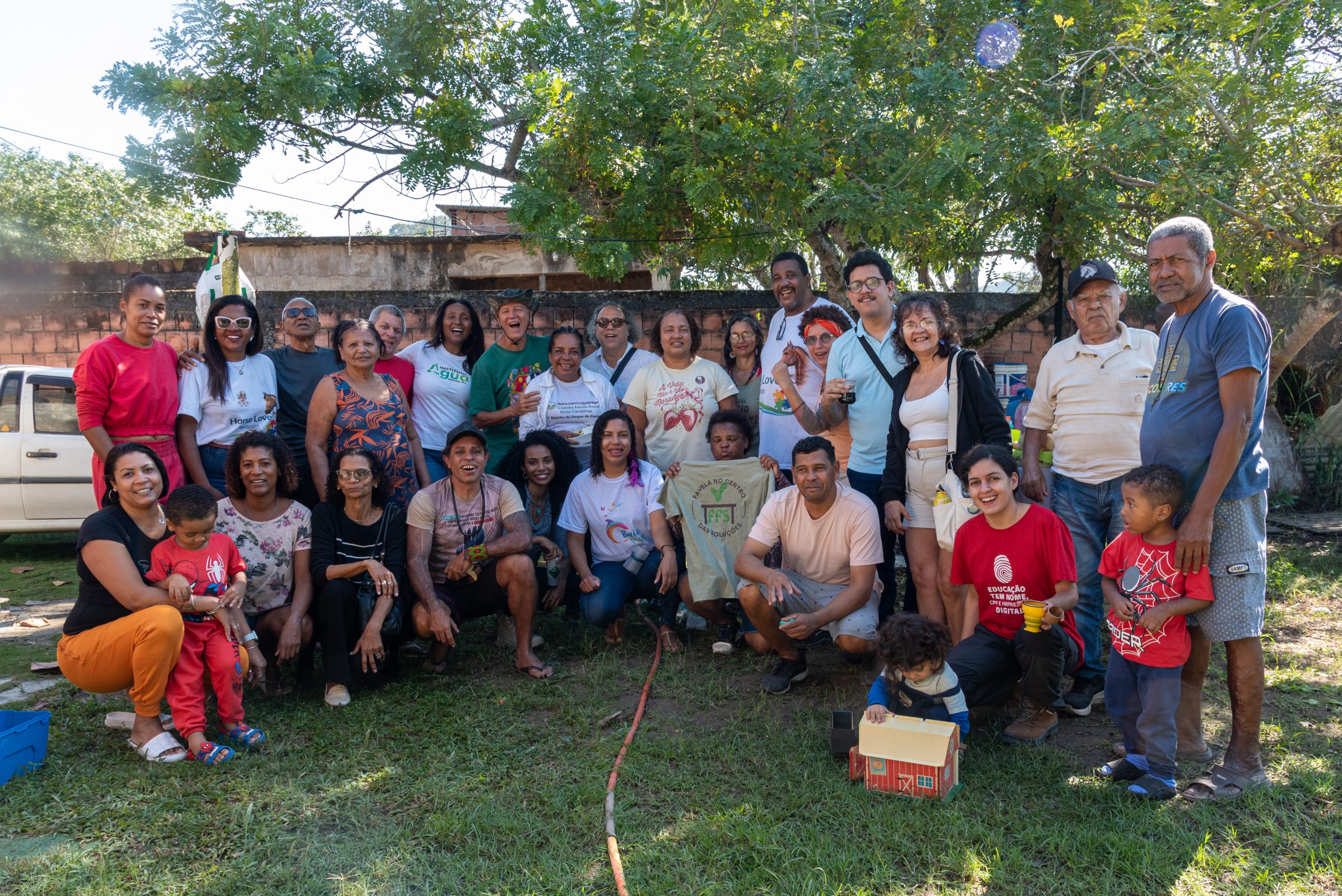

The Agroecological Collective Action held at the headquarters of the Remanso Beach Fishers’ Association (APAR) in Suruí, Magé, a municipality in Greater Rio de Janeiro’s Baixada Fluminense region, brought together residents, fishers, activists and environmental educators to build a community garden at the APAR headquarters and launch the Remanso Fair. The gathering was part of the Sustainable Favela Network (SFN)* Collective Calendar and provided a space for coordination among various collectives, including Mango Collective, Bora com Queiroga, Edixe Accessories, Horse Love Therapies, the Ana Alice Educational Garden, the Mirindiba Institute, Aldeia Maracanã and the Living Bay Movement.
Andre Luiz, an artisanal fisher and president of APAR, explained the importance of bringing the collectives together for this day of activities at the association’s headquarters:
“Our work here in Magé is very important for strengthening local people, local commerce and the socio-environmental awareness that we are fighting to preserve more and more. [It’s] our land, our backyard, [it] is where we draw our livelihood from. I am also an artisanal fisher and we need Guanabara Bay, we need to pollute less and this needs to be passed on to many people so that we can save our planet. Because our planet is dying, and there is no more time to lose. Environmental awareness has to happen 24 hours a day.”
The day began with a collective breakfast and preparations for building the community garden. As participants arrived, a table of socio-environmental education materials was set up in front of the association, where the discussion circle took place. Despite the distance from the state capital, the event drew 70 people from communities across Greater Rio.
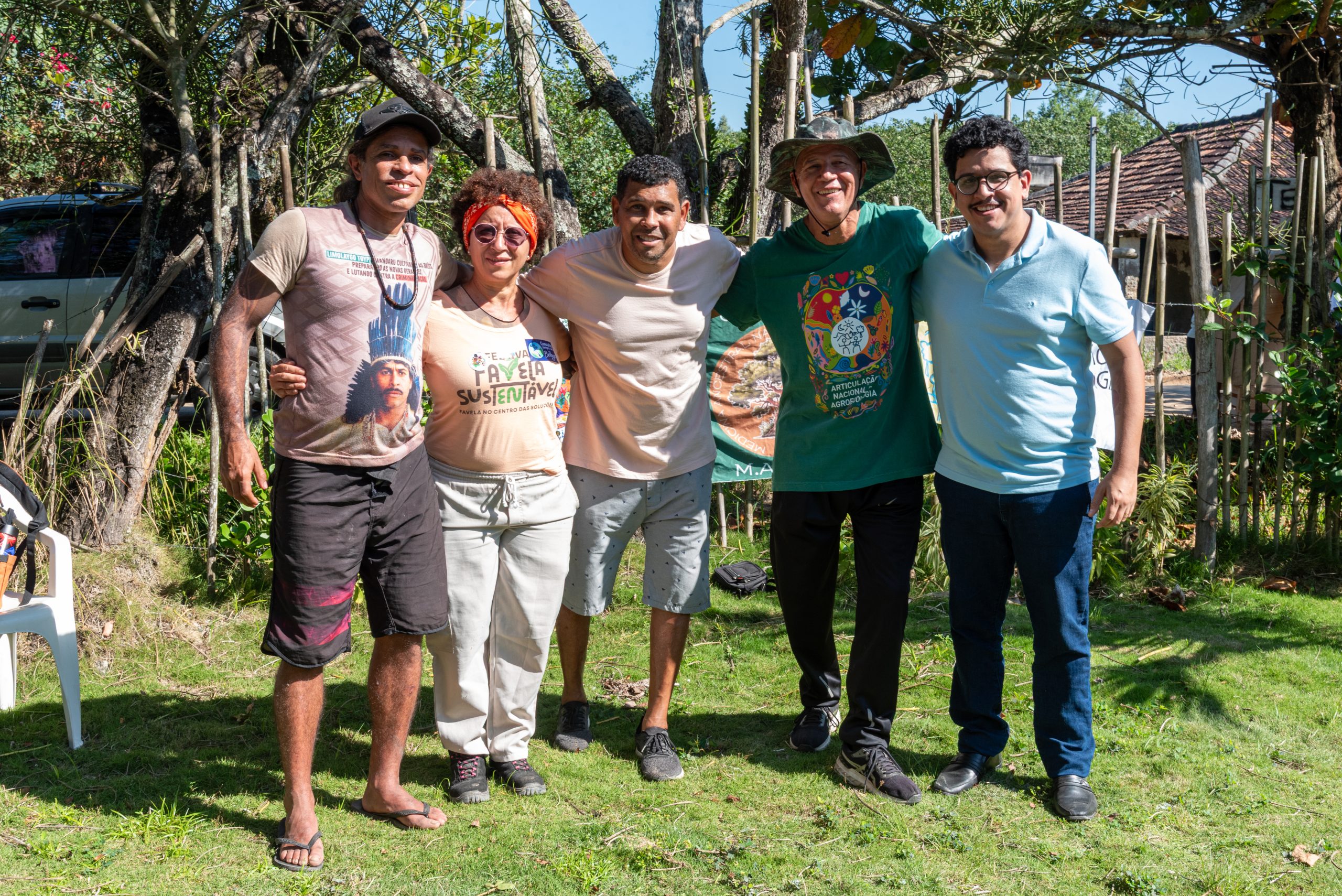
At the opening of the event, a few speakers introduced the day’s activities. Norma Bomfim, a member of the Technical Chamber of Education and Environment of the Regional Council of Biology (CRBio) and a biologist supporting the project at Remanso Beach, set out the purpose of the event beyond the collective action itself:
“Caring for your community means caring for health, caring for the environment and caring for the ecosystem around us. That’s why we’re here. We hope that, through this gathering and these conversations, proposals for improvements, proposals for action and proposals that contribute and bring value will emerge.”
Dario Jurema, of the Xukuru people, a tour guide, actor and beekeeper from Aldeia Maracanã, spoke on behalf of the resistance of the Indigenous peoples present at the collective action:
“It is resistance, because the mere fact that we exist is already resistance. It runs against every interest of capital, which rolls over everything and standardizes everyone, puts things in a little box and lays down that heavy concrete—on the asphalt, on the ground and also in our minds, paving over our minds—and we try to offer a counterpoint. I am here with André because we are developing community-based tourism, helping the people of APAR gain more room for financial autonomy and also giving greater visibility to the community… in a way that lets people see the importance of preserving a biome like this one, which is the cradle of Guanabara Bay, of our lives. This place has marine life, birds… And it is also a source of subsistence for the local population.”
Sérgio Ricardo Hortelão, a resident of Duque de Caxias, from the Ana Alice Educational Garden and Mango Collective, called for greater awareness around reducing consumption, stressing the need to organize as a network and support local projects:
“The most important thing of all is for us to be together, for us to be a network. We are living through a challenging moment, right?… It may be a good idea for us to consume less. Because every time we consume something, something in nature was destroyed. So we have to try to consume less, come together more and more, and seek out peripheral communities. André and the people from APAR are here, they’ve always been here… I’m here to contribute and to say that this is a very good initiative.”
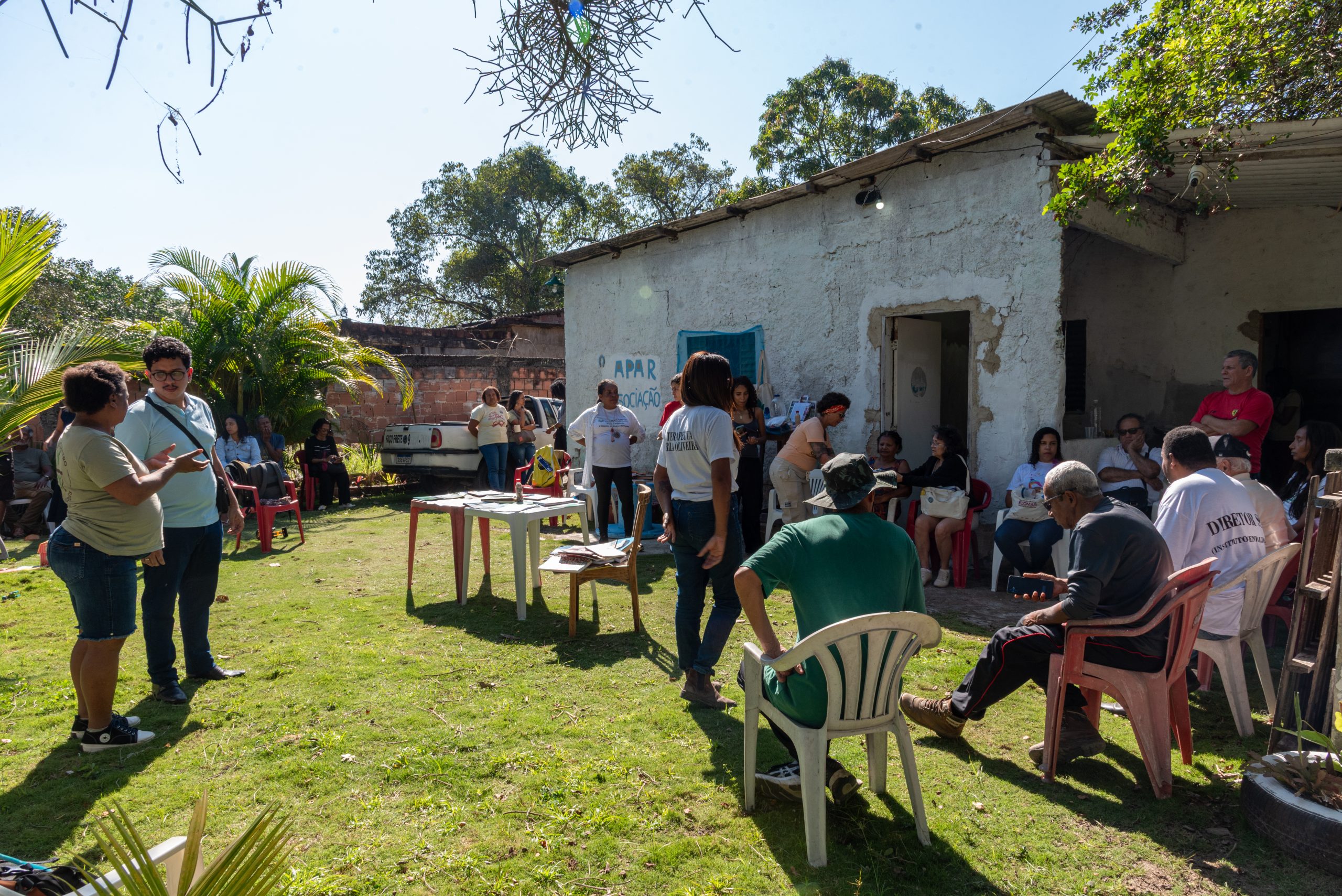
Anderson Ribeiro, a resident of Magé and member of the Mirindiba Institute, a collective focused on climate justice and combating environmental racism in favelas and peripheral areas, spoke about developing counterarguments to dominant narratives and claiming spaces of power:
“Today, the garden being built here at APAR shows that we, as a community, have an obligation to promote socio-environmental technologies for society and for our own subsistence. Whether it’s community gardens, biodigesters, green roofs or any other technology we bring into the space we are building… I always like to remind people that Magé’s budget last year came to over R$1 billion (~US$196 million). I want to know how much of that went to the fishing community? How much of that went to agroecology? We have to put public spending on the agenda. It’s great to talk about community, a shared breakfast, a community garden, but we also need to hold accountable those who are in power, those who occupy decision-making spaces.”
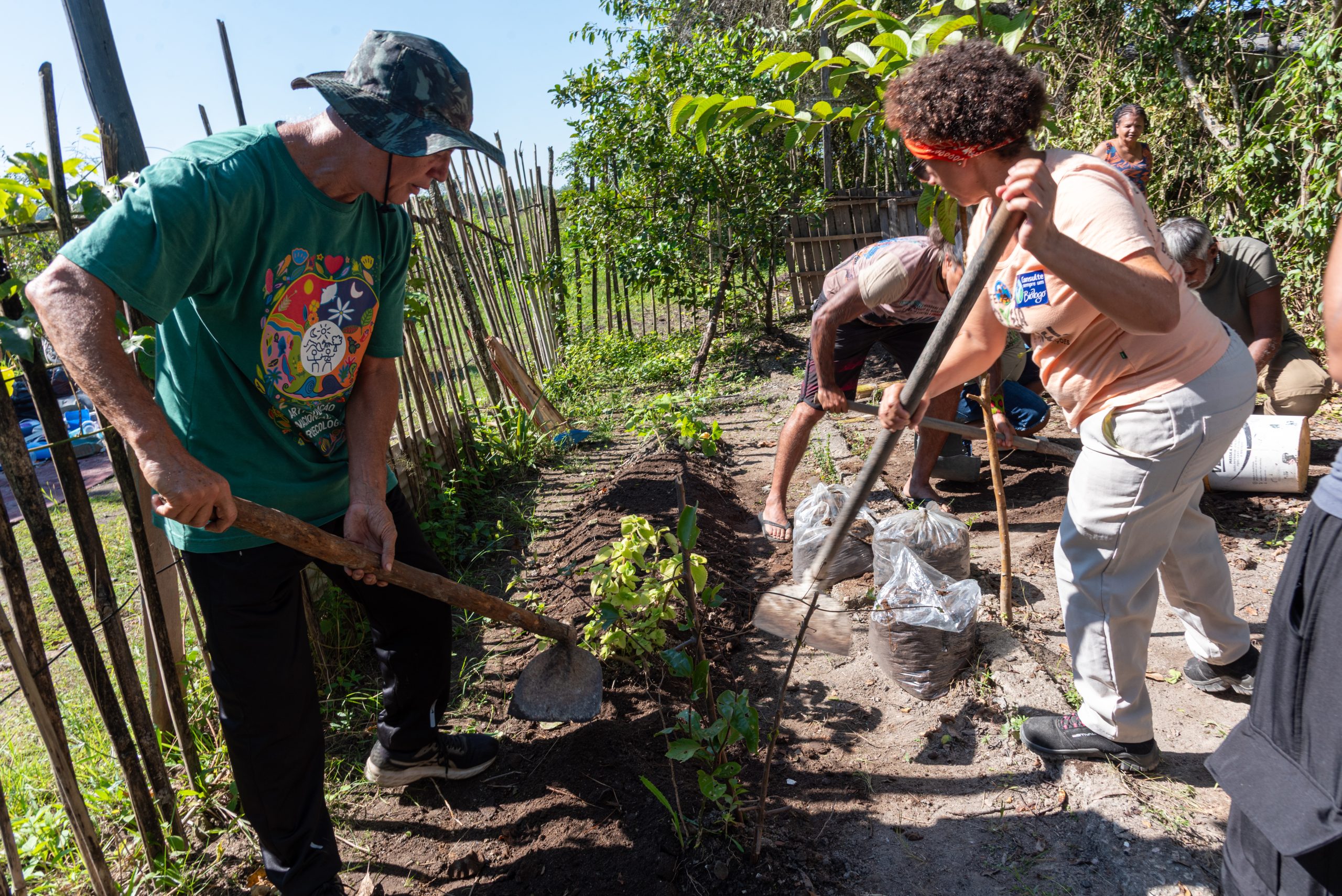
After everyone present had introduced their work and the projects underway in their communities, the Remanso Fair was officially launched with a circle of chants and prayers by Indigenous peoples, honoring the soil and the forces of the forests and the waters, bringing the first part of the event to a close. The agroecological collective action to build the garden followed immediately afterward, with the preparation of the soil and the assembly of the garden beds so that vegetable seedlings and medicinal herbs could be planted.
In the afternoon, after a collective lunch supported by a local restaurant, there was a visit to Remanso Beach and the mangrove. According to Bomfim, residents and allies hold periodic collective actions to maintain the area, collecting mostly plastic from the waters of Guanabara Bay.
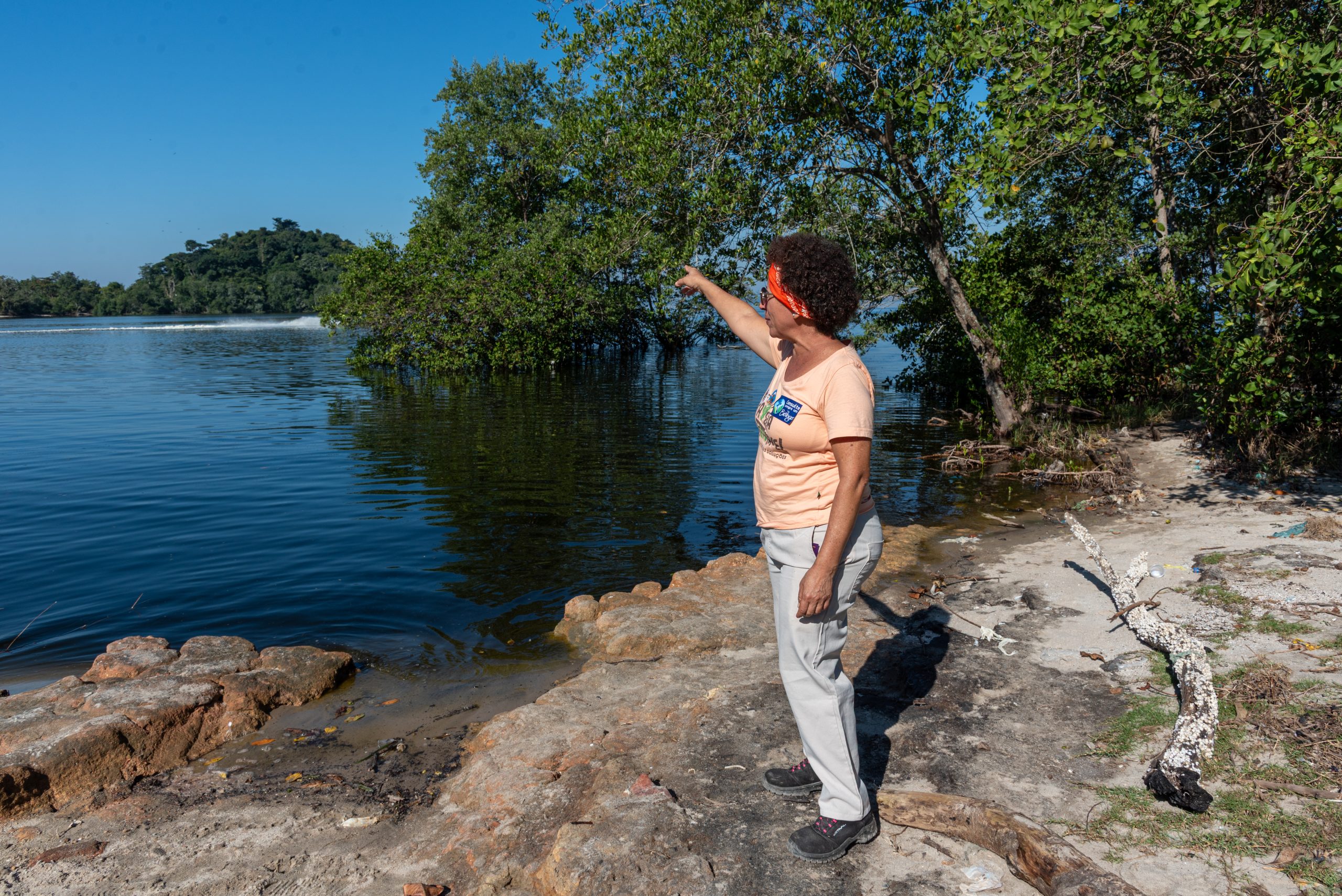
Bomfim summarized the day’s activities at the Remanso Beach Fishers’ Association:
“This is our third collective action here at Remanso Beach, and these activities have contributed to environmental education, to highlighting this community’s socio-environmental issues and to developing future projects and proposals based on the community’s needs—a community that is also vulnerable, despite its paradisiacal setting.
It’s a community with its own needs and challenges. There is the issue of pollution in Guanabara Bay, and there is the vulnerability of fishers, who have to look for other alternatives… So that is our purpose here: to strengthen the fishers, the fishing community and the women in this community, the women fishers. We launched an artisan fair, and its purpose is for women and men fishers to use their culture and crafts as another source of income and also as a way to showcase their work, their culture and what these people, who have lived here for many, many years, do in their community.”
View the Full Photo Album:

*The Sustainable Favela Network (SFN) and RioOnWatch are both initiatives of not-for-profit organization Catalytic Communities (CatComm).
About the author: Bárbara Dias was born and raised in Bangu, in Rio’s West Zone. She has been a photojournalist and documentary photographer since 2016, focusing on human rights, socio-environmental justice, religions and favela communities. A popular communicator trained by the Piratininga Communication Center (NPC), she is currently pursuing a degree in Journalism at Candido Mendes University (UCAM). A co-founder of Coletivo Fotoguerrilha (2016–2025), she holds a degree in Biological Sciences from Rio de Janeiro State University (UERJ), a master’s in Environmental Education from the Federal Institute of Rio de Janeiro (IFRJ), and is a public school teacher.