
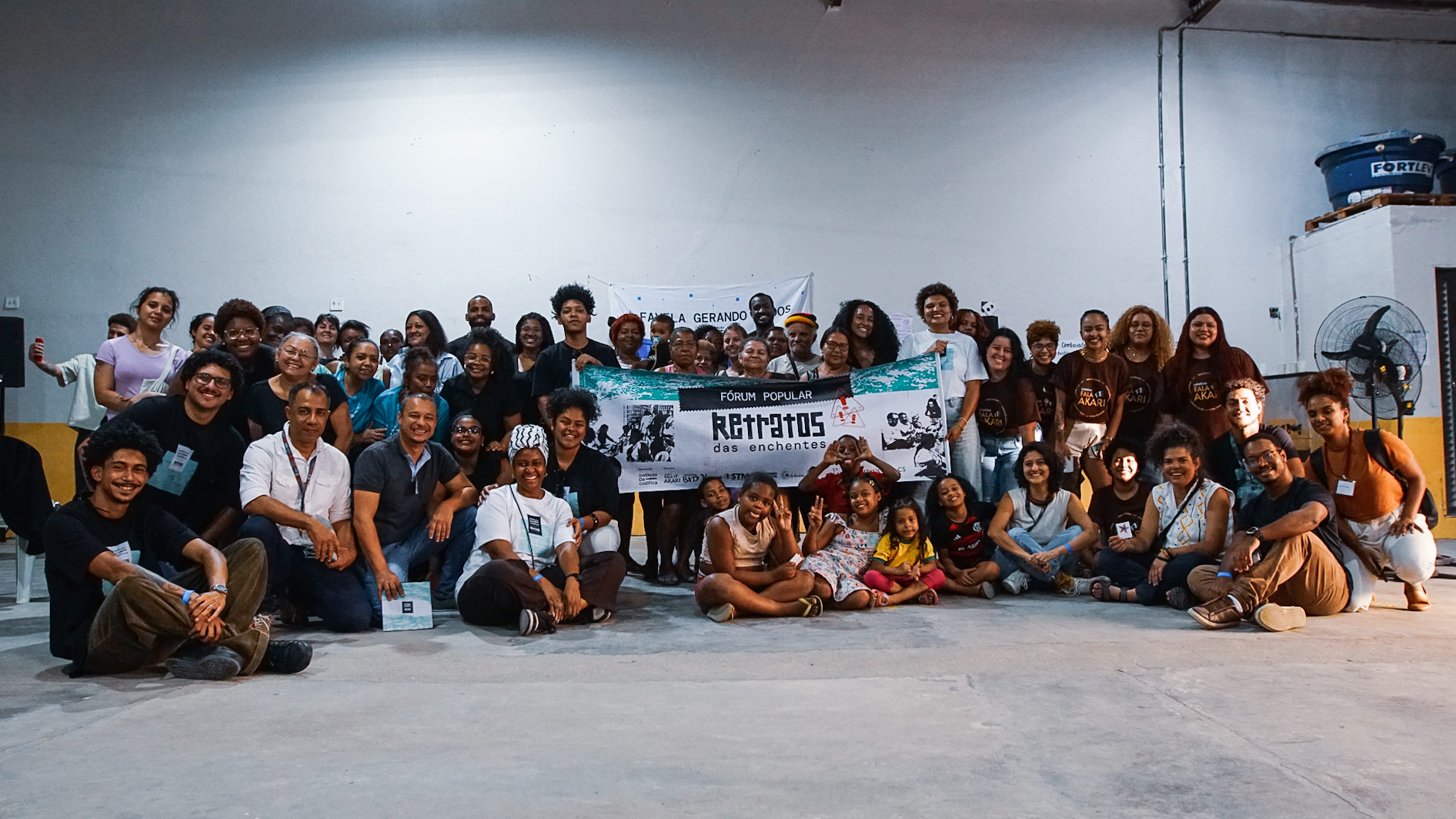

On July 18, a sunny Saturday, the Acari favela, in Rio de Janeiro’s North Zone, launched the Portraits of Floods study. Produced by the Decodifica Institute in partnership with grassroots collectives from four favelas in Rio de Janeiro and the northeastern state of Pernambuco, the study generated data on the impacts of heavy rainfall across these favelas.
The Acari survey and launch were carried out by the Fala Akari Collective. Through a Citizen-Generated Data (CGD) process—a term used to describe community-led research conducted by residents themselves, without relying on scientists or academic institutions—226 families were interviewed throughout 2025, generating portraits of daily life in the favela before, during and after floods.
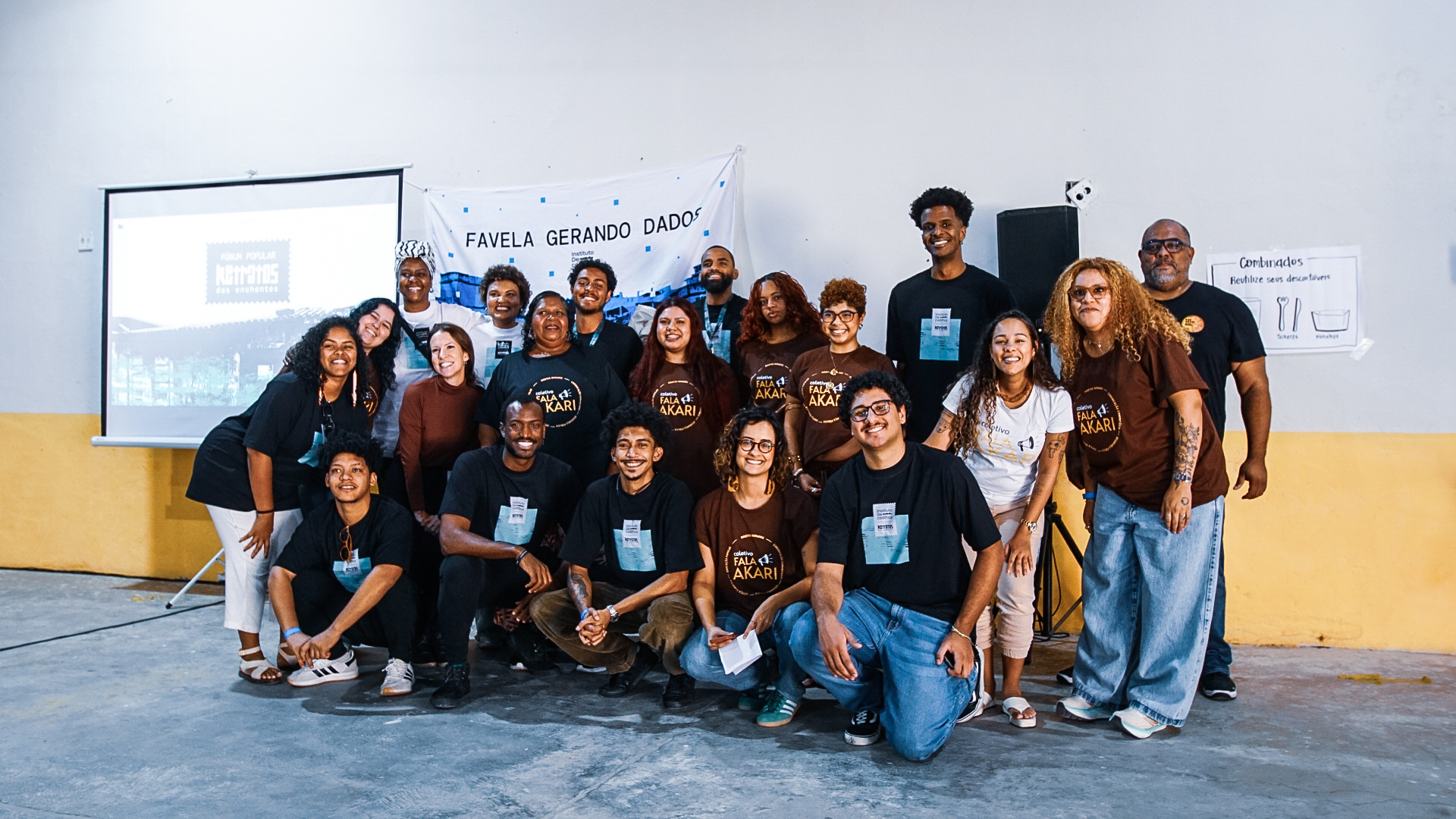
The launch* took place at the Mothers of Acari Cultural Center and was part of the Portraits of Floods Community Forum, a stage of the project dedicated to presenting the findings to the mapped community and, based on its main demands, collaboratively developing solutions with residents.
Complexo de Acari and Its Geography
Covering over 160 hectares, the Complexo de Acari favela is located in Rio de Janeiro’s North Zone and borders five neighborhoods: Pavuna, Costa Barros, Coelho Neto, Parque Colúmbia and Irajá. The community lies within the Guanabara Bay watershed and is crossed by the Acari River, from which it takes its name. The river originates in Greater Rio’s Baixada Fluminense region, in the Gericinó Mountains, in Duque de Caxias, and flows through São João de Meriti before reaching the city of Rio. Although it is part of the São João de Meriti River basin, it is directly influenced by the Pavuna River. After flowing through part of Baixada Fluminense and Rio’s North Zone, it empties into Guanabara Bay.
Acari’s geography is unique: parts of the community lie at the same elevation as Guanabara Bay, while others are even below sea level. As a result, the favela is highly vulnerable to flooding. These events have been part of residents’ daily lives for years and are frequently reported by the media, including RioOnWatch in 2023, 2025 and, most recently, 2026.
Ver essa foto no Instagram
What Do Floods Take Away?
Data from the Portraits of Floods study in Acari reveal an alarming reality: for nearly all residents interviewed—it is important to note that 75% identified as Black and 24% as white—the street where they live is synonymous with flooding.
Among respondents, 96% reported that floodwaters on their street typically rise above one meter, while 84% said water has already exceeded one meter inside their homes.
As a result, half of those surveyed said they have made structural modifications, such as renovations, raising the ground floor or even abandoning the first floor altogether, as described by Fala Akari community organizer and grassroots mapper Nathália Theodorino:
“More and more people are leaving the ground floor [of their homes] and moving upstairs. So many people have abandoned the ground floor of their homes. That says a lot about what we go through here. In some places, the water rises above one meter; in others, it reaches two meters. People are trying to adapt so they can stay here because they have nowhere else to go, nowhere else to run to.”
The loss of furniture and household appliances also took a toll. According to the Acari survey, residents have lost over 1,200 pieces of furniture and had around 600 household appliances damaged in recent years.
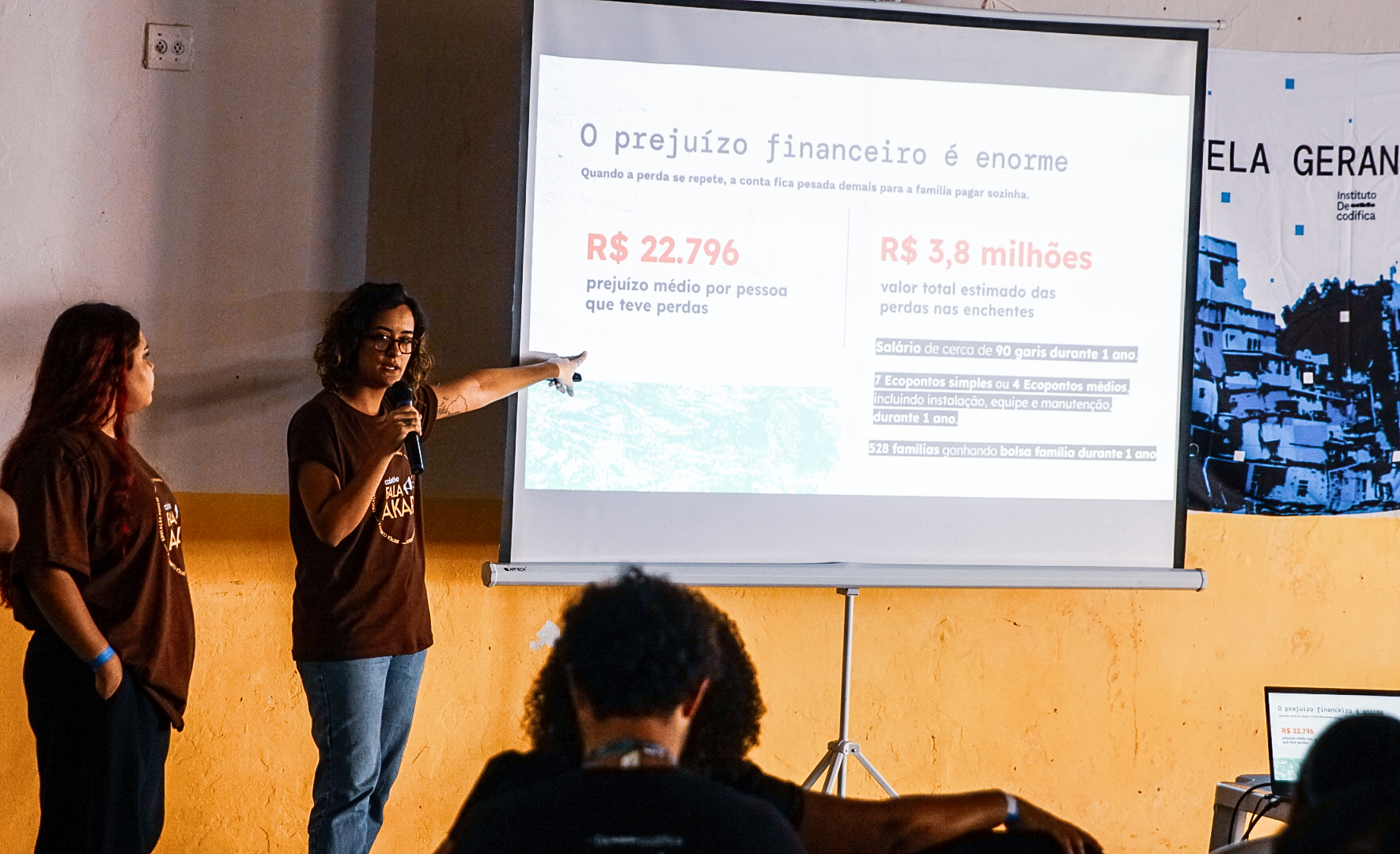
Altogether, the study estimates that residents have suffered R$3.8 million (~US$746,000) in losses over the past 30 years. According to the study’s projections, that amount would be enough to pay the salaries of 90 sanitation workers for one year or fund the construction of seven basic ecopoints in the community over the same period—both longstanding local demands.
Besides the climate anxiety generated by these losses, half of residents have been living with the problem for so long that they have given up replacing what was lost. They only buy what they need or secondhand items for fear of losing everything again.
According to the study, only 40% of residents say they receive some form of advance warning about floods. And when they are alerted, their main sources of support during these disasters are within the community itself: the homes of family members and neighbors, NGOs and religious spaces.
Throughout the event, residents shared their experiences living in Acari, including Juciara Souza, 53, who lives on the ground floor and said that flooding brings risks that go beyond the water itself:
“Sometimes you get electric shocks from the water. The electric meter at my gate is very low. So [when it rains], whoever is inside the house can’t get out, and whoever is outside can’t get in. I have to ask my neighbor [who knows how to work with electricity] to shut off the power so people can get up onto the rooftop.”
Another resident, Antonio Marcos da Costa, who is in the process of retiring, said he buys secondhand furniture and household appliances because of the flooding. He stressed the importance of creating preventive measures to protect not only families’ finances, but also lives:
“Like a friend here said—who woke up with the water rising in her bedroom—the community should have an alarm system. If we can’t communicate [we can’t save ourselves]. Now, everything I own is secondhand. My stove cost R$60 (~US$12), and my refrigerator cost R$250 (~US$50).”
For Letícia Pinheiro, one of the Fala Akari Collective directors, producing data helps address not only the lack of climate data on favelas, but also change the reality of residents affected by environmental racism:
“There’s a constant need to think about public policies with grassroots leadership, that respond to what the community needs. We know a lot within the favela, but it’s hard [to do anything] without data. We want to change these hardships into solutions, into a vision for the future.”
Climate Justice Designed by Those Who Need It Most
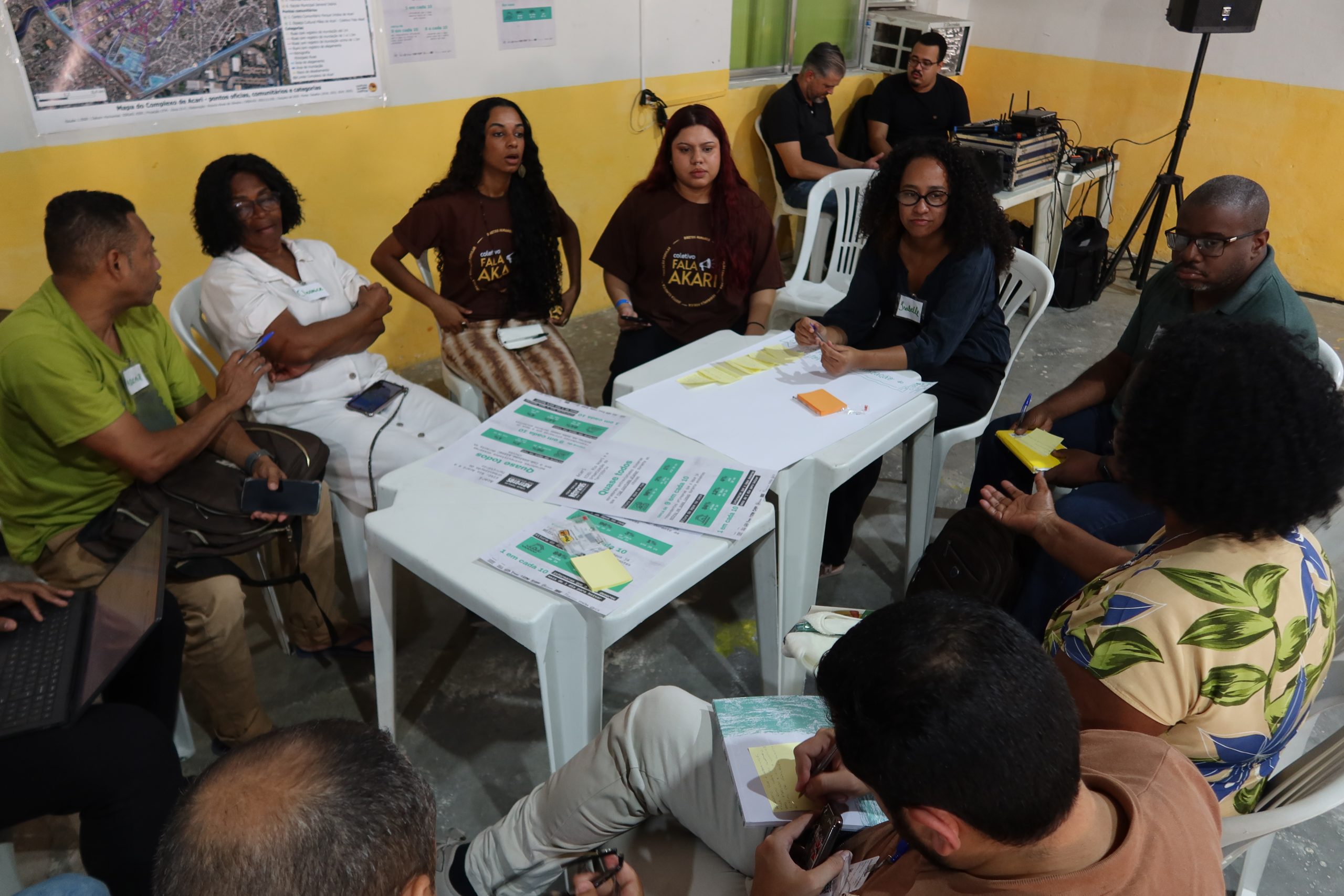
Beyond presenting the findings, the event also served to systematize solutions developed by residents, prioritizing strategic actions. Through discussion circles, residents put forward proposals on three key themes focused on prevention, mitigation and adaptation:
- The Acari River and Urban Development in the Community, Before and During Floods;
- Communication, Early Warning Systems and the Support Needed After Floods; and
- Financial Impacts and Government Programs.
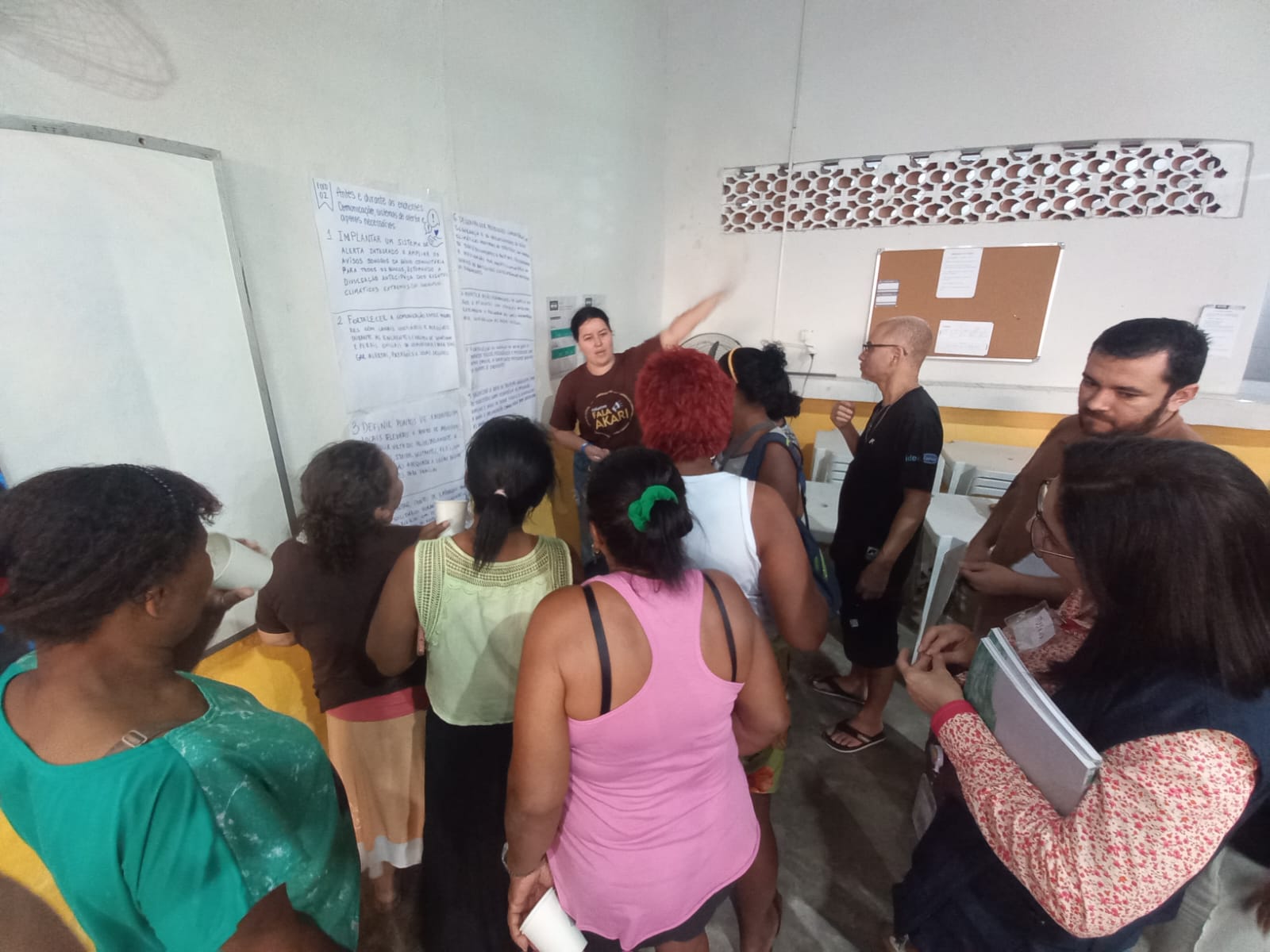
Discover the Priority Climate Actions Defined by Acari Residents
-
- Ensure the Acari River is cleaned and maintained regularly (rather than at such long intervals), including dredging, removing sediment buildup at bottlenecks and restoring the retention ponds, which are currently no longer functioning.
- Adopt popular environmental education as a pillar of prevention, integrated with health, education and environmental initiatives, raising residents’ awareness in the face of the climate crisis.
- Ensure favela residents have a voice in decisions about the river and their community, and that public authorities are present in other ways, addressing discrimination and invisibility.
- Implement an integrated early warning system and expand the community radio’s audible alerts to all blocks, resuming advance warnings about extreme weather events.
- Establish meeting points in elevated areas and support centers prioritizing children, older adults, pregnant women and PWDs, providing adequate meals and enough baskets of basic foodstuffs for affected families.
- Resume effective urban sanitation services, with more sanitation workers—who currently only clean the Main Street—proper storage of construction materials, revitalization works and ongoing maintenance of the Acari River to reduce flooding.
- Ensure the full payment of fair and adequate financial assistance to compensate residents for their losses and build climate-resilient homes—current amounts fall far short of what is needed.
The event also featured Portraits of Floods: After the Water Went Down, which shares stories from communities mapped by the project in other Brazilian states, showing how, despite regional differences, the same story repeats itself in favelas and urban peripheries across the country.
Watch the Full Documentary Here:
The full findings from the study will be made available soon through the project’s channels. To stay updated, visit the Decodifica Institute’s official website and follow the organization on social media, including Instagram.
*Residents, NGOs and partner organizations attended the event, including Criola; Asplande; the District Health Council (CDS); the Federal University of Rio de Janeiro School of Architecture and Urbanism (FAU/UFRJ); Social Visão do Bem; Sagrada Esperança; Espaço Faveleira de Acari; Akari Popular University Entrance Prep Course (PVP Akari); Acari Baptist Church; the Federation of Residents’ Associations of the Municipality of Rio de Janeiro (FAM-RIO); Ronaldo Gazolla Municipal Hospital; the Canal do Cunha Watershed Observatory; Respira Rio; Instituto Clima e Sociedade (ICS); the Acari Residents’ Association; Catalytic Communities (CatComm); the Natural Resources Defense Council (NRDC); Vizinhos Parmalat Cooperative; and the Marcos Valadão Family Health Clinic, bringing the total number of participants to 50.
About the author: Amanda Baroni Lopes holds a degree in journalism from Unicarioca and was part of the first Journalism Laboratory organized by Maré’s community newspaper Maré de Notícias. She is the author of the Anti-Harassment Guide on Breaking, a handbook that explains what is and isn’t harassment to the Hip Hop audience and provides guidance on what to do in these situations. Amanda was born and raised in Morro do Timbau, Complexo da Maré.