
• English
  • Português
  • Facebook
  • Instagram
  • Twitter
  • YouTube
RioOnWatch
  • Home
    • Highlighted Stories
    • Understanding Rio
    • Reference Articles
  • Communities
    • Central
    • South Zone
    • North Zone
    • West Zone
    • Greater Rio
  • Policies
    • Public Security
    • Housing
    • Transport
    • Education
    • Health
    • Sanitation
  • Violations
    • Human Rights
    • Housing Rights
    • Police Violence
    • Government Neglect
  • Organizing
    • Community Organizing
    • Community Solution
    • Resistance
    • Sustainability
    • Participation
    • Protest
    • Culture
    • Responsible Tourism
  • Content Map
    • by Community Contributors
    • by Int’l Observers
    • Series
      • Anti-Racist Series
      • Energy Justice Series
    • Event Reports
    • Video Stories
    • Photo-Essays
    • Interviews/Profiles
    • Research & Analysis
    • Reviews
    • Listicles
    • Opinion
    • Reference
    • Podcasts
    • Translated Articles
  • About
    • Timeline
    • Our Reporting Policy
    • License
    • Feedback
  • For Journos
  • Donate
Latest News
  • [ January 29, 2026 ] ‘It’s the Place of Resistance of Our Existence’: Duque de Caxias’ Culture Manor is a Hub for Art, Education and Leisure by Community Contributors
  • [ January 13, 2026 ] 10 Years Since the Rio Olympics: Vila Autódromo Continues to Resist Gentrification Pressures Amidst New ‘Olympic Barra’ Neighborhood #EvictionsWatch
  • [ January 8, 2026 ] COP30 Civil Society Rundown: Thousands of Communities and Social Movements, Representing Favelas, Indigenous, Quilombola and Other Marginalized Groups Fill Belém During COP30 [IMAGES] *Highlight
  • [ December 31, 2025 ] ‘What We Want Aren’t Bodies on the Ground… It’s Recognition of [Our] People Creating Solutions’: Penha Favelas Hold Composters and Integrated Health Events Highlighting Local Climate Memories *Highlight
  • [ December 26, 2025 ] 2025 Retrospective of Top International Reporting on Rio’s Favelas #MediaWatch
Home“Para Inglês Ver”

“Para Inglês Ver”

Today, a “para inglês ver” (PIV) law, policy or project is one which, from the outside, appears to address a problem, but which in practice is merely a superficial change, a temporary fix or public relations exercise intended to appease community interests and appeal to domestic and international public opinion. It does little to benefit those it purports to help, either because implementation on a well-designed policy is poorly conducted and easily corruptible, or because it is actually designed for political motives rather than social or philanthropic ones. This situation occurs when public officials lack the genuine desire or political will to institute the necessary change, and is usually accompanied by an extensive PR campaign aimed at promoting the policy.
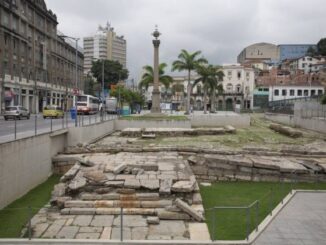
Ruins at the site of the primary disembarkment of slaves in Rio: large influx of slave ships from 1758 to 1831 and periods of less activity were studied by Emory University - Agência O Globo / Márcia Foletto
*Highlight

Research Indicates that Rio Received Two Million Enslaved Africans

By Renan França • Translation by Elizabeth Gladding • May 11, 2015

For the original in Portuguese with video, by Renan França, published in O Globo, click here. The number is double what was estimated: the results are based on a database created by Emory University, in Atlanta. Between […]

Posts pagination

« 1 … 3 4

RioOnWatch’s anti-racist reporting series won silver in the 2022 inaugural The Anthem Awards, in the Diversity, Equity & Inclusion category among Best Local Awareness Programs.
A Project of

About

In May 2010, Catalytic Communities launched what was originally Rio Olympics Neighborhood Watch (hence RioOnWatch), a program to bring visibility to favela community voices in the lead-up to the 2016 Rio Olympics. This news site, RioOnWatch.org, grew into a much-needed and unique reference featuring favela perspectives on the urban transformation of Rio. With diverse and deeply interlinked articles by a mix of community reporters, resident opinions, solidarity reporters, international observers, and academic researchers, we work to engender a more accurate picture of favelas, their contributions to the city, and the potential of favela-led community development in Rio and around the world.

Contact & Support

contact@rioonwatch.org
WhatsApp +55.21.991.976.444
USA VOIP +1.301.637.7360

Volunteer | Donate

10 Years! Check Out Our Story:

Awards

Special Thanks

Fundação Heinrich Böll Brasil
World Habitat
Fideicomiso de la Tierra Caño Martín Peña
Pastoral de Favelas
Center for CLT Innovation
Global Land Alliance
Ecocity Builders
Mansueto Institute for Urban Innovation
SDSU Behner Stiefel Center
The Rio Times
Forum Grita Baixada
Beto Paixão Graphic Design
Architecture Museum of Vienna
Yale School of Architecture

  • Home
    • Highlighted Stories
    • Understanding Rio
    • Reference Articles
  • Communities
    • Central
    • South Zone
    • North Zone
    • West Zone
    • Greater Rio
  • Policies
    • Public Security
    • Housing
    • Transport
    • Education
    • Health
    • Sanitation
  • Violations
    • Human Rights
    • Housing Rights
    • Police Violence
    • Government Neglect
  • Organizing
    • Community Organizing
    • Community Solution
    • Resistance
    • Sustainability
    • Participation
    • Protest
    • Culture
    • Responsible Tourism
  • Content Map
    • by Community Contributors
    • by Int’l Observers
    • Series
      • Anti-Racist Series
      • Energy Justice Series
    • Event Reports
    • Video Stories
    • Photo-Essays
    • Interviews/Profiles
    • Research & Analysis
    • Reviews
    • Listicles
    • Opinion
    • Reference
    • Podcasts
    • Translated Articles
  • About
    • Timeline
    • Our Reporting Policy
    • License
    • Feedback
  • For Journos
  • Donate

© 2026 Attribution-NonCommercial-ShareAlike 4.0 International