
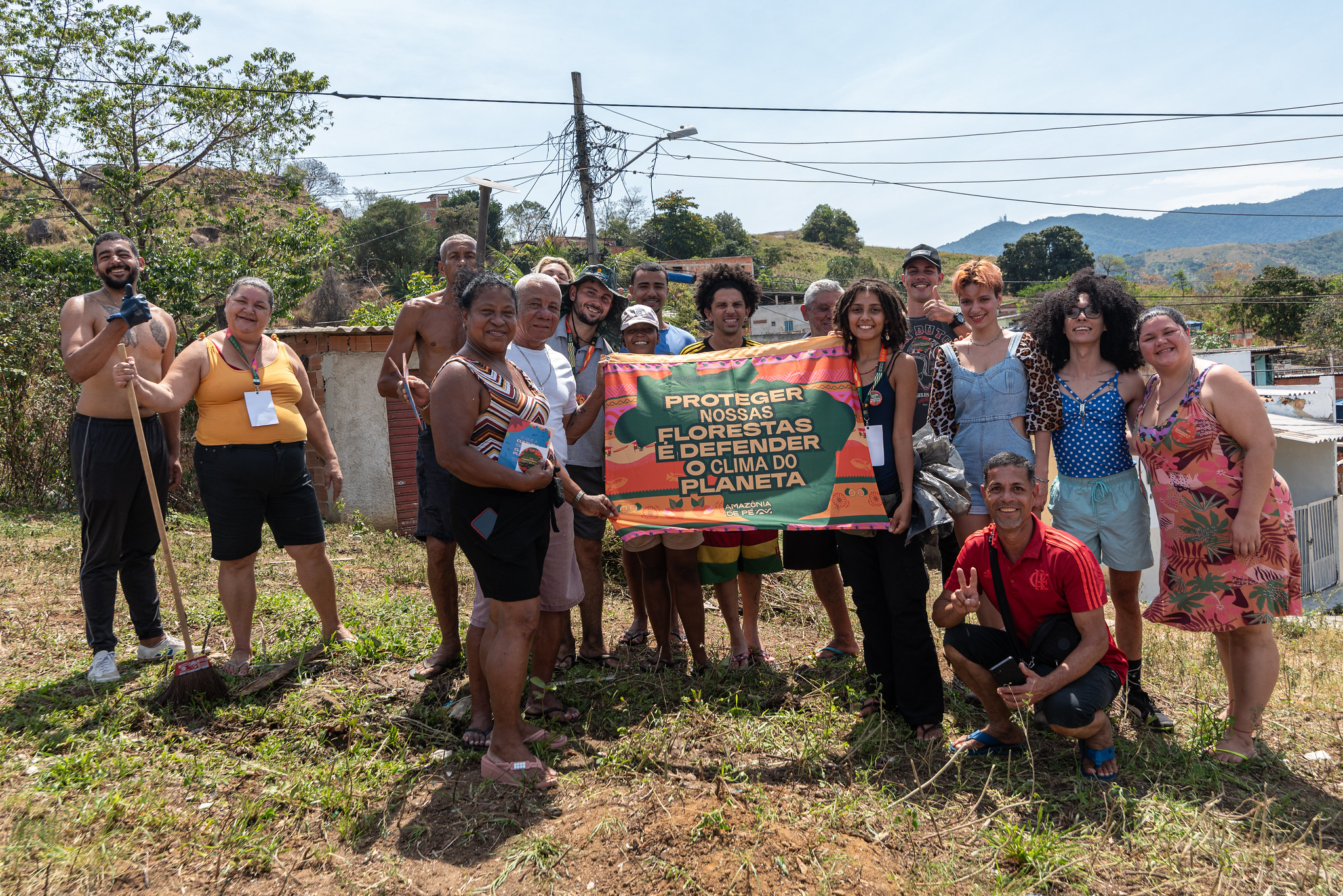

On September 21, Complexo da Coreia, a group of favelas in Senador Camará, in Rio de Janeiro’s West Zone, carried out a collective cleanup in the green area of Caminho Anes Dias. The activity brought together members of The Love Troop, a local socio-environmental project, members of Affective Earth, and volunteer residents from the community and beyond. The activity, which also included a cultural soirée, was part of the 2025 Standing Amazon 24-Hour Cultural Marathon and the Sustainable Favela Network‘s* Collective Calendar.
Despite the hot and sunny Sunday, participants showed no lack of energy as they kicked off by removing waste from Caminho Anes Dias. The initial idea behind the activity was to prepare the space to receive fruit tree seedlings and turn it into a leisure area for local residents.
Fernando dos Santos, local organizer and a member of both Affective Earth and The Love Troop, shared how they came up with the idea for the initiative.
“I’ve worked with culture for some time now. I’m a musician, I work with art, and I’ve also been researching and experimenting with gardening and ancestral medicine. I recently started to organize environmental actions here in the area, since there are very few projects, very few initiatives of the kind around here. For this first activity our aim is to remove the trash and plant seedlings, fruit trees, specifically so that… children can harvest them, and most of all to encourage collective care for the space. This is a place without a single square; it’s a dead-end street, somewhat isolated. At the end, there are some green spaces, but no playground. We also hope to improve it in this sense.” — Fernando dos Santos
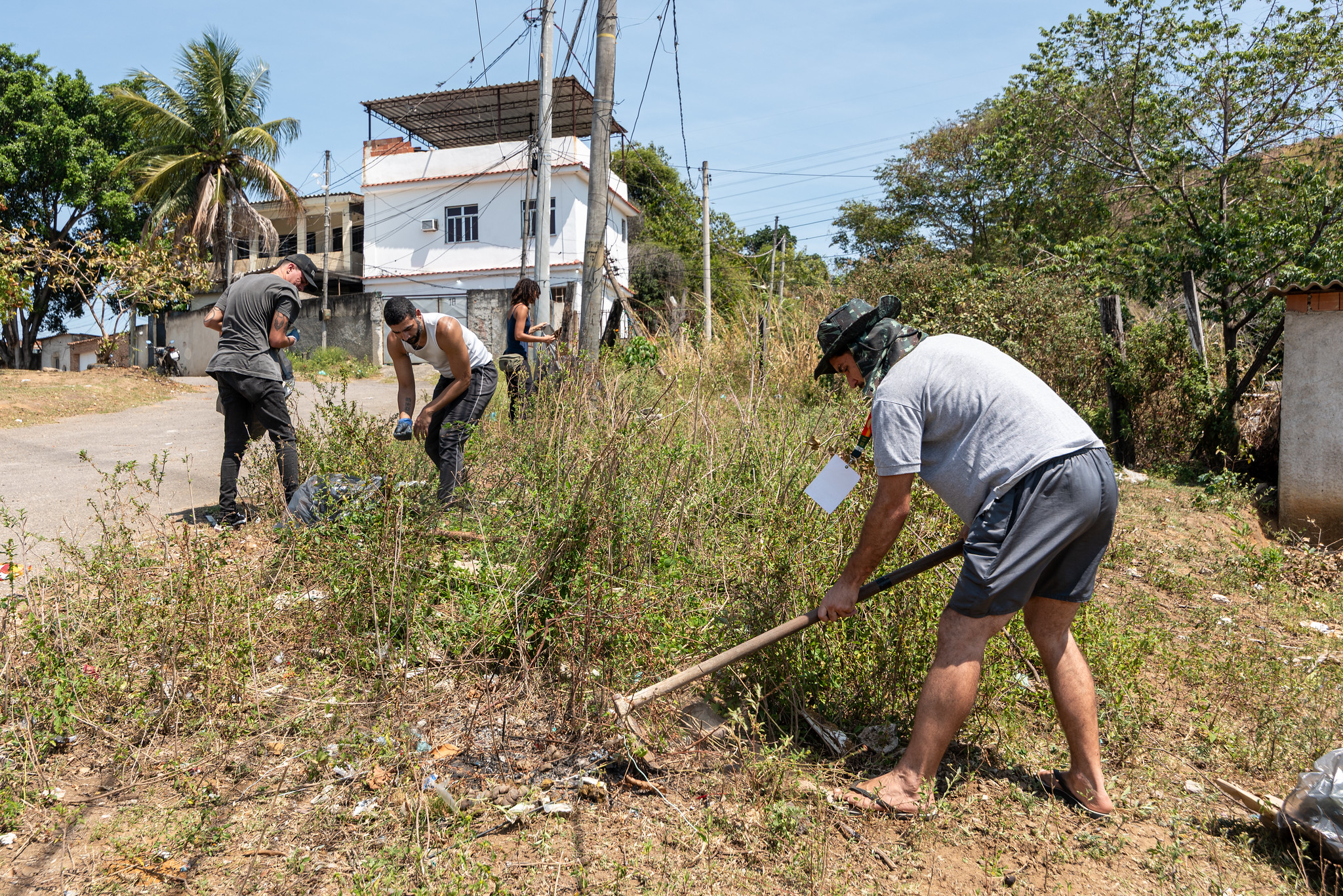
In addition to having few public leisure areas, Complexo da Coreia is little known and has not attracted initiatives to support local development. “This is an isolated community. People here are usually just passing through… The West Zone is very forgotten, Santíssimo in particular, I think,” reflected Thaysa Santos, an Affective Earth community organizer.
Fernando dos Santos explained that, almost always, when West Zone favelas are remembered, it is mainly in connection with violence. As a way of countering this stigma, he named the project “The Love Troop.”
“We called it The Love Troop to joke a bit with this notion of the area’s violence… [Our initiative] changes that view. This area is seen and remembered for its violence. If you search ‘Complexo da Coreia’ on Google, all you’re going to find are police raids, armored trucks, helicopters, and such… But there’s a diversity of events, people, and potential here, and we’ve got to make sure that evolves, you know? And we’re only going to do that if we work together. On our own, we’re weak.” — Fernando dos Santos
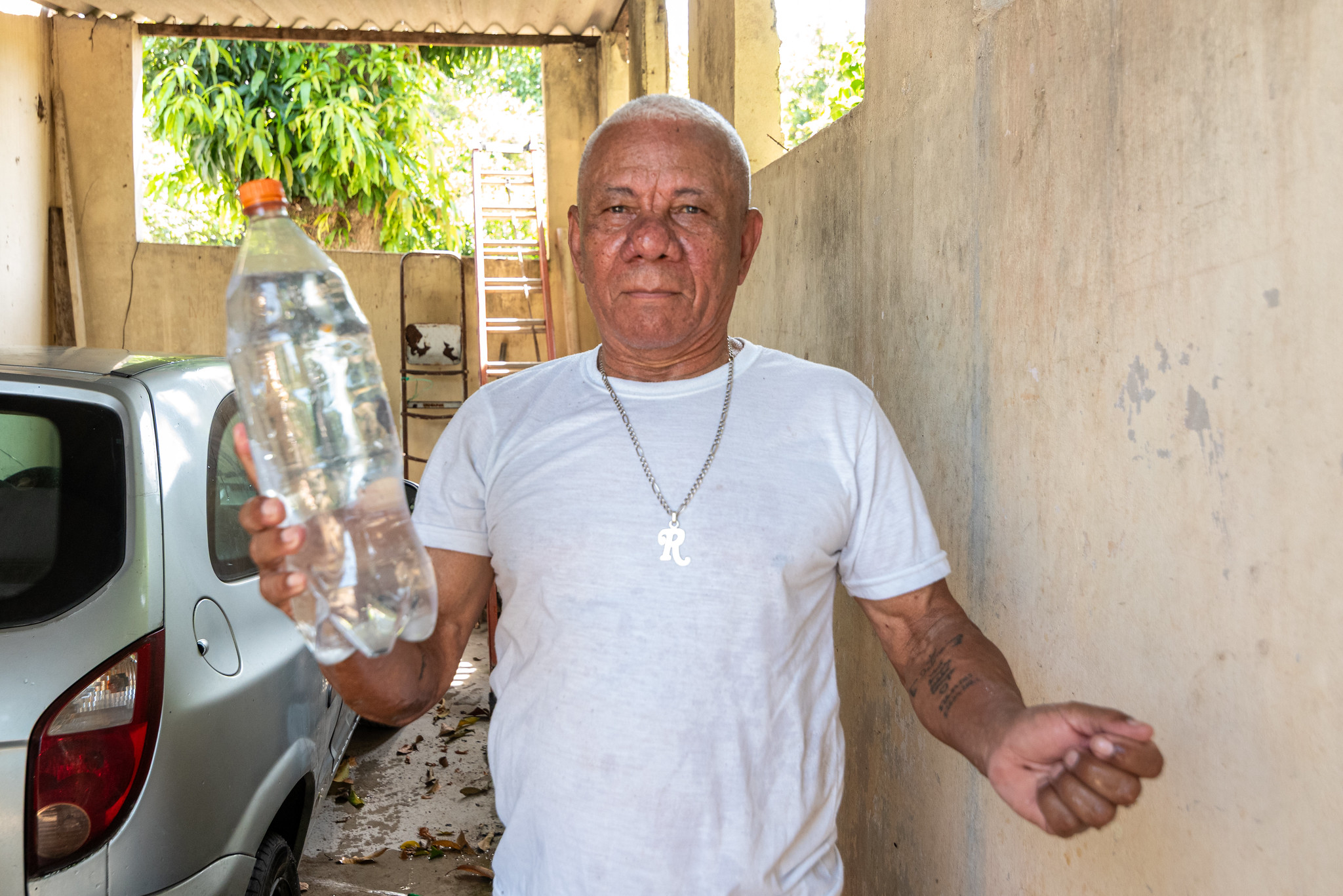
The initiative had the support of long-time residents, such as Seu Antônio Rodrigues. At 71, Seu Antônio has lived in the community for 68 years.
“I was the first one to come live here. Back then, it was just trees and brush… A collective action [like this one] is a beautiful thing. If everyone did something like this everywhere, there wouldn’t be [trash] on riverbanks or in the streets… It’s the first time we’ve seen a project like this. No one had ever done anything here, apart from politicians.” — Antônio Rodrigues
Proud of his community, Seu Antônio says he lives in close contact with nature and that the water supplying his home comes from a spring: “I’ve never had piped water from CEDAE [Rio de Janeiro’s state water and sewage utility] here at home. Just look at where I live—in the morning all you hear are birds singing in the trees.”
Building on the cleanups, Affective Earth and The Love Troop intend to maintain the conservation of the green spaces of Caminho Anes Dias and, later on, plant fruit tree seedlings. Due to the day’s intense heat, the planting of the seedlings—which would not have survived the high temperatures—was postponed.
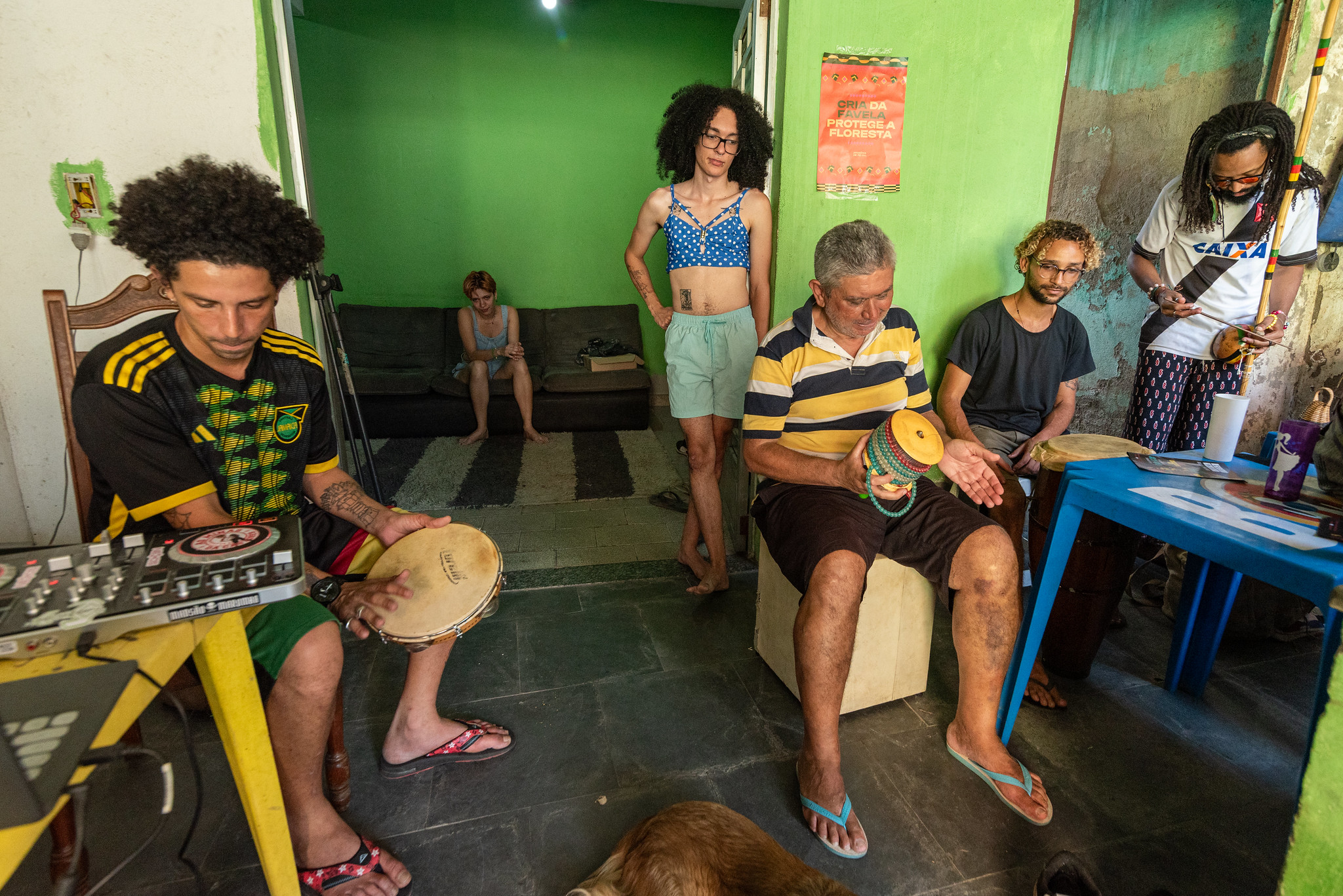
After the cleanup and the collective lunch, a cultural soirée brought together residents and West Zone artists, with DJ Ras Renato on the decks and artistic performances by Expressão Sonora RJ, Procopio, Baralho no Bolso, Adil Franco, and Santos Titãs.
The goal of the first collective action in Complexo da Coreia was to begin recovering a space that had, until then, been abandoned and to draw the community’s attention. The results of the effort were visible, with the involvement of residents and volunteers from other areas. In this way, they planted a seed that will sprout in the coming months into a green space at Caminho Anes Dias.
View the Photo Album of the Collective Action at Caminho Anes Dias:

*The Sustainable Favela Network (SFN) and RioOnWatch are both initiatives of not-for-profit organization Catalytic Communities (CatComm).
About the author: Bárbara Dias was born and raised in Bangu, in Rio’s West Zone. She has a degree in Biological Sciences, a master’s in Environmental Education, and has been a public school teacher since 2006. She is a photojournalist and also works with documentary photography. She is a popular communicator for Núcleo Piratininga de Comunicação (NPC) and co-founder of Coletivo Fotoguerrilha.