

In Complexo da Maré, a group of 16 favelas with 140,000 residents in Rio de Janeiro’s North Zone, the Especiais da Maré project (Maré’s Specials, in free translation) serves over 700 atypical families from across the region. On September 21, Brazilian National Day of Struggle for Persons with Disabilities, RioOnWatch celebrated Especiais da Maré, a key initiative that builds ties of belonging and affection among Maré residents with disabilities, as well as a much-needed network of support.
The story of the Especiais da Maré collective is told by Alusca Cristina Silva Sousa, 33, the project’s manager and the mother of Pedro Henrique, diagnosed with cerebral palsy and severe epilepsy. Sousa lived in Parque União, one of the favelas that make up Maré, her entire life. She recently moved to Ilha do Governador (Governor’s Island, also in the city’s North Zone), but because of the project and her own story, she can be found in Maré every day, working alongside the other managers.
“The project began in 2018 in a WhatsApp group, assisting eight mothers. The idea was encouraged by Luiz Costa, one of Pedro Henrique’s teachers. Since then, we’ve registered so many families that we’ve created two WhatsApp groups. The first group runs from [the] Kelson’s [community] to [the] Morro do Timbau [favela], and the second from Timbau to Vila do João.” — Alusca Cristina Silva Sousa
Especiais da Maré has developed partnerships with Brazil’s national public health foundation (Fiocruz) and the Federal University of Rio de Janeiro (UFRJ), offering cooking workshops for mothers through an additional project to promote information about health and nutrition through the culinary arts. Every Monday, atypical motherhood takes center stage through a discussion group held at the Teotônio Vilela Municipal School, which offers psychotherapeutic support in partnership with the Allos Association. In addition, every Monday and Wednesday at 3pm, the children of Especiais da Maré participate in inclusive theater activities at the Maré Museum.
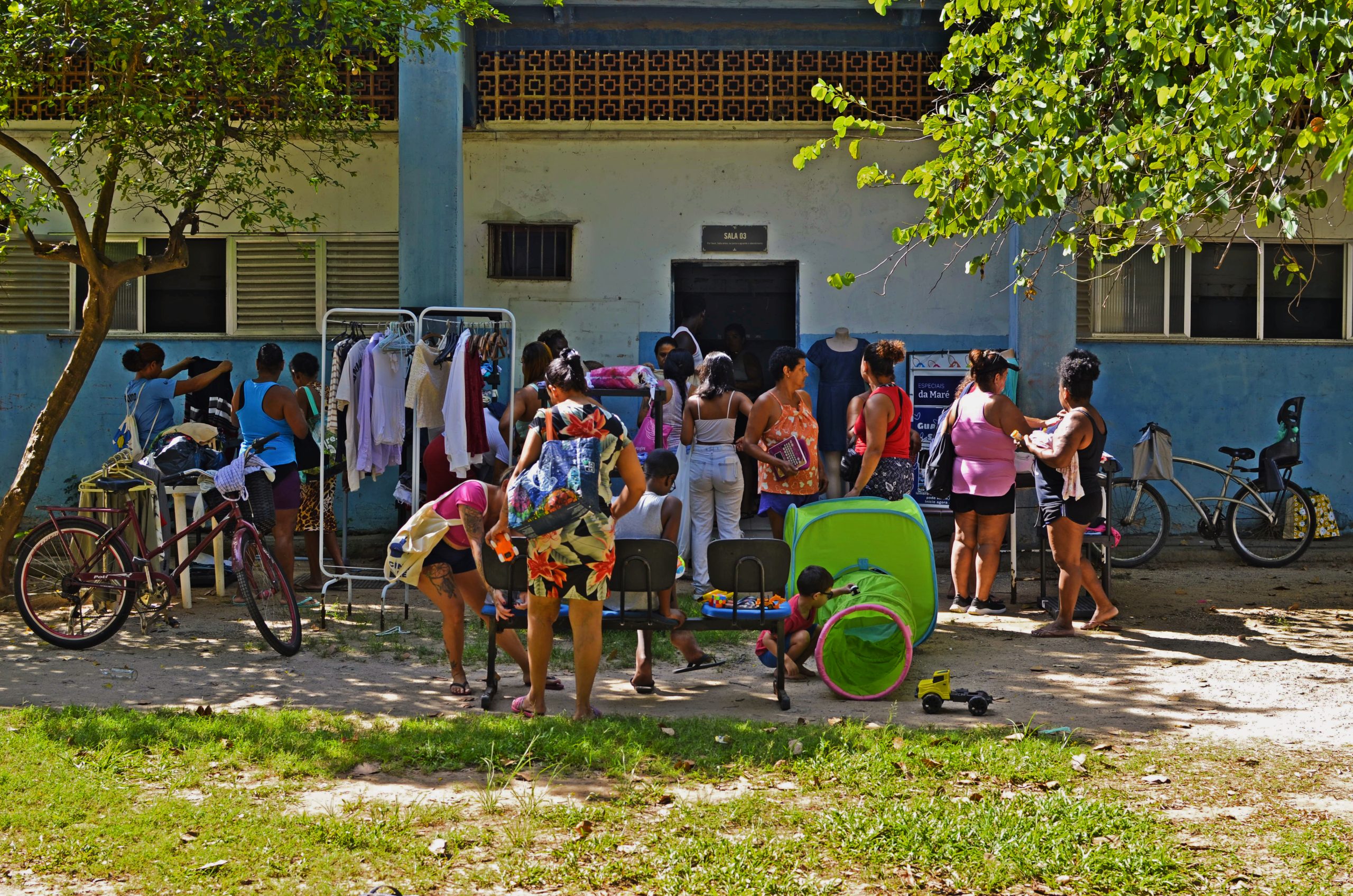
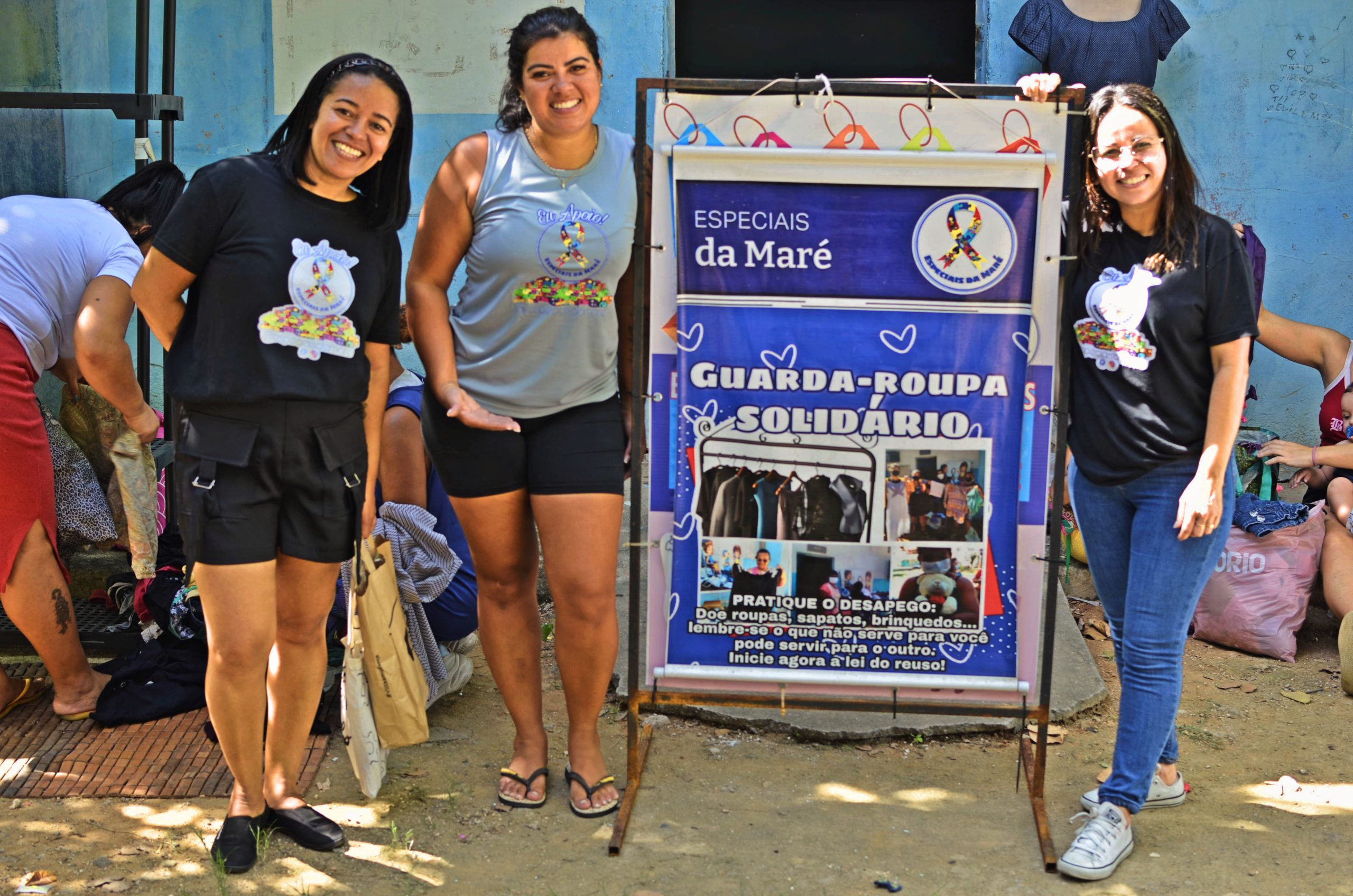
The Especiais da Maré project also provides support through two WhatsApp groups with atypical mothers and fathers, and promotes the monthly Solidarity Wardrobe meeting at the Seu Amaro Olympic Village, where the managers distribute donated materials to atypical parents.
The project has continued to evolve since 2018. Sousa says that, “with the growing demand from families and an increase in the project’s activities, we’re considering a new space for the headquarters.”
“The space we now have for our headquarters is my old house. I divided it into two parts: one remains a house, which I put up for rent. The other part became the Especiais da Maré headquarters. We also have a space provided by the late Seu Amaro, in the Seu Amaro Olympic Village, where we run the Solidarity Wardrobe program. One day, our management team was talking about how we wanted to improve the meetings between mothers and needed a space for that. We went to Seu Amaro, who was responsible for and managed the Maré Olympic Village, and he gave us the space to store our donations—clothes, toys, adult diapers, and even wheelchairs. He was a very important person for us because it was thanks to him that we were able to increase our visibility and have another space of care and support for families.” — Alusca Cristina Silva Sousa
The project managers—Alusca Cristina Silva Sousa, Lorrayne Gomes dos Santos, Valéria Oliveira Viana, Antônia Maria Souza Pirangi, Francisca Juliana Mesquita, and Marcelly Olinto—aim to relocate the headquarters, which is currently in Parque União, at Rua Larga, 25. This would expand the structure to accommodate more atypical mothers from Maré.
“Our project is mostly made up of single mothers, but we have some fathers and partners who are present and participate in the group. This one here is very involved,” says Sousa, pointing outside the headquarters, where Adilson da Conceição Santos, an atypical father, is organizing donated materials in the car heading for the Vila do João favela.
The group was formed when these atypical parents identified that they faced common problems in their daily lives, such as a lack of information and support in public health and education services, as well as difficulties with accessibility and mobility. Additionally, they shared the desire to combat prejudice and ableism, especially within the favela.
Ver essa foto no Instagram
Flávia de Lima Andrade, 52, says her biggest challenge with daughter Juliana, 21, is mobility and accessibility in the favela. Juliana has spinal muscular atrophy (SMA) and, due to the difficulty of moving around inside her own home, lives exclusively on the second floor of the house.
“Juliana was diagnosed at age six. She was admitted to the ICU many times. Over time, she gradually lost more and more movement in her body. Because of the delay in the diagnosis, we had difficulty accessing care, physical therapy, and medication.” — Flávia de Lima Andrade
Challenges and Achievements in Educating Atypical Children in the Favela
Despite the challenges faced, Andrade’s daughter managed to finish high school.
“She studied at the Yuri Gagarin Public School, in Bonsucesso, and had a van that picked her up and took her to school. She attended the Olga Benário Prestes State School, in Ramos, and had a car that took her there. Her last school was the Dilermando Cruz Municipal School. That was a very difficult time because there was no transportation [available] and we had to take the BRT [to get Juliana to school].” — Flávia de Lima Andrade
Now that Juliana has graduated, Andrade says her daughter wants to take the vestibular [college entrance exam]: “She’s studying and getting ready for it.”
Luiz Costa, 66, is a psychologist and teacher in the Rio de Janeiro municipal school system and currently lives in Magé, a municipality in Greater Rio de Janeiro’s Baixada Fluminense region. He worked as a teacher in Rio for 20 years and taught in Maré for 15 of those years. In 2015, he taught his last classes at the Teotônio Vilela Municipal School. It was also the year he began to have more contact with Alusca Sousa and her son, Pedro Henrique.
“I worked with classes that included students with age-grade gaps, students with learning difficulties, and for a year I worked exclusively with students with autism. In every public school, there’s at least one child with a disability. So I was used to working with this kind of routine.” — Luiz Costa
The teacher became involved in home-based educational support and had his first contact with Alusca Sousa, Pedro Henrique, and many other atypical families from Maré at the Teotônio Vilela Municipal School. Based on his experiences with these families in the school environment, Costa encouraged the creation of Especiais da Maré, recognizing the need for mutual assistance and a network of community support.
“Besides being a teacher, Luiz lived in Maré, so he saw me taking care of Pedro and came up with the idea of creating a group. He taught other children with disabilities and was also aware of how other families coped. The goal was to support and strengthen the bond between mothers and fathers of children with disabilities, share information, and improve the lives of atypical families.” — Alusca Cristina Silva Sousa
For Costa, education and health professionals must be committed and compassionate, as they can make a positive difference in the lives of many atypical children. Unfortunately, the teacher has seen many cases like Pedro Henrique’s, in which, whether through omission or medical error, children are denied the right to full development.
“I was there when Pedro said ‘mommy’ for the first time. He was around six or seven years old. [When Pedro was born], the doctors told Alusca to go home, but not to expect much from her son. In fact, they should have informed her about the difficulties during childbirth and that she should have medical follow-up and do therapy and activities [with him] to minimize the problems he might face [later on]. This kind of medical error was very common at the time. It still happens today, but there’s now a growing movement of institutes that are concerned with the health of these children.” — Luiz Costa
Silence at Birth, Silenced in Life
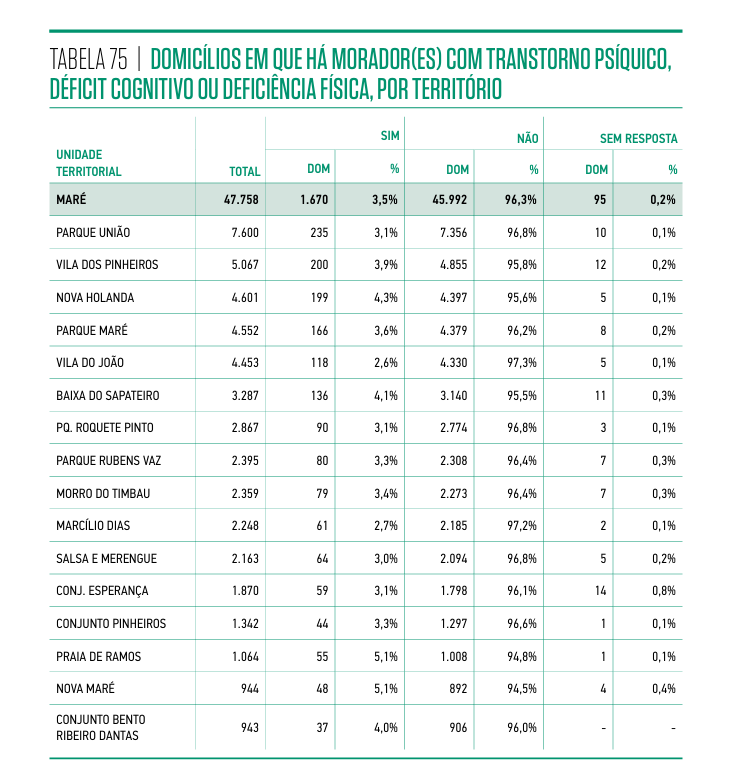
According to the 2019 Maré Population Census, conducted by Redes da Maré, 1,678 households had at least one resident with a mental disorder, cognitive impairment, or physical disability. Thus, it can be said that, of Maré’s total population of 140,000 residents, at least 1.2% are people with disabilities, and 3.5% of the 47,758 households surveyed in the census are home to this population.
Sousa says she went through moments of great suffering and doubt during her son’s hospitalization at Fernando Magalhães Maternity Hospital, due to a medical error and the doctors’ silence regarding Pedro Henrique’s birth. Her son spent 22 days in the ICU and was discharged with cerebral palsy.
She also says that during her prenatal care in Maré, there were no signs of complications in the pregnancy, which reinforces her claim of medical malpractice. “I just wanted to know how my son was doing, and they [at the hospital] wouldn’t say anything. They wouldn’t even let me hold him or see him. At the time, I just wanted to get out of there and hold Pedro Henrique,” she recalls.
While organizing donated materials—adult diapers, medicine, wheelchairs, and walkers—to deliver to families in Vila do João alongside Adilson, 50, atypical father of Jhovane and member of Especiais da Maré, Sousa talks about how emotional she gets.
She says she sought justice after a long time, looking for information on all the services available for her child. Faced with the State’s negligence, she was forced to turn to the private healthcare system to protect her son’s right to full development.
When Pedro Henrique was two years old, Sousa began to see the costs of caring for her son rise rapidly. So she decided to file a lawsuit against the State. Thirteen years have gone by, and although the case was decided in the family’s favor, she says the State has still not offered any kind of support to Pedro Henrique or his relatives.
“I only found out about Pedro’s disability three months after he was born, during a private consultation. It’s very common for mothers to learn of the diagnosis months after giving birth. We don’t get proper medical follow-up, we don’t have access to quality services, and we’re not told what happened during delivery.” — Alusca Cristina Silva Sousa
Like Sousa, Adilson Santos recounts the same ordeal with the State over the care of his son Jhovane.
With a family structure different from Sousa’s, Santos is friends with Jhovane’s mother and shares a house with her. Although he does not share any genes with the child, he discussed the possibility of taking on parental responsibility, and she agreed. His son, Jhovane, is 11 years old and in the fifth grade at the Leonel de Moura Brizola CIEP, a regular public school in Ramos. He has cerebral palsy, microcephaly, and a heart condition.
The father says he officially recognized his son’s paternity when the boy was only three years old.
“Jhovane came into my life when he was just one year old. There was a bond of love and care between us, and I decided I wanted to be closer to him. So I talked to his mother, and we started living together: me, Jhovane, Jhovane’s mother, and her other daughter. Jhovane’s mother only found out she was pregnant at seven months, and during that time, she was working a formal job. She should have been receiving prenatal care, but her boss began harassing her, saying that if she missed work for her checkups, she’d be fired. For that reason, she didn’t get prenatal care.” — Adilson da Conceição Santos
The father says that Jhovane was born at Miguel Couto Hospital and that, during delivery, doctors discovered his mother had congenital syphilis. To ensure the baby wouldn’t develop health problems, Jhovane was given a ten-day course of antibiotics. However, health professionals failed to test him for microcephaly—a necessary procedure given his mother’s condition.
Jhovane’s microcephaly diagnosis was communicated to his family at Bonsucesso General Hospital when he was just over a year old. Only then were his parents able to apply for the Continuous Cash Benefit (BPC), a right granted to people with disabilities in situations of socioeconomic vulnerability, as established by the Organic Law of Social Assistance (LOAS).
At the age of four, Jhovane began receiving care through the Sarah Network of Rehabilitation Hospitals and has been followed by the hospital ever since. “[Today,] Jhovane can eat, drink, and move around in his wheelchair. He does all of this with difficulty, but he manages,” says Santos, stressing that although Jhovane can do many things on his own, his son still depends heavily on support.
“He wears diapers, can’t go to the bathroom, and can’t get out of bed, so he’s still very dependent. Now that he’s older, moving around the house has become harder. His route is from bed to wheelchair to sofa and back again. During and after the pandemic, Jhovane stopped going to physical therapy because of the shutdown and the difficulties in accessing care due to his health, which further affected his movement and caused atrophy in his knee. Unfortunately, people either don’t know or don’t want to know about other people’s realities, and they treat people with disabilities with prejudice, diminishing their lives and experiences. Usually, they want to fit everything into standards and boxes, and end up excluding people with disabilities. Especiais da Maré has become a space to bring atypical families closer together and improve living conditions for children and young people with disabilities.” — Adilson da Conceição Santos
Gabriele da Conceição, 30, mother of Gael, 5, who was diagnosed with epilepsy at eight months, agrees with Sousa and Santos on the crucial role Especiais da Maré has played in her life. It was only through the group, alerted by other mothers, that da Conceição realized her son might also be on the autism spectrum, which led her to seek help. In August 2024, at the age of four, Gael was officially diagnosed with level-two autism, with functional language impairment.
“I had Gael during the pandemic. It was very difficult. Even though I had my husband, I felt completely overwhelmed caring for Gael. The whole family noticed that something was different about him, but no one said anything. He was slow to speak and also showed unusual behaviors. It took me a long time to get my son’s autism diagnosis. I only found out about his autism when I joined Especiais da Maré, after other mothers shared their experiences with me.” — Gabriele da Conceição
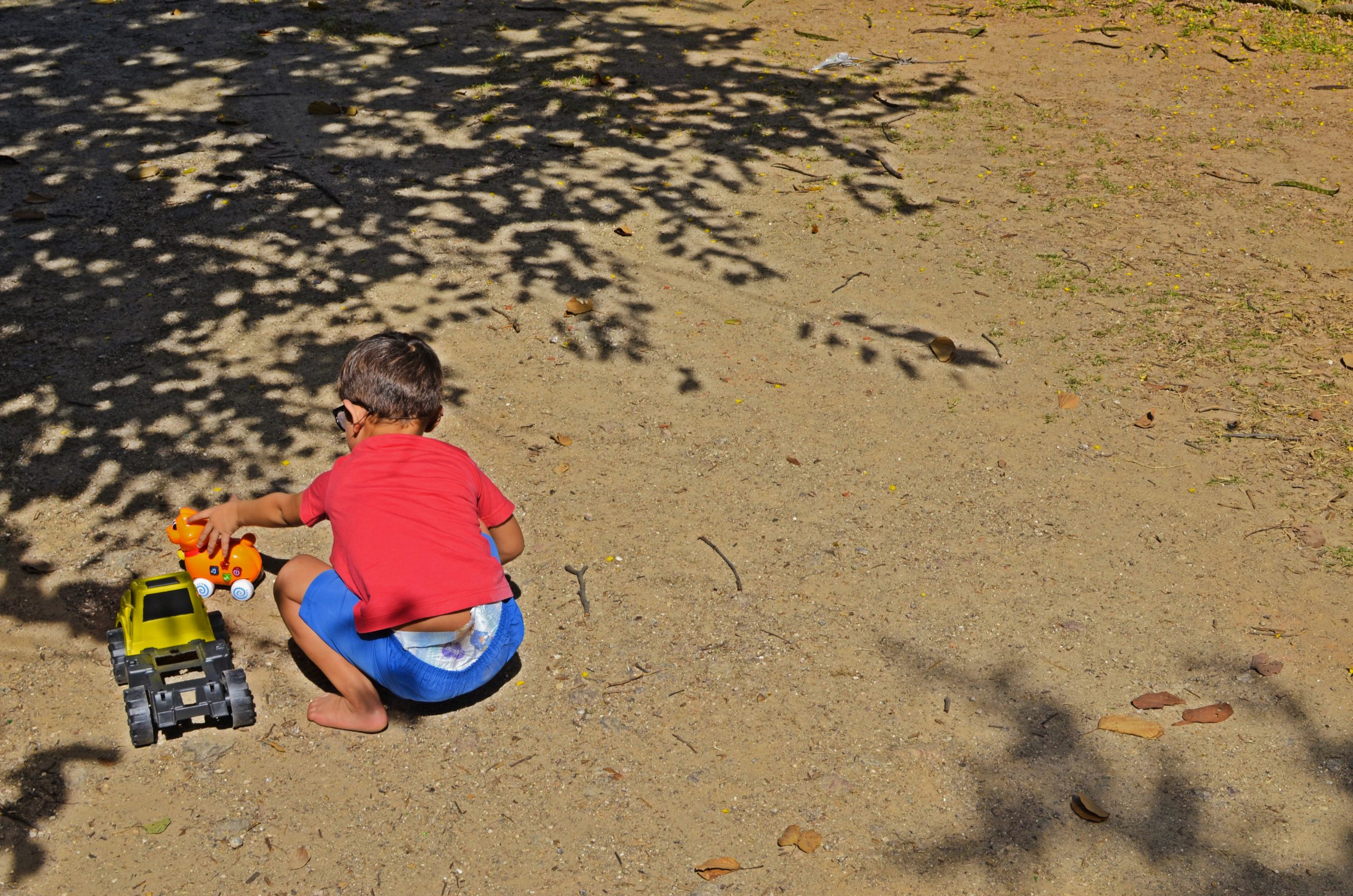
Even with the mothers sharing their experiences, da Conceição could only take action for her son once she had a medical report confirming his neuroatypicality.
“The doctors refused to give Gael a medical report stating he has autism. That makes caring for a child extremely difficult. It was really hard to access treatment without a medical report confirming [the diagnosis]… I couldn’t seek therapy or treatment… We also lack access to social welfare benefits, like the BPC.” — Gabriele da Conceição
Without medical care, without social benefits—to which families are entitled but unable to access—and with few opportunities for quality public services or a support network, many mothers of people with disabilities face socioeconomic vulnerability and the absence of State support. These mothers shoulder the costs and care of their children alone. As a result, they often suffer from depression, anxiety, and other disorders.
As revealed by the Maré Population Census, this is one aspect of the State’s neglect of people with disabilities and residents of the favela.
“In a social context of limited access to health services and schooling, it is not difficult to imagine that there are people with intellectual disabilities who have not been diagnosed or received medical care, and as a result, their disability may not have been recognized by themselves or their families… The bigger problem is that poor conditions in accessibility and urban cleanliness, access to health facilities and professionals, income, and other factors—such as daily violence stemming from both the fight against and internal disputes over the drug trade—create serious obstacles for people with more severe disabilities and/or disorders in exercising their fundamental human right to come and go as they please. In this context, the physical and psychological limitations of individuals are exacerbated by restrictions on care, accessibility, and specialized support.” — Maré Population Census
Faced with a reality in which the State provides little or no support, Especiais da Maré offers a network of care, guidance, and follow-up for atypical families in Maré. In true “by us for us” fashion, Especiais da Maré is made up mostly of mothers who, despite all the challenges, manage to improve the lives of atypical children and families in Maré.
To find out what the institution needs, visit Especiais da Maré’s social media pages (Instagram and Facebook) or contact them via WhatsApp: +5521 97222 8603.
About the author: Ramon Vellasco is a freelance photojournalist and reporter, born and raised in Vila da Penha. He focuses on issues related to human rights, culture, education, diversity, and marginalized social groups, primarily working in peripheral, favela, areas.