

Preface: Public Policies Without Active Listening Don’t Bring Change
The “International Favelas Conference,” which took place on March 17 and 18, organized by the Brazilian Institute of Architects’ Rio de Janeiro chapter (IAB-RJ), and Rio de Janeiro’s state government, to promote the Integrated City Program, had zero participation of favela residents. One of the slogans on its promotional cards and social media posts read “Integrated Cities: Past, Present and Future.” The verb tenses chosen to communicate this institutional message are reminiscent of Sankofa, an African symbol that calls for the recollection of past mistakes and learning in the present, leading to a wise future.
Unfortunately, however, there was no wisdom and much less learning to be had. Integrated City, which is based on other programs implemented in favelas since the 1990s, has been anything but innovative. In its promoters’ vision, it seeks to integrate the so-called informal city with the formal one—in other words, to insert the favela into the city which, according to this logic, unlike the favela itself, is well planned. But we are already familiar with these politics of discontinuity, in which government plans go unfinished, are badly managed and don’t yield the results they claim to seek.
It is worth remembering that the Integrated City program was launched by means of a police operation in the Jacarezinho favela, in Rio’s North Zone, on January 19, 2022, eight months after the Jacarezinho Massacre, which was defended by now-former governor Cláudio Castro. Until then, this had been the largest massacre in the state’s history.
The Event
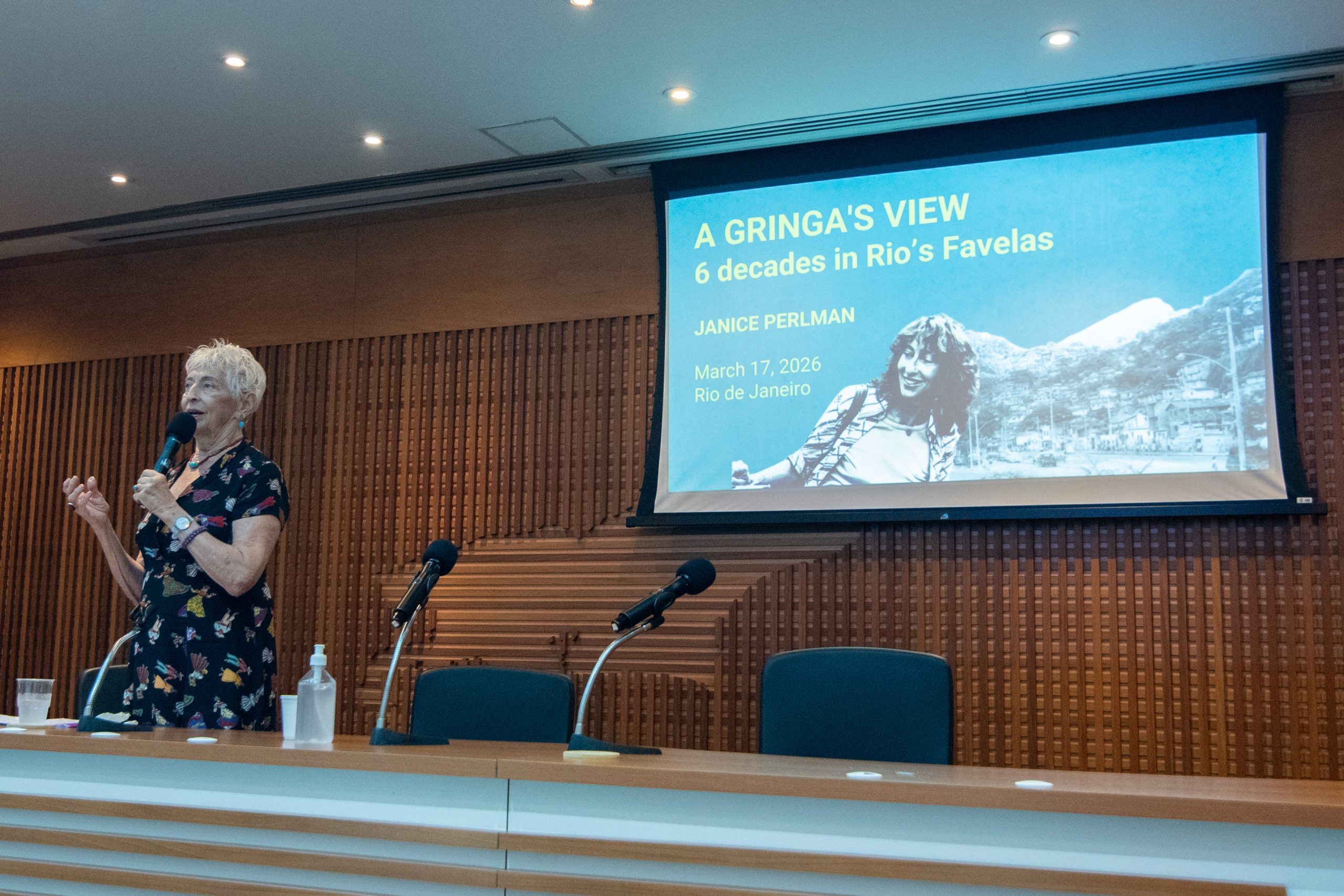
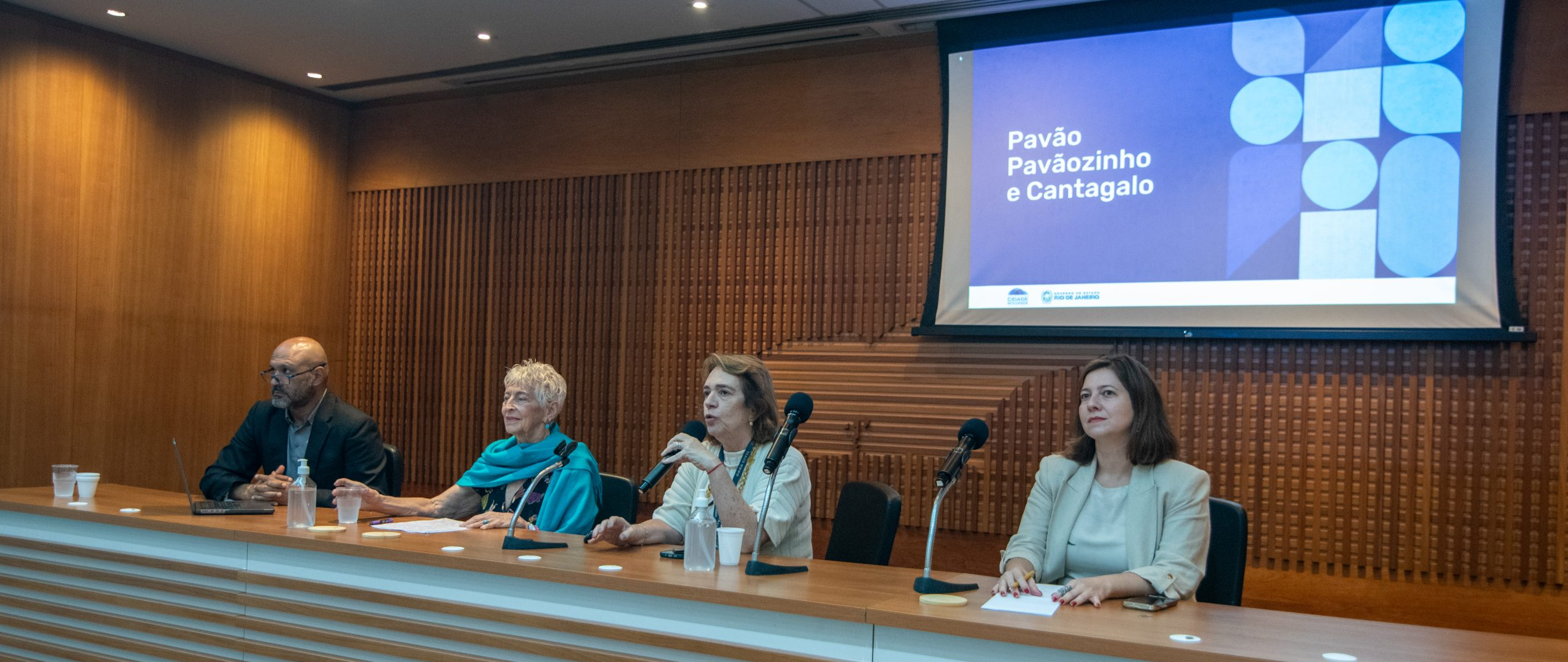
On the first day (17), in the auditorium attached to Guanabara Palace (the governor’s residence), lectures were delivered by two foreign anthropologists with decades of experience in favelas, Janice Perlman and Santiago Uribe, moderated by Sérgio Magalhães, founder of the Favela-Bairro favela upgrading program. They sought to debate current issues faced by the state of Rio, present Perlman’s research and understand the great success story of Medellín, Colombia, which was once known for extreme violence and has since become a reference for social urbanism. The afternoon ended with a site visit to the Pavão-Pavãozinho/Cantagalo favelas in Ipanema.
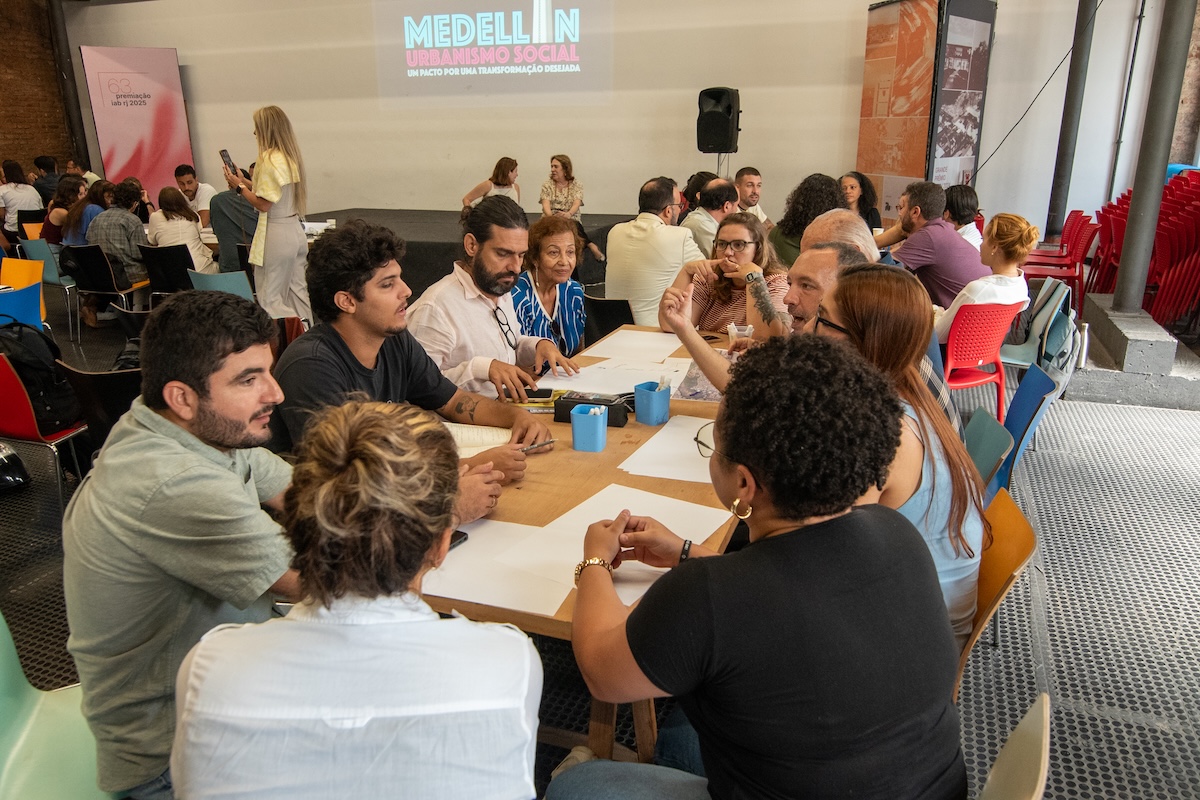
On Wednesday (18), the event was at IAB-RJ’s headquarters and began with a collaborative architectural workshop to plan an urban intervention in a public park. In the afternoon, the program concluded with a roundtable involving Marcelo Burgos, Janice Perlman, Gerônimo Leitão, Mario Brum, Pedro Abramo, Manoel Ribeiro and Sérgio Magalhães.
The talks given by the event’s protagonists often echoed similar reflections: to move forward with hope, thinking that the city is you, is me and that we already propose solutions through the projects we work on.
But in none of these spaces were the few favela residents and organizers in attendance—the primary experts—given the space, voice and attention they were due.
RioOnWatch went to the “international favelas conference” to hear these voices. Voices that only appeared at the end of the lectures, when the few residents and organizers present, the people who actually build and fight every day to improve these communities, expressed themselves on the microphone or during field activities. It is worth noting that these voices found the event promotions online: they were not intentionally invited.
The Event(‘s) Marginalized Voices (in Both Senses)
For decades, scholars have used favelas as a means for academic debate and experimentation, without significant return or collaboration with local residents. The favela residents who build their communities are left invisible in these processes, without permission to participate as the agents of multiple intelligences that they are, seen at most as sources of data and guides through alleyways, because planning is an object of academic and political interest, with a focus on infrastructure, overlooking a fundamental structure for existence: the individual, the human being.
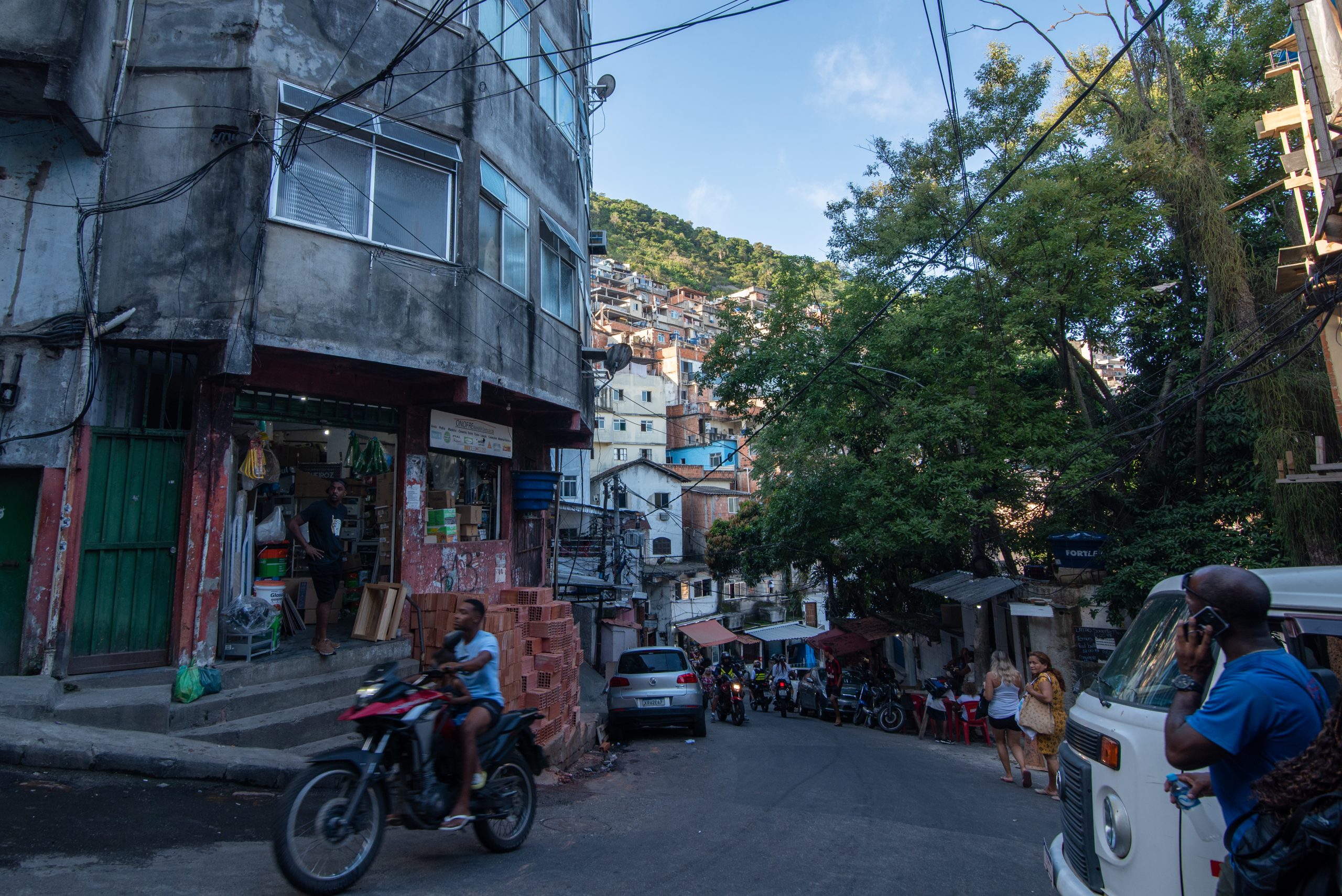
During the event’s site visit to recently renovated public facilities in Cantagalo [which the State is calling “multi-service complex” while residents still affectionately describe it as the Brizolão], in the shiny new space meant for residents’ coexistence and social projects, we came across a notice that, starting on March 26, it will also serve as a base for a Military Police battalion. Although promoted as the first public policy to address both public security and social infrastructure within a single framework, Integrated City is reminiscent of the Pacifying Police Units (UPPs), which, together with the UPP Social, were once described as a utopia. In the end, this program harmed residents’ physical and mental health, without dialogue in most of the affected communities.
During a brief walk through the community after this visit, we heard Daniel Alves, a resident of Seropédica, in Greater Rio’s Baixada Fluminense region, a specialist in the rights of socially vulnerable populations and a student of Architecture and Urbanism at the Federal Rural University of Rio de Janeiro (UFRRJ), talk about the poor implementation of urban policies in favelas.
“By implementing a project that brings infrastructure and upgrading to the favela, we imagine that improvements in sanitation, housing and safety will bring satisfactory results… Now, we have the program (Integrated City) in Pavãozinho… Despite the investment, we still see open sewage near the entrance connecting the community and the public facility, a buildup of trash and high demand, overloading the elevators, which, during peak hours, can have lines with waits lasting several minutes.” — Daniel Alves
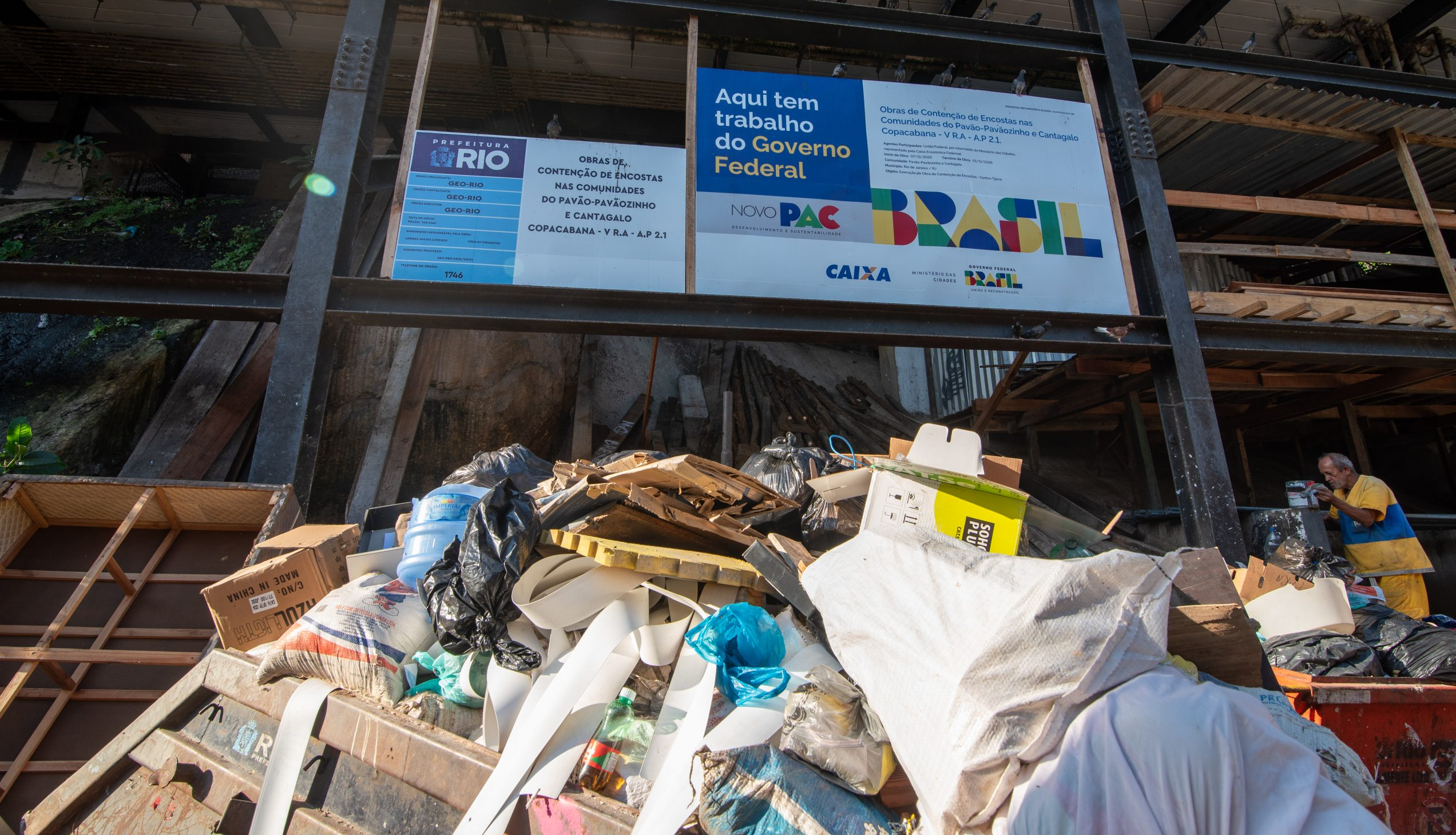
There is a wide gap between what is envisioned and what is implemented (guidelines that claim to seek improvements but do not materialize in the final outcome), typically resulting in the waste of public resources. This toys with the hopes of residents who dream of change that would bring adequate sanitation and other essential services for collective well-being, truly aligned with the Sustainable Development Goals (SDGs), in line with the United Nations’ 2030 Agenda call to action.
When looking at the timeline of projects, such as Rio Cidade (Rio City), Favela-Bairro (Favela-Neighborhood), Comunidade Cidade (Community City), Cidade Integrada (Integrated City) and the whole series of investments going back and recorded in the History of Favela Upgrades published here on RioOnWatch 13 years ago, one can see the discrepancy between the grand rhetoric of project launches, international publicity and the minimum change in everyday life. The city is built and defined by the logic of those on the outside—a large architectural model without resident participation, marked by urban intervention and the erasure of memory.
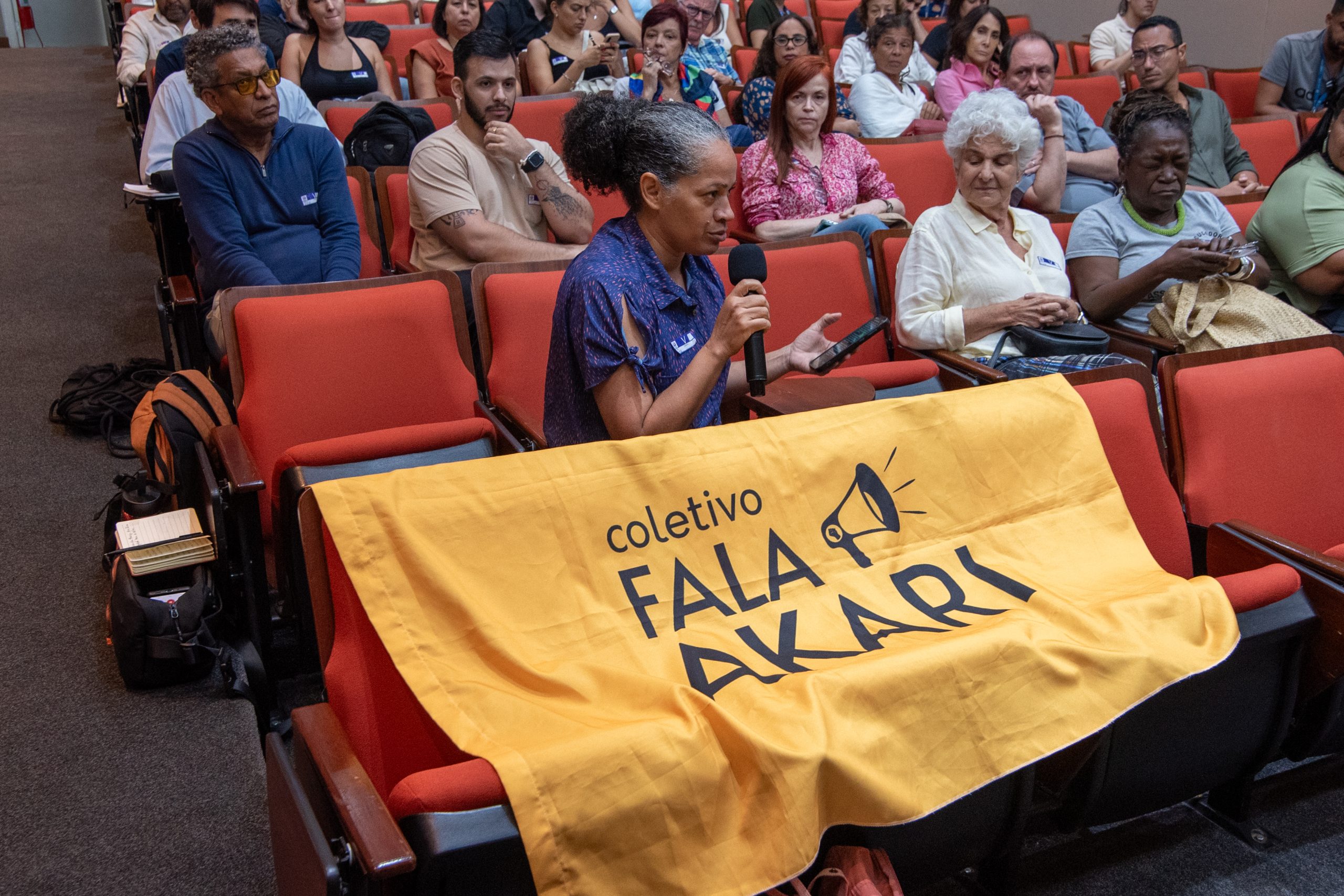
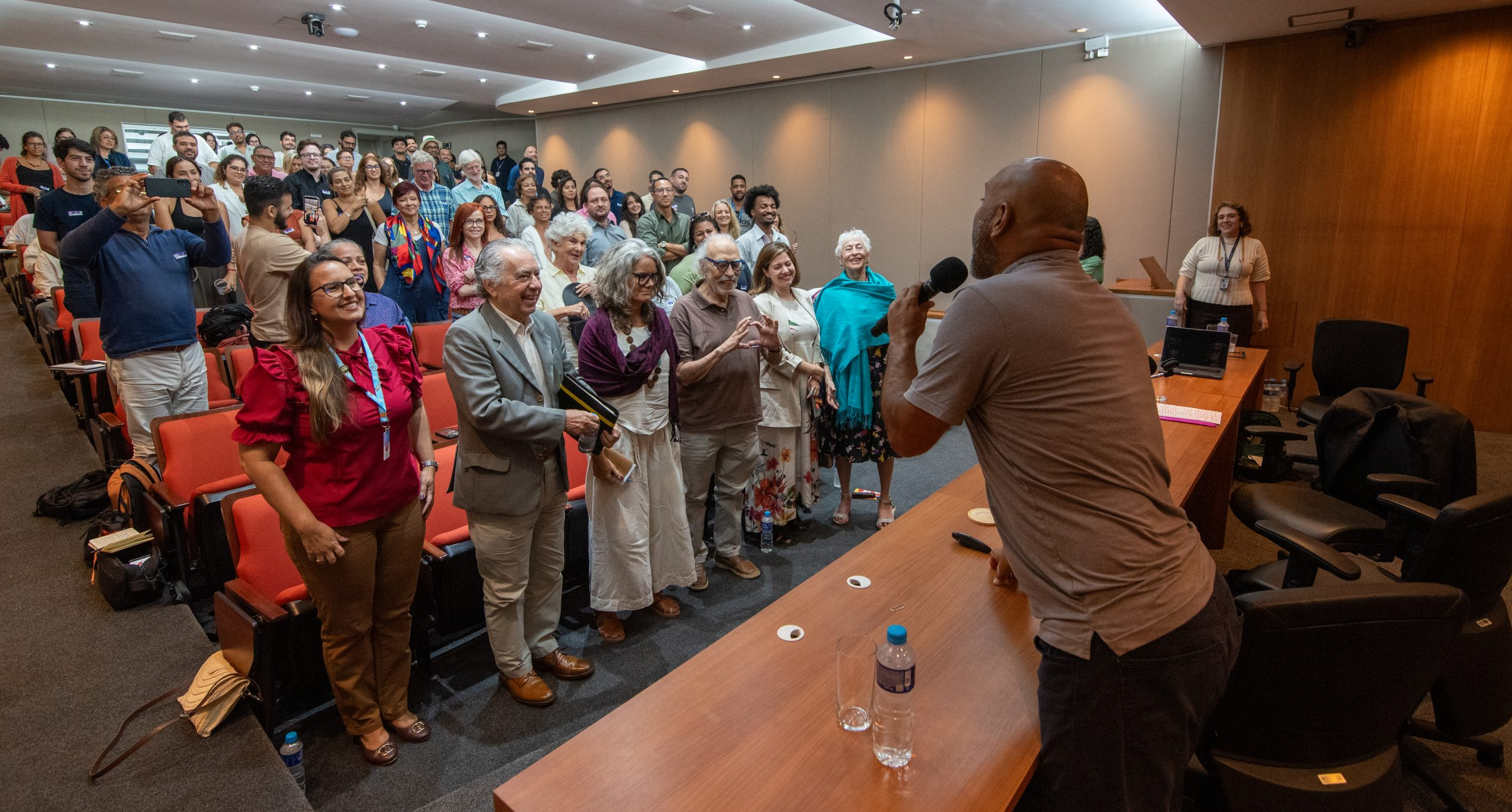
Zilda Soares, a resident of the Acari favela, among those in Rio with the lowest Human Development Index (HDI) numbers and increasingly impacted by desperate annual floods, is an organizer with the Fala Akari Collective, and attended both days of the event. At the end of the lectures on the morning of the first day, she gave a deep account of how the movement she is part of teaches care in favelas and is not limited to one-off implementation. It does so by preserving the memory of the struggles of mothers and grandmothers, through the political education of youth and the construction of narratives by local voices. She made reference to a previous statement by Uribe, who asked if there was a single young person or even someone up to 21 present. There wasn’t.
Research shows that, increasingly, grandmothers are taking charge of caring for their grandchildren in favelas, as a strategy of family resilience in the absence of the State, while experiencing overwork and invisibility. So, Soares asked: how can intergenerational care be put into practice alongside the work already being done by collectives? How can public policies and community agents simultaneously value the memory and leadership of mothers and grandmothers who have historically sustained our communities? And the main question is: what can the government learn from experiences such as Fala Akari’s to create policies rooted in the reality of the favela rather than in government offices?
I confess that, as a grassroots communicator and favela resident, when I arrived at the event, I expected a diverse conference built by favela residents—not the absence of residents and leaders. Even the panels lacked representation. The event positioned itself as a favela event, without favela representation or moderation. Favelas create solutions before governments and academia.
Therefore, the favela, which is young and Black, was represented only by a few who ventured to follow an Internet link to what was called the International Favelas Conference. The few in the audience were not invited.
The event was polished in discourse, well planned on paper, rhetorically developed, but poorly executed. What the organizers should have kept in mind is that the favela is rich in knowledge, needing support—not external validation. During the afternoon’s visit to the favela, policing was heavy: was it for the residents’ safety or to contain visitors’ fears? The State’s role should be collaborative, not as the gatekeeper of knowledge and access.
“The event used the name ‘International Favelas Conference’ to lend legitimacy to a security-driven government project… It wasn’t a slip-up, but the perfect distillation of the State’s policy for favelas: funding for hard infrastructure (and the police), crumbs of space for grassroots participation and lots of international shine to mask the absence of genuine listening.” — Zilda Soares, Fala Akari Collective
The event provided a platform for academia, with architects and urban planners, anthropologists, sociologists and others, including slides in English, but what about the favela resident? It’s unjust to debate the favela without favela residents. Debating a space without those who belong to it. Because keeping us invisible isn’t politics, it’s the reproduction of the elite’s eloquent enthusiasm that seeks ‘solutions’ without us.
After several failed public policies for favelas, the state of Rio de Janeiro should have already learned from its mistakes and invited those whose daily life is in their favelas.
About the author: Charlie Gomes currently studies journalism at Unesa. A radio host by training, he is a climate activist and an intern in parliamentary communication at Rio de Janeiro’s State Legislative Assembly (ALERJ). The son of northeastern Brazilians, he was born and raised in the Rocinha favela.