
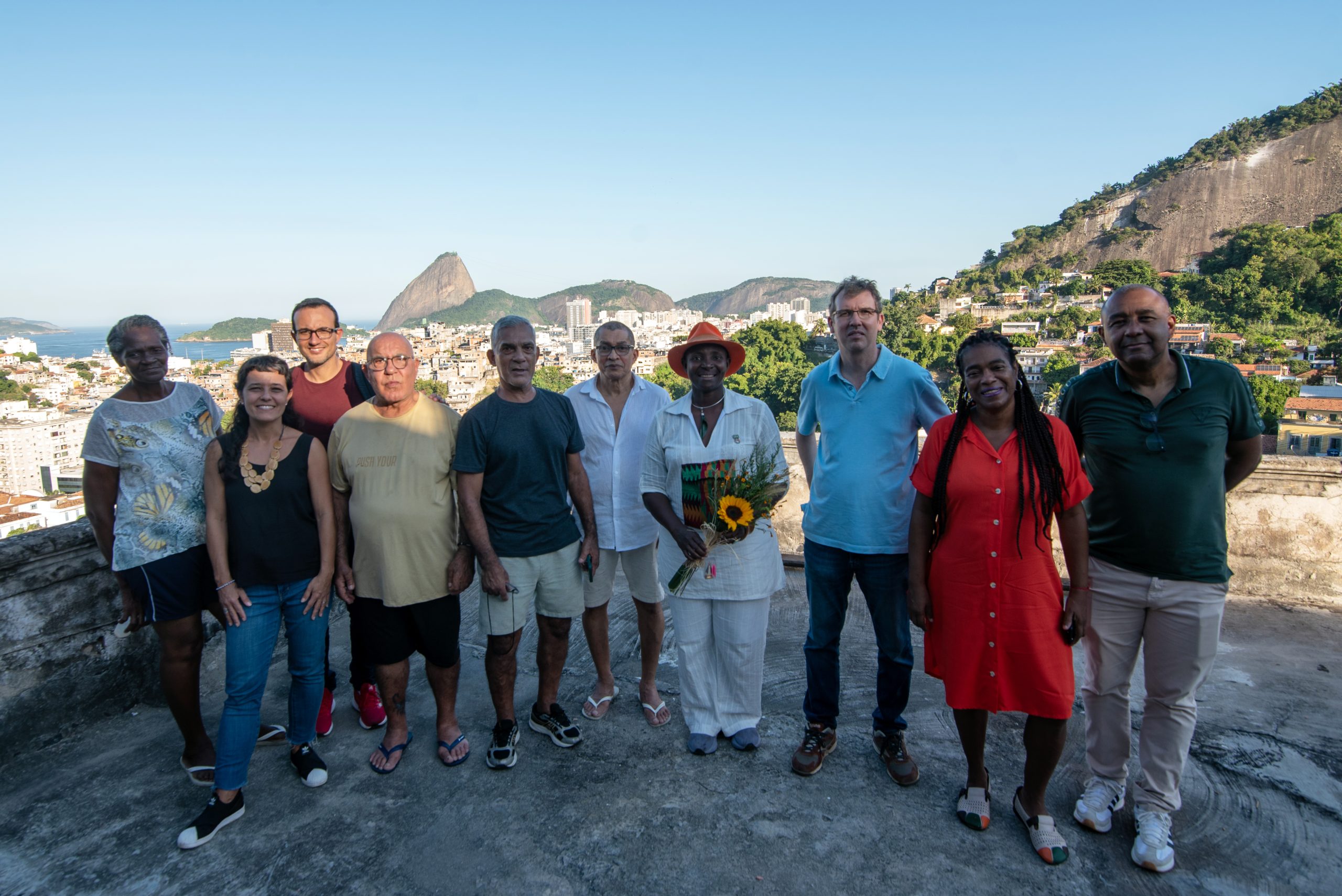

Residents of the Cândido Mendes Mansion in Santa Teresa, a neighborhood in central Rio de Janeiro, received a distinguished visitor on May 7, Her Royal Highness Princess Abze Djigma of Burkina Faso.
The visit took place so she could meet residents and learn about the history behind the occupation. During her time in Rio, the princess also visited Rocinha in Rio’s South Zone, and gave a lecture inaugurating the Sustainability and Urban Resilience in Engineering Hub (SURE), in partnership with the United Nations University (UNU), at the Pontifical Catholic University of Rio de Janeiro (PUC-Rio).
Ver essa foto no Instagram
Abze Djigma is internationally known for her work on climate justice and social inclusion. She has visited Brazil before, including in 2025 at COP30 in Belém. She is a leading figure in advancing solutions for countries in the Global South, particularly around sustainable development, energy and climate.
A descendant of Princess Yennenga, a historical figure central to the founding of the Mossi people, Djigma carries within her ancestry the strength of this great warrior. Through her work, she founded the H.R.H. Princess Abze Djigma Foundation, whose primary mission is to improve the lives of women and youth.
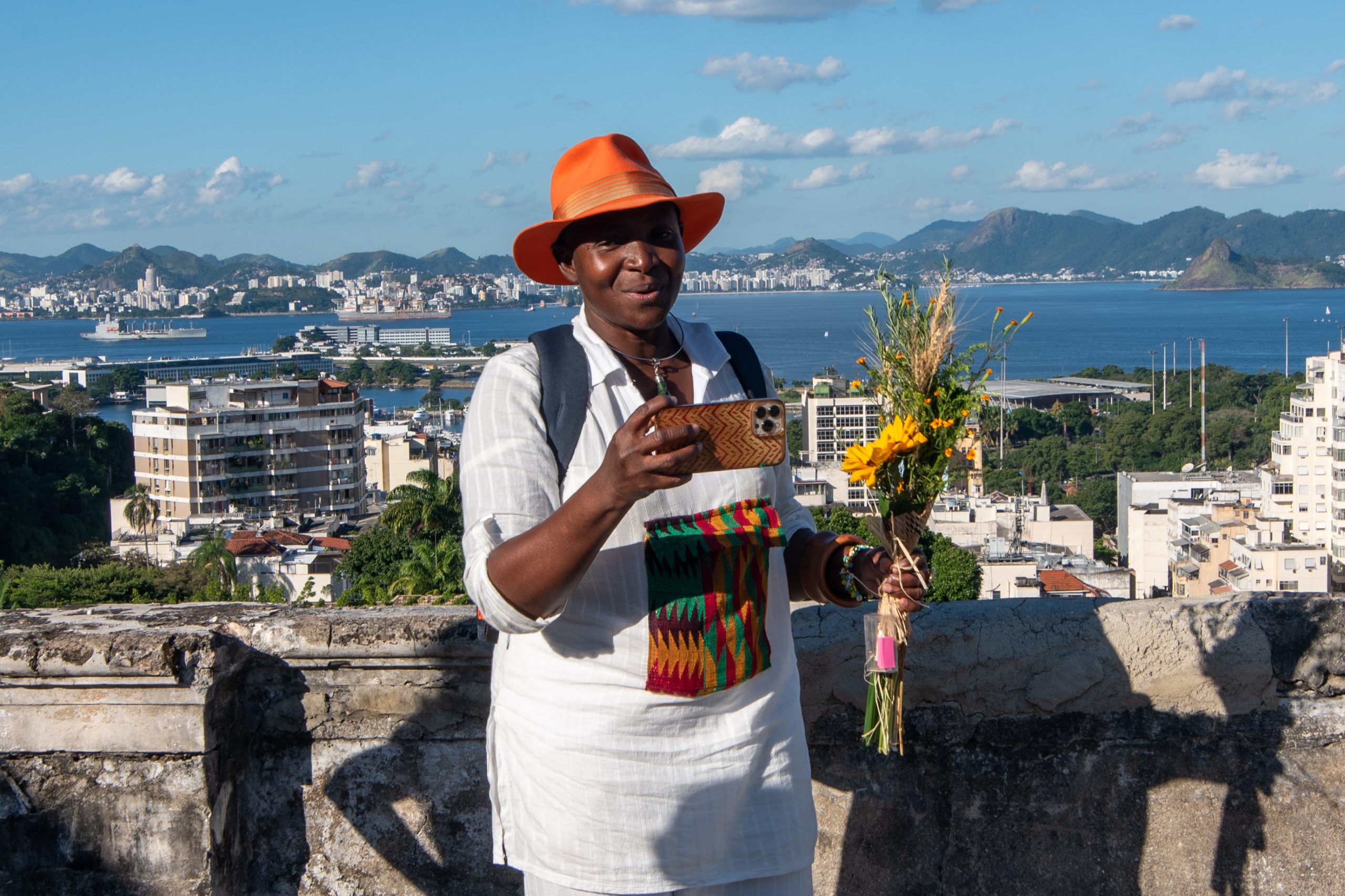
Accompanied by professors from PUC-Rio, the princess arrived at the Cândido Mendes Mansion on the afternoon of Thursday, May 7, to learn about the residents’ history and struggle. Most have lived in the building for over 30 years and are seeking recognition of the property as social interest housing by Brazil’s Secretary of Federal Patrimony (SPU), as recently reported by RioOnWatch.
Present during the visit to the Cândido Mendes Mansion, professor Daniel Cardoso, from PUC-Rio’s Department of Civil and Environmental Engineering, emphasized that the technical allies supporting the occupation take an interdisciplinary approach in assisting residents with legal, social, environmental and structural issues. He believes the Princess’s visit to the occupation could “help draw attention to the mansion’s challenges within the context of the recently signed and launched United Nations University initiative and the Sustainability and Urban Resilience in Engineering Hub, with the support and engagement of the Princess, who serves as an advisor and has a close relationship with the UNU and the UN itself.”
Upon arriving at the Cândido Mendes Mansion, Abze Djigma was welcomed by a delegation of residents who highlighted the historical and social dimensions of their struggle for housing. The building’s structural issues, as well as ongoing difficulties in communicating with the government and the SPU were also discussed.
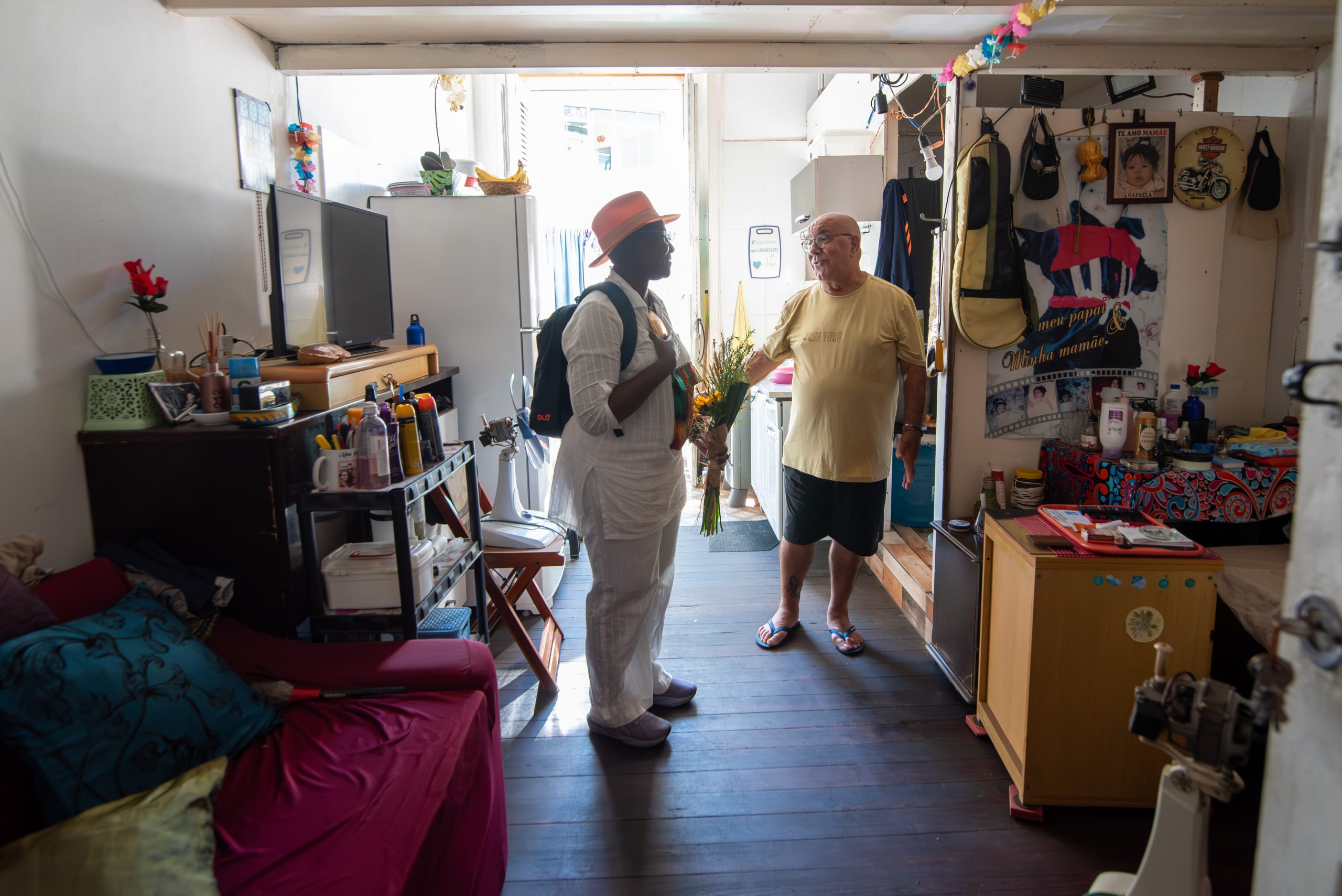
One of the residents to open his home to the Princess was Joel Antunes, who speaks French. He showed her his apartment and the view from the rooftop terrace.
International Solidarity as a Fighting Tool
Lucinalva de Sousa Santos, a resident since 1997 and member of the Cândido Mendes Mansion Residents’ Association Council, viewed Princess Abze Djigma’s visit as an important contribution to the group’s fight to remain in the building:
“What can I say about the privilege of having Her Royal Highness Princess Abze Djigma in our mansion? It’s an enormous form of representation and deeply important to our fight. She is an icon for Black people, who make up the vast majority [of residents] here. We are deeply grateful for her visit and thankful to the people who made it possible. I hope Princess Abze’s visit can help carry our story forward and that it can become a cause she chooses to champion. And may NGOs and other partners come to support us in this fight, which has grown so large.”
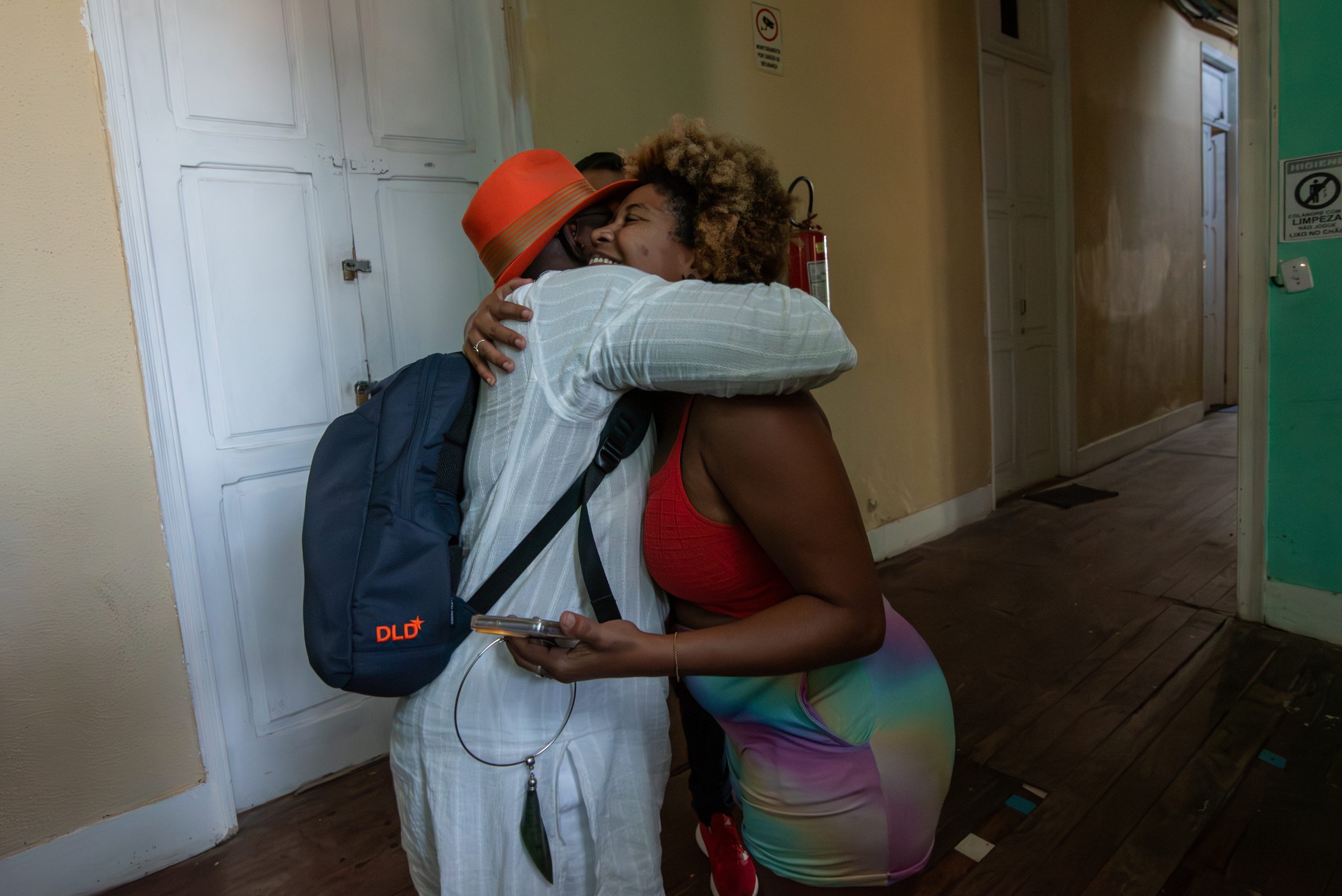
Andreia Brasil, an entrepreneur, ambassador for Black Brazilian Mothers—an online platform that promotes the economic support, training and empowerment of Black mothers—and daughter of Cândido Mendes Mansion resident Dona Valquíria Brasil, with whom she runs Afrokiry, an African-themed jewelry workshop, wanted to give Princess Abze Djigma a hug and a gift as soon as she learned of her visit.
“I felt deeply honored to know that a princess from Africa, from my ancestral homeland, was visiting my country and the mansion, home to families in great need of support. I decided to gift her a necklace handmade by me. I gave it to her and she immediately took off hers and put on mine. She was very open. Even though she didn’t speak my language and I didn’t speak hers, we still managed to communicate incredibly well. She was very polite and very kind.” — Andreia Brasil
Maíra Martins, professor in PUC-Rio’s Department of Architecture and coordinator of the Interdisciplinary Research and Extension Center for Collaborative Social Interest Projects and Practices (COLABIS), believes the visit has implications that go beyond raising awareness about the situation at the Cândido Mendes Mansion.
“Princess Abze Djigma’s remarks are important not only for bringing visibility to the struggle of the residents of the Hotel Moderno Mansion, but also for drawing attention to the discussion around the human dynamics of socio-spatial segregation in Rio de Janeiro. What she is pointing to is a historical process that has been reproduced in the city for a long time. It’s also a process that can be observed in other capitals around the world: the appreciation of certain areas and the resulting displacement of more vulnerable residents once those areas begin to increase in [market] value.” — Maíra Martins
At the end of the visit, on the rooftop terrace overlooking Guanabara Bay and Sugarloaf Mountain, Princess Abze Djigma spoke about the importance of resisting gentrification and real estate speculation in major cities.
“We’re here in an area that attracts the interest of investors. This is the former Hotel Moderno, an old hotel that was abandoned. Residents occupied the space and want the city government to take action to ensure they can stay here. We cannot allow cities to be emptied of their true citizens, as is the case in so many capitals. When residents leave, the soul of the city leaves with them. What makes Rio Rio is the carioca people, samba, dance and its vitality. But if we don’t take care of them, all of the energy that draws people to Rio will disappear.” — Princess Abze Djigma
View the Full Photo Album Here:

About the author: Bárbara Dias was born and raised in Bangu, in Rio’s West Zone. She has a degree in Biological Sciences, a master’s in Environmental Education, and has been a public school teacher since 2006. She is a photojournalist and also works with documentary photography. She is a popular communicator for Núcleo Piratininga de Comunicação (NPC) and co-founder of Coletivo Fotoguerrilha.