
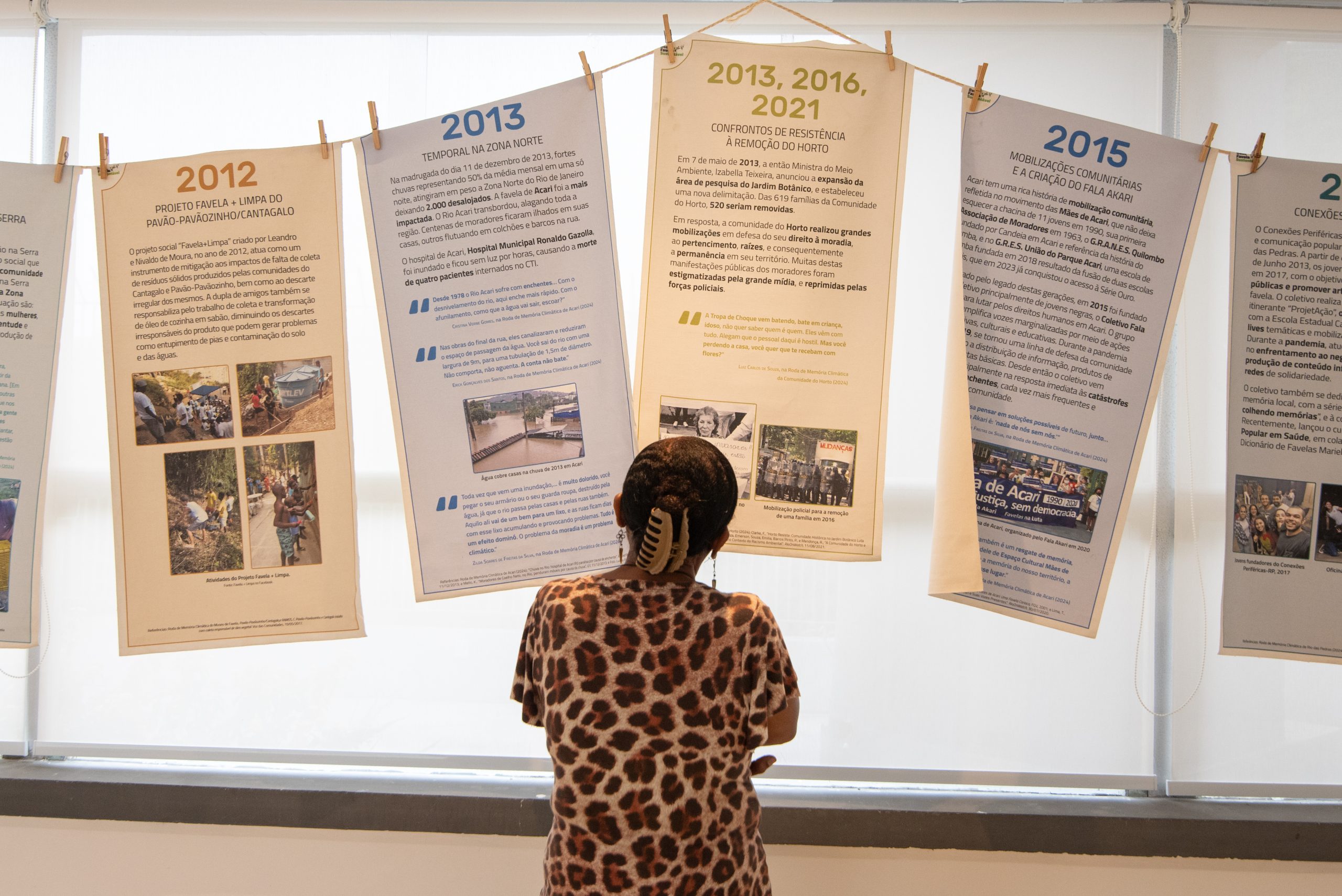

The ‘Favela Climate Memory’ exhibition returned to the Favela Museum (MUF) during Brazil’s 24th Annual National Museum Week, now presented in its complete form. Organized by eleven museums and memory project members of Rio’s Sustainable Favela Network (SFN)*, the installation, featuring 60 timeline panels, 13 banners and other objects, opened to the public in the heart of Rio de Janeiro’s South Zone on May 19 after spending three months in Santa Cruz, in the city’s West Zone. It will remain open through July 30, Tuesday through Saturday, from 10am to 5pm, at the museum’s headquarters, located at Rua Alberto de Campos, 12, 4th floor, in Ipanema. Schedule a visit here.
Márcia Souza, co-founder of the Favela Museum in the Pavão-Pavãozinho and Cantagalo favelas (known by the acronym PPG), spoke about the importance of hosting the exhibition once again at MUF and about the process behind the climate memory circles that informed the exhibition, held in ten favelas across Rio de Janeiro.
“I’ve been part of building the Sustainable Favela Network and the climate memory circles, and of this integration with all the other favelas across Rio de Janeiro. Bringing this exhibition back here, now, this time in its complete form, is very important to me because it was built collectively. It comes from deep within us, from that intimate place where we spoke about everything we went through in the past and everything we learned from those experiences. And today, this whole issue of climate is out there—something we don’t control and can’t prevent, but something we can prepare for. These issues [climate change] are here; how are we going to deal with them? And all of this is grounded in the experiences of several generations: young people listening to their elders [and elders listening to the young]… It’s wonderful to be part of this!”
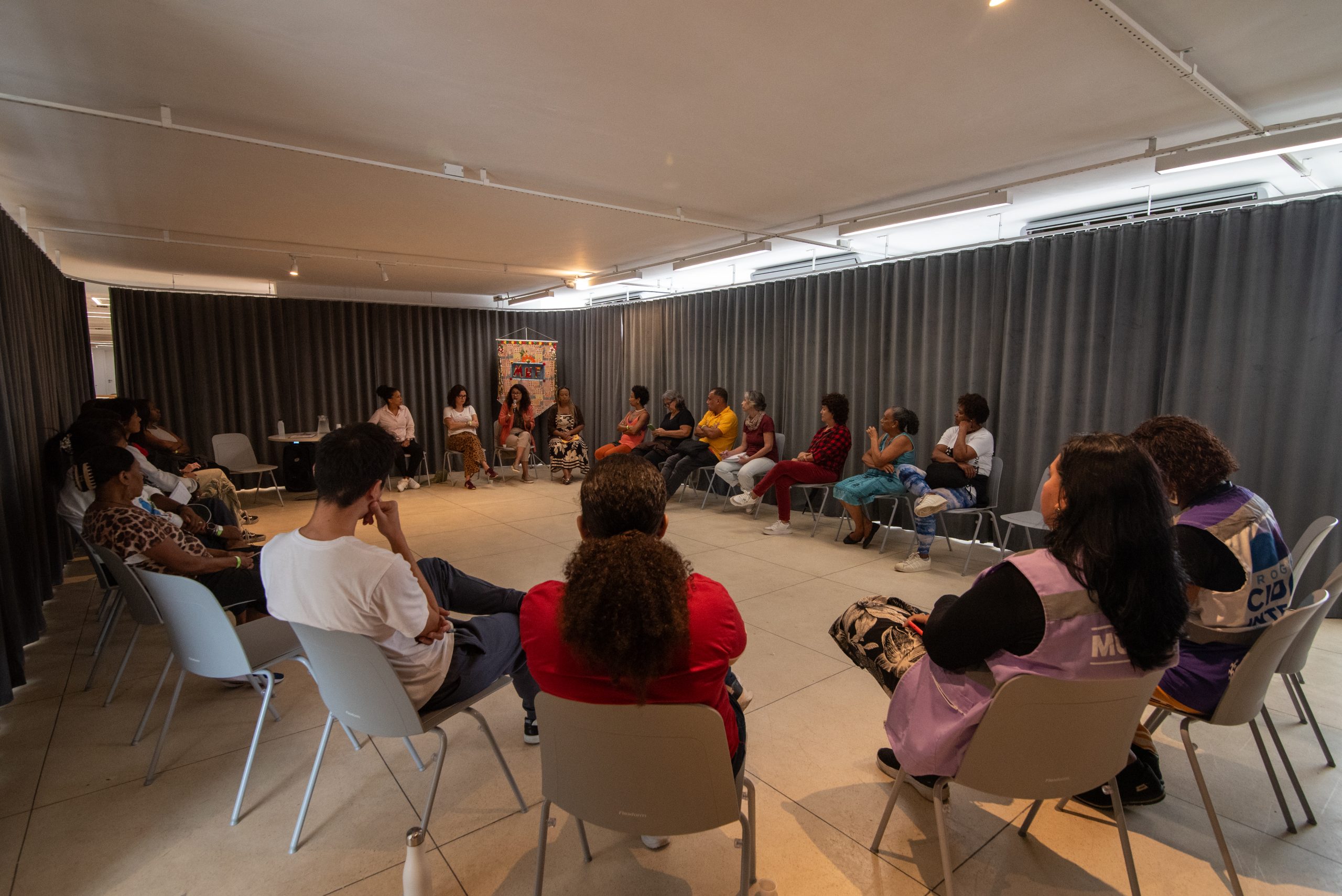
During the opening of the exhibition at MUF, “dialogues on the network for the protection of women, support pathways and protective leadership” took place, organized by the Operational Support Center for the Prosecutors’ Offices of Domestic and Family Violence Against Women (CAOVD) of the Rio de Janeiro State Public Prosecutor’s Office (MPRJ). Public prosecutor and deputy coordinator of CAOVD/MPRJ, Eyleen Marenco, alongside social workers Rosangela Pereira and Jaqueline de Souza, brought together a group of women residents and community leaders for a discussion on their work fighting gender-based violence. Elizabete Pereira, second director of the current MUF administration, spoke about the importance of the event and the opening of the exhibition:
“It was a really interesting exchange, especially because it took place at the same time as the opening, right when we were welcoming the Favela Climate Memory exhibition back. I was able to take part in setting it up, and it’s incredible to see everything that has been added to the favelas’ memories and how different, and yet so alike we all are. And there are so many solutions. So I’m looking forward to continuing to explore the exhibition, and I’m very happy about this partnership, with this work alongside MUF.”
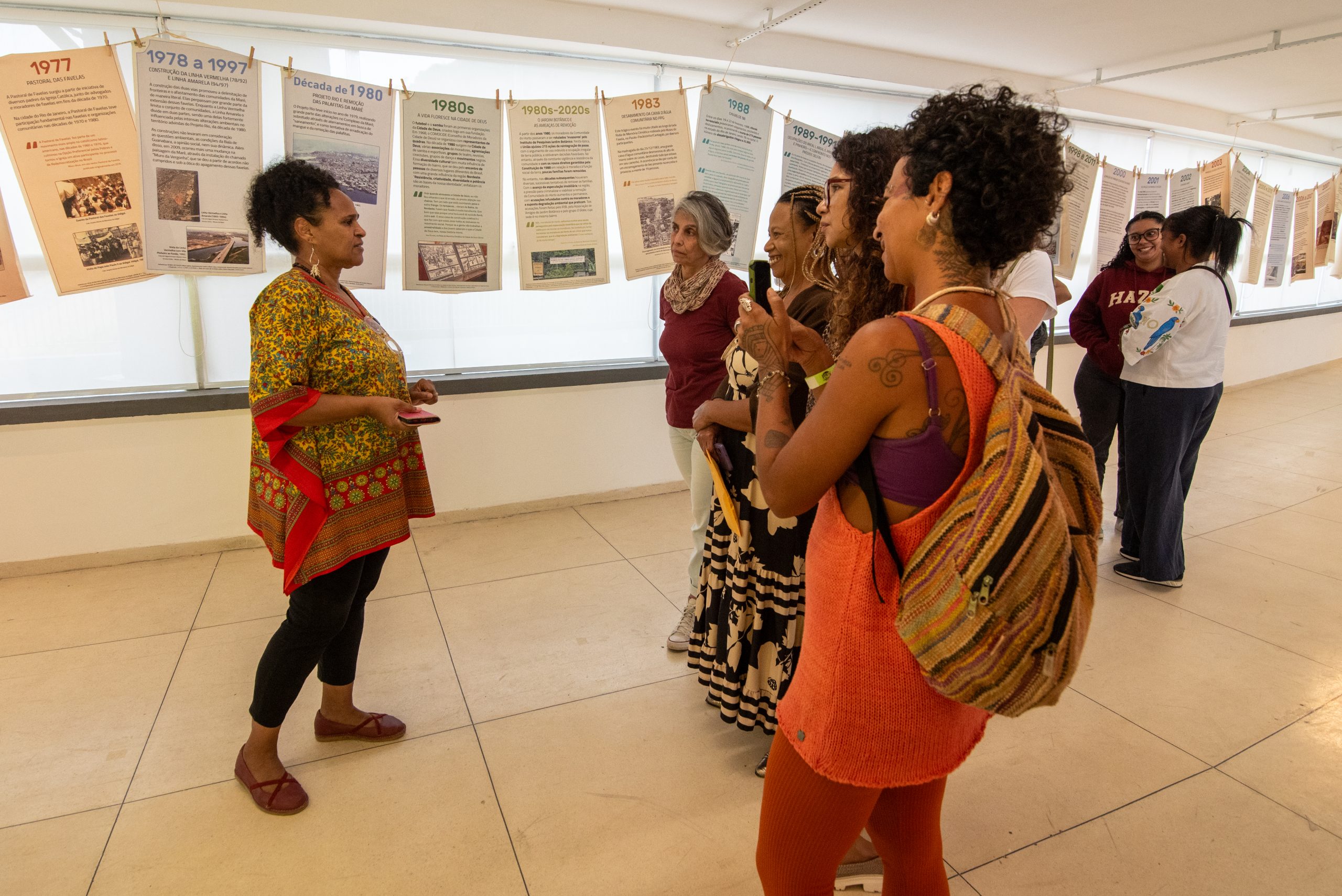
After the discussion circle, participants took part in a guided tour of the exhibition led by Souza in the newly renovated Favela Museum space. Souza described how the exhibition came together:
“This exhibition was created through discussion circles. We held ten of them—five at first (in 2023), then another five (in 2024). We talked about what climate is and how it has affected us over time. Everyone talked about the tragedies and about how people found ways to deal with them. There are people from different places who went through the same things, but in different ways. And we ended up realizing that we were united, you know? [Both within each favela and among the favelas that participated] we’ve lived through all kinds of situations and learned how to survive so that today we can tell others how we survived and what we can do. So, to me, climate memory is this: living and feeling what was experienced in the past and recounted through our elders, while younger generations create new solutions instead of simply waiting for the government.”
Larissa Itaboraí, a journalist and MUF volunteer, said she was impressed by the exhibition’s content:
“Today, we took part in a very interesting discussion and now we’re being introduced to this exhibition. I have to admit I was impressed by the amount of information contained in these panels. The way Márcia [guided us] also really moved me. She’s someone from here, one of MUF’s founders. We talk a lot about climate change in terms of forests and water. But when we move from the macro to the micro and look at how favelas are affected, we can see environmental racism and climate racism.”
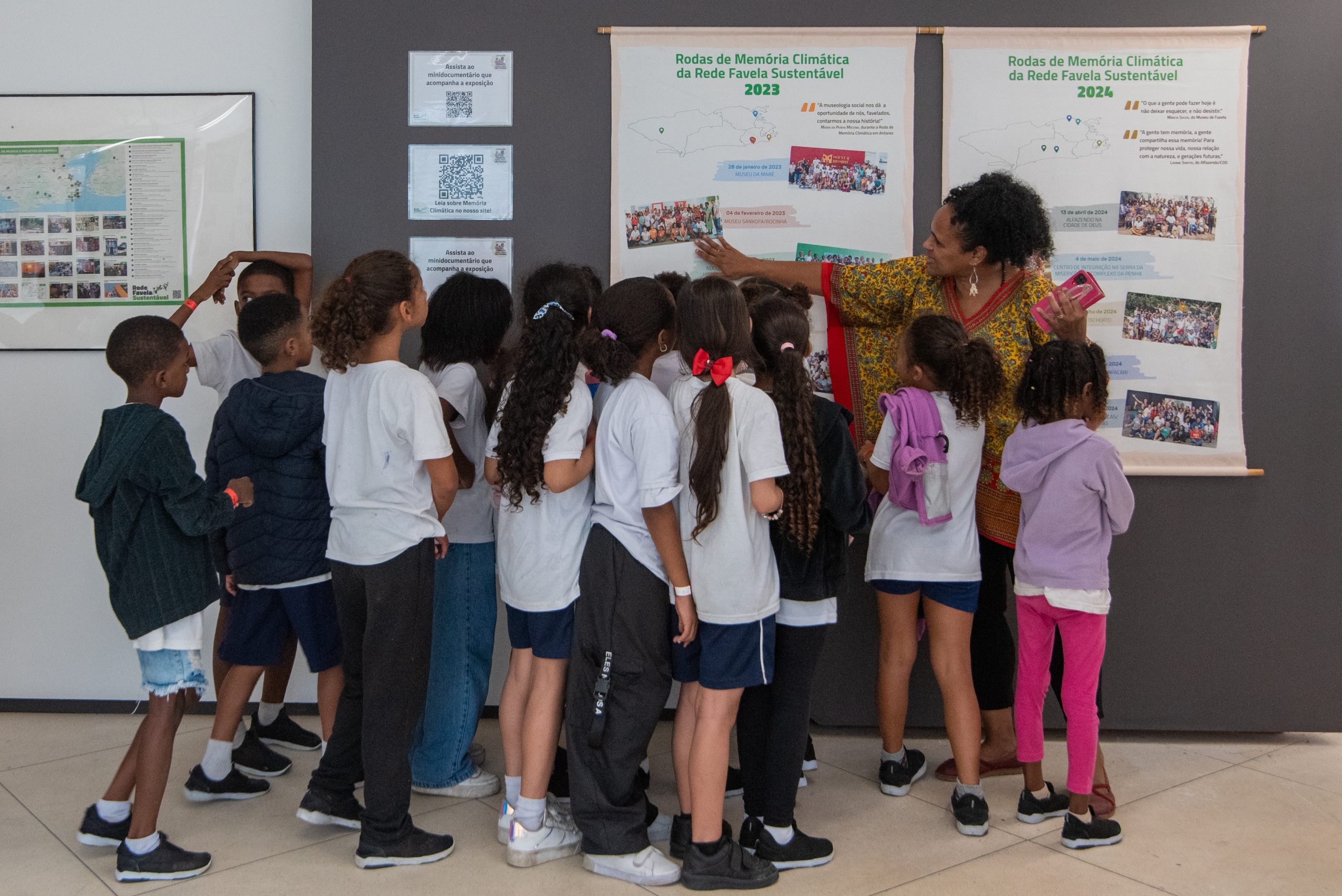
On the same day, the exhibition was visited by 20 third-grade students from President João Goulart Municipal School, also located in PPG. Accompanied by their teacher, the young visitors were guided by Márcia Souza through the installation. At the end of the tour, they left messages on the interactive map that is part of the set up. Souza commented on the importance of children visiting the exhibition:
“When we bring this information for them to look at, touch, hear and see, it’s incredibly important. They engage with it and understand that they, too, can take part in building a solution. So when a child sees the exhibition and understands what surrounds them, they interpret it in their own way, without any interference—it’s just them and their perspective.”
The ‘Favela Climate Memory’ exhibition is on display at the Favela Museum, located at Rua Alberto de Campos, 12, 4th floor, in Ipanema, Rio de Janeiro, through July 30. Visitors are welcome Tuesday through Saturday, with entry permitted between 10am and 5pm.
View the Full Photo Album:

*The Sustainable Favela Network (SFN) and RioOnWatch are projects of Catalytic Communities (CatComm).
About the author: Bárbara Dias was born and raised in Bangu, in Rio’s West Zone. She has a degree in Biological Sciences, a master’s in Environmental Education, and has been a public school teacher since 2006. She is a photojournalist and also works with documentary photography. She is a popular communicator for Núcleo Piratininga de Comunicação (NPC) and co-founder of Coletivo Fotoguerrilha.