
Clique aqui para Português
This article is part of a series on the 2026 Brazilian elections, focusing on the perspectives of Greater Rio’s favelas.
Whether in 1995 or 2025: The ‘Wild West Bonus’ Is an Electioneering Measure
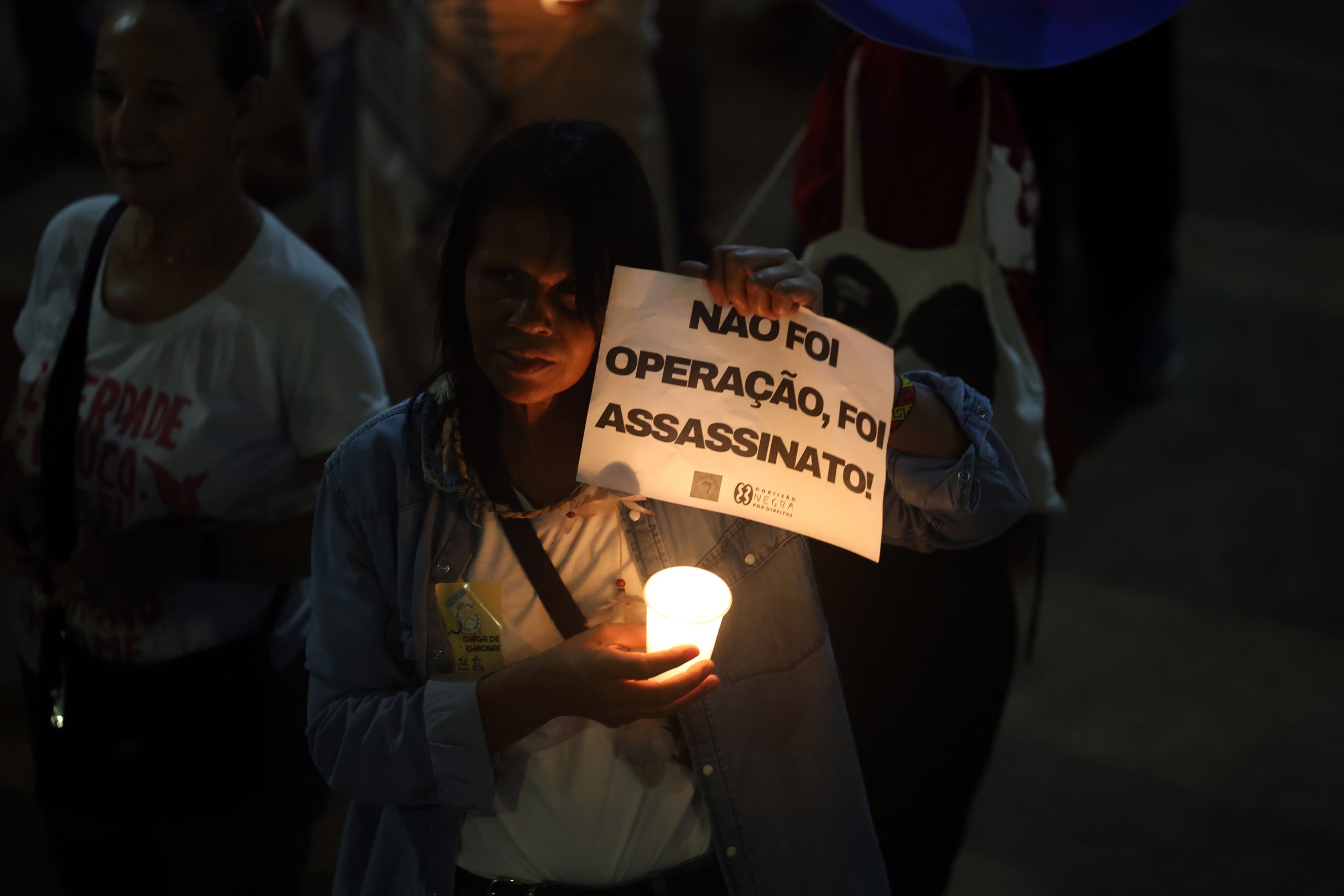
In September 2025, lawmakers aligned with former Governor Cláudio Castro in the Rio de Janeiro State Legislative Assembly (ALERJ) introduced a bill to reinstate a measure first established in 1995 and abolished in 1998: the ‘Wild West bonus.’ Bill 6027/2025 rewards police officers who carry out extrajudicial executions of suspects. The bonus, ranging from 10% to 150% of officers’ salaries, has sparked outrage and protests. Activists also view it as an electioneering measure.
Although the bill was vetoed by then-Governor Cláudio Castro, the veto was overturned by his own base through a political maneuver within ALERJ. State Deputy Dani Monteiro, then-chair of ALERJ’s Human Rights Commission, said that the vote, approval, veto and subsequent overturning of the veto on the ‘Wild West bonus’ were met with surprise by all members of the commission, which was not even consulted.
“The whole thing was a political maneuver. Cláudio Castro, who is now ineligible to run for office, led the largest massacre in the state of Rio de Janeiro in the favelas of Complexo do Alemão and Complexo da Penha [in the North Zone]. It was a true bloodbath… We were shocked by the sudden vote and approval of the ‘Wild West bonus’ and quickly filed a legal action to block such an arbitrary law, which proved completely ineffective in the past. It has been proven time and again that this is no way to fight crime. The ‘Wild West bonus’ would not only further increase police lethality but also encourage bad public officials involved in organized crime to commit homicides without the risk of being punished. And the state of Rio de Janeiro already holds the record for killings by public security agents.” — Dani Monteiro
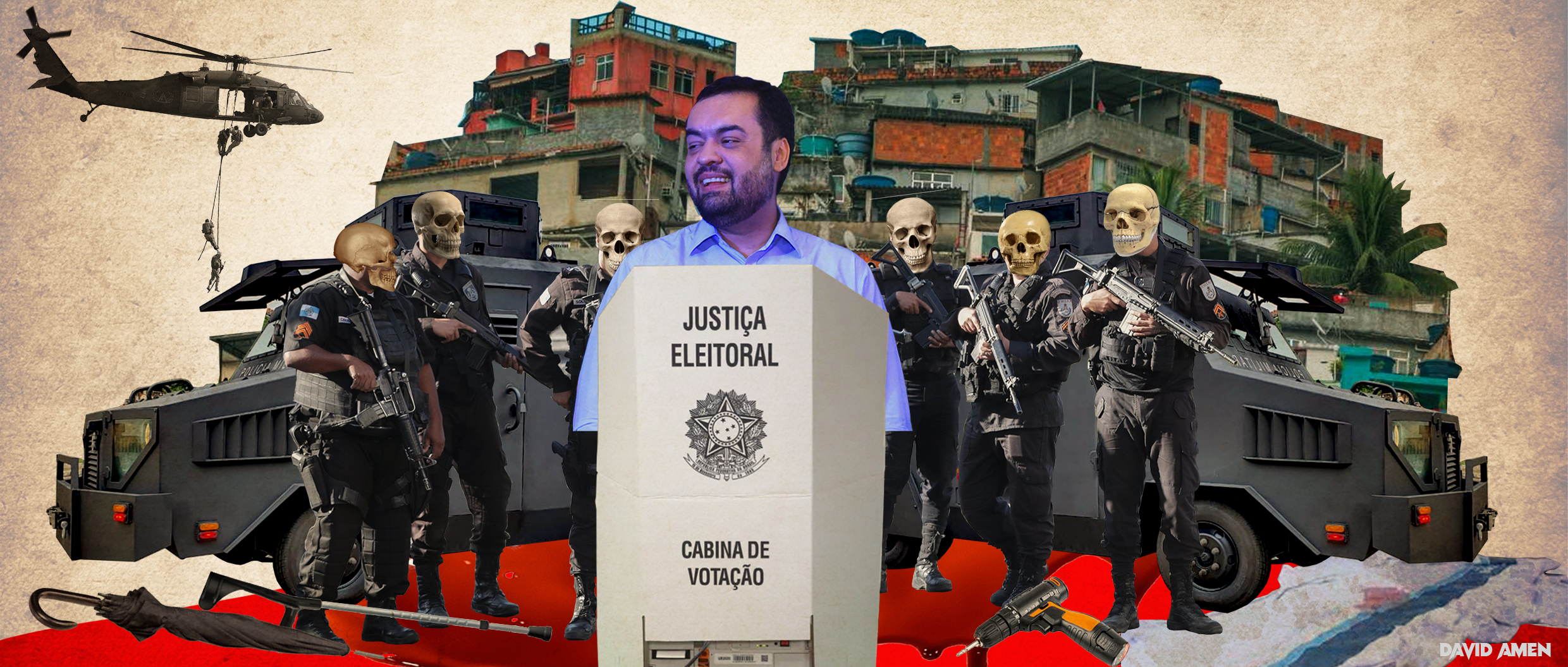
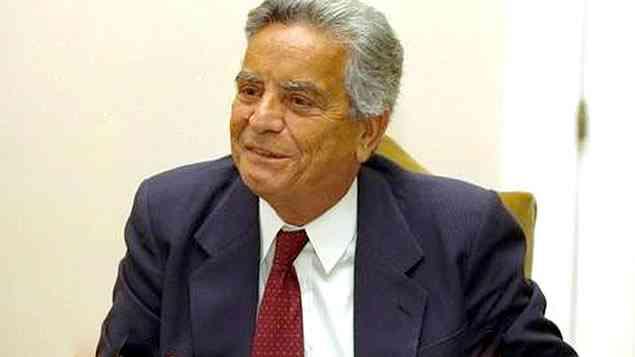
Originally created by then-Governor Marcello Alencar (1995–1999) in 1995, early in his term, the ‘Wild West bonus’ rewarded military and civil police officers for neutralizing criminals and for so-called ‘acts of bravery.’
Elected with the support of President Itamar Franco (1990–1994), Alencar appointed retired Army General Nilton Cerqueira to head public security in the state of Rio. In doing so, the governor chose to resume the policy of confrontations in favelas, which had been rejected by his predecessor, Leonel Brizola.
To reward the officers who killed the most in these confrontations, Marcello Alencar created a bonus for civil and military police officers, nicknamed the ‘Wild West bonus.’ The logic behind the bonus was this: since there was corruption within the police force, it was believed that if officers were offered money to engage in confrontations, they would refuse money from organized crime.
Guilherme Pimentel Braga, lead attorney for DefeZap, a service that provides access to justice and documentation in cases of State violence in Rio de Janeiro, highlights the countless ways in which this system can be abused:
“They sell it as a solution, but it’s a false solution; in fact, it’s part of the problem. Police lethality actually strengthens criminal factions. Studies already demonstrate this; Cambridge University itself published a study last year showing that State violence—especially police lethality—strengthens factions. And we can look at this in various ways. For example, police lethality can be a way of eliminating witnesses—in other words: security agents involved in crime who boost criminal activity, executing people who, if arrested alive, could expose criminal schemes that strengthen factions. Aside from silencing people, another example is that police killings can be a mechanism for increasing the amount of protection money, right? If the police suddenly decide to increase the amount they extort—that is, the money they charge for protection—and the gang refuses to pay, then they go in and, through police lethality, force the people involved in crime to pay more, you see? Or it could even involve a murder-for-hire service, a hitmen scheme: in other words, we get paid by one faction to kill people from other factions. Or [the police] selling out a favela [dominated by one faction] to another.
We know that police lethality is, in fact, a mechanism that intensifies crime in peripheral areas. And we also know that the people controlling these areas aren’t the ones paying protection money. The people in control are the ones receiving protection money. So this whole debate about ‘let’s rid these areas of factions’ is a false one. They create both the problem and the solution. We know how weapons end up there.”
![During a protest led by favela residents after the massacre on October 31, 2025, in Complexo da Penha, the sign reads: “[Favela] residents are not criminals.” Photo: Vinícius Ribeiro](https://rioonwatch.org/wp-content/uploads/2026/08/According-to-one-of-the-most-recent-surveys-87-of-Rios-favela-residents-support-the-police-operation-that-resulted.jpeg "During a protest led by favela residents after the massacre on October 31, 2025, in Complexo da Penha, the sign reads: “[Favela] residents are not criminals.” Photo: Vinícius Ribeiro")
Just as in the run-up to the 2026 elections, back in the 1990s, the Wild West bonus was accused of being an electoral ploy and populist. Marcello Alencar was accused of offering a simplistic and supposedly quick fix for a historic crisis. Others criticized the government for merely seeking to inflate “police productivity” metrics without actually improving public safety conditions. Above all, the measure was seen as a desperate attempt to mask the lack of a public safety strategy, intelligence capabilities, infrastructure and better pay for police officers.
In addition, within police ranks, the measure was also criticized for distorting hierarchy. In the 1990s, officers complained that the bonuses allowed subordinates to earn more than their superiors, discouraging criminal investigation and intelligence work, which was more methodical, efficient and safer, but did not yield direct financial gain for officers.
Another unexpected effect that also contributed to the unpopularity of Marcelo Alencar’s administration was the perversion of policing fueled by the Wild West bonus. As a result, death squads grew stronger and found a source of public funding for their activities, especially in the Baixada Fluminense and the rest of the Greater Rio region.
And it was precisely due to this controversial history and its limited effectiveness in fostering a sense of security and improving public safety indicators that, shortly thereafter, during Anthony Garotinho’s administration (1999–2002), State Deputy Carlos Minc (PSB) succeeded in getting the State Legislative Assembly to approve the elimination of the Wild West bonus.
Ver essa foto no Instagram
Wild West Bonus: First as Tragedy, Later as Farce
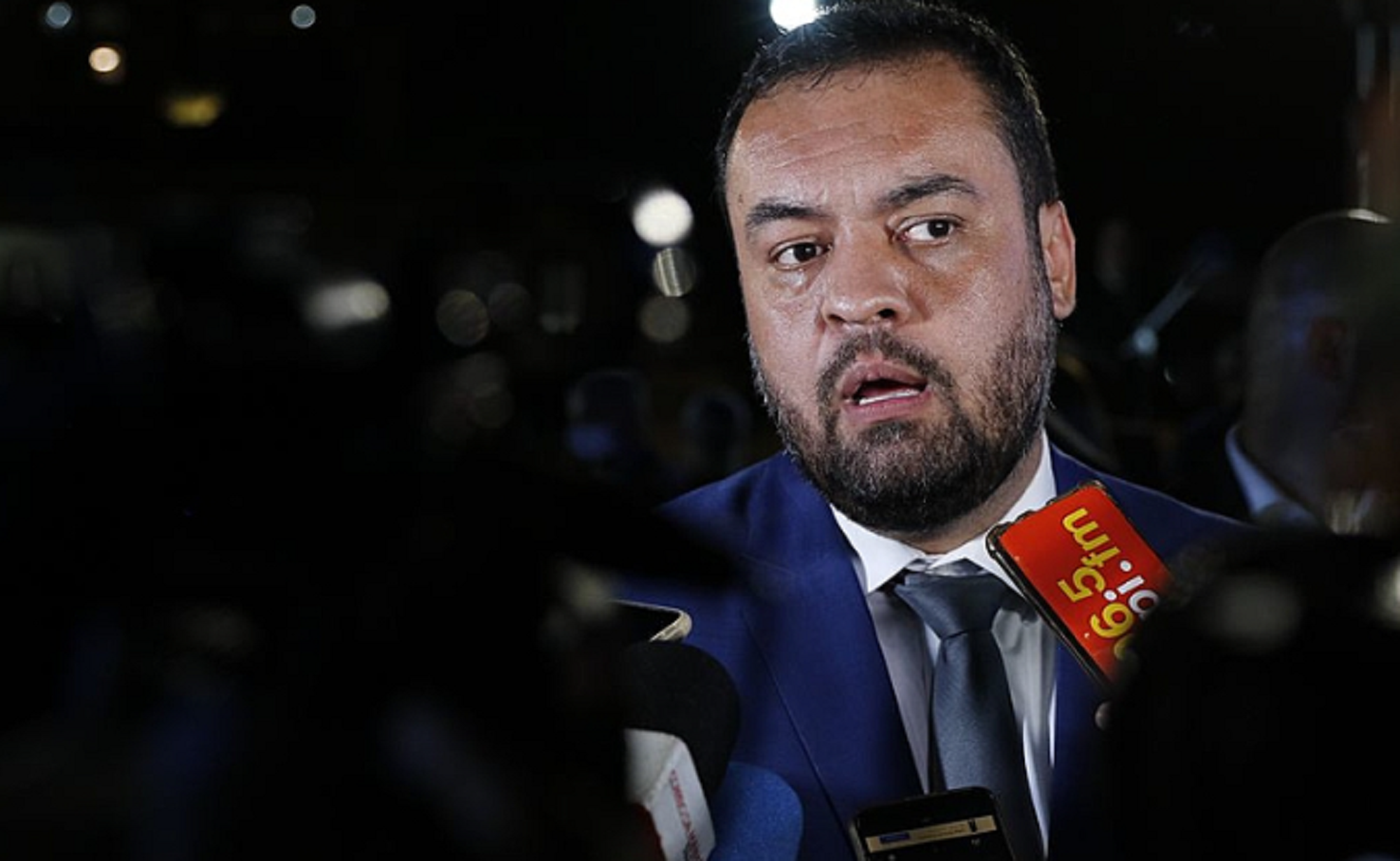
Therefore, as explained above, the Wild West bonus was abolished. However, over 25 years later, in September 2025, State Deputy Rodrigo Amorim (União Brasil), leader of the Cláudio Castro administration in ALERJ, proposed Bill 6027/2025, supported by State Deputies Marcelo Dino (PL), Alexandre Kinoploch (PL), Alan Lopes (PL) and Célia Jordão (PL). The bill provides for a “cash award for special merit,” which, in practice, establishes a cash bonus ranging from 10% to 150% of a police officer’s salary for killings in the line of duty and the seizure of drugs and weapons during operations. This, in practice, means reinstating the Wild West bonus.
After being approved by a large majority, the bill was sent to the governor’s office for his signature. Despite prioritizing armed confrontations, with extremely violent and high-profile police operations under his administration, then-Governor Cláudio Castro vetoed the Wild West bonus, citing unconstitutionality and budgetary constraints—since the state of Rio de Janeiro is under a fiscal recovery program.
However, Guilherme Pimentel points out that the governor’s move must be viewed with attention and caution. According to him, talking about the approval of the Wild West bonus means talking about the political power of Rio de Janeiro’s far right and Castro’s base in ALERJ:
“The far right wields enormous influence in Rio de Janeiro politics and came up with the idea of bringing back the Wild West bonus, which already proved to be a failure in the 1990s. More than a failure: [it was] responsible for many of the problems with violence we experience [today]. It’s important that we remember that the Wild West bonus used to reward people like Colonel Cláudio, who ordered the murder of Judge Patrícia Acioli, or Ronnie Lessa himself, who carried out the assassination of Councilwoman Marielle Franco. We need to remember this, because we know that the Wild West bonus is the kind of public policy that cultivates violence as a language, as a vision of society. Later on, society reaps very bitter fruit.”

According to experts and social movements, the veto was a political maneuver intended to prevent further damage to the governor’s reputation, as he was on the verge of being removed from office by the Superior Electoral Court (TSE). So much so that, about a month and a half later, the Executive’s veto was overturned in ALERJ.
The Wild West Bonus May Be Scrapped in Court
As soon as the reinstatement of the Wild West bonus was confirmed, following the overturning of Castro’s veto, the Socialism and Liberty Party (PSOL) filed a lawsuit asking the Brazilian Supreme Court (STF) to rule on the (un)constitutionality of the Wild West bonus. Judge Alexandre de Moraes is serving as the reporting judge for the case and has requested information from Castro and ALERJ.
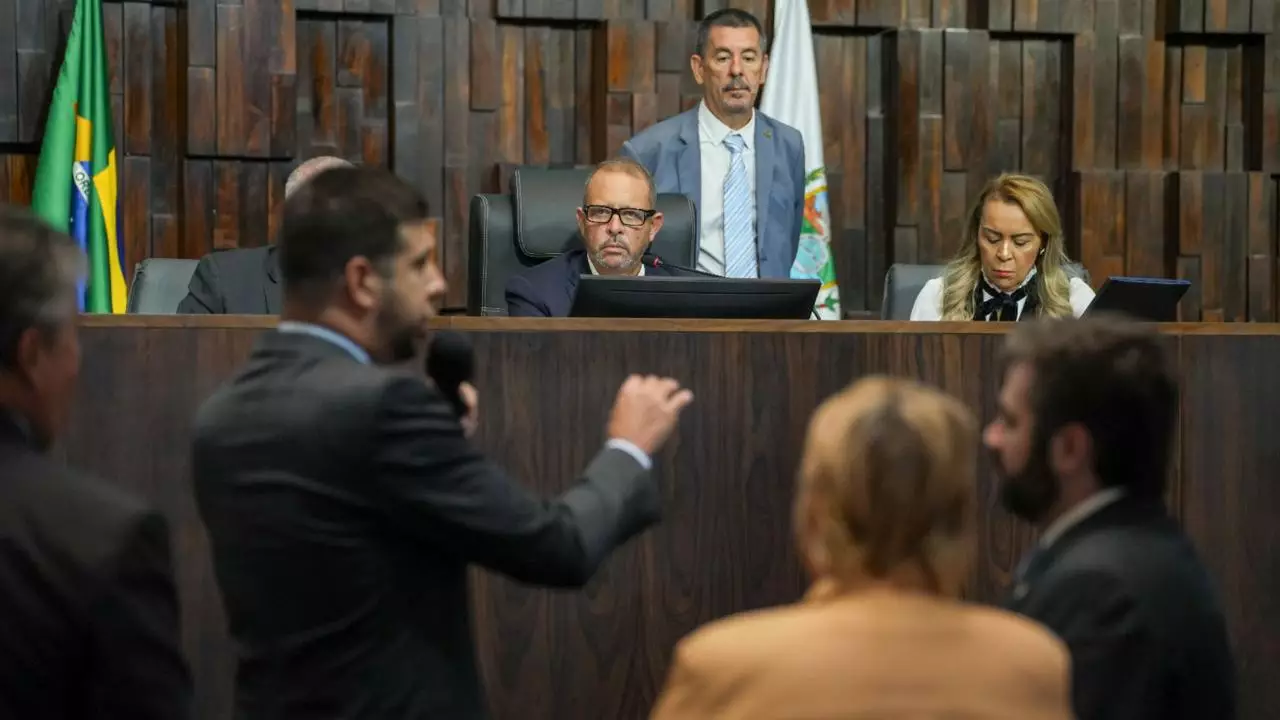
The state of Rio de Janeiro faces a turbulent electoral landscape: the governor stepped down from office; there was already no vice governor, since he resigned in 2022 to work at the State Audit Court (TCE); and ALERJ’s president, next in line for succession, is in custody for ties to Comando Vermelho—the Red Command, Rio de Janeiro’s largest criminal faction. In this context, the State Electoral Court (STE) ordered the establishment of an interim government. Led by Ricardo Couto, president of the Rio de Janeiro Court of Justice, the interim administration will remain in place at the state government headquarters in Guanabara Palace until the new governor, who will be elected in the October 2026 elections, takes office.
Against this backdrop of extreme fragility in Rio de Janeiro’s political institutions, in yet another political maneuver, the new president of ALERJ, Douglas Ruas (PL)—elected after his ally’s arrest—issued a decree on June 23, 2026, unilaterally altering the composition of commissions that had, in some cases, been in the hands of the opposition for years due to political negotiations and agreements—agreements that have now been broken.
Examples included the Human Rights and Citizenship Commission and the Women’s Rights Commission, previously chaired, respectively, by Dani Monteiro and Renata Souza, both from PSOL. The changes were announced at a meeting of the ALERJ leadership council, with no room for negotiation. With these changes, Renata Souza was replaced by Sarah Poncio (Solidariedade), while Alexandre Kinoploch, one of the co-authors of the 2025 Wild West bonus bill, replaced Dani Monteiro and became chair of ALERJ’s Human Rights and Citizenship Commission.
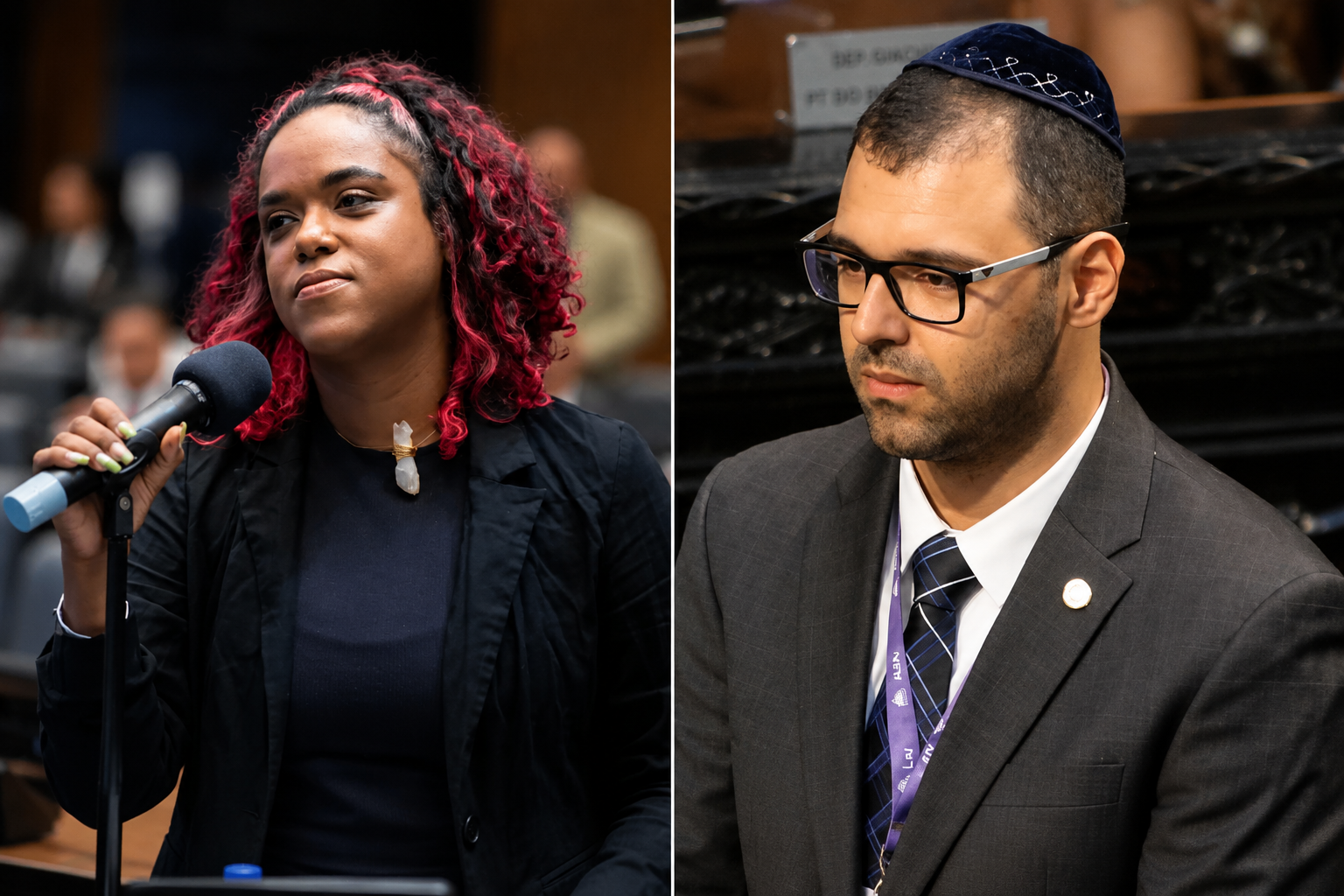
Alexandre de Moraes has not yet ordered the suspension of bonus payments, as requested in PSOL’s lawsuit before the STF. Nor has he released his vote for the panel or the full STF court to rule on the merits of the case. Until then, Rio de Janeiro police officers continue to be rewarded for killing.
The 2026 pre-election cycle is marred by the deadliest massacres in Rio de Janeiro’s history and by the reinstatement of a law that allows police officers to kill while profiting from public funds. Unfortunately, the STF’s review of this measure could take years. Until then, the people of Rio de Janeiro will continue to die at the hands of police officers paid to carry out executions, even though there is no death penalty in Brazil.
About the author: Carla Regina Aguiar dos Santos was born and raised in Morro do Turano. Her work as a community journalist has always prioritized the day-to-day happenings in the favelas. Reporting what goes on beyond the view of traditional media, she has contributed to the Favela News Agency (ANF), A Pública, Eu, Rio! and Terra. She received the ANF Award for journalism in the culture category and the Neuza Maria Award for Journalism.