

This article is part of a series on the 2026 Brazilian elections, focusing on the perspectives of Greater Rio’s favelas.
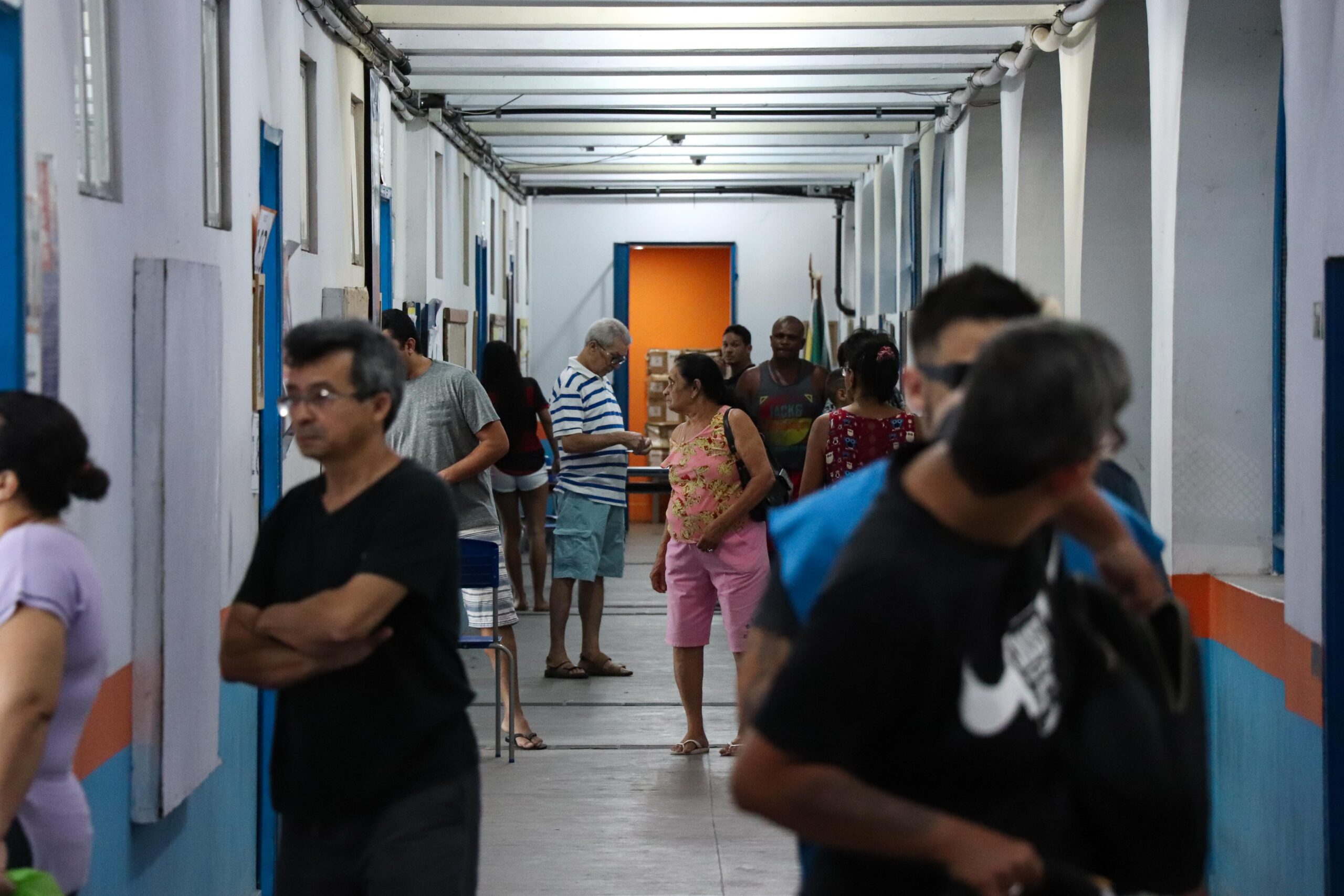
With every election, the ritual repeats itself in public schools and local associations that become voting sites in favelas and other neighborhoods across the state of Rio de Janeiro: lines under the sun, campaign flyers scattered on the ground and a repeated promise of change. In 2026 Brazilians will cast their votes to elect federal deputies, state deputies, two senators, governors and the president.
According to the nation’s Superior Electoral Court (TSE), Brazil has its largest electorate in history in 2026, with over 158.7 million people eligible to vote. In the state of Rio de Janeiro, there are over 12.8 million registered voters.
The Brazilian Institute of Geography and Statistics’ (IBGE) national census reports that Rio de Janeiro has the country’s second-largest favela population—over 2.1 million people in 1,724 favelas—enough to influence the outcome of any election. That said, favela residents are known to vote in all sorts of ways depending on interests, family and local culture, income, religion and even who controls the area, whether the militia, the drug traffic or neither, among countless other factors.
“Favela is not synonymous with poverty. Of course, there is an overlap in terms of income, area, race and inequality in accessing public services, but this is a population that varies greatly in terms of income, race, inequality of access and even regarding their occupation of an area. The term favela can express a range of different realities.” — Mayra Goulart, professor in the Department of Political Science at the Federal University of Rio de Janeiro’s (UFRJ) Public Policies, Strategies and Development Program (PPED) and coordinator of the Laboratory of Political Parties, Elections and Comparative Politics (Lappcom)
Why Does the Favela Vote Matter?
On the one hand, favela residents are precisely those who depend most on a number of services shaped by public policy. And the vote determines who will occupy decision-making positions and, from there, which proposals, priorities and policies will carry the most weight.
On the other hand, voting can seem irrelevant for those who live in favelas and face, day after day, generation after generation, open sewers, unreliable transportation and fear during police operations. After all, for so many years, we have seen that voting does not guarantee that infrastructure projects will be carried out, schools will be built or police operations will stop taking place.
Yet, to build potential for change, this is precisely the cycle that favela residents must work to break, taking the lead, analyzing candidates and understanding what they actually represent, voting for those who offer real opportunities to change the system of chronic neglect and repression.
“Favela residents depend on public transportation, public schools, daycare, hospitals, public safety, street lighting, sanitation and jobs. Political decisions determine how much will be invested in these areas. That’s why voting means thinking about the worker who faces an hours-long commute, the mother who relies on daycare, the young person seeking an education.” — Ilsimar de Jesus, 49, resident of Greater Rio’s São João de Meriti and member of the Baixada Fluminense Network of Mothers and Family Members of Victims of State Violence
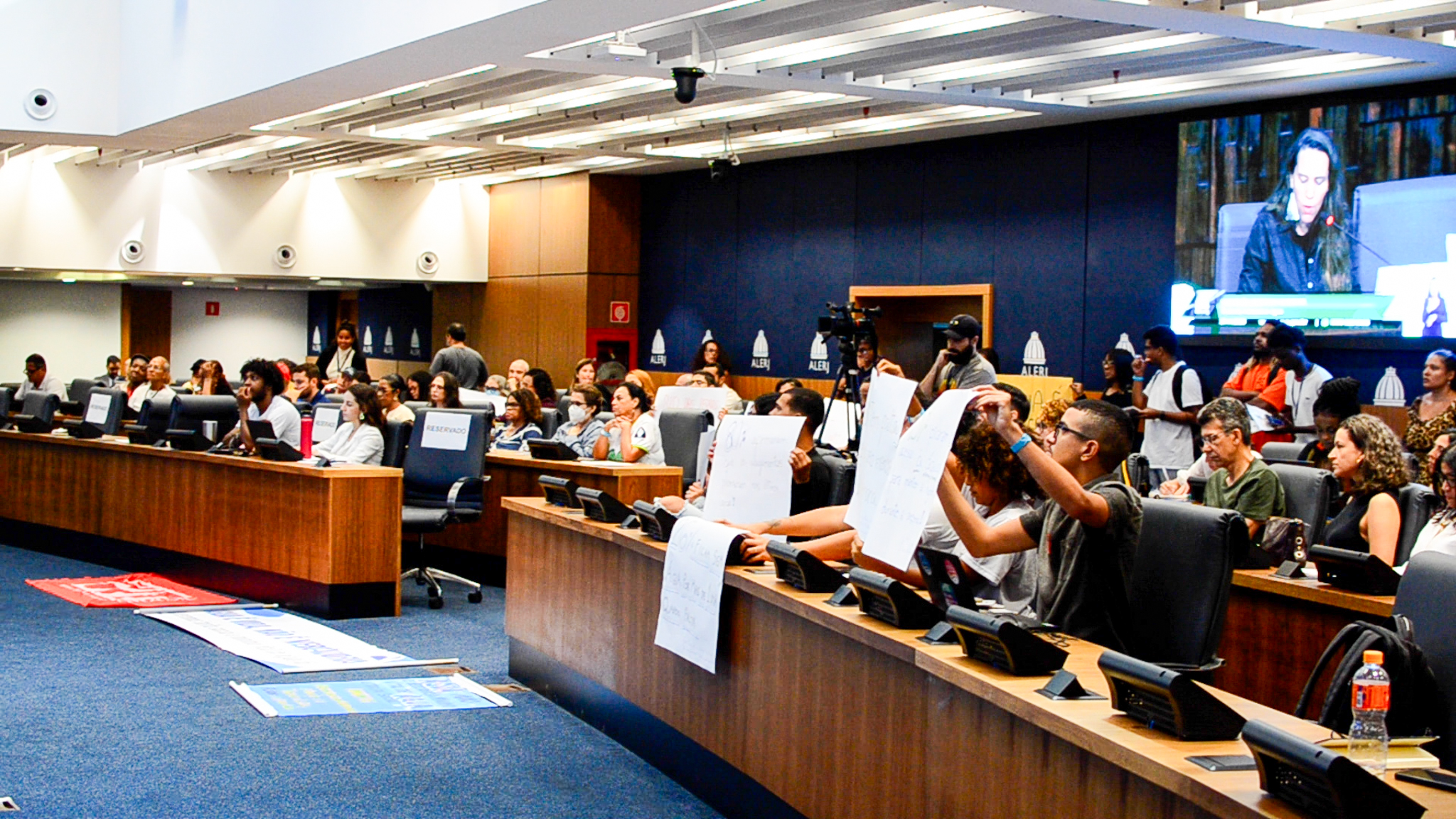
And beyond voting, we need to follow up on the promises made by those who are elected, question their proposals, participate in public hearings, reach out to lawmakers and demand answers. Especially in state legislatures—such as the Rio de Janeiro State Legislative Assembly (ALERJ).
In the face of so many immediate challenges—working, putting food on the table, caring for family, navigating the lack of basic services—this level of engagement is a lot to expect. But it is precisely due to these challenges that we need to pursue it.
“When we don’t vote, the majority decides for us. But voting is a constitutional right that no one can take away from us.” — Mariluce Mariá, 44, resident and artivist of Indigenous descent from the Complexo do Alemão favela
Brazil’s 1988 Constitution guarantees that “popular sovereignty shall be exercised by universal suffrage and by direct and secret vote, with equal value for all.” In other words, at the electronic ballot box, the vote of someone who lives in a mansion is equal to that of someone who lives in a favela. It is therefore crucial that favela residents research candidates and vote if we want to change our reality.
“Voting means taking responsibility for a better world that still needs to be built for favela residents. Participation can help influence the direction of state and federal policies by electing representatives committed to the real problems faced by the most impoverished populations.” — Silvana Sá, 41, journalist, born and raised in the favelas of Complexo da Maré
In practice, the vote determines who will decide where public money comes from and where it goes.
“Voting is the main way to put pressure on representatives, to take decisive action in politics. It is the primary tool available to citizens.” — Professor Mayra Goulart, coordinator of Lappcom
And after the elections, pressure can take different forms: a community can track a candidate’s promises, question their proposals, participate in public hearings, reach out to lawmakers through their offices and public engagements and demand answers.
What Is at Stake for Favelas in the 2026 Elections?
There is a paradox in the competition for votes in the favelas and peripheral areas of Brazil’s major cities: despite accounting for a significant share of the electorate, these areas continue to face the denial of basic rights, which also leads to the fragmentation of the community vote by leaving residents vulnerable to clientelistic welfare practices that undermine grassroots organizing precisely when it could make the greatest difference.
A coordinated favela vote could carry real weight in altering the makeup of legislative bodies and putting pressure on the Executive’s agenda.
“Public authorities do not ignore the favela as a political actor. They control it, silence it and treat it with violence. The way they treat the favela says a great deal about the power each area has—or can have, if organized. In this sense, the vote has enormous importance.” — Silvana Sá, born and raised in Maré
There is evidence of this strength: a Lappcom study on Rio de Janeiro state’s 2026 pre-campaign period shows that political parties have begun to actively recruit leaders from social movements—including, specifically, “representatives of housing movements” and “peripheral populations”—to run for state and federal deputy, precisely because these leaders carry “legitimacy built through concrete struggles in specific territories.”
The vote also serves as a form of direct pressure, a way to show public authorities that people are paying attention to issues that matter to favelas.
“We are headed to the ballot now in 2026 hoping that something will change, that something will improve in terms of education, healthcare, social programs that work… and that the favela will be seen as more than a deposit of swarms of people, and rather as a place where working people live, where children and teens are growing up and need to see another reality.” — Thaiana da Costa, 38, beautician and resident of Complexo da Penha
| What’s at Stake | Without a Coordinated Favela Vote | With a Coordinated Favela Vote |
| Sanitation and infrastructure | Stopgap projects and disruptions to essential services. | Regular water supply and flood-prevention drainage. |
| Public safety | Violent police operations and criminalization of favelas. | Harm-reduction protocols and investment in police intelligence. |
| Local investment | Public funds directed only to wealthy areas. | Budget amendments allocated directly to favelas. |
Why Is 2026 a Decisive Year and What Does Each Office Have to Do With Favelas?
This October, we will elect a president, governors, senators and state and federal deputies. Each voter will make six choices: federal deputy, state deputy, two senators, governor and president. In all, the following seats are up for election: 513 federal deputies, 1,035 state deputies, 24 district deputies, 54 senators, 27 governors and the presidency.
“This year’s election is very important. Two-thirds of the Senate will be renewed. We have a real chance to choose people who will be able to support and vote on public policies [that serve] our people. Senators make laws, and these laws can be good or bad for us, the people directly affected by them.” — Silvana Sá
In fact, control of the state Executive has already changed hands in 2026: in March, then-Governor Cláudio Castro (PL) resigned on the eve of a Superior Electoral Court ruling that convicted him of misusing public offices to benefit his 2022 reelection campaign. Shortly after, the TSE revoked his term in office and declared him ineligible to run due to abuse of political power.
This uncertainty provides a very concrete picture of the situation in Rio de Janeiro.
“Choosing the people who will take office, especially the person who holds the power of governor, is the greatest concern because the governor has the power to appoint secretaries… We need to know what this person’s governance plan is and who their secretaries will be.” — Mariluce Mariá, Complexo do Alemão
Many people think the president is the most important choice. However, the president’s power depends on the support of an aligned Congress, making the choice of deputies and senators just as decisive as that of president. Electing candidates committed to the issues that matter to favela residents is what ensures these issues reach the decision-making table.
| Office | What They Do | How It Affects Favelas |
| Federal deputy | Votes on federal laws and the federal budget in Brasília. | Federal funding for housing, sanitation and healthcare; direct budget amendments. |
| State deputy | Legislates and oversees the governor at the Rio de Janeiro Legislative Assembly (ALERJ). | Oversees emergency care units (UPAs), state hospitals and schools; can launch a parliamentary inquiry. |
| Senator (2 seats) | Represents the state in Congress for eight years. | Determines tax reforms and long-term labor and social legislation. |
| Governor | Heads the state Executive and police forces. | Public safety policy, trains/metro system, state healthcare and education. |
| President | Heads the federal Executive and the economy. | My House My Life housing program, minimum wage, efforts to combat hunger and the Unified Health System (SUS). |
Why Does the Office of Governor Carry So Much Weight for Favela Residents?
Because many of the decisions that directly affect residents’ daily lives are made at the state level.
The state’s key responsibilities are:
- In public safety, the state government commands the Military Police (PMERJ) and Civil Police (PCERJ), responsible for the two deadliest police massacres in the history of the state of Rio de Janeiro: respectively, the Penha Massacre, perpetrated by the PMERJ, and the Jacarezinho Massacre, an operation carried out by the PCERJ’s Special Operations and Resources Coordination (CORE);
- In education, the State manages the public high school system;
- In healthcare, it manages key healthcare facilities, including some Emergency Care Units (UPAs), including in large favelas, such as the UPA in Complexo da Maré; diagnostic centers; and medium- and high-complexity hospitals, such as Getúlio Vargas Hospital in Penha and the Paulo Niemeyer State Brain Institute (IECPN) in Centro, a national reference center. It also manages the State Regulation System (SER), which regulates public access to appointments, diagnostic tests and surgeries at state healthcare facilities;
- In transportation, it operates mass public transit systems, such as trains, the subway and ferries;
- It is responsible for water supply and sewerage through CEDAE, as well as the cleanup of Guanabara Bay—although some of these responsibilities have been granted to private companies: Águas do Rio, Iguá and Rio+Saneamento.
That is why it is important to look not only at the candidate, but also at the governance plan they present.
“We need to know what this person’s governance plan is and who their secretaries will be.” — Mariluce Mariá
Choosing a governor also means indirectly choosing an administrative team and a political direction for different areas of public management.
After the Vote: How Do We Demand What Was Promised?
Voting is only the first step in a democratic cycle that requires ongoing oversight. Casting a vote without following up leaves the community vulnerable to broken promises and projects that only appear during election years.
“The vote is not a blank check. It is a choice and also a responsibility. If we want change, we need to follow up on those who get our vote and demand that they deliver what they promised. The favela cannot cast its vote and then disappear from the political debate. Our vote must be accompanied by organization, participation and demands for accountability.” — Ilsimar de Jesus
This is not about imagining that six numbers entered into an electronic ballot box will solve longstanding problems. It is about recognizing that those in power make decisions that, one way or another, reach the favela.
That is why, in 2026, voting can be the beginning of an even bigger question: after we choose our representatives, what are we going to do to follow up, demand accountability and continue to participate? Voting takes just seconds, but the fight for rights continues every day.
About the author: Tatiana Lima is a journalist, popular communicator, editor and human rights communications advisor. She holds a PhD in Communication and a master’s degree in Media and Everyday Life, both from the Fluminense Federal University (UFF). A grassroots network organizer, she represents Território Mídias Brasil in Rio de Janeiro and contributes to Núcleo Piratininga de Comunicação. A Black feminist born and raised in Favela do Quitungo and Morro do Tuiuti, Lima currently lives in Rio’s urban periphery.