
Clique aqui para Português
180 ACTIVITIES FOR ALL AGES AND AUDIENCES IN DOWNTOWN RIO: CULTURAL PERFORMANCES, WORKSHOPS, SOLIDARITY MARKET, HEALING SPACE, DISCUSSION CIRCLES, FILMS, EXHIBITIONS
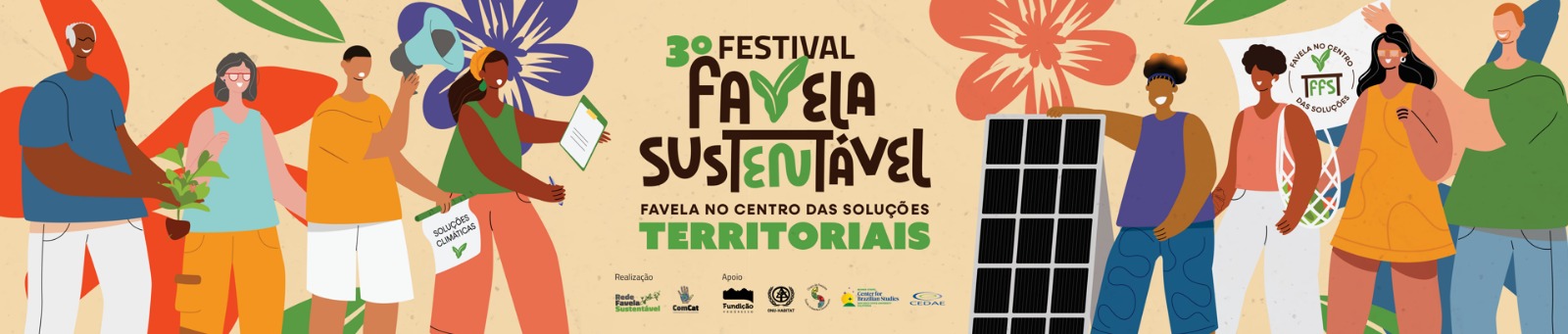
Unmissable! On Saturday, October 17, 2026, Rio de Janeiro’s Sustainable Favela Network will hold its largest ever public event, featuring 180 activities free of charge at the iconic Fundição Progresso cultural center in downtown Rio. Always inspiring, the third edition of the Sustainable Favela Festival: Favelas at the Center of Territorial Solutions will be twice the size of previous editions, with over 2,000 people expected to attend. It is the world’s largest fair dedicated to solutions from informal settlements generating inspiration, sharing opportunities, mutual learning and affection, co-produced by 167 collectives from 150 favelas and peripheral communities across Greater Rio. Everyone is invited to participate, witness, exchange ideas and learn together. The 2026 program is packed! This will be the last year in this format and at this scale, as the event will become smaller and itinerant in the coming years. Don’t miss your chance to experience this powerful network in all its glory!
3rd Sustainable Favela Festival: FAVELAS AT THE CENTER OF TERRITORIAL SOLUTIONS
October 12, 2026—On Saturday, October 17, the 3rd Sustainable Favela Festival – Favelas at the Center of Territorial Solutions will showcase 180 socio-environmental solutions and cultural events from favelas across Greater Rio and beyond, spread across nine spaces at Fundição Progresso in downtown Rio de Janeiro, from 9am-5pm. The festival is a large-scale grassroots mobilization, organized over many months by leaders of 167 community-based organizations representing 150 different favelas and peripheral neighborhoods. The event is free of charge, open to the public and will feature diverse and powerful cultural performances, hands-on learning workshops, a unique solidarity economy fair, discussion and networking circles, enlightening film screenings, eye-opening exhibitions and delightful health and well-being activities for all ages and audiences. Everyone is welcome at this unmissable event! This year, we expect to greet between 2,000 and 3,500 in-person participants, and it will be the last edition at this venue and scale! Don’t miss out! Register now to avoid lines.
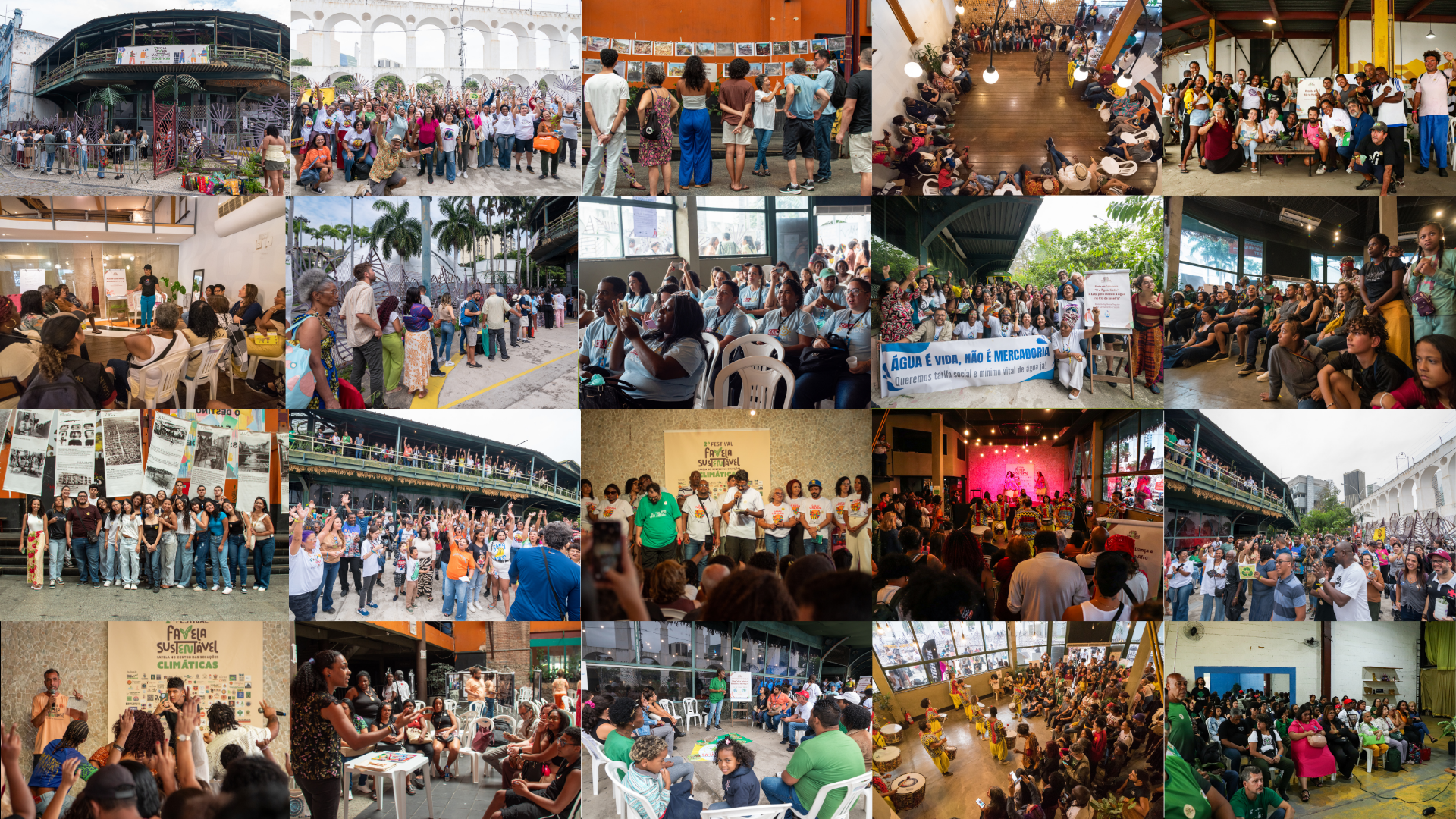
Check out the full program and register. Registration is free and mandatory to generate a QR code that avoids lines and guarantees entry. Check out images from previous festivals: 2024 [photos and video] and 2025 [photos and video]. Contact us. Visit our Instagram. Media partners: Feel free to republish this press release.
2026 Festival Brings Territoriality to the Fore
Following a months-long planning process, improved on previous editions through monthly meetings and contributions from over 100 favela organizers, this year’s festival adopted “territorial solutions” as its theme, inspired by the uniquely Brazilian understanding of the term territory. This perspective is particularly evident in critical geography and social movements, where territory is much more than a fixed piece of land or a legal boundary drawn on a map. It is, rather, a living space defined by human use, everyday life, cultural identity and power relations.
The 2026 activities include (check out the full program):
- Territorial Solutions Mural — A mural installation receiving interventions from hundreds of participants throughout the day.
- 23 Recreational/Physical Performances — From traditional martial arts from Complexo da Penha to charme and forró dance classes and recreational circus workshops from Vila Paciência/Favela do Aço.
- 11 Cultural Performances on Stage — A packed schedule of performances, including the show “Brazil Show Your Face,” the la Nguzu Afoxé Procession, the Vivarte Institute for Human Restoration Choir, the Ciranda da Rocinha Literary Soirée, Barreira do Vasco Ballet, the Afro Orunmila Show and more.
- 32 Discussion Circles — From rivers as rights holders to a Q&A session with water utility CEDAE, from “Grandma in the Kitchen” conversations to AI in Favelas, these discussion circles will provide rich and diverse opportunities for exchange.
- 65 Solidarity Economy Stalls and Educational Booths — There will be swap activities, an exhibition on Sepetiba Bay, mask-making, a wide variety of handicrafts for sale, and food and drinks to suit all tastes.
- 7 Film Screenings, Talks and Debates — Featuring special guests from São Paulo’s union of landslide victims in São Sebastião, sharing firsthand experiences of climate impacts from 10:30am to 12pm, in addition to various documentaries, memories of Rio das Pedras and Living Soil as a Foundation for Struggle.
- 18 Healing Opportunities — The Healing Space will offer a range of opportunities for reflection and comfort, from yoga and self-care with Believe in Women from Providência, art therapy with Women in Action from Vila Kennedy, foot soaks with the Children of Reason Social Welfare Organization, Paving the Way for Afro-Care by the Makeda Network and more.
- 22 Hands-on Workshops — How to create a mini-garden? Carnival accessories? Environmental games? Full meals with a single pot? A solar cooker? Plant-based milks? Soil-based paint? Sustainable jewelry? Seed guardian necklaces? A green roof? Come join us, all ages welcome, for this year’s workshops!
- 8 Exhibitions — Including Women of Stone, Favela Climate Memory, Embroidering Resistance, Maré Memories and Solar Artivism, among others.
Program: Where and When?
- 3rd Sustainable Favela Festival – Favelas at the Center of Territorial Solutions
- Date: Saturday October 17, 2026
- Time: 9am–5pm
- Place: Fundição Progresso, Rua dos Arcos, 24 – Lapa, Rio de Janeiro [Map]
- Registration: Free and required for entry (a QR code will be sent to your email)
How to Make the Most of the Festival:
- Check out the program or hour-by-hour guide — We recommend reviewing the program in advance to make the most of so many inspiring opportunities!
- Register to avoid lines and guarantee your spot — We recommend arriving early to enjoy the whole day: there is so much to explore and experience! Remember, this is the final year in this central location and at this scale!
What Is the Sustainable Favela Network?
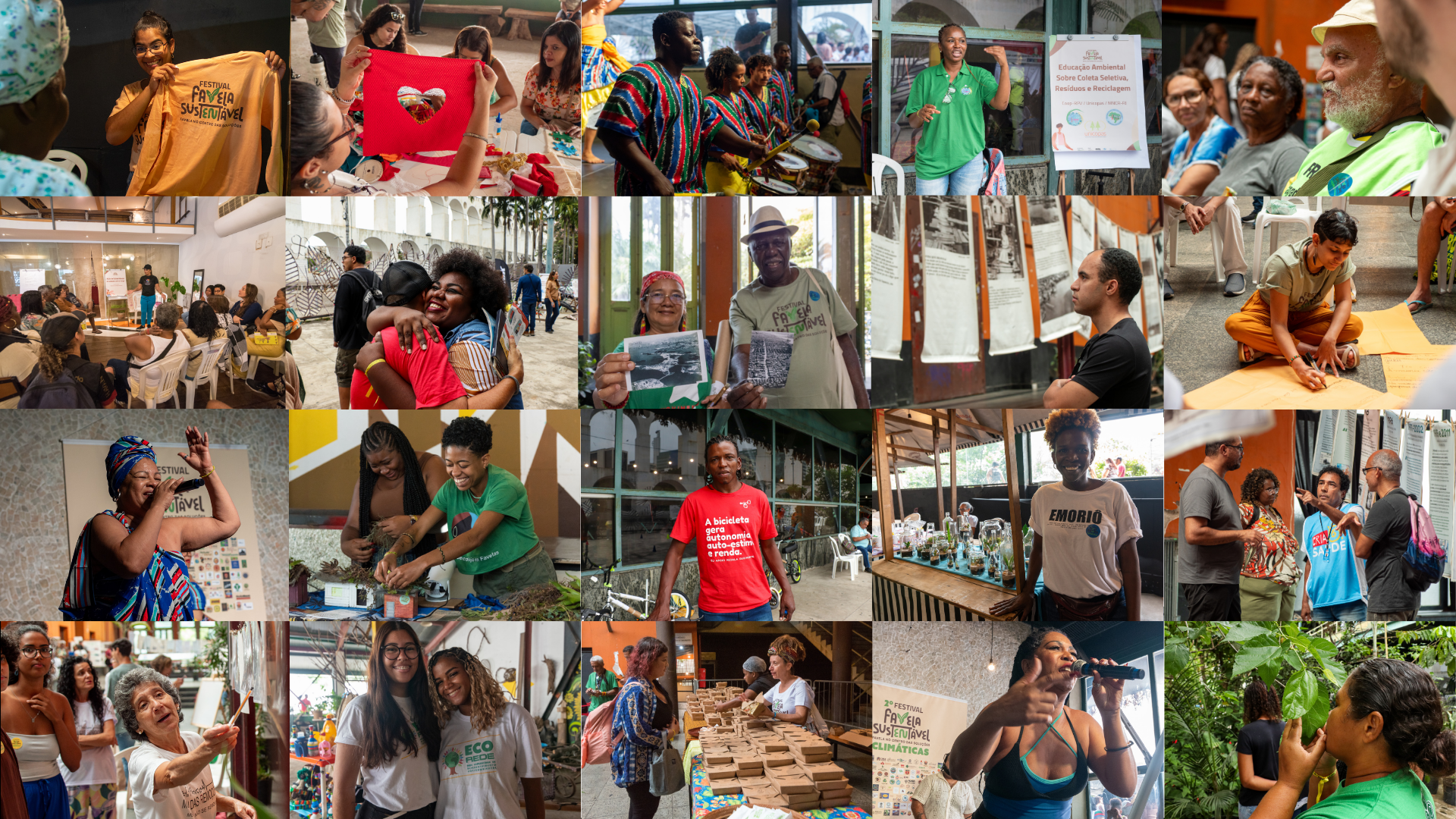
The Sustainable Favela Network has been growing since 2017 and is currently made up of over 1,200 members, including community organizers from over 400 favelas and technical allies who work together in the fight for climate justice, aiming to realize the potential of favelas as models of sustainable communities. We work towards 12 objectives such as food sovereignty, adequate sanitation, climate justice, culture and memory, among others. Our activities include knowledge exchanges, training in social technologies and nature-based solutions, citizen-generated data, communication and advocacy. Over the years we’ve installed solar energy systems and bio-systems, organized numerous collective clean-up and planting efforts, held debates with mayoral candidates, created the Covid-19 in Favelas Unified Dashboard, conducted the Favela Climate Memory research project, taken energy justice to Brasília as a key demand, the Climate Letter From the World’s Informal Settlements to COP30 and much more! Our members organize collective actions, environmental education activities, community gardens, recycling initiatives, river clean-ups and countless other actions every day to benefit their communities.
The Sustainable Favela Festival is your chance to share and engage in-person with this powerful network!
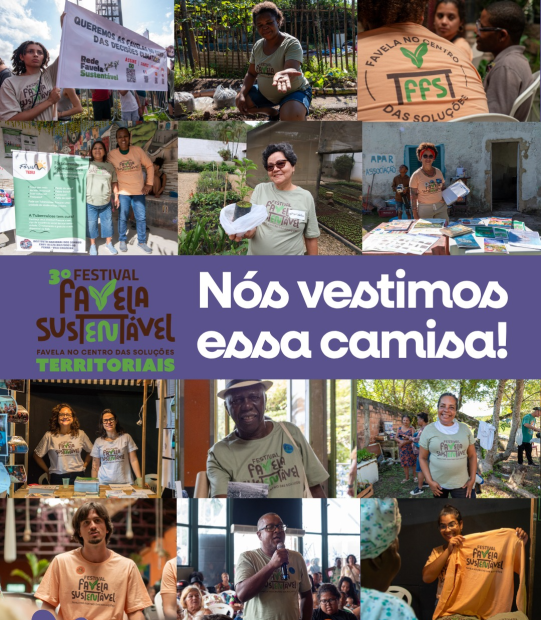 Explore Some of the Sustainable Favela Network’s Activities
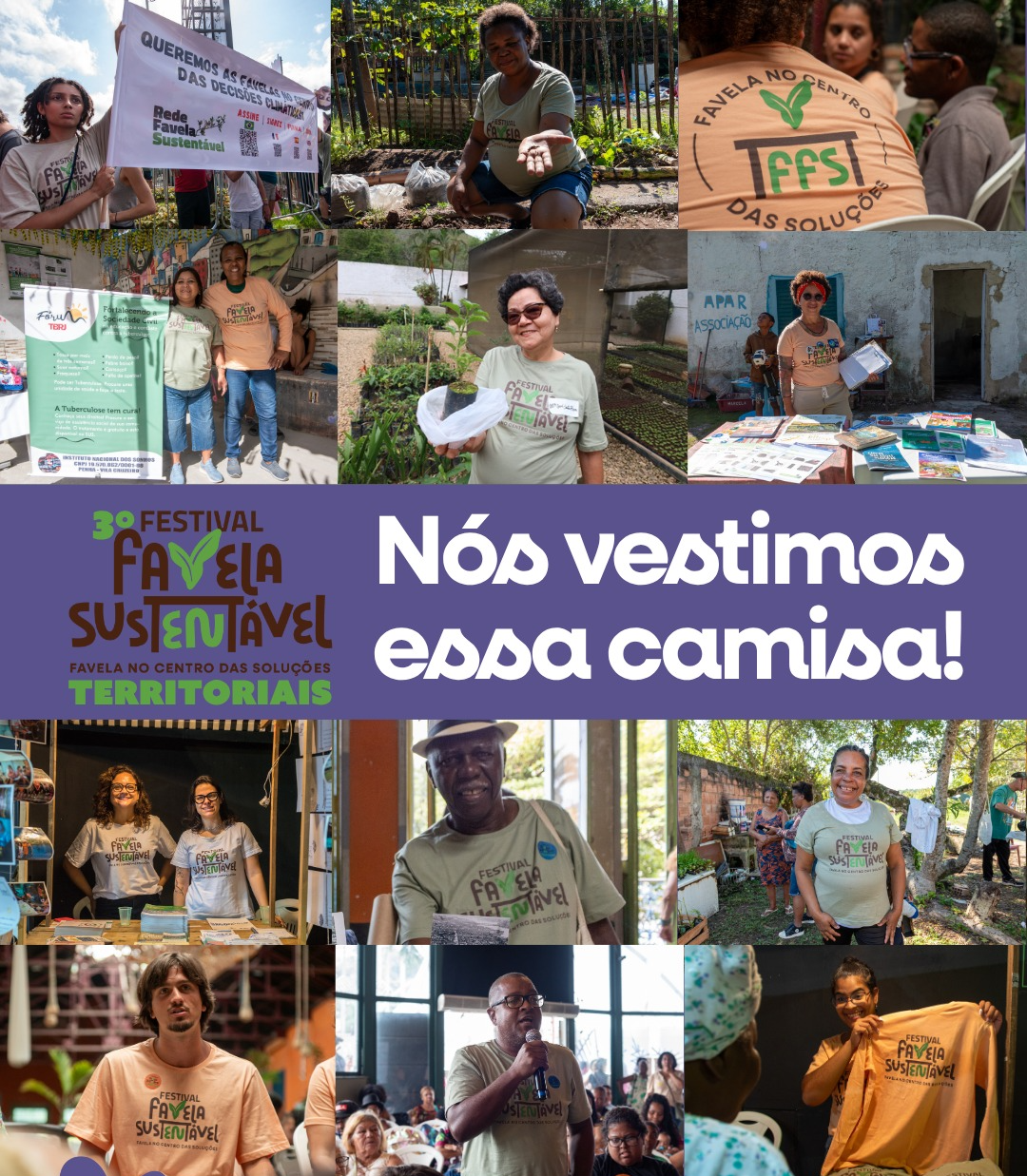
- Sustainable Favela Festival
- Favela Climate Memory
- COP30 Letter from the World’s Informal Settlements
- Water and Energy Justice in Favelas: Training, Research and Advocacy
- Building a Sewage Biosystem
- Solar Energy System Installation
- Knowledge Exchanges Across Communities
- Debate with Mayoral Candidates
- Advocacy in Brasília
Participating Favelas and Peripheral Communities
The 3rd Sustainable Favela Festival – Favelas at the Center of Territorial Solutions is made possible through the activities of 167 socio-environmental collectives and allies representing 150 favelas and peripheral communities from across Greater Rio and beyond.
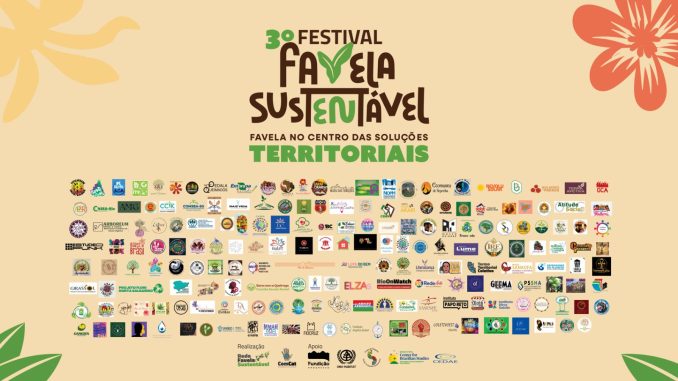 Check out the list of favelas and peripheral communities participating in this year’s Sustainable Favela Festival program: 4 Bicas (Complexo da Penha), Acari, Aldeia Maracanã, Almerinda (São Gonçalo), Amarelinho (Irajá), Arará (Benfica), Austin (Nova Iguaçu), Babilônia (Leme), Bangu, Barreira do Vasco (São Cristóvão), Barros Filho, Bato (Jacarepaguá), Beira Pica-Pau (Cordovil), Boaçu (São Gonçalo), Cabo Frio, Cachoeiras de Macacu, Calharins, Caminho (Jacarepaguá), Campo Grande, Canal do Anil (Anil), Cantagalo (Ipanema), Carmari (Nova Iguaçu), Casa Branca (Tijuca), Cascatinha (Penha), Cerro Corá (Cosme Velho), Chapadão (Anchieta), Chapéu Mangueira (Leme), Chatuba (Mesquita), Cidade Alta (Cordovil), City of God (Jacarepaguá), Colônia Juliano Moreira (Jacarepaguá), Complexo da Maré, Complexo da Pedreira (Costa Barros), Complexo da Penha, Complexo do Alemão, Complexo do Lins (Lins de Vasconcelos), Complexo do Salgueiro (São Gonçalo), Comunidade de Olaria (Olaria), Comunidade do 18 (Piedade), Comunidade do Bairro 13 (Costa Barros), Comunidade do Horto (Horto), Coreia (Mesquita), Coruja (Neves, São Gonçalo), Cosmos, Engenho da Rainha, Evereste, Fallet (Santa Teresa), Favela do Aço (Santa Cruz), Fazenda Caxias (Seropédica), Fazendinha (Niterói), Fisher (Teresópolis), Fogueteiro (Santa Teresa), Furquim Mendes (Jardim América), Gardênia Azul, Grupo Esperança, Guararapes (Santa Teresa), Guaratiba, Guaxi (Coelho Neto), Higienópolis, Hiterland (Belford Roxo), Imbariê (Duque de Caxias), Inoã (Maricá), Itacolomi (Ilha do Governador), Itaipuaçu (Maricá), Jacarezinho, Jacaroá (Maricá), Jacutinga (Mesquita), Japeri, Jardim Gramacho (Duque de Caxias), Jardim Primavera (Duque de Caxias), Jockey Clube (São Gonçalo), Juramento, Luz (Nova Iguaçu), Macacos (Vila Isabel), Malvinas (Inhaúma), Mangueira, Manguinhos, Mineira (Catumbi), Mineiro Pau (Santa Cruz), Morro da Conceição (Gamboa), Morro da Providência (Gamboa), Morro do Arroz (Centro, Niterói), Morro do Pinto (Santo Cristo), Morro do Preventório (Centro, Niterói), Morro Inglês (São Conrado), Mutuá (São Gonçalo), Nossa Senhora de Fátima (Queimados), Nova Brasília (Del Castilho), Nova Campinas (Duque de Caxias), Nova Holanda, Pantanal (Nova Iguaçu), Parada São Jorge (Sacramento, São Gonçalo), Parque da Cidade (Gávea), Parque Horácio Complexo do Araras, Parque Marilândia (Campos Elíseos), Parque Royal (Ilha do Governador), Parque São Carlos (Paraíso, Nova Iguaçu), Parque União (Bonsucesso), Pavão-Pavãozinho (Copacabana), Pavuna, Pedra de Guaratiba, Penha Circular, Petrópolis, Porto da Pedra (São Gonçalo), Posse (Nova Iguaçu), Praça Seca, Praia do Remanso (São Francisco, Magé), Prazeres (Santa Teresa), Quilombo Camorim (Jacarepaguá), Ramos, Rio Bonito de Lumiar (Lumiar, Nova Friburgo), Rio das Pedras (Jacarepaguá), Roça do Abebé de Ouro (Maricá), Rocinha, Sahy (Barra do Saí, São Sebastião), Salgueiro (Tijuca), Santa Amelia (Belford Roxo), Santa Inês (Bangu), Santa Lúcia (Magé), Santa Marta (Botafogo), Santo Amaro (Santa Teresa), São Domingos (Niterói), Sepetiba, Serrinha (Madureira), Shangri-lá (Jacarepaguá), Taquara, Terra Prometida (Penha), Terreirão (Recreio dos Bandeirantes), Tijuquinha (Itanhangá), Trindade (São Gonçalo), Valverde (Nova Iguaçu), Vargem Grande, Vargem Pequena, Vidigal, Vigário Geral, Vila Alzira (Duque de Caxias), Vila Autódromo (Jacarepaguá), Vila Cruzeiro (Penha), Vila da Penha (Penha), Vila Esperança (Parada Angélica, Duque de Caxias), Vila Joaniza (Barbante, Ilha do Governador), Vila Kennedy, Vila Paciência, Vila Residencial do Fundão, Vila São João (São João de Meriti), Vila Vintém (Realengo), Viradouro (Niterói).
Festival Supporters
The 3rd Sustainable Favela Festival – Favelas at the Center of Territorial Solutions is organized by the Sustainable Favela Network with support from international donors through CatComm and in partnership with Fundição Progresso, CEDAE, UN-Habitat, Health, Environment and Sanitation Research Group (Fiocruz), Behner Stiefel Center for Brazilian Studies at San Diego State University, Habitat International Coalition and Climate Reality Project Brazil.
Press Contact & Materials
- Telephone/WhatsApp: +55-21-991976444 (English or Portuguese)
- Email: press@catcomm.org
- Release | Full program | Festival Hour-by-Hour Guide
- Registration: Free and required for entry
- Instagram: instagram.com/favelasustentavel
- Images: From 2024 [photos and video] and 2025 [photos and video]