
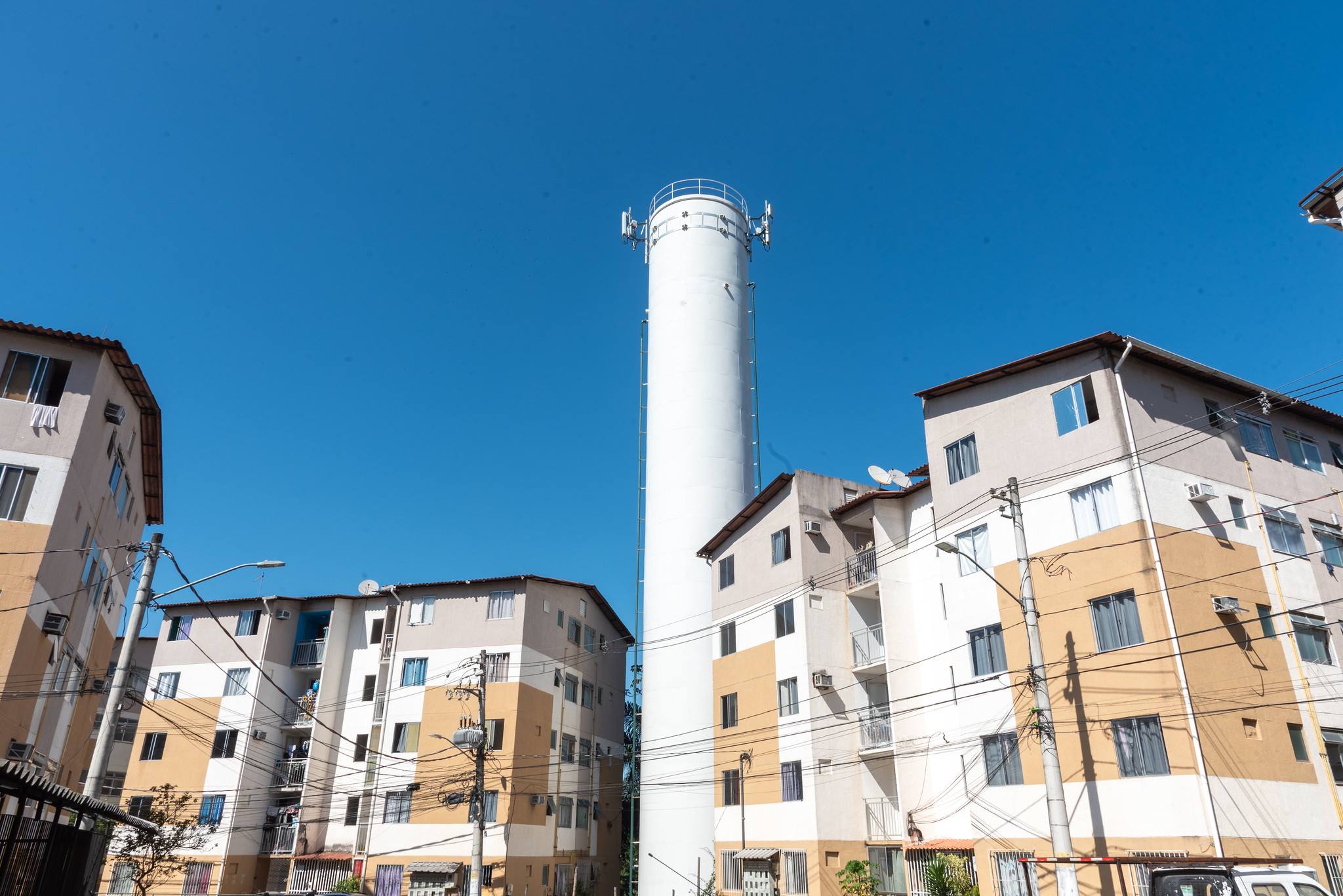

This article is part of our series reflecting on the impacts of mega-events on Rio de Janeiro 10 years after the 2016 Olympic Games. It was produced in partnership between RioOnWatch and Grupo CASA: Social Studies on Housing and the City, based at the Institute of Social and Political Studies at the State University of Rio de Janeiro (IESP–UERJ), comprising their university extension program and launching IESP effort to share results of the academic research conducted by members of Grupo CASA with a broad audience. Through this collaboration, the group hopes to build an archive that will enable it to continue critically monitoring the implementation of public policies in the Rio de Janeiro metropolitan area.
Based on years of ethnographic research conducted by anthropologist Daniela Petti, culminating in her doctoral dissertation, Economics of Everyday Life: Between Homes, Values and Families, this article follows the transformations in the lives of Parque Carioca residents 10 years after their eviction from Vila Autódromo: how they have rebuilt their lives in a vertical territory shaped by the relocation of families from different places of origin and the pressures of real estate. Some found in resettlement an opportunity to reorganize their lives and family structures, while others faced rising housing costs, the loss of income-generating activities carried out from home and the weakening of longstanding community ties. Over a decade of experience in the My House My Life (MCMV, by its Portuguese acronym) public housing complex shows that moving into an apartment does not, in itself, represent a path of upward social mobility, much less a better life. Through Arlinda’s experience, the article reveals the contradictions that permeate the lives of hundreds of families removed from Vila Autódromo in the context of pre-Olympic evictions.
‘I Moved Back to the Favela So I Wouldn’t Starve in the Housing Project’
Arlinda,* 45, came to Rio de Janeiro from the northeastern state of Paraíba and lived in several neighborhoods in Greater Rio’s Baixada Fluminense region before settling in the Vila Autódromo favela, in the city’s Southwest Zone, in the late 1990s. There, she lived with her three children, her then-husband and father-in-law for over 15 years. The couple built a house on land that belonged to her father-in-law. The announcement that the favela would be removed in 2012 prompted extensive negotiations within families like hers. Although she still lived under the same roof as the father of her children, Arlinda’s marriage had already effectively ended. Negotiations with the City over cash compensation and housing units under the My House My Life federal housing program were accompanied by the restructuring of family arrangements, as relatives living in the same house or on the same compound (a very common living arrangement in Vila Autódromo) had to decide how to divide the compensation among themselves. For many women, these negotiations proved decisive. Like Arlinda, other women in Vila Autódromo had already ended their marriages but continued living in the same homes and on family land because they could not afford to move out. In these cases, couples divided the compensation—money and/or apartments—allowing them to establish separate households. Eviction ultimately became an opportunity for these women to gain residential autonomy. Arlinda received a housing unit as compensation and her ex-husband received another. Both were in Parque Carioca, the MCMV public housing complex where most Vila Autódromo residents were resettled.
I did not meet Arlinda during the period of forced evictions. At the time, I was involved in the grassroots resistance against this urban intervention. Like several other residents, Arlinda did not join the fight and accepted resettlement. She told me her story when I rented a housing unit in Parque Carioca to conduct my master’s research. Its aim was to understand the resettlement experience. Years later, during my doctoral research, I rented a room in another resident’s apartment, this time to understand everyday economics in the context of the crisis brought about by the Covid-19 pandemic. My story with Parque Carioca began in 2019, when I first moved there, and continues to this day. Even though I have defended my doctoral dissertation, I still visit the community because of the friendships I made there. Drawing on this long-term research experience in Parque Carioca, I will now jump forward in time and take the reader to 2021, five years after Arlinda was resettled in the complex. Through this account, I hope to offer an ethnographic perspective on Parque Carioca over its 10 years of existence.
It was the second year of the pandemic, and Arlinda was struggling to make ends meet. She had stopped selling sweets on the street when the pandemic began, and strictly observed social isolation throughout 2020. She received the government’s Emergency Aid for a few months and, after that, began selling food on the beach. The easing of social isolation measures in 2021 allowed her to return to work. Despite the income she earned on the beach, which fell considerably after the summer, she continued to struggle to pay the bills and support her household. She was considering moving back to a favela, where she would not have to pay as many bills as she did in the housing complex. In Parque Carioca, residents had taken on numerous expenses: electricity and gas bills, condominium fees, fire safety fees, property tax (IPTU), as well as additional charges related to the housing complex and even organized crime. Balancing the cost of feeding her family with all these expenses had been a challenge since moving to Parque Carioca, but during the pandemic, it had become particularly difficult. She was considering renting out her place and using the income to rent an inexpensive studio apartment for her family in a nearby favela, where she would only have to worry about food rather than all the other bills.
Arlinda was not the only person in Parque Carioca to face financial hardship during the pandemic. According to a survey I conducted in lot three of the complex in 2022, 52% of residents had lost their jobs since the start of the health emergency. In addition, 58% reported having difficulty buying food during this period, while 40% said they were unable to pay the complex’s bills on time. Household debt was also high. Of those interviewed, 59% were in debt, with 34% of these debts related to basic services, such as the bills mentioned above. Resettlement brought about not only a reconfiguration of domestic life, but also of household finances. Many residents who had run businesses from their homes in the favela had to reinvent themselves after resettlement. The limited space in their apartments forced them to find new ways to earn a living. The share of household income spent on housing costs increased, reducing families’ well-being by compromising essential needs such as food.
Economic transformation is not the only aspect of the resettlement experience. The shift to vertical housing also affected social relations. As seen in the interview with Conceição Queiroz in this same series, resettlement affected relationships between neighbors to the point of fracturing what Queiroz called the “big Vila Autódromo family.” Parque Carioca received families forcibly evicted from different communities across the city. Most came from Vila Autódromo. However, many also came from other communities in nearby Curicica, as well as from Rio’s North Zone. Another characteristic of the complex is the high turnover of residents resulting from the housing markets that typically emerge around MCMV units. Its location in an area experiencing intense real estate appreciation further drives demand for the apartments. The mix of families from different parts of the city, along with the high turnover of residents, leaves many with the feeling that “there are a lot of strangers here, people we don’t know,” as they often report.
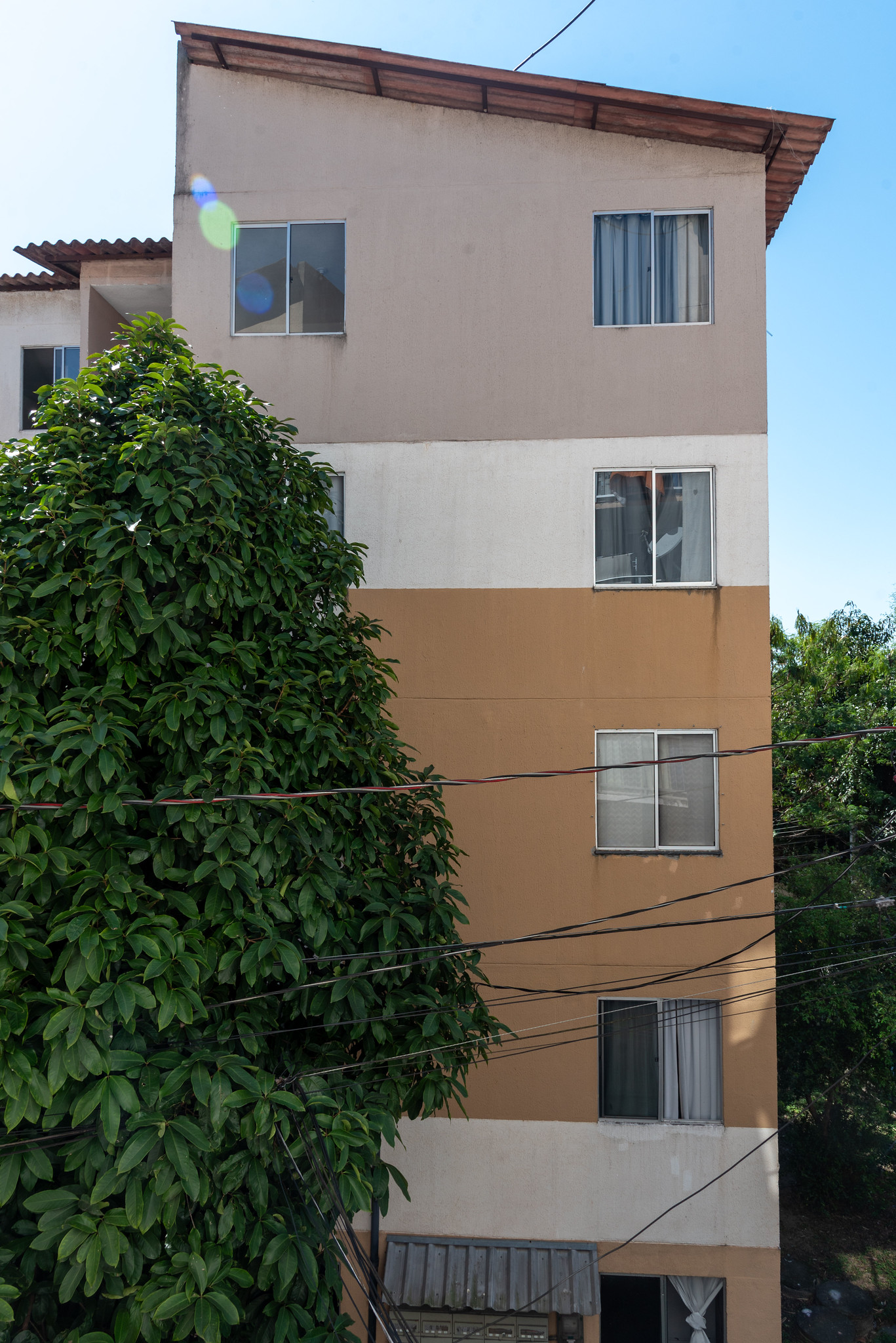
The individualization brought about by vertical housing, combined with the mix of families from different parts of the city and the high turnover of residents driven by the housing market, creates a certain anonymity that, to some extent, permeates social relations. Even so, residents continue to build and rebuild the social ties inherited from their communities of origin in order to adapt to a new housing context. Despite the impacts of vertical housing on relationships between neighbors, the streets of the complex serve as spaces where people meet, talk, reminisce about the favela, exchange, help one another and continue cultivating social ties that provide them with a sense of security.
In addition to giving new meaning to the complex’s public spaces in their everyday lives, many residents modified their housing units according to their own preferences in order to adapt to this new living arrangement. Many replaced floors and doors and carried out extensive renovations to their apartments. Others simply invested in painting and decorating. Some also converted rooms in their apartments into commercial spaces, such as balconies in first-floor units that were turned into grocery stores. Anthropological literature on homes and ways of living recognizes that changes to living spaces accompany subjective changes.
Resettlement in Parque Carioca was yet another episode in the housing histories of families traditionally exposed to vulnerabilities in their housing experiences. Leaving the favela is described by many as yet another forced eviction and displacement among others experienced by their families. These urban displacements affect the plans and aspirations of people, in addition to triggering family rearrangements, such as the separations described at the beginning of this article. Arriving at the complex, a “strange” place in contrast with the “familiar” represented by the community, required efforts to adapt to this new reality. Home renovations are a material resource imbued with subjective meanings, expressing how people continue to give meaning to their living spaces in order to live a desirable life, a life according to their plans.
Feeling at home after resettlement is not easy. This event transformed spaces, subjectivities and also the economic configurations of domestic life. A forced eviction from the favela and resettlement in a housing project constitute a complex urban phenomenon that can be lived in many ways and result in markedly ambivalent experiences. Many families refused to leave Vila Autódromo, and some secured the right to remain there through the fight for the right to housing.
Other families I met saw the eviction as an opportunity to improve their lives by acquiring housing units and receiving cash compensation. In my research, I documented numerous attempts to maximize compensation, such as acquiring additional housing units through home improvements and spatial modifications carried out by residents in homes slated for demolition in Vila Autódromo. Larger houses and a greater number of units resulted in greater compensation. Some rebuilt their lives with the compensation they received, while others regretted negotiating with the City and leaving the community. As mentioned earlier, many women were able to assert their residential autonomy away from the control of their ex-husbands. Some were happy to move to the complex, while others missed the favela. Often, all these feelings were mixed together within the same experience. In addition to being complex, the phenomenon led people down many different paths. Beyond the residents who settled in Parque Carioca, others used their compensation money to build or buy homes elsewhere in the city. Some lived in the housing project for a time and later had to leave. This was the case for Arlinda.
In 2022, she decided to leave the housing complex and move back to a favela. Like others, Arlinda could no longer bear the high housing costs, compounded by the economic crisis and high inflation that affected Brazil during the pandemic. Unhappy about leaving the apartment that was hers by right, Arlinda moved to a nearby favela. She sold her property and bought a studio apartment in a place where she could devote a large share of her income to feeding her family. She misses the housing complex because she feels she lived there with greater “dignity,” as it was a more organized space than the favela. Despite that, leaving the complex and moving back to a favela was the path she found to living a better life. As she told me herself:
“I moved back to the favela so I wouldn’t starve in the housing project.”
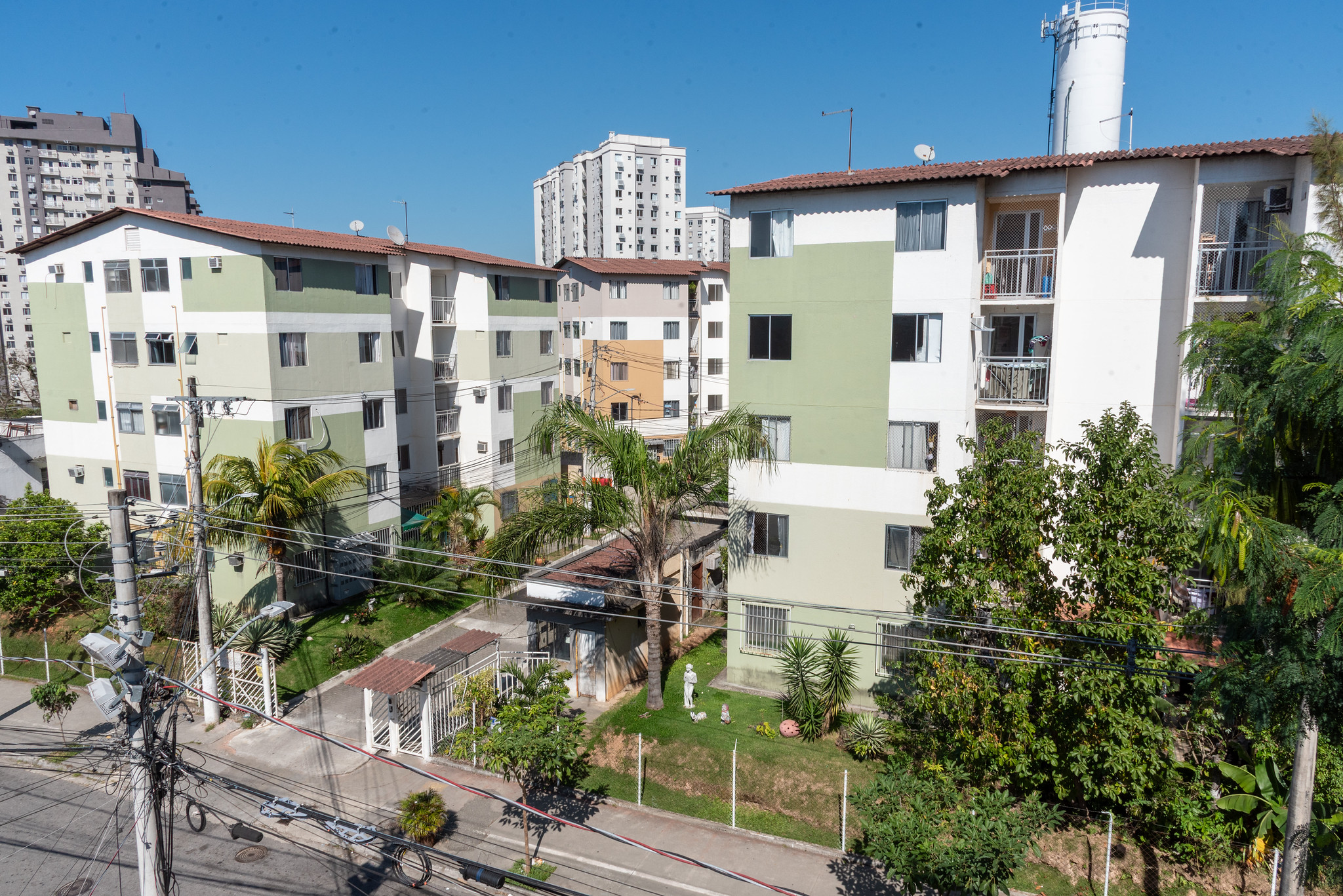
The My House My Life federal program was responsible for the verticalization of working-class housing promoted by public policies for the provision of social housing in Brazil. The program and the State actors that promote it frame the entire experience as a path of upward social mobility. The verticalization of housing, the shift toward nuclear family arrangements and the reconfiguration of relationships between neighbors brought about by these processes express forms of housing that, from this perspective, are understood as superior to those found in the favela.
Therefore, Arlinda’s experience does not represent a tale of upward social mobility and exposes the illusions and failures of housing policy. Under the logic of certain public policies, the favela and the housing complex do not represent opposite ends of an evolutionary path. The continuities between the two are expressed in a series of vulnerabilities to which residents remain exposed after resettlement. In addition to the factors that produce risk and vulnerability already mentioned in this article, I am referring to conditions such as the legal insecurity over their properties, since many residents have yet to receive the final deeds to their apartments, and the fact that the complex has become a territory fought over by organized crime groups. Both drug traffickers and militia members are present in the complex, imposing restrictions on residents’ freedom and engaging in violent confrontations.
I trust that this ethnographic account of Vila Autódromo’s forced evictions and resettlement in Parque Carioca has demonstrated the importance of considering housing policies through broader lenses, such as economics, social relations and subjectivities. The intersection of favela eviction policy and MCMV in the context of Olympic Rio redirected the paths of many people and changed their ways of life. Around 700 families were forcibly evicted from Vila Autódromo, and this number reflects the diversity of ways in which the experience of resettlement was lived. This research account sought to bring visibility to other perspectives on this experience that complement what has been said on the subject for years.
*Arlinda is a pseudonym chosen to protect the interviewee’s identity.
About the author: Daniela Petti holds a bachelor’s degree in Social Sciences from the Getúlio Vargas Foundation (FGV), a master’s in Sociology (with a concentration in Anthropology) from the Graduate Program in Sociology and Anthropology (PPGSA) at the Federal University of Rio de Janeiro (UFRJ) and a PhD in Social Anthropology from the Graduate Program in Social Anthropology (PPGAS) at UFRJ’s National Museum. She also holds a PhD in Sociology from the Interdisciplinary School of Advanced Social Studies (IDAES) at the National University of San Martín (UNSAM) in Argentina. Her ethnographic research focuses on working-class housing, urban social movements, homes, values and economics in everyday life.