
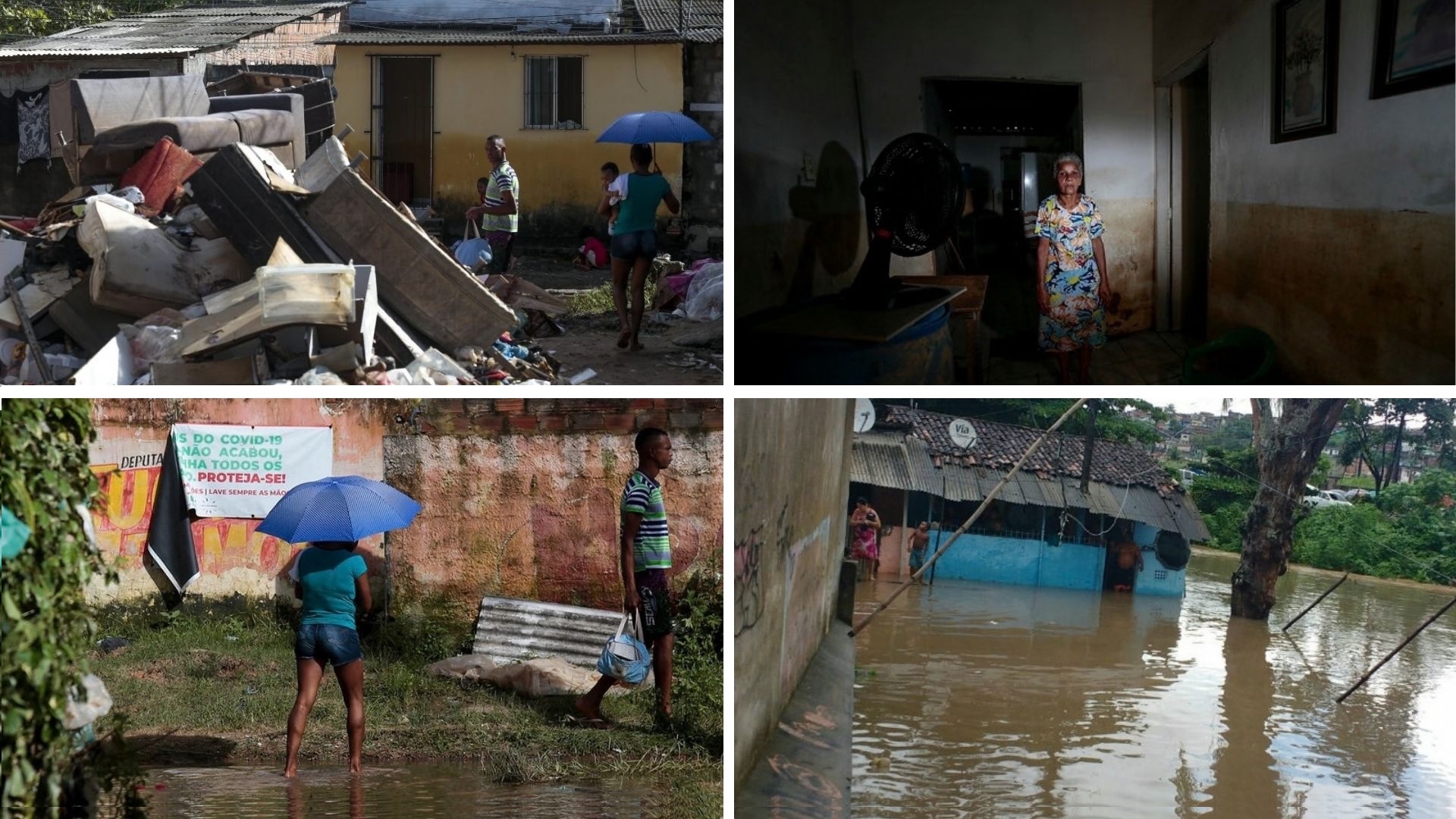

Residents living along the banks of the Tejipió River, in the northeastern Brazilian city of Recife, in Pernambuco state, are demanding transparency from the ProMorar program and calling for the R$2 billion (~US$385 million) investment to translate into permanent solutions, adequate housing and popular participation.
The heavy rains of 2022 left deep scars on Recife. Faced with the urgent need to prevent further tragedies, City Hall, together with the Inter-American Development Bank (IDB), approved the ProMorar project, with an investment of R$2 billion aimed at building urban resilience in the Tejipió River Basin.
The plan promised modern nature-based solutions, floodable parks, land tenure and guarantees that families would not have to leave their neighborhoods. However, what residents of the Ipsep, Jardim Uchôa, Caçote, Sapo Nu and Coqueiral favelas have experienced in practice is very different from the promises made on paper.
Seu Jailton, a resident and business owner in Jardim Uchôa, a community in the neighborhood of Areias, shared his sense of abandonment and concern:
Ver esse post no Instagram
Another resident said that floodwaters invade homes every two weeks:
Ver esse post no Instagram
On July 25, 2026, residents of these communities alongside the Tejipió River Popular Forum (FORTE), the Dom Helder Camara Center for Studies and Social Action (CENDHEC), the National Human Rights Movement (MNDH/PE), among others, raised their voices through a letter denouncing the situation, demanding answers regarding the lack of compliance with social safeguards and calling for transparency during a demonstration at Marco Zero in downtown Recife.
The original guidelines agreed upon with the IDB established clear criteria: transparency, prioritizing that families remain in their own communities, strengthening women’s political participation and mitigating socio-environmental impacts.
Yet the daily lives of those living along the banks of the Tejipió River continue to be marked by neglect:
- Constant Flooding and Insecurity: Flooding remains a constant reality. In addition to recurring material losses, families live with polluted water invading their homes and the daily risk of animals such as rats, snakes and alligators inside their houses.
- Lack of Dialogue and Transparency: No clear information is given in advance about which homes will be impacted or about plans for land regularization. The program’s social services office has not worked as an effective channel for listening to residents or providing complete and accessible information.
- Superficial Gender Initiatives: Although the IDB guidelines emphasize women’s leadership and empowerment, the initiatives offered to women residents have been reduced to beauty and self-care workshops, ignoring the political and economic autonomy of women in the community.
- Silence on Community Proposals: A network of technical and community organizations developed the Community Social Interest Housing Project, offering a viable, within-budget alternative to guarantee adequate housing within the same region. Presented to the ProMorar coordination team, the project has yet to receive any response.
The Gota D’Água Movement’s public demonstration made it clear that residents are not seeking to stand in the way of development, but rather to ensure that it takes place with and for the people.
The movement’s main demands include:
- Guaranteeing Adequate Housing Within the Community: Effective adoption of options such as assisted purchase, property exchange and social interest housing through the project presented by the network, avoiding forced displacement to distant areas.
- Dignified Resettlement: Forced evictions should only take place to permanent housing units that are ready to be occupied and in adequate living conditions.
- Fair Compensation and Land Regularization: Fulfillment of the commitment to financial compensation of no less than R$85,000 (~US$16,000) for those who choose this option, as well as the issuance of property deeds through REURB for those living in safe areas.
- Effective Flood Prevention Works: Permanent structural solutions that prevent water from invading homes.
- Genuine Participation and Transparency: Active listening of residents, especially women, for decision-making and no forced evictions without prior consultation.
The Gota D’Água Movement’s message to public officials and regulatory agencies is direct: communities in the Tejipió River Basin will no longer accept being made invisible.
True urban development only exists when it respects the history, right to housing and dignity of the people who build the city every day.
About the authors: Pastor Geazi and Pastor Marcos are Catholic missionaries and members of the Transformar Institute and Solidare Institute, respectively. Luís Emmanuel is a grassroots lawyer and coordinator of CENDHEC’s Right to the City Program. Géssica Dias is a social worker with a master’s degree in Urban Development from the Federal University of Pernambuco (UFPE) and works in urban socio-environmental organizing.