
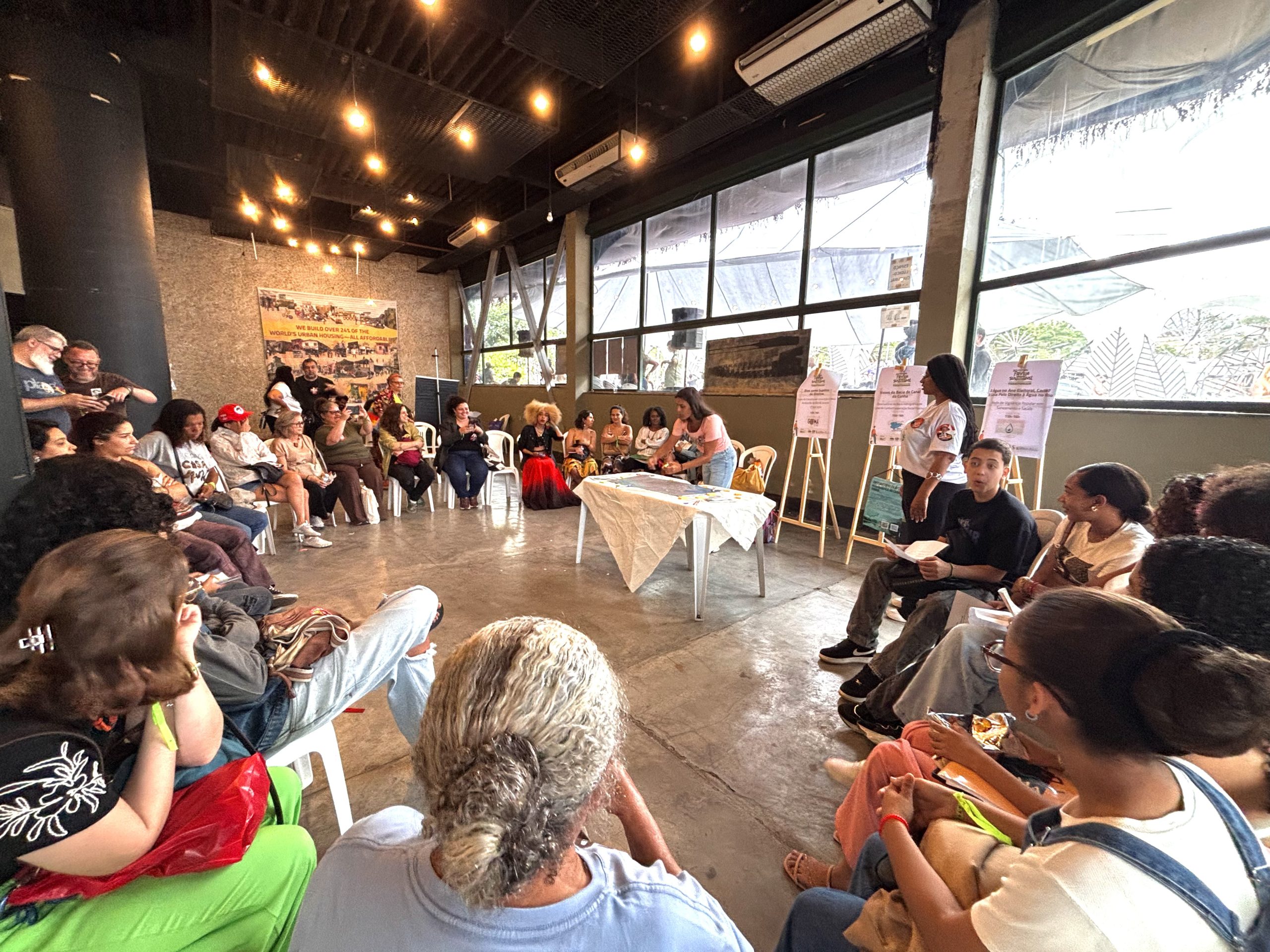

Held on Saturday, October 17, at Fundição Progresso, the festival featured over 180 activities throughout its program.
The sound of flowing water lulling people to sleep, childhood memories of swimming in once-clean rivers and outrage over polluted waterways marked discussions at the 3rd Sustainable Favela Festival. Through discussion circles and exhibitions, residents, students and socio-environmental organizations debated the degradation of rivers and impacts on favelas.
Upon arriving at the festival, it was impossible not to notice the connection between water and the communities represented at the event. This relationship was evident both in residents’ demands for improved sanitation and in the various exhibitions spread across the venue’s two floors.
Among the works exhibited on the second floor, a display of children’s drawings depicting their relationship with rivers stood out for its vibrant colors and the creativity reflected in each illustration. Despite their different representations, the drawings seemed to be in dialogue with one another, as though guided by a common theme, highlighting the importance of rivers to the lives of people, animals and plants.
On the other side of the exhibition hall, banners and panels from the Favela Climate Memory research project presented stories from different favelas and their relationship with water. The images depicted everything from the impacts of rainfall in communities such as Rocinha, where the geography of the hillsides influences rainwater runoff, to everyday scenes, such as puddles that reveal sanitation problems in these communities.
The solidarity market also featured exhibition stalls displaying photographs and records from different communities. Among them was the Pedala Queimados initiative, which presented a cyclist’s journey along the Doce River in Minas Gerais. During his journey, he documented stories of residents affected by the Mariana dam collapse, recording the lasting impact of the tragedy on people’s lives and the affected communities.
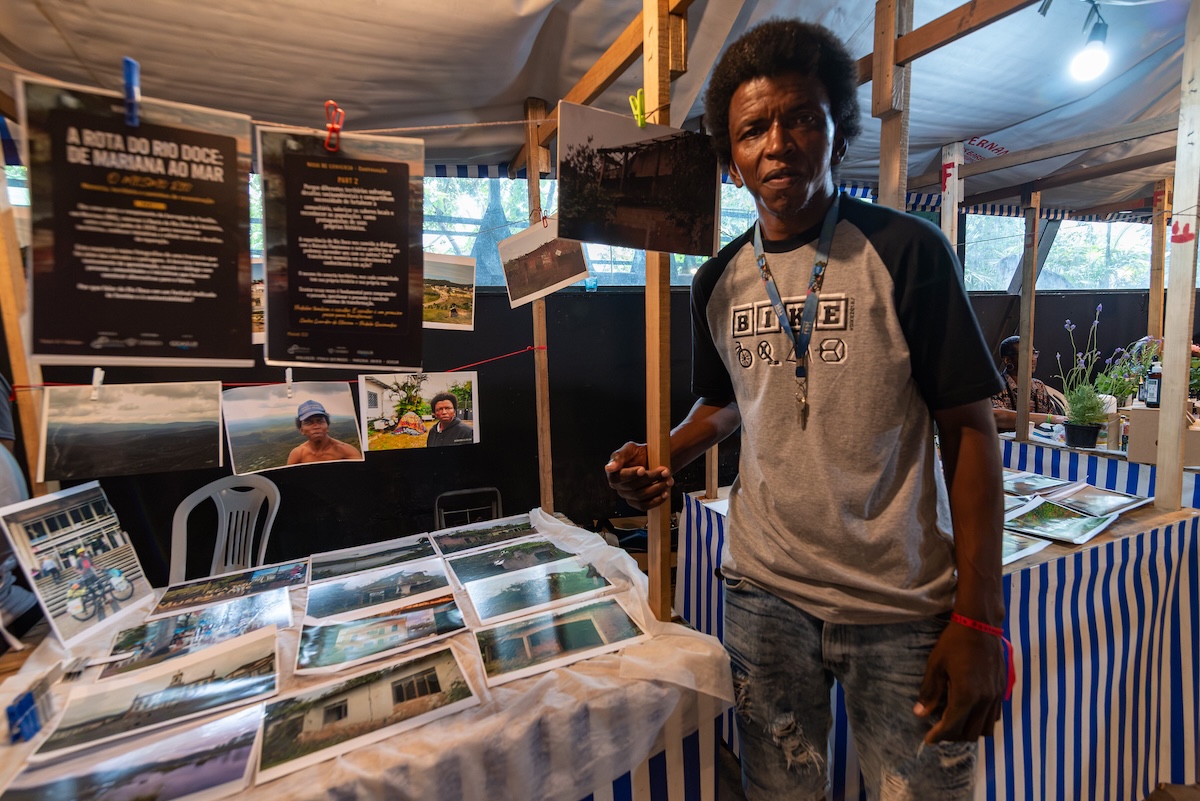
One of the discussion circle’s activities began with a reading of the Anil River Rights Declaration, drafted by ninth-grade students from the Canrobert Pereira da Costa Municipal School in Jacarepaguá. In the document, the students express concern about the river’s degradation and demand action from the city government to preserve it.
Ver esse post no Instagram
Teacher Jacqueline Guerreiro, from the Canrobert Pereira da Costa Municipal School in Anil, Jacarepaguá, highlighted the importance of developing ongoing environmental education projects that bring students closer to their communities’ socio-environmental issues. The school has carried out activities related to the Anil River since the 1990s. These activities were consolidated between 2017 and 2018 with the creation of the Anil River School Observatory. The initiative promotes interdisciplinary activities, such as drafting the declaration of river rights and projects focused on climate change.
For Guerreiro, connecting global environmental issues to local realities helps students understand the connections between ecosystems and recognize their own role in building knowledge. She also emphasized that students taking a leading role strengthens their self-esteem and encourages them to participate in new projects:
“When we bring [something] to the local level, to the river in their own community, to where they live, they’re able to make these connections. Their self-esteem as builders of their own knowledge also helps in the next stages, activities and projects. It’s a responsibility passed down from older classes to the newer ones.”
During the Voices of the Cunha Canal Watershed activity, participants shared positive and negative memories of rivers near their homes. Their accounts highlighted problems such as illegal waste disposal, the presence of dead animals and the lack of initiatives to restore these environments.
Residents living near the Cunha Canal in Complexo da Maré and activists also revisited the river’s history and denounced the abandonment and neglect by public authorities regarding its preservation. The canal is one of the most polluting waterways among those flowing into Guanabara Bay and faces severe pollution and sanitation problems that affect communities living nearby.
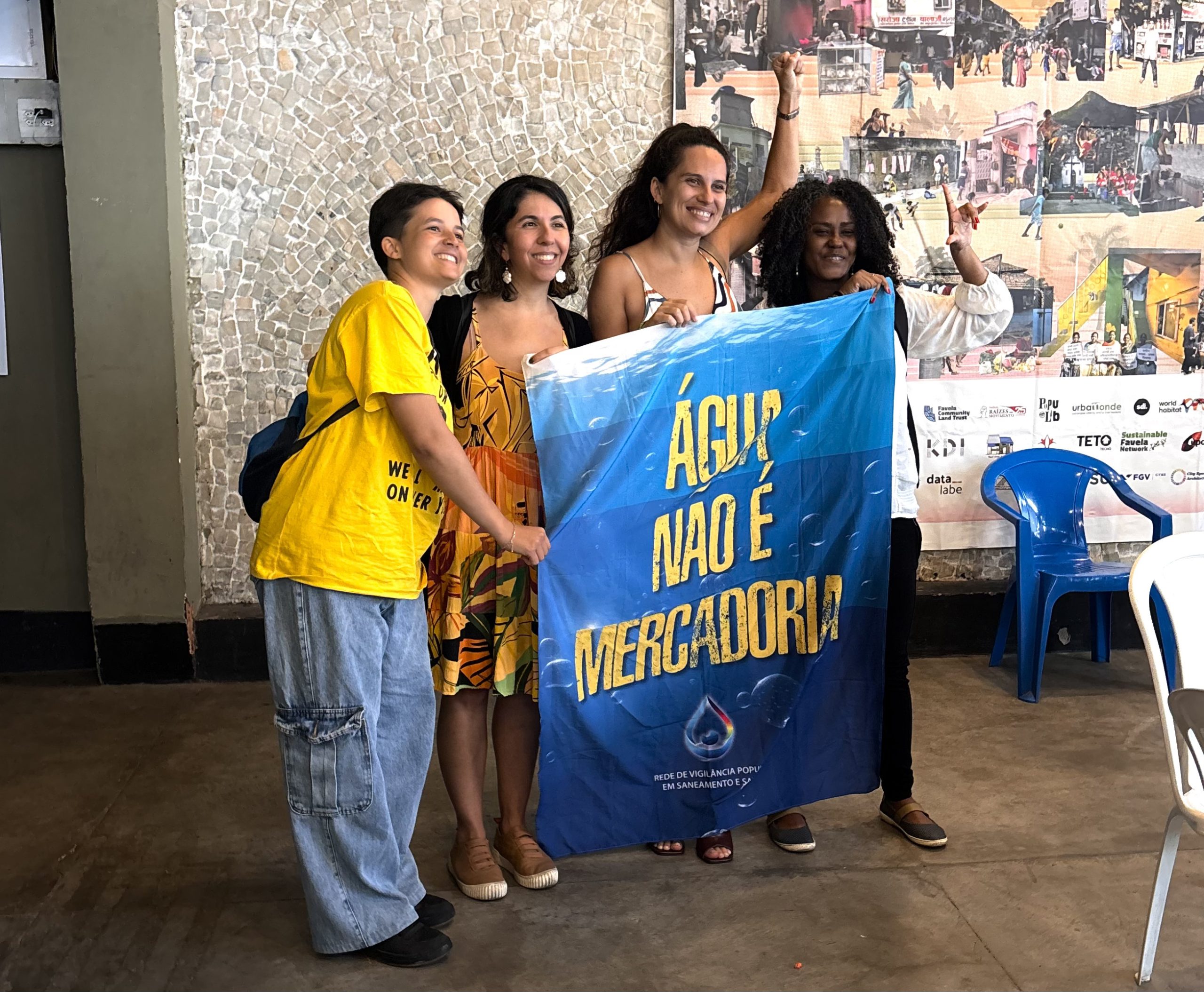
During the activity, participants also criticized the private companies responsible for water distribution and sewage treatment—Águas do Rio, Rio+Saneamento and Iguá—over the challenges of ensuring access to sanitation and protecting natural resources. Participants highlighted the need for more effective public policies and greater commitment from government officials to environmental recovery in Rio de Janeiro.
“We are facing a very worrying situation,” said the activity’s moderator, a member of the Popular Network for Sanitation and Health Monitoring, which brings together around 50 members, including organizations, coalitions, elected officials’ offices and forums.
For Carolina Niemeyer, from the Fiocruz Presidency’s Social Cooperation Department, dialogue among collectives helps create solutions, but implementing them requires political commitment. “There’s a plan in place. What’s missing is political will,” she said, highlighting the responsibility of public authorities in putting the proposals into practice.
Environmental inequality was also the subject of a discussion circle organized by the Pedala Queimados Association. Carlos Leandro de Oliveira shared his experience on the Doce River Route, undertaken in 2016 to learn about the impacts of the Fundão Dam collapse in the city of Mariana, Minas Gerais, and hear from those affected.
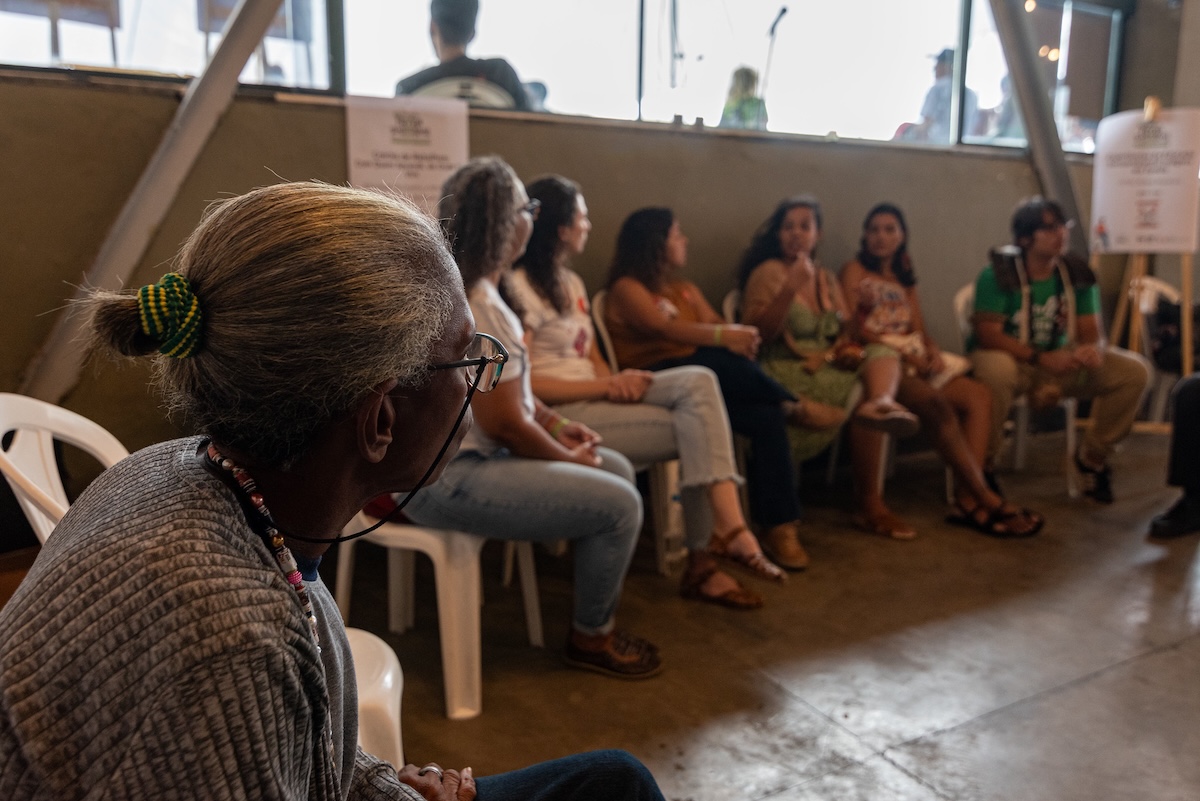
Oliveira traveled along the Doce River Route in 2016 to understand the impacts of the Fundão Dam collapse in Mariana through the experiences of affected residents. The initiative sought to give visibility to those impacted and gain firsthand knowledge of environmental conflicts and the challenges of obtaining compensation.
“I wanted to listen to those people who had been made invisible,” said Oliveira, explaining his motivation for the journey. Along the way, he identified similarities between the realities of those affected in Minas Gerais and residents of Greater Rio’s Baixada Fluminense, particularly his native Queimados, where floods and flash floods take place every year.
“The issue changes, the place changes, the direct impact changes, but the neglect is the same,” he observed. According to Oliveira, recurring floods directly affect residents’ lives, as they face the possibility of losing their belongings every summer. “There are people in Queimados who have stopped buying materials and furniture for their homes because they know they’ll lose them the following summer,” he said.
Another aspect that struck him was realizing that, even after new homes had been built for families affected by the dam collapse, structural problems and uncertainties about the community’s ability to remain in the area persisted. Oliveira also highlighted that, years after the disaster, some people have still not been recognized as having been affected by it or received adequate compensation:
“[As you travel] along the [Doce River] Basin, you begin to understand that there are people who, to this day, have not received compensation or even been recognized as affected [by it] because they live farther away from the epicenter of the disaster.”
For Oliveira, the bicycle was essential to this process, not only as a means of transportation but also as a tool for connecting with people and listening to them. Spending time with residents allowed him to build relationships of trust and learn their stories. “The bicycle brings people together,” he summarized.
The material collected during the journey was intended for a documentary. Although he lost some of the audiovisual records, Oliveira plans to resume the project, gathering new testimonials to give greater visibility to the stories and demands of those affected.
The discussions reinforced that preserving rivers also means ensuring basic sanitation, risk prevention and public policies that protect communities, taking into account different perspectives—from the commitment of public authorities to that of residents seeking solutions to clean up the rivers near their homes.
Below, read the full 2023 Anil River Rights Declaration, drafted by ninth-grade students from the Anil River School Observatory at Canrobert Pereira da Costa Municipal School:
The Anil River is part of Jacarepaguá’s environmental heritage.
The Anil River must be preserved for future generations.
The Anil River is important for a healthy environment in the Jacarepaguá region.
The history of the Anil River must be known to residents and students of schools in the surrounding area.
Use of the Anil River requires respect for the law.
The Anil River has the right to flow.
The Anil River has the right to regenerate.
The Anil River must not be polluted.
The banks of the Anil River must be preserved through the planting of native seedlings.
The Anil River must be cared for and conserved through city government actions.
About the author: Karen Fontoura is a journalism student at the Federal University of Rio de Janeiro (UFRJ), a resident of Rocinha, and a reporter with community newspaper Fala Roça, where she coordinates the organization’s institutional and project communications. She works with audiovisual production, reporting and the promotion of community initiatives.