
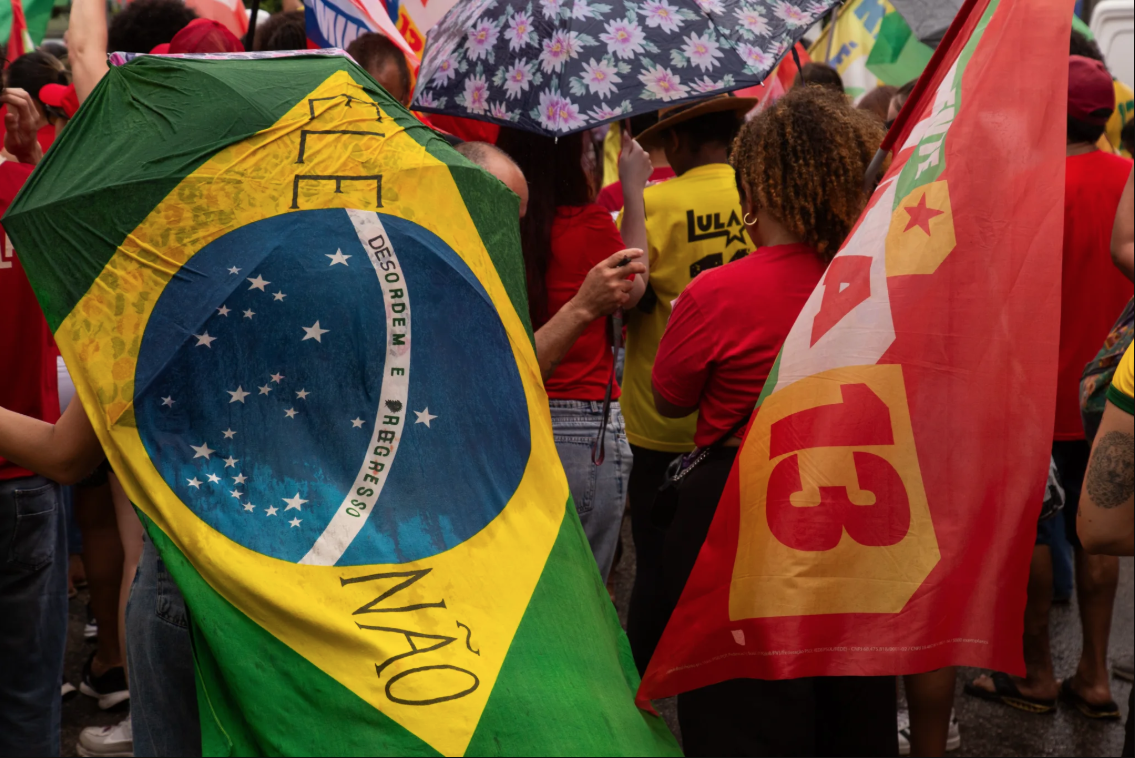

For the original article by Gizele Martins, published in Brasil de Fato on November 4, click here.
November 4 is Favela Day! Favelas have 129 years of history. Today, they are home to Black communities, people hailing from Brazil’s Northeast, Indigenous peoples and so many others who resignify these spaces every day. We are laborers working in precarious conditions, living in homes built with our own hands. We have historically fought for water, housing, safety and so many other basic human rights.
Criminalization is the norm in a country marked by the criminalization of poverty and structural racism. In Maré, where I was born and raised—a group of 16 favelas in Rio de Janeiro’s North Zone, home to 140,000 residents—we survive countless, nearly weekly police operations under the pretext of fighting the drug traffic. In reality, these operations are about controlling our land and territory, our culture, our community life and our insurgent struggles.
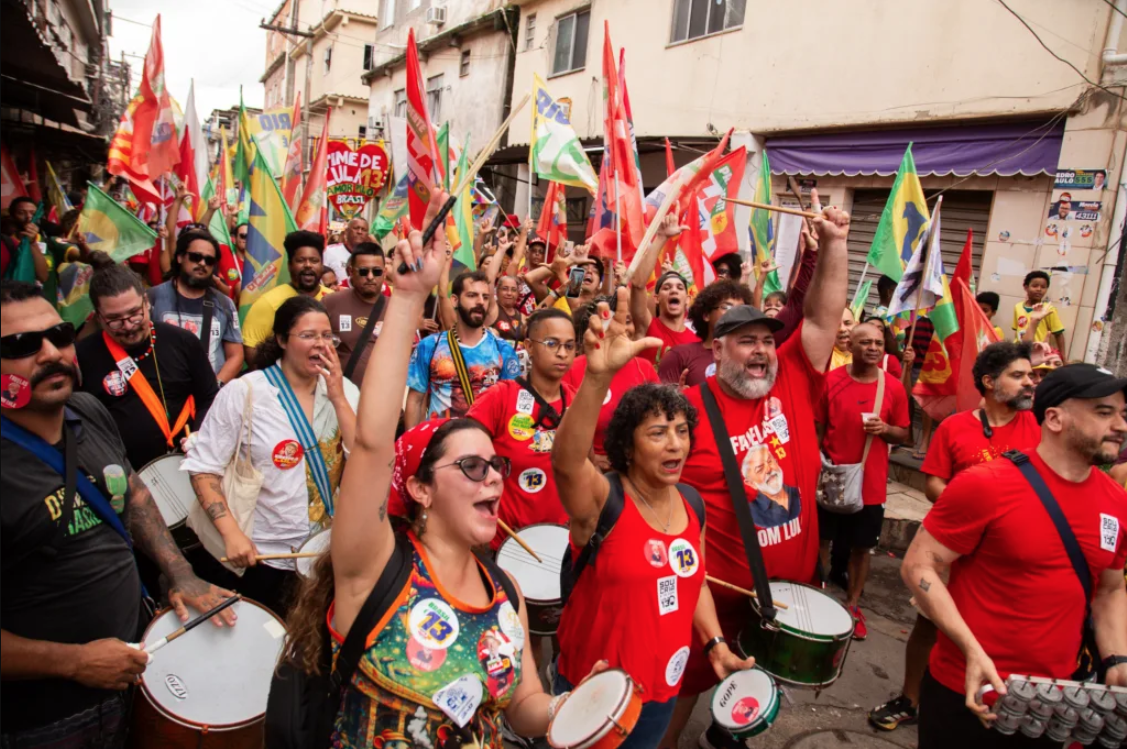
In this same place—as a way to reclaim a narrative often written by others through the lens of criminalization—numerous community media outlets are rewriting the favela’s story. These outlets highlight our lives, music, theater, culture and work and transform all this into memory. We have community museums, community radio and TV stations and community newspapers, alongside social media platforms that have become a milestone in reaching audiences both within and beyond favelas.
In recent years—especially during election periods—there have been many questions regarding us, the poor, and why a majority of people in favelas vote for the right. In the first round of this most recent election, we did not see campaigns from left-wing parties in many of the favelas and peripheral neighborhoods of Rio de Janeiro’s North Zone, the Baixada Fluminense and West Zone. In my view—and that of other residents and key figures within favela movements—this was a political error, and one that is not new. For some years now, we have held the view that we need left-wing movements to support our local efforts—by providing political education and cultural activities, and by helping us work strategically in our struggle to secure local public policies.
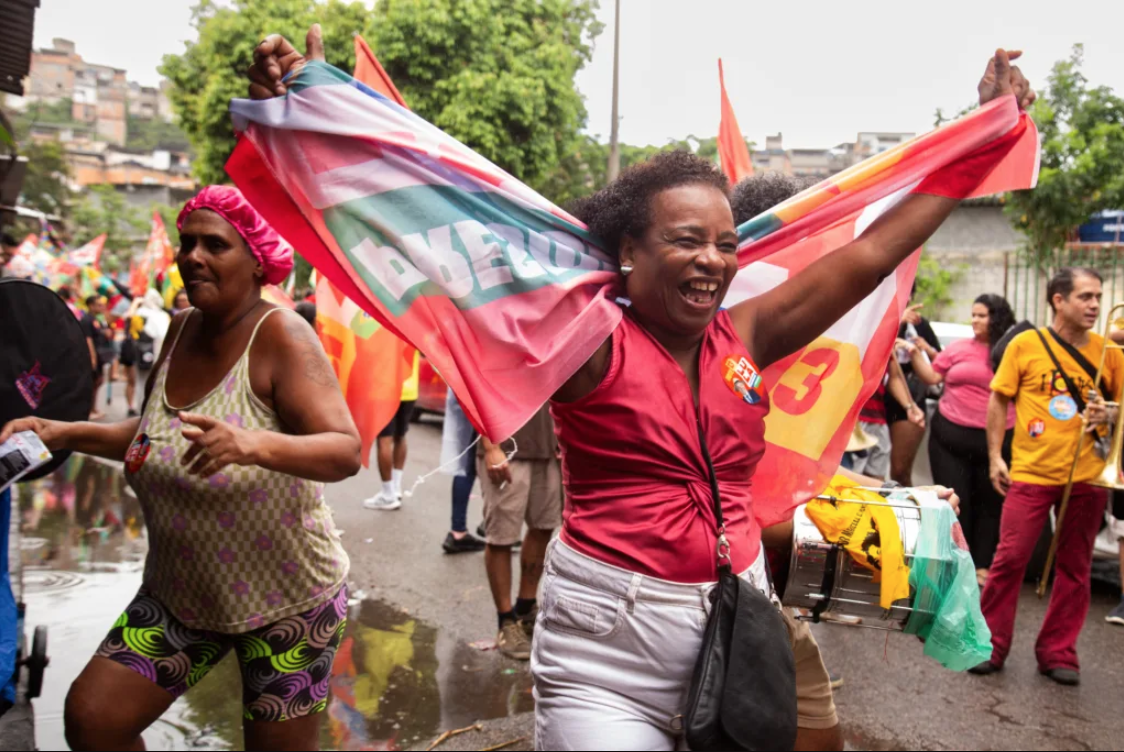
After the first round of the 2026 elections, numerous people reached out to us to develop a strategic plan to combat fake news and create an election-focused communication campaign. In Maré, we quickly came together in response to an internal need—by residents, for residents—and collectively organized a communications plan that included print materials—signs, wheat-pasted posters, flyers, stickers and banners—as well as a sound truck broadcasting audio recordings and music about public policies secured during the years the Workers’ Party (PT) was in government.
We took to social media and WhatsApp groups with graphics and short videos, highlighting both tangible achievements and the setbacks we experienced under the far-right administration during the Covid-19 pandemic. We developed this communication strategy using language that resonates locally, with the help of friends. I ask myself, though, why, even under a left-wing government, there is no investment in community media. Why are we, journalists from favelas and other territories of resistance across our country, still not valued as professionals deserving of rights?
Ultimately, in Maré alone—thanks to the communication strategy carried out by local youth distributing flyers daily at churches, schools, family clinics and door-to-door, alongside a street demonstration that brought together nearly 2,000 people and marched through 12 of Maré’s favelas—Lula gained over 9,000 votes between the first round and the runoff. According to an analysis by grassroots outlet Voz das Comunidades, based on data from the Superior Electoral Court (TSE) website, “In the 161st electoral zone, Lula received 61.90% (42,467 votes), while Flávio Bolsonaro received 38.10% (26,143 votes). Lula gained about 9,000 more votes than he had in the first round, and Flávio Bolsonaro gained about 1,800.” It is worth noting that this same favela faced serious problems due to changes in voting locations during the first round.
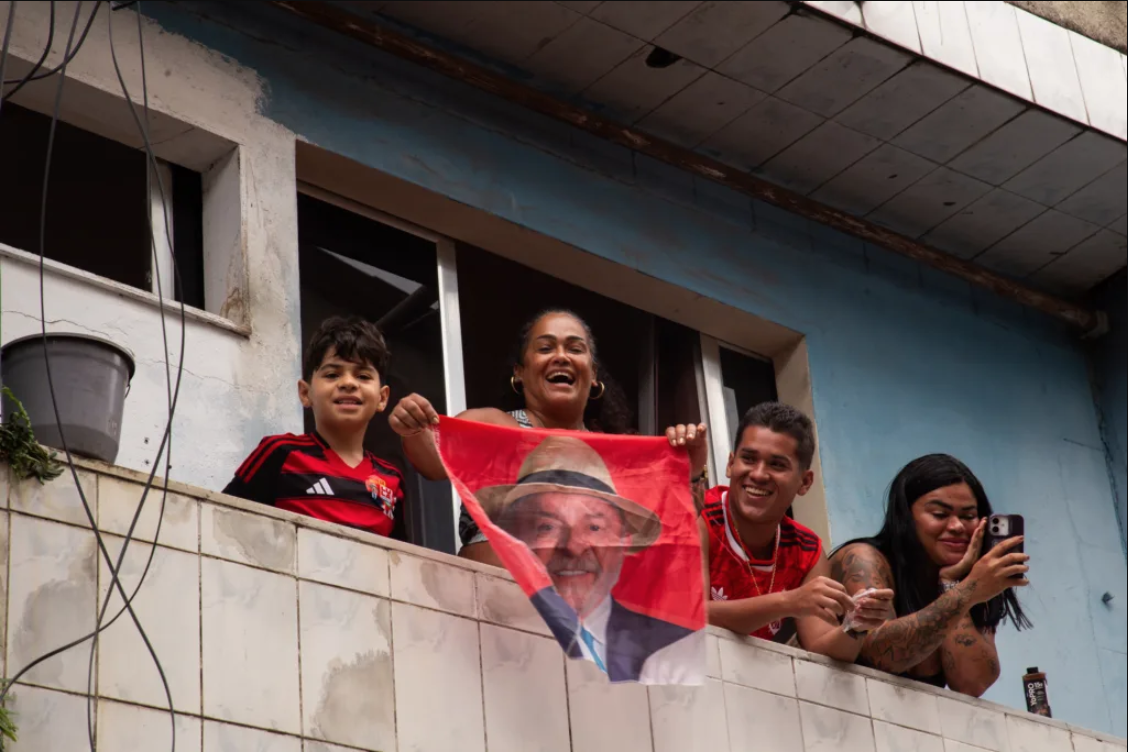
This same analysis published by Voz das Comunidades pointed out that “in the places where residents of Complexo do Alemão, Penha, Maré, City of God, Rio das Pedras, Gardênia Azul and Rocinha live, Lula received more votes than Flávio Bolsonaro in every electoral zone we monitored.” This, therefore, makes me question: is the problem really us poor people, stereotypically dismissed as those who “don’t know how to vote”? Or is it that we only see political campaigns show up in moments of desperation, as witnessed during the runoff? The right wing contests this space, this language, and this ideology on a daily basis. That is why we invite everyone to reflect on the agenda for the democratization of communication, the public funding of community media, and the ongoing work that must be sustained within our favelas and peripheral neighborhoods. Let us move forward—carrying our banners, our dreams, and our visions of a different world—to engage in the battle for minds and ideas, so that, together, we may transform our practices!
About the Author: Gizele Martins is a communicator from the Maré favela in Rio de Janeiro, an anti-racism advocate, and a defender of the right to life and of territories.