Initiative: Pedala Queimados (Cycle Queimados) Contact: Facebook; Instagram; WhatsApp: +5521965508094 Year Founded: 2015 Municipality: Queimados (in Greater Rio de Janeiro’s Baixada Fluminense region ) Mission: Promote social change through cycling, focusing on creating opportunities—especially for employment and income—while also encouraging citizenship and reducing inequality. Public Events: Pedala Queimados holds frequent activities for children and their families in the Nossa Senhora de Fátima neighborhood (known as São Miguel) in Queimados, such as teaching children how to ride bicycles. In addition, special events are open to the public, including the Bike de Cria Festival, and group walks and bike rides through the region’s rural areas, such as the Walk Queimados. Check out their social media pages for more information about upcoming events. Get Involved: Participate in events, help promote the tours offered by the project, volunteer by sharing your skills, or support through donations or ongoing sponsorships.
What began in 2015 as an initiative to encourage the use of bicycles as an economical and sustainable means of transportation soon developed into an association that integrates various demands of residents in Queimados, a municipality in Greater Rio de Janeiro’s Baixada Fluminense region. Officially registered in 2019, Pedala Queimados promotes the use of bicycles in the city in order to strengthen sustainable mobility and foster social change through active transport.
‘I Realized I Didn’t Have to Be Held Hostage by Public Transportation’
When Carlos Leandro de Oliveira, founder of Pedala Queimados, found himself cycling 55 km (~34 miles) to work every day, he began to rethink how he moved around the city and his relationship with different modes of transport.
“I grab my bike and start heading toward Rio, and I realize I don’t have to be held hostage by public transport if I don’t have the money to get around. The bike could take me many places, anywhere. And after two bike trips—one to São Paulo and another between Minas and Espírito Santo—I began to see that if I could bike across Brazil, then people could bike in Queimados, which is flat and theoretically comfortable for cycling. Actually, not really, because there’s no infrastructure. But people are already biking here, right? So I began mobilizing around the bicycle, [to encourage] people to bike here.” — Carlos Leandro de Oliveira
The daily bike ride covered the stretch from Queimados to downtown Rio, and was a consequence of Oliveira’s delayed salary at a time when he was still an intern. This event encouraged him, in 2015, to create Pedala Queimados and promote greater awareness of the issue in the region, in addition to leading important projects in the field.
One of Pedala Queimados’ first activities was a seminar held in partnership with Teto Brasil, an organization that implements housing and habitat initiatives in precarious favelas. The meeting, which took place about a year after Pedala Queimados was created, aimed to discuss the challenges of implementing a cycling policy in the city.
During this same period, between 2016 and 2018, the city of Queimados recorded violence rates higher than those of other Brazilian cities. Data collected by the Atlas of Violence identified Queimados as the most violent city in the country at that time. Motivated to change this reality, Oliveira began to give Pedala Queimados an increasingly professional approach.
“How was I going to fight for mobility if people were barely surviving? Either I would keep fighting alone, or I could shift the focus and use the bicycle as a tool [for transformation] to help people survive. I began to understand what led people to such violence, even death… Some would steal, many turned to robbery, [used] drugs [here in the region]… and if the reason was this (many robbed because they had no work, because they had little schooling), [I thought about proposing] the bicycle as a tool for training, employment, and income. From there we came up with the idea for the project ‘Queimados Cycling for the Future: Toward a More Humane City.’” — Carlos Leandro de Oliveira
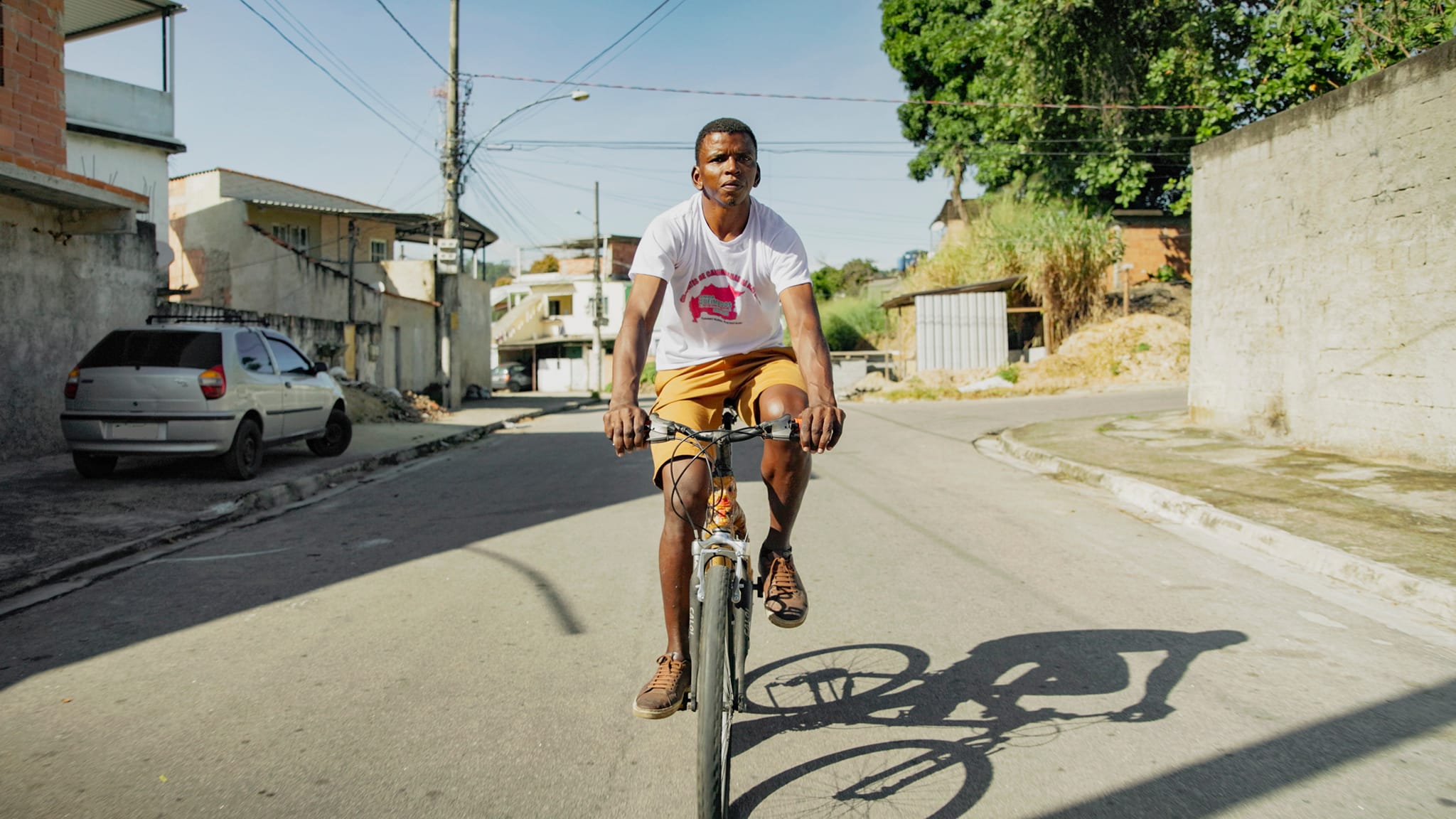
Oliveira started a fair mobility project in Queimados to democratize transportation in the city. Photo: Canal Off
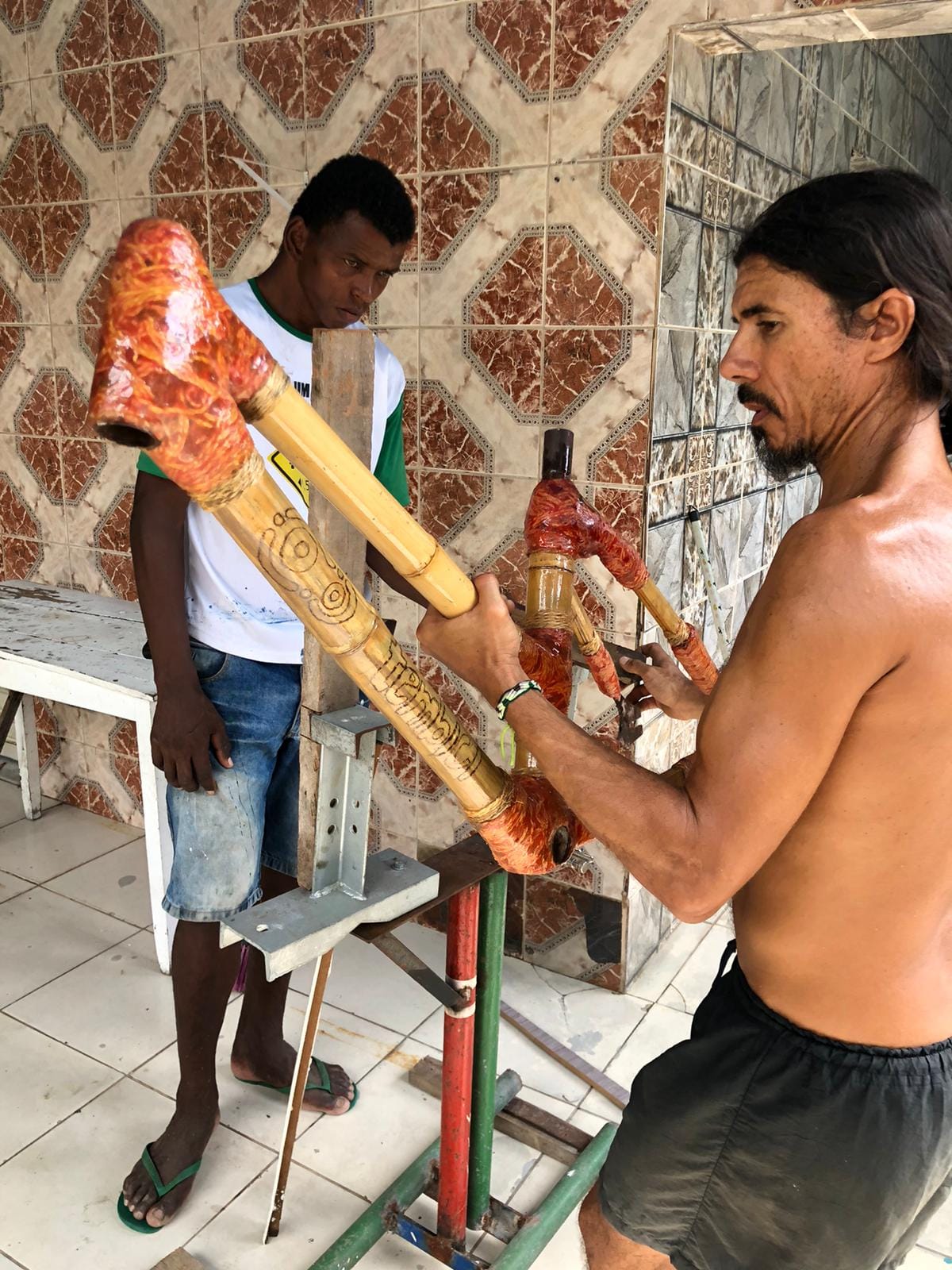
Based on this mission, Pedala Queimados held its first bicycle assembly training in 2018, facilitated by craftsman Klaus Wolkmann of Art Bike Bamboo. At the former Portal Cultural space in downtown Queimados, he taught 25 people to build bicycle frames using bamboo. The training included women, seniors, youth and some formerly incarcerated people, among others, generating opportunity and visibility. Ten bicycles were built at that time and the knowledge of how to construct bamboo bicycles stayed in Queimados. The funds for this specific project were raised through a crowdfunding campaign.
Despite its potential, the high production costs made it hard to keep the initiative going, which sought precisely to democratize access to bicycles in Queimados. Financial constraints are among the greatest barriers faced by community projects promoting active and sustainable mobility.
Bamboo bike assembly training, offered by Pedala Queimados with the aim of democratizing access to bicycles in the region. Photo: Pedala Queimados Archive
In 2018, besides the bamboo bike workshops, Pedala Queimados also replicated a project by the organization Ameciclo, first launched in Recife, a city in Northeast Brazil. Called the Abandoned Bicycle Capital Proposal, this initiative targeted residential complexes from the federally-funded public housing program My House My Life. It was carried out as part of Pedala Queimados’ “Cycling for the Future” program.
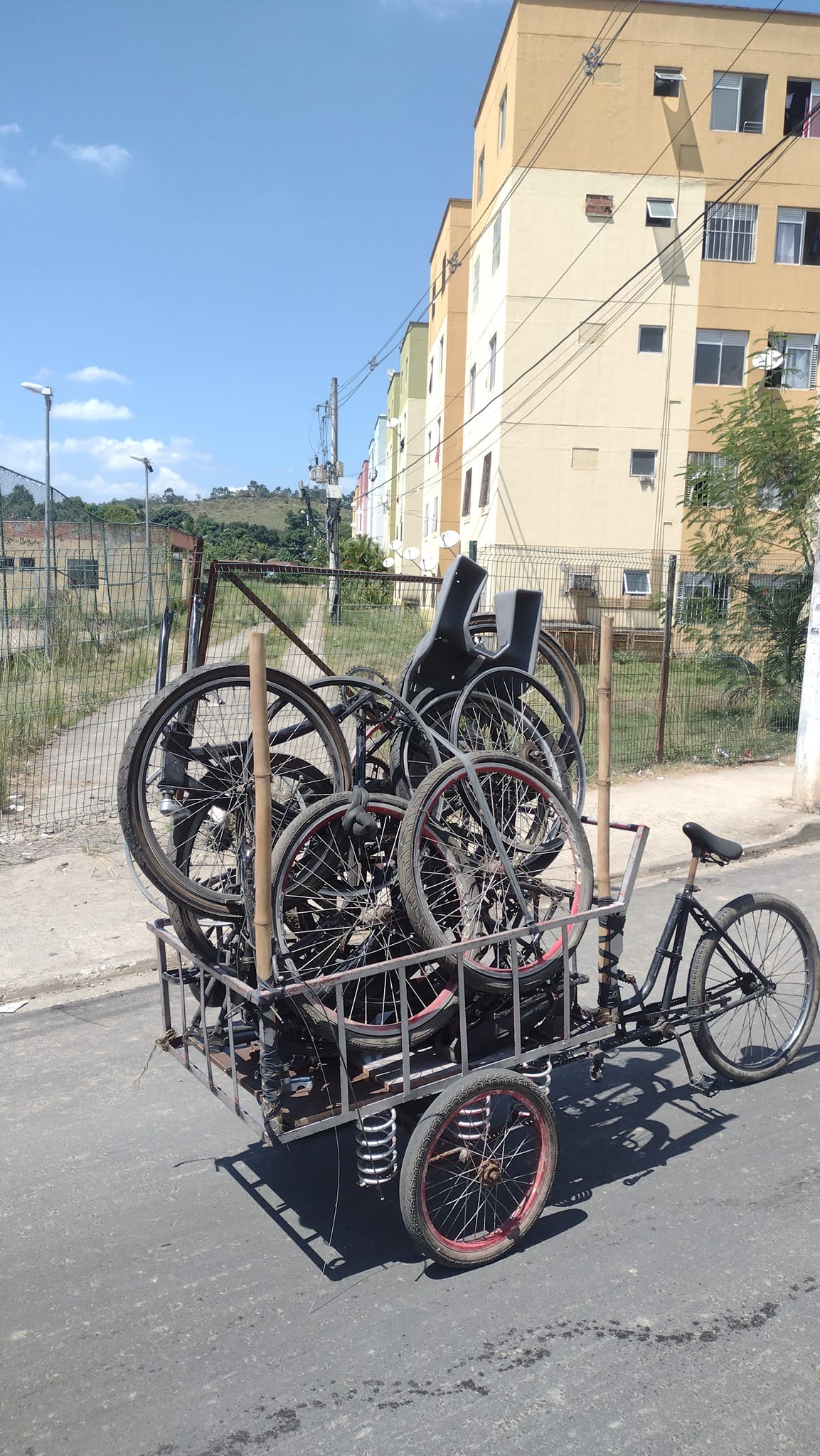
The project collected abandoned bicycles in various parts of Rio de Janeiro to be repaired and donated for collective use by residents of My House My Life housing complexes in Queimados. The project aimed to provide access to a shared bicycle system, as well as train residents in mechanics, bike repair, and conscious use of bicycles as a means of mobility.
“Understanding what led these people to suffer violence, to die, to steal, to rob… If the reason was because they didn’t have jobs, [because they had] little schooling and a number of [other] issues… then let’s use bicycles as a tool for training, employment, and income generation.” — Carlos Leandro de Oliveira
Bicycles were collected from gated communities in upscale areas of Rio de Janeiro to be refurbished and delivered to low-income residents of Queimados. Photo: Personal archive
However, the pandemic impacted the completion of the project, which was put on hold until health restrictions were loosened. Some of the bicycles that had already been collected were stolen during this period. The remaining material was donated to Golfinhos da Baixada, a swimming project for children, or stored in Pedala Queimados’ warehouse. Despite the obstacles, Oliveira and his companions persevered.
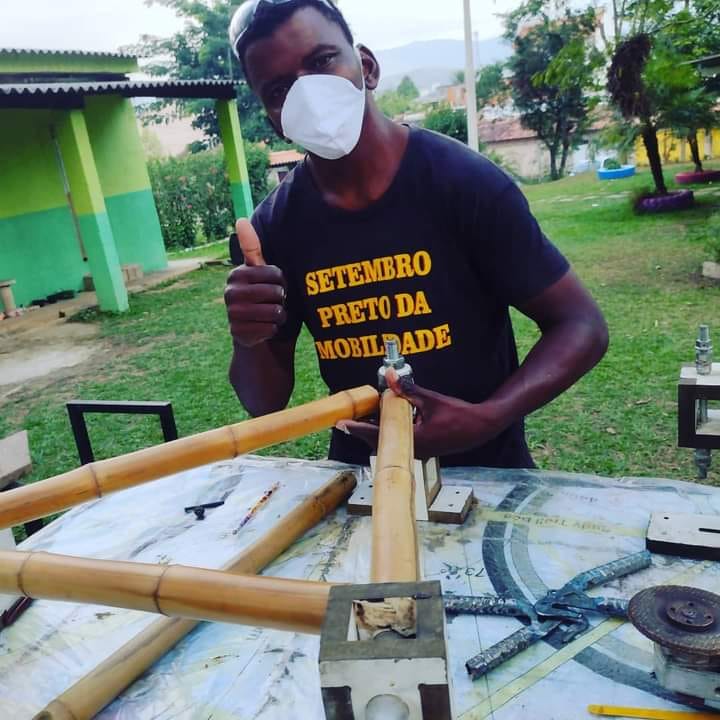
The project offered a course on bamboo bicycle assembly, an initiative supported through crowdfunding. In the photo, Oliveira during one of the workshops held in 2022. Photo: Personal archive
“We weren’t able to follow through with the project. That’s also tough because, when we got there, we mobilized a lot of people—especially children and teenagers—and in the end, we couldn’t deliver. That messes with their expectations, you know? Right now, we’re applying for a grant to try to restart this project in another area. This year, we applied to Bicicleta Brasil [a Ministry of Cities program] and received the seal, but didn’t get the prize [in cash or the final approval], which would have made it possible. Our CNPJ [number with the National Registry of Legal Entities] was denied because we didn’t file the right papers. You need funding for all that, right? You have to pay the accountant—and if you don’t have funding, how can you afford that? We’re trying to sort that out.” — Carlos Leandro de Oliveira
Along with the challenges already faced, factors such as economic sustainability affect the continuity of the initiative.
“No bike-sharing model in Brazil or anywhere else in the world can sustain itself solely on user fees [charges for use]. Without a sponsor behind it, the bikes won’t run. It’s the same here [in Queimados], because you need maintenance—the streets are in very poor condition. It’s not fair to put all the costs on the user, since [transportation] fares are already high and the idea is to reduce costs. It’s an [extremely challenging] issue. Calls for proposals and funding were paths we had in mind, and that pushed us to think of other ways to sustain ourselves, because the pandemic laid bare a huge reality: how to sustain ourselves through what we do.” — Carlos Leandro de Oliveira
During the pandemic, Pedala Queimados reinvented itself, and the bicycle proved to be a key factor in overcoming the challenges posed by the health crisis. Community groups such as Golfinhos da Baixada, Better World Collective, Friends of Paraíso Association (AMPARA), Visão Coop, and Professora Marli Esteves Institute, among others, joined forces in the União Rio Movement to deliver baskets of basic foodstuffs and hygiene items through bike deliveries. The initiative focused on serving municipalities in the Baixada Fluminense region, such as Queimados, Japeri, Nova Iguaçu, São João de Meriti, and others.
Although it managed to get through the pandemic, Pedala Queimados still feels its effects. Few of the bicycles collected actually reached new users, mainly due to the lack of space, lack of resources to refurbish them, and issues related to the region.
“Over the years [especially after the pandemic], Pedala Queimados has continued its activities in a limited way, offering bamboo bicycle workshops in Queimados. However, the assembly of bamboo bikes has been carried out with our own resources, left over from the first workshop. The project survives on occasional funding, like services I provide myself and external financial or material support. The realization of Queimados’ tourism potential is also affected by the violent representation of the region. What is the context in which most people talk about this place? It’s the context in which people from Rio proper perceive the Baixada Fluminense as a violent place. It’s the context in which only bad things are seen as happening here… How can we break this stigma? How can we attract people to come here, to value and strengthen this place? It’s against this backdrop [that we fight] not to accept the stigma imposed on us, as if it were normal.” — Carlos Leandro de Oliveira
Ecotourism and Sustainable Entrepreneurship Rolls with Pedala Queimados
Pedala Queimados has been offering bike tours along nature trails in Queimados since the easing of health restrictions in 2022. In this way, it joined the ecotourism movement in the region, promoting outdoor physical activities that still respected the social distancing measures required at that stage of the pandemic.
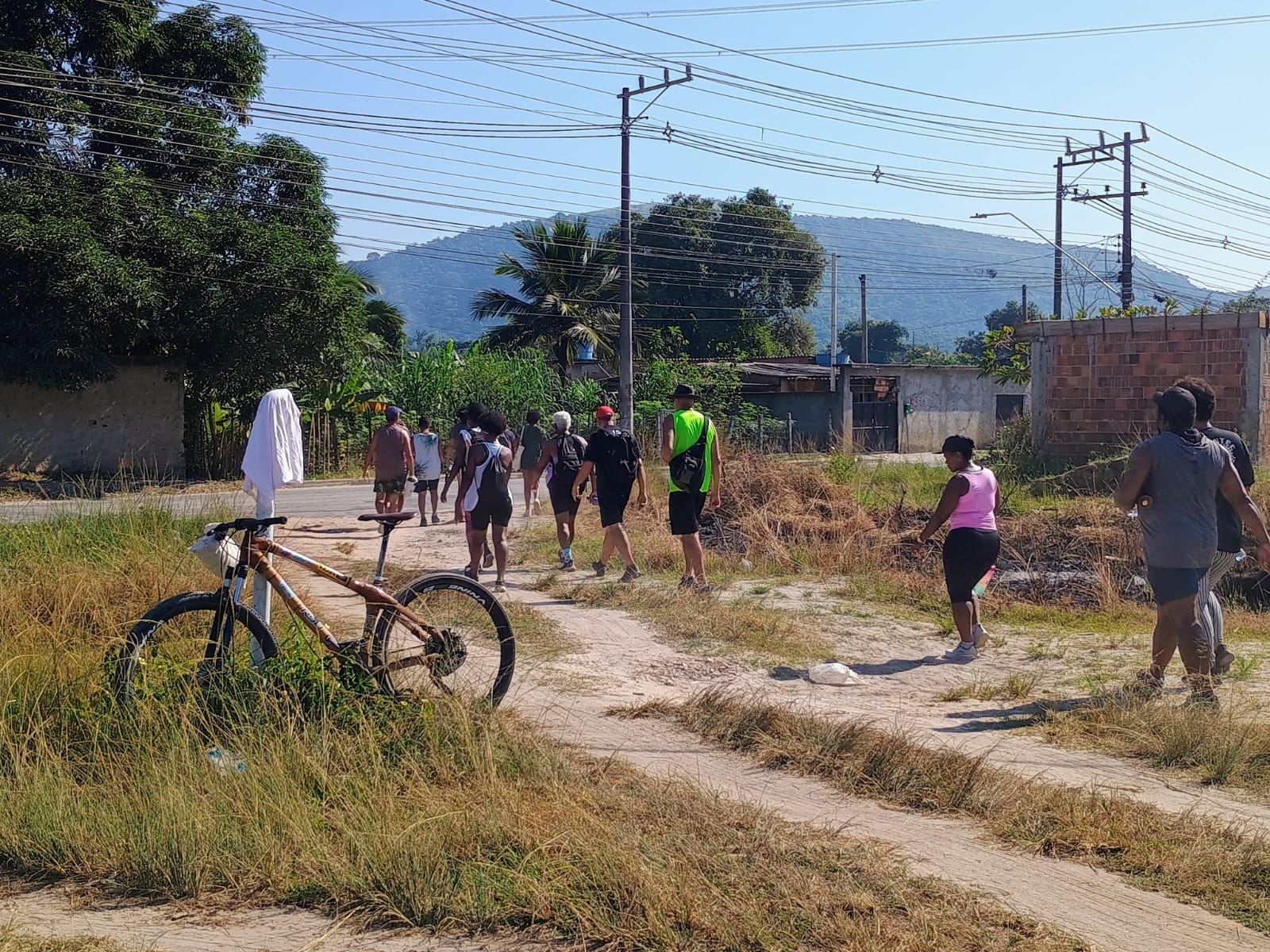
Pedala Queimados currently offers group walks and rides through the city’s rural areas. One of these events is the Walk Queimados – Nature Trek, which attracts participants of all ages. People join by bike or on foot, exploring the beauty of Queimados’s rural landscapes. Each participant makes a small contribution, helping sustain this self-financed organization. In this way, Pedala Queimados offers a safe community experience that helps put Queimados on the map of ecotourism capitals.
Among the activities that the project began to develop after the pandemic is ecotourism in the rural area of Queimados. Photo: Personal archive
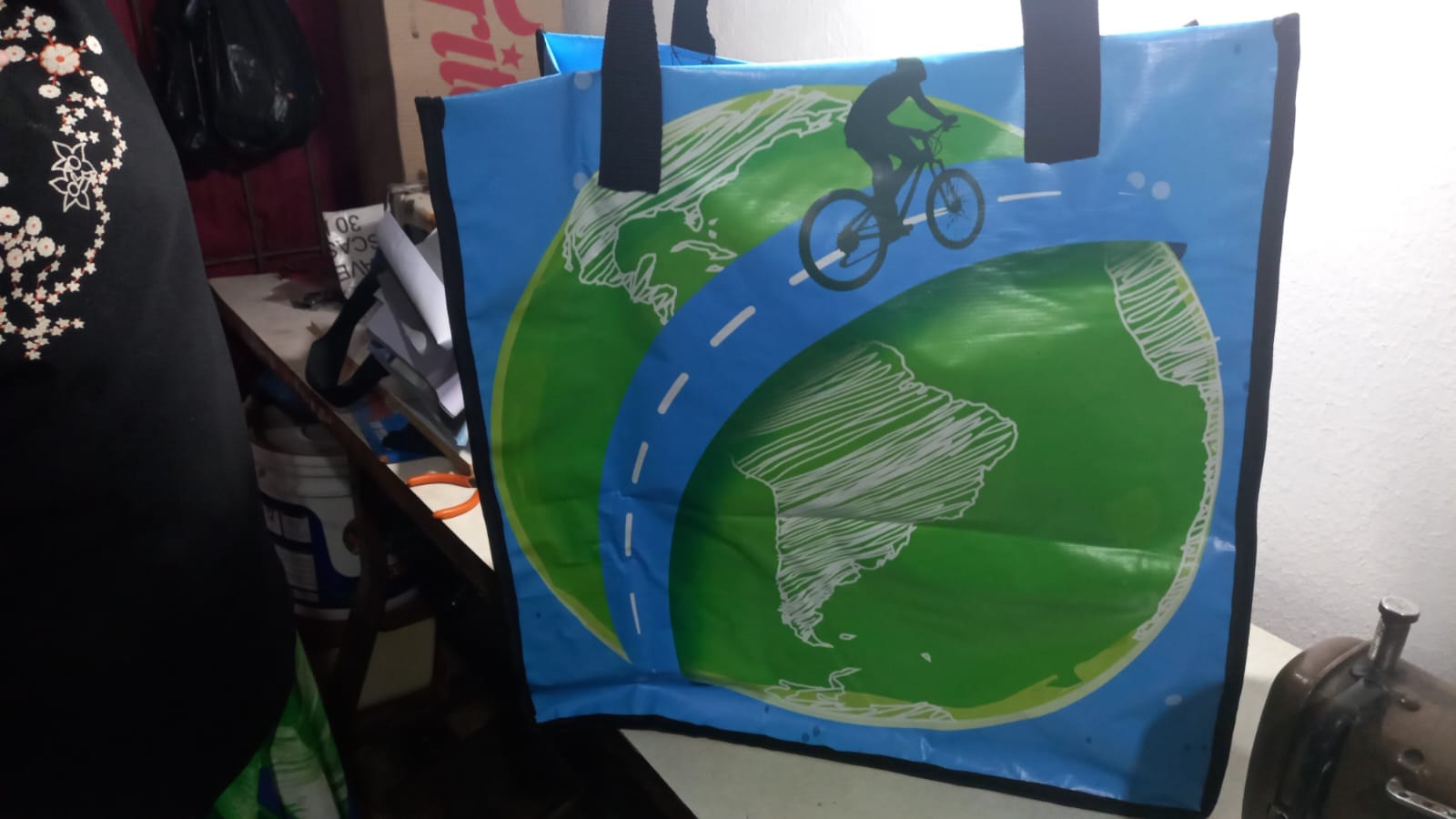
Despite the setbacks, Pedala Queimados began a new line of work in 2022: the sustainable production of shopping bags, reusing materials from major events such as Shimano Fest—one of the largest bike festivals in Latin America, held in São Paulo—the Rei e Rainha do Mar surfing competition, and the Christ the Redeemer Half Marathon, both held in Rio de Janeiro.
The bags are produced using what’s called a circular economy or sustainability tripod. The idea is to take the tarps used at these events and turn them into reusable bags made by socially vulnerable residents of Queimados. In the end, the bags are bought by the organizers of the same events that had provided the material. According to Oliveira, this model promotes justice on three pillars: environmental, economic, and social.
However, production was interrupted two months ago when the warehouse, located in the Nossa Senhora da Conceição neighborhood in Queimados, was broken into and burgled. All the wiring was cut and the machinery used to make the bags stolen, causing significant losses. The project is now focused on launching a crowdfunding campaign to restart bag production.
In addition to promoting active mobility, Pedala Queimados coordinates other socio-environmental initiatives, such as producing eco-bags from materials donated by sporting events. Photo: Personal archive
‘Making Active Mobility a Priority’
Currently, Praça da Paz, located in the Nossa Senhora de Fátima neighborhood in Queimados, is a central hub for the project, also serving as a community space and venue for events and festivals. Every month, in this square, children between the ages of two and eight learn to ride bikes with Pedala Queimados. The space features walls covered with graffiti, paintings, and writings that serve to reclaim the neighborhood’s values and honor those who left their mark on the development and history of the region. Occupying this space in the neighborhood is seen as an act of resistance and hope.
According to Oliveira, promoting social work through bicycles is essential to push for changes in public policies on urban mobility, which are still extremely deficient or even non-existent in the peripheral areas of Greater Rio, such as Queimados.
“The government invests resources where there are cars, right? But for bicycles, almost nothing. So how do you reverse this logic? [By investing] in people. If you look, most people in Queimados get around on foot or by bike. And what kind of investment is there for this type of public? The sidewalks are all inaccessible. The bike lanes they build in the city run along the river, poorly made, and with the first heavy rain everything gets washed away, like what happened here. So this is the big challenge: making active mobility a priority in public investment. That’s what the City Statute says, that’s what guides it, and what [also] guides the National Urban Mobility Policy: cities with over 20,000 inhabitants must invest and must have a municipal mobility plan that includes bicycles, with social participation. And that, unfortunately, is not something the public administration does here [in Queimados]. And I, who once served as an environmental councilor [on the Municipal Environmental Council of Queimados (COMDEMA)], realized that [we], environmental activists, don’t have enough power to give weight to this debate. Especially because there’s no one defending this cause in the City Council [of Queimados]. Everyone there uses cars and sees the city through a car-centered lens. We put our bodies at risk [by walking and cycling in Queimados. So,] we need to occupy this space, we need to show that our bodies are there [to engender public policies that promote active mobility].” — Carlos Leandro de Oliveira
To contact and donate to this community initiative and for more information (in Portuguese) click here. For those requiring an English interface, Catalytic Communities, the US 501[c][3] nonprofit that publishes RioOnWatch, can also act as fiscal sponsor for those who would like to make a US tax-deductible donation in English here. You may follow up at donate@catcomm.org confirming your donation is earmarked for “Pedala Queimados.”
About the author: Amanda Baroni Lopes has a degree in journalism from Unicarioca and was part of the first Journalism Laboratory organized by Maré’s community newspaper Maré de Notícias. She is the author of the Anti-Harassment Guide on Breaking, a handbook that explains what is and isn’t harassment to the Hip Hop audience and provides guidance on what to do in these situations. Lopes is from Morro do Timbau, a favela within the larger Maré favela complex.
Support RioOnWatch’s tireless, critical and cutting-edge hyperlocal journalism, online community organizing meetings, and direct support to favelas by clicking here.


 This article is part of a series of profiles of initiatives in Rio de Janeiro’s Sustainable Favela Network and of a series created in partnership with the Behner Stiefel Center for Brazilian Studies at San Diego State University, to produce articles for the Digital Brazil Project on environmental justice in the favelas through RioOnWatch.