

For the original article by Marcos Furtado for the Corre de Cria blog, published in newspaper Extra, click here.
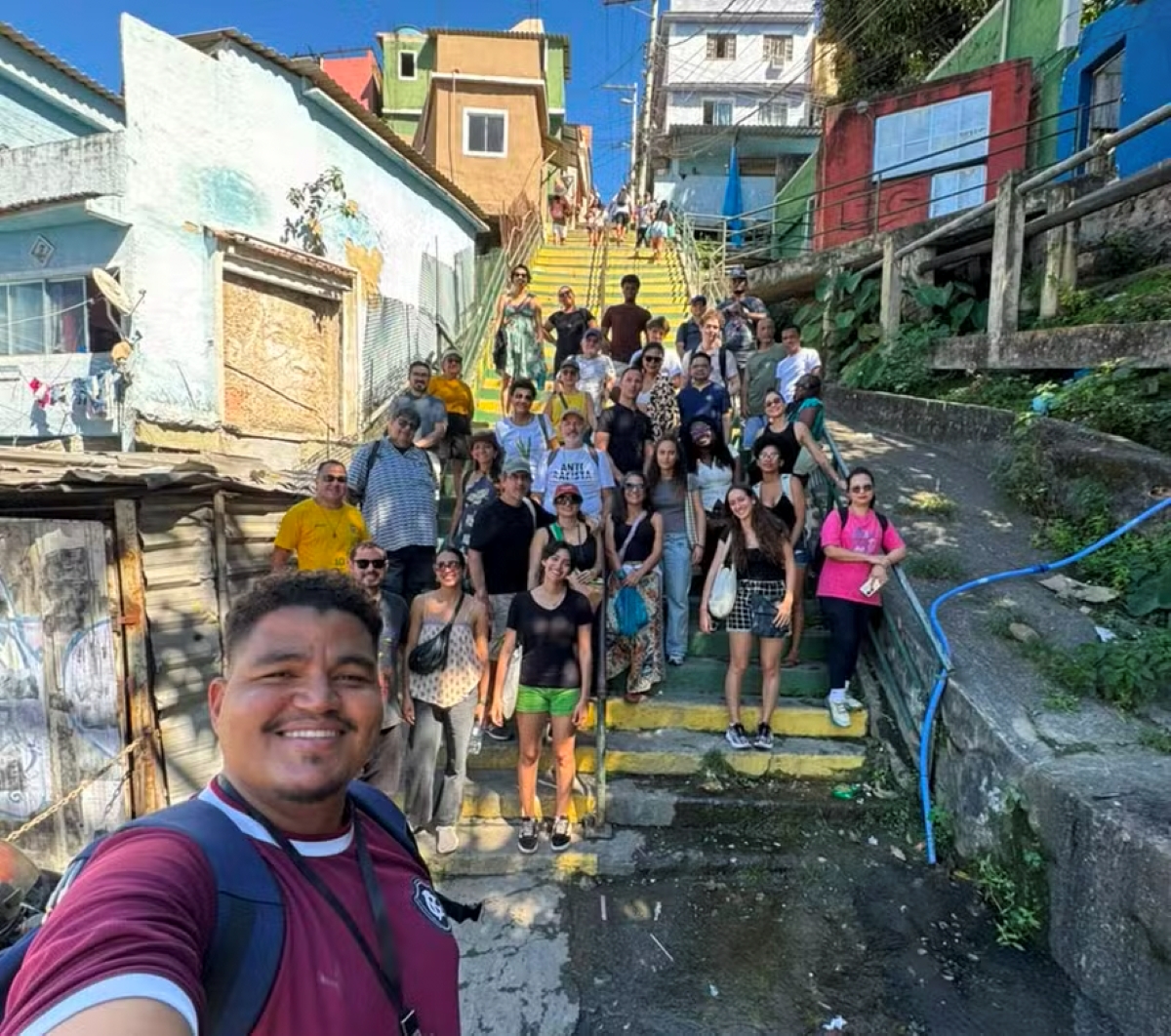
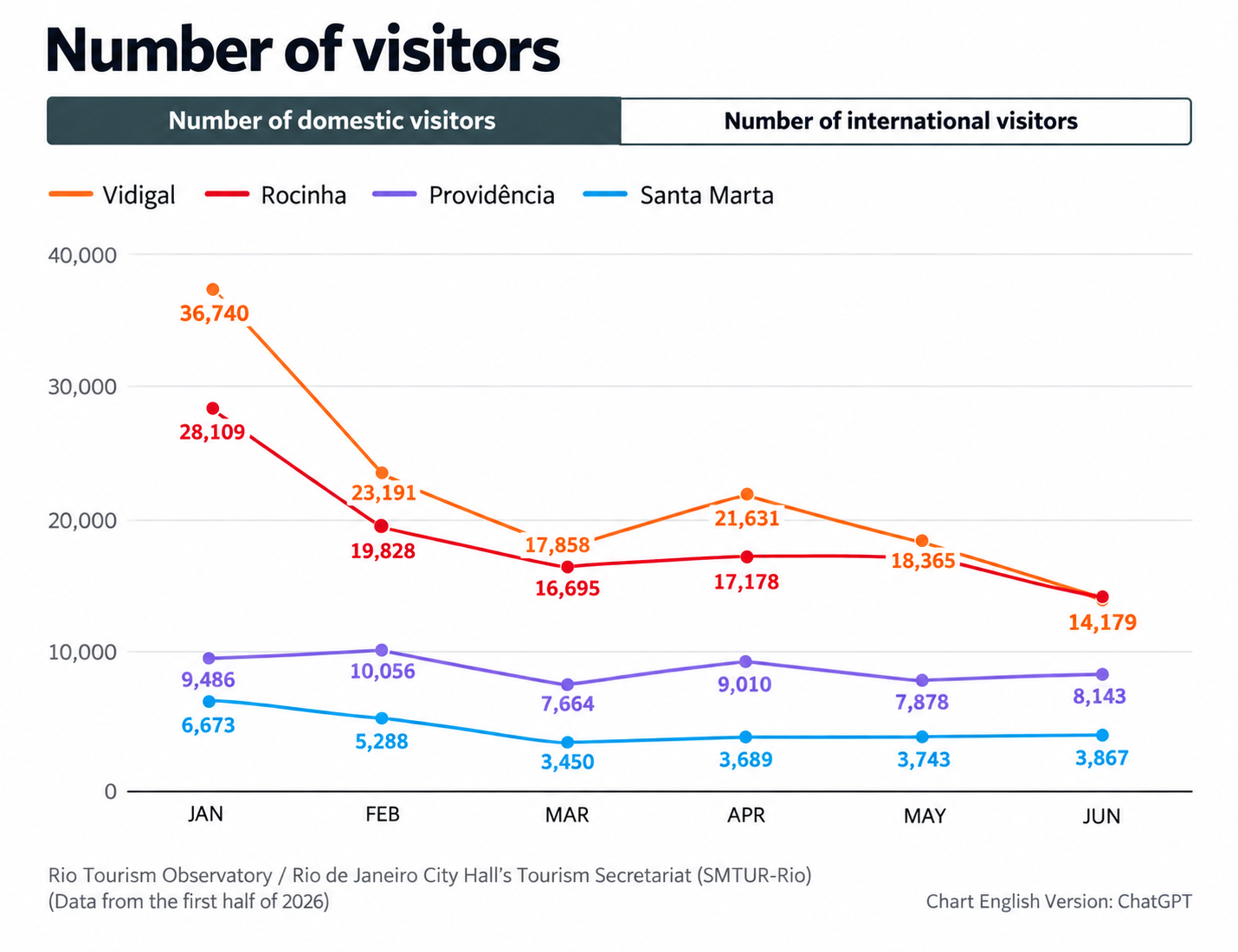
Two favelas rank among the 20 places most visited by tourists in the city of Rio. In the first half of this year, Vidigal received 193,247 visits and Rocinha, 186,995, according to a survey by the Rio Tourism Observatory. Both rank ahead of the Selarón Staircase (148,287) and the São Cristóvão Fair (71,752).
In the Observatory’s overall ranking of places visited by tourists, which combines domestic and international visitors, Vidigal comes 14th and Rocinha 16th.
The survey also tracks two other favelas: Morro da Providência, with 66,876 visits, and Santa Marta, with 32,627. Monitoring of both only began this year. Providência’s inclusion is linked to Inovatur, a project run by the Tourism Secretariat that treats the community—considered Brazil’s first favela—as a tourist destination.
According to Municipal Secretary of Tourism Daniela Maia, the large number of visitors can be attributed to local creativity.
“Tourism, particularly in Rocinha, has been experiencing rapid growth over the past few years. One of the factors behind this is residents turning their rooftops and alleyways into settings for authentic experiences that drive the local economy.”
How the City Arrives at These Numbers
Favelas have no entrance turnstiles or reservation books. To arrive at these figures, the City uses data generated by mobile phones.
The Rio Tourism Observatory works with telecommunications records known as CDRs, or call detail records. On a map of the city, the team draws geographic boundaries around each tourist attraction—what they call polygons—and tracks which mobile devices connect to the cell towers covering that area.
“Based on a map of the city and the locations of these cell towers, I create geographic boundaries around the areas I’m interested in,” explains Renato Oliveira, manager of the Tourism Observatory platform. “Within those geographic boundaries, we can identify who is in that area.” The study does not look at a single day. Instead, the device’s activity is tracked over the course of the month to create what the industry calls an origin-destination matrix. “I know where that phone spent the night, where that phone spent most of the month. Wherever it spent most of the month outside business hours, I’ll understand that to be its place of residence.”
The raw data comes from a single mobile network operator, Claro, and is processed by Kido Dynamics, which uses statistical extrapolation to estimate the behavior of other networks. Foreign tourists are included in the count because, when roaming, their phones connect to an operator in Brazil. Even those who buy a Brazilian SIM card for their vacation are still included in the classification. “Even if it’s a new SIM card, it doesn’t have any history here in the city. So we’ll look at it and determine whether it’s national or international,” says Oliveira.
What Counts as a “Tourist Visit”
The criteria are narrower than the name might suggest. To be included in the count, the phone’s owner cannot live, work or study in the area and must have remained within the polygon for at least 30 minutes. This time restriction is used to rule out people who merely passed through by car or subway. Only people from another country or state are included in the count.
And there is an important detail for anyone reading the numbers: the count is of visits, not people. “If they went to Rocinha twice, three times, four times, they will be counted four, five times. Because we are counting visits, not people,” explains Oliveira.
Why Only Four Favelas Appear
The Observatory has been monitoring and publishing data on 20 tourist attractions since 2023—the historical series began with places that already had established visitor flows. Internally, the team works with around 100 locations. Expanding the list to include other favelas is something the Tourism Secretariat would like to do, but it faces a technical limitation. “We can’t create very small geographic boundaries. And there are areas where we have very few cell towers,” says Oliveira.
The example he gives involves the favelas of Copacabana and Leme. Morro da Babilônia is so close to the beach and to Leme Fort that someone on the hillside may end up being detected by an antenna covering the sand. “In that area, given the number of antennas, I wouldn’t be able to determine who is actually visiting the favela, who is at the fort and who is at the beach,” he says.
From a Popsicle to a National Award
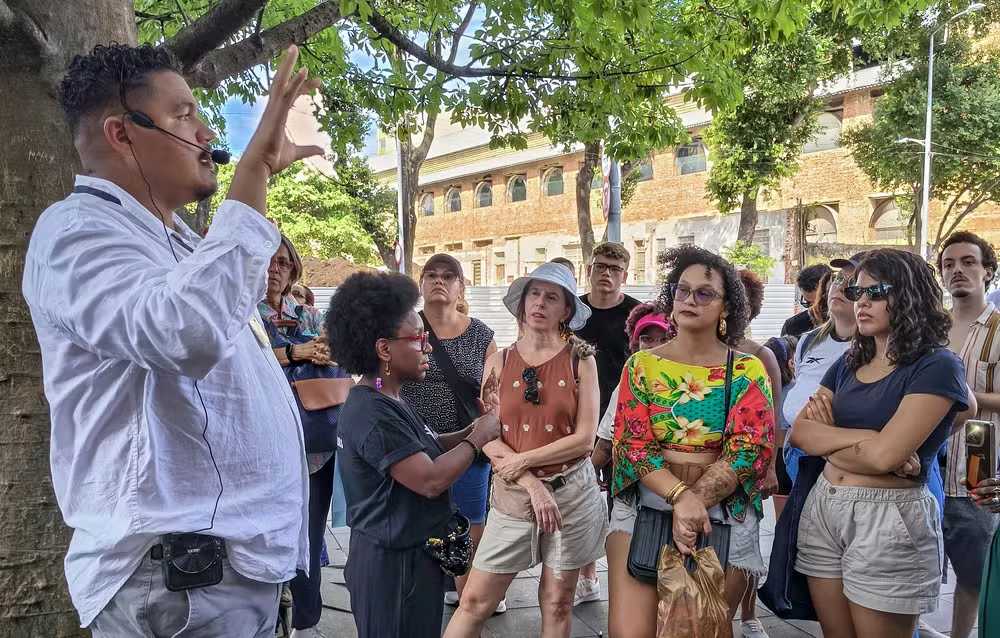
Creativity and sensitivity led Cosme Felippsen, 37, to become a tour guide. It was 1997, when Providência was celebrating the 100th anniversary of the term favela, and a foreign couple asked to see its alleys. Felippsen was eight years old. “I took them to Toca, an area where I lived in Providência, on Rua da Grota, and walked back with them to Praça Américo Brum, which is now the cable car station. They bought me a popsicle, which was my first payment,” he recalls.
As a teenager, he attended the Centenary Methodist Church, at the foot of the hill in Gamboa, which welcomed worshippers from various parts of the world. They wanted to go up to the favela and would call Felippsen to take them. In return, they would take him along the city’s traditional tourist route. “And I got to know my own city as well.”
The name Rolé dos Favelados (Stroll of the Favelados) only appeared in 2016. Felippsen had returned from New York, where he had attended a conference on human rights and housing at the invitation of the Rosa Luxemburg Foundation, and wanted to continue the tours in Providência without repeating a model that bothered him.
“I was afraid of making the same mistake as the safari tours, the favela tours, which are conducted by agencies and guides from outside the favela and reinforce prejudice, stigma and stereotypes about these communities. These are guides and agencies that have no authority to speak about the favela.” — Cosme Felippsen, tour guide and founder of Rolé dos Favelados
The turning point came with the Histórias Vivas (Living Stories) course, organized by journalist Gizele Martins, a resident of Maré. The name came up during a visit to Providência with women from the Maré complex of favelas. Since then, over 30,000 people have been guided by Felippsen.
Felippsen got professional training as a tour guide, but he follows a different playbook.
“According to UniRio [Federal University of the State of Rio de Janeiro], Rolé dos Favelados is Brazil’s first tour-guiding initiative rooted in political activism. In the tour-guide course, we’re instructed not to take a stand. For Rolé dos Favelados, however, anyone who doesn’t take a stand is already taking one. So, Rolé dos Favelados is an act of [civil] disobedience, a rebellion against the tour-guide course. Because before being a guide, I’m a resident of this community, someone who is active in it and calls it home.” — Cosme Felippsen
In practice, this changes the itinerary. “We don’t just take tourists to see a view, have a caipirinha and do whatever they want in the favela. We take visitors there to engage with and think about the favela, about basic sanitation, culture, religiosity and security,” he adds.
Today, there are around three tours per week and an average of 100 people per month, including individual visitors and school groups. He works with another guide in Providência and also leads tours in Salgueiro and Rocinha favelas.
What the Flow Brings and What It Demands
For Antônio Pita, director of the Viva Pequena África (Long Live Little Africa) initiative and founder of Diaspora.Black, the money tourists spend has a specific advantage: it stays. “Resources move around, [there’s] spending in bars, restaurants and cultural centers in these favelas. This is very important for generating economic activity, including in transportation and mototaxi services. All of this creates an economic flow that remains in the community longer,” says Pita.

According to him, there is also an effect on demands for public services. “It’s important for residents to be able to use this flow of tourism to strengthen their demands and organize for [improvements in] garbage collection, urban maintenance and street lighting. Since tourists notice all of this, they join residents in their struggle to ensure that these services are provided to a high standard,” he says.
Pita does not hide the other side: increased tourism in favelas can bring inconveniences and drive up the cost of services.
“There’s an impact on the prices of services and items sold in bars and restaurants. All of this can lead to higher costs, to a disruption in the flow of life in these communities. Photos can be somewhat invasive if guides and tour leaders don’t make it clear that this is not a zoo or a safari. This is a very serious risk when tourist flows are uncontrolled and disorderly, reinforcing the stigmatization of these communities.” — Antônio Pita
Little Africa Beyond Valongo
Diaspora.Black is involved in the Viva Pequena África initiative, with a focus on promoting the area to domestic and international Afro-tourism audiences. And the goal, says Pita, is to broaden the story that is told there.
“It’s not just about Valongo in Little Africa, it’s not just about the memory of enslavement. We have different tourist routes that tell the story of the occupation of the area, passing through Morro da Providência. These tours tell the story of the favela itself, the story of Tia Ciata, the story of samba and the story of carnival groups. These tours offer a perspective on how the Black population occupied the city and how it reinvents this space through its culture and ancestral knowledge.”
Starting at the end of this year, the initiative will begin offering training for guides who work in the region, covering local history, existing tours and the pricing of new tourism products. The focus will be Morro da Providência. “Providência has a range of important cultural, social and religious organizations. They need to understand this tourist flow and its impacts and be able to organize themselves to welcome these visitors,” says Pita.