

This article is part of a series on the 2026 Brazilian elections, focusing on the perspectives of Greater Rio’s favelas.
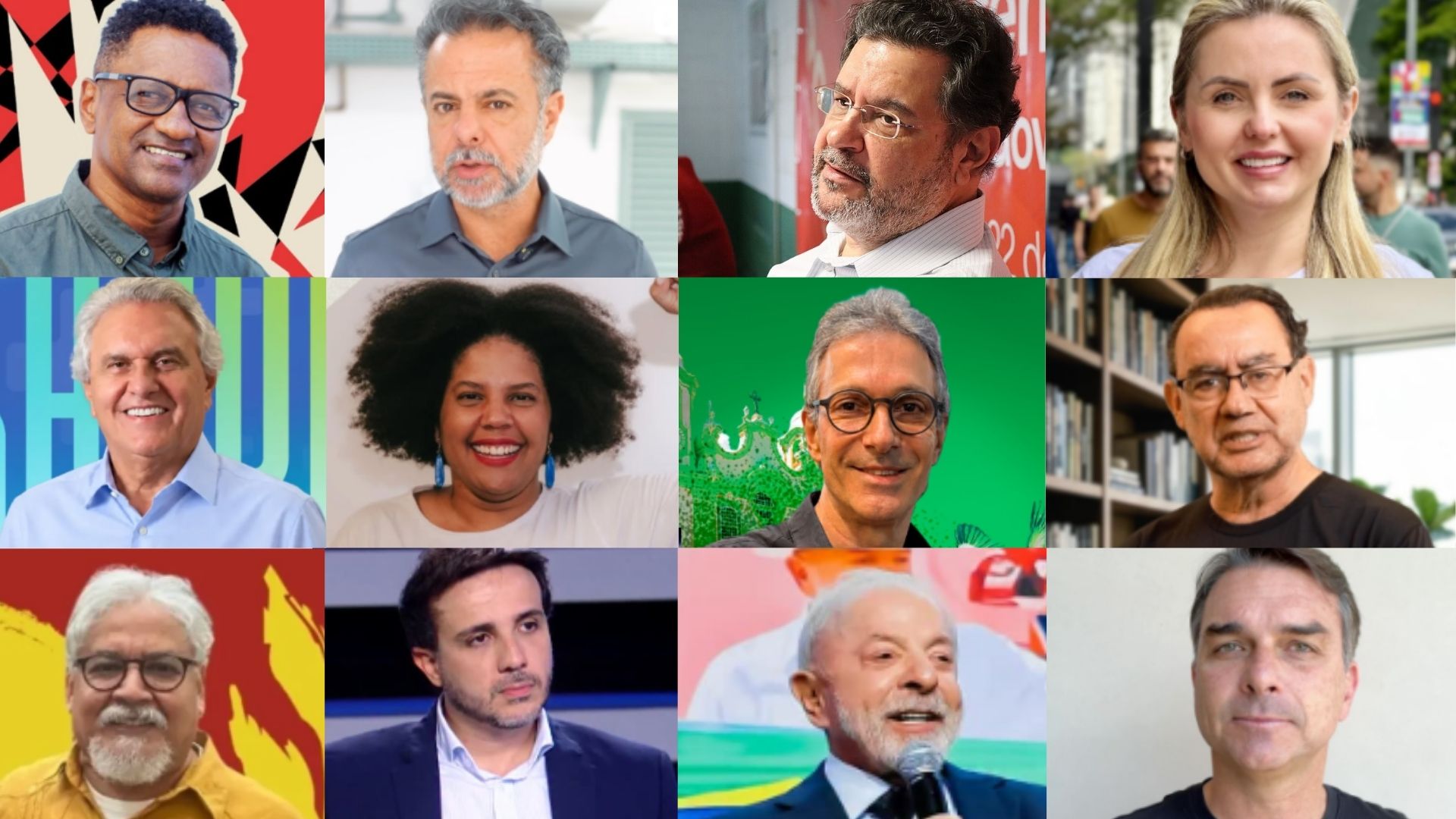
Brazil’s 2026 presidential race will hold its first round of voting on October 4. The diversity of candidate positions places Rio de Janeiro’s favelas at a historic crossroads shaped by diverse and opposing views of the State’s role in these working-class communities. By analyzing the policy platforms submitted by Brazil’s 12 initial presidential candidates—official documents containing the campaign promises politicians register with the Superior Electoral Court (TSE)—this report shows that the future of these communities could take very different paths.
Proposals range from punitive measures aimed at “de-favelization” to granting property titles without sanitation improvements and continuing projects to upgrade and integrate these communities into the city. There are also calls for concrete anti-racist measures: ending the war on drugs, demilitarizing the police and using vacant properties to guarantee housing for the population. Other proposals place public security and territorial reclaiming at the center of their response to what to do about and for favelas.
For this report, RioOnWatch examined and analyzed data from the candidates’ policy platforms registered with the Superior Electoral Court, cross-referencing them with federal policies already being implemented, such as My House My Life and the New Growth Acceleration Program (Novo PAC)/Living Peripheries program. Recent actions and public positions taken by the candidates were also considered when directly relevant to the topic.
The starting point for the comparison is a simple question: when different candidates talk about favelas, are they talking about the same thing? The answer uncovered by the investigation is no.
What Power do Presidents Hold With Regard to Favelas?
On October 28, 2025, Operation Containment deployed 2,500 police officers to Complexo do Alemão and Complexo da Penha, in Rio de Janeiro’s North Zone, to combat the Red Command, Rio’s largest criminal faction. With over 120 people killed, most of them Black, it was the deadliest police operation in the country’s history—surpassing the Jacarezinho Massacre, which left 28 people dead in 2021. While Governor Cláudio Castro (PL) described the operation as a success and accused President Lula’s administration of denying reinforcements (a claim the federal government refuted), the Minister of Justice at the time, former Supreme Court Justice Ricardo Lewandowski, responded that no formal request had been made. According to the minister, if the state was unable to handle the situation, it should have formally requested a Guarantee of Law and Order (GLO) operation or federal intervention through proper channels—measures that fall exclusively under the authority of the Presidency.
The episode exposes a reality often overlooked in election coverage: the state government is not the sole authority shaping daily life in Rio de Janeiro’s favelas; the nation’s president also plays a role. The division of responsibilities conceals enormous presidential power that is rarely discussed.
Federal influence in favelas rests on three main pillars:
First, funding: The resources financing major infrastructure projects in favelas often comes from the federal government. Programs such as My House My Life public housing program and the New Growth Acceleration Program (Novo PAC), with its Living Peripheries component, that fund infrastructure improvements at scale, are federal programs implemented through municipalities. It is the federal government’s budget allocation that determines whether local sanitation and slope stabilization projects will get off the ground.
Second, the Guarantee of Law and Order (GLO): Only the president can authorize the deployment of the Armed Forces within a state. This is what President Michel Temer did in 2018 when he decreed a federal intervention into Rio de Janeiro’s public security and placed General Braga Netto in command for a year—a measure that failed to reduce lethal violence.
Third, the Brazilian Supreme Court (STF) and police regulation: The federal government influences decisions made by the Supreme Court through the Office of the Attorney General of the Union (AGU), an agency under the president’s authority that weighs in on cases involving police regulation. One example is ADPF 635 (the “ADPF of the Favelas”), which, in April 2025, imposed 23 mandatory measures on Rio de Janeiro—including the use of body cameras, the preservation of crime scenes and the presence of ambulances during police operations—an issue that returned to the center of the debate following Operation Containment. In addition, the Ministry of Justice itself has the authority to establish national guidelines for police operations.
Despite the importance of these three instruments, none of them is described in detail in the policy platforms submitted to the TSE. However, whether through action or omission, the candidates have already indicated how they intend to use them. This was the perspective from which we compared the data. And that is why reading these campaign promises is not a waste of time: it is an attempt to understand what candidates, if elected, will ensure funding, and who will cut rights, in favelas over the coming years.
Twelve Candidates Running for President
The TSE completed its review of candidate registrations on September 11, 2026, approving 12 presidential tickets. The candidacy of Pablo Marçal and his running mate Leonardo Avalanche, from the Brazilian Labor Renewal Party (PRTB), was rejected. For this reason, this report analyzes 12 policy platforms, not 13.
To make the proposals easier to understand, RioOnWatch organized the presidential candidates’ main proposals around a central question: how does each platform view favelas and, based on that, what kinds of policies does it propose for housing, infrastructure, sanitation and public security?
By analyzing the 12 policy platforms—official documents containing the campaign promises politicians register with the Electoral Court—RioOnWatch shows that the future of these communities could take very different paths.
Explore the candidates’ proposals, ranked by popularity according to a recent poll:
| Candidate / Party | How does the platform view favelas? | Housing and sanitation proposals | Public security and police operations proposals |
| Luiz Inácio Lula da Silva (PT) | Favela upgrading and residents’ right to remain, State presence through public services and recognition of favelas as areas at risk from climate change. | Proposes expanding favela upgrading, maintaining and expanding My House, My Life program and integrating housing with sanitation, infrastructure and risk prevention. | Focus on federal coordination, intelligence and financial measures against criminal organizations, as well as expanding the use of body cameras. Proposes the creation of the National Public Security System and the Ministry of Public Security, strengthening the Brazil Against Organized Crime Program and supporting the approval of the Public Security Constitutional Amendment. |
| Flávio Bolsonaro (PL) | Land regularization and property ownership, combined with a vision of territorial reclaiming by public security agencies. | Proposes reviving the Green and Yellow House Program, with a target of 2.5 million housing units, expanding land regularization and achieving universal water and sewage services by 2033. | Proposes tougher measures against criminal factions and militias, designating them as terrorist groups and reclaiming areas controlled by criminal organizations. |
| Augusto Cury (Avante) | Land regularization and property ownership, State presence through public services and attention to climate risks. | Proposes regularizing five million homes over ten years, linking property titling to sanitation, drainage and slope stabilization, with resident participation. | Calls for coordination between police forces, intelligence and municipal authorities, without making public security the sole focus of territorial policy. |
| Ronaldo Caiado (PSD) | Land regularization and property ownership, with an emphasis on public security and social protection. | Mentions housing construction, favela upgrading, land regularization and social rent assistance, and proposes universal water and sewage services by 2033. | Proposes a Domestic Terrorism Law to classify criminal factions such as PCC and CV, as well as militias, as terrorist groups, build maximum-security federal prisons and adopt a tougher approach to criminal punishment. |
| Renan Santos (Missão) | Transforming favelas into formal neighborhoods through so-called “de-favelization.” | Proposes transforming favelas into formal neighborhoods through property titling, long-term financing and infrastructure improvements. Also proposes measures addressing unoccupied buildings in risk areas. | Combines territorial transformation with reclaiming areas controlled by criminal organizations and combating militias. |
| Romeu Zema (Novo) | Land regularization and property ownership, linked to the idea of directing housing development toward areas with infrastructure. | Proposes restructuring My House, My Life and prioritizing properties in areas with infrastructure and services, as well as land regularization. | Supports reclaiming areas controlled by criminal organizations, with the participation of the Armed Forces. |
| Samara Martins (UP) | Favela upgrading and residents’ right to remain, the right to the city and State presence through public services. | Proposes favela upgrading and publicly funded and social housing construction, including the use of vacant public properties. | Supports demilitarizing the police and ending the war on drugs approach. |
| Wilson Grassi (DEM) | Land regularization and property ownership, emphasizing credit and property titling. | Proposes using rental payment histories to facilitate home financing and expanding property titling. | Prioritizes financially crippling criminal organizations, federal prisons and border control. |
| Hertz Dias (PSTU) | Favela upgrading and residents’ right to remain, viewing peripheral areas as part of urban reform. | Supports affordable housing, upgrading peripheral areas, universal sanitation and banning evictions without alternative housing. | Proposes demilitarizing the police and making investigations a central pillar of public security. |
| Edmilson Costa (PCB) | Favela upgrading and residents’ right to remain, with State presence through public services. | Supports affordable housing, using vacant public properties, expanding water and sanitation networks and providing services in working-class communities. | Proposes demilitarizing the police alongside providing public services in areas controlled by criminal organizations, linking public security to rights. |
| Rui Costa Pimenta (PCO) | The right to housing and resolving land disputes. | Supports building millions of affordable housing units, banning evictions and using vacant properties for housing. | Proposes dissolving the Military Police and the repressive apparatus as part of a policy of self-defense and a break with the current model. |
| Clariana Barão (CD) | Climate risk and vulnerable areas, urban interventions and land regularization. | Combines favela upgrading, land regularization, sanitation, drainage, street lighting and disaster prevention. | Proposes intelligence-led, data-driven public security, focusing on prevention and combating criminal organizations. |
Source: Policy platforms registered with the TSE and comparative analysis conducted by RioOnWatch. The categories used are analytical frameworks developed by the reporting team based on the proposals described in the documents and do not constitute official classifications of the candidates.
The Crux of the Matter: Six Different Views of Favelas
Placed side by side, these 12 policy programs differ in more than just the number of public works promised. They differ on a more fundamental question: what exactly is a favela? An unfinished part of the city that can be completed through infrastructure? Property without legal documentation? An at-risk area to be fixed? A territory to be reclaimed from criminal organizations? A community with rights and the power to determine its own future? Or a problem that simply goes unnamed?
Each answer produces a different policy for these communities. By cross-referencing the policy platforms with the parties’ track records, we identified six overarching views of how the next President of the Republic intends to approach favelas:
1. Favelas as a Problem: The Idea of “De-Favelization”
More conservative candidates, such as Renan Santos (Missão), view favelas solely as an issue of public security and disorder. His policy platform proposes eliminating favelas within ten years. His proposal calls for creating the “crime of favelization” to punish those who occupy land illegally and allowing City Hall or the State to demolish homes within 48 hours under exceptional circumstances. He is the one candidate who explicitly uses the term “de-favelization.” His policy platform proposes a violent break with the current model to punish irregular occupation, disregarding the housing deficit and institutionalizing forced evictions under the justification of “territorial security.”
2. Favelas as Business: Ownership Documents, Financing, but No Improvements
Candidates who embrace a “free market” approach, such as Romeu Zema (Novo), Augusto Cury (Avante) and Flávio Bolsonaro (PL), focus on providing residents with property ownership documents (formal land regularization) and bringing favela homes into the banking system. The goal is to turn residents into people who can take out loans or sell their properties on the market.
One major danger of this approach is that property ownership documents do not prevent flooding, and access to individual credit does not pay for infrastructure projects such as sewage systems, drainage and slope stabilization to prevent landslides. Moreover, when the State’s main instrument is a property deed, residents are no longer treated as holders of the right to housing and the city, but rather as people who now own an asset (their home) that can be used as collateral for a loan. The property becomes collateral and the resident becomes a potential borrower.
Wilson Grassi (Democrata) proposes using rental payment histories to facilitate home financing and also supports property titling. Zema, meanwhile, argues that funding from My House, My Life should go exclusively to central areas of the city, aiming to stimulate the formal real estate market. Flávio Bolsonaro’s platform also proposes that Caixa Econômica Federal, a federal government-owned bank and primary agent for social and housing policies, expand access to credit and provide financial guidance, including microcredit for small businesses, as well as a program offering lower interest rates and cashback to those who pay their bills on time.
3. Favelas as Neighborhoods: Upgrading and Integration as a Continuation of Existing Policies
Luiz Inácio Lula da Silva’s (PT) reelection campaign is the only one of the 12 that supports continuing local infrastructure projects based on the principle of “upgrading without evictions.” To this end, his platform describes an existing favela policy, complete with figures, timelines and budgets, making it the only policy platform whose impact can already be measured in Rio de Janeiro.
The proposal promises to maintain the National Secretariat for the Peripheries (SNP) and the New Growth Acceleration Program’s Living Peripheries initiative, which recently announced R$702 million (~US$140 million) for infrastructure projects in Complexo do Alemão, Maré and Rocinha. Under this approach, favelas are recognized as neighborhoods within the city that need sanitation and public infrastructure. Living Peripheries, a component of the New Growth Acceleration Program (Novo PAC) launched in November 2024, brings together over 30 policies agreed upon by different ministries, an agreement with the UN agency UNOPS to finance 120 Municipal Risk Reduction Plans, R$3.3 billion (~US$656 million) in contracts for favela upgrading projects and R$1.4 billion (~US$278 million) for slope stabilization, with the goal of ensuring that every home in a favela has its own postal code (CEP) by the end of 2026.
The program registered with the TSE promises to “complete and expand favela upgrading projects” and raise the My House, My Life target to 3 million housing contracts by the end of 2026, as well as provide a line of credit for home renovations through the Home Renovation Brasil program. The campaign treats favelas as a legitimate part of the urban fabric, making improvements dependent on increased direct State investment in infrastructure, as opposed to approaches based on privatization and evictions.
Although Flávio Bolsonaro’s campaign does not propose any infrastructure projects in favelas in the 76 pages of his policy platform, the candidate promises to expand access to homeownership by reviving the Green and Yellow House Program, with a target of 2.5 million housing units.
4. Favelas in the Crosshairs of the War: Public Security Shapes How These Communities Are Viewed
Public security is where decisions made in Brasília have the greatest impact on favelas. The STF ruling known as the ADPF of the Favelas (which sought to reduce deaths during police operations) divides the candidates.
The policy platforms of right-wing and far-right candidates, such as Ronaldo Caiado and Flávio Bolsonaro, present highly punitive plans that treat favelas as war zones, prioritizing armed confrontation over favela upgrading. Bolsonaro’s policy platform proposes classifying criminal organizations as narcoterrorist groups, lowering the age of criminal responsibility (to as young as 14 for heinous crimes), building federal prisons modeled on those in El Salvador and creating 500,000 prison beds. Along similar lines, Caiado proposes classifying organized crime as domestic terrorism (with minimum sentences of 45 years) and relegates housing to a secondary concern. Both praised the high death toll of the recent Operation Containment and defended legal exemptions from criminal liability for police officers who kill in the line of duty, promising to extend the state’s policy of armed confrontation to the federal level. This would mean expanding aggressive police operations that terrorize residents.
Under the center-left government (PT), Lula’s public security proposal focuses on investigating the financial activities of organized crime through financial intelligence. However, his administration has made little effort to require states to equip police officers with body cameras.
Meanwhile, radical-left candidates are the only ones whose policy platforms explicitly call for an end to the “war on drugs” and the demilitarization of the police, arguing that the State must stop killing Black youth as a means of addressing the problem.
5. Favelas as Rights-Holders: Ending Racism in Politics
Radical-left candidates, such as Samara Martins (UP), advocate profound change. They argue that the lack of housing and sanitation is shaped by race and social class and is a result of racism in Brazil. Their proposal is not to carry out small-scale infrastructure projects, but to expropriate (transfer to State ownership) vacant buildings in city centers and convert them into affordable housing. They also demand the demilitarization of the police to stop treating residents as enemies.
Hertz Dias (PSTU) and Rui Costa Pimenta (PCO) advocate, respectively, banning evictions without alternative housing and implementing an affordable housing plan “under workers’ control,” with Pimenta going further by proposing the dissolution of the Military Police itself.
Edmilson Costa (PCB) wants to renovate vacant federal government properties so that families experiencing homelessness can move in immediately. In Rio, this could mean using empty federal buildings in downtown Rio or the Port Region.
6. Favelas as an Absence: When Silence Is Also an Answer
Lastly, some government platforms simply do not mention favelas as a distinct category. Clariana Barão (Christian Democracy) has no chapter on housing, while Wilson Grassi proposes only granting property deeds to residents of established neighborhoods, without directly addressing communities still undergoing urbanization.
In the housing sections of Caiado’s and Zema’s government platforms examined, the word “favela” does not appear. Instead, the terms used are “social protection” and “areas with infrastructure,” a choice that, in a state where over 2 million people live in favelas, according to the Census, speaks for itself about the hierarchy of priorities.
Declared Assets and Profiles of the 12 Presidential Candidates
The figures below represent assets declared to the Electoral Court. They do not constitute a market valuation or an audit of the candidates’ assets:
| No. | Candidate | Party | Running Mate | Age | Occupation | Education | Place of Birth | Assets Declared |
|---|---|---|---|---|---|---|---|---|
| 13 | Luiz Inácio Lula da Silva | PT | Geraldo Alckmin (PSB) | 81 | Metalworker | Completed elementary education | Garanhuns, Pernambuco | R$4,775,650.64 (~US$949,868) |
| 22 | Flávio Bolsonaro | PL | Alfredo Gaspar (PL) | 45 | Senator | Completed higher education | Resende, Rio de Janeiro | R$8,186,555.83 (~US$1,628,290) |
| 70 | Augusto Jorge Cury | Avante | Júlio Delgado (Avante) | 68 | Writer and critic | Completed higher education | Colina, São Paulo | R$242,281,162.52 (~US$48,189,264) |
| 55 | Ronaldo Caiado | PSD | Gilberto Kassab (PSD) | 77 | Physician | Completed higher education | Anápolis, Goiás | R$52,557,930.98 (~US$10,453,673) |
| 14 | Renan Santos | Missão | Aroldo/Coronel Medina (Missão) | 42 | Businessman | Incomplete higher education | São Paulo, São Paulo | R$795,089.00 (~US$158,142) |
| 30 | Romeu Zema Neto | Novo | Eduardo Girão (Novo) | 62 | Businessman | Completed higher education | Araxá, Minas Gerais | R$178,707,610.09 (~US$35,544,605) |
| 80 | Samara Martins da Silva Feitosa | UP | Raquel Brício (UP) | 39 | Dentist | Completed higher education | Belo Horizonte, Minas Gerais | R$33,000.00 (~US$6,564) |
| 35 | Wilson Grassi Junior | DEM | Suêd Haidar (Democrata) | 56 | Veterinarian | Completed higher education | São Paulo, São Paulo | R$50,000,000.00 (~US$9,944,905) |
| 16 | Hertz Dias | PSTU | Vanessa Portugal (PSTU) | Not confirmed | Elementary school teacher | Completed higher education | São José de Ribamar, Maranhão | R$0.00 / No assets declared |
| 21 | Edmilson Costa | PCB | Cleusa Santos (PCB) | Not confirmed | Not found in this search | Completed higher education | Pedreiras, Maranhão | R$454,485.68 (~US$90,396) |
| 29 | Rui Costa Pimenta | PCO | Antônio Carlos (PCO) | 69 | Journalist and copywriter | Completed higher education | São Paulo, São Paulo | R$0.00 / No assets declared |
| 27 | Clariana Barão | DC | Fabiana Torquato (DC) | 39 | Lawyer | Not confirmed in this record | Cuiabá, Mato Grosso | R$1,820,760.17 (~US$362,146) |
Source: Comparative analysis of the government programs registered with the TSE.
About the author: Tatiana Lima is a journalist, popular communicator, editor and human rights communications advisor. She holds a PhD in Communication and a master’s degree in Media and Everyday Life, both from the Fluminense Federal University (UFF). A grassroots network organizer, she represents Território Mídias Brasil in Rio de Janeiro and contributes to Núcleo Piratininga de Comunicação. A Black feminist born and raised in Favela do Quitungo and Morro do Tuiuti, Lima currently lives in Rio’s urban periphery.