

This article is part of a series on the 2026 Brazilian elections, focusing on the perspectives of Greater Rio’s favelas.
As the state of Rio de Janeiro approaches the 2026 elections, its problems go beyond the figures in the government’s accounts. The state’s fiscal crisis, challenges in delivering basic public services and armed conflicts in favelas and peripheral areas directly affect the lives of its constituents.
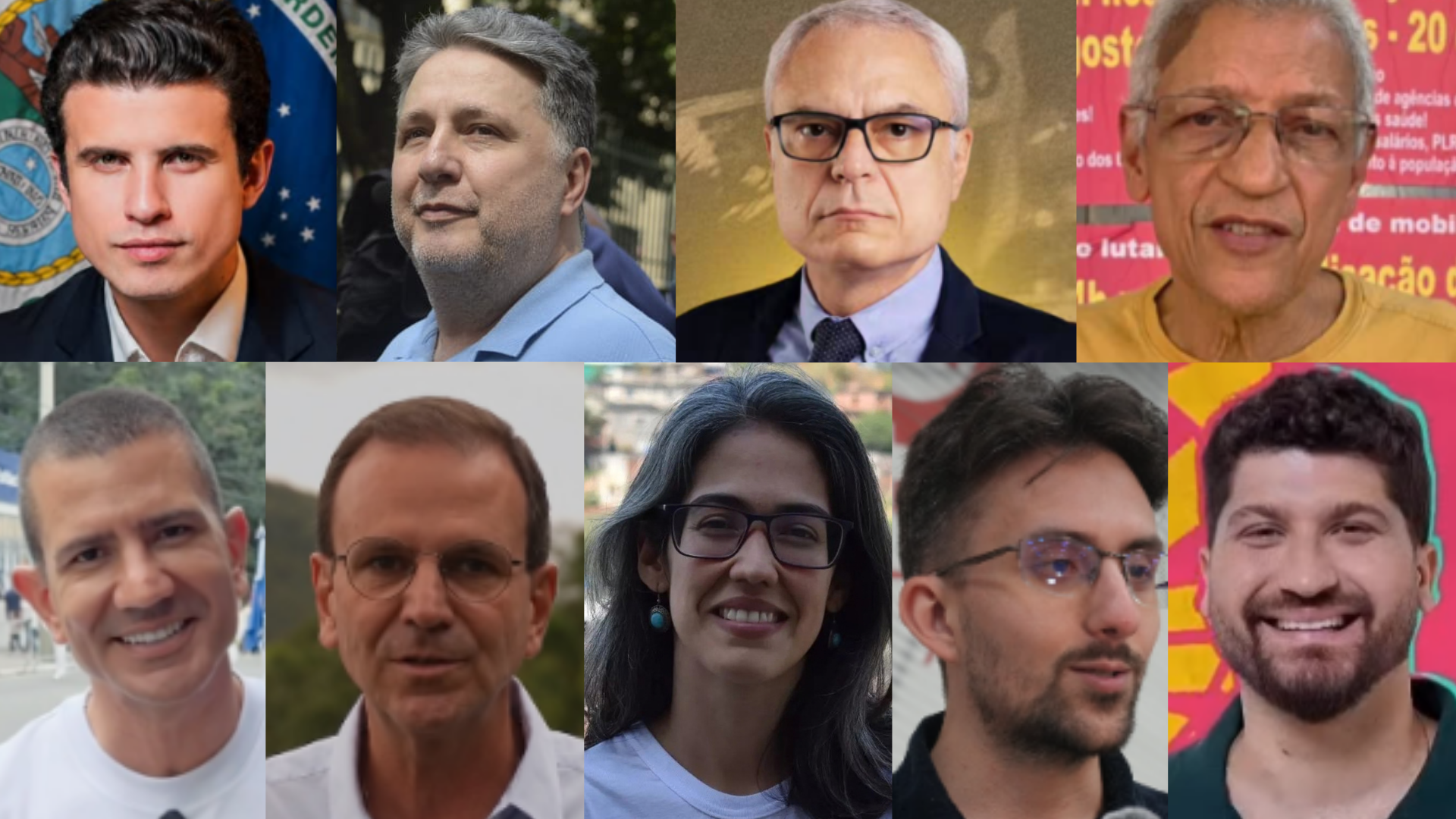
It is within this context that nine candidates are vying for Guanabara Palace—where the state of Rio de Janeiro’s government is headquartered. Each candidate presents a different proposal for policy issues that directly impact favelas and peripheries, including public security, sanitation and housing.
This RioOnWatch report analyzed the candidates’ government plans, which were filed with Brazil’s Superior Electoral Court (TSE), to identify what each candidate’s proposals are for favelas, what problems candidates acknowledge and what solutions they offer. Candidates’ public statements and past actions as they relate to these issues were also considered.
Proposals filed with the TSE do not legally require the next administration to implement them, but they do provide a public record of the priorities put forth during the campaign and can serve as a tool for post-election monitoring and accountability.
Below are the profiles of the candidates for governor of the state of Rio de Janeiro, in order of popularity, according to the most recent polls:
| Candidate/Party/Party number | Candidate’s Background | Declared Assets (2026) | Notes on Declared Assets |
|---|---|---|---|
| Eduardo Paes (PSD/55) | Four-term mayor of Rio de Janeiro; Paes left City Hall in March 2026 to run for governor of Rio de Janeiro State. His running mate is Jane Reis (MDB). | R$ 189.210,63 (US$36,311.24) |
Declared R$185,000 (~US$35,503) in 2024. Main declared assets are a Volkswagen Tiguan and investments. |
| Douglas Ruas (PL/22) | Former Civil Police inspector, state deputy, Secretary of Cities under former Rio de Janeiro Governor Cláudio Castro and president of the Rio de Janeiro State Legislative Assembly (Alerj) since the arrest of his predecessor and ally Rodrigo Bacellar in April 2026. | R$ 1.467.687,88 (US$281,662.66) |
Had the highest declared net worth among the candidates at the time of reporting. Includes investments, real estate and equity shares. |
| Anthony Garotinho (Republicanos/10)
|
Former governor of Rio de Janeiro (1999–2002), former Secretary of Public Security under Rosinha Garotinho, member of a traditional political family from Campos dos Goytacazes, journalist, radio broadcaster and announcer. Running mate is Major Elaine (DEM). | R$ 167.500,00 (US$32,061.11) |
Declared assets have decreased compared to previous years. Reported a property in Campos dos Goytacazes. |
| William Siri (PSOL/50) | Economist; current Rio de Janeiro city councilmember, elected in 2020 and reelected in 2024. Running mate is Juliana Carvalho. | R$120,000.00 (US$22,974.42) | According to the cited record, assets consist of shares in a company. |
| André Marinho (Novo/30) | 32-year-old television presenter, comedian and influencer; first election for a majoritarian office. Running mate is Lieutenant Colonel Erigreyce Monteiro. | R$407,503.55 (US$78,017.98) | Include an apartment, equity shares and savings, according to the information gathered. |
| Coronel Busnello (Missão/14) | Colonel in Rio de Janeiro’s Military Police with a background in special operations and overt public security operations. | R$ 950.000,00 (US$181,880.83) |
Reported net worth has decreased compared to declared assets in 2022. |
| Cyro Garcia (PSTU/16) | 71-year-old retiree and left-wing activist; has run for various offices since 2004. Running mate is Perciliana Costa. | R$385,400.00 (US$73,786.18) | According to the information gathered for this report, he declared owning an apartment and a Chevrolet Celta. |
| Juliete Pantoja (UP/80) | Grassroots educator and activist with the Movement for the Fight for Neighborhoods, Villages and Favelas (MLB). Ran for governor of Rio de Janeiro in 2022 and for mayor of Rio in 2024. Running mate is Bia Martins. | R$ 0,00 | Did not declare any assets in the cited record. Declared a balance of R$203.99 (US$39.05) in 2022. |
| Luan Monteiro (PCO/29) | 30-year-old merchant and student running in his fourth election under PCO.
|
R$ 0,00 | No assets declared in the cited record. No campaign income or expenses had been declared at the time of RioOnWatch’s reporting. |
Which Policies Affecting Favelas Fall Under the Governor’s Responsibility?
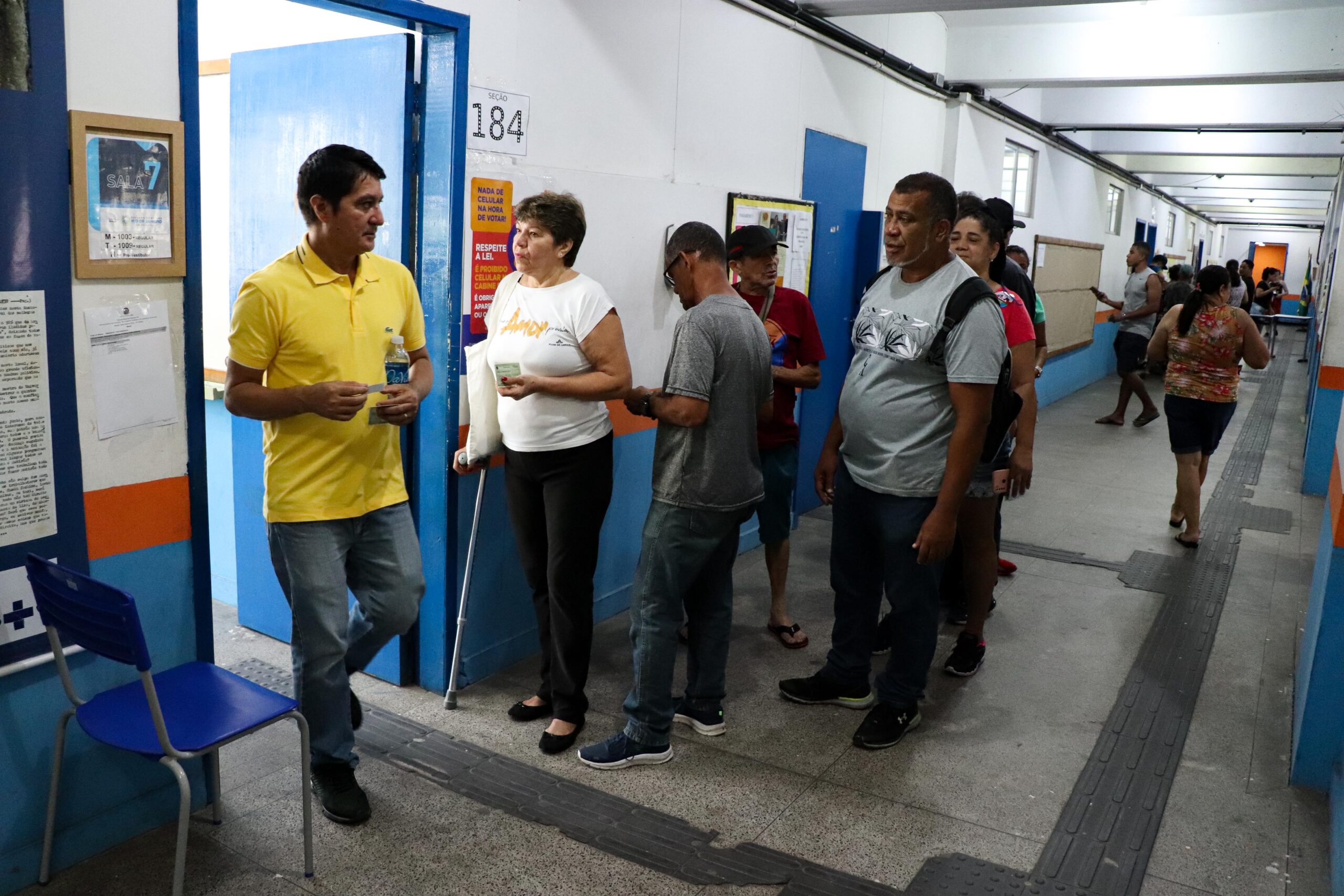
Rio de Janeiro has over 2.1 million residents living in 1,724 favelas, according to the Brazilian Institute of Geography and Statistics’ (IBGE) 2022 Census. Favelas are home to a significant portion of the state’s population and are directly impacted by the state government’s decisions, particularly across four areas: public security, basic sanitation, housing and urbanization.
However, favelas are not just voter-dense areas. They serve as the primary barometer of the effectiveness or failure of Rio de Janeiro’s state public policies. Historically, the relationship between the state government and these communities has been marked by the discontinuity in the provision of social rights and the recurrence of police operations.
The state is currently facing the expansion and strengthening of armed groups—drug trafficking factions and militias—that exert territorial control and directly influence the lives of four million citizens. This is according to an ongoing survey conducted by the Study Group on New Illegalities at the Fluminense Federal University (GENI/UFF) in partnership with the Fogo Cruzado Institute.
All government interventions in favelas and peripheral areas of the state of Rio de Janeiro are profoundly constrained by institutional limitations. The first of these is the Fiscal Recovery Regime (RRF), which limits the state’s borrowing capacity and direct investment, forcing electoral campaigns to propose radical financial strategies or a break with the federal government.
The second is the regulatory transition of basic sanitation services, which divided up the services previously provided by the state-run water utility CEDAE and transferred water distribution in favelas to private businesses. The revised Legal Framework states that by 2033, 99% of the population will have access to drinking water and 90% will have access to sewage collection and treatment. About 54.8% of the sewage generated in the state of Rio de Janeiro is effectively treated, according to the Brazil Sanitation Panel and data compiled by the Trata Brasil Institute.
Third, and perhaps the most sensitive issue in the electoral debate, is the Claim of Non-Compliance with a Fundamental Precept No. 635 (more commonly known as the ADPF of the Favelas) before the Brazilian Supreme Court, which imposed limits on police lethality and has been the target of harsh attacks from conservative candidates.
The incoming government will have to deal simultaneously with fiscal constraints, the current contracts with private sanitation providers and the rules established by the Brazilian Supreme Court concerning public security in favelas.
Are Favelas Included in the Candidates’ Government Plans?
An analysis of the nine candidates’ platforms reveals significant differences, not only in their proposals but also in their level of detail. Some plans include measures specifically targeting favelas, while others address infrastructure, public security or economic development more generally, without a specific focus on favelas.
Within this context, the nine candidates for governor have put forth their platforms to voters in 2026: André Marinho (Novo); Anthony Garotinho (Republicanos); Coronel Busnello (Missão); Cyro Garcia (PSTU); Douglas Ruas (PL); Eduardo Paes (PSD); Juliete Pantoja (UP); Luan Monteiro (PCO); and William Siri (PSOL).
What is and isn’t included in the government plans:
| Candidate | Do They Mention Favelas? | Public Security | Sanitation and Water | Housing and Urbanization | Specific Goals or Measures |
|---|---|---|---|---|---|
| Eduardo Paes | No specific section | Specific proposals | Specific proposals | References to housing policies | Limited detail in plan |
| Douglas Ruas | No specific focus | Specific proposals | Specific proposals | Predominantly generic | Limited detail in plan |
| Anthony Garotinho | References in discussions of public security | Specific proposals | Not identified | Not identified | Not identified |
| William Siri | Specific focus | Specific proposals | Return to state ownership | Specific proposals | Defined measures and programs |
| André Marinho | Specific focus | Area-specific proposals | Specific proposals | Land regularization and property titles | R$700 million (US$134.3 million) fund mentioned |
| Coronel Busnello | Specific focus | Specific proposals | Not identified | “De-favelization” | Assessment and criteria outlined |
| Cyro Garcia | Specific focus | Specific proposals | Return to state ownership | Structural measures | Structural measures |
| Juliete Pantoja | Specific focus | Specific proposals | Return to state ownership | Structural measures | Structural measures |
| Luan Monteiro | Not identified | Not identified | Not identified | Not identified | Not identified |
Eduardo Paes (PSD), of the Together to Change, Courage to Rebuild coalition, presented an eight-page preliminary plan. The document has no specific section dedicated to favelas and focuses on reorganizing public administration, economic development and partnerships with the federal government. The most specific proposals for favelas appear primarily in discussions of public security and in public statements.
Douglas Ruas (PL) presented the Real Rio Plan, a 51-page document. The plan prioritizes professional training and mentions the need to guarantee freedom of movement through the use of police forces. However, regarding infrastructure, Ruas’s proposals are more general, without detailing specific interventions tailored to the realities of favelas.
André Marinho (Novo) presented a 140-page plan. His proposals include urban planning deregulation and granting individual property titles. Regarding sanitation, the plan proposes a R$700 million (US$134.3 million) fund financed by the Inter-American Development Bank (IDB) for sewage infrastructure and large-scale drainage projects in 80 large favelas.
Colonel Busnello (Missão) uses the concept of “de-favelization.” Following a phase of tactical stabilization, his government plan proposes that the state assess these areas and provide permanent infrastructure in favelas, with families relocated only in cases of extreme geological risk.
William Siri (PSOL) proposes the Live in Rio Program, which bans forced evictions and expands Technical Assistance for Social Interest Housing.
Juliete Pantoja (UP) and Cyro Garcia (PSTU) link the housing deficit and precarious conditions in favelas to real estate speculation and propose, among other measures, using vacant state properties for social housing.
Public Security: What Changes for Favelas?
The electoral debate takes place against the backdrop of the Claim of Non-Compliance with a Fundamental Precept No. 635 (the ADPF of the Favelas), ruled on by the Brazilian Supreme Court, and disputes over limits on police operations in favelas. The reality in these communities, however, reveals the persistence of lethal violence. Some candidates criticize the restrictions imposed on police operations under ADPF 635. According to the Keeping an Eye on ADPF 635 report, in 2024 for example, police operations took place on 42 days, resulting in 20 deaths and forcing schools and health centers to suspend operations in Complexo da Maré alone.
It is therefore important to understand each candidate’s position on public security in favelas:
| Candidate | Guiding Principle for Favelas | Position on Police Lethality, ADPF 635 and Police Operations | External Oversight and Internal Affairs |
|---|---|---|---|
| Eduardo Paes | “The State must go in and stay.” | Opposes ADPF 635; advocates confrontation with criminal groups. Supports the use of surveillance technology, including integrated cameras and facial recognition, alongside police operations. | Wants to unify police forces under a single Public Security Secretariat to reduce parliamentary interference, merging the existing Military Police and Civil Police Secretariats. |
| Douglas Ruas | Overt policing and expansion of the “Security on the Ground” program. | Opposes ADPF 635; strongly supports large-scale tactical police operations. | Opposes the use of body cameras to punish police officers. |
| Anthony Garotinho | “BOPE 2.0” (5,000 officers) for the encirclement and permanent occupation of favelas. | Death should be the last resort (“the police are there to make arrests”); focus on intelligence. | Not prioritized in his main statements; focus on support from the Armed Forces. |
| William Siri | Demilitarization and intelligence operations at borders and ports. | Compliance with human rights goals; focus on the flow of weapons rather than favelas. | Body cameras for all officers and the creation of an independent civilian internal affairs unit. |
| Cyro Garcia | Dissolution of the Military Police. | Eliminate police operations involving lethal force and confrontations in favelas. | Police forces subject to oversight by the population. |
Given these platforms, it is important to point out several structural gaps running through most public security programs. Strikingly, the debate largely focuses on overt policing, the use of force and occupation of favelas, while overlooking efforts to strengthen investigations, forensics and intelligence capabilities. The use of body cameras by police officers—despite being mandated by the Brazilian Supreme Court—still faces resistance among police officers and emerges as a point of contrast among the gubernatorial candidates.
In Eduardo Paes’ plan, reclaiming favelas and peripheral areas emerges as a priority. Paes advocates for the use of surveillance technology, including integrated video cameras and facial biometrics, in conjunction with police action. In public statements, he has also criticized the restrictions imposed by the Brazilian Supreme Court on police operations.
Douglas Ruas, whose background includes the Civil Police and Governor Cláudio Castro’s administration as Secretary of Cities (SECID), advocates for police operations to dismantle barricades and for expanding the Security on the Ground program. Ruas also positioned himself against some restrictions on police operations.
Anthony Garotinho proposes a so-called “BOPE 2.0,” or a new iteration of the Military Police’s Special Police Operations Battalion, with a force of 5,000 officers to permanently occupy favelas considered liberated, with logistical support from Brazil’s Armed Forces. In a public statement, he affirmed that the role of the police is to arrest individuals, not to kill them.
Colonel Busnello also proposes a police presence and territorial stabilization strategy prior to implementing other public policies.
The focus is different among left-wing gubernatorial candidates. William Siri argues that police forces should not treat favelas as “enemy territory” and instead proposes shifting part of the police operational effort to ports, airports and highways, while also investing in intelligence and in Guanabara Bay.
Cyro Garcia proposes dissolving the military hierarchy within police forces and ending armed police raids. Juliete Pantoja advocates for changing the structure of public security institutions and ending the current model of police operations.
Most proposals—especially those from conservative candidates—lack a clear and strategic distinction between the roles of the Military Police and Civil Police. The debate is instead largely focused on overt policing, the use of force and favela occupation, which are all responsibilities of the Military Police, while neglecting solid proposals to strengthen investigative, forensic and intelligence capacities, which are responsibilities of the Civil Police.
In disregarding the investigative tools necessary to follow money trails, combat state corruption and dismantle the logistical and political structure of drug factions and militias, these plans are limited to proposing continuous armed confrontation. In favelas, this translates into the majority of proposals focusing on overt policing, without ever diminishing the real power of organized crime.
Water and Sewage: What Do the Candidates Want to Do with CEDAE, Rio’s State-Run Water Utility?
Concerning sanitation services, the key distinction between candidates’ proposals can be found in the future of service contracts and CEDAE, the state-run water utility. After CEDAE was auctioned off in blocks, private companies began operating water distribution services in different regions of the state, while CEDAE remained responsible for water collection and treatment from major water sources. The Energy and Basic Sanitation Regulatory Agency of the State of Rio de Janeiro (AGENERSA) is the regulatory body for this arrangement.
Eduardo Paes, Douglas Ruas and André Marinho all advocate for continuing these private contracts, alongside oversight and regulation. William Siri, Juliete Pantoja and Cyro Garcia, on the other hand, advocate for revoking these service contracts and instead propose returning sanitation services to state ownership by reestablishing a public and integrated CEDAE.
Another policy issue directly impacting low-income residents is the social tariff. Social tariff rates varied between R$27.45 and R$30.46 (US$5.49 and US$6.10, respectively) for the initial consumption bracket of up to 15 cubic meters of water in 2024, in addition to other pricing models created by the private service providers to help residents become registered, paying customers.
But civil society organizations question whether this current model guarantees water access for families living in extreme poverty. DataLabe and other collectives are pursuing Public Civil Action No. 0833043-81.2023.8.19.000, arguing that water supply cannot be conditioned exclusively on one’s ability to pay. The lawsuit argues that families registered with CadÚnico—the federal government’s Unified Registry used to identify and enroll socially vulnerable groups in social assistance programs—should be entitled to a free supply of up to 25,000 liters of water per month.
In the gubernatorial candidates’ plans, the social tariff issue is addressed with less detail compared to the debate over the service contract model.
Housing and Urbanization
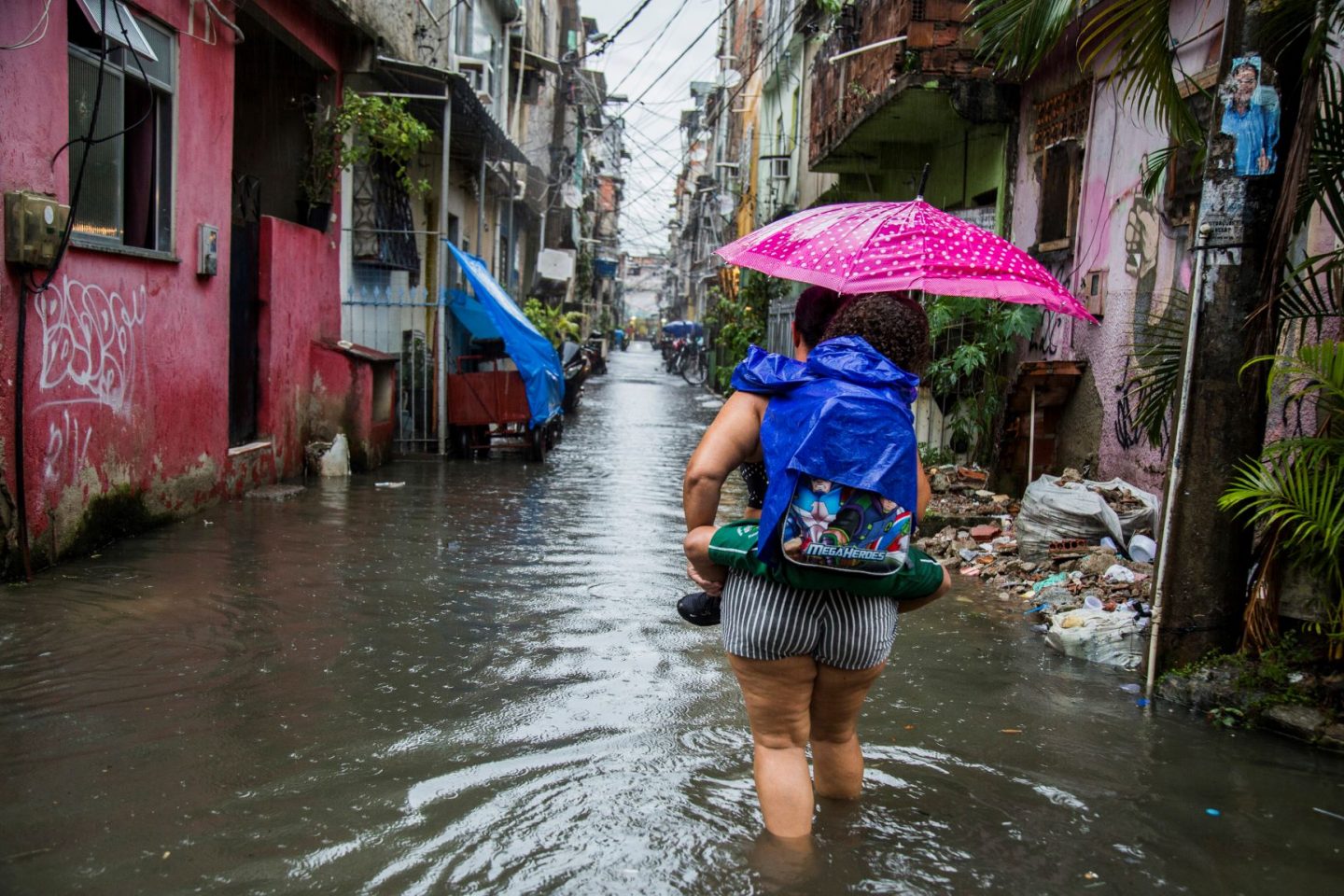
The issue of housing appears across the candidates’ platforms in various forms. Although Rio de Janeiro’s state-run housing company, CEHAB-RJ, can play a role in urbanization and housing development policies, RioOnWatch’s investigation found that historically, the company’s role has been diminished.
Eduardo Paes is banking on partnerships with the federal government and housing programs. William Siri and Juliete Pantoja advocate for restructuring the state’s housing policy, including slope stabilization projects and housing renovations. Siri’s proposals also include providing technical assistance for social interest housing.
Colonel Busnello’s proposed “de-favelization,” André Marinho’s land regularization and titling, and left-wing candidates’ proposals for expropriating vacant state properties demonstrate how the housing debate involves differing views on residents’ permanence, urbanization and regularization of favelas.
What Was Left Out of the Plans?
Beyond the proposals presented, RioOnWatch’s analysis of these platforms identified a pattern: the near-complete absence of quantifiable goals, implementation deadlines and funding sources. In many cases, foundational policies appear as generic statements that lack outcome indicators.
A cursory reading of the plans reveals a lack of financial engineering. Aside from specific mentions, such as the IDB-backed fund proposed by André Marinho, the gubernatorial candidates fail to explain how they will finance their promised multibillion-real interventions under the Fiscal Recovery Regime (RRF).
Without clearly defined timelines and detailed budget allocations, proposals for favelas risk becoming mere ideas whose implementation will be difficult to monitor. This omission is profoundly significant: the more unspecific a public policy is in a government plan, the harder it becomes for residents and civil society organizations to monitor and hold government actors accountable after the incoming administration takes office.
These comparisons show that the differences between the candidates lie not only in the solutions they advocate for, but also in the attention given to favelas within each plan and in the level of detail presented.
Track Record in Working-Class Communities
Beyond current proposals, the candidates’ track records help contextualize their positions on working-class communities. Candidates’ current promises directly clash with the legacies they left behind in these communities.
Eduardo Paes, who served several terms as Rio’s mayor, implemented a variety of policies in favelas during his tenure. On the one hand, he launched infrastructure programs such as Morar Carioca, which promised to upgrade material conditions in favelas. On the other hand, he presided over the highest number of forced evictions in the city’s recent history, driven by construction projects for large-scale sporting events such as the 2014 World Cup and 2016 Olympics. The disruption of consolidated communities, like Vila Autódromo and Morro da Providência, still raises red flags about how city policies can override the right to remain and the right to housing.
Anthony Garotinho—who is attempting to regain political prominence by focusing on public security—governed the state with mixed results and evaluations throughout his tenure. Despite experimenting with pioneering models of community policing (such as the Special Areas Policing Group or GPAE), his administration oversaw extremely high rates of police lethality and structurally failed to curb the territorial expansion of armed groups, with measures that varied in scope and results.
Douglas Ruas, in turn, carries the weight of institutional continuity. As the former Secretary of Cities in Cláudio Castro’s recent administration, Ruas was part of a state government marked by some of the most lethal police operations in Rio de Janeiro’s history, such as operations with high death tolls in Jacarezinho and Vila Cruzeiro, which has put his proposals to intensify armed operations under intense scrutiny.
Voters Must Demand Action
The nine plans analyzed by RioOnWatch present significant differences in how they address public security, sanitation and housing in favelas. While some candidates detail specific measures for these communities, others focus their proposals on general policies or leave certain issues without defined goals and actions.
The programs on file with the TSE do not guarantee that the proposals will be implemented, but for voters in Rio’s favelas, they can serve as a means of citizen oversight in monitoring the policies’ implementation. They can be tools to exert pressure on the government for better public services and hold the next governor of the state of Rio de Janeiro accountable.
About the author: Tatiana Lima is a journalist, popular communicator, editor and human rights communications advisor. She holds a PhD in Communication and a master’s degree in Media and Everyday Life, both from the Fluminense Federal University (UFF). A grassroots network organizer, she represents Território Mídias Brasil in Rio de Janeiro and contributes to Núcleo Piratininga de Comunicação. A Black feminist born and raised in Favela do Quitungo and Morro do Tuiuti, Lima currently lives in Rio’s urban periphery.