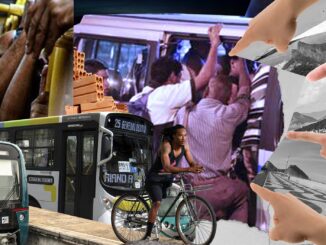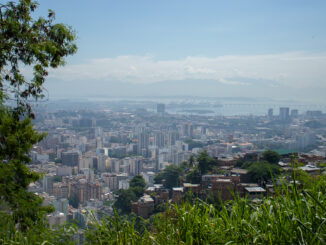
As part of the city’s Porto Maravilha port revitalization program, the City of Rio is implementing a controversial cable car in Providência, Rio’s first and most historic favela, set to launch shortly. But to make room for this and various transport-related construction projects on the hill, 832 houses, or one-third of the community, have been marked for removal. Near the top some 60% of the houses are marked, exactly the area supposedly set to benefit from these mobility investments. Further projects are temporarily stalled as a judge imposed a moratorium on evictions until a case brought to court by the community is resolved.
Around More >
Centro,
forced evictions,
gondola,
history,
in the courts,
law,
mobility,
moratorium on demolitions,
Port Region,
Porto Maravilha,
Providência,
public defenders,
transportation
The federal program’s dwellings are being constructed in peripheral areas without urban mobility, studies show. Click here for original article in Portuguese in O Globo by Alessandra Duarte and Carolina Benevides.
The federal program that became the hallmark of the Dilma government for housing, Minha Casa Minha Vida (My House My Life) is building many of their dwellings in areas without transportation infrastructure. Studies by urban planners indicate that the program reproduces the logic of older conjuntos (“housing estates”), such as Cidade de Deus and Nova Sepetiba, where the poor end up being pushed to locations far from, for example, the supply of jobs—and without a system More >
"região dormitório",
Coppe,
inequality,
IPPUR,
metro,
Minha Casa Minha Vida,
mobility,
peripherization,
public housing,
transportation,
West Zone
Last week, citizens packed the Clube dos Portugueses in West Zone neighborhood Taquara for the public meeting presenting the TransOlímpica highway and Bus Rapid Transit (BRT) project which will connect Barra da Tijuca and the Olympic Park with other West Zone neighborhood Deodoro where other Olympic events will take place. The R$1.5 billion project will run 26km through nine neighborhoods. Under current plans, the TransOlímpica will run through the community of Vila Autódromo, where residents have been resisting eviction under different premises for twenty years.
The public consultation meeting - Audiência Pública in Portuguese – is a legal requirement for the administration of government More >
Transcarioca, in blue, will connect Rio's west zone with the international airport
Connecting Barra da Tijuca and the Olympic Park with the International Airport, the Transcarioca highway and Bus Rapid Transit (BRT) route is the most visible transport infrastructure work the city of Rio is undertaking in preparation for the 2014 World Cup and 2016 Olympics. Officials estimate that the 39km expressway and its 45 bus stations will serve 400,000 passengers per day and cut journey time between Barra and the airport by 60%. However, of the three BRT transport projects under construction – the others being the TransOeste linking far West Zone More >
2016,
Barra da Tijuca,
BRT,
Campinho,
evictee profile,
forced evictions,
gender,
North Zone,
Penha,
psychological terror,
Transcarioca,
Transoeste,
TransOlímpica,
transportation,
West Zone
Original article from BBC-Brasil available here.
For planners, Olympic construction should fit into long-term city plan
Rio’s Mayor, Eduardo Paes, has already said that the 2016 Olympics are a “wonderful excuse” to make necessary urban changes to the city. But, according to two foreign specialists, the mega-events are excessively regulating the urban changes in Rio in a distorted way: instead of having the Olympics and the World Cup help the city create a long term urban plan of, for example, 50 years, the city is altering itself to accommodate these sporting events.
In her book Planning Olympic Legacies, which came out this year, German More >