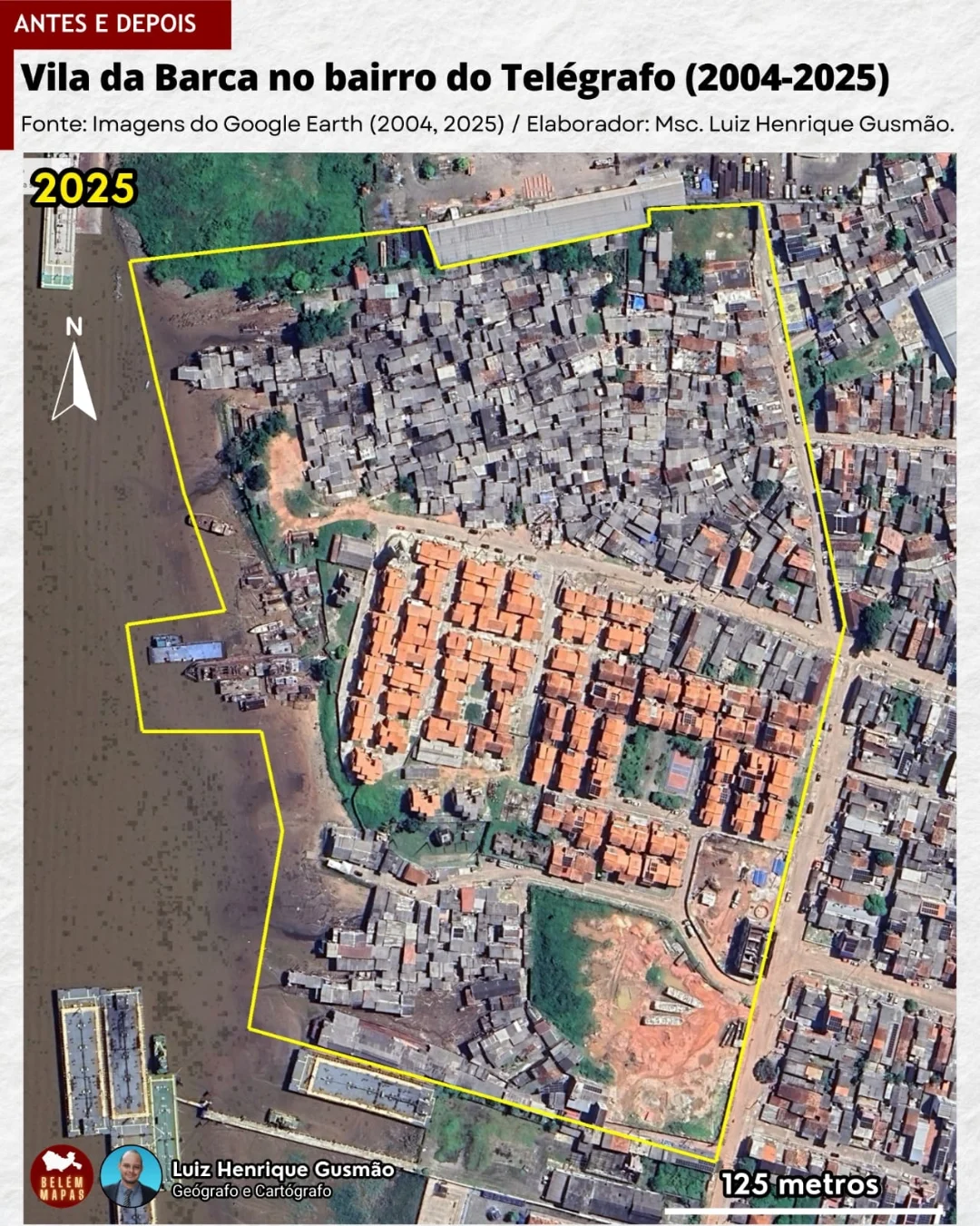
Aerial map of Vila da Barca, located in the Telégrafo neighborhood, which is part of Belém’s central region. Source: Luiz Henrique Gusmão
RioOnWatch was in Belém, capital of the Amazonian state of Pará, in November 2025, during the 30th Conference of the Parties (COP30) to the UNFCCC (United Nations Framework Convention on Climate Change) and the parallel People’s Summit. The conference’s official areas (known as the Green Zone and Blue Zone) saw a massive presence of representatives from Indigenous villages and nations, fishing communities, quilombos and Amazonian favelas, communities impacted by large-scale projects, and national and international social movements already affected by extreme climate events that contribute adaptive ancestral knowledge and technologies, offering the world valuable lessons on climate resilience in the midst of struggles for water justice, sanitation and the right to dignified housing. For this reason, RioOnWatch visited—among other ‘baixadas,’ the term used in Belém to refer to its favelas—Vila da Barca in the Telégrafo neighborhood in the city’s Central Zone.
Documents and residents’ accounts indicate that Vila da Barca, one of the largest stilt house communities in Latin America, has been around for at least 100 years along the banks of Guajará Bay in Belém, in the state of Pará.
Based on historiographical research, the Vila da Barca Memorial Museum states that the area where the community now sits was first occupied in the 1910s during Belém’s economic expansion in the rubber boom. Other sources, however, argue that Vila da Barca is even older.
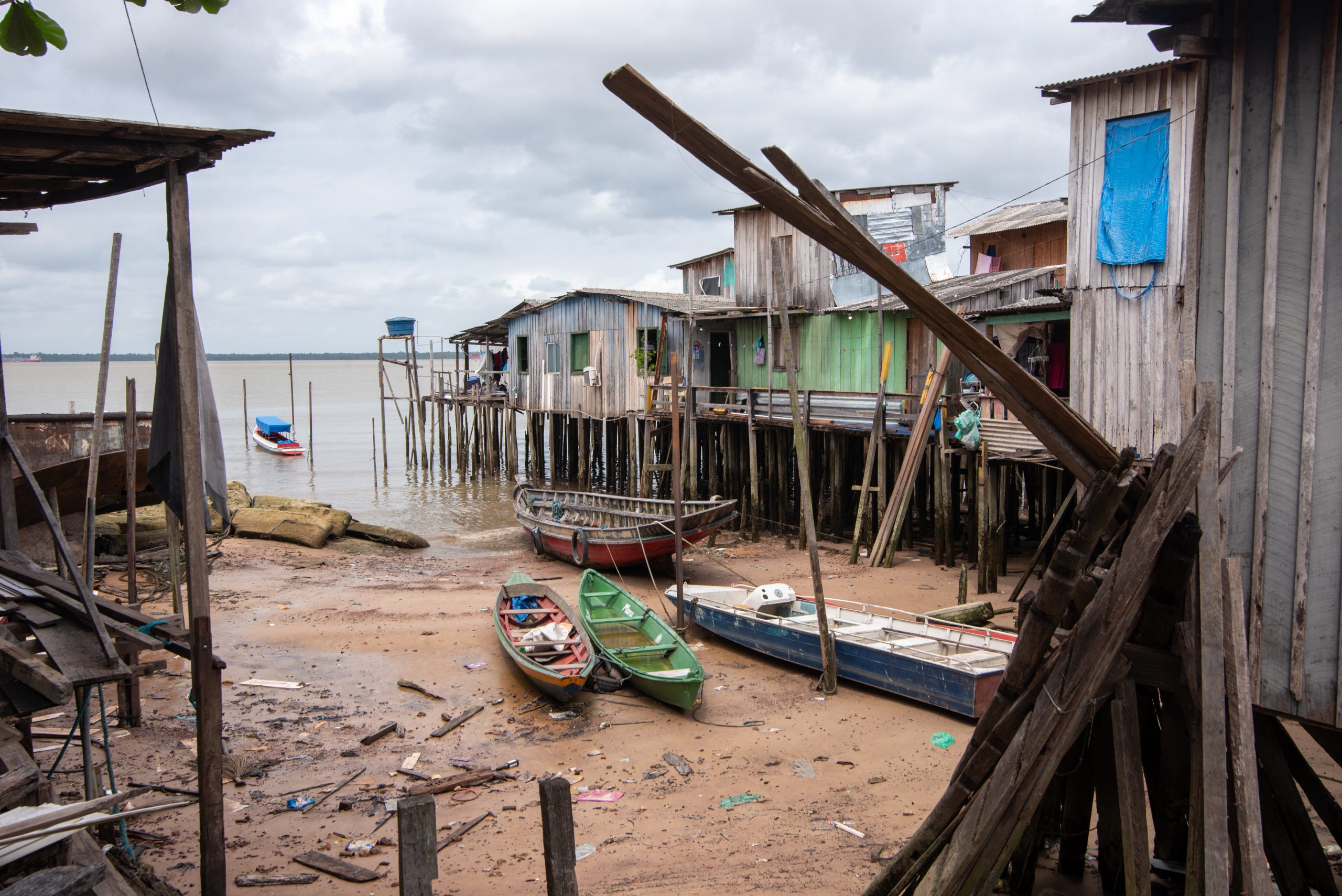
Although the community is now known for its 543 stilt houses, home to 1,400 families, residents say that the founders of Vila da Barca originally built their homes on solid ground. At some point, a newly arrived family began living in an abandoned boat on the riverbank. Others, seeing this possibility, then started building their own homes over the water, as in other stilt house communities across Brazil and the world, such as the historical case of Complexo da Maré—a cluster of 16 favelas in Rio de Janeiro’s North Zone.
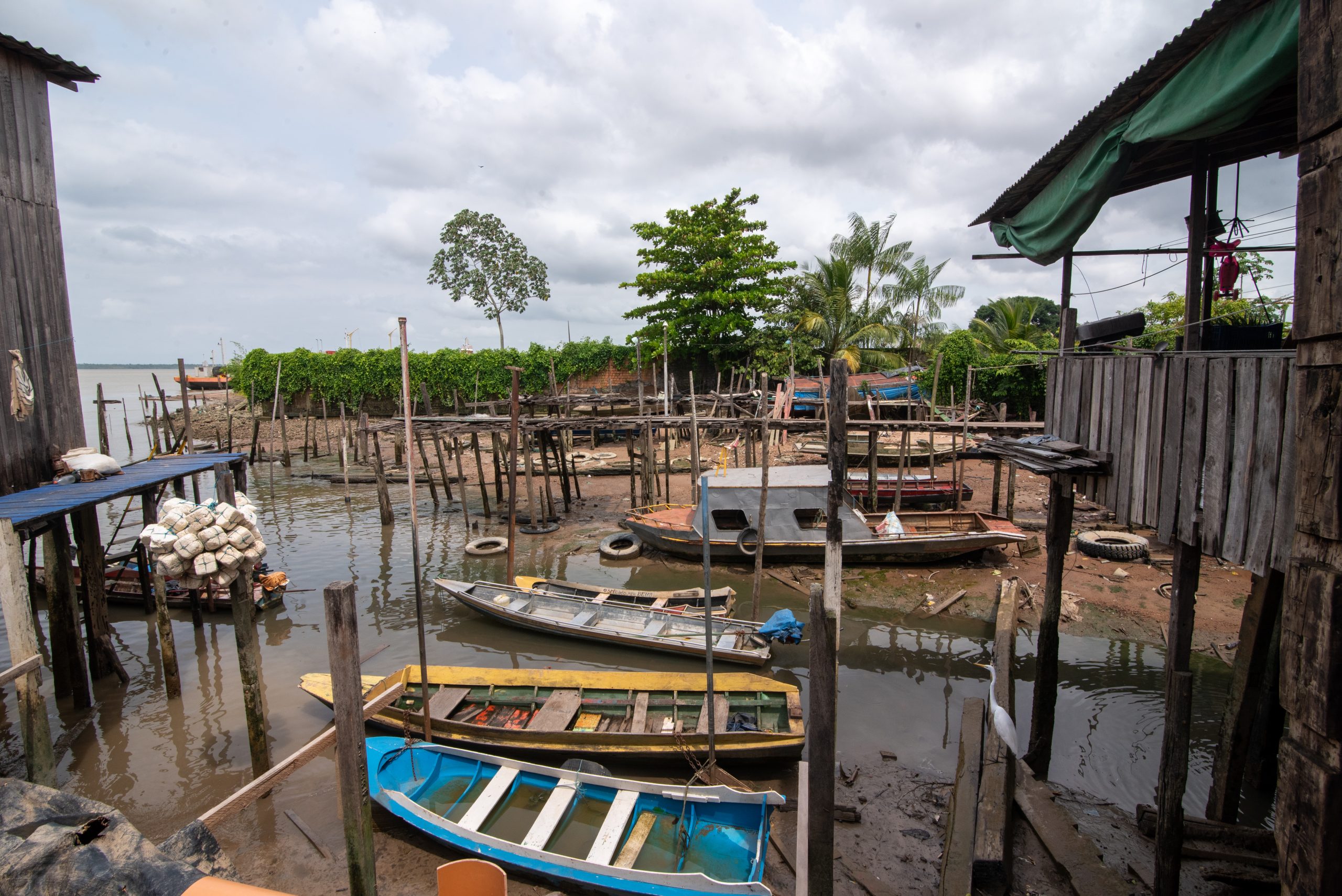
The port area of Vila da Barca’s stilt house community. Photo: Bárbara Dias
Gerson Bruno, general coordinator of the Vila da Barca Residents’ Association (AMVB), describes the community’s history and struggle.
“The stilt houses in Vila da Barca were originally built by the traditional riverside population and people from the countryside who came looking to make a living in the big city… In our community, we have a memorial museum, which we created through a grant from the Aldir Blanc Law [created to support the cultural sector during the coronavirus pandemic], to record the history of Vila for future generations: how it emerged, the struggles for water… We used to have to carry water on our heads.” — Gerson Bruno
Vila da Barca is the largest stilt house favela in Belém, capital of the state of Pará. Photo: Bárbara Dias
Eight years ago, residents denounced the neglect of several local governments in implementing the Palafita Zero Program, which still hadn’t been carried out. To this day—18 years later—the works are only moving forward a little at a time.
“The [Palafita Zero Program] housing project has shown such disregard for us that the last municipal administration simply reduced goals, cut the project in half and said: ‘look, from today on, only these families are entitled. These other ones aren’t’… [This here is currently] some of the most expensive square footage in Belém. We’re under a lot of pressure to leave. [But] our sense of belonging is very strong… We won’t accept the removal of any resident from Vila to a housing project [somewhere else], only to the same area.” — Gerson Bruno
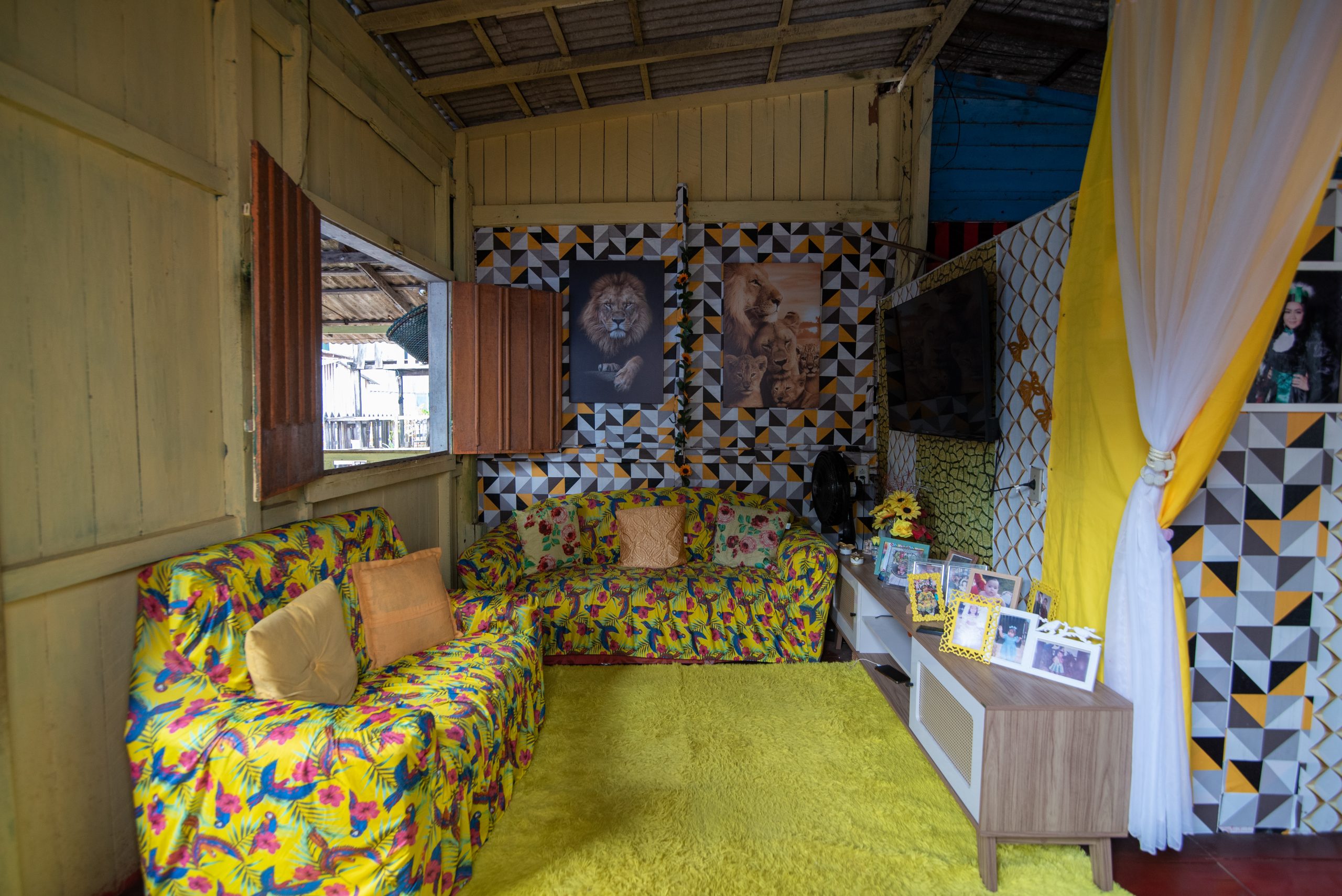
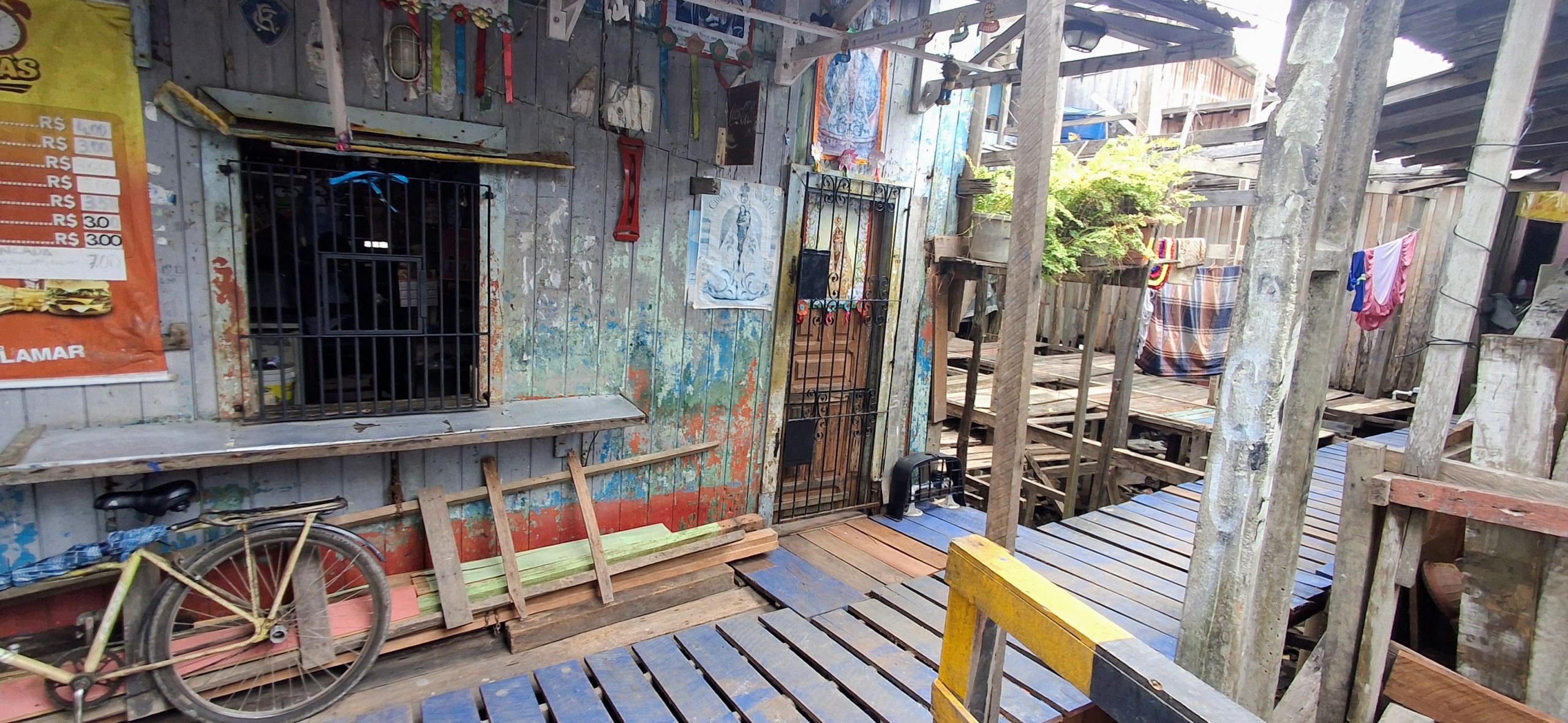
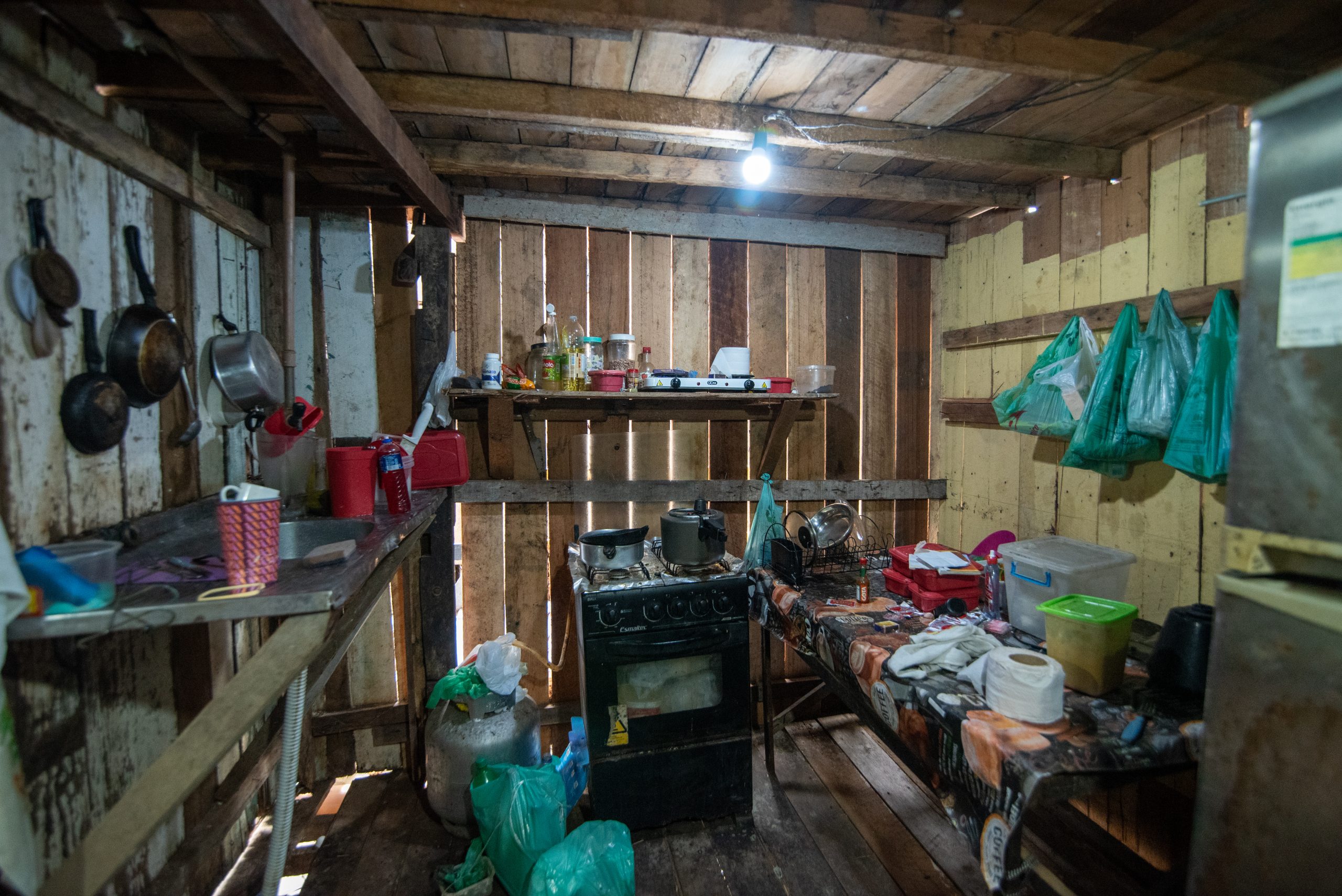
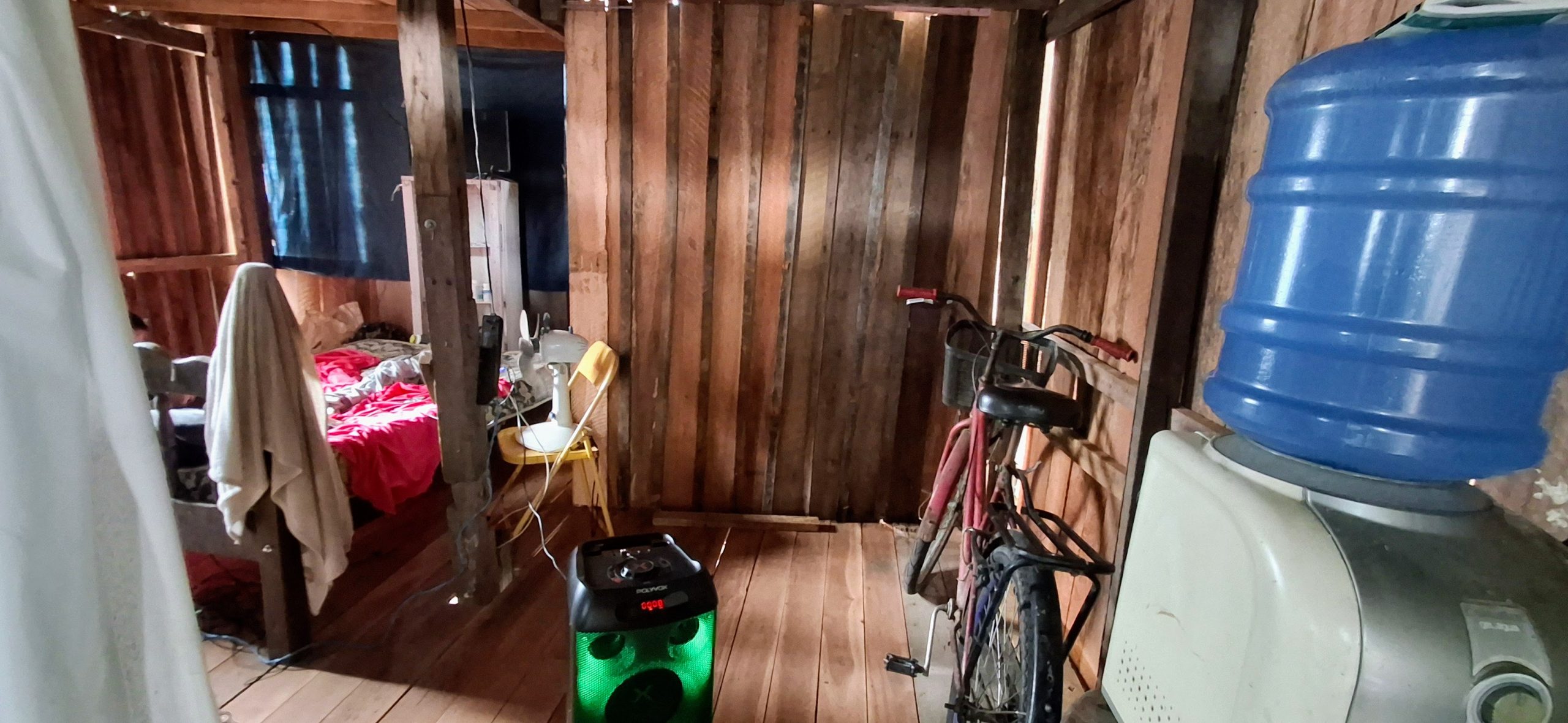
Interior of a home on stilts in Vila da Barca. Photo: Bárbara Dias
In the Amazon itself, there are riverside communities and even luxury hotels built on stilts. The issue is not the stilt structures themselves. For some residents, they are a community asset, an ancestral technology, a way to live close to nature and their source of livelihood (in the case of fishermen), which allows them to access their right to the city.
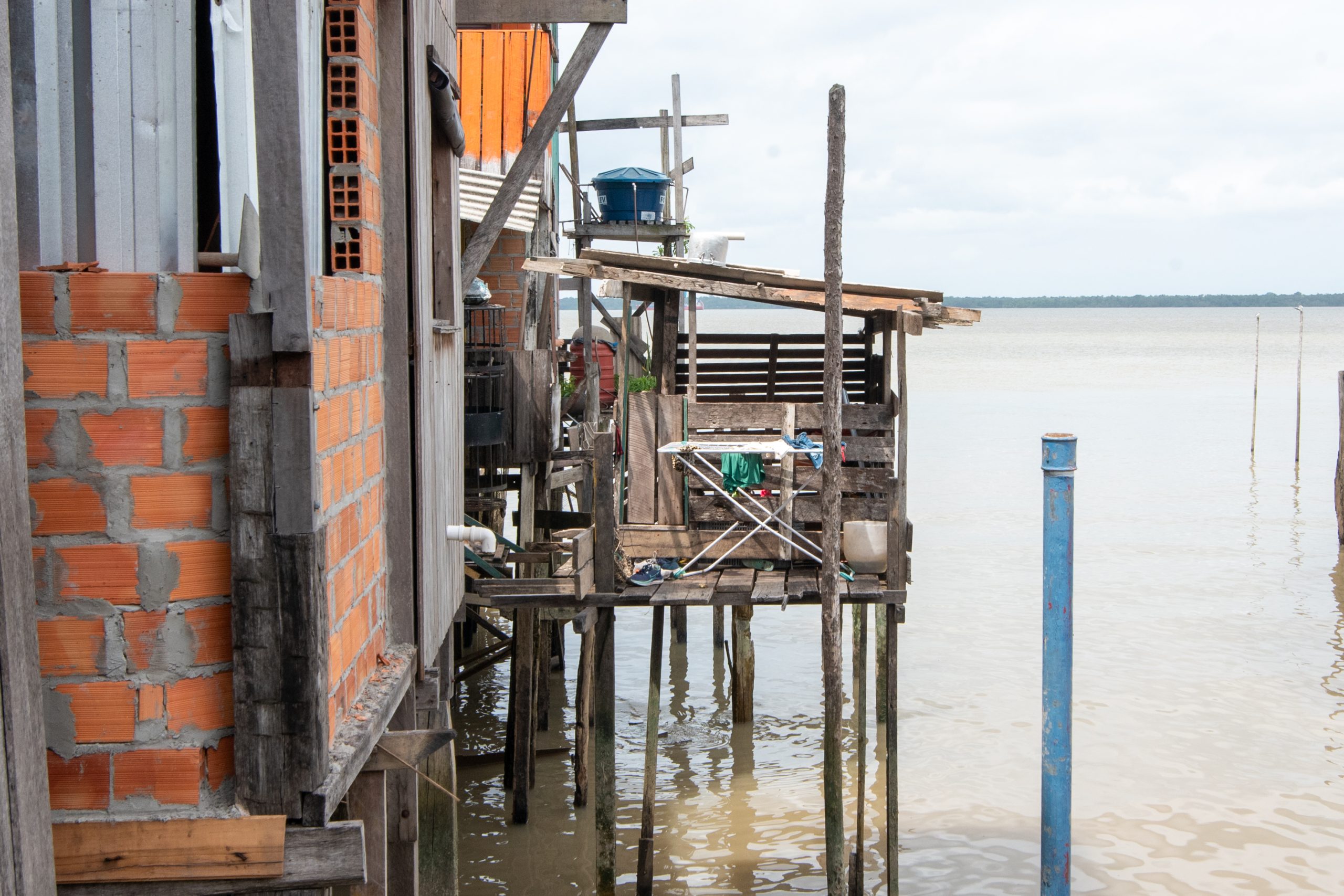
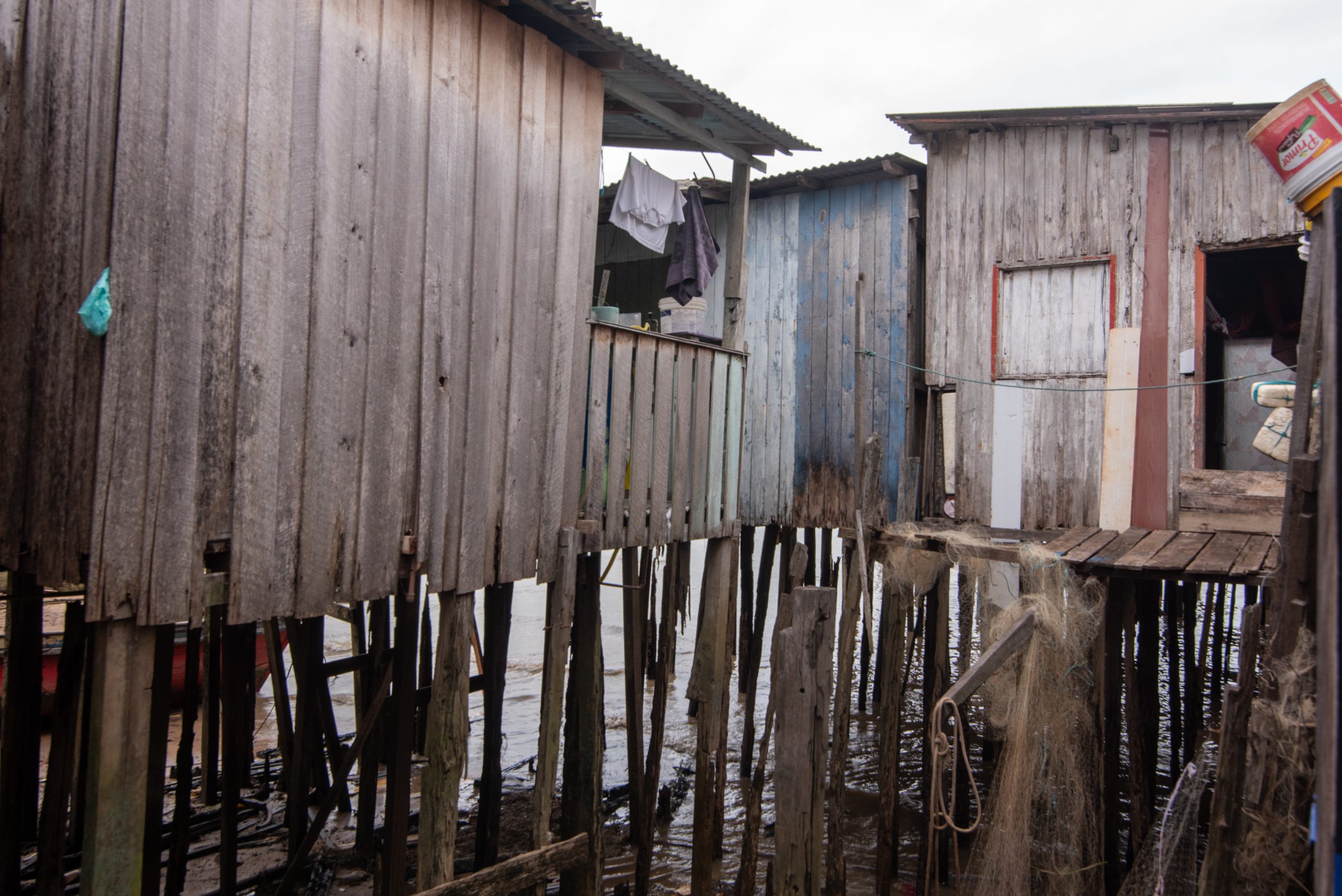
Stilt houses in Vila da Barca are built from a variety of materials. Photo: CatComm
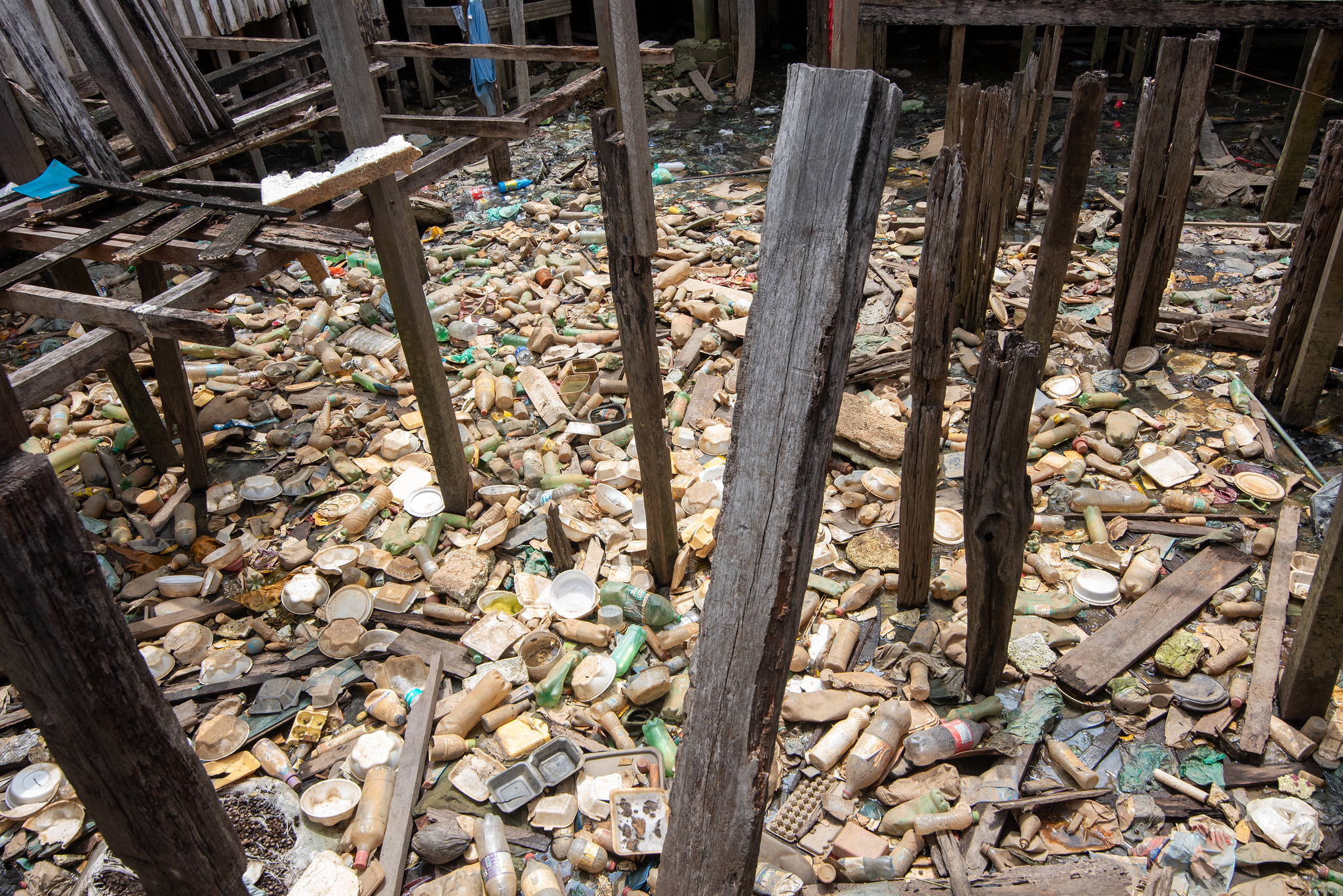
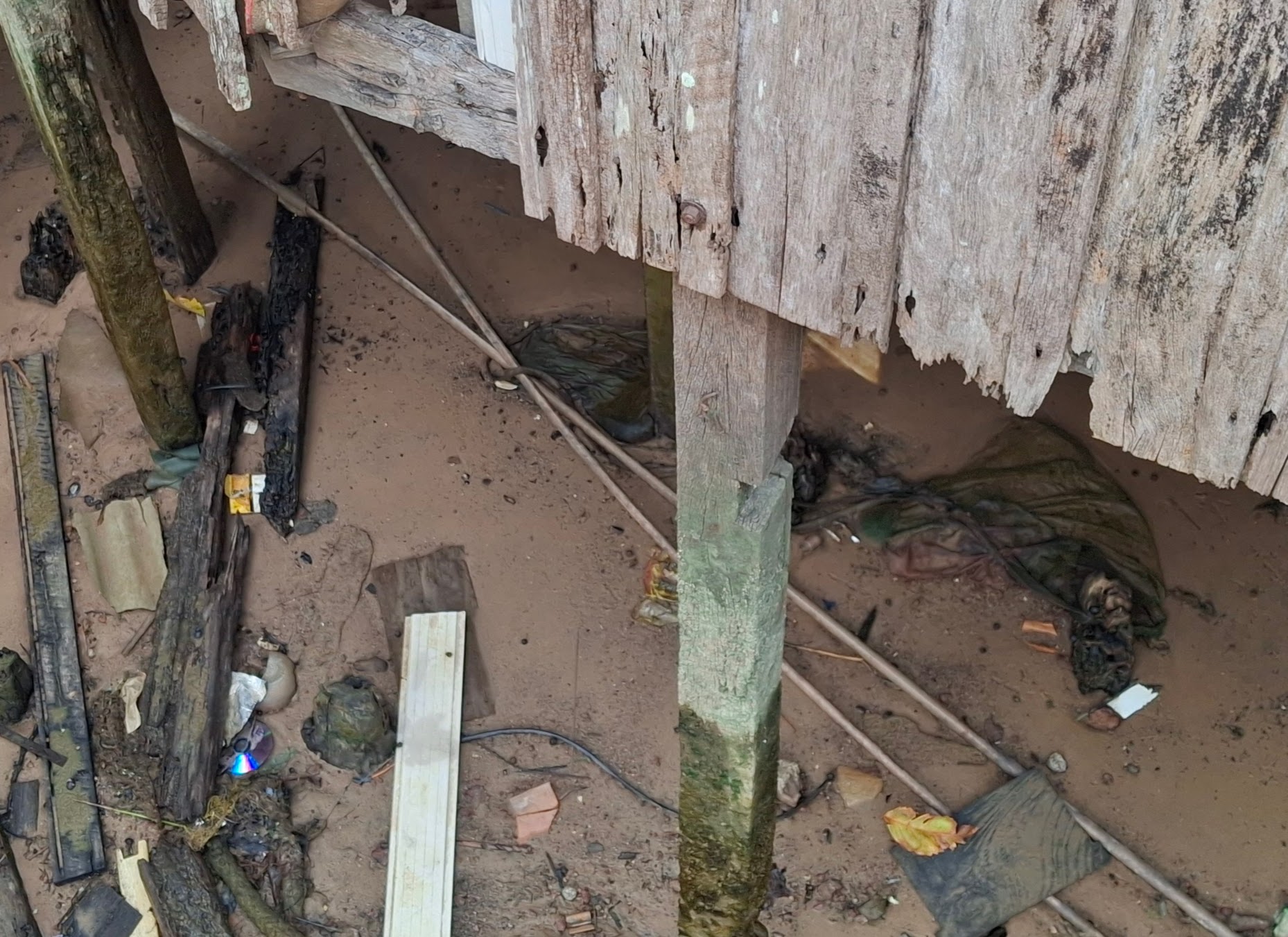
For these residents, the problem is pollution—of the river on which the stilt houses stand—whether from untreated sewage or contamination from other sources, such as industry or trash that the tide carries in and deposits beneath the homes.
Solid waste accumulates beneath some of the stilt houses, regularly brought in by the high tides, which reach the community twice a day. According to Águas do Pará, an eco-barrier will be installed after the sanitation works. Photo: Bárbara Dias
According to community leaders, nine homes are currently being removed from the stilt house area, all in the part most vulnerable to the tide. Their residents will be resettled in the MCMV apartment complexes next door, within Vila da Barca itself. According to the government’s plan, the area where these houses currently stand will be filled in to make way for the construction of a square.
The stilt houses most vulnerable to the tides will be removed. Photo: Bárbara Dias
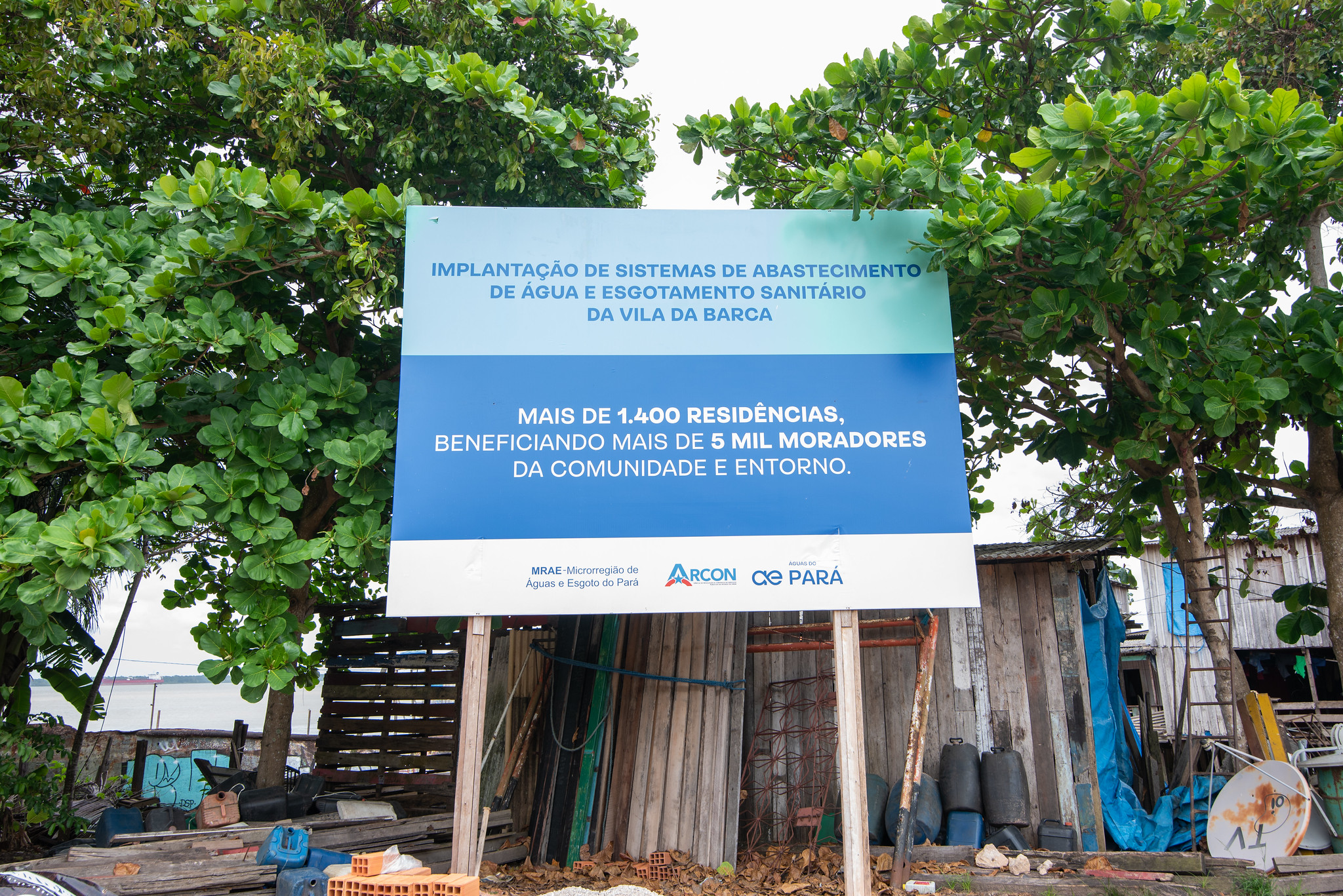
However, most of the stilt houses will remain and are currently receiving, along with the whole of the Vila da Barca community, public investments in sanitation: both water supply and sewage systems, provided by the private utility Águas do Pará. As shown on the sign below, 1,400 homes are included, benefiting 5,000 residents.
Sign for the Águas do Pará program shows that 5,000 residents will benefit from water and sewerage. Photo: Bárbara DiasOld water supply pipes, already deactivated. Photo: CatComm
In Manaus, Beco Nonato, located in the Cachoeirinha neighborhood in the South Zone of the state of Amazonas, was the first stilt house favela in Brazil to receive treated water and sewage collection services from the utility company. In Santos, a coastal city in the state of São Paulo, in addition to water and sewage infrastructure works, the Parque Palafitas community received improvements to the buildings and preservation efforts, both material and cultural. These efforts even included the construction of housing units in the stilt house style, using materials culturally appropriate for that purpose.
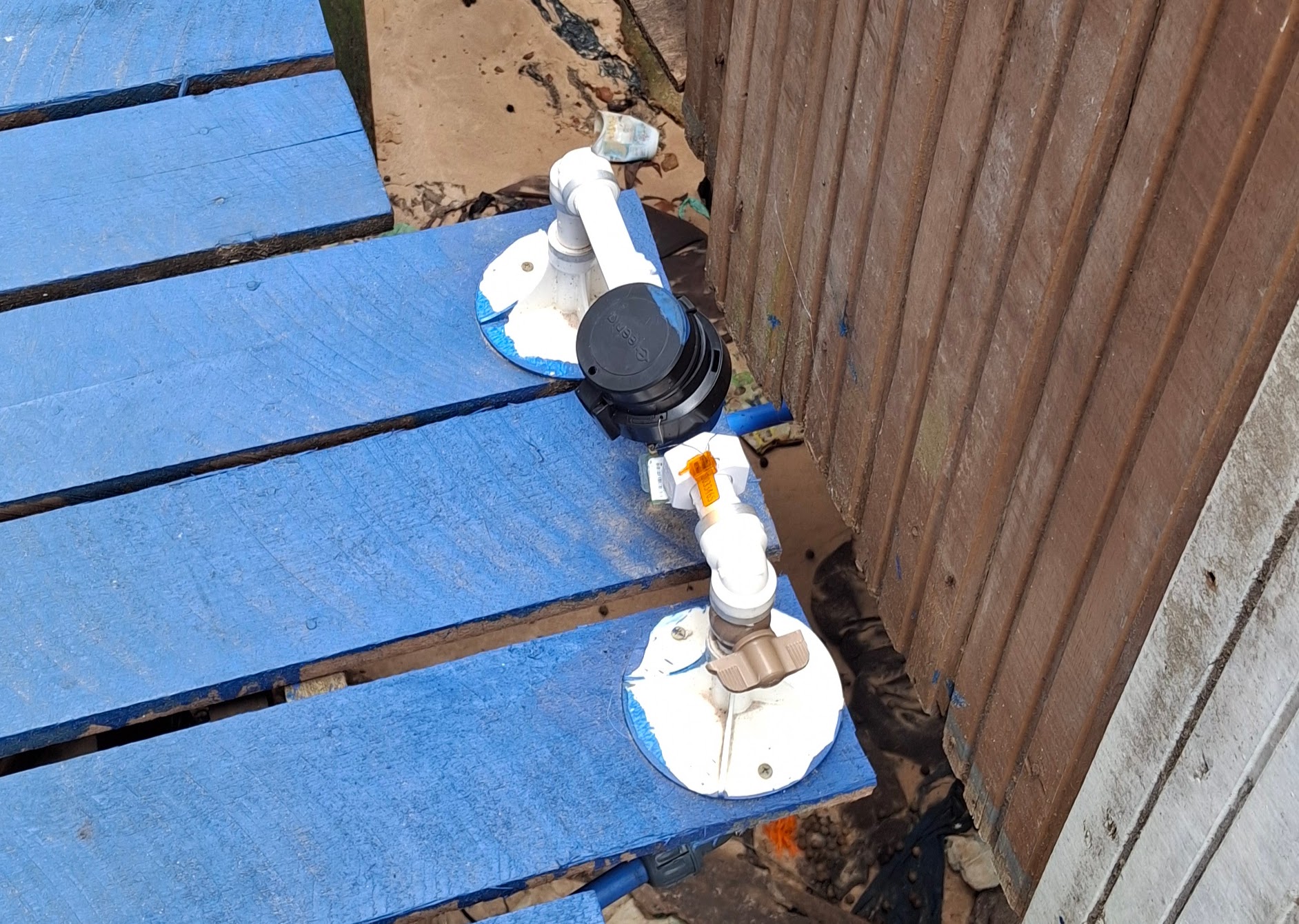
During RioOnWatch’s visit to Vila da Barca, we observed residents’ relief at the installation of a proper water supply system. The old pipes used by residents, which ran along the sand’s surface—submerged most of the day in river water and thus providing contaminated water—are now deactivated. With the new system, the utility removes the blue-painted planks characteristic of the community’s walkways, installs new pipes just below the walkway, connects them to the newly installed water meters, and then reinstalls the walkway with the planks painted blue once again.
We spoke with Nelson Lima Rosa, 43, a resident and Vila da Barca community leader.
Newly installed water meter in the stilt houses of Vila da Barca is used by the utility to monitor water usage. Residents are charged the social tariff. Photo: CatComm
“At a public hearing with the governor, leaders from Vila da Barca told him: ‘Go on, drink this water!’ They challenged the governor to drink the community’s water. He didn’t… After the works, the number of sick people dropped significantly… The pipes were very thin, tidal and sewage water would always get in… the pipes for the homes were buried under sand, sludge and trash or, at times, ran over the ground… Any crack in a pipe meant residents drank and bathed with contaminated water.” — Nelson Lima Rosa
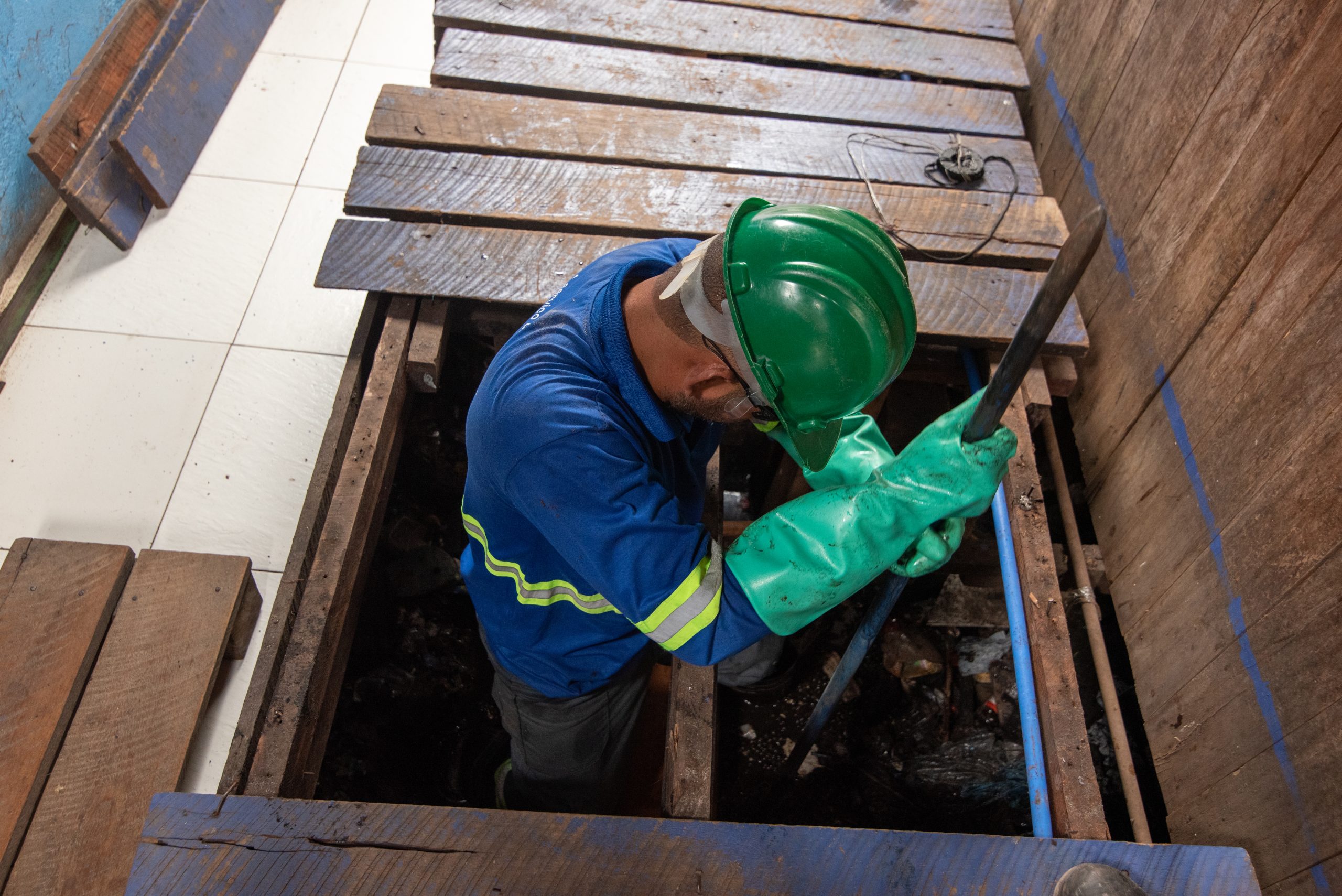
The work being carried out by Águas do Pará decommissions the precarious system that ran along the riverbed, raising the water and sewage pipes and attaching them to the undersides of the wooden walkways. Previously, thin PVC pipes that cracked from continuous exposure to sun and rain, and from direct contact with pollutants, sewage and animals, were replaced by thicker pipes that are less prone to cracking.
Works aim to provide clean water and sewerage for the stilt house residents. Photo: Bárbara Dias
By raising the pipes and attaching them to the walkways, the chances of damage to the plumbing are reduced. Another advantage is that if they do get damaged, the problems will be more visible and easier to fix.
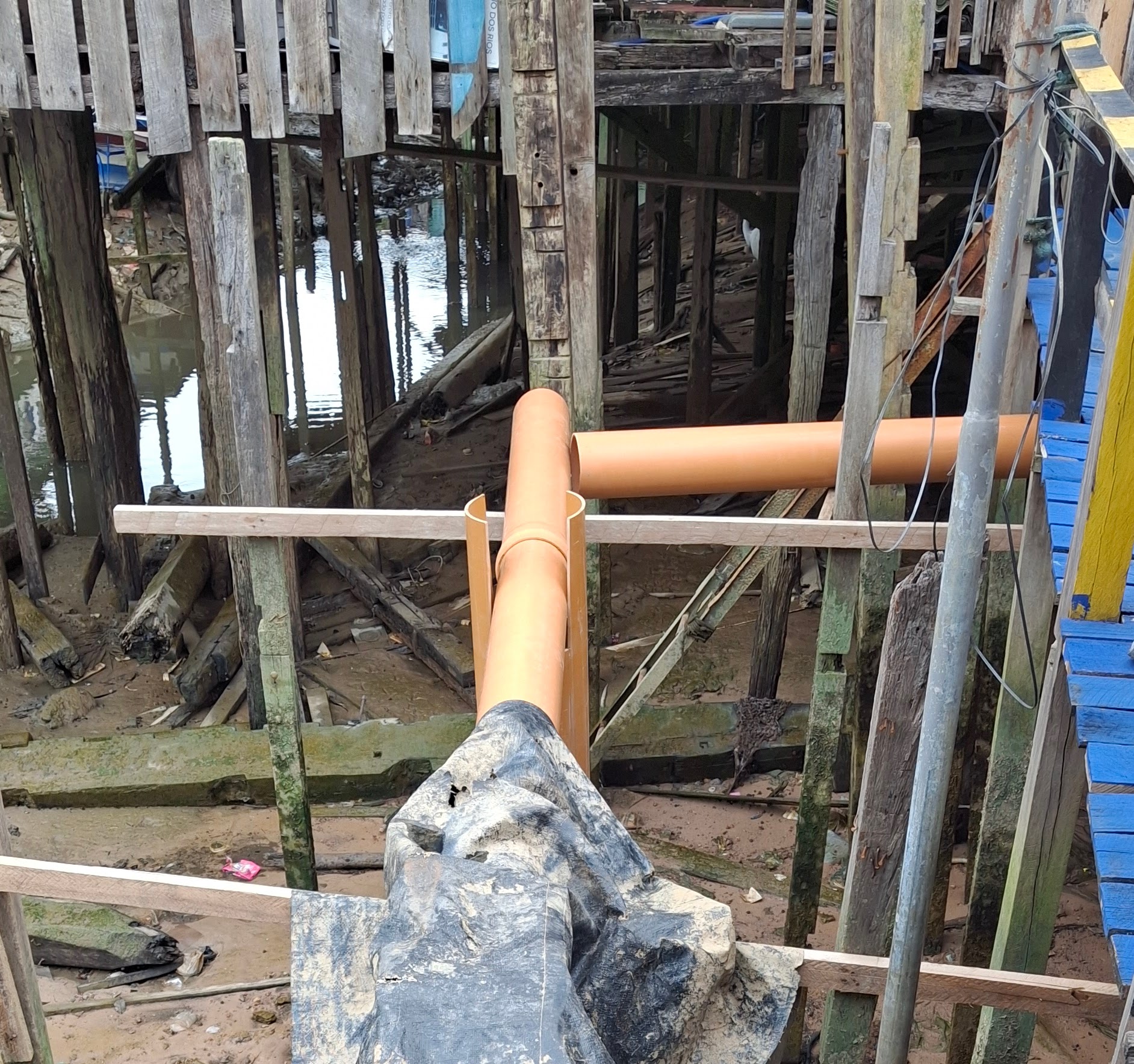
Meanwhile, the sewage network in the stilt house area is under construction, running below and parallel to the blue walkways.
The stilt house sewage system is under construction, running below and parallel to the walkways. Photo: CatComm
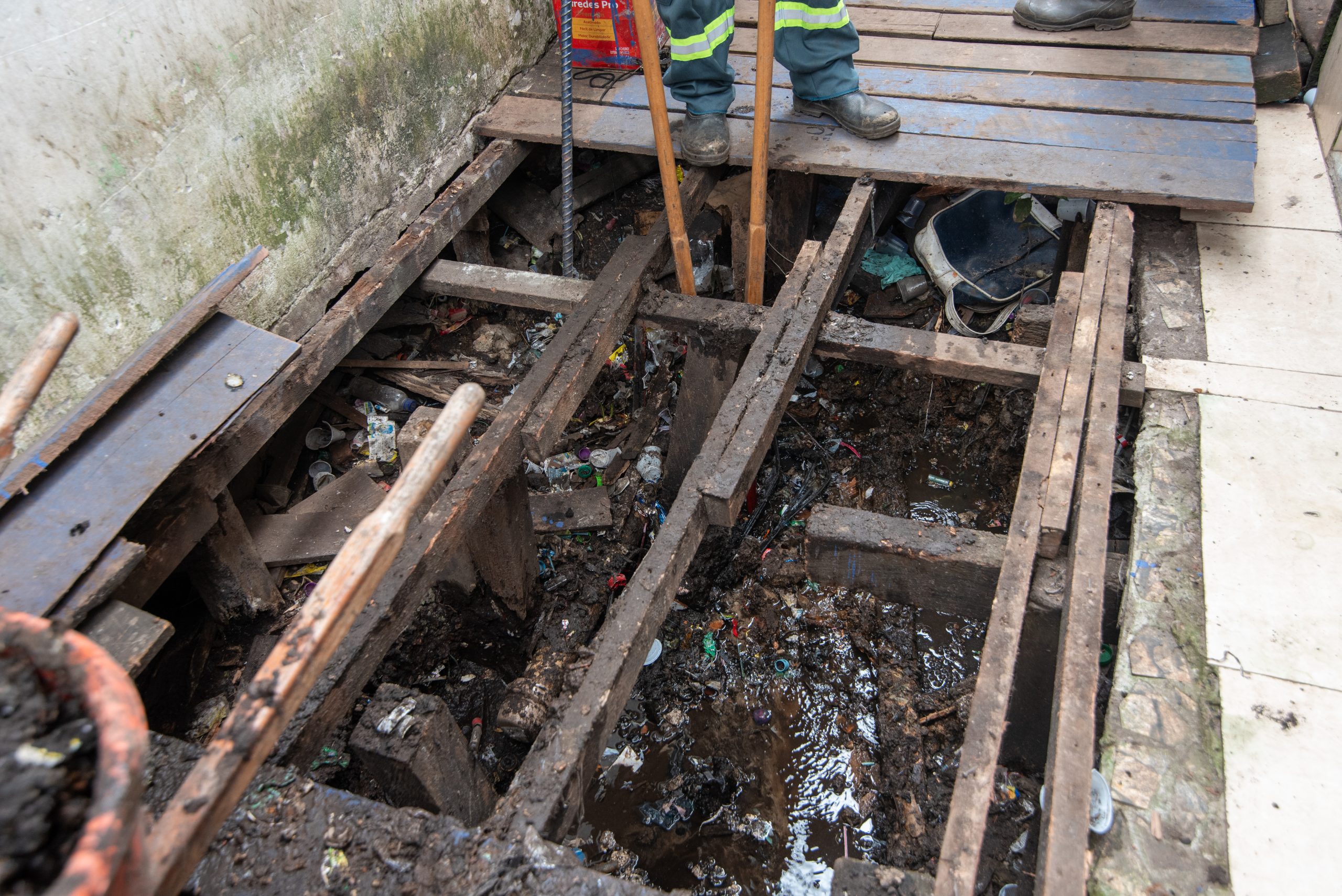
In addition to the sewage network, Águas do Pará employees are carrying out targeted macro-drainage projects under pedestrian walkways to prevent flooding. According to reports from the employees themselves and local leaders, most of the workers are residents of the community.
Most of the employees working on the projects are residents of Vila da Barca itself. Photo: Bárbara Dias
Residents see the works as a step forward. Some people have started taking showers and having running water for the first time. Luiz Claudio da Silva Vera Cruz, 52, has lived in the Vila da Barca stilt house area since birth and says his family has been there since his grandmother was born. This means Cruz’s family has been in Vila da Barca for five generations.
Now, his grandchildren live in the Vila apartment complexes and go to the stilt houses to visit their grandfather and play.
“My grandmother lived 92 years. She was born here. This community is over a hundred years old. Back then, the houses were big, with plenty of space between them. Now, there’s almost no space, they’re right next to each other… hardly any room for new constructions, except upwards or near the port, on the beachfront [as residents sometimes call the river].” — Luiz Claudio da Silva Vera Cruz
Cruz’s family has been in Vila da Barca for five generations, four of them living in the stilt houses. His grandchildren live in the Vila apartment complexes and go to the stilt houses to visit their grandfather and play. Photo: Bárbara Dias
During the visit to his home, Cruz drew attention to a recurring problem. According to him, places from where people were removed and ressettled into the apartment complexes, once left empty, were reoccupied by other families in need of housing. Without a consistent housing policy, public authorities are left to chase their own tails with these sporadic and isolated actions.
Cruz, however, is hopeful about the works taking place in his baixada.
“Before, people used to have to turn on the pump and draw water themselves, using buckets or pots… Very few households here had water tanks… Now, after the works, the water comes straight in, with a good flow, all the time.” — Luiz Claudio da Silva Vera Cruz
Although happy, he does not hide his concern about the cost this access will represent for his family income.
“The paper showing the price of water hasn’t arrived yet. We don’t pay for electricity, but I’m worried the water will be too expensive. It’s good to have water, but what if I don’t have money to pay? For now, they aren’t charging us [beyond the social tariff]. They installed that thing outside [the water meters], but they didn’t charge us… we already have a [high] cost for materials to build stilt houses… That wood is angelim [tropical hardwood]… for the floor, you need planks of another type… everything is expensive!” — Luiz Claudio da Silva Vera Cruz
Stilt houses in Vila da Barca have different levels of structural vulnerability and are built from a variety of materials. Due to costs and his low income, Cruz says he learned from his father how to maintain a stilt house. In a way, this gives him autonomy to adapt his home to the climatic realities he faces at any given moment, such as during floods, when he said he raised the floor of his home. However, like other residents we interviewed, he echoes the sense of belonging felt by his neighbors.
“I like living here, I like this area, I like living this way. I raised my children here.” — Luiz Claudio da Silva Vera Cruz
New angelim planks incorporated into Cruz’s home, whose grandmother was born and lived to 92 in the stilt houses of Vila da Barca. Photo: CatComm
While he enjoys his life in the stilt houses, Cruz also shares his optimism about the government-promised apartments, saying, “I’d rather move into the apartments… but they’re taking way too long to deliver them!”
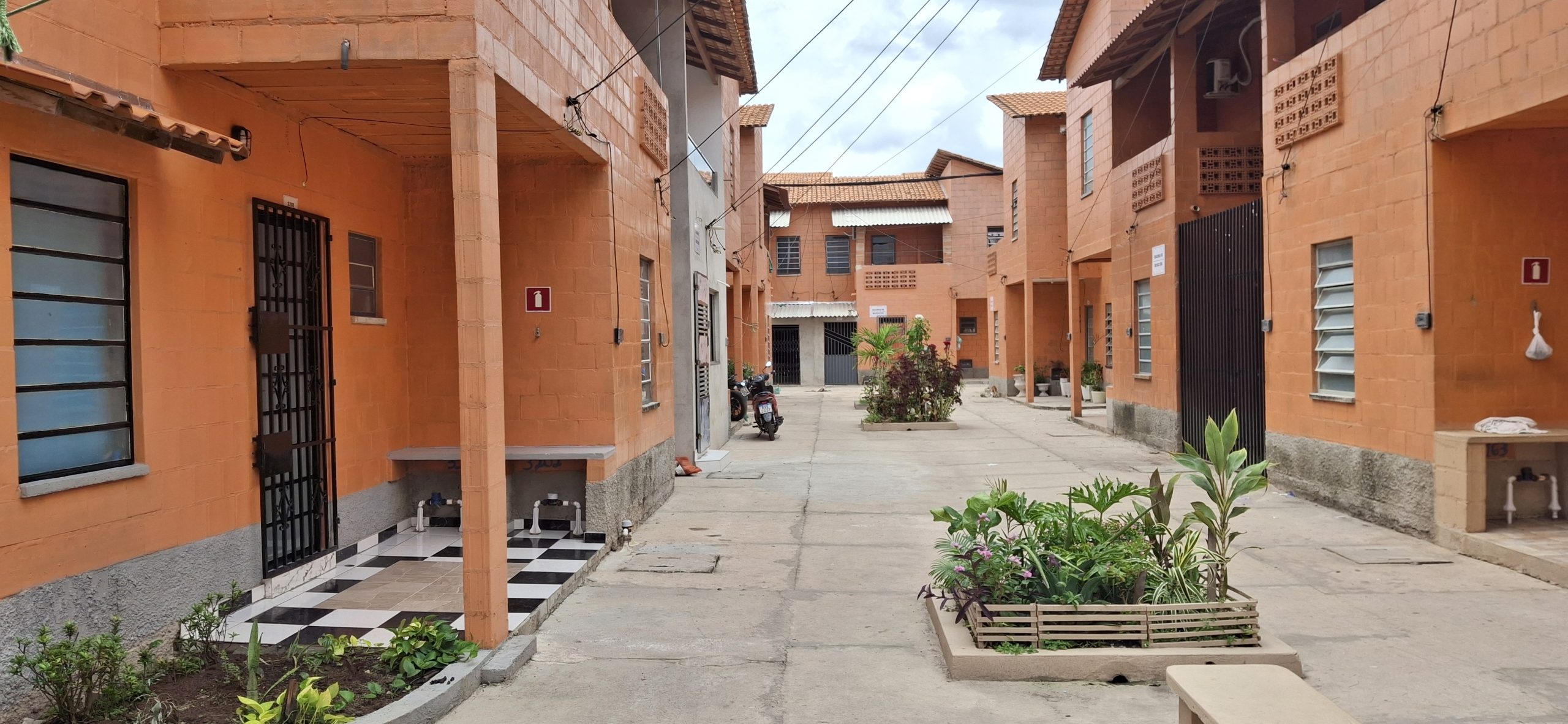
The plan is still to resettle several of the stilt houses. The new apartments are duplex units. On the first floor: a living room, bathroom, kitchen and a small open-air service area. In the living room, a staircase leads to the second floor, where there are two bedrooms and a terrace.
Newly built homes in the Vila da Barca housing complex. Photo: CatComm
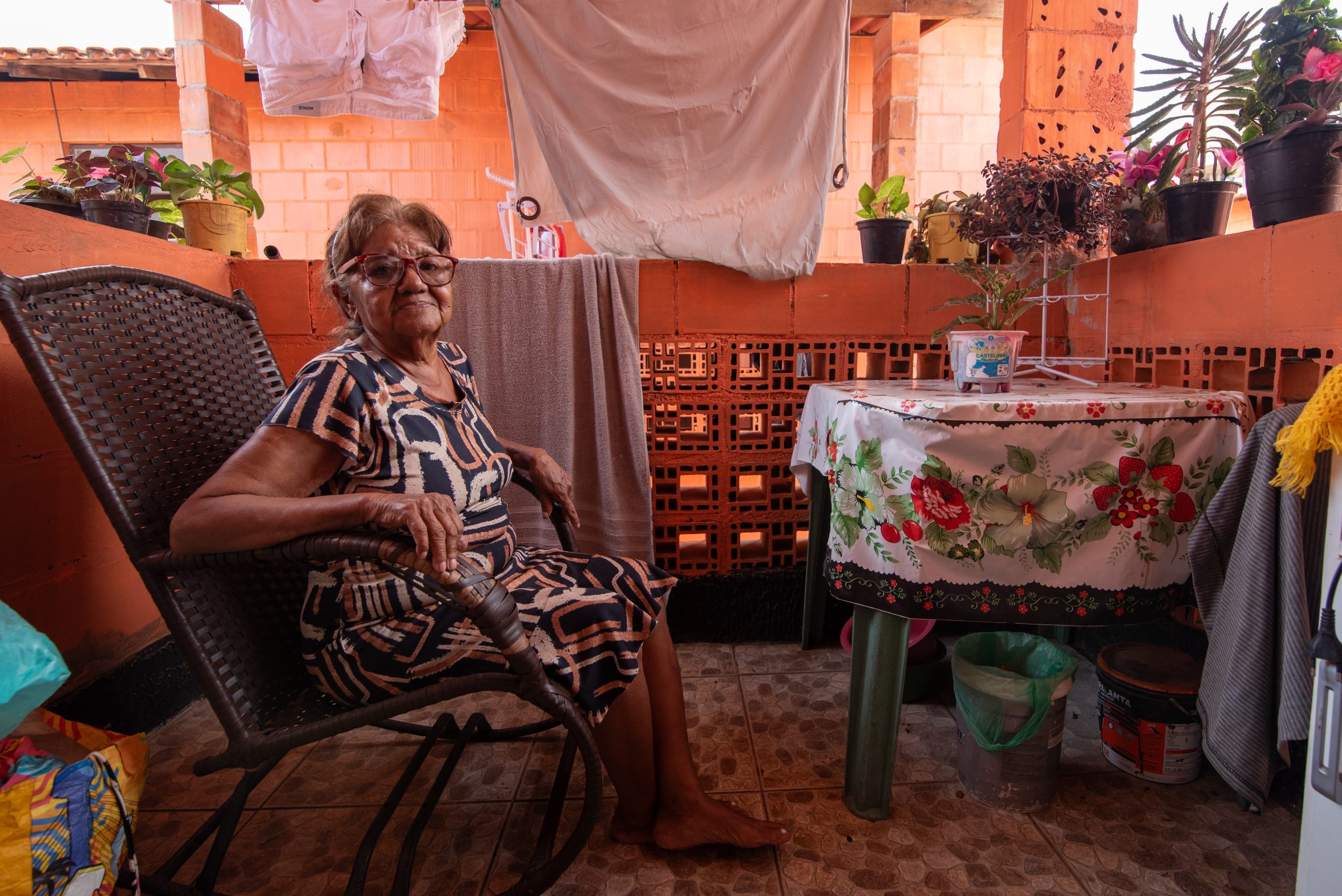
Dona Eunice Nunes dos Santos, 75, and her son, Denielson, are very pleased to have moved into the Vila da Barca apartment complex, which happened five months ago after more than a decade of waiting.
“[The apartment complex to which part of the stilt house residents were relocated] took 16 years to be built. It was stop, start, stop, start, all due to corruption. [Because of that] I didn’t even expect to live in this apartment one day… There are other buildings in the complex here for the people removed from Vila da Barca whose residents received the keys to fully finished units, with ceilings, tiled floors in every room, painted walls and all the outlets working. [Mine didn’t come finished.]” — Eunice Nunes dos Santos
Eunice Nunes dos Santos, 75, was resettled from the stilt house where she lived paying rent to a duplex apartment in the resettled-residents complex within Vila da Barca itself, a demand made by the community. She says she is happy, despite having criticisms about the unfinished state of the apartment she received. Photo: Bárbara Dias
Eunice was born in Muaná, on Marajó Island, in the interior of Pará. As a child, she moved to Belém to live with a family who raised her. Years later, after having children of her own, she moved to Cotijuba, an island in Belém’s metropolitan island region, already on the shores of Marajó Bay. However, after being abandoned by her husband, she moved with her children to Vila da Barca, where she lived in the stilt house area, paying rent.
Today, living in the apartment complexes, Eunice is happy she no longer has to pay rent and now has a less precarious home. However, she worries about the cost of this, since she now pays for water and electricity. Even with the social tariff, which she says is available to her, the utilities have been charging hundreds of reais per month for consumption that does not match reality. When RioOnWatch visited her family, for example, there was nothing that could justify the amount on her electric bill.
“I have three fans, a fridge, a TV, an electric shower, cell phones… We don’t have air conditioning [a freezer, microwave, washing machine, computer] or any other equipment that requires a lot of electricity.” — Eunice Nunes dos Santos
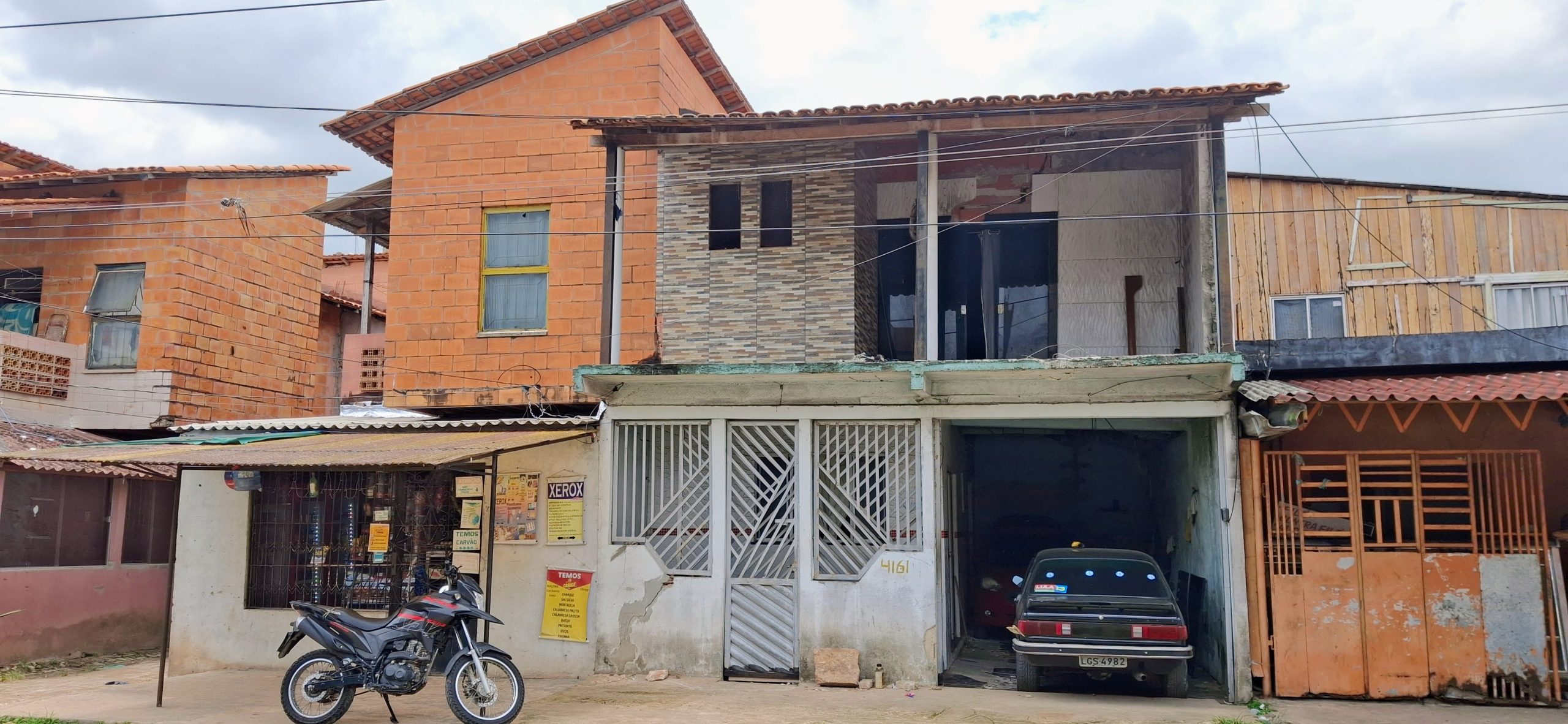
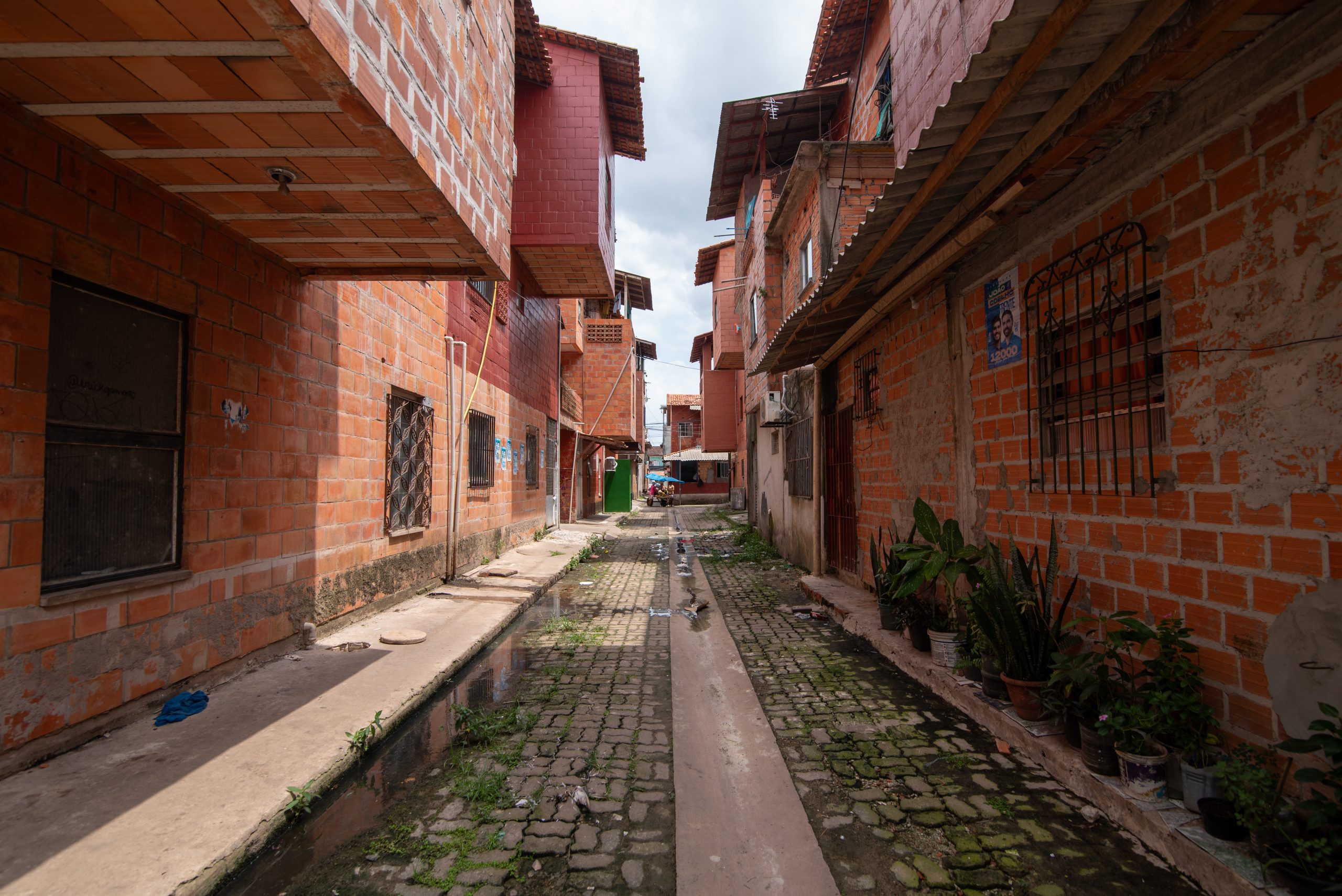
Homes already established in the housing complex, where residents have adapted their units according to their needs. Photo: CatComm
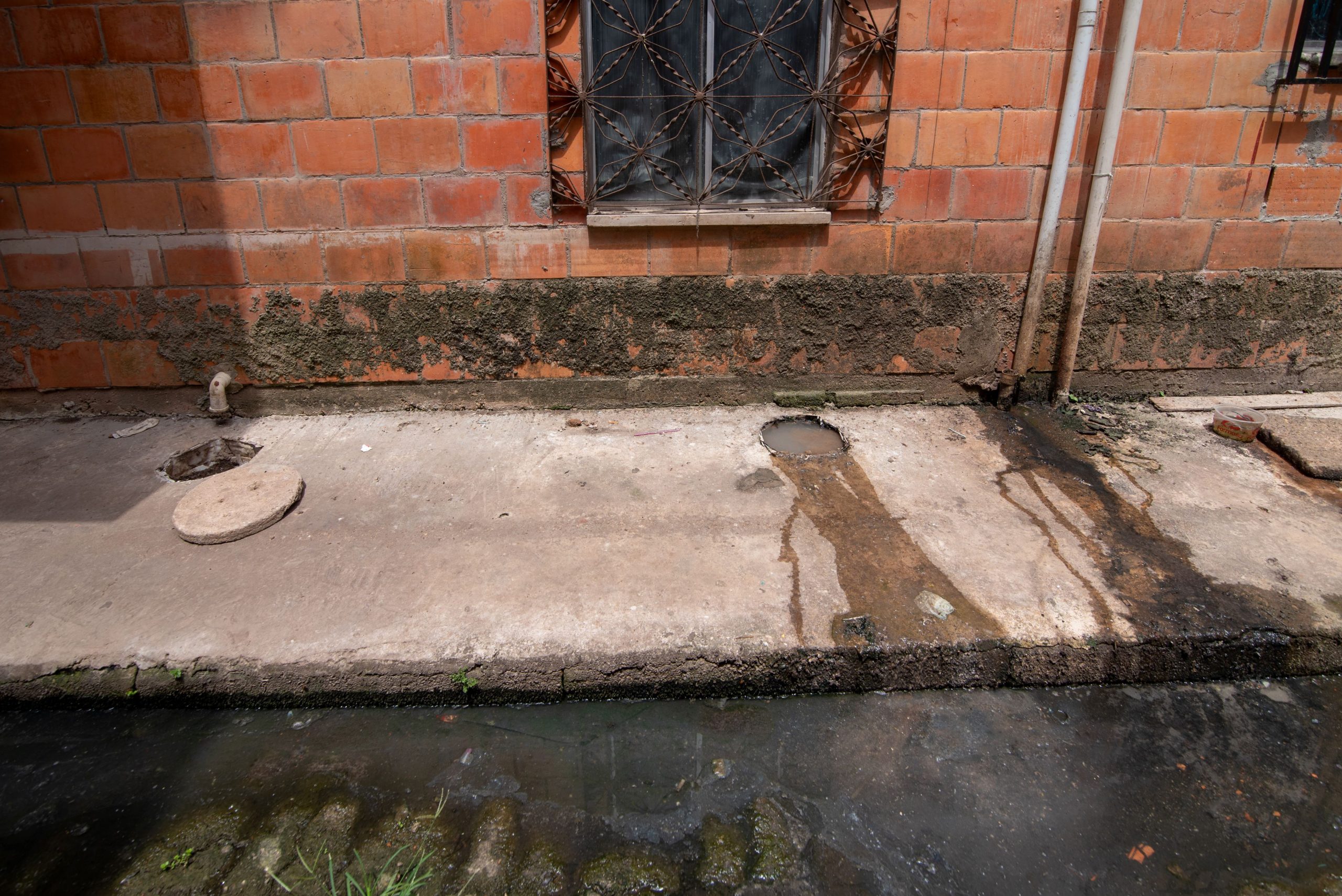
Walking through the complexes, in the units that were built first, residents reported that although the buildings were designed with a sewage system, it wasn’t planned to meet the community’s actual needs.
As a result, Águas do Pará regularly has to clean internal walkways in the complexes to prevent sewage from overflowing into the streets between the buildings.
Drainage and cleaning of internal walkways in the complexes are carried out regularly to prevent sewage from overflowing. Photo: Bárbara Dias
Meanwhile, residents of some of the more fragile homes in Vila da Barca face life-threatening risks, with structures that could give way—partially or entirely—at any moment, collapsing into the polluted waters of the Guamá River. This was a warning shared by a resident during RioOnWatch‘s visit. Visibly shaken, he spoke loudly as he pointed toward the door, where he said we would be safer.
Although he said he likes living there and likes the stilt houses, he also said he would prefer the possibility of living in a brick house, on solid ground, in the complexes the government is building.
Vila da Barca Residential Complex. Photo: Bárbara Dias
Luiz Claudio Vera Cruz’s grandchildren were also present on the day RioOnWatch visited him. Playing on their grandfather’s bed, they said they enjoy visiting him in the stilt house area because they get to play and kick a ball around on the wooden walkways between the homes with other children from the neighborhood. The two grandchildren live in the Vila da Barca apartment complex—the first generation in 100 years not to live in stilt houses.
The risk of collapse is imminent in some cases, however. A few hours after RioOnWatch’s visit, in another part of Vila da Barca, a stilt house collapsed, leaving four people homeless.
At the end of our visit, we caught the graduation ceremony of the Barca Saneada project, promoted by Águas do Pará. Focused on environmental education, the project fosters composting, community gardens, the collection of recyclable materials and their transformation into income-generating items, artistic objects and more. During the ceremony, participants were encouraged to speak about the knowledge they had gained and to strengthen their cultural sense of belonging to the community, including through carimbó and traditional foods.
One of the students, Kaillany Sashielly Silva de Moura, 17, described what she learned.
“Now we know it’s not trash, it’s waste [laughs]… The project taught us to be mindful about separating organic matter, waste and recyclables. I learned that you can make bricks with plastic and with glass. And with organic matter, you can make fertilizer for plants, biofertilizer. The part that interested me the most was the composters. Since my grandmother has plants at home, and I’m also obsessed with plants, I was especially into the composters. We made about 20 composter kits and distributed them around the community. So, I kept one at home, which also helps teach people there, because many residents don’t know that you can separate organics from recyclable waste.” — Kaillany Sashielly Silva de Moura
She now hopes to become a community organizer in her area, raising awareness among her family and neighbors about the importance of preserving the natural environment surrounding Vila da Barca. This was also echoed by the general coordinator of the Vila da Barca Residents’ Association.
“We’re going to transform waste—plastic that can no longer be recycled—into bricks and, with these bricks, we’re going to build green garden beds and make our contribution. There’s a cooperative in Belém making these bricks. There are also the composters that the youth learned to make. There are some really cool hooks [to hang trash bags and prevent vectors], made from recycled materials, which [the community’s youth] decorated and added messages to… We’ve learned that [Belém] City Hall is coordinating with companies to make public equipment—benches, tables, trashcans—using the waste that’s in the stilt house area. They’re thinking of giving back to the community what was once pollution, turning it into equipment and shared spaces… and these young people are going to be multipliers. We’re now trying to form another group for more youth. And before we know it, this wheel is turning, and they’re transforming the world.” — Gerson Bruno
The general coordinator emphasizes the importance of the struggle to achieve improvements for his baixada.
“Sustainability cannot exist only at the discourse level, it needs to be part of everyday life… And we really need to get our hands dirty. While they are there, discussing in the Blue Zone, we are here, getting our hands dirty!” — Gerson Bruno
Check out the Photo Album of the Visit to Vila da Barca on Flickr:
About the author: Julio Santos Filhohas a Bachelor’s in International Relations (UFF) and a Master’s in Sociology (IESP-UERJ). A Black man from Ilha do Governador, he has worked as editor of RioOnWatch since 2020. In 2021, he edited the series “Rooting Anti-Racism in the Favelas,” a silver medalist in The Anthem Awards.
Support RioOnWatch’s tireless, critical and cutting-edge hyperlocal journalism, online community organizing meetings, and direct support to favelas by clicking here.


 This article is part of a series created in partnership with the Behner Stiefel Center for Brazilian Studies at San Diego State University, to produce articles for the Digital Brazil Project on environmental justice in the favelas through RioOnWatch.