
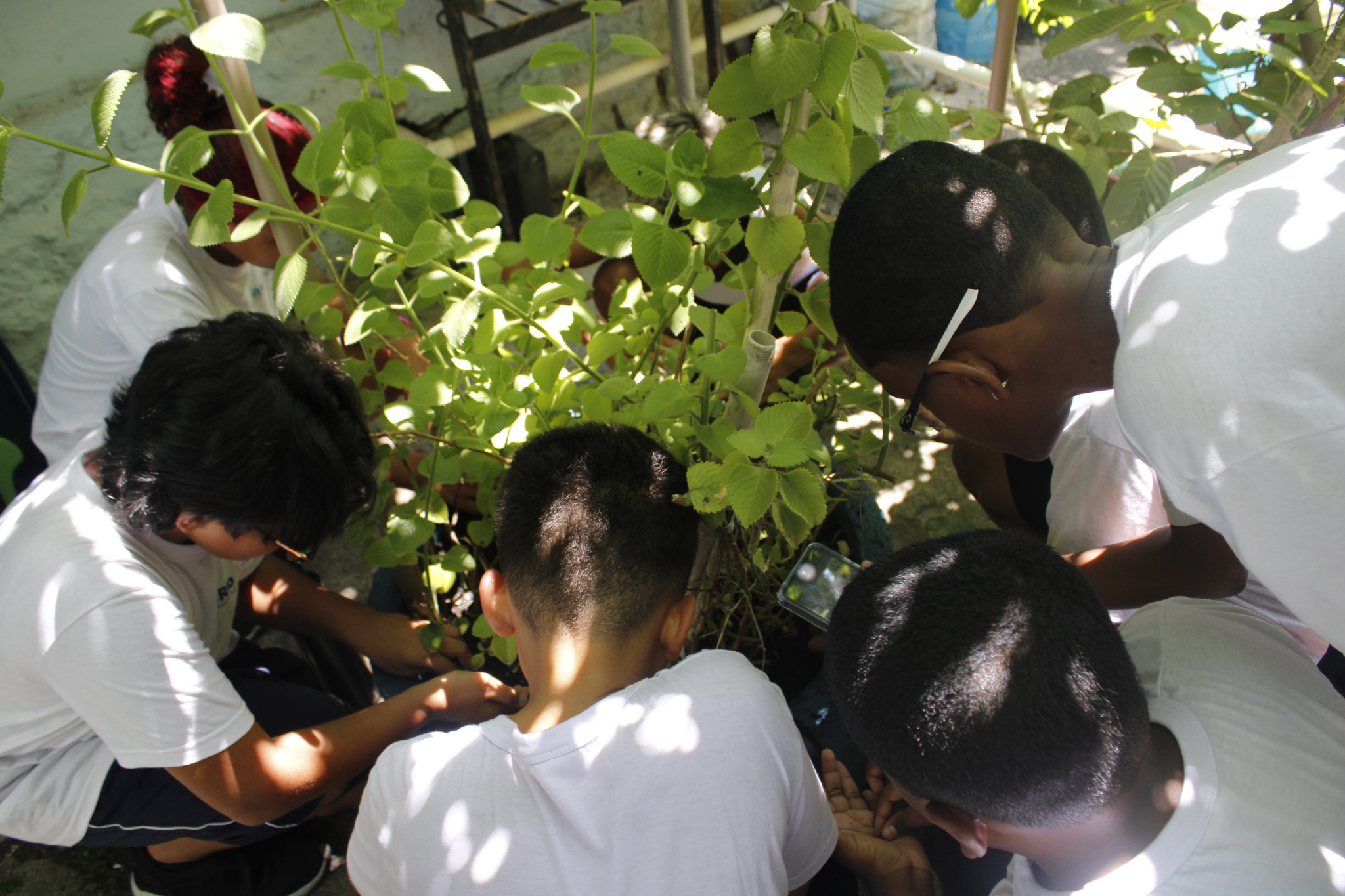

Two years ago, classes at the Brant Horta Technological Municipal School (GET Brant Horta), located in Penha, a complex of favelas and surrounding neighborhoods in Rio de Janeiro’s North Zone, resumed in a special way: with a collective action in the school’s community garden.
This happened with the support of Vilson Luiz, a tour guide and environmental educator from Penha responsible for coordinating the project, and the Frente Penha collective. On March 5, students, teachers and environmental partners came together in a welcome ritual for new students. The event, a March activity on the Sustainable Favela Network’s (SFN)* collective calendar, also brought together environmental volunteers, such as Edvana do Nascimento, a member of Ação da Cidadania; Mara Lúcia Araújo, a member of the Positive Women collective; Franklin Ramos, an environmental educator; Eliana Ramos, an entrepreneur from Edixe Accessories; Lucia Helena Barbosa, from the Transvida Cooperative; and Maria José da Silva.
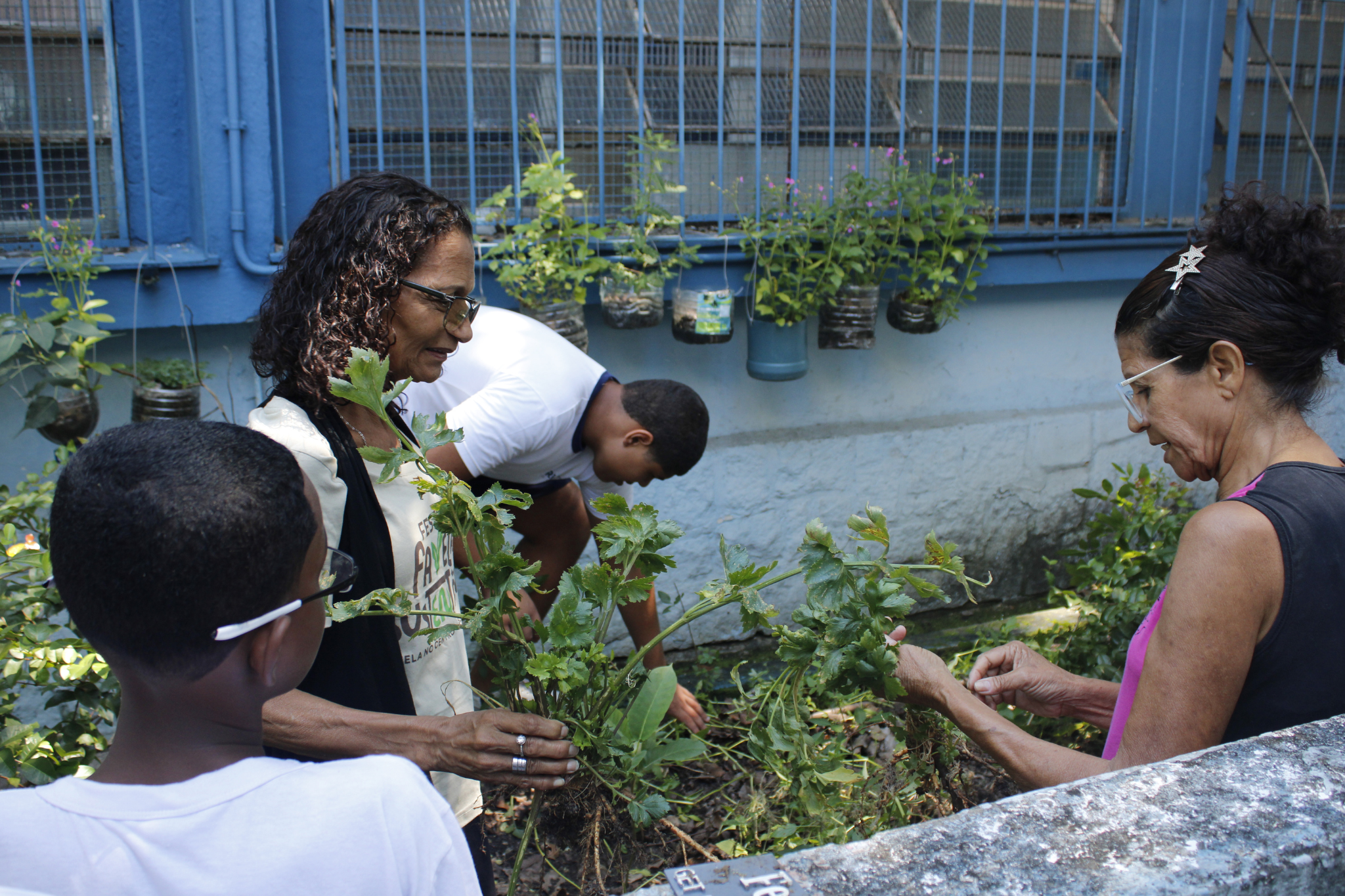
The Environment as an Educational Tool
As previously published by RioOnWatch, the Complexo da Penha region is one of the city’s main urban heat islands. Concerned about this reality, GET Brant Horta began raising students’ awareness by carrying out practical actions of care and preservation in the area surrounding the school, encouraging a sense of belonging.
During 2024 Environment Week, students and teachers organized a collective action in Ary Barroso Park to revitalize the previously underused site. Marjorie Guimarães, principal of GET Brant Horta, recalls:
“We even did some planting there [in Ary Barroso Park]. The idea of bringing the community to the school or the school going to the community was to improve students’ behavior, so they understand why they should not destroy or break things.”
However, the initiative was short-lived due to armed conflicts in the area. This motivated the administration and students to create their own on-campus community garden in May 2024—both to continue what had started in the park and to make productive use of unused spaces in the school.
Virgínia do Espírito Santo, geography teacher, shares how the project reaffirms the importance of collective, creative organizing between teachers, students, the community and projects within Complexo da Penha:
“We asked them [the students] what we could do with the empty space we had on the school grounds and they said: ‘We don’t have a green space here in the school.’ So we thought: ‘Why don’t we build a garden, then?’ And they agreed. We teachers made an estimate [of what we needed to start the garden] and purchased the materials. Then, Vilson got fertilizer from [waste utility] Comlurb to help improve the soil. Some people from the NGO Sowing and Harvesting Friendship came to help, and the Serra da Misericórdia Integration Center, (CEM) came too, bringing supplies, seedlings and seeds. And then we got started.”
Ver essa foto no Instagram
For principal Marjorie Guimarães, the garden has brought numerous benefits to daily life at the school, such as developing student leadership and improving performance:
“We used to have students, for example, who never spoke to anyone at school. One of them went from being introverted to extroverted and even came up with the irrigation system [for the garden]. He’s an example of how there’s an emotional aspect to all of this, because he has a stutter and had to explain things in his own way. It was good for both his health and emotional wellbeing. Others developed a sense of belonging, which encouraged them to stay longer at school and play games like ping-pong and volleyball. For us, that’s really great because it means they aren’t out on the streets. The more restless students also come together in the garden, and we use it as a bargaining chip: for the most absent or disengaged students, we tell them they have to come [to school to participate in the garden]. As a result, their behavior has improved a lot. I’m not saying it’s the [only] reason, but [the garden] helps, you know? We don’t reach all students, but we do pull some [away from disengagement] and from a disinterest in studying.”
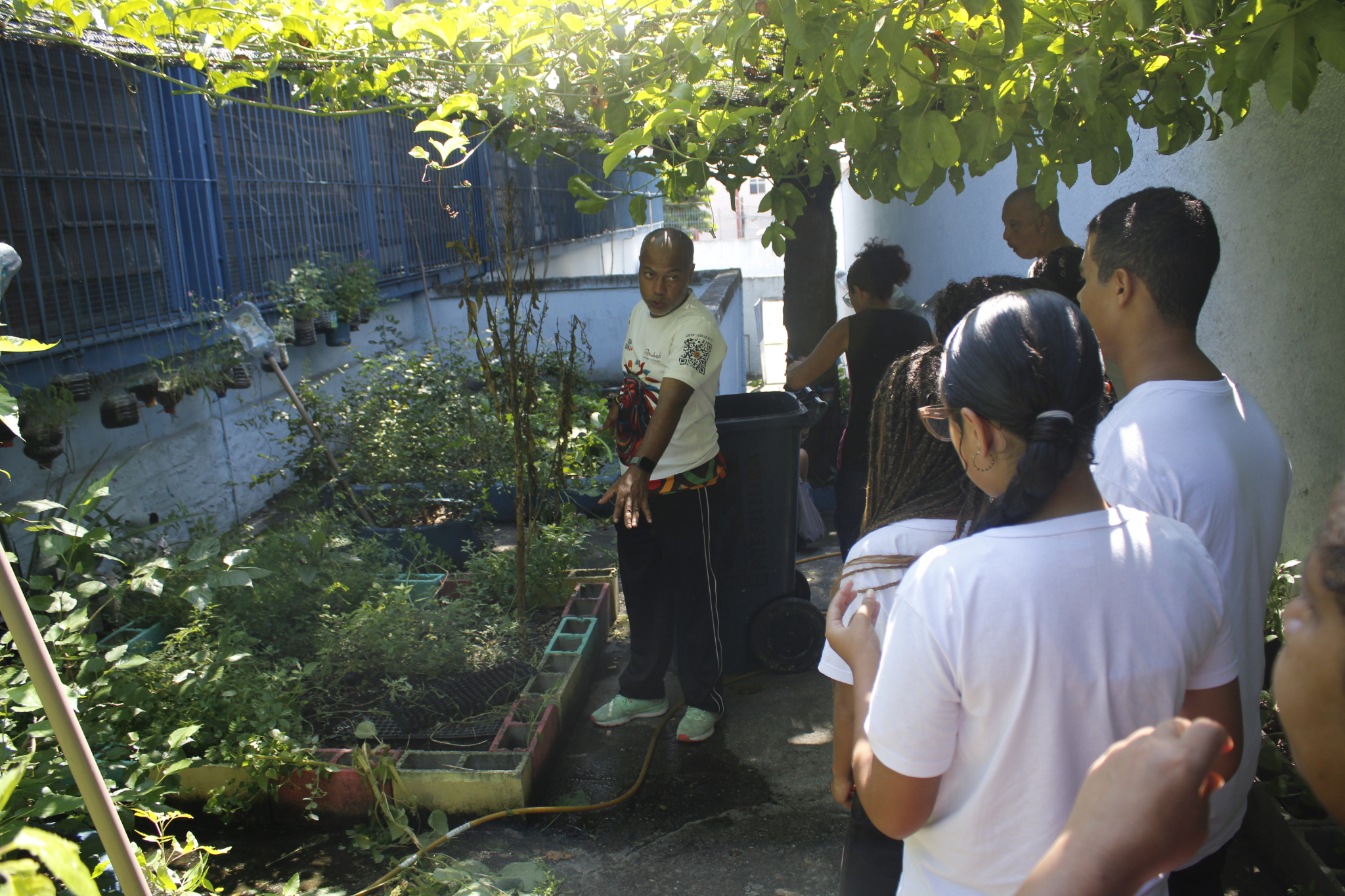
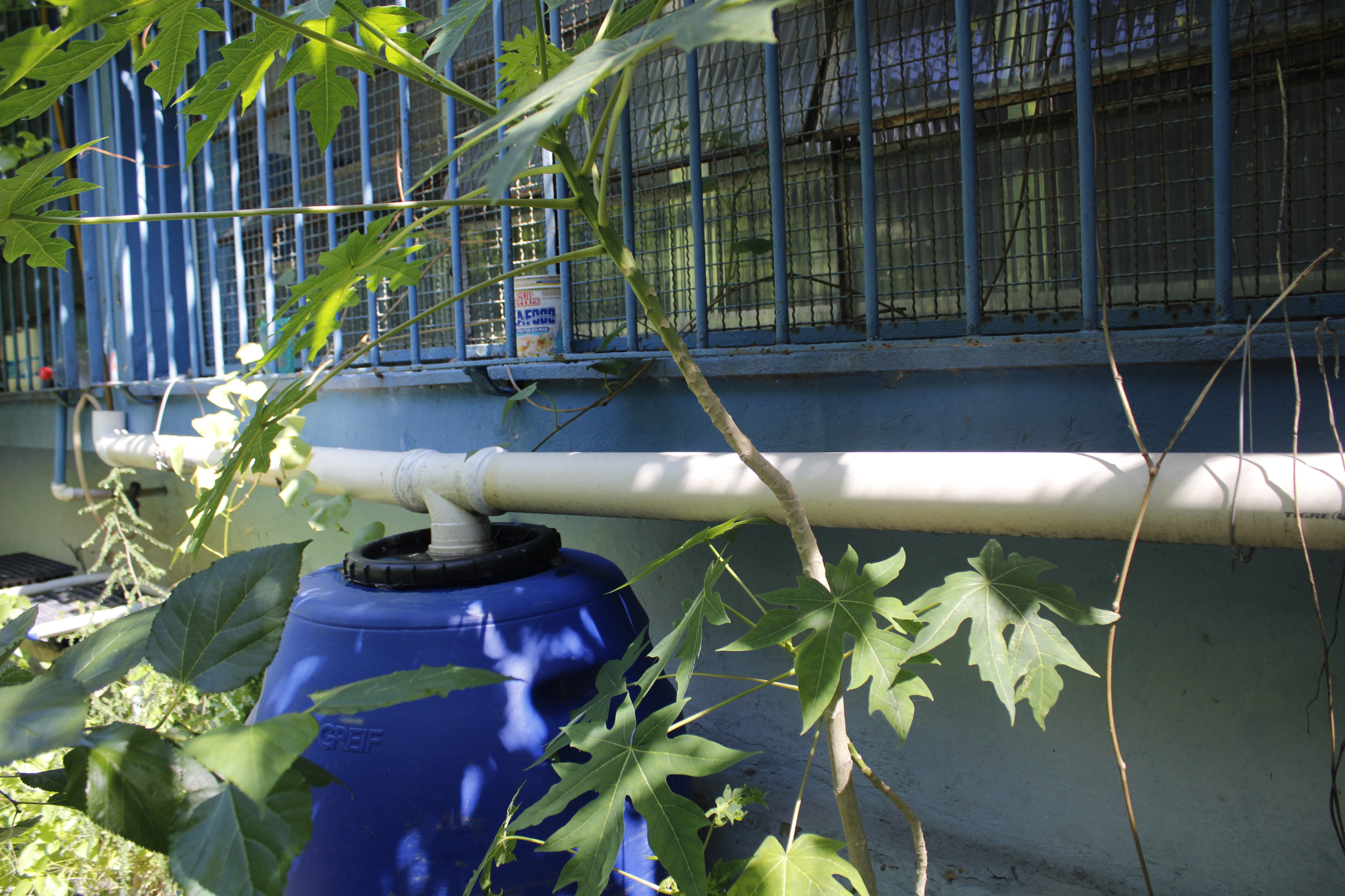
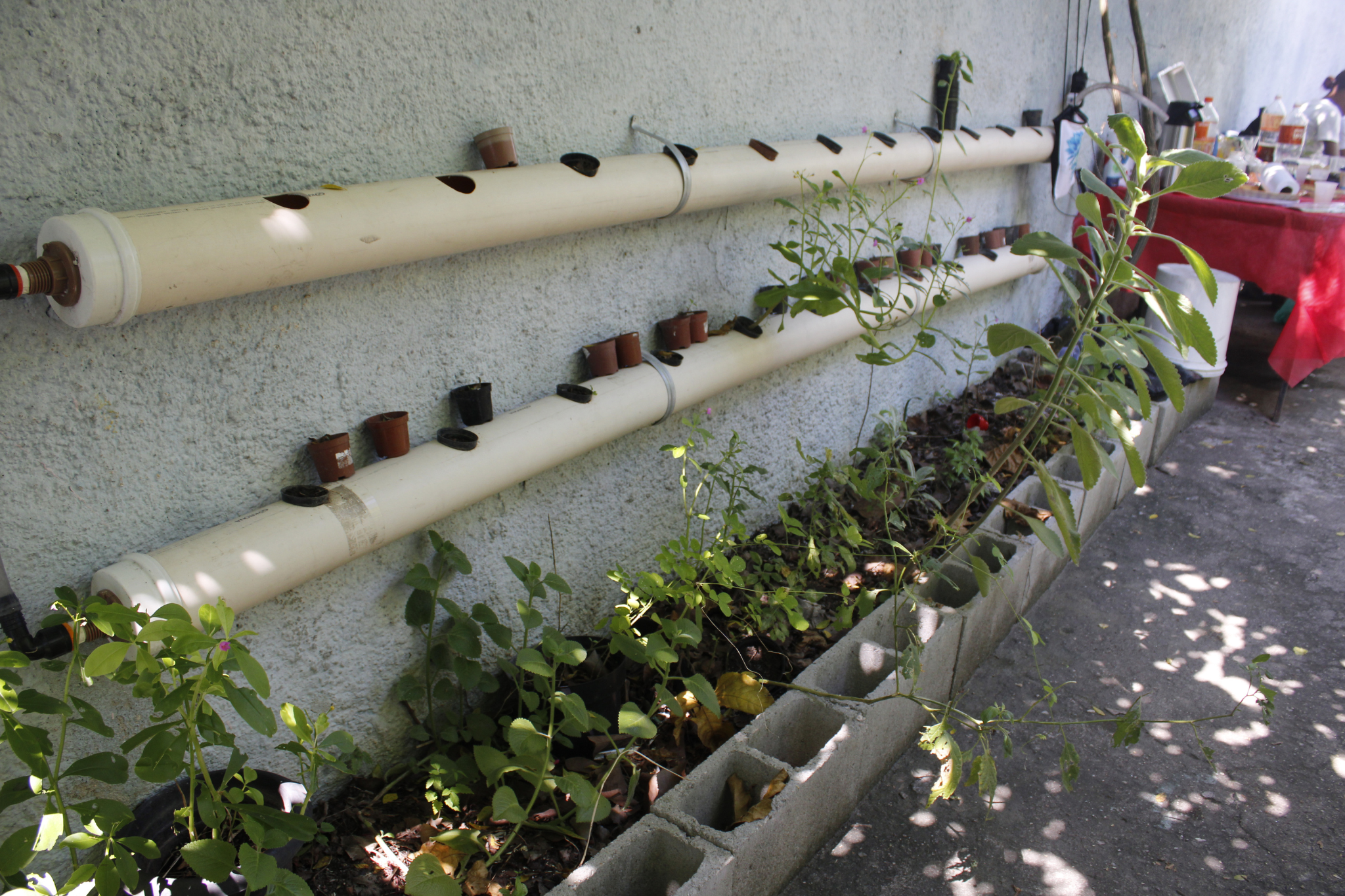
With the support of the school and community, the students carried out a series of actions that benefited the entire school. Among these initiatives is an irrigation system for the garden that reuses water from air-conditioning units. The system stores the water in a small barrel capable of supplying all the seedlings.
There is a vertical garden growing small seedlings that are still germinating; they will later be transferred to the garden beds. The irrigation system works by means of pumps that continuously circulate water from the bottom up.
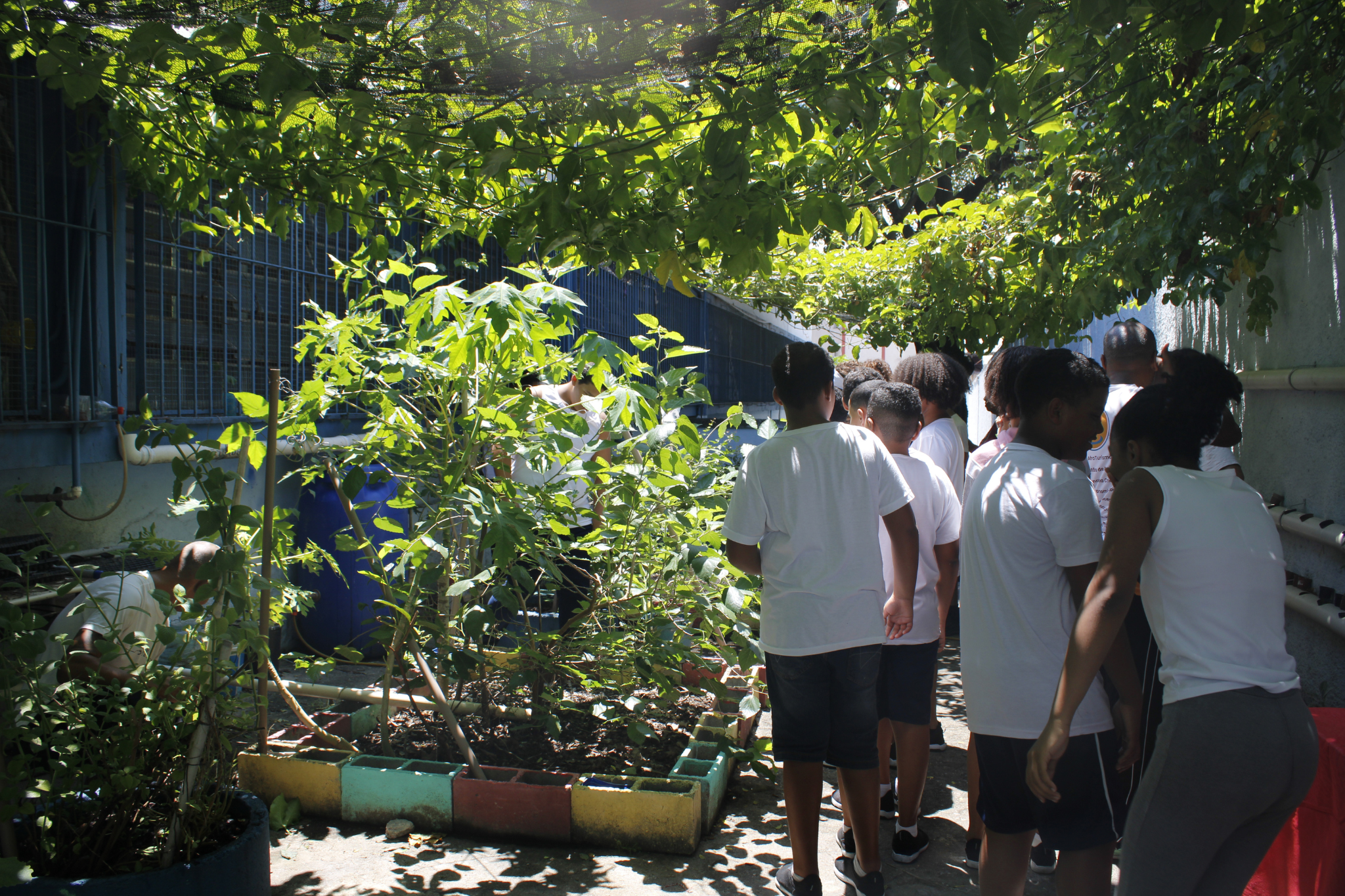
Two agroecological green roofs with light structures and quick-installation design were also added at the school; the netting and passion fruit leaves covering the garden came from the Green Roof Favela project. This structure has helped create a cooling point inside the school, crucial on hot days.
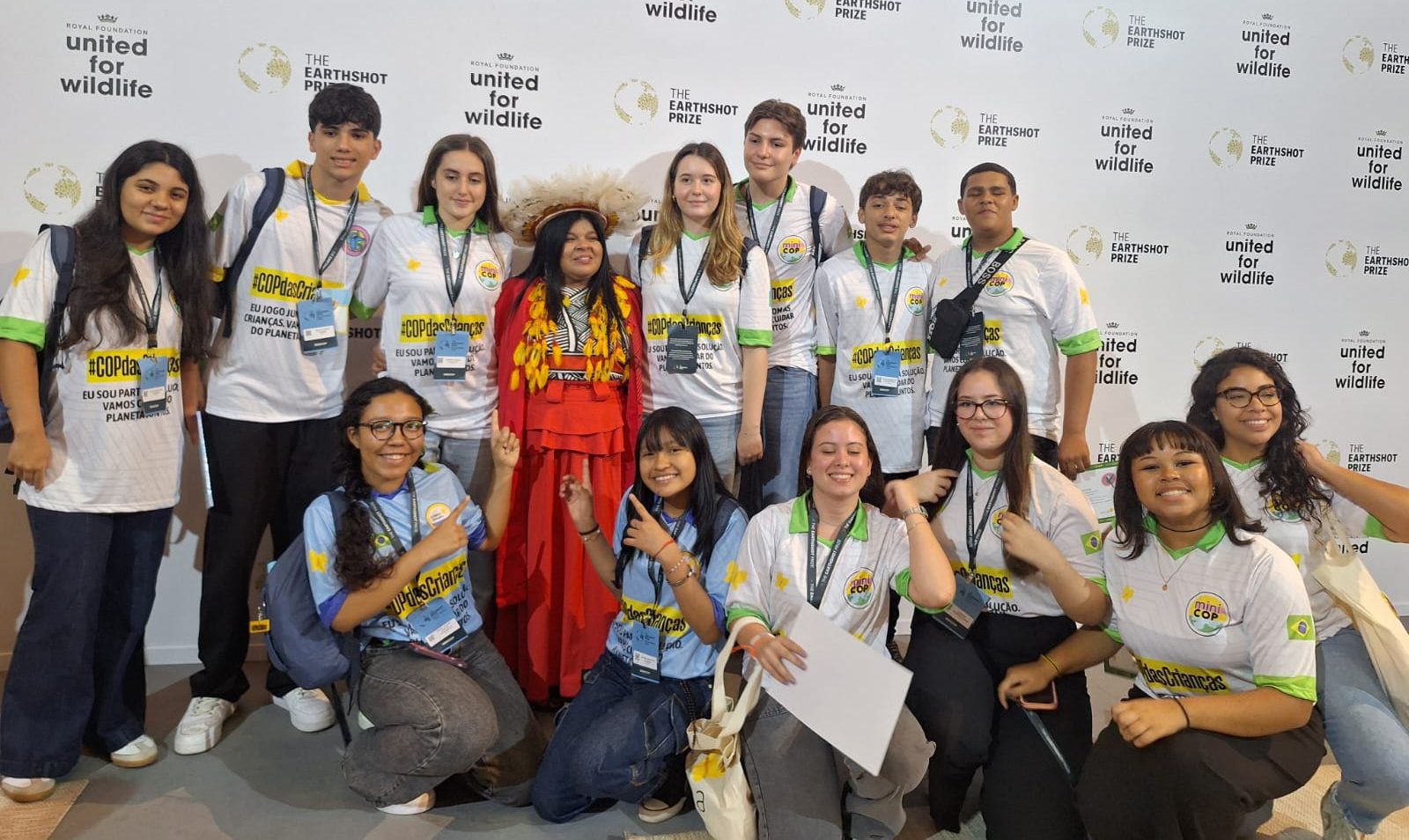
To further its socio-environmental mission, the school organized a fashion show in partnership with the Divines School and stylist Almir França, producing an entire collection from scraps of denim. The event was attended by actress Gi Fernandes, a former GET Brant Horta student. The students also received recognition from the Prince of Wales at the Earthshot Prize ceremony at Rio’s Museum of Tomorrow on November 5, 2025.
The Brant Horta community garden‘s social media shows content produced by the students. The school’s official profile also features various other educational materials created by the students. One of the most accessed posts on the school’s page is a tutorial in which children and teenagers teach how to make pouffes from plastic PET bottles.
The school is also competing for the 2025-2026 Shell NXplorers Global Inspiration Awards, an international award that recognizes schools that mobilize young people to change reality through science, creativity and care for their communities. It is nominated for the 2025 Best Sustainable Ideas category.
Ver essa foto no Instagram
Seeds and Their Fruits in Self-Taught Learning
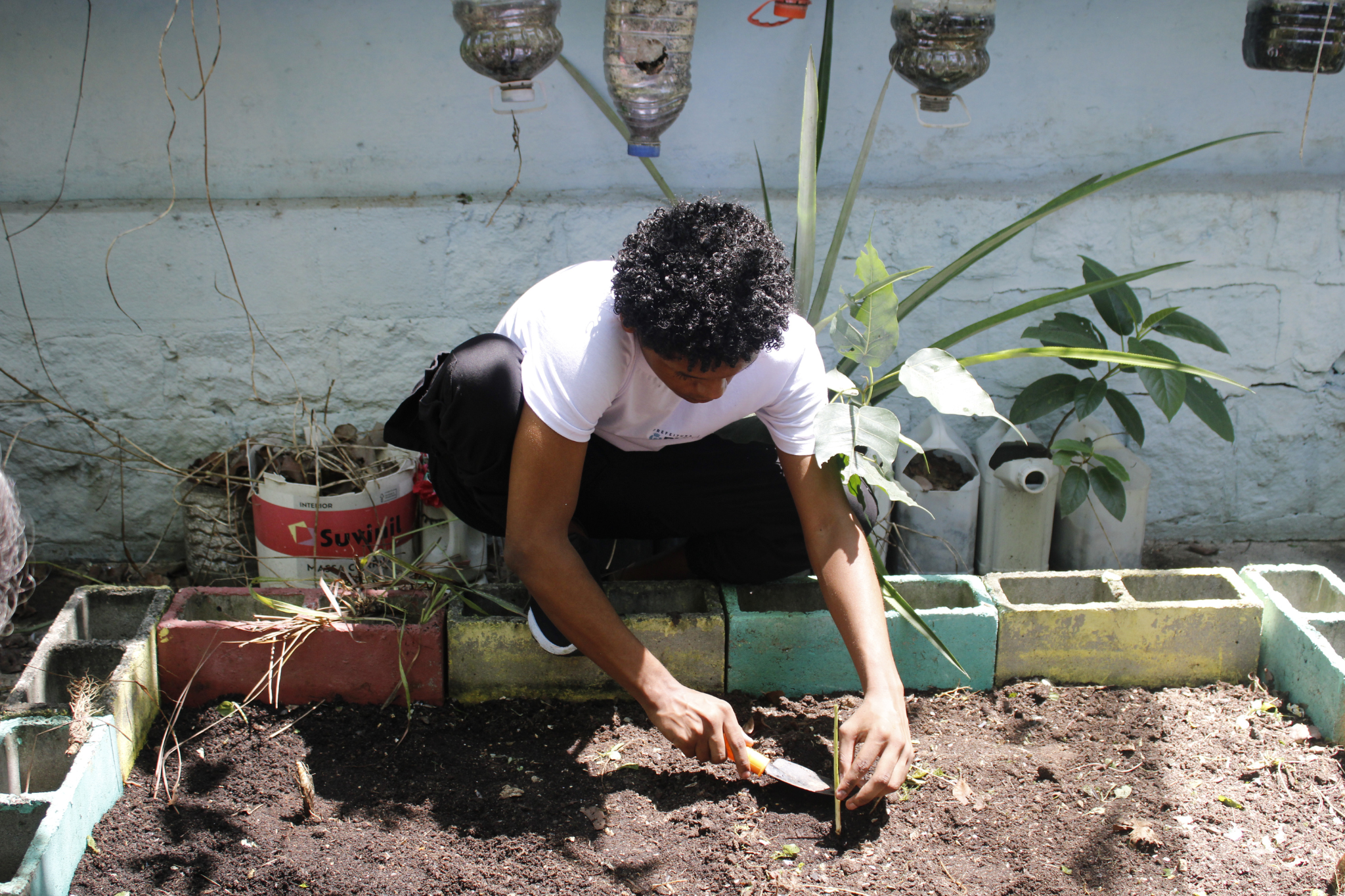
The garden has around 50 seedlings, distributed among edible and medicinal plants. In addition, it also an autonomous and integrated learning circuit among the different age groups served by the school, as explained by Vilson Luiz:
“There are very sensitive plants that die over the course of the year. It creates that feeling of, ‘Wow, we came here, planted them, and they died?’ Yes, but at the same time, others also grow. And it’s this movement of care that we need in order to do this work, this renewal. This helps because it’s the [the youth] who have to do the research. It’s not a place that has an owner. Everyone is the owner.”
A veteran of the community garden and a former GET Brant Horta student, Matheus Daniel, who is now in his first year at the Heitor Lira State High School, also in Penha, shares how participating in the garden contributed to his self-care:
“What impacted me the most was the care I learned to give to certain plants, many of which I didn’t know before. I also learned how to make remedies from many of these medicinal plants. I have asthmatic bronchitis and learned to use herbs as tea, which really helps my cough.”
Nathally Hyara, an 8th grade student at the school, says that the project she liked the most was building the garden’s irrigation system, as it challenged her to acquire new knowledge:
“All of the irrigation systems here were made by the students. I shared several ideas and we tried to find something more sustainable. All of the systems were made with materials we received or recycled. One is made from a fabric softener bottle and another from a hose. We just brought all the ideas together and developed everything. So it was built by all the students. Each one contributed an idea and we just put them into practice.”
Fabrício Miguel, also an 8th grader, began participating in the garden’s activities more recently and shared the benefits of this contact with nature:
“It’s a form of de-stressing. I have now started a garden at home, where I planted an onion. I put it in the middle of some sand, all neat and tidy, and it’s already growing. At home, we also have many types of plants because my grandma likes them too.”
A Garden of History and Memory
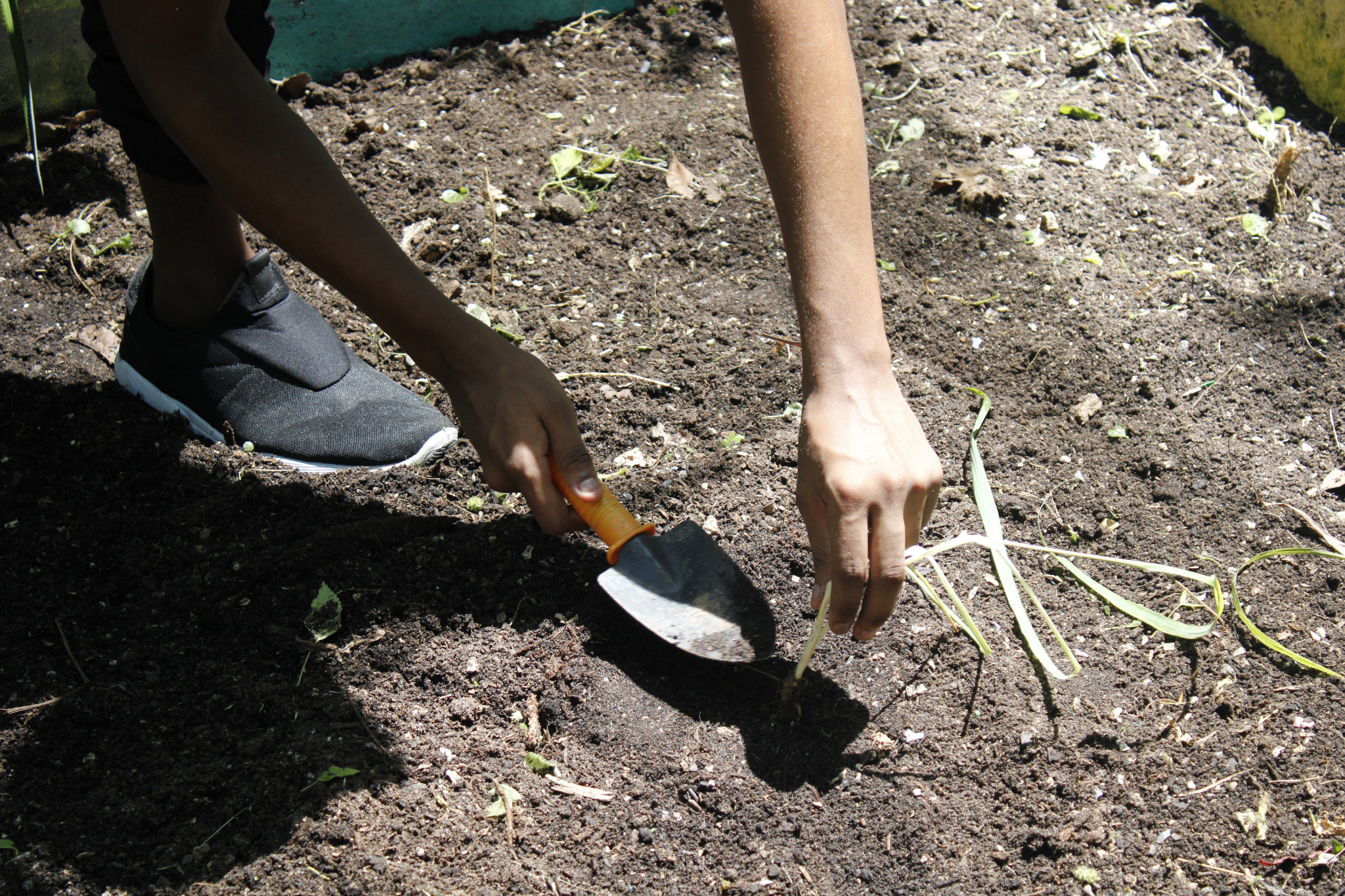
Victor Eckhart, a former GET Brant Horta student, shared that, beyond what his peers mentioned, the project also involves a reconnection with ancestral knowledge:
“We learned a lot about ancestral knowledge, [for example,] that boldo is one of the oldest plants we have here. There’s a garden bed that is entirely ancestral. Not only Brazil’s ancestral knowledge, but ours too, from our grandparents—my grandma, for example, still strongly recommends I drink boldo for a stomachache.”
Vilson Luiz explains that, alongside the work in the garden and the school’s curriculum subjects, the appreciation of local history also takes a central role in this process:
“We tell the history of this area, starting with its original inhabitants, so the children understand the real story of the place they belong to and can help preserve it.”
The Fight to Revitalize the Ary Barroso Park
Ary Barroso Park suffers from neglect by public authorities. At 60 years old, it currently has broken fences, overgrown vegetation, dry ponds and a lot of stagnant rainwater, which increases the number of mosquitoes and the risk of dengue, chikungunya, Zika and other diseases in the area.
This prompted a public civil action by the Rio de Janeiro Public Prosecutor’s Office (MPRJ), denouncing the situation and demanding solutions. Finally, on March 9, 2026, the Court ordered urgent measures from Rio’s City Hall and the State of Rio de Janeiro to be implemented within a maximum of 60 days.
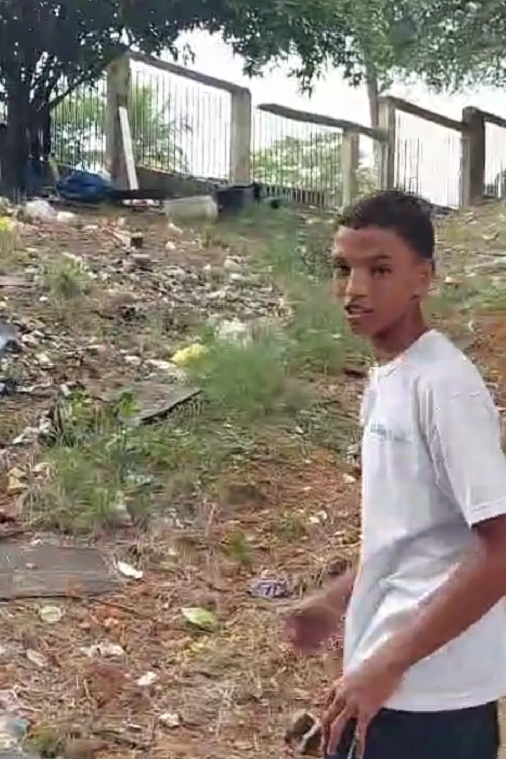
Actions ordered by the Court include: maintenance of vegetation by the municipal waste collection utility Comlurb, including trees at risk of falling; halting unauthorized construction in the protected area; demolition of illegal structures on the site; and development of a restoration and revitalization plan for the park, covering its internal roads, gardens, ponds, fences and all degraded infrastructure.
In response to this situation, the restoration of Ary Barroso Park has also been taken up by the students, who have even launched a campaign to reactivate the site. According to Virgínia do Espírito Santo, a geography teacher at GET Brant Horta:
“We asked the students what part of the neighborhood made them think of nature and they came up with the Ary Barroso Park… They made Instagram videos asking for the park’s revitalization and showing the broken playground equipment. We’ve always asked for the community’s help, because we didn’t want this [environmental education] to stay only within the school. We want the students to replicate it in the favela and in the neighborhood. To take it to other institutions. For example, they are now working with Arena Dicró and with Ana Santos [from CEM] on the Agroflorestinha project, replicating the work they do at our school. Our students go there on Saturdays on their own and teach other children. If we have an unused space, we plant a tree or create a garden. We need to remember that this neighborhood is an intense urban heat island and that the only way to improve it is by adding greenery, because the city won’t come to plant. The park has been completely neglected.”
Planting New Futures
Despite setbacks, hope always finds a space to flourish. According to Vilson Luiz, turning the city block where the school is located from concrete into a green space will be the next step in this movement:
“We have plans to open some gaps in the sidewalk, break it up, and plant trees around the school block. We’ll plant and start taking care of it. We’ll turn the school into a living laboratory.”
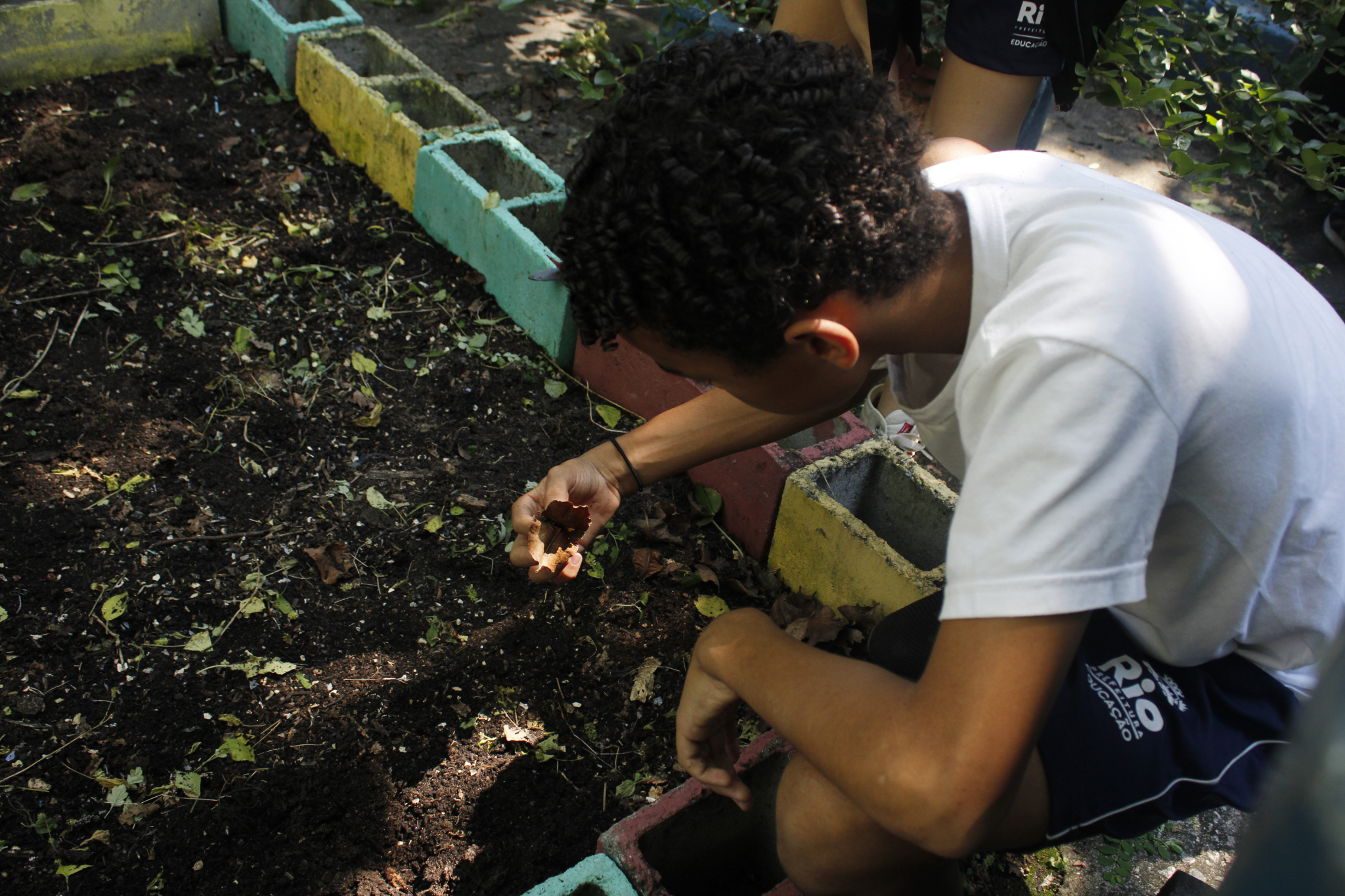
Victor Eckhart, on the other hand, wants to implement his knowledge at his new school, where he hopes to share it with other students:
“This [GET Brant Horta] is where I learned everything about planting and got to know the plants. Now, I have a small garden at home with peppers and sunflowers. I also have a papaya tree that’s grown quite big—I got it from here. I want to try and create a planting project at my new school, Heitor Lira, to help kids understand what I learned here. I want to pass this knowledge on to the next generation.”
View the Full Album of the GET Brant Horta Garden Collective Action in Penha:

*The Sustainable Favela Network (SFN) and RioOnWatch are both initiatives realized by not-for-profit organization Catalytic Communities (CatComm).
About the author: Amanda Baroni Lopes holds a degree in Journalism from Unicarioca and was part of the first Journalism Laboratory organized by the Maré community newspaper Maré de Notícias. She is the author of the Anti-Harassment Guide in Breaking, a handbook that explains what is and isn’t harassment to the Hip Hop audience and provides guidance on what to do in these situations. Lopes is from Morro do Timbau, a favela within the larger Maré favela complex.