

Clique aqui para Português
The bill received 24* votes in favor but needed 26 to pass. Coordinated efforts by right-wing city council members, coupled with the spread of false claims about Community Land Trusts, proved decisive in defeating the bill.
On June 25, the city of Rio de Janeiro missed the chance to take a major step forward in guaranteeing the right to housing. The City Council rejected, by three votes, Complementary Bill No. 55/2025, which would have established the legal framework for Community Land Trusts (CLTs)**—an innovative regularization tool that can guarantee the right of urban communities to remain in place, combats real estate speculation and strengthens residents’ leadership in decisions affecting their communities.
In a session marked by false claims about CLTs, the bill introduced by Councilwoman Tainá de Paula received 24* votes in favor, falling three votes short of the 26 required for approval. Although the proposal was supported by a majority of council members present—with only 12 voting against it—as a complementary bill, it required a two-thirds supermajority to pass, a threshold it failed to meet.
Community Land Trusts may be new to Brazil, but they are far from new globally. With a history spanning nearly 60 years, the model has proven to be a lasting solution to the housing crisis, capable of preserving a stock of affordable housing for low-income populations, even in high-value areas of cities. It works as follows: once established, the land belongs to the community as a whole, while homes belong to residents. Each family retains the autonomy to manage its home as it sees fit, in accordance with bylaws approved collectively, while preserving the shared goal of ensuring the community’s permanence in the neighborhood and preventing gentrification.
CLTs have been adopted in countries around the world, from cities in the Global North to informal settlements in Puerto Rico and Kenya, as a tool for addressing the housing crisis. They are also included in the United Nations (UN) New Urban Agenda, which recognizes their potential and recommends them as a housing policy instrument for countries worldwide. Brazil’s experience with the model was also highlighted in the World Cities Report 2026, a UN global report on the state of the world’s cities and solutions to urban challenges.
In Rio de Janeiro, CLTs gained significant visibility during the 2022 and 2023 revision of the city’s Master Plan. Following numerous discussions and public hearings at the City Council, civil society organizations strongly advocated for the inclusion of the model in the legislation, which was ultimately approved at the end of 2023. CLTs were incorporated as one of the Master Plan’s urban planning instruments, with the purpose of ensuring access to land and housing. Despite this victory, the law’s final text required that the instrument be regulated by its own legislation, limiting its immediate applicability.
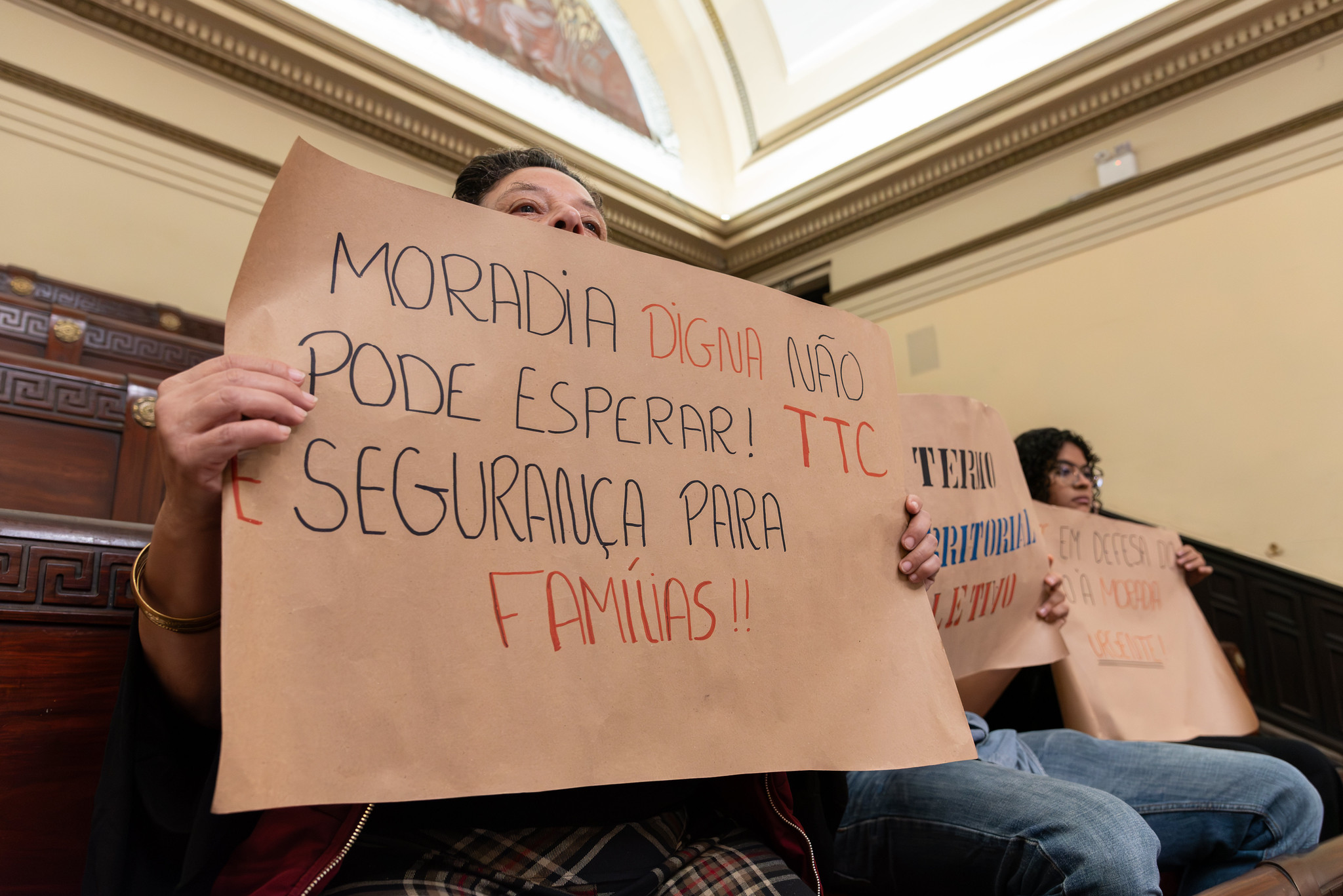
Complementary Bill No. 55/2025 was introduced precisely to meet this requirement established by the Master Plan. The bill provided a comprehensive legal framework for CLTs, setting out their objectives, legal structure, governance mechanisms and relationship with land tenure regularization policy. The proposed legislation represented a significant innovation for the city, introducing new strategies to address the housing deficit—which exceeds 200,000 units—as well as the chronic tenure insecurity faced by favelas and other urban communities.
It is important to note that the inclusion of CLTs in Rio de Janeiro’s Master Plan was backed by broad public support. The requirement that the instrument be regulated through separate legislation stemmed from a desire to establish a more comprehensive legal framework and avoid legal uncertainty. The bill’s rejection in June therefore went against the aspirations expressed by civil society during the Master Plan revision process, when support for CLTs in the city was made unequivocally clear.
The municipal government itself has recognized CLTs as an important housing policy strategy. At the end of 2025, the Municipal Plan for Social Interest Housing (PMHIS, by its Portuguese acronym) was approved, incorporating CLTs into its housing policy portfolio. Under the PMHIS, the Rio de Janeiro municipal government committed to “implement one CLT every two years, totaling two CLTs by 2029.”
Speeches by City Council Members Reveal Misunderstanding of the Proposal
The June 25 session during which the bill was put to a vote was marked by speeches from right-wing city council members advancing misleading arguments aimed at blocking approval of the Community Land Trust proposal.
Below, we address and clarify these inaccurate claims.
False Claim #1 — Under a CLT, You Do Not Own Your Home and Cannot Sell It
“A Community Land Trust creates a kind of collective property registry. You don’t own your home. Instead, you become part of a legal entity, an association, and that association owns all those properties, while you are simply a member of that legal entity, that association.” — Pedro Duarte (PSD)
Contrary to the councilman’s claims, the CLT’s governing entity does not own the homes within a community. The entity—a nonprofit organization created and managed by residents—retains ownership of the land, while the homes remain individually owned by residents. Under the CLT model, each resident individually owns their home through a surface rights deed, which exists under Brazilian law and separates ownership of the land from ownership of the buildings constructed on it. This arrangement is reflected in each property’s land registry and, far from creating a “collective property registry,” as the councilman claimed, already recognizes each resident’s individual property rights. The bill itself establishes this in Article 5: “A CLT is established… through the consolidation of the individual rights of its members to buildings and/or improvements they have constructed or acquired, with the boundaries of each privately used plot recognized.”

“If you want to… sell your property individually—‘I want to sell my house’—you can’t.” — Pedro Duarte (PSD)
It is not true that a Community Land Trust prohibits the sale of property. Each resident individually owns their home. The surface rights deed is a real property right established under Brazilian law—just like freehold ownership—and gives residents full autonomy over the use of their homes, including the right to sell, rent or pass them on to their children, all with the proper legal registration. What sets a CLT apart is its commitment to preserving housing affordability by preventing the sale of the land from opening the door to real estate speculation within the community.
The model is designed to preserve the characteristics of social interest housing and reduce the risk of gentrification by formalizing the community’s own preferences through rules established to ensure that housing remains affordable in the future. All of these rules are discussed and approved by residents as part of the CLT’s bylaws.
False Claim #2 — CLTs Are Against Private Enterprise and Support Parallel Power
“The bill would not benefit private enterprise. On the contrary, it would even create opportunities for parts of it to be exploited by the parallel power [gangs and militias].” — Rogério Amorim (PL)
Contrary to the councilman’s claims, CLTs are not at odds with private enterprise. The model itself is the result of the free initiative of residents and technical allies who choose to organize themselves into an association to collectively manage their community. Once formally established, the community also creates new opportunities to formalize residents’ economic activities while strengthening the economies of surrounding areas without forcing out those who built the local economy.
Furthermore, there is no evidence whatsoever to support the claim that CLTs would open the door to “the parallel power.” Quite the opposite: militias, which have operated in Rio de Janeiro for decades without CLTs ever existing in the city, have a direct interest in the individual titling of land occupied illegally. This process makes it easier for them to bring new properties—produced through real estate speculation—into the formal market, increasing the profits of these criminal groups. Researchers have described this process as “militia urbanism.”
By contrast, under the CLT model, the land could no longer be sold or used for speculative purposes. Instead, it would be collectively stewarded by residents, resulting in stronger governance than either informal collective management or individually managed formal ownership. The land would be dedicated to the provision of affordable housing and collectively owned by all homeowners through the association that holds title to it. As a result, it could no longer be used to fuel the gentrification of communities. This is fundamentally incompatible with the militias’ interest in exploiting the real estate market for economic gain.
False Claim #3 — CLTs Are a Communist Model
“Unfortunately, under socialist and communist governments, one of the first things abolished is private property. That’s why I say this bill also has an ideological, communist, socialist and totalitarian element to it.” — Rafael Satiê (PL)
Nothing could be further from the truth. CLTs were invented in the United States in the 1960s as a way to secure land rights for marginalized communities. Today, the US has over 300 active CLTs, second only to England, which has over 400. CLTs also exist in Belgium, France, Canada, Australia, Germany, Kenya and Puerto Rico, among other countries. There are no known CLTs in socialist countries.
What is happening, particularly in countries with high levels of development, is a growing concern over the housing crisis, which is making adequate housing increasingly unaffordable—even for middle-class families. The rising cost of housing—driven by its treatment as a commodity rather than a right—is a phenomenon observed in cities around the world.
The city council members who strongly opposed CLTs argue that the model is intended to attack or replace private property in Brazil. That is not the case. CLTs expand the range of tools available to help realize the right to housing in the country. It is essential to recognize that Brazil is facing a genuine housing crisis and that the strategies currently available to address it have not proven sufficient. The country faces a housing deficit of nearly six million homes, while the number of vacant properties exceeds eleven million. Part of this problem stems from the way land and housing are treated: as high-cost commodities.
CLTs offer new responses to this concerning scenario, helping to guarantee security of tenure for communities, increase the number of homeowners and maintain a stock of affordable housing.
Lastly, it is always important to emphasize: CLTs are not imposed. They are simply another tool for guaranteeing the right to housing, complementing many others already available. Communities that wish to adopt a more collective approach to land ownership may choose to implement the model in their neighborhoods. It is not mandatory for anyone—the project itself makes this clear in Article 1 by affirming the “autonomy to join” a CLT. Rejecting the possibility of this proposal is simply another attack on the very freedom of choice these same council members so often champion.
The Absence of a Law Does Not Prevent the Implementation of Community Land Trusts in Rio de Janeiro
Although the bill was defeated, it is important to emphasize that Community Land Trusts do not depend on a specific law to be implemented in Brazil. The model operates through a combination of legal instruments that already exist under Brazilian law, including nonprofit legal entities, direito de superfície and land tenure regularization. A law specifically governing CLTs would indeed make implementation easier and help overcome bureaucratic obstacles—and we missed that opportunity in Rio de Janeiro. However, the bill’s rejection does not prevent the model from being used.
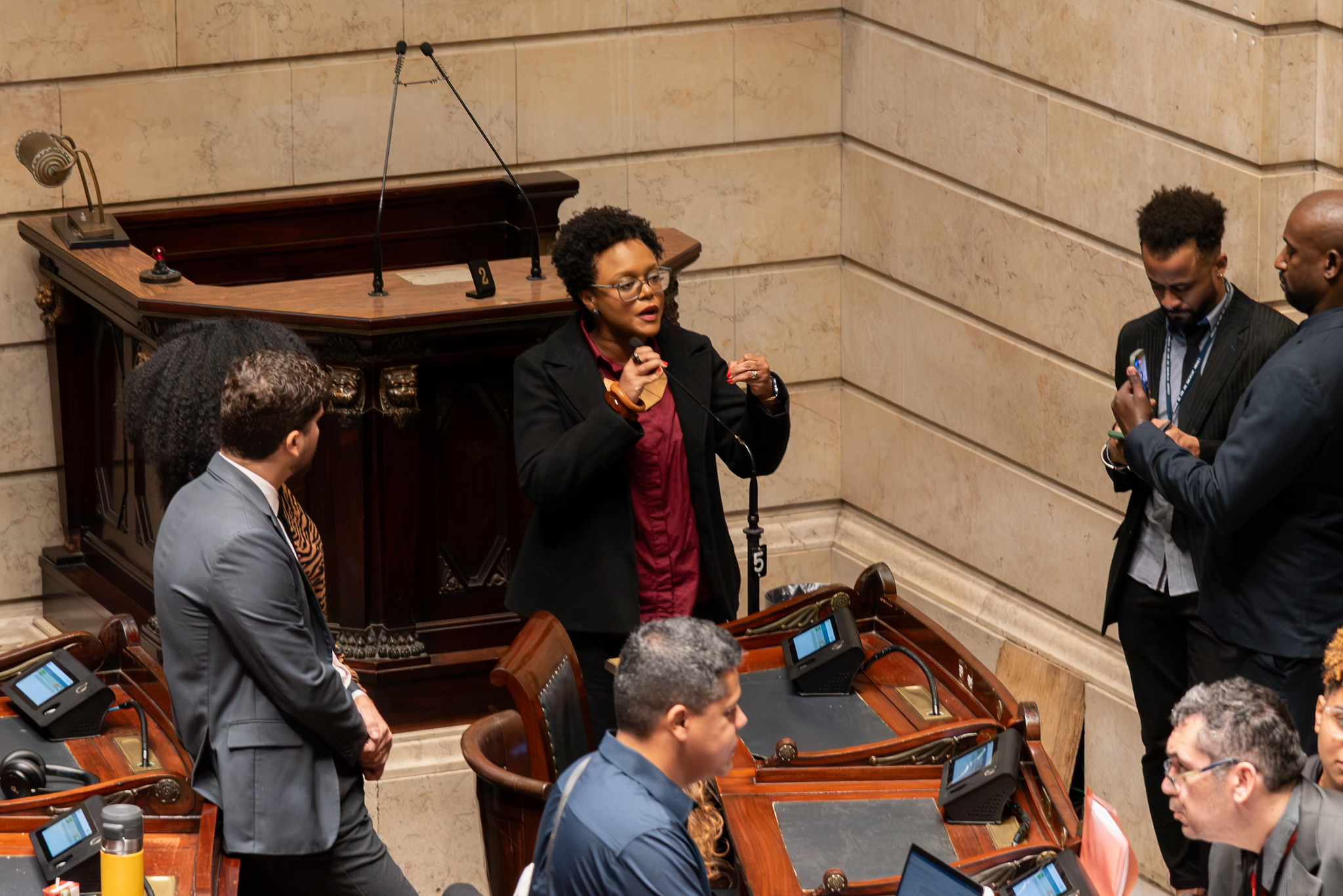
Community Land Trusts are gaining increasing visibility in Brazil, and the setback in Rio de Janeiro’s City Council will not stop this movement. Today, six Brazilian municipalities have already approved CLT legislation: São João de Meriti, Magé, Maricá and Rio de Janeiro, all in the state of Rio de Janeiro; Biguaçu, in Santa Catarina; and the federal capital, Brasília. A federal bill on the subject is also currently under consideration. Increasingly, the model is being recognized by a wide range of stakeholders, including community leaders, social movements, researchers, public officials and lawmakers. Despite the municipal CLT bill’s defeat, it is important to recognize and value the fact that a majority of the city council members present declared their support for the proposal. Support for Community Land Trusts continues to grow in Brazil, and it will continue to do so despite this temporary setback.
*Correction to the original article, which stated that there were 23 votes in favor: In total, 24 city council members voted in favor of the bill, 23 on the voting panel and one orally: Átila Nunes (PSD), Carlo Caiado (PSD), Cesar Maia (PSD), Deangeles Percy (PSD), Fabio Silva (Podemos), Felipe Boró (PSD), Felipe Pires (PT), Flávio Valle (PSD), Joyce Trindade (PSD), Leniel Borel (PP), Leonel de Esquerda (PT), Maíra do MST (PT), Marcio Ribeiro (PSD), Monica Benicio (PSOL), Niquinho (PT), Paulo Messina (PL), Rick Azevedo (PSOL), Salvino Oliveira (PSD), Tainá de Paula (PT), Tânia Bastos (Republicanos), Thais Ferreira (PSOL), William Siri (PSOL) and Zico (PSD). Councilman Rodrigo Vizeu (MDB) voted orally, which is why his vote was not recorded on the voting panel, although it was formally counted.
The 12 city council members who voted against the bill were: Alana Passos (PL), Diego Faro (PL), Dr. Rogério Amorim (PL), Fernando Armelau (PL), Gigi Castilho (Republicanos), Jorge Canella (União Brasil), Marcelo Diniz (PSD), Pedro Duarte (Novo), Poubel (PL), Rafael Satiê (PL), Vitor Hugo (MDB) and Willian Coelho (DC). The votes can be verified in the session minutes on the City Council website.
**The Favela Community Land Trust and RioOnWatch are both projects of Rio de Janeiro-based NGO Catalytic Communities (CatComm).