• English
  • Português
  • Facebook
  • Instagram
  • Twitter
  • YouTube
RioOnWatch
  • Home
    • Highlighted Stories
    • Understanding Rio
    • Reference Articles
  • Communities
    • Central
    • South Zone
    • North Zone
    • West Zone
    • Greater Rio
  • Policies
    • Public Security
    • Housing
    • Transport
    • Education
    • Health
    • Sanitation
  • Violations
    • Human Rights
    • Housing Rights
    • Police Violence
    • Government Neglect
  • Organizing
    • Community Organizing
    • Community Solution
    • Resistance
    • Sustainability
    • Participation
    • Protest
    • Culture
    • Responsible Tourism
  • Content Map
    • by Community Contributors
    • by Int’l Observers
    • Series
      • Anti-Racist Series
      • Energy Justice Series
    • Event Reports
    • Video Stories
    • Photo-Essays
    • Interviews/Profiles
    • Research & Analysis
    • Reviews
    • Listicles
    • Opinion
    • Reference
    • Podcasts
    • Translated Articles
  • About
    • Timeline
    • Our Reporting Policy
    • License
    • Feedback
  • For Journos
  • Donate
Latest News
  • [ May 15, 2026 ] Complex and Intelligent, the Favela Has Its Own Geography Favela Qualities
  • [ May 14, 2026 ] ‘This Is Where My Life Began:’ Residents of Santa Teresa Occupation Claim Right to Stay in Talks With Federal Heritage Secretariat #EvictionsWatch
  • [ May 13, 2026 ] 10 Years After Rio’s Most Notorious Pre-Olympic Forced Eviction, Women-Led Collective Action Preserves the Memory of Vila Autódromo #LegacyWatch
  • [ May 9, 2026 ] Data Centers, AI and the Social Costs for Rio de Janeiro: What Does It Mean in Practice to Become a Big Tech Hub? [EDITORIAL] #LegacyWatch
  • [ April 28, 2026 ] The Who and Why of Sustainability: Without Retraining, Waste Pickers Have Been on Losing End of Greenwashing 14 Years After Closing of ‘Waste Land’ Dump *Highlight
HomeProtest

Protest

*Highlight

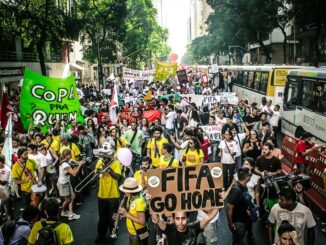
#NaoVaiTerCopa: From Social Media to the Streets

By Benjamin Parkin • June 15, 2014

Few would have imagined in 2007, when Brazil won its bid to host the World Cup, that the controversy surrounding use of public money, corruption and militarization would have unfolded as it did. A Fifa […]

#Rio2016

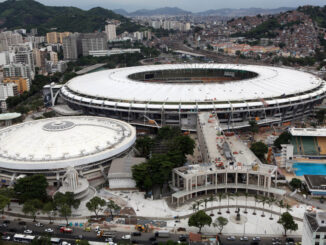
The Tragedy of the Maracanã Stadium

By Tom Winterbottom • June 13, 2014

Clique aqui para Português As a symbolic space in Rio de Janeiro, there is little to compare to the Maracanã stadium. Its history and position in the urban imagination is tightly linked to the cultural […]

#CommunityMedia

World Cup Violations: What About Communication Rights?

By Daniel Fonsêca • Translation by Ollie Davies • May 22, 2014

For the original by Daniel Fonsêca in Portuguese on Carta Capital’s Intervozes blog click here. Stereotyped representations, violation of communication rights and the need to increase the number of voices and subjects addressed by the […]

#UPPWatch

UPP Security Crisis As World Cup Approaches

By Felicity Clarke • May 16, 2014

Clique aqui para Português At a time when the world’s eyes are turning to Brazil, and in particular Rio de Janeiro, security concerns could not be more pressing. As northeastern World Cup host city Recife […]

#Rio2016

Will Children Pay the Highest Price for Brazil’s Mega-Events?

By Beth McLoughlin • May 5, 2014

The children’s charity Terre des Hommes has hosted a workshop looking at the effects of mega sporting events, starting with the imminent World Cup, on children in Brazil. The workshop, which took place in São Paulo, […]

Posts pagination

« 1 … 37 38 39 … 47 »

RioOnWatch’s anti-racist reporting series won silver in the 2022 inaugural The Anthem Awards, in the Diversity, Equity & Inclusion category among Best Local Awareness Programs.
A Project of

About

In May 2010, Catalytic Communities launched what was originally Rio Olympics Neighborhood Watch (hence RioOnWatch), a program to bring visibility to favela community voices in the lead-up to the 2016 Rio Olympics. This news site, RioOnWatch.org, grew into a much-needed and unique reference featuring favela perspectives on the urban transformation of Rio. With diverse and deeply interlinked articles by a mix of community reporters, resident opinions, solidarity reporters, international observers, and academic researchers, we work to engender a more accurate picture of favelas, their contributions to the city, and the potential of favela-led community development in Rio and around the world.

Contact & Support

contact@rioonwatch.org
WhatsApp +55.21.991.976.444
USA VOIP +1.301.637.7360

Volunteer | Donate

10 Years! Check Out Our Story:

Awards

Special Thanks

Fundação Heinrich Böll Brasil
World Habitat
Fideicomiso de la Tierra Caño Martín Peña
Pastoral de Favelas
Center for CLT Innovation
Global Land Alliance
Ecocity Builders
Mansueto Institute for Urban Innovation
SDSU Behner Stiefel Center
The Rio Times
Forum Grita Baixada
Beto Paixão Graphic Design
Architecture Museum of Vienna
Yale School of Architecture

  • Home
    • Highlighted Stories
    • Understanding Rio
    • Reference Articles
  • Communities
    • Central
    • South Zone
    • North Zone
    • West Zone
    • Greater Rio
  • Policies
    • Public Security
    • Housing
    • Transport
    • Education
    • Health
    • Sanitation
  • Violations
    • Human Rights
    • Housing Rights
    • Police Violence
    • Government Neglect
  • Organizing
    • Community Organizing
    • Community Solution
    • Resistance
    • Sustainability
    • Participation
    • Protest
    • Culture
    • Responsible Tourism
  • Content Map
    • by Community Contributors
    • by Int’l Observers
    • Series
      • Anti-Racist Series
      • Energy Justice Series
    • Event Reports
    • Video Stories
    • Photo-Essays
    • Interviews/Profiles
    • Research & Analysis
    • Reviews
    • Listicles
    • Opinion
    • Reference
    • Podcasts
    • Translated Articles
  • About
    • Timeline
    • Our Reporting Policy
    • License
    • Feedback
  • For Journos
  • Donate

© 2026 Attribution-NonCommercial-ShareAlike 4.0 International